

18 Narrow Hallway Ideas That Make a Tight Space Feel Bigger
A narrow hallway can feel frustrating because almost every decorating decision affects the walking path. Add the wrong console and you’re brushing past it. Hang bulky hooks and suddenly coats steal several more inches. Use a dark runner from wall to wall and the corridor can feel even tighter.
The good news is that a small corridor doesn’t need much to feel better. The biggest improvements usually come from protecting floor clearance, directing the eye toward the far end, bouncing light around, and choosing decor that adds personality without projecting too far from the walls.
These narrow hallway ideas are all built around that width problem specifically, whether you’re working with an apartment corridor, a compact passage between rooms, or a long hallway that feels more like a tunnel than part of the home.
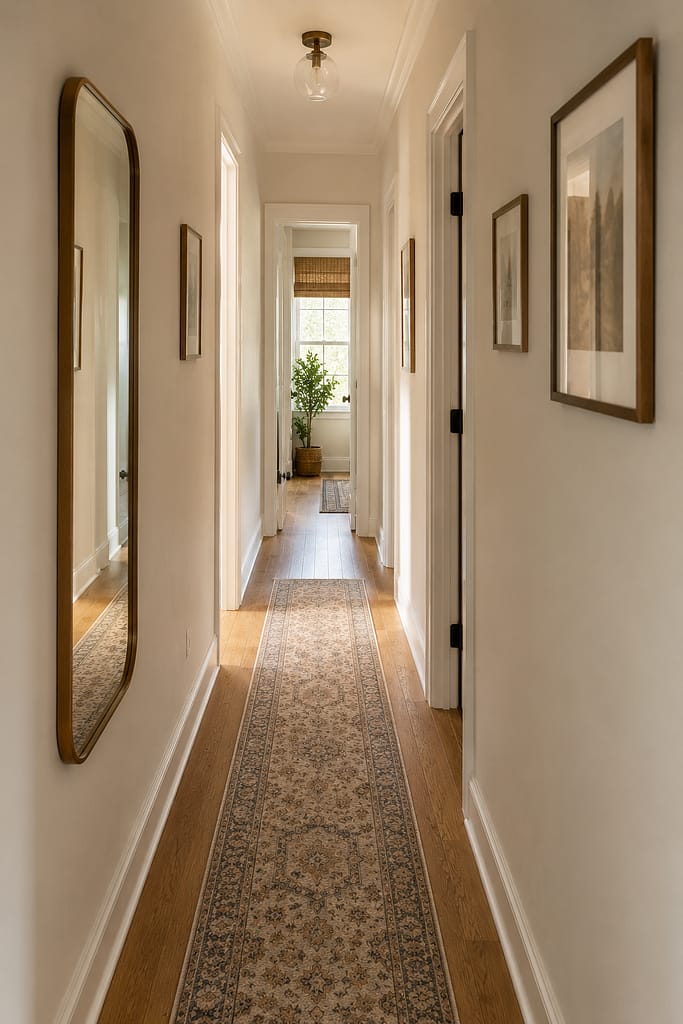
1. Leave More Floor Visible Around the Runner
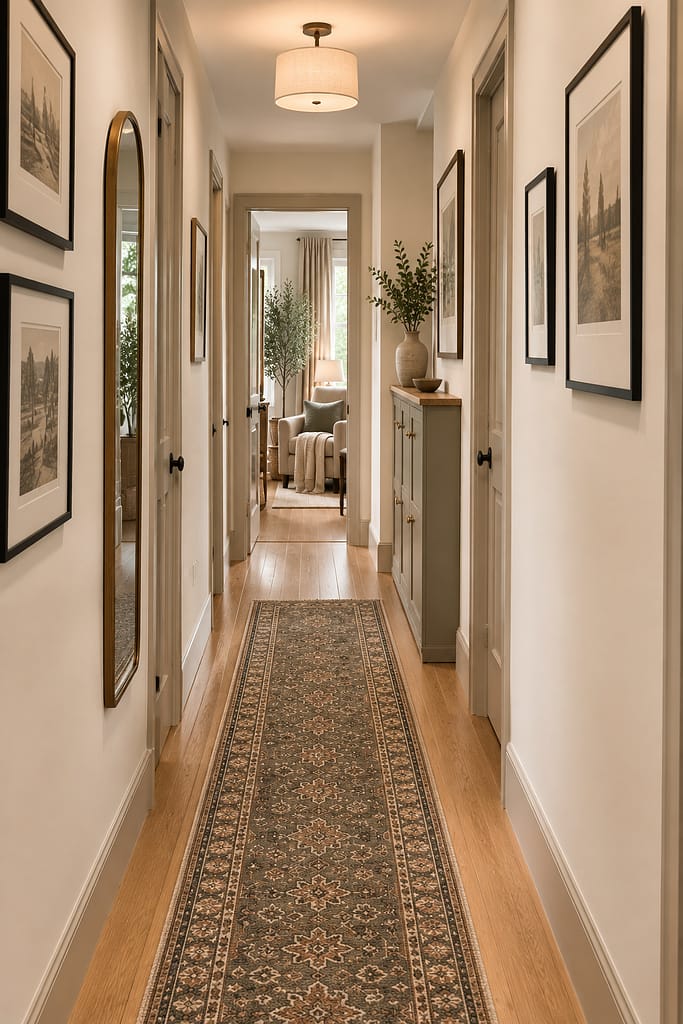
A runner can make a corridor feel longer, but it shouldn’t look squeezed between the walls. Choose a width that leaves a visible strip of flooring along both sides so your eye can still read the full width of the hall. Even a few inches of exposed floor can create a cleaner boundary. Low-pile rugs are also easier around tight door swings. If the hall is especially narrow, avoid thick fringe or curled edges that make the walking zone feel cluttered.

2. Use One Large Mirror Instead of Several Small Ones
A mirror helps because it reflects both light and another view of the room, making the wall feel less visually solid. In a tight hallway, one substantial mirror often works better than several small ones because it creates a broader uninterrupted reflection. Hang it where it catches a doorway, window, or lighter room rather than reflecting a blank wall. Keep the frame relatively slim so the mirror itself does the work without projecting too far into the corridor.

3. Keep Console Tables Extremely Shallow
If you really want a landing spot, depth matters more than width. A traditional console can easily turn a comfortable passage into a shoulder-bumping zone, so look for a very shallow table or shelf-depth freestanding piece. Tape the footprint on the floor before buying and walk past it carrying a laundry basket or grocery bag. If you naturally turn sideways, it’s too deep. Open legs are preferable because seeing the floor beneath the furniture keeps the hallway from feeling visually blocked.
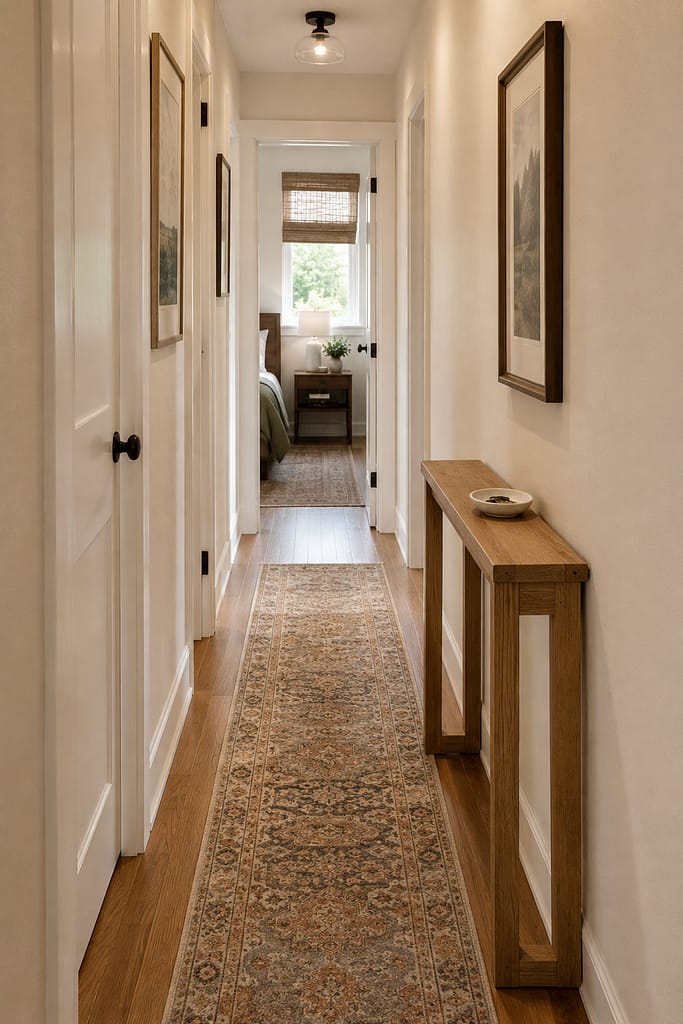
Pro tip: Test furniture depth with painter’s tape before buying. Mark the exact footprint, then walk the hallway normally for a day. If you keep stepping over the tape, choose something shallower.
4. Use a Lighter Wall Color With Some Warmth
Light colors reflect more available light, which can soften the tunnel effect in a small narrow hallway. That doesn’t mean you’re limited to stark white. Warm ivory, pale greige, soft mushroom, or a very light muted beige can keep the space bright while feeling less clinical. If the hallway has little natural light, test samples under your actual fixtures; cool whites can turn gray or blue in shadow. A consistent wall color also reduces visual interruptions, helping the corridor read as one continuous volume.
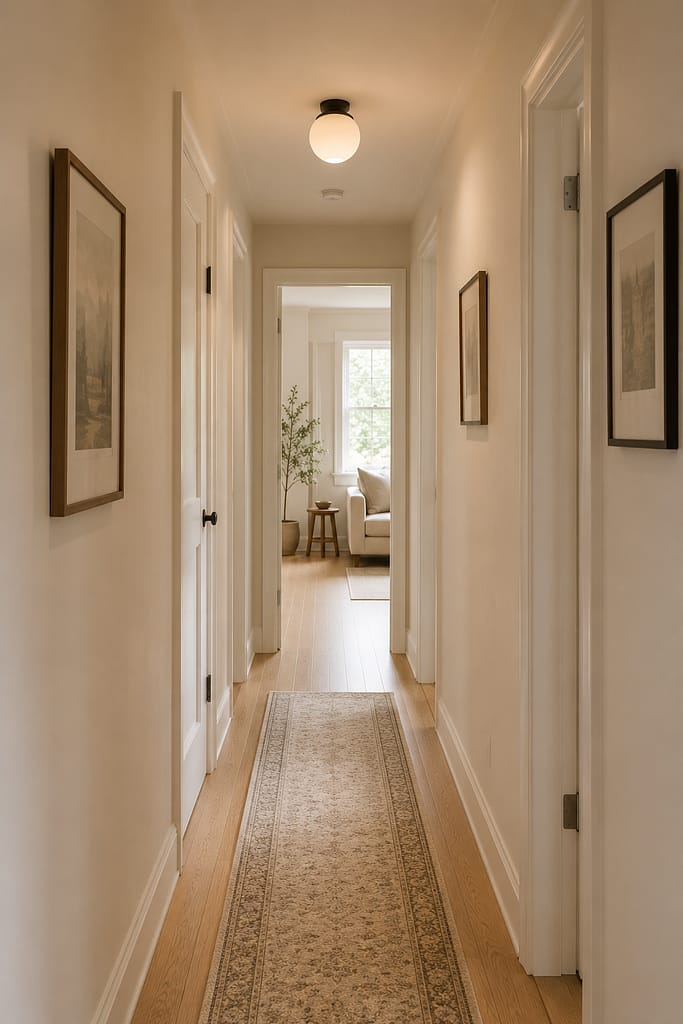
5. Paint Doors and Trim Close to the Wall Color
Strongly contrasting door frames can visually chop a narrow hallway into repeated blocks. Painting the doors, trim, and walls in closely related tones creates longer uninterrupted lines, which helps the corridor feel calmer and less segmented. You don’t have to use the exact same finish—walls can stay lower sheen while doors and trim use something more durable. This technique is particularly helpful when several doors sit close together and the hallway already has lots of architectural interruptions.

6. Direct Attention Toward the Far Wall
A narrow hall often feels bigger when the eye has somewhere to travel. Use one interesting piece at the end—a medium-to-large artwork, a painted door, a mirror, or a simple framed photograph—to create a destination. Keep the side walls quieter so they don’t compete for attention. This emphasizes the hallway’s length while reducing the sense of being boxed in by both side walls. It works especially well in long apartment corridors where the far wall is visible from the entry.

7. Keep Wall Decor Flat and Low-Profile
In a tight corridor, physical projection matters. Deep shadow boxes, bulky baskets, sculptural wall pieces, and thick shelves can steal useful inches and create places to bump shoulders. Flat framed prints, photographs, textiles mounted close to the wall, or a thin mirror add visual interest without affecting circulation. If you’re building a gallery wall, use frames with similar shallow profiles so the wall reads as one decorative plane instead of a row of obstacles.
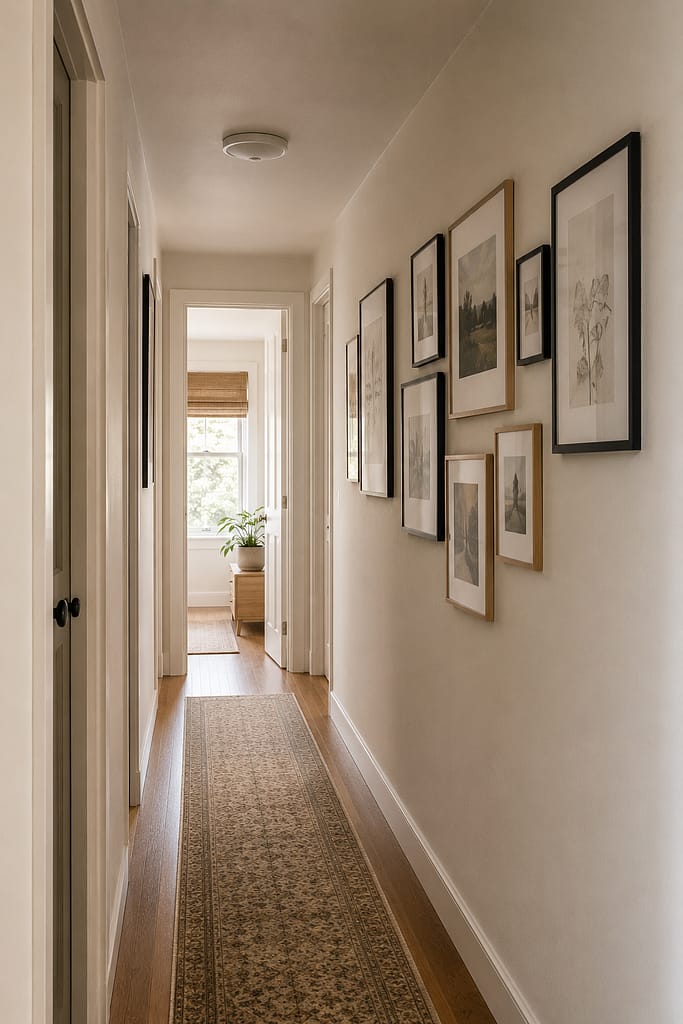
Budget tip: Replace bulky decorative objects with printable art, family photos, or thrifted flat frames. You can fill a long wall without taking a single useful inch from the walking path.
8. Hang Art in a Horizontal Sequence
A row of similarly sized frames can emphasize length without making the walls feel busier vertically. Keep spacing consistent—roughly a couple of inches between frames is a useful visual starting point—and align their centers rather than their tops. This creates a clean horizontal rhythm that leads the eye down the corridor. Avoid stacking too many rows on a narrow wall; one line of art is usually enough. For small corridor decoration ideas, restraint often produces a stronger result than filling every blank section.
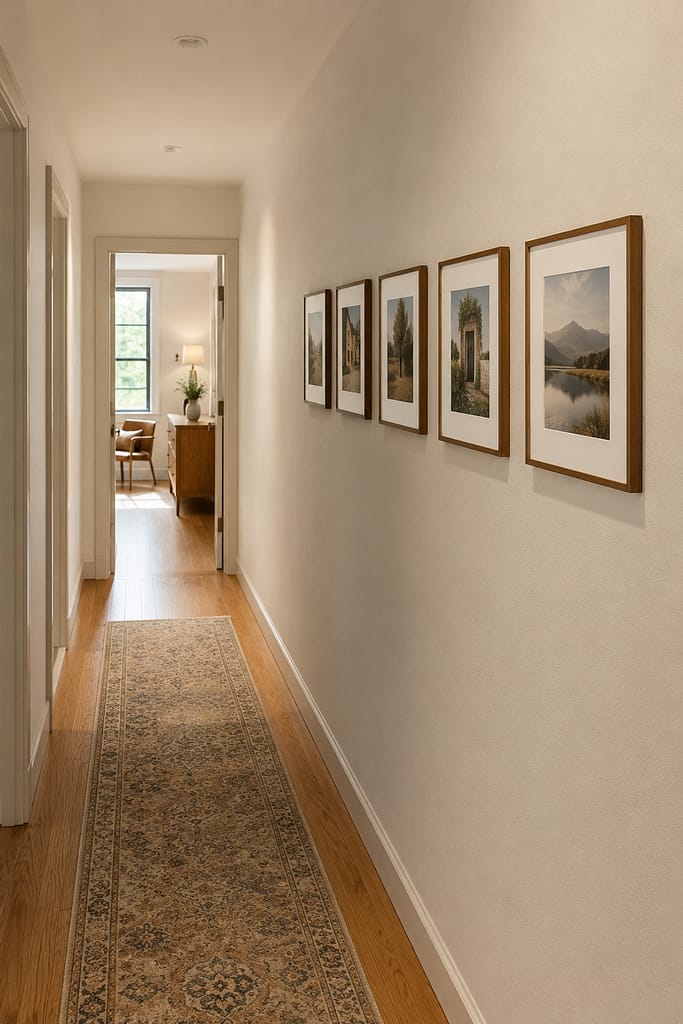
9. Add Vertical Lines to Lift a Low-Feeling Hall
If a hallway feels tight because it’s both narrow and visually low, vertical elements can draw attention upward. Narrow wall battens, subtle vertical paneling, or tall artwork encourage the eye to move from floor to ceiling rather than side to side. Keep the relief shallow so the treatment doesn’t project into the walkway. Painting vertical trim the same color as the wall makes the effect quieter and more contemporary, while still giving a little architectural depth.
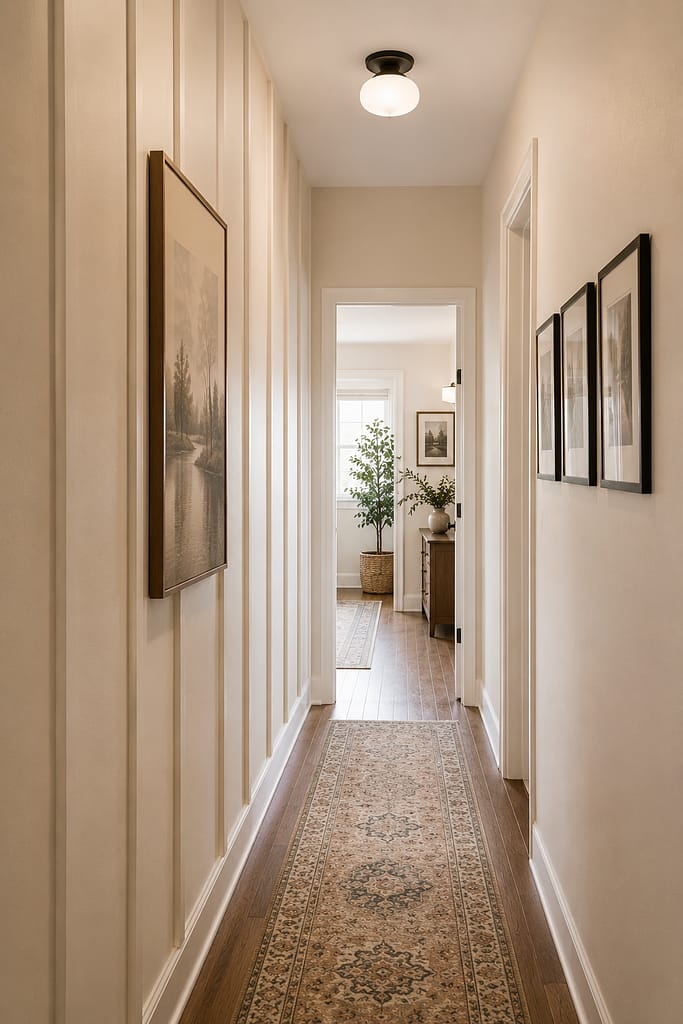
10. Use Light at More Than One Point
A single ceiling fixture in the middle of a long corridor can leave both ends in shadow, making the hall feel narrower and more tunnel-like. Multiple low-profile ceiling lights or appropriately placed sconces can spread illumination more evenly along the route. Keep fixtures relatively compact so they don’t visually crowd the passage. Warm-white lighting generally feels inviting, but the main goal is avoiding harsh bright spots surrounded by darkness. Even illumination lets you see the full width of the hall more clearly.
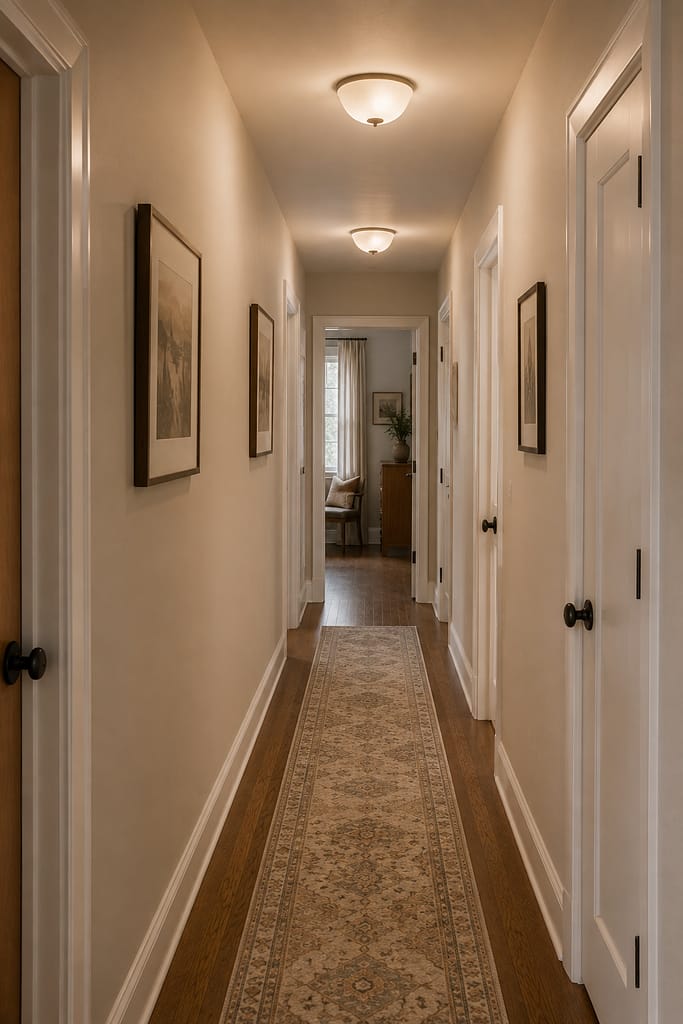
11. Use Sconces With Minimal Projection
Wall sconces can work in a narrow hallway, but choose designs that sit close to the wall. Deep arms, large shades, or fixtures placed around shoulder height can feel intrusive even if they technically fit. Slim uplights, compact cylinders, or shallow shaded sconces are easier to live with. Place them where door openings won’t conflict and where they can wash the wall with light. Illuminating the wall itself makes the boundary feel softer than leaving it in deep shadow.

Pro tip: Before choosing sconces, hold a cardboard box against the wall at the fixture’s planned depth. Walk past it several times to see whether that projection feels comfortable in real life.
12. Keep Storage on Only One Side
A narrow hallway becomes uncomfortable quickly when both walls start collecting storage. Choose one side for any necessary shoe cabinets, hooks, or shallow shelving, then keep the opposite wall mostly flat. This creates an obvious clear side for movement and prevents the corridor from feeling pinched in the middle. If the storage side includes coats, account for the thickness of hanging clothing—not just the hook itself. A two-inch hook can become a much deeper obstacle once a winter coat is hanging from it.

13. Choose Closed Storage Over Open Clutter
Open shelves make every shoe, bag, and cable part of the visual landscape. In a small narrow hallway, that extra detail can make the space feel busier and therefore tighter. If storage is unavoidable, a shallow closed cabinet in a color close to the wall is often calmer. Keep the top mostly empty and avoid decorating it like a full console. Closed storage lets the eye travel along one clean surface instead of stopping at every object sticking out from a shelf.

14. Use a Narrow Boho Look Through Texture, Not Bulk
A narrow boho hallway can still feel warm without baskets, oversized plants, and layered furniture filling the floor. Bring in the style through a faded runner, flat woven wall hanging, warm wood frames, and one or two earthy colors instead. Texture reads visually without necessarily taking up physical space. Avoid large floor baskets unless the hallway genuinely has room for them. This creates cozy narrow hallway decor that feels collected while respecting the corridor’s basic job: getting people comfortably from one room to another.

15. Choose One Wall for Stronger Color
If you love color but worry that dark paint will close in the corridor, concentrate the stronger tone on one wall rather than both. A muted olive, dusty blue, clay, or deeper greige can add personality while the opposing wall stays lighter and reflective. The result creates depth without forming a dark tunnel. This works best where the painted wall receives at least some light. Keep doors and trim relatively quiet so the contrast looks deliberate rather than chopped up.
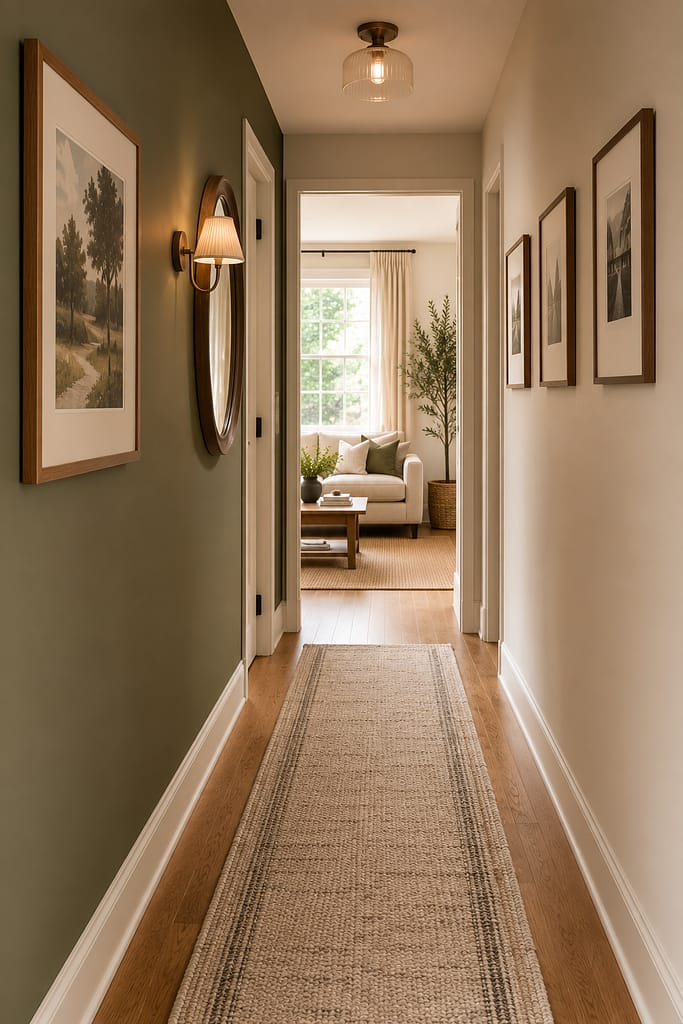
Budget tip: If you’re unsure about a darker hallway color, paint a large removable sample board instead of testing a tiny swatch. Move it down the corridor during the day to see how the shade behaves in different light.
16. Skip Furniture Entirely in the Tightest Sections
Sometimes the best narrow hallway idea is simply not adding furniture. If the corridor is already tight, a console or bench won’t become useful just because it’s marketed as “slim.” Use wall art, paint, lighting, and a runner to create the finished look, then save storage for a wider entry or nearby room. Empty floor space isn’t wasted space in a corridor—it’s circulation. Keeping that route clear often makes the whole home feel easier to move through.

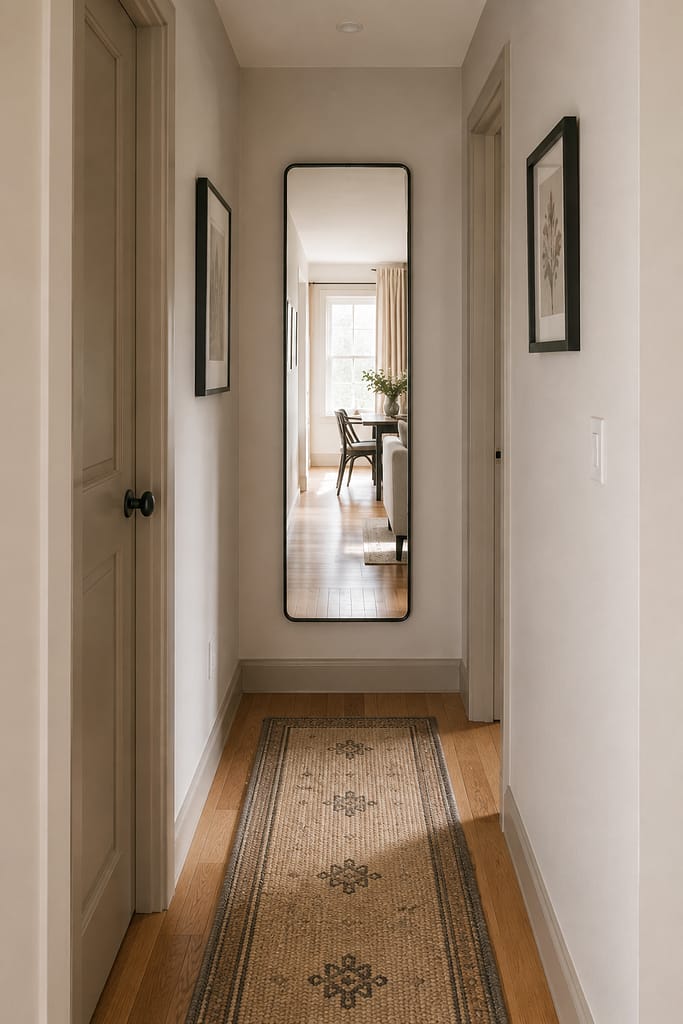
17. Use a Tall Slim Mirror at the End of a Short Corridor
A mirror placed at the end of a short hallway can visually extend the space because the reflection creates an apparent continuation beyond the wall. A tall rectangular design works especially well because it also draws the eye upward. Make sure the reflection is pleasant—a doorway, artwork, or brighter room is better than a storage closet. Use a secure mounting method appropriate for the mirror and wall, especially in a high-traffic corridor where accidental bumps are more likely.
18. Edit the Hallway From Walking Height
A narrow corridor should be judged while moving through it, not only from a styled photograph. Walk the entire route and notice where your shoulders, bags, hands, and clothing naturally travel. Remove anything that catches you, sticks out unnecessarily, or makes the path feel visually busy. Then look from both ends: if several dark pieces cluster on one side, spread or simplify them. The finished space should feel easy to pass through first, with the decorating supporting that function rather than competing with it.
Frequently Asked Questions
How much walking space should I leave in a narrow hallway?
There isn’t one practical width that suits every existing home, but the path should let you walk normally without turning sideways or brushing furniture. Test the route while carrying something bulky, opening nearby doors, and passing another person if that happens regularly in your household.
What furniture is best for a narrow hallway?
Very shallow consoles, slim shoe cabinets, and compact wall-adjacent storage are the safest options where the hall has enough width. If a piece forces you to alter how you walk through the corridor, skip it and use flat wall decor instead.
What paint colors make a narrow hallway feel bigger?
Light warm neutrals, soft off-whites, pale greiges, and muted light colors tend to reflect available light and keep the walls visually quiet. Darker colors can still work as an accent on one wall or the far end if you want more depth without creating a fully enclosed feeling.
How can renters decorate a narrow apartment hallway?
Use a low-pile runner, removable artwork systems where appropriate, freestanding shallow storage, leaning mirrors in safe locations, and removable decor that doesn’t interfere with the walkway. Always follow your lease and the product instructions before using adhesive hooks or strips on painted walls.
Should a narrow hallway have a runner?
It can, provided the rug doesn’t interfere with door swings or make the route feel visually packed. A runner that leaves visible flooring on both sides usually looks lighter than one that nearly fills the entire corridor.
Make the Width You Have Work Harder
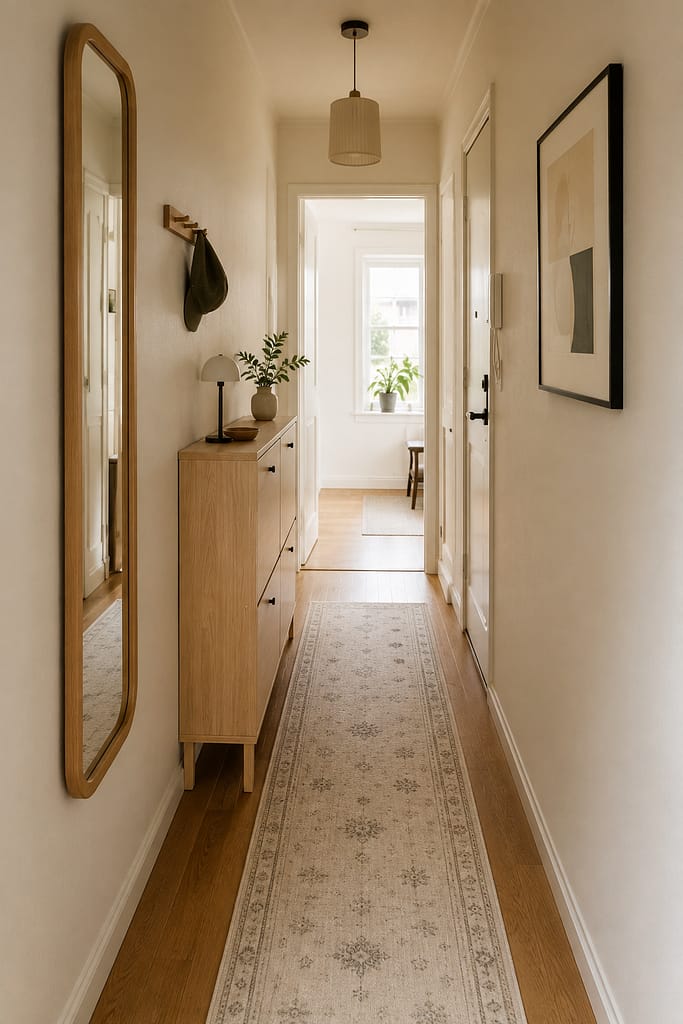
A narrow hallway doesn’t need to become a miniature room. Its first job is still circulation, and the best decorating choices protect that.
Keep the floor visible, use light and mirrors strategically, choose flat wall decor, and be suspicious of any furniture that sticks too far into the walking path. Once the corridor feels comfortable to move through, the decorative part gets much easier.
Save or pin these narrow hallway ideas for later, especially if you’re trying to make a tight corridor feel brighter, calmer, and more spacious without rebuilding it.