
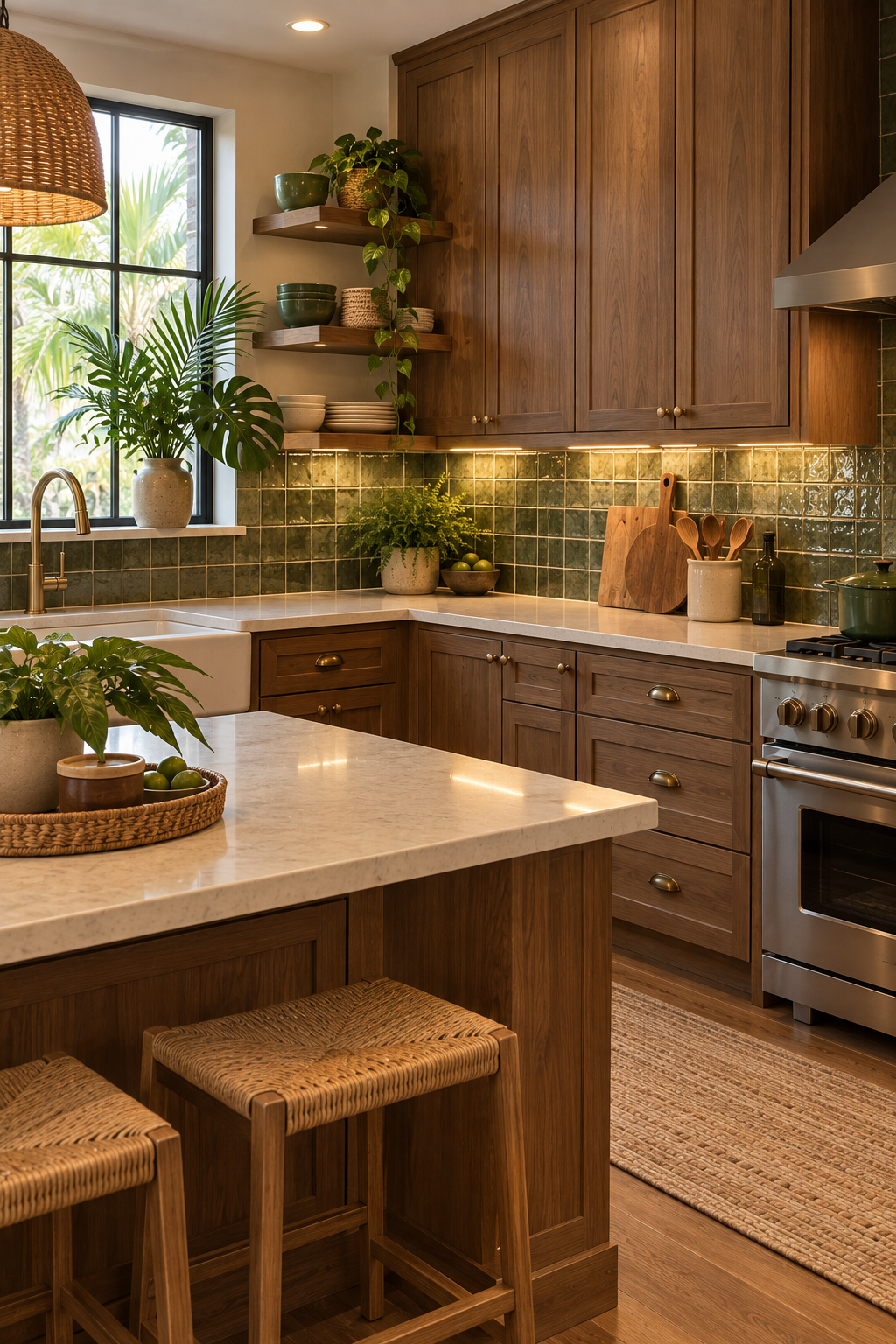
13 Tropical Kitchen Ideas for a Fresh and Relaxed Interior
A tropical kitchen doesn’t need palm-tree wallpaper, novelty decorations, or a collection of accessories shaped like fruit. The most inviting versions take their cues from nature: warm wood, leafy greens, woven textures, soft neutrals, and plenty of light.
The style can work in an ordinary American kitchen with standard cabinetry and a modest footprint. You don’t need a complete renovation, either. A few changes to the cabinet color, backsplash, lighting, or accessories can introduce a relaxed, nature-inspired feeling.
The key is balance. Natural materials bring warmth, green adds freshness, and lighter surfaces keep the room from feeling heavy. Choose a few elements that complement one another rather than turning every surface into a separate statement.
These 13 tropical kitchen ideas explore ways to bring that look into a practical, comfortable home.
1. Pair Warm Wood With Leafy Green
Warm wood and leafy green create a natural foundation for tropical kitchen design. Medium-toned oak or walnut cabinetry brings depth, while a muted green backsplash introduces a fresh contrast.
Keep the countertops in a light, warm neutral so the wood grain and tile remain distinct. This combination works particularly well when the cabinetry has simple lines and the backsplash provides the main decorative detail.
Before choosing materials, compare wood and tile samples together. Walnut can lean red or brown, while green tile may have yellow, gray, or blue undertones. A coordinated combination will look more intentional than two finishes that happen to be individually attractive.
If replacing the backsplash isn’t practical, introduce green through ceramics or a small plant instead. You can create the same general color relationship without a permanent project.
2. Paint Lower Cabinets Muted Green
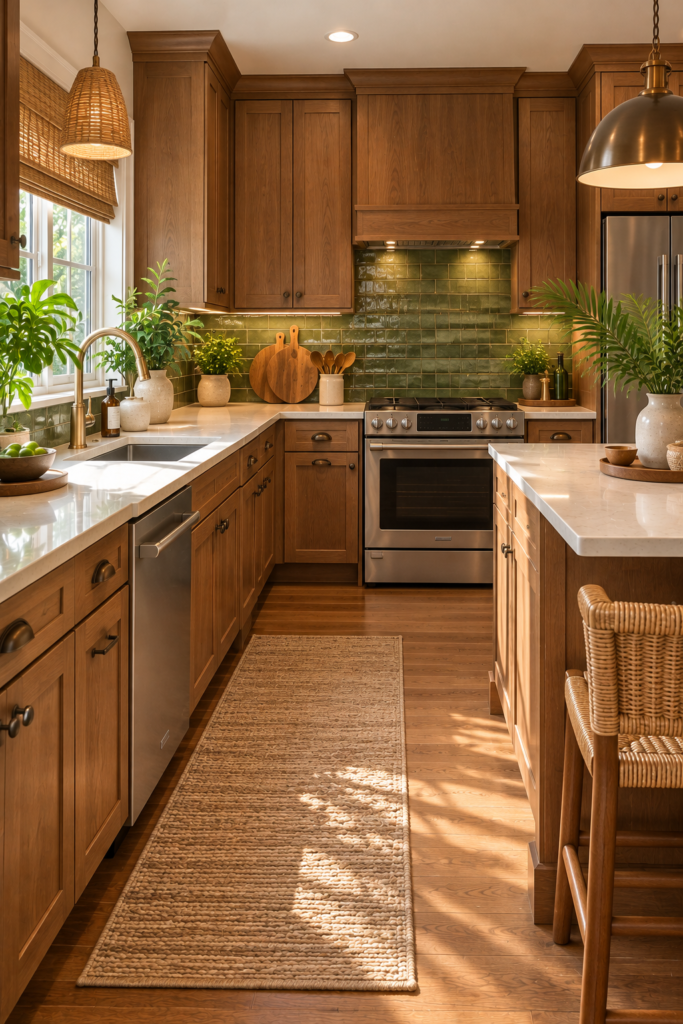
Painting the lower cabinets muted green is a practical way to bring tropical color into a kitchen while retaining a light upper half.
Olive, moss, and subdued leafy green work well with warm cream upper cabinets, natural wood accents, and neutral countertops. The contrast gives the room character without requiring a dramatic patterned backsplash.
Choose a green that suits the kitchen’s natural light. A shade that looks soft beside a bright window may appear darker under evening lighting, so compare paint samples in both conditions.
Preparation matters when painting existing cabinets. Clean the surfaces, assess the existing finish, and follow the coating manufacturer’s instructions for sanding, priming, and application.
Keep the remaining colors relatively restrained. If the lower cabinets provide the main color statement, plain tile and simple hardware can help the room feel balanced.
For another color direction, explore these mint green kitchen ideas.
3. Add Botanical Tile
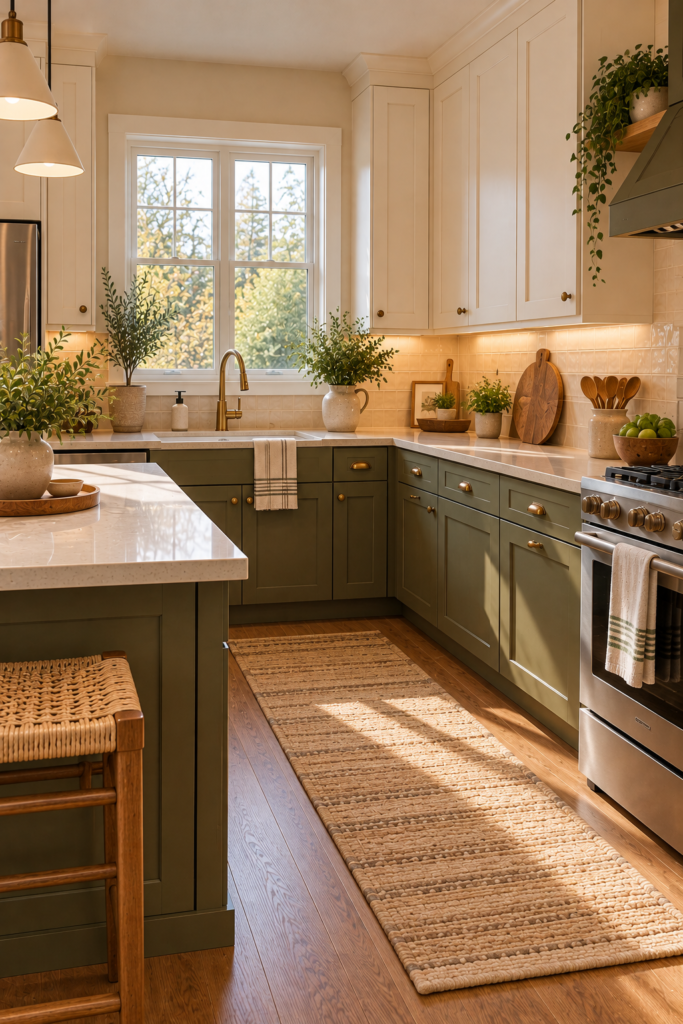
A botanical-inspired backsplash can provide a clear tropical focal point without requiring the whole kitchen to follow a leafy theme.
Look for subtle leaf patterns or tiles with natural-looking color variation. Muted olive, cream, dusty green, and warm brown can complement wood cabinetry without competing with it.
Think about where the pattern will have the most impact. A backsplash behind the sink or along a single preparation area can be enough, particularly in a smaller kitchen.
Check that the tile is suitable for the intended location and that the substrate, installation method, and grout are appropriate for the kitchen environment. Near cooking areas, consider cleaning requirements as well as appearance.
If the cabinets and flooring already have strong patterns or visible grain, choose a simpler botanical design. The aim is to create one memorable detail, not make every surface compete for attention.
4. Bring in Woven Counter Stools
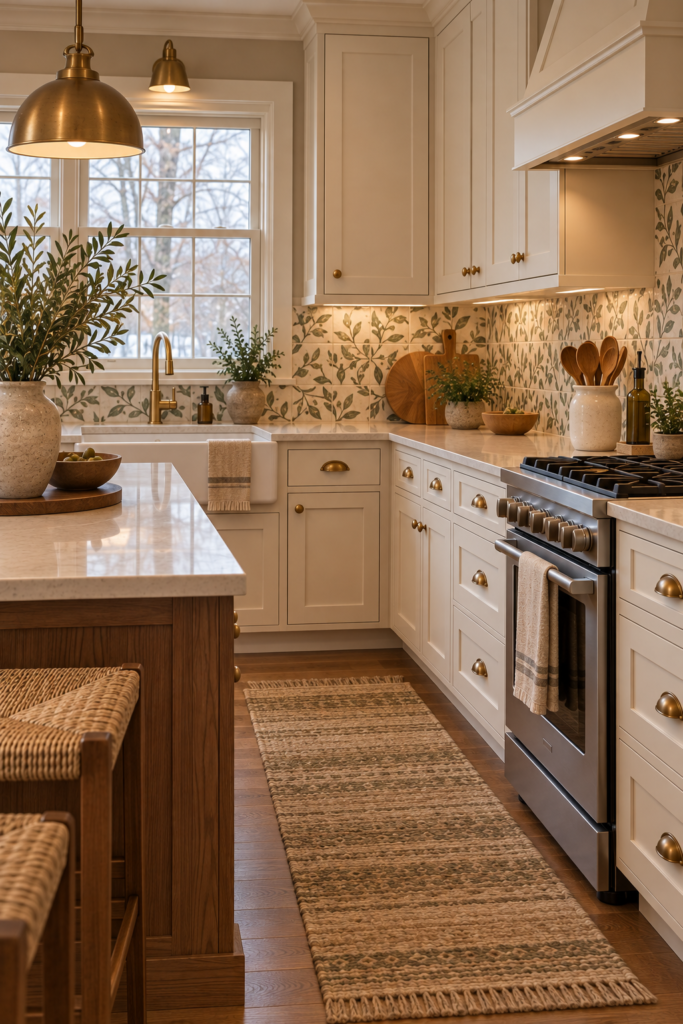
Woven counter stools add texture to a tropical kitchen without requiring a change to the permanent finishes.
Choose sturdy stools with woven seats or backs, then pair them with a wood island or peninsula. Natural fibers and wood work especially well alongside green cabinetry, cream counters, and understated metal hardware.
Comfort and fit matter as much as appearance. Check the counter height, available legroom, seat dimensions, and space needed to move the stools in and out.
Look for stable construction and a seat that feels comfortable for the way the kitchen will be used. Natural woven materials also need appropriate care, particularly near spills, humidity, and cooking areas.
Keep the stools outside the main work route so they don’t obstruct access to appliances or cabinets. A few well-chosen seats can soften the room without making circulation awkward.
5. Add Realistic Greenery
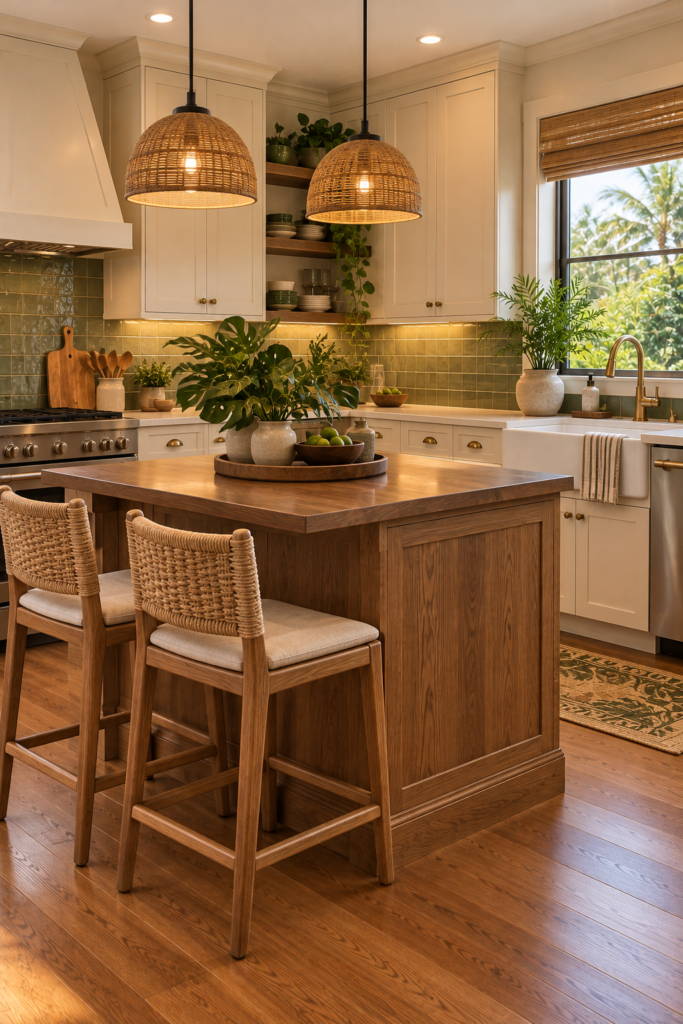
Plants can strengthen the connection to nature that makes tropical interiors appealing, but the best choice depends on the kitchen’s actual conditions.
A plant near a bright window may be suitable for a different variety than one placed on a dim shelf. Consider available daylight, temperature changes, and the plant’s watering requirements before choosing where it will live.
A medium-sized plant can work near a window, while a smaller one may fit on a dry counter away from food preparation. You don’t need greenery on every shelf to establish the look.
Use a stable pot with suitable drainage management, and protect wood surfaces from moisture. Keep plants away from cooking heat and position watering where it won’t reach electrical equipment.
If the kitchen doesn’t offer suitable conditions for a live plant, introduce botanical color through a ceramic planter or another nature-inspired accessory instead.
6. Use Warm Cream Instead of Bright White
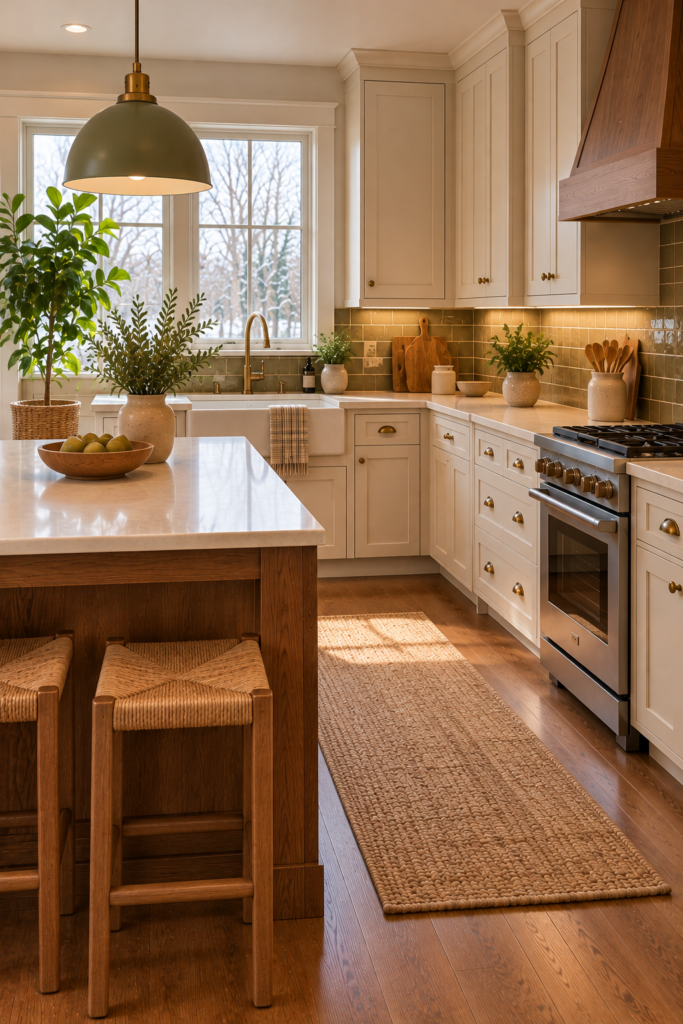
Warm cream provides a softer background for the wood, green, and natural textures associated with tropical kitchens.
Cream walls, pale countertops, and light neutral tile can help balance darker cabinetry without making the room feel stark. They also allow woven accessories and leafy plants to stand out.
Choose the undertone carefully. Some creams lean yellow, while others appear more beige or neutral. Compare paint and countertop samples beside the wood and green finishes rather than selecting each independently.
A light background is especially useful in a compact kitchen where dark cabinets already occupy much of the visual space.
You don’t need every surface to be the same shade. Slight variations in wall color, tile, and counters can add depth while preserving a calm overall appearance.
7. Add a Rattan Pendant Carefully
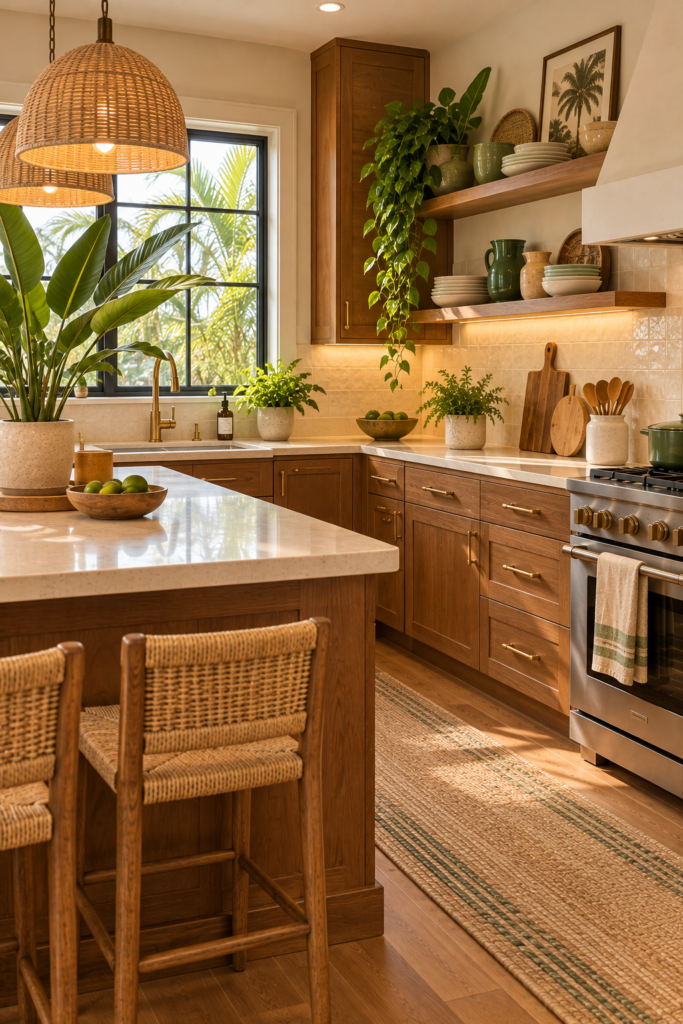
A woven pendant introduces natural texture overhead and can become a focal point above a dining nook or suitable island.
Choose a fixture designed and rated for the intended location. Its size should relate to the table or work surface, ceiling height, and surrounding cabinetry rather than overpowering the room.
Consider the shade’s material and construction. A woven appearance doesn’t automatically make a fixture appropriate for every kitchen location, particularly where heat, moisture, or cleaning requirements are relevant.
The installation should provide suitable support and safe clearance. Electrical connections and mounting need to follow the manufacturer’s instructions and applicable requirements.
Use the pendant as part of a broader lighting plan. General lighting and task lighting are still important for food preparation and cleanup.
If a woven fixture isn’t suitable for the location, natural wood details or woven seating can provide similar texture without introducing an overhead obstruction.
8. Use Green Handmade-Look Tile
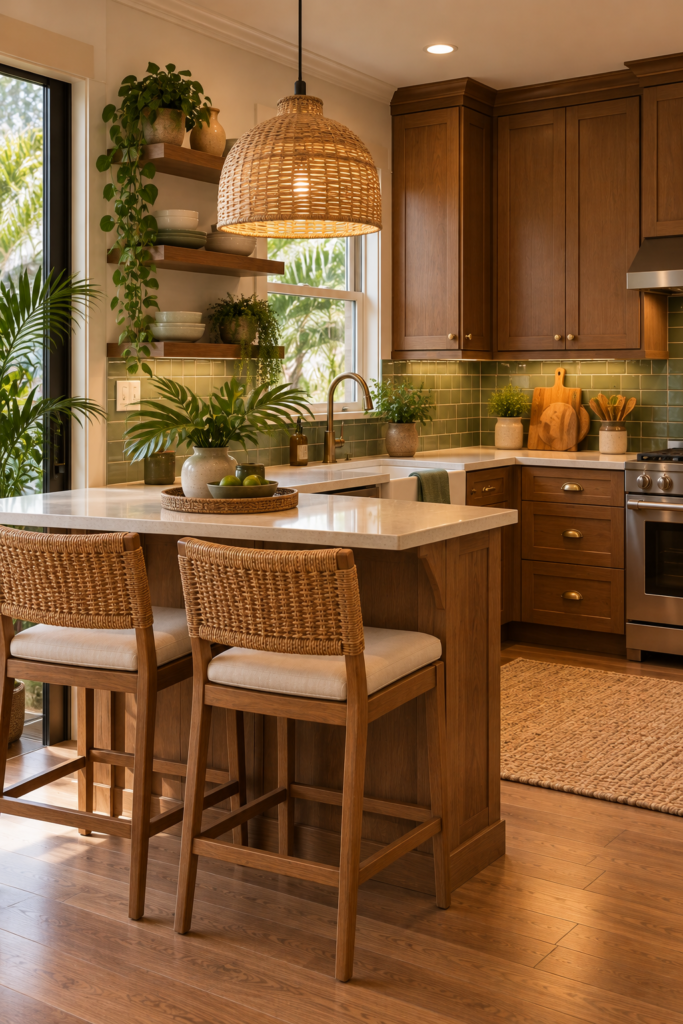
Green tile can introduce depth through both color and surface variation. A muted emerald, moss, or leafy olive glaze works particularly well with walnut cabinetry and warm neutral countertops.
Handmade-look tiles often have subtle variations in tone or surface appearance, giving the backsplash more character than a completely uniform finish.
Choose a tile size and layout that suit the scale of the kitchen. Simple rectangular tiles can feel relaxed and traditional, while smaller formats create a more detailed surface.
Consider grout color as part of the overall design. A close match produces a quieter appearance, while contrasting grout makes the pattern more prominent.
Before buying, confirm that the tile is suitable for the intended wall and that its cleaning and maintenance requirements fit your cooking habits.
Because the tile provides color and texture, keep nearby accessories relatively simple. A few ceramics and natural wood details are usually enough.
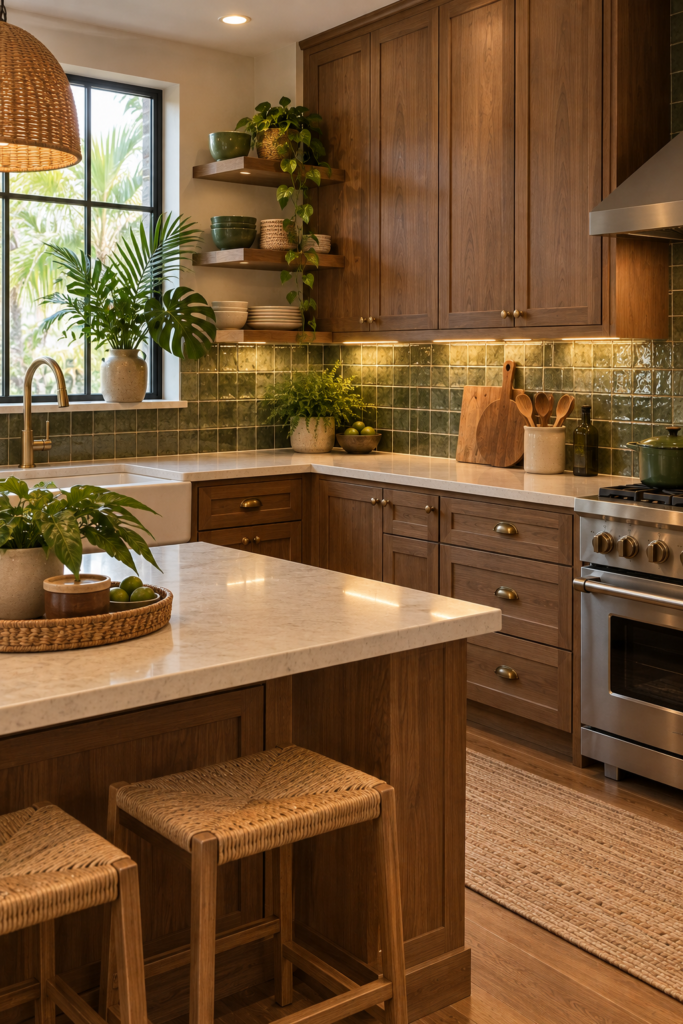
9. Create a Tropical Breakfast Nook
A breakfast nook can make a tropical-inspired kitchen feel relaxed and welcoming without requiring a large dining area.
Consider a compact round wood table, woven chairs, and simple cushions in cream or another light neutral. A small plant near a suitable window can connect the seating area to the rest of the kitchen.
Choose furniture that fits the actual layout. Measure the space needed to pull out chairs and move between the table, cabinets, and appliances.
A round table may work well in a corner where a rectangular table would create awkward edges, while a built-in bench can make efficient use of a narrow wall.
Keep the surrounding colors consistent with the kitchen’s main palette. Warm wood, soft neutrals, and one green accent can create a cohesive nook without making it feel overly decorated.
Lighting should illuminate the table comfortably while maintaining clear sightlines and safe movement around the seating.
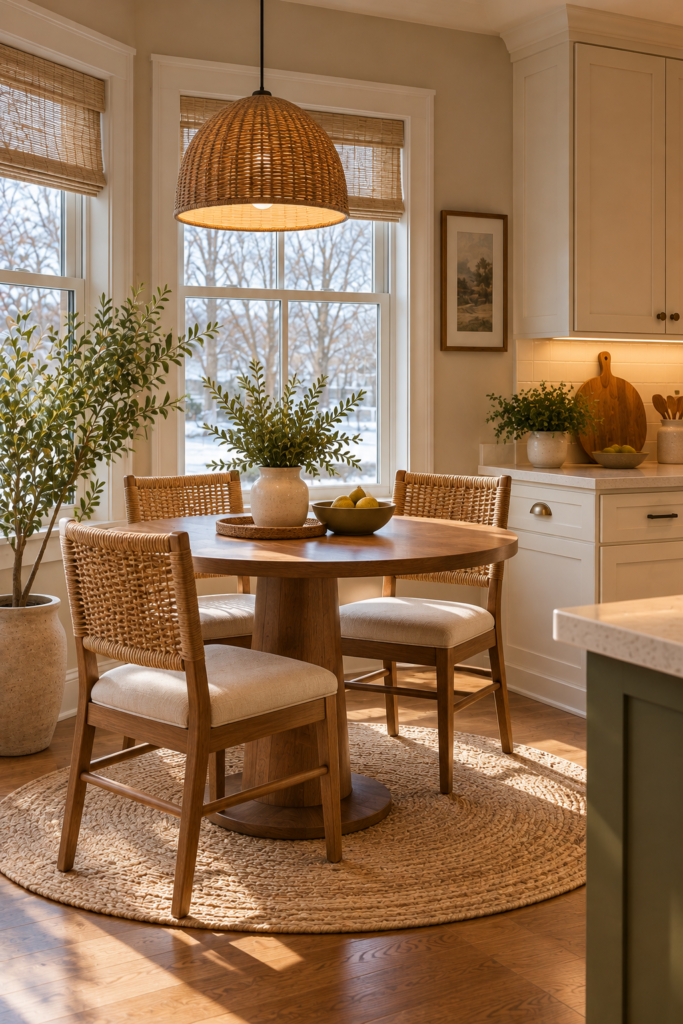
10. Add Tropical Color Through Accessories
Accessories are a useful way to explore tropical style without painting cabinets or replacing tile.
Try muted-green ceramics, a leafy fabric accent, a warm-brown bowl, or a small woven basket. These pieces introduce color and texture while leaving the existing kitchen finishes unchanged.
This approach is particularly practical for renters or anyone who prefers reversible decorating changes.
Start with the colors already present in the room. If the cabinetry is cream and the countertops are warm beige, green and natural wood accents may provide enough contrast.
Avoid collecting too many unrelated objects. A small group of coordinated accessories can make a stronger impression than a crowded countertop.
Keep textiles and woven materials away from cooking heat, and make sure accessories don’t obstruct food preparation, sink use, or appliance operation.
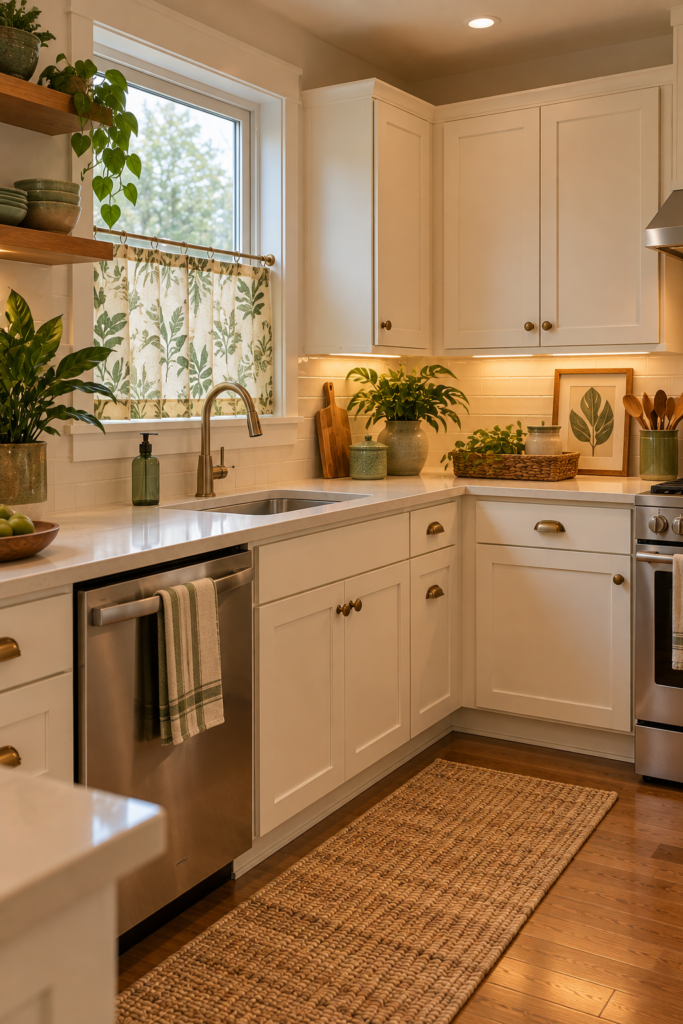
11. Create a Dark Tropical Kitchen
Tropical design can also work with deeper colors. Forest-green cabinetry, walnut accents, warm cream counters, and restrained brass details create a richer interpretation of the style.
The contrast between deep green and light surfaces helps the wood grain remain visible while preventing the room from becoming uniformly dark.
Lighting is particularly important. Combine suitable general lighting with task lighting over preparation areas and beneath upper cabinets where needed.
Before committing to deep cabinetry, consider the room’s daylight, size, and existing finishes. In a small or dim kitchen, using forest green on lower cabinets or an island may provide the desired character with less visual weight.
Choose metal finishes that complement the palette rather than introducing several competing accents.
The result should feel layered and inviting. Natural materials and good lighting matter more than filling the room with tropical-themed objects.
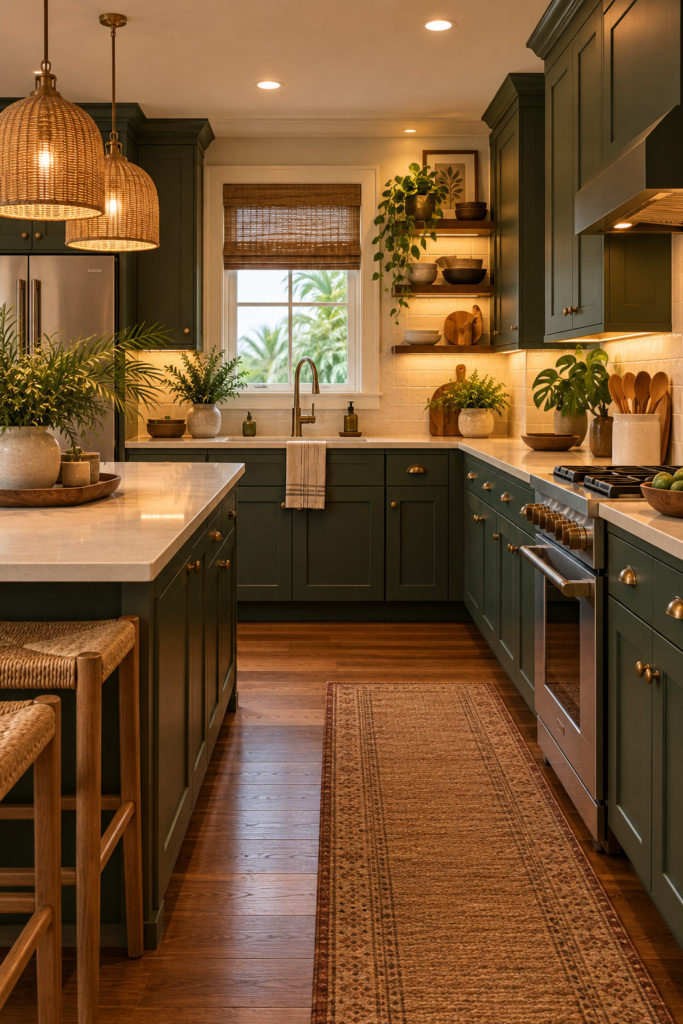
12. Create a Modern Tropical Kitchen
A modern tropical kitchen combines natural materials with clean lines and restrained decoration.
Flat-panel walnut cabinetry, a muted-green backsplash, and warm cream counters provide a straightforward foundation. A small number of carefully chosen accessories can add personality without creating clutter.
Consider where wood grain will be most visible and let it provide much of the texture. Simple hardware and uncluttered work surfaces reinforce the contemporary look.
A larger plant can complement the room if the available light and space suit it. Otherwise, a smaller botanical accent can provide a similar connection to nature.
Pay attention to storage and daily use. Keep frequently used equipment accessible, preserve clear preparation surfaces, and choose finishes that suit the amount of cooking the kitchen sees.
For a related light-and-natural palette, see these coastal kitchen design ideas.
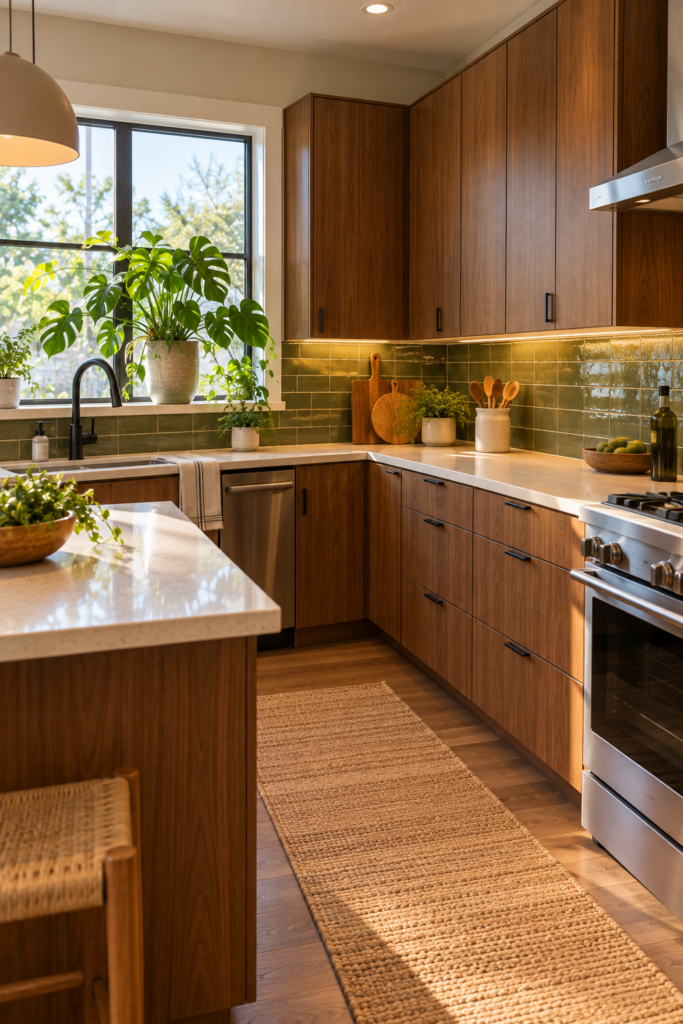
13. Layer a Complete Tropical Kitchen Palette
A complete tropical palette brings wood, cream, muted green, woven texture, and a restrained metal accent into one coordinated scheme.
Start with the largest surfaces, such as cabinetry, walls, counters, and flooring. Then introduce smaller details through ceramics, lighting, plants, or a simple textile.
Choose one dominant wood finish and a clear main color. The remaining elements should support those choices rather than compete with them.
For example, medium wood and warm cream can provide the foundation, while olive appears on the backsplash and aged brass adds a small amount of warmth. Another kitchen might use deep green cabinets with pale counters and natural woven seating.
Compare finishes in the kitchen’s actual lighting before committing to permanent changes. Colors can look different beside one another than they do in isolation.
Leave enough open counter space for everyday tasks. A tropical kitchen should feel connected to nature and easy to use, not crowded with accessories.
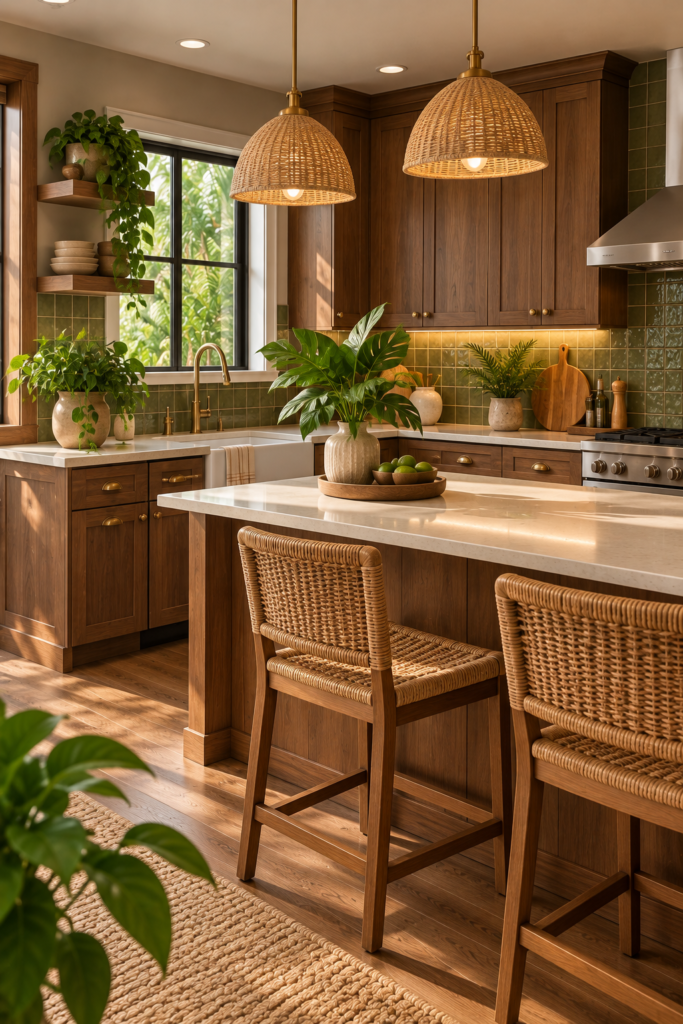
How to Make a Kitchen Look Tropical Without Making It Themed
Focus on materials rather than novelty decorations. Warm wood, natural green, woven textures, and subtle botanical patterns can create the desired feeling without relying on obvious tropical motifs.
Choose one or two features to lead the design. That might be green cabinetry, a botanical backsplash, or a combination of wood and woven seating.
Keep the rest of the kitchen relatively simple so the natural materials remain visible. Real plants can help when conditions support them, but they aren’t essential to the style.
Tropical Kitchen Color Ideas
Warm cream with walnut and olive creates a balanced, nature-inspired combination. Forest green with cream and aged brass offers a deeper look, while dusty blue-green with medium oak feels softer and lighter.
Mushroom taupe and warm wood can provide a neutral foundation for leafy accents. Choose colors that share compatible undertones, and compare samples in both daylight and evening lighting.
The aim is a coordinated palette, not an exact match between every surface.
Tropical Kitchen Safety
Keep plants, woven materials, and textiles away from cooking heat and other significant heat sources. Maintain clear walkways and ensure stools, rugs, and accessories don’t obstruct appliance doors or the main work route.
Secure shelving and pendant fixtures using supports appropriate for the mounting surface and intended load. Follow appliance clearance requirements and maintain suitable ventilation.
Keep watering away from electrical equipment and protect moisture-sensitive surfaces. Electrical, structural, plumbing, gas, and ventilation work should be assessed and completed by appropriately qualified professionals.
Final Thoughts
The best tropical kitchen ideas rely on natural materials and a relaxed balance of color rather than novelty decorations. Warm wood, muted green, soft cream, woven textures, and carefully chosen lighting can bring freshness and character to an everyday kitchen.
You might start with painted lower cabinets, a green backsplash, woven stools, or a few coordinated accessories. Choose the changes that suit your space, preserve useful work surfaces, and let the materials do most of the decorating.
A tropical-inspired kitchen should feel fresh, comfortable, and connected to nature while remaining practical for everyday cooking.
