
14 Corner Kitchen Cabinet Ideas: Smart Solutions for Awkward Spaces
Kitchen corners can be some of the hardest areas to organize. Deep shelves, awkward angles, and blind cabinets often make everyday cookware and pantry items difficult to reach. The right storage solution can make these spaces easier to use without requiring a complete kitchen renovation.
The best approach depends on the cabinet’s shape, the items you plan to store, and how much access you need. Some kitchens benefit from a simple rotating shelf, while others need pull-out hardware or a different cabinet layout. Before choosing a solution, consider how the cabinet opens, where its hinges sit, and whether the existing interior can accommodate an organizer.
These corner kitchen cabinet ideas cover practical ways to improve access, organize supplies, and make better use of the space you already have.
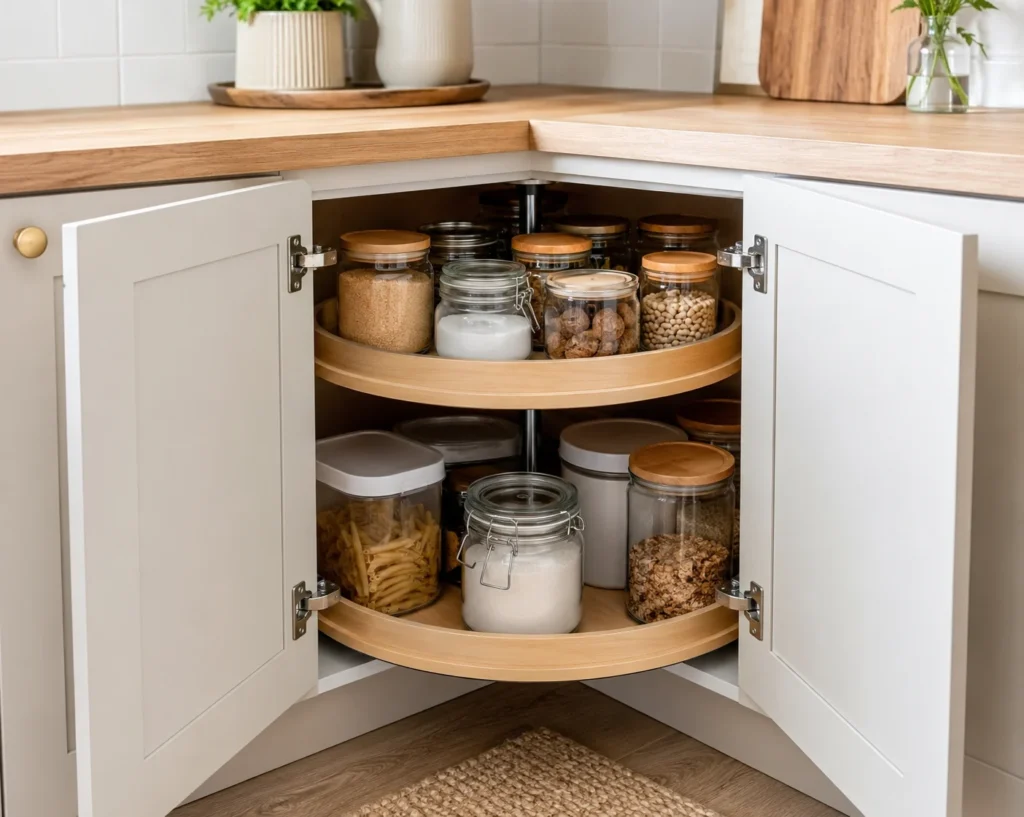
1. Install a Full-Circle Lazy Susan
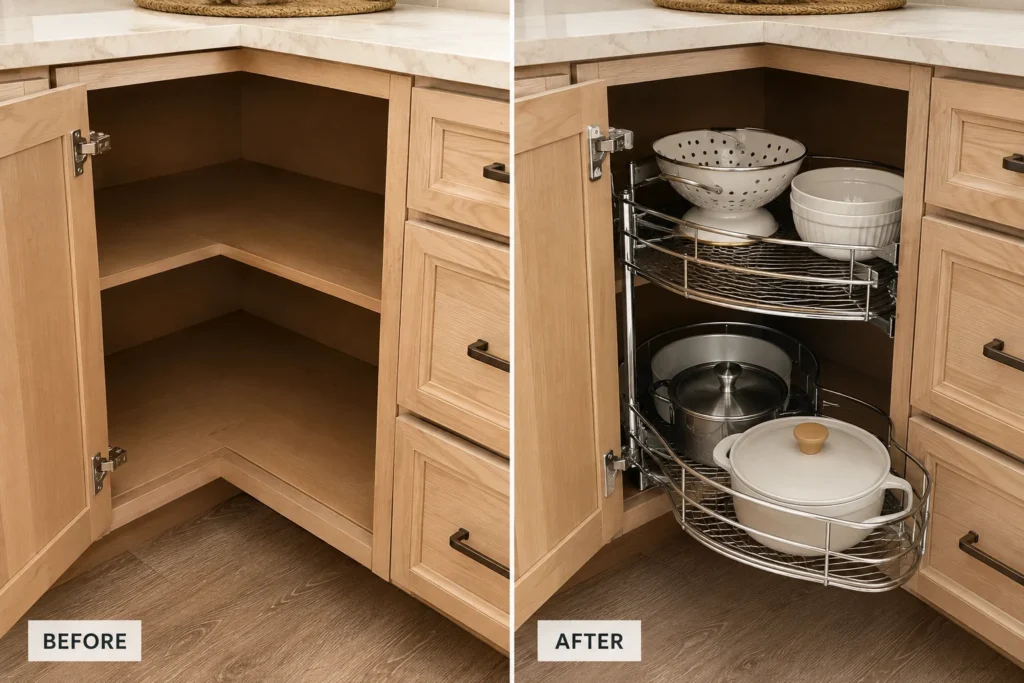
A full-circle Lazy Susan is a rotating shelf that brings stored items within reach with a simple turn. It works particularly well in corner cabinets designed to accommodate a rotating carousel, making it easier to retrieve jars, containers, and other everyday kitchen essentials.
A two-tier model can make better use of the cabinet’s vertical space, provided there is enough clearance between the shelves and the cabinet frame. Before buying, check the interior dimensions, opening width, and available clearance around hinges or center supports. Choose a sturdy model that rotates smoothly and has a rim to help keep items in place.
Use the carousel for lightweight pantry containers, condiments, or smaller kitchen supplies. Avoid overcrowding the shelves, since tightly packed items can obstruct rotation and make the organizer harder to use.
2. Try a Kidney-Shaped or D-Shaped Susan
When a full-circle carousel leaves awkward gaps or interferes with the cabinet opening, a kidney-shaped or D-shaped turntable may provide a better fit. These designs have a modified outline intended for particular corner cabinet configurations, allowing the rotating shelf to work around the cabinet’s shape.
The right design depends on the cabinet construction. Some models are intended for specific corner openings, so compare the manufacturer’s fit requirements with your existing cabinet before purchasing. Pay attention to the door arrangement and the space needed for the shelves to turn freely.
This option is especially useful when you want the convenience of rotating storage without replacing the entire cabinet. Keep the most frequently used items toward the front of each shelf and avoid placing tall containers where they could catch against the cabinet frame.

3. Upgrade to a Pull-Out Corner System
A pull-out corner system brings stored items toward you instead of requiring you to reach deep into the cabinet. Depending on the design, shelves may slide, pivot, or move outward as the door opens, improving visibility and access to cookware and pantry supplies.
These systems vary considerably in their installation requirements. Some can fit existing cabinet boxes, while others require specific cabinet dimensions or modifications. Check the usable opening, hinge position, internal obstructions, and the manufacturer’s installation requirements before committing to a system.
A pull-out organizer is worth considering when you frequently use the cabinet and find a stationary shelf inconvenient. It can also be useful for heavier items that are awkward to retrieve from a deep corner, provided the system is designed to support their weight. For other ways to improve cabinet access, explore these kitchen cabinet storage ideas.
4. Consider a Magic Corner Pull-Out
A magic corner system is designed to bring storage from a blind corner into view through a linked arrangement of moving shelves or baskets. Opening the cabinet door activates the mechanism, allowing stored items to move outward so the back of the cabinet becomes easier to access.
The main advantage is improved access to space that might otherwise remain difficult to use. However, the mechanism needs to match the cabinet’s configuration, and its moving parts require sufficient clearance. Review the installation specifications and make sure the shelves suit the cookware or supplies you intend to store.
This solution is particularly worth considering when planning a kitchen remodel or replacing corner cabinetry. If you’re working with an existing cabinet, check whether a compatible retrofit model is available before assuming the entire unit needs to be replaced.

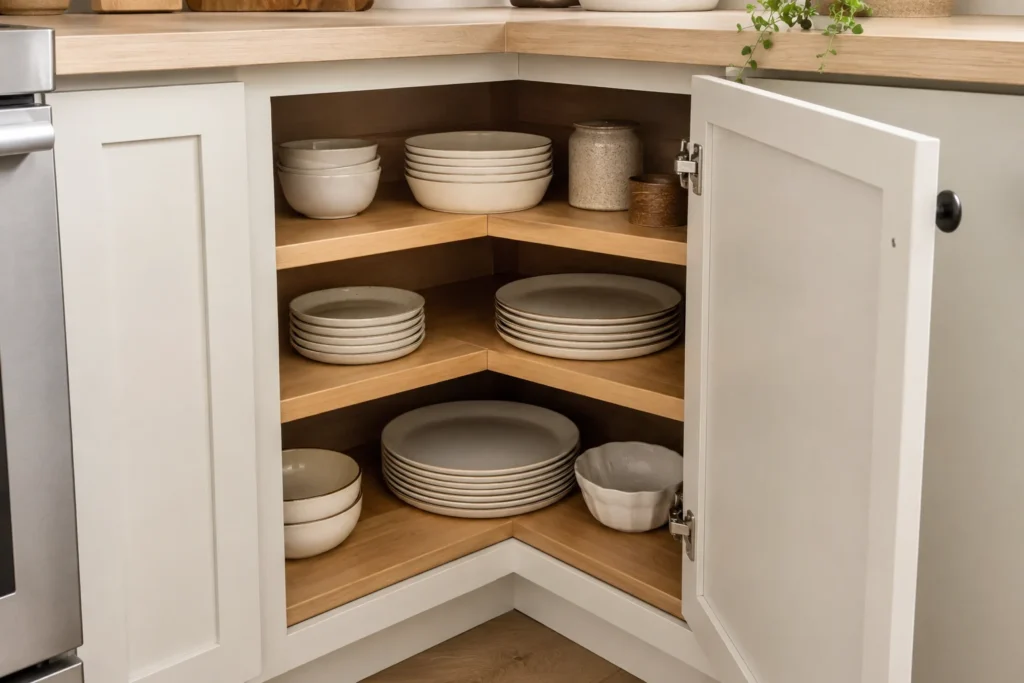
5. Use Pie-Cut Shelves for a Simple Fix
Pie-cut shelves are stationary shelves shaped to fit certain corner cabinet layouts. They provide a defined storage surface without the moving parts found in rotating or pull-out organizers.
Their simplicity can be an advantage if you prefer straightforward storage and want to avoid maintaining a more complicated mechanism. They can accommodate cookware, mixing bowls, and other kitchen items that fit comfortably on the shelves. The best arrangement depends on how the shelves align with the cabinet opening and how easily you can reach the back.
Before installing new shelves, check their dimensions and confirm that the supports are suitable for the intended load. Organize items by frequency of use, keeping everyday essentials near the opening. Because stationary shelves don’t bring their contents forward, avoid filling the deepest area with things you need regularly.
6. Add a Blind Corner Pull-Out Basket
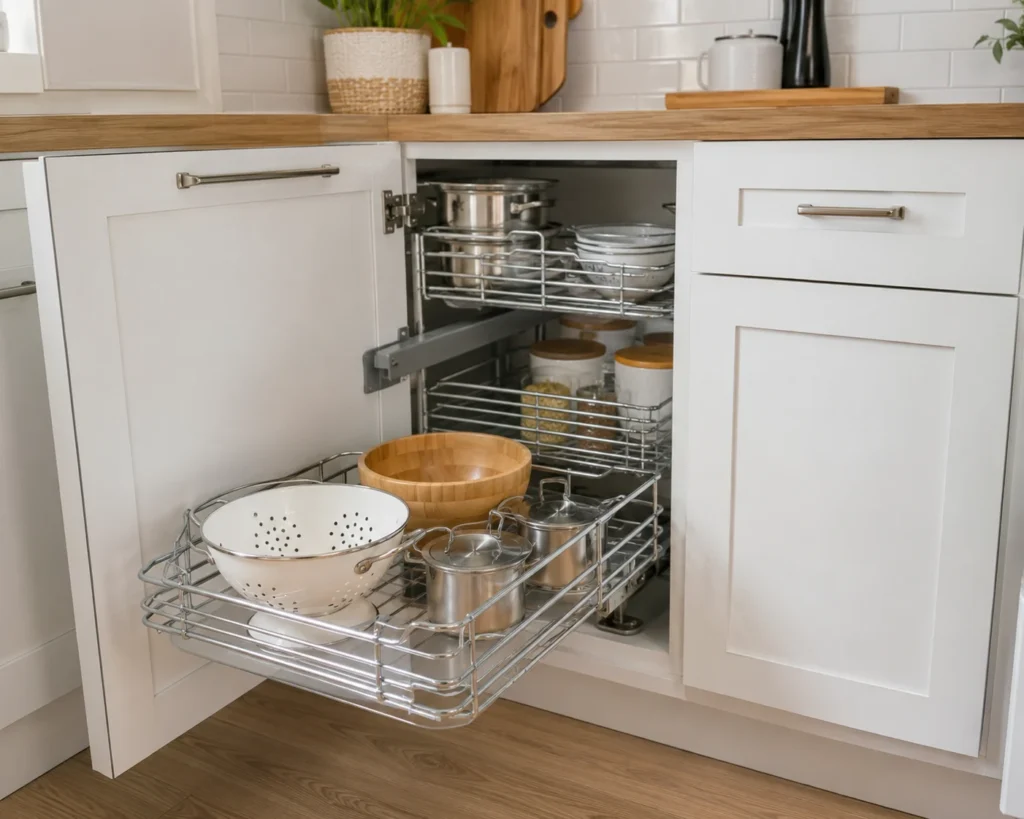
A blind corner cabinet extends behind an adjacent cabinet run, leaving part of its interior difficult to reach through the main opening. A purpose-built pull-out basket system can help by sliding out and moving forward, making previously hidden items more accessible.
These organizers come in different configurations, so compatibility matters more than appearance alone. Check the cabinet’s opening, interior depth, door hinges, and any plumbing or structural obstructions. Look for a design that suits the items you plan to store rather than choosing a basket that is too small or awkwardly shaped for your needs.
Wire baskets can be useful for kitchen supplies that benefit from visibility and airflow, while solid shelves may suit smaller objects that could slip through the openings. Avoid overfilling the mechanism, and choose a system with a suitable load rating for the items it will hold.
7. Convert the Corner Into a Mini Pantry
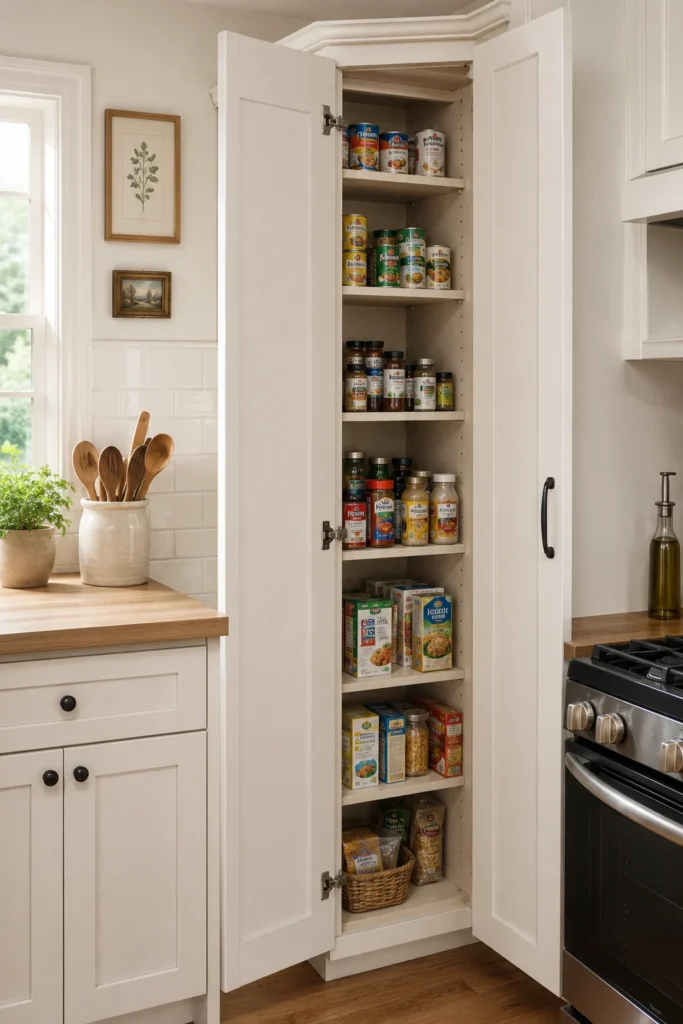
A tall corner cabinet can serve as a compact pantry for canned goods, packaged ingredients, and other kitchen staples. Adjustable shelves help accommodate different container heights, making the interior more flexible as your storage needs change.
Start by grouping the items you want to keep there. Cans and jars may need sturdy, easily reached shelves, while lighter boxed goods can occupy higher positions. Check whether the existing shelves can be repositioned and whether the cabinet door opens far enough to retrieve containers comfortably.
Use shallow bins or baskets to group smaller packets and prevent them from disappearing behind larger items. Keep heavier supplies at a comfortable lifting height rather than placing them overhead. Store food in appropriate sealed containers when needed, and leave enough space to see what you have before buying more.
8. Install Diagonal Corner Drawers
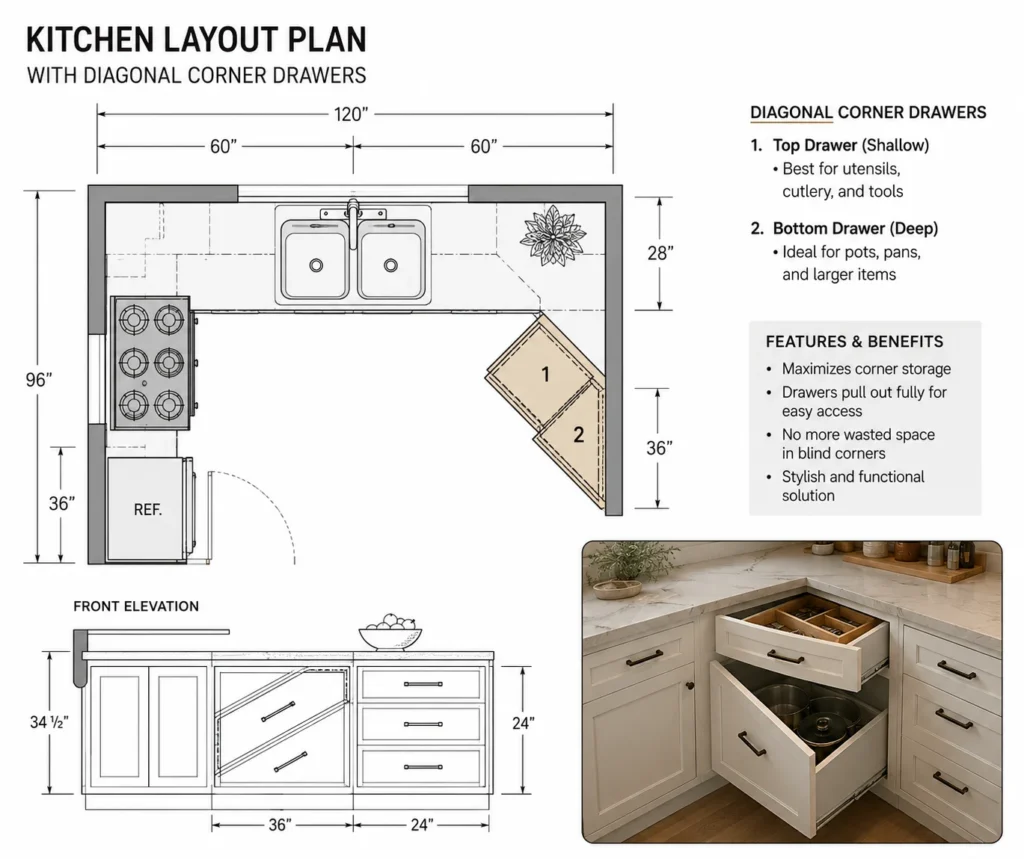
Diagonal corner drawers replace a conventional door-and-shelf arrangement with drawers that extend from the corner at an angle. Their top-down access makes it easier to see the contents without reaching into a deep cabinet.
This layout is usually easiest to plan when designing new cabinetry or undertaking a substantial remodel. The angled drawer fronts, cabinet boxes, and neighboring units need to work together, so converting an existing corner cabinet may not be practical.
Consider what you want to store before choosing the drawer configuration. Wide drawers can be useful for utensils, kitchen linens, and smaller cookware, while deeper drawers may suit pots and pans if their construction supports the load. Check how fully each drawer extends and make sure open drawers won’t interfere with nearby appliances or block the main walkway.

9. Use a Corner Cabinet for Small Appliances
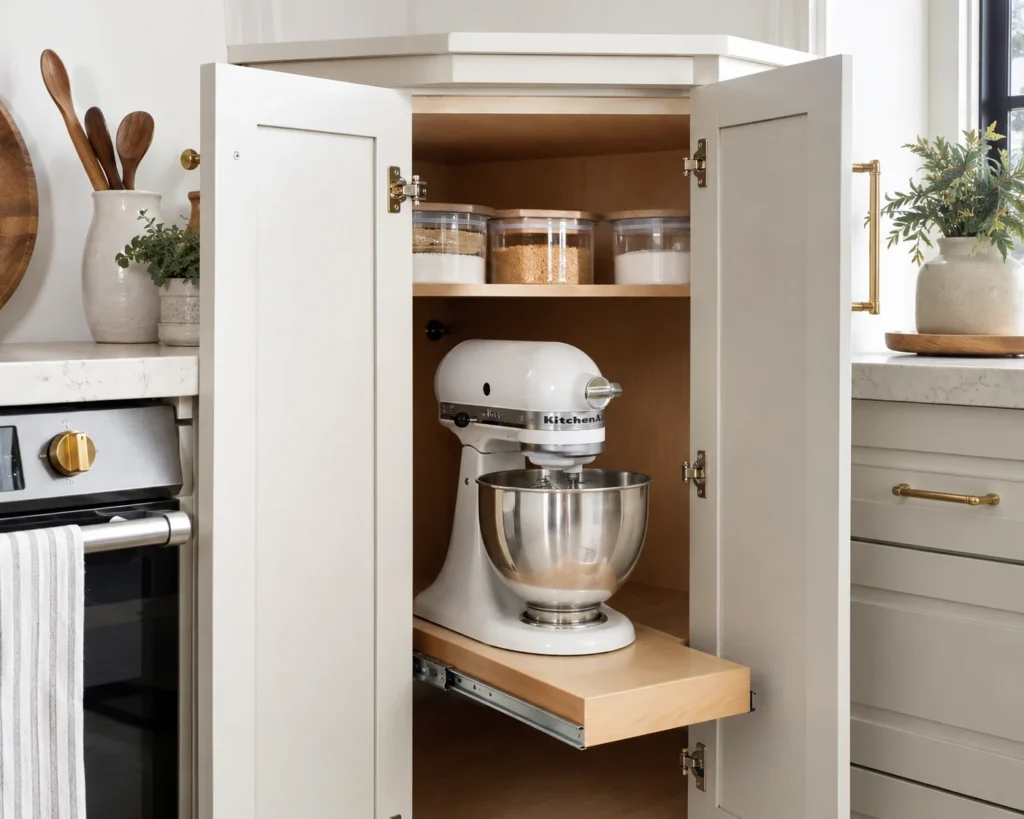
A corner cabinet can create a dedicated home for a coffee maker, toaster, or stand mixer, helping keep the main countertop clear. A cabinet with a suitable opening can conceal appliances when they’re not in use while keeping them close to the work area.
Consider the appliance’s weight, dimensions, and frequency of use. A pull-out shelf can make a heavy mixer easier to access, but it must be designed to support the appliance and extend safely. Check that the cabinet door, shelf, and appliance can move without colliding with nearby handles or counters.
Electrical access and ventilation are equally important. Make sure the appliance can be used according to its instructions, with adequate clearance from surrounding surfaces and a safe route for its cord. Don’t operate a hot appliance inside a closed cabinet or allow steam to collect beneath shelves.
10. Plan Corner Uppers for Lightweight Items Only
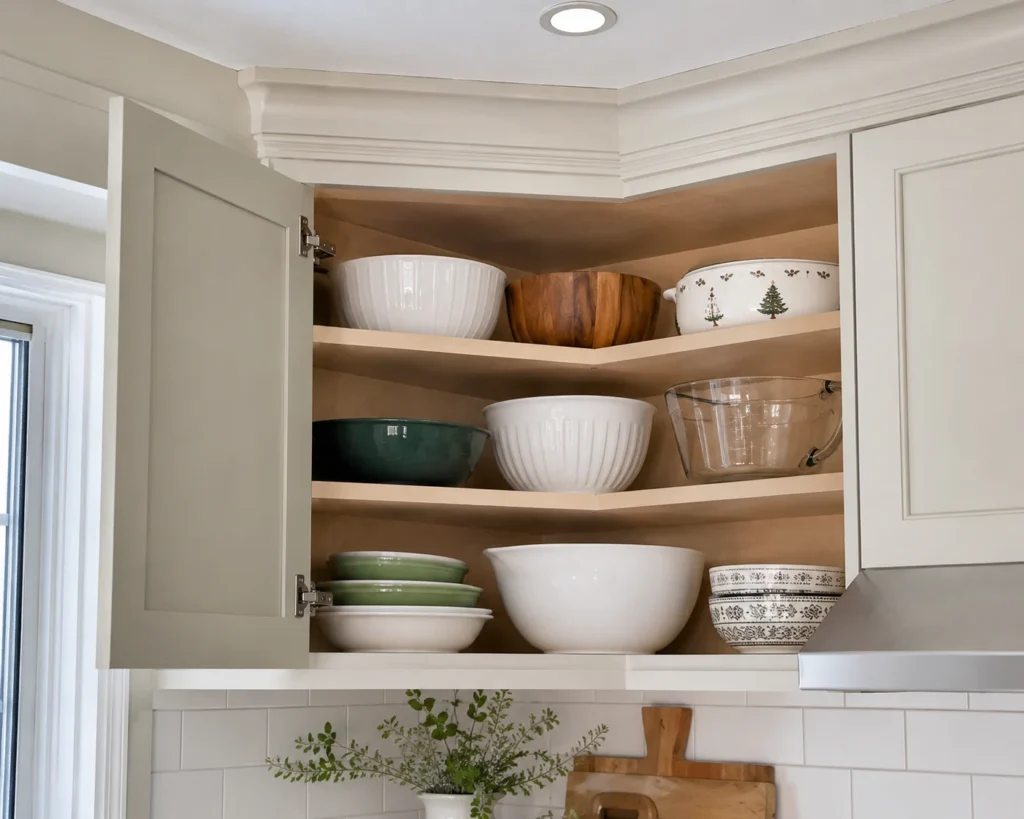
Upper corner cabinets can be useful for serving bowls, occasional-use dishes, vases, and other items that don’t need to be retrieved throughout the day. Because these cabinets may be high, shallow, or awkward to reach, their contents should be selected with accessibility in mind.
Choose lightweight objects that fit comfortably on the shelves, and avoid stacking fragile items where they could topple when another piece is removed. Reserve lower cabinets or drawers for heavy cookware and everyday dishes that you need frequently.
Before reorganizing an upper corner, check the shelf condition and the cabinet’s construction. Use a stable step stool when necessary, and don’t stretch or reach across a countertop while holding breakable items. The goal is to make use of otherwise overlooked storage without making everyday tasks more difficult.
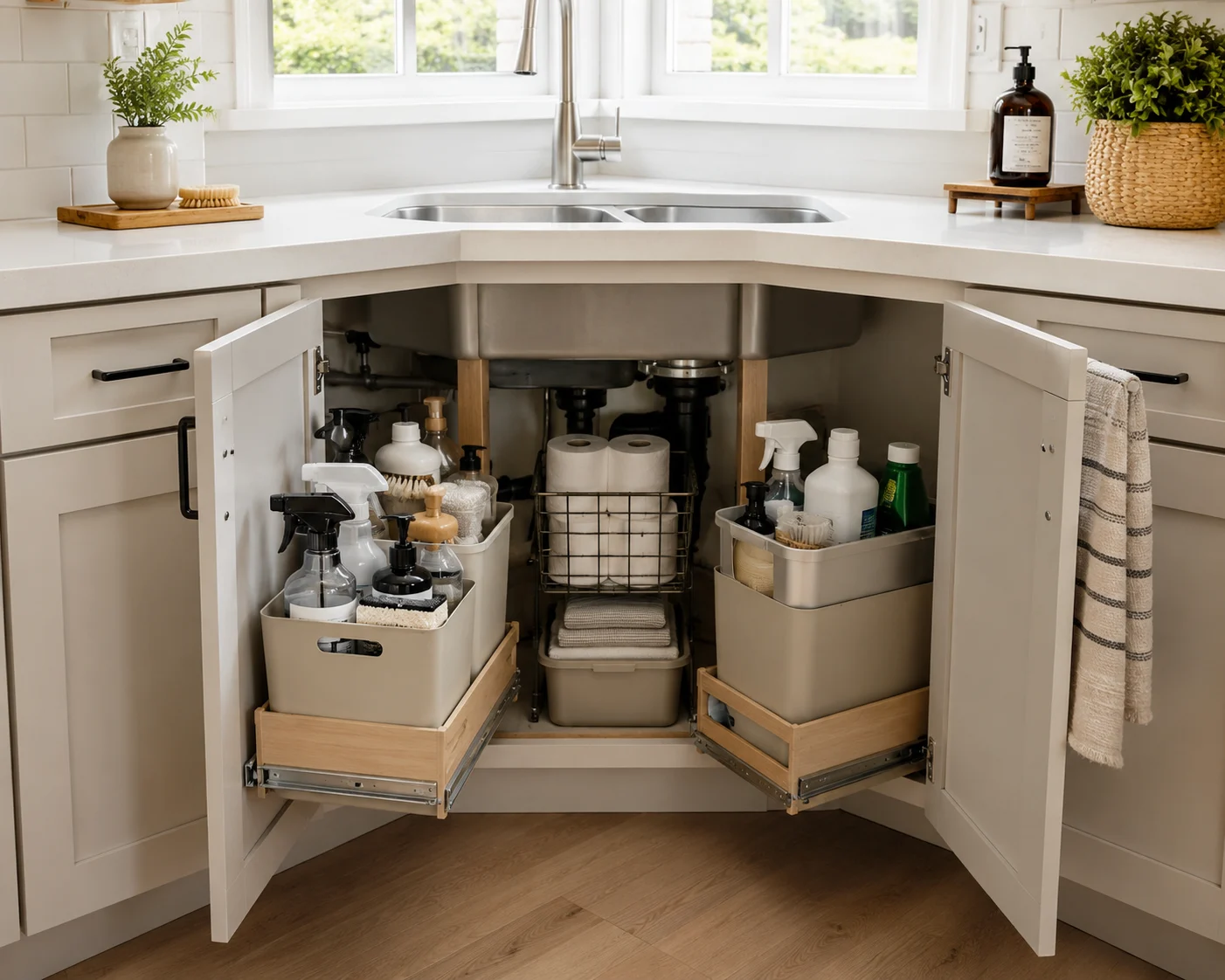
11. Add a Corner Sink With Under-Sink Organizers
Placing a sink in the corner can free up portions of the adjoining countertop and cabinet runs for other kitchen tasks. It’s a layout decision rather than a simple storage accessory, so it is best considered when planning a renovation or redesigning the kitchen’s plumbing and cabinetry.
The space beneath a corner sink can also be organized with suitable bins, shelves, or pull-out organizers. Start by identifying the sink bowl, drain, water lines, and any other obstructions. Choose storage that fits around these components without putting pressure on plumbing connections or preventing access for repairs.
Use designated bins for cleaning supplies, keeping products in their original containers and separating incompatible chemicals. Store items where you can reach them without moving everything else, and avoid placing supplies where leaks could go unnoticed. If you’re considering a broader layout change, these U-shaped kitchen design ideas can help you think about how corner placement affects the surrounding work areas.

12. Use Vertical Corner Shelving for a Coffee or Baking Station
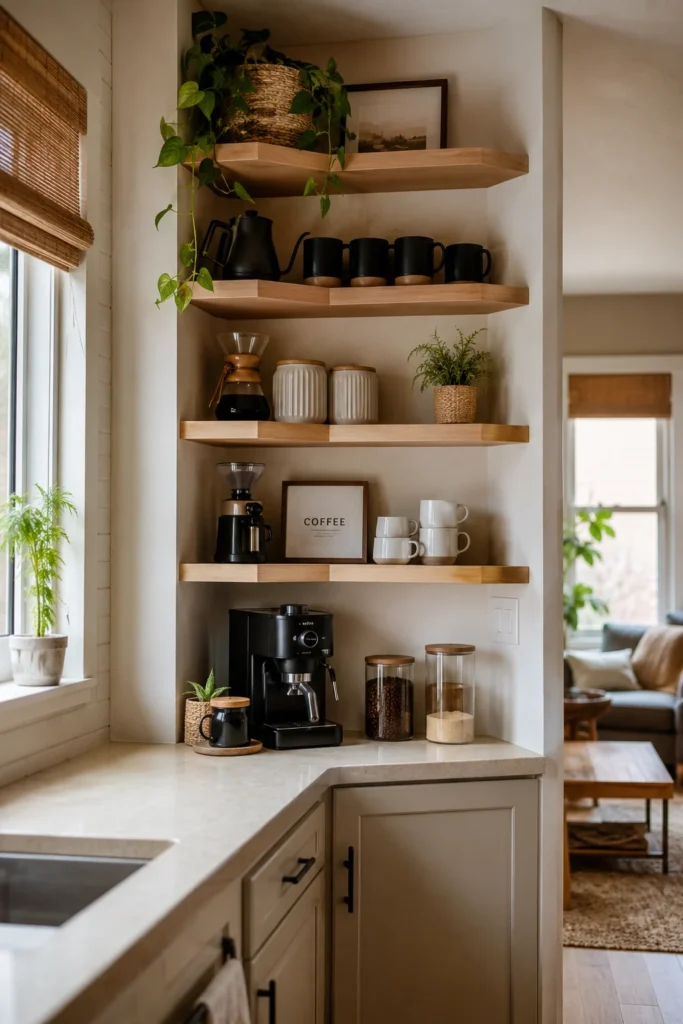
Open corner shelving can turn an unused wall junction into a compact coffee or baking station. Shelves can hold mugs, small bowls, coffee accessories, or frequently used baking ingredients while leaving the countertop available for preparation.
The arrangement should reflect how you use the space. For a coffee station, keep mugs and lightweight accessories within easy reach of the machine. For baking, use stable containers for dry ingredients and leave room to set down mixing bowls or measuring tools.
Check the wall construction and use suitable brackets or a purpose-built shelving system. Follow installation instructions and consider the combined weight of the shelves and their contents. Keep shelves away from direct cooking heat and repeated splashes, and avoid placing heavy or fragile objects where they could fall onto the work surface.
For more ideas on balancing open storage with everyday function, browse these kitchen shelf decor ideas.
13. Retrofit an Old Corner Cabinet Instead of Replacing It
An existing corner cabinet may be able to accommodate an updated organizer without replacing the cabinet box. Retrofit options can include rotating shelves, pull-out baskets, or other mechanisms designed for particular cabinet shapes.
Start by identifying whether the cabinet is a true corner cabinet or a blind corner unit. Measure the usable interior and opening, and inspect the hinges, shelves, and obstructions that might limit movement. Compare those details with the organizer’s fitting requirements before purchasing anything.
A retrofit can be a practical alternative to a larger renovation, but not every cabinet accepts every system. Some modifications may require new mounting points or changes to the cabinet interior. If the cabinet is damaged or the proposed mechanism needs more space than it provides, replacement may be the more suitable option.
14. Plan Corner Placement Early if You’re Building New
When designing a new kitchen, decide how the corner cabinets will function before finalizing the cabinet layout. Choosing between rotating shelves, pull-out mechanisms, diagonal drawers, and stationary shelving early can help the cabinetry work with the way you cook and store supplies.
Think about the entire work area rather than treating the corner as an isolated feature. Consider the location of the sink, range, refrigerator, nearby drawers, and main walking routes. A storage system that looks convenient on its own may be frustrating if an open door or extended drawer blocks access to another cabinet.
Discuss the available configurations with your cabinet supplier or installer, and compare the space and installation requirements of the options. Prioritize easy access to the items you use most, sensible storage for heavier cookware, and enough clearance for doors and drawers to operate comfortably.
Safety and Practical Installation Tips
Before installing any corner organizer, confirm that it is compatible with the cabinet and suitable for the intended load. Follow the manufacturer’s instructions for mounting, hardware, clearances, and weight limits. Secure shelves and brackets appropriately, and don’t assume that an existing shelf or cabinet base can support a heavier load simply because it fits.
Keep heavy items on lower, accessible shelves, and avoid overloading pull-out mechanisms. Test moving parts carefully before filling them, checking that doors, drawers, and baskets operate without catching on nearby cabinetry or appliances. Store fragile items away from edges and where they won’t fall onto a work surface.
In cabinets beneath a sink, leave plumbing connections accessible and keep supplies arranged so leaks can be spotted. For appliance storage, follow the appliance manufacturer’s ventilation and clearance requirements, keep cords in good condition, and never operate a heat-producing appliance in an enclosed cabinet unless its instructions explicitly allow it.
Finally, preserve clear access to the kitchen’s main work areas. Organizers should make cooking and cleanup easier, not block walkways or prevent nearby doors and drawers from opening fully.
A well-organized corner cabinet doesn’t have to be complicated. A rotating shelf may solve a simple access problem, while a pull-out system, pantry arrangement, or carefully planned cabinet layout may suit a more demanding space. Choose the option that fits your existing cabinetry, the items you need to store, and the way you use your kitchen every day.
