

17 Reading Nook Ideas for Small Spaces That Feel Cozy, Not Cramped
It’s easy to save dozens of reading nook ideas and come away thinking you need a huge bay window, custom bookshelves, or an entire spare room to create one at home. In reality, some of the most useful reading spaces fit into square footage that wasn’t doing much in the first place.
A bedroom corner, shallow alcove, upstairs landing, awkward section beneath a sloped ceiling, or even the empty end of a living room can become a comfortable place to read. The trick is making the nook function as well as it photographs.
That means thinking beyond the chair. Can you comfortably sit there for an hour? Does the light actually reach the page? Is there somewhere to put coffee without balancing it on the floor? Can another person still walk through the room?
The 17 ideas below focus on those practical details, with options for small rooms, ordinary budgets, renters, and anyone who wants a cozy reading spot without making an already-tight home feel more crowded.
1. Turn an Empty Bedroom Corner Into an Adult Reading Area
An unused bedroom corner is one of the easiest places to start because you usually don’t need to build anything. The bigger challenge is resisting the urge to fill every inch of it.
Start with the chair. A compact armchair around 28–32 inches (71–81 cm) wide can provide considerably more support than a tiny decorative accent chair without dominating the room. Check the overall depth as well. Deep lounge chairs can project 36 inches (91 cm) or more into the room before you’ve even added a footstool.
For reading, I’d prioritize a supportive back and usable armrests over a particularly sculptural chair. If the seat feels slightly too deep, a small lumbar cushion can make it far more comfortable.
Add one small drink surface rather than a full-size side table. A 10–14-inch (25–36 cm) round table, wall-mounted shelf, or narrow C-table may be enough for a mug and phone.
Try to preserve roughly 30–36 inches (76–91 cm) of a frequently used walking route where the room allows. You may be able to work with less in a private bedroom, but don’t position the chair so you’re constantly clipping its arm on the way to the closet.
Finish with a basket for a blanket or current books. You don’t need a chair, ottoman, floor lamp, plant, table and magazine rack simply because they appeared together in an inspiration photo.
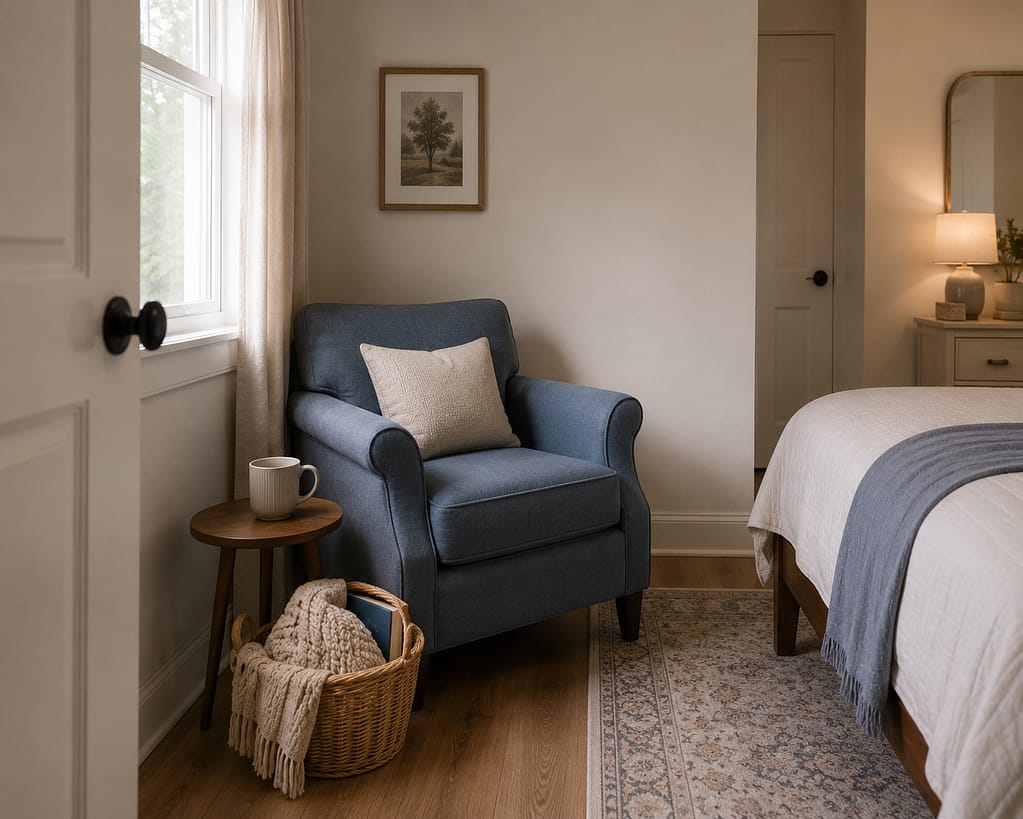
2. Create a Reading Nook Beside a Window
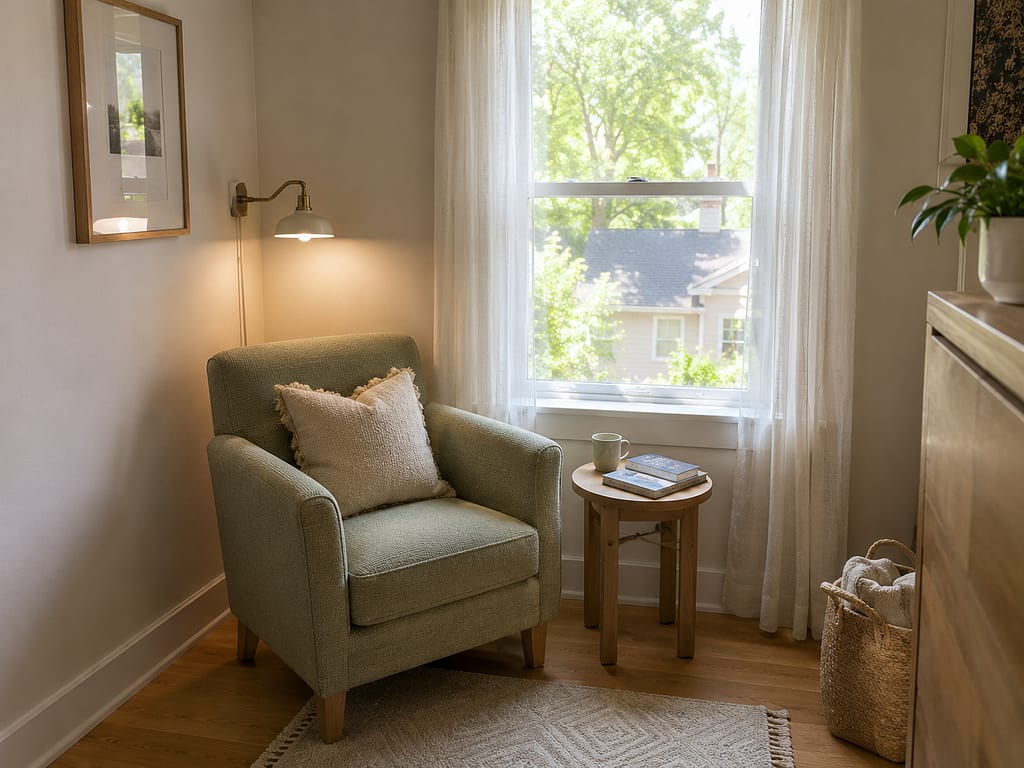
Natural light makes a window an obvious location for a cosy reading nook, but don’t automatically push the chair directly against the glass.
First check how the window opens and where curtains or blinds need to move. If there is a radiator, baseboard heater, floor vent, or HVAC register below the window, keep the manufacturer’s required clearance rather than blocking it with furniture.
Positioning the chair slightly beside the window often works better. You’ll still get daylight without sacrificing access to the window.
Direct afternoon sun can also be uncomfortable and may fade book covers and fabrics over time. A sheer curtain can soften harsh light while a blackout or lined curtain gives you more control when needed.
For evening reading, natural light obviously disappears. Place a floor lamp behind one shoulder or use a plug-in wall sconce if floor space is scarce. You want light falling onto the page, not shining directly into your eyes.
Before drilling anything, sit in the chair and hold a temporary lamp at approximately the proposed position. It’s a simple test that can prevent an annoyingly high or badly angled sconce.
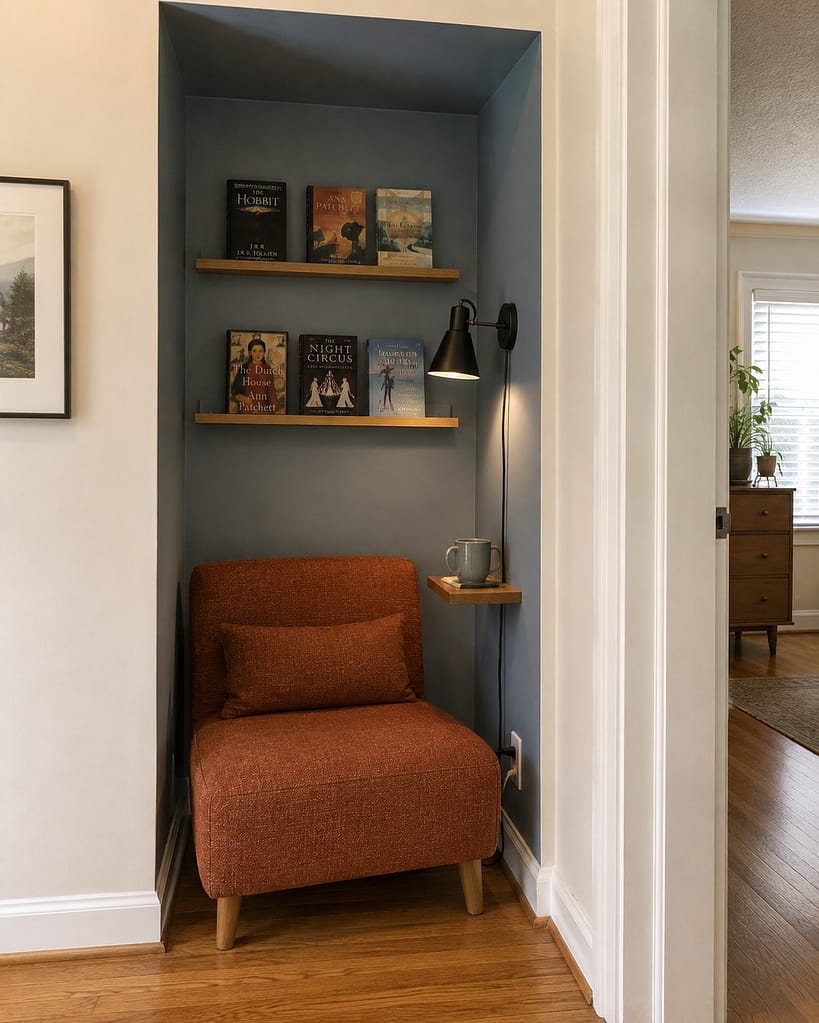
3. Use an Awkward Alcove or Recessed Wall
A shallow recess can look too small for furniture yet be surprisingly useful once you stop trying to treat it like a normal room.
Measure the opening at the floor, middle and top—older houses aren’t always square. Then decide whether the recess suits a chair, a bench, or storage better.
If a bulky armchair would nearly fill the opening, a compact slipper chair can be a smarter choice. Slipper chairs have no arms, which saves valuable width, although they’re best for readers who don’t rely heavily on arm support.
Use the walls instead of adding a freestanding bookcase. Shallow book ledges around 4–6 inches (10–15 cm) deep can hold front-facing books, while shelves around 8–10 inches (20–25 cm) deep accommodate many standard books without protruding excessively.
A wall-mounted reading light and tiny floating drink shelf can keep the floor completely clear.
Painting the recess a muted mushroom, dusty blue, or soft terracotta also visually defines it without requiring more furniture.
4. Turn a Tiny Spare Room Into a Miniature Reading Room
Some tiny spare room ideas fail because they try to make a very small room perform five jobs at once. If you have a box room that’s rarely used, giving it one clear purpose can actually make it more valuable.
For a miniature reading room, start with the largest item—the chair—and build outward. Don’t automatically choose the biggest armchair that fits through the door. Check whether the door can still open fully and whether you can comfortably reach shelves and windows once the chair is in position.
One narrow bookcase, a comfortable chair and good lighting may be enough.
Vertical storage makes sense here. Modular bookcases or inexpensive stock shelving can use wall height while leaving the center of the room open. Closed baskets or cabinet doors on the lowest shelves can hide chargers, spare blankets and miscellaneous items that otherwise make a small room look chaotic.
If you have a lot of books, minimalist doesn’t have to mean getting rid of them. Organized storage and some visual breathing room are usually more effective than pretending an actual reader owns six carefully color-coordinated novels.

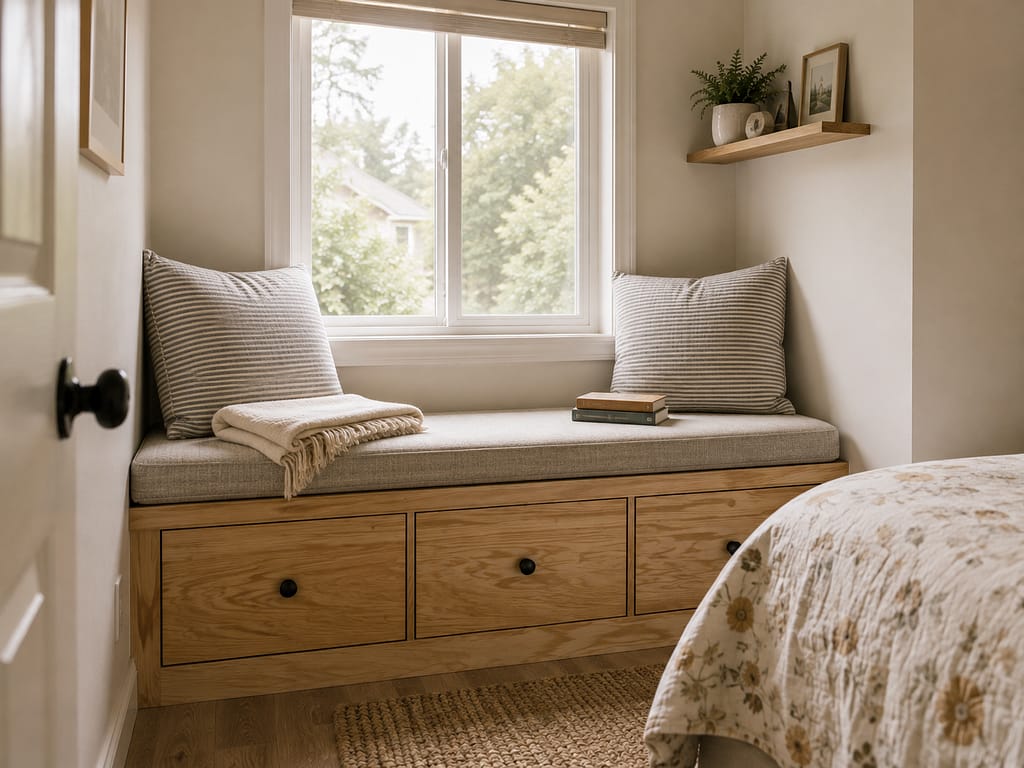
5. Build a Simple Window Bench With Storage Underneath
A window seat can be an efficient answer when there isn’t enough room for a freestanding chair, but depth matters enormously.
Very shallow decorative benches may look charming and feel uncomfortable after ten minutes. If you’re building a seat intended for actual reading, something around 20–24 inches (51–61 cm) deep can give you room for a proper seat cushion and angled back cushions. Your ideal dimension will depend on your height, preferred sitting position, and the window configuration.
Underneath, drawers, lift-up compartments, or simple open cubbies with baskets can hold blankets and less frequently used books.
Plywood or MDF construction can be far more affordable than custom cabinetry. A local carpenter may also be able to build a basic bench shell while you add the cushion yourself.
Be careful with windows that extend very low, radiators below the sill, and nearby electrical outlets. Never build permanent storage over ventilation or heating components without accounting for their clearance requirements.
Use washable or removable cushion covers. Window seats collect dust, crumbs, pet hair, and coffee spills just like sofas do.
6. Make a Reading Nook Work Under a Sloped Ceiling
Sloped ceilings create some of the best nooks in houses because the space can feel enclosed without needing additional walls.
Use the lowest section for things that don’t require standing height: a low chair, floor cushion, storage bench, or bookshelves. Keep the route into the nook beneath the taller portion of the ceiling so you’re not ducking every time you sit down.
A low-backed lounge chair can work especially well. Before buying one, mark its footprint on the floor with painter’s tape and check where your head will actually be once you’re seated.
Low custom shelving isn’t essential. Simple cube storage, short modular bookcases, or DIY plywood shelves can follow the knee-wall area at a much lower cost.
Lighting deserves attention because loft and attic corners can become gloomy. A wall light may be more useful than a tall floor lamp, especially where ceiling height changes quickly.

7. Pair a Cozy Chair With One Narrow Bookshelf
A full library wall isn’t necessary to make a corner feel like a genuine reading space. Sometimes one narrow bookcase is more useful.
Look for a shelf around 10–12 inches (25–30 cm) deep rather than a particularly bulky display unit. This provides enough depth for most books without taking too much floor area.
Position it beside rather than directly behind the chair so you can reach your current books without getting up.
This setup is also a good place to spend your budget on the chair rather than the cabinetry. A secondhand armchair with a solid frame can be re-covered or professionally cleaned, while an inexpensive modular bookshelf handles storage perfectly well.
Sit in the chair before buying whenever possible. An attractive upright chair with a 19-inch (48 cm) seat depth may suit one person beautifully; someone taller may prefer a deeper seat. Back angle and arm height matter just as much as the measurements.

8. Use Floating Shelves Where a Bookcase Won’t Fit
Floating shelves are useful when floor area is the limiting factor, particularly beside a bed, behind a chair, or in a narrow recess.
For ordinary books, shelves roughly 8–10 inches (20–25 cm) deep are often sufficient. Large art and design books may require deeper shelving, so measure your collection rather than copying a generic dimension.
Don’t position shelves where someone can hit their head when standing up. Shelves directly above a seated reader also need secure installation appropriate to the wall type and expected load. Books get heavy surprisingly quickly.
Renters who can’t install substantial shelves might use a narrow leaning shelf or lightweight picture ledges where permitted.
Keep the lowest shelf accessible for books you’re currently reading. Higher shelves can hold less frequently used titles.
This is another case where fewer pieces help. If shelves handle the books and a wall light handles illumination, you may only need a chair and tiny drink surface on the floor.

9. Create a Cottage-Inspired Reading Corner
Room decor cottage style is particularly suited to reading corners because it doesn’t depend on everything looking new or matching perfectly.
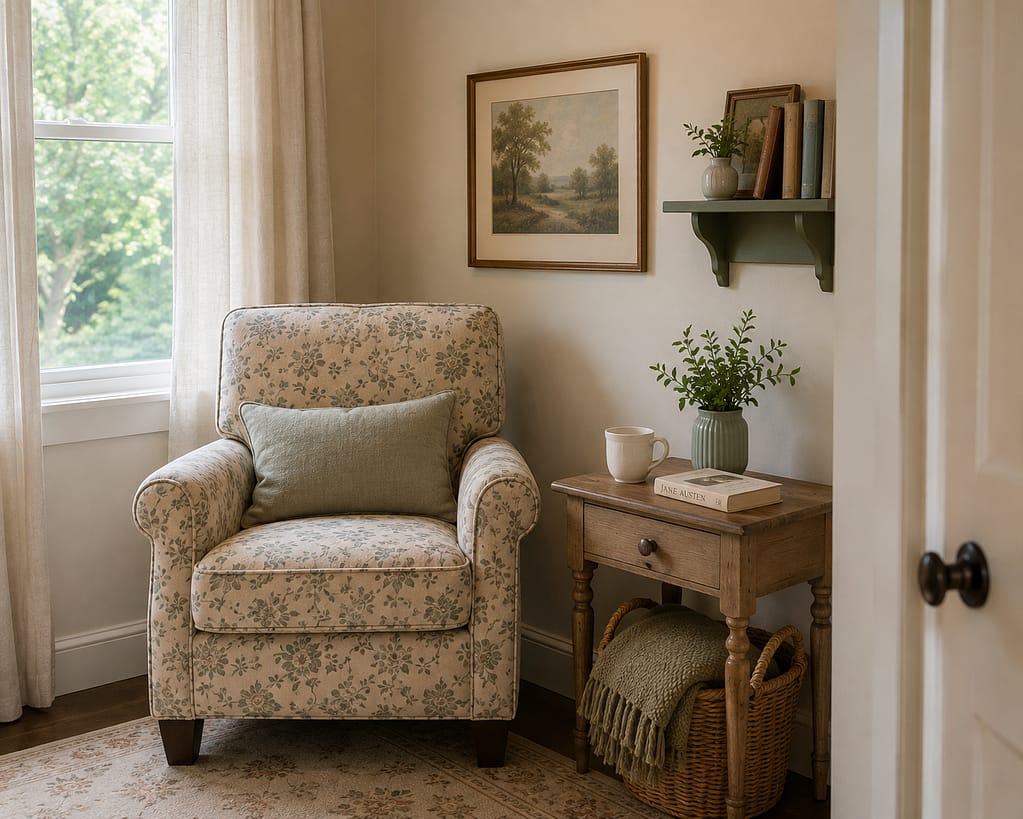
Start with one comfortable upholstered chair—perhaps a subtle floral, check, stripe, or plain linen-look fabric. Add a thrifted timber table and a basket rather than an entire set of coordinated furniture.
The key is stopping before “cozy” becomes crowded.
If the chair already has patterned upholstery, keep curtains and cushions quieter. If the chair is plain, a small floral lumbar cushion or checked throw can add the cottage character instead.
A wall-mounted plate collection, vintage print, or small framed landscape can make the corner feel established without taking up floor space.
Practicality still wins. Choose washable cushion covers where possible, make sure the table is stable enough for a drink, and keep the blanket basket where it doesn’t become a tripping hazard.
10. Turn an Upstairs Landing Into a Reading Spot
A wide landing can provide useful square footage, but circulation comes first.
Before adding furniture, watch how people actually move through the space. Bedroom doors need to open, stair access must remain unobstructed, and the reading area shouldn’t narrow a critical passage.
A compact chair pushed against a solid wall generally makes more sense than furniture floating near the stairs. Avoid positioning furniture where it interferes with required stair, landing, or guard clearances.
Instead of a floor lamp extending into the passage, use a wall-mounted or plug-in sconce where suitable. A narrow wall shelf can hold several books without requiring a deep bookcase.
Landings can also be darker than rooms with exterior windows, so lighting often determines whether the space becomes genuinely usable rather than merely decorative.

11. Convert an Unused Closet Into a Reading Nook
An underused closet can become an interesting reading nook in house setup, but measure carefully before removing anything.
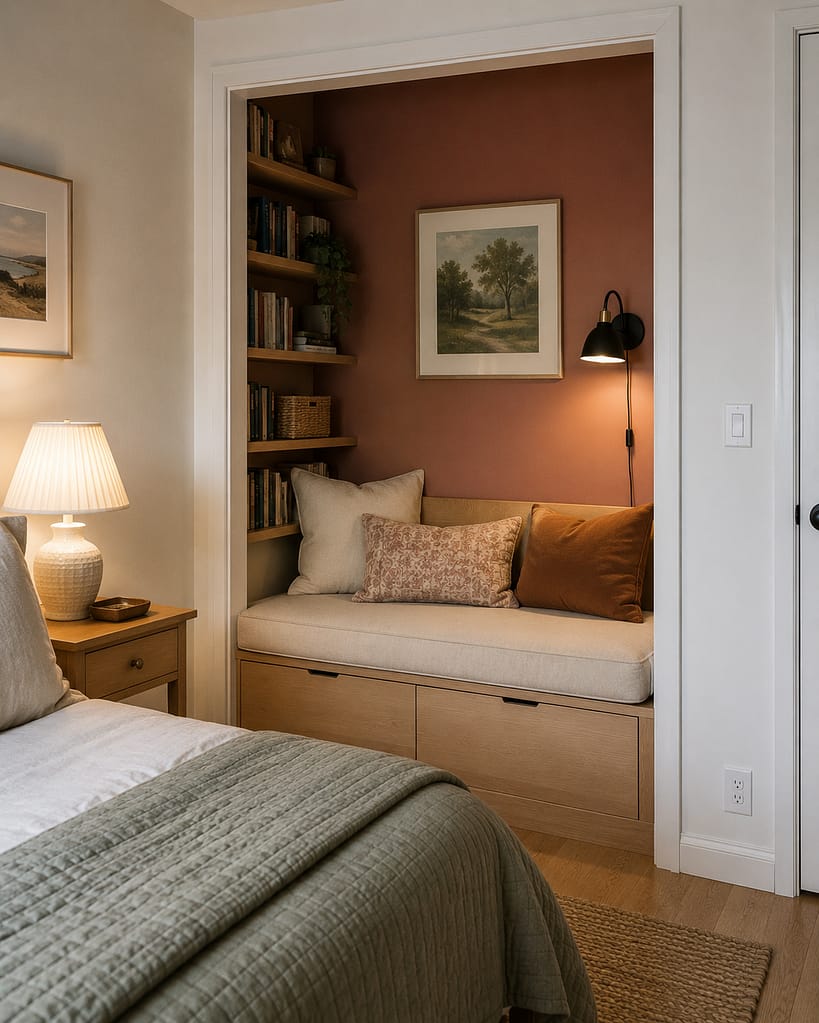
Once doors and internal rails are removed, some closets offer enough depth for a small bench or compact chair. Others are simply too shallow to sit in comfortably and are better converted into book storage beside a chair outside the opening.
If you’re building a bench, allow enough depth for your body plus back cushions. Don’t force a 12-inch-deep (30 cm) decorative shelf to perform like a comfortable seat.
The advantage of a closet nook is that the side walls naturally create an enclosed feeling. Paint or wallpaper the back wall, add shallow shelves, and use a plug-in sconce if running new electrical wiring isn’t realistic.
Keep ventilation in mind. Don’t cover vents, and avoid creating an enclosed nook that becomes noticeably stuffy.
For renters, preserve doors and hardware so the closet can potentially be restored later.
12. Build a Compact Library Wall Around a Chair
If you have one empty wall, surrounding a chair with books can create the feel of an interior design reading room without dedicating an entire room to it.
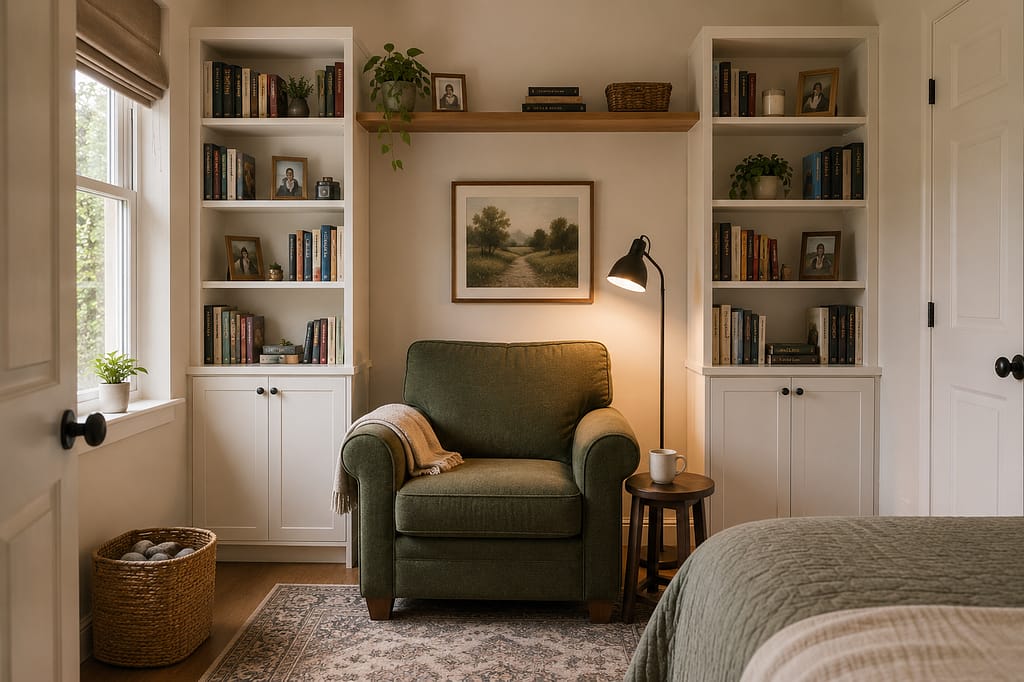
The affordable version uses modular bookcases rather than custom joinery. Place matching units on either side of the chair and, if appropriate, visually connect them with a securely installed upper shelf.
Matching paint, repeated shelf heights, simple filler strips, and consistent trim can make separate components look more intentional.
Don’t squeeze the chair between the shelves. Leave enough width for your elbows and for getting in and out comfortably.
Closed lower storage is particularly useful here. Doors or baskets can conceal chargers, paperwork and miscellaneous items while upper shelves remain available for books.
If you need an outlet behind the chair, plan for access before filling the wall with furniture. Extension cords trapped beneath heavy bookcases aren’t a good long-term solution.
13. Use a Corner Bookshelf to Define the Nook
Corner shelving can make an otherwise vague section of a room feel deliberate without adding another wall.
Instead of forcing two full-depth bookcases into the corner, consider one standard-depth shelving run meeting a shallower set of shelves. That keeps the inside corner accessible and prevents a bulky block of furniture from swallowing the chair.
Place the chair slightly forward and angled toward the room. This creates a visual boundary while keeping the nook connected to the larger space.
Corner shelves also work well for mixed storage. Keep everyday books around seated eye and hand level, heavier books lower down, and a basket or closed box for small clutter.
Leave some shelf space open. This isn’t because minimalist rooms should contain hardly any books; it’s because tightly packed objects on every surface can make a tiny corner feel visually smaller.

14. Create a Reading Area at the End of a Hallway
The end of a wide hallway or passage can sometimes accommodate a tiny reading spot without affecting traffic flow.
This works best when the chair sits beyond rather than within the main route. Measure with the furniture in mind, not just the empty floor. A chair that’s 30 inches (76 cm) wide may have arms or legs that project farther than expected.
A small slipper chair can work where a traditional armchair is too bulky. Pair it with shallow wall-mounted shelves and a sconce to avoid occupying additional floor area.
Skip the ottoman in a passage unless there’s genuinely room. A small footstool that tucks beneath the chair or table is easier to live with.
If there’s a window at the end of the hallway, don’t block access just to achieve a symmetrical photograph. Being able to open and clean it matters more.

15. Make a Living-Room Reading Zone Feel Separate
A reading area doesn’t need physical walls to feel like its own little zone.
In a small living room, use furniture orientation to create separation. Turn the reading chair slightly away from the main sofa rather than lining every seat along the walls. A narrow bookcase behind or beside the chair can reinforce the boundary.
A small rug can help, but don’t add one if it creates awkward overlapping rug edges or a trip hazard.
Lighting is often the strongest visual cue. Giving the chair its own reading lamp immediately signals that this corner has a purpose separate from the main seating arrangement.
Keep circulation between the sofa, doorway, and chair intact. Painter’s tape is useful here: mark the proposed chair footprint before ordering furniture and live with the outline for a day or two.
If the room is already busy, repeat existing materials rather than introducing five new ones. A walnut table in a room with walnut accents will usually feel calmer than an unrelated decorative piece.

16. Use a Floor Cushion or Compact Lounge Chair in an Extremely Tight Space
Sometimes there simply isn’t enough room for a conventional armchair. That’s where a floor-level setup can work—provided getting down to and up from the floor is comfortable for you.
Choose a substantial floor cushion or low lounge chair with back support rather than scattering thin decorative pillows on the floor. A supportive backrest against a wall can make a major difference during longer reading sessions.
Add one washable cover, a small blanket, and wall-mounted book storage. A little tray can provide a safer surface for a drink than placing a mug directly on the floor.
This arrangement is particularly useful in bedrooms, dorm-style rooms, tiny apartments, or low-ceiling attic areas.
For readers who find floor seating uncomfortable, don’t force the look. A compact upright chair with a small footprint is a better use of the same area.
Good small-space design should accommodate the person using it rather than demanding that the person accommodate the photograph.

17. Create a Cozy Evening Reading Nook With Proper Lighting
A nook that works beautifully at noon can become useless after sunset, so lighting deserves to be treated as part of the furniture plan.
For reading, the goal is focused light reaching the page without creating harsh glare. Position a floor lamp or wall-mounted light slightly behind and to one side of your shoulder rather than directly in front of your eyes.
A wall sconce saves floor area and is particularly useful beside larger cozy chairs. Renters can use plug-in versions, with a neat surface-mounted cord cover instead of a cable dangling across the wall.
Choose a warm evening light rather than an extremely cool bulb if you want the corner to feel relaxed, but don’t go so dim that reading becomes uncomfortable. A dimmable fixture gives you more control.
Think about power at the same time. If you read on a tablet or charge your phone nearby, an accessible outlet or discreet USB charger prevents cables from stretching across the walking path.
Finally, give yourself somewhere for the boring but important things: glasses, phone, tea, bookmarks. A tiny shelf or table within easy reach can make the difference between a nook you admire and one you use every night.

A Small Reading Nook Should Work Harder Than It Looks
The best reading nook ideas aren’t necessarily the ones with custom shelving, enormous windows, or enough cushions to fill a sofa. A successful nook is usually much simpler: a chair or bench that’s genuinely comfortable, books you can reach, light that falls where you need it, and a safe place for a drink or phone.
Start with the space you actually have and choose furniture to fit it rather than trying to reproduce an inspiration photo piece by piece. Sometimes that means skipping the ottoman, replacing a floor lamp with a plug-in sconce, or using shallow shelves instead of a full bookcase.
Get those practical details right, and even an overlooked bedroom corner, landing, alcove, or tiny spare room can become one of the most useful places in the house.