
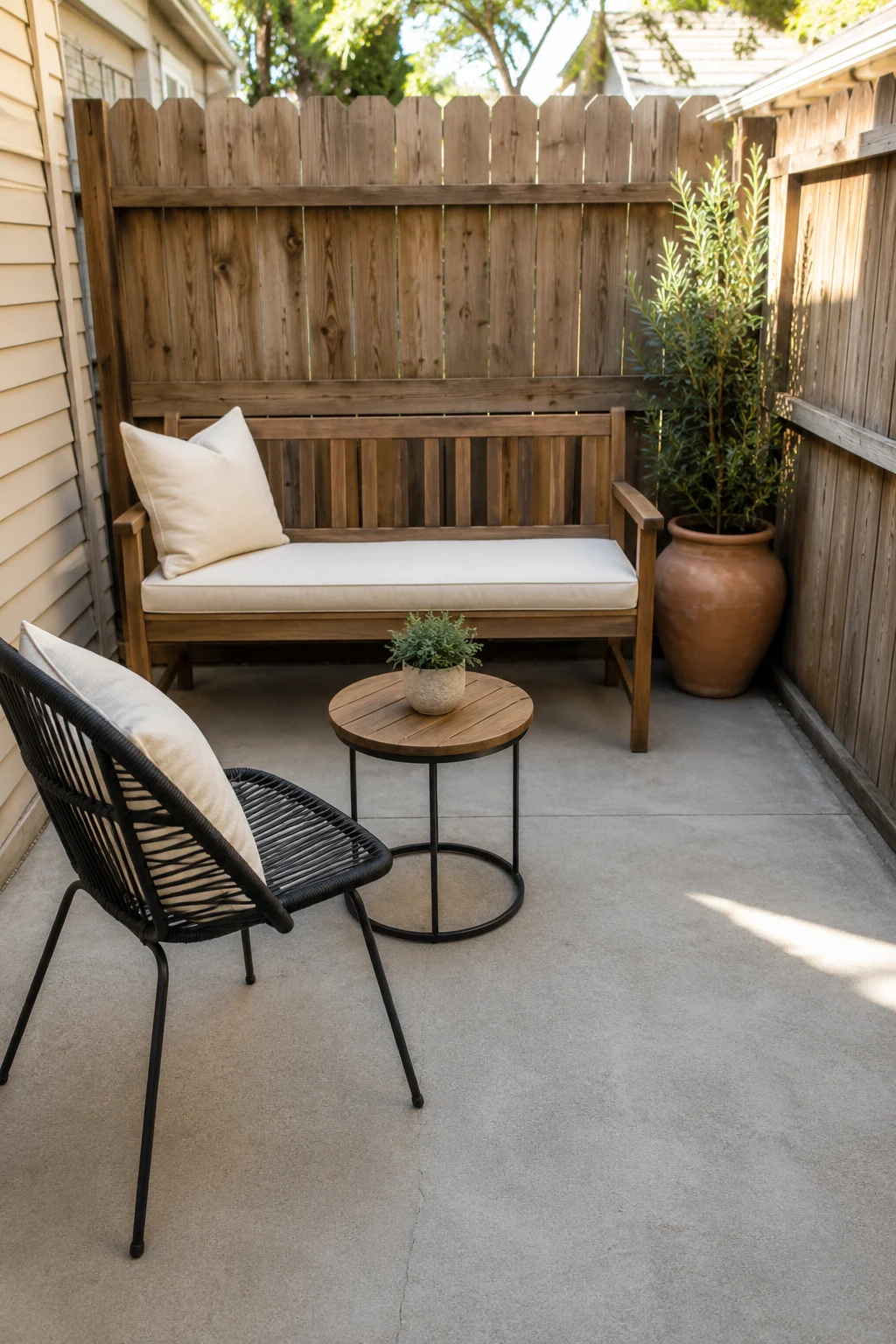
18 Small Patio Seating Ideas for a Cozy Outdoor Retreat
The best small patio ideas usually start with one practical question: how do you actually want to sit outside? That matters more than choosing lanterns, rugs, or decorative planters first. In compact spaces, furniture that looks beautiful online can become frustrating very quickly if it blocks the door, narrows the walking path, or leaves no room to pull out a chair.
A better approach is to choose the seating layout first, then build the rest of the patio around it.
Every piece has to earn its footprint. Two comfortable chairs may be more useful than a cramped four-seat set. A storage bench can replace both seating and a cushion box. A narrow round table often works better than a square one because you can walk around it more easily.
Small outdoor spaces also benefit from visual breathing room. You don’t need to fill every wall, corner, and railing with furniture or plants. A clear path, a few well-scaled pieces, some greenery, and soft lighting are often enough to make even a plain concrete patio feel intentional.
18 Small Patio Seating Ideas for a Cozy Outdoor Retreat
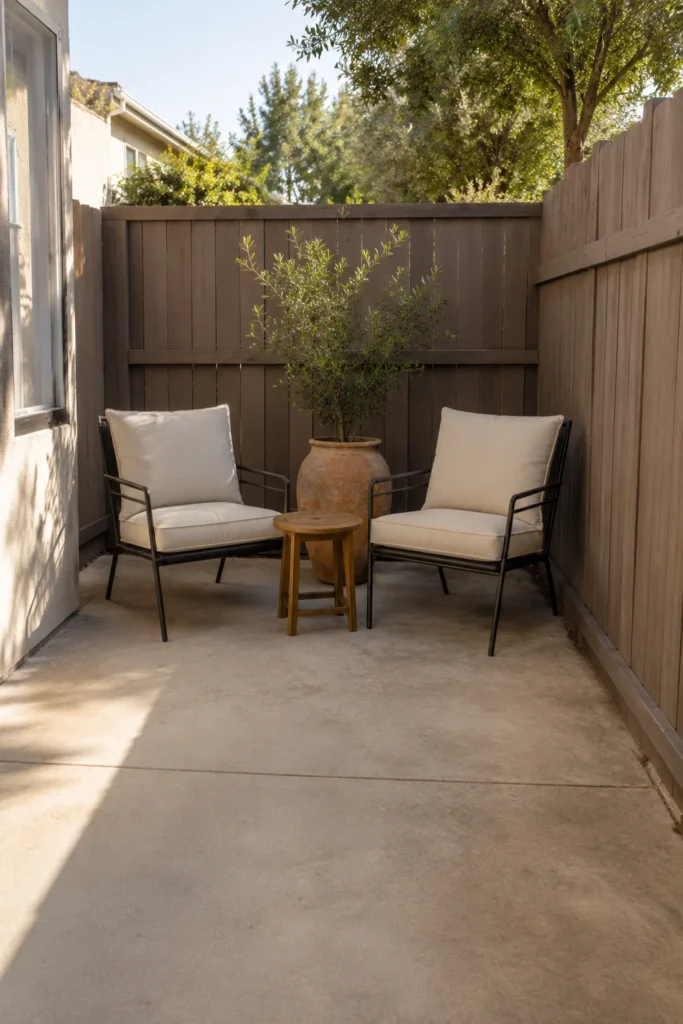
1. Create a Two-Chair Conversation Corner
A pair of slim lounge chairs is one of the easiest ways to turn an awkward patio corner into somewhere you’ll actually use.
On a roughly 6-by-8-foot patio, place two open-frame chairs at a slight angle toward each other rather than lining them up flat against the wall. Chairs around 24 to 28 inches wide usually feel more comfortable in a tight area than deep, oversized outdoor armchairs. Put a 14- to 18-inch round side table between them.
The angled arrangement makes the seating feel conversational while keeping the middle of the patio open. A round table is useful here because there are no corners sticking into the walking path.
One taller planter behind the chairs can soften a plain fence without stealing as much floor space as five small pots.
Before buying furniture, check the chair depth as carefully as the width. A chair can look narrow from the front and still project 35 inches into the patio.
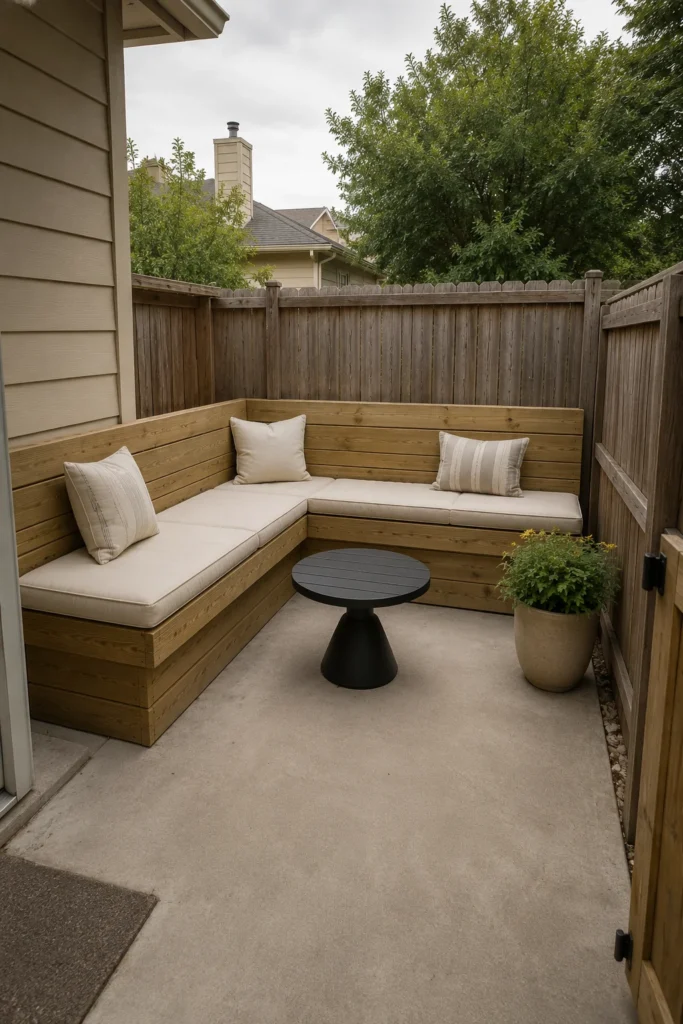
2. Fit a Built-In Corner Bench Into a Tight Patio
Corners are valuable square footage in a small outdoor space because that’s where freestanding furniture often wastes room.
A simple L-shaped bench pushed tightly against two walls can turn an 8-by-8-foot townhouse patio into a surprisingly useful seating area. Keep the bench around 18 to 20 inches high and roughly 20 to 24 inches deep. Add seat cushions in a light neutral fabric and three or four loose back pillows rather than covering every inch with bulky cushions.
A small pedestal table or 22-inch round coffee table in front is enough for drinks without making the center difficult to navigate.
The reason an L-shaped bench works so well is that it pushes most of the seating to the perimeter. Instead of several chair legs and arms occupying separate footprints, the seating becomes one continuous zone.
If you’re building the bench yourself, don’t make the seat too shallow in an attempt to save space. An uncomfortable 15-inch-deep bench won’t get used, no matter how neatly it fits.
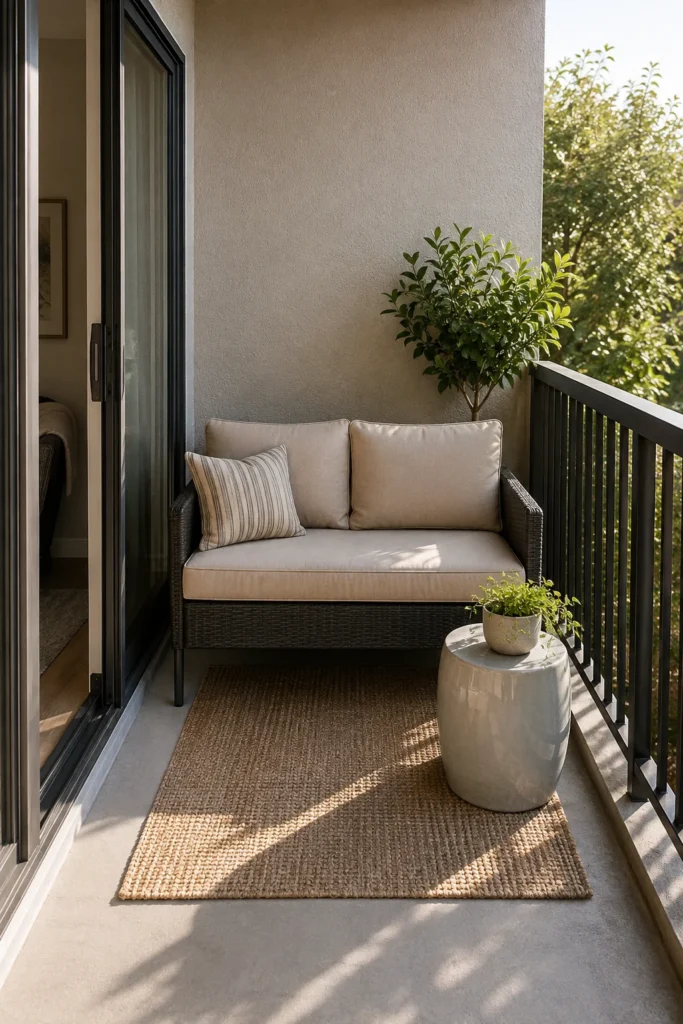
3. Use a Compact Loveseat With One Side Table
If you prefer lounging to upright dining, a small outdoor loveseat can be more comfortable than trying to squeeze two bulky chairs onto a narrow patio.
Look for a loveseat around 48 to 58 inches wide with relatively slim arms. Place it against the longest solid wall and use a small side table instead of a full coffee table. A 14-inch drum table or garden stool takes up much less floor space while still holding two drinks.
This layout works particularly well on apartment patios because the furniture footprint stays concentrated on one side. The remaining width can function as the main walking path from the door.
Visually light frames matter. A woven resin wicker or powder-coated aluminum loveseat with raised legs usually feels less bulky than a boxy sofa with a solid base.
Measure the patio door before committing. A loveseat that technically fits but forces you to sidestep every time you step outside is too large for the space.
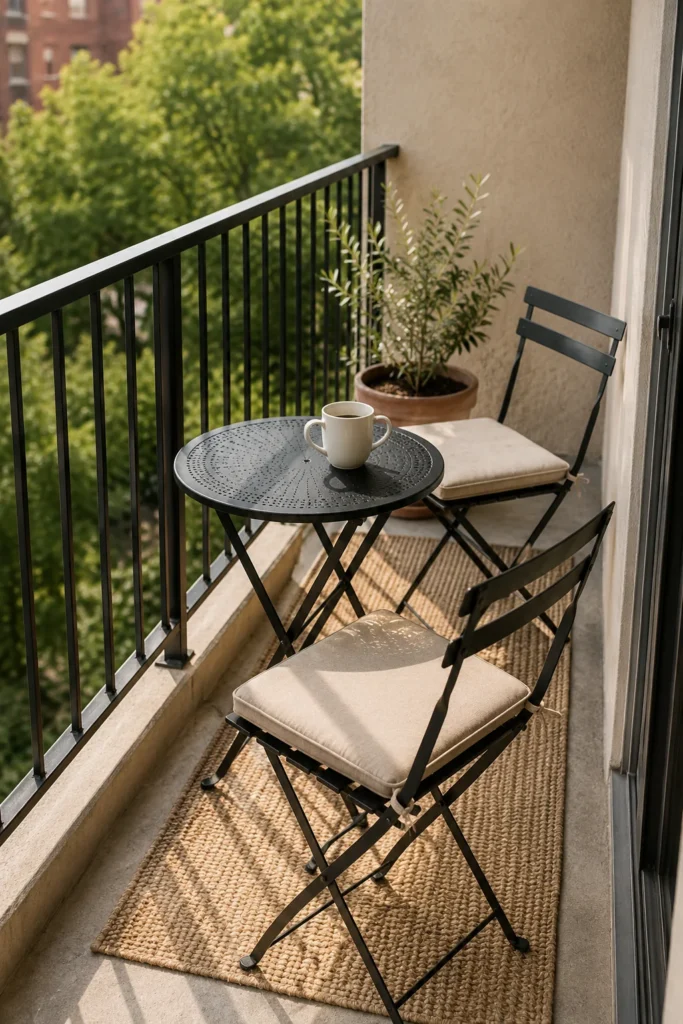
4. Choose a Tiny Bistro Set for Morning Coffee
A café-style setup is one of the most useful balcony seating ideas when you want somewhere to have coffee or dinner without losing the entire outdoor floor area.
Choose a round table around 24 to 28 inches wide and two slim café chairs. Folding metal chairs work particularly well because they can be stored flat against the wall when you’re not using them.
Place the table toward one end of the balcony rather than directly in the center of the traffic path. If the balcony is long and narrow, arrange the chairs diagonally so neither person has to sit with their back pressed against the railing.
A small outdoor rug can visually define the seating zone, but it should have enough air around the edges to dry properly after rain.
For windy upper-floor balconies, extremely lightweight furniture can become a problem. Choose pieces with enough weight to stay stable, or secure folding furniture according to building guidelines when it isn’t being used.
5. Combine a Narrow Bench With One Accent Chair
You don’t always need matching furniture to make a small patio look intentional.
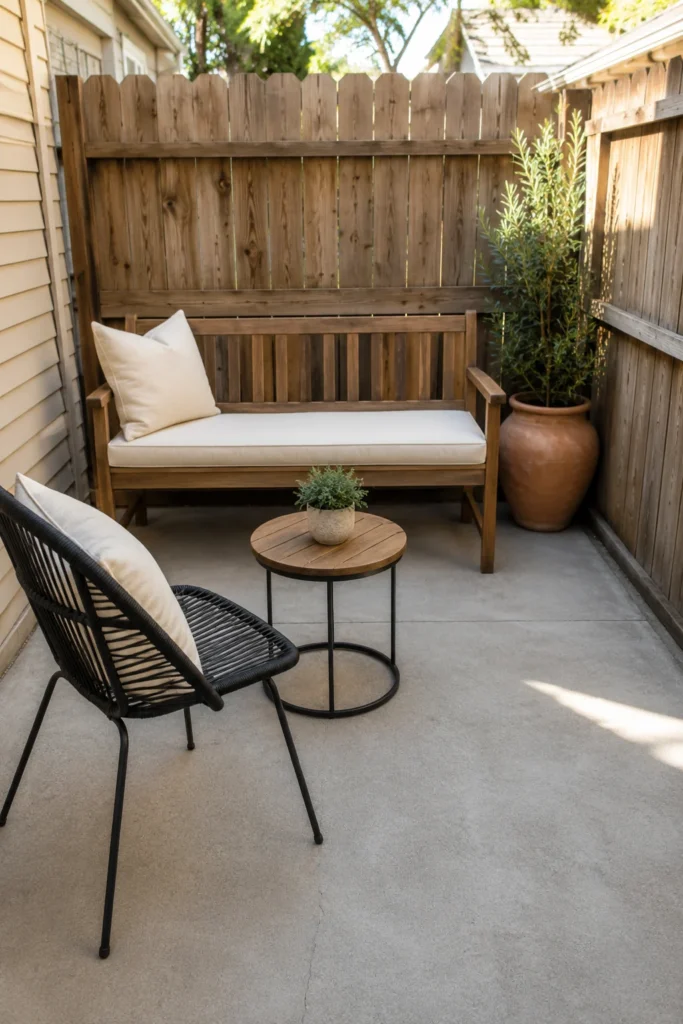
Place a narrow wood bench against the fence and angle one lighter-framed chair toward it. The bench can seat two people when needed, while the single chair keeps the layout conversational rather than making everyone sit in a row.
A small round side table—roughly 16 inches wide—can sit between them. This mixed layout works particularly well in small backyard seating areas where a full dining set would dominate the space.
To make inexpensive pieces look related, repeat one element. For example, use cream cushions on both the bench and chair, or choose black metal for the chair frame and table base.
Keep the bench around 18 to 22 inches deep. Deep outdoor benches can feel luxurious in photos, but in a six- or seven-foot-wide patio they quickly eat into the walking path.
6. Build a Budget Gravel Seating Pocket in a Very Small Backyard
A tiny yard doesn’t need a full patio installation to feel finished.
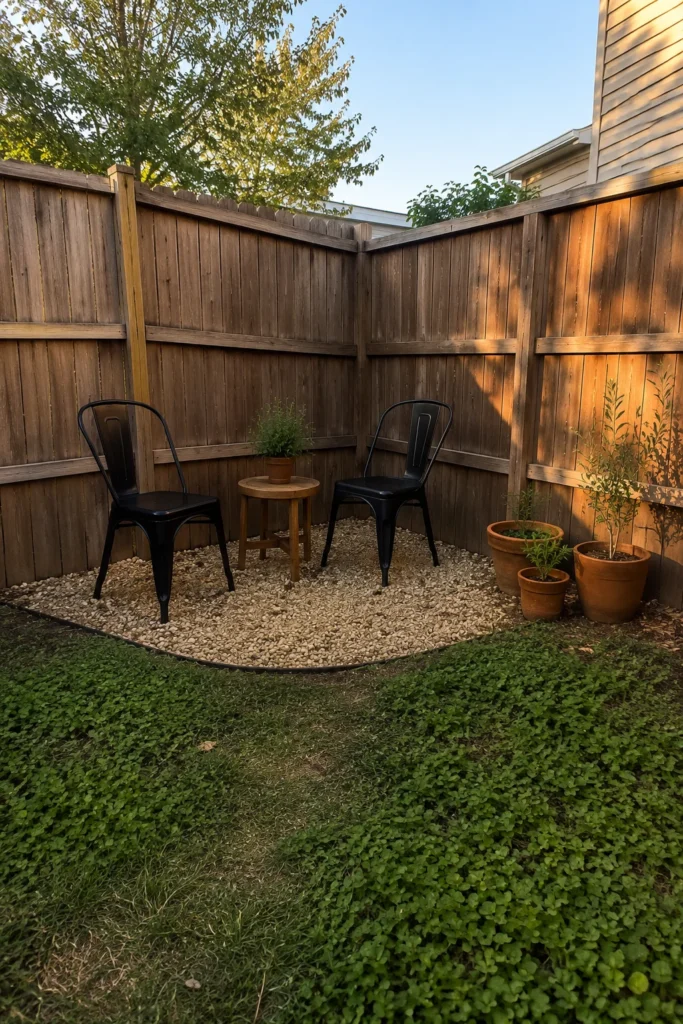
In a very small backyard, carve out a compact 6-by-6-foot seating area using pea gravel or another suitable compact surface. Place two secondhand metal chairs under a tree or beside the fence with a small round table between them.
Keeping the furniture to one corner preserves the rest of the yard instead of turning the whole space into hardscape.
This is one of the most realistic very small backyard ideas for renters or homeowners working gradually. Gravel, simple folding chairs, and thrifted pots can create a designated destination without the cost or footprint of a large deck.
Use a limited palette so affordable pieces feel intentional. Black chairs, warm terracotta pots, and tan gravel look more organized than six unrelated finishes.
If the gravel area is newly installed, make sure the base is prepared well enough that chair legs don’t sink every time someone sits down.
7. Use Folding Chairs for a Patio That Needs to Stay Flexible
If your patio serves multiple purposes, permanently filling it with furniture isn’t always helpful.
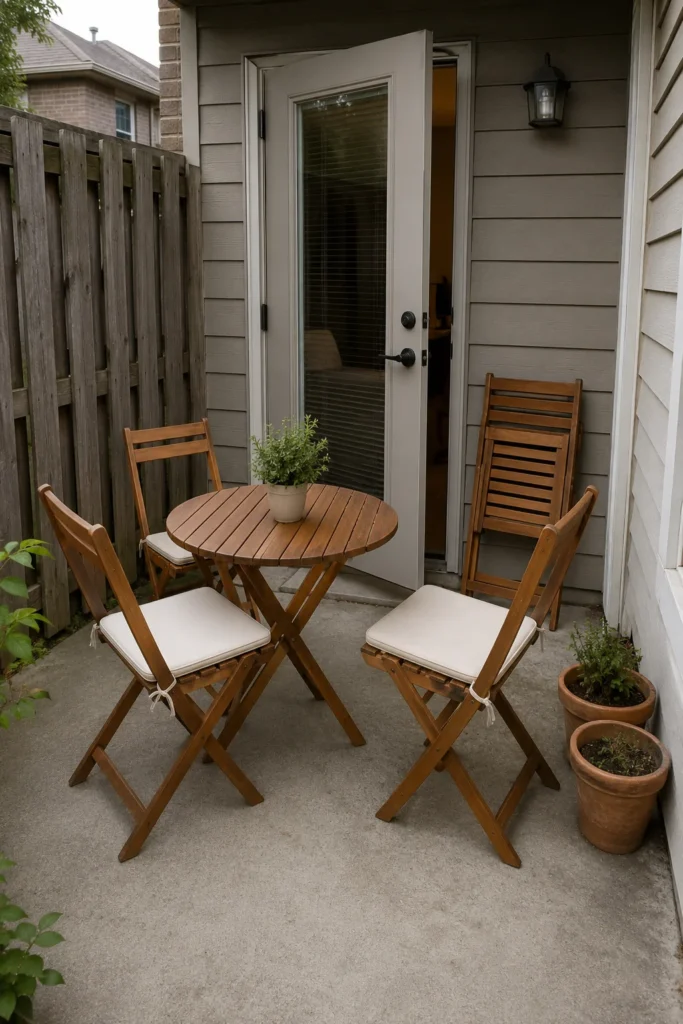
Two or three attractive folding chairs can create seating when needed and disappear against the wall when you want open space. Look for powder-coated steel, treated wood, or another outdoor-suitable material, and add removable seat pads if comfort matters.
A small folding table makes the setup even more adaptable. For a 6-by-8-foot patio, a tabletop around 24 inches wide is often enough for coffee or a casual meal without dominating the layout.
This setup is especially useful for renters, narrow terraces, and patios where the back door opens outward.
The main styling trick is consistency. Three inexpensive folding chairs look more deliberate if they’re the same finish and paired with cushions in one repeated color.
Lightweight furniture is easy to move, but that’s also a disadvantage in wind. Fold and store it securely when storms or strong gusts are expected.
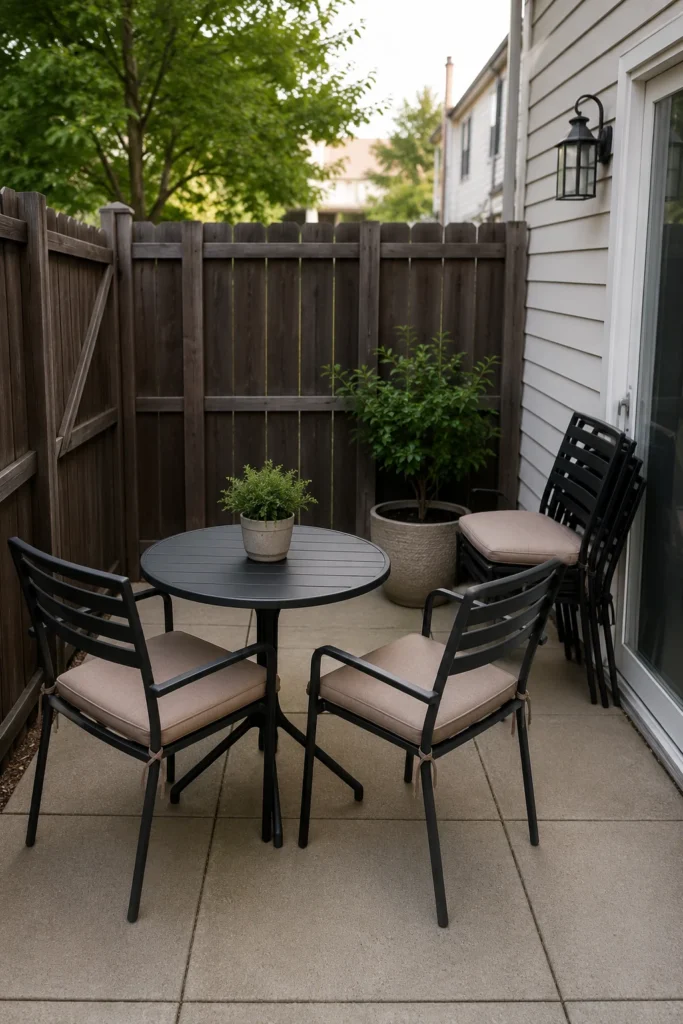
8. Try Stackable Chairs for Occasional Guests
Some patios don’t need four chairs every day—but it’s useful to have them when friends come over.
Use two stackable outdoor chairs as your everyday setup and keep two additional matching chairs stacked neatly in a corner. Pair them with a 26- to 30-inch round table that can comfortably serve two without occupying the whole patio.
Powder-coated aluminum and resin designs are especially useful because they can have relatively slim frames. The open backs and narrow legs help the seating feel visually lighter in a confined area.
This setup handles the common small-space problem of wanting occasional capacity without permanently over-seating the patio.
If you entertain only once a month, designing the patio for six people every day doesn’t make much sense. Prioritize the number of seats you actually use.
Just make sure the stacked chairs don’t block the door, AC unit, or access to storage. A storage solution only helps if it isn’t creating another obstacle.
9. Make a Wooden Patio Feel Cozy With Two Low Lounge Chairs
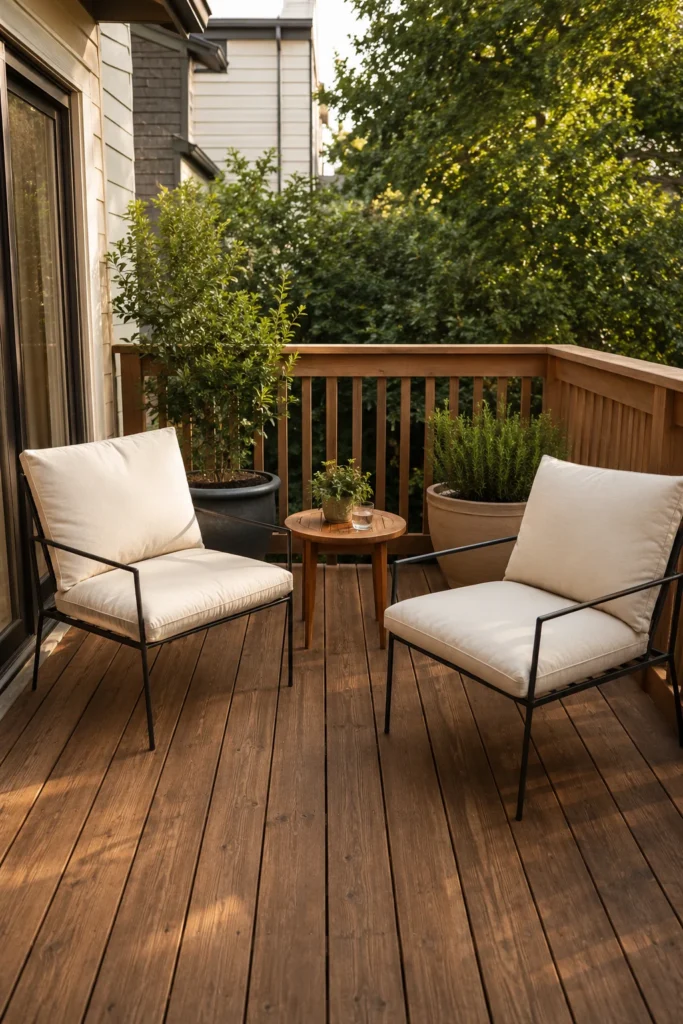
On a small wooden patio or deck, the floor itself already adds warmth, so the furniture can stay restrained.
Place two low black metal or wood-framed lounge chairs near one end of the deck with cream outdoor cushions. Angle them slightly toward each other and use one small teak table in between.
The dark chair frames create contrast against warm decking, while pale cushions keep the arrangement from feeling heavy.
Don’t cover a small wood deck with too many pieces. A 6-by-10-foot deck often feels much larger with two chairs and one table than with a loveseat, coffee table, three planters, a storage box, and an extra stool all competing for space.
One or two substantial planters at the perimeter are usually enough.
If you’re using an outdoor rug over wood decking, make sure it can drain and dry properly. Keeping moisture trapped against the boards is not worth the decorative effect.
10. Add a Storage Bench That Earns Its Footprint Twice
Storage is a real problem on small patios because cushions, lanterns, gardening gloves, and outdoor throws all need somewhere to go.
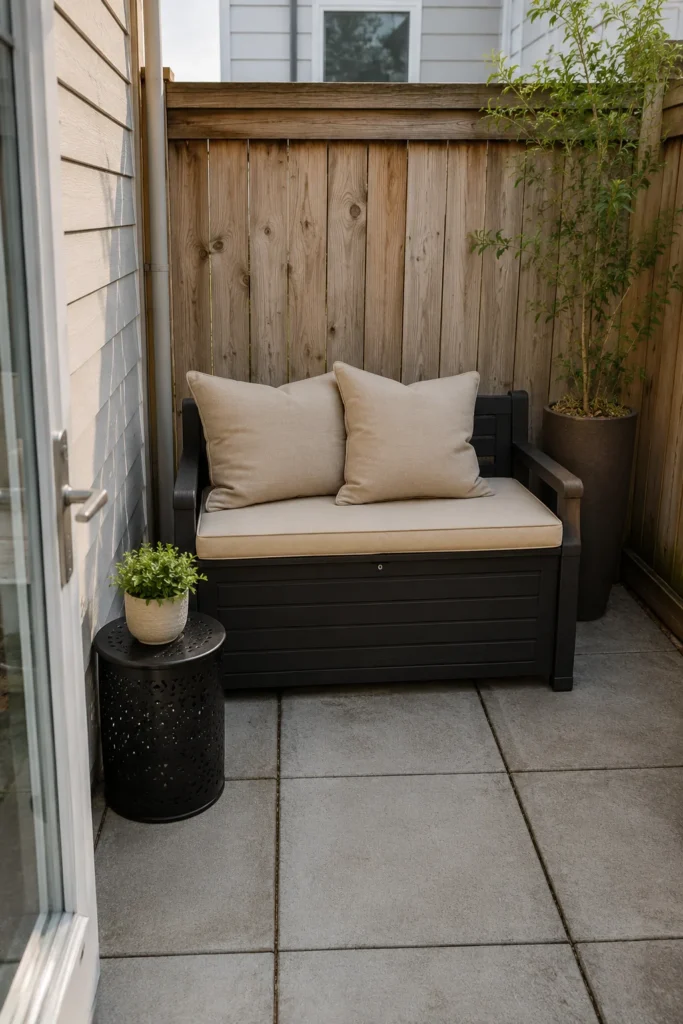
A weather-appropriate storage bench gives you seating and a place to hide those items in one footprint. Position it along a fence or solid wall and add one seat cushion plus two loose back pillows. A small stool beside it can function as either a table or an occasional extra seat.
This setup is especially useful on townhouse patios where there isn’t room for both a separate deck box and a bench.
Choose a bench deep enough to sit comfortably, but avoid oversized models designed for storing large equipment. Around 20 to 23 inches deep is usually much easier to live with in a compact patio.
Check that the lid can open fully without hitting a window sill or railing.
Storage benches also make cushion management easier. If taking the cushions indoors after every rain is annoying, you’re more likely to leave them outside until they’re soaked.
11. Fit a Slim Bench Along a Narrow Balcony Wall
Deep chairs can make a narrow balcony feel even narrower.
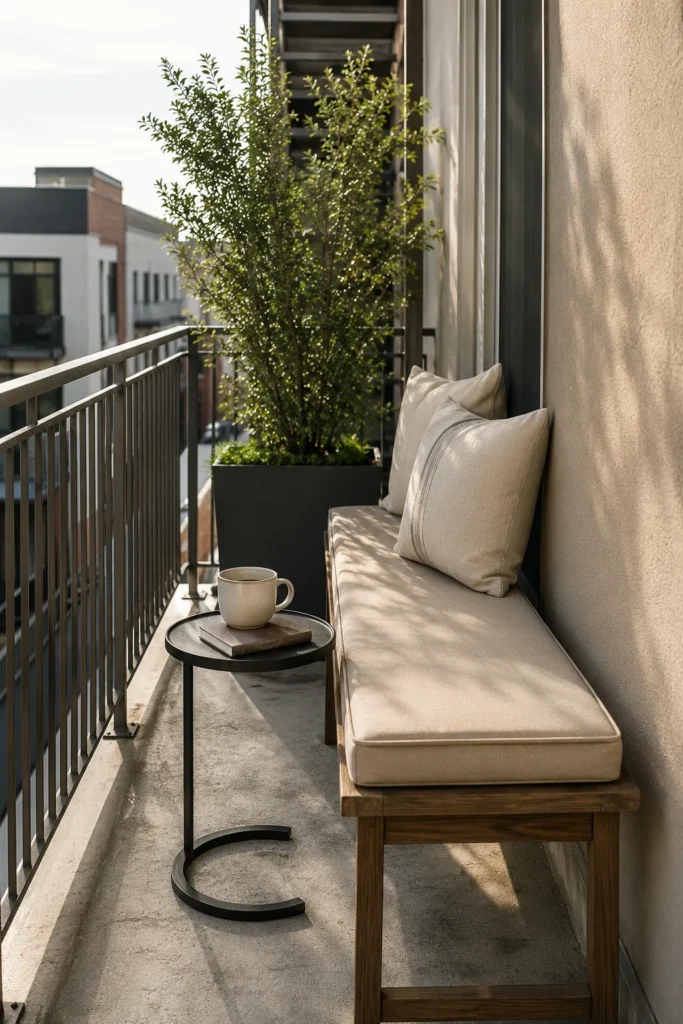
Instead, place a slim bench along one long wall and keep the railing side largely open. A bench about 16 to 19 inches deep can work well where standard lounge furniture simply sticks out too far.
Add a thin seat cushion and two back pillows. A small C-shaped side table or compact stool can slide near the bench without blocking the walkway.
This is a useful answer for backyard and balcony seating solutions because the furniture responds to the actual shape of the space rather than forcing a standard patio set into it.
For privacy, consider one tall narrow planter or a partial screen near the seating end rather than covering the entire railing. Too many tall elements can make a narrow balcony feel like a corridor.
Check your building rules before attaching privacy screens or hanging objects from railings, and make sure nothing interferes with drainage.
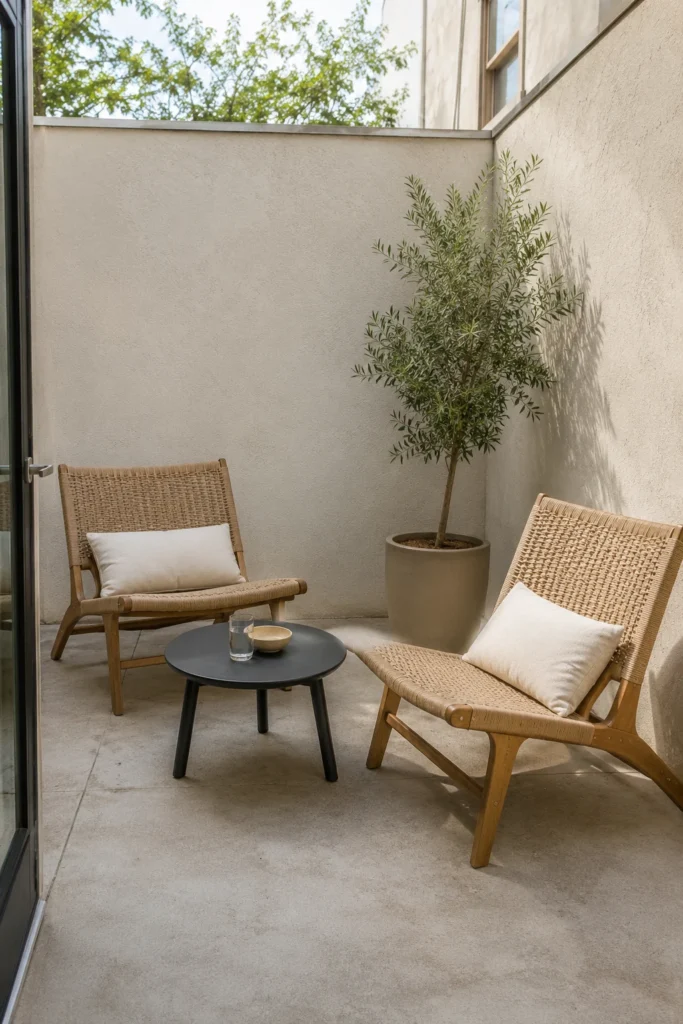
12. Use Low Lounge Chairs to Keep the View Open
Low-profile seating can make a compact patio feel calmer because it keeps more of the wall, fence, and surrounding view visible.
Use two low-slung wood or woven lounge chairs with narrow arms and keep the cushions relatively simple. A low round table between them reinforces the relaxed look without creating a tall visual block in the center.
This layout works well in a small courtyard or enclosed patio where high-backed furniture can make the space feel boxed in.
Don’t confuse low seating with deep seating. Chairs that sit close to the ground can still project far forward, so check total depth before buying.
A single tall plant behind one chair adds enough vertical contrast. If every corner gets a tall planter, the open feeling disappears.
For comfort, pay attention to how easy the chairs are to get in and out of. Very low seats can look sleek but aren’t suitable for everyone.
13. Wrap a Bench Around One Large Planter
If greenery and seating are competing for the same floor space, combine them.
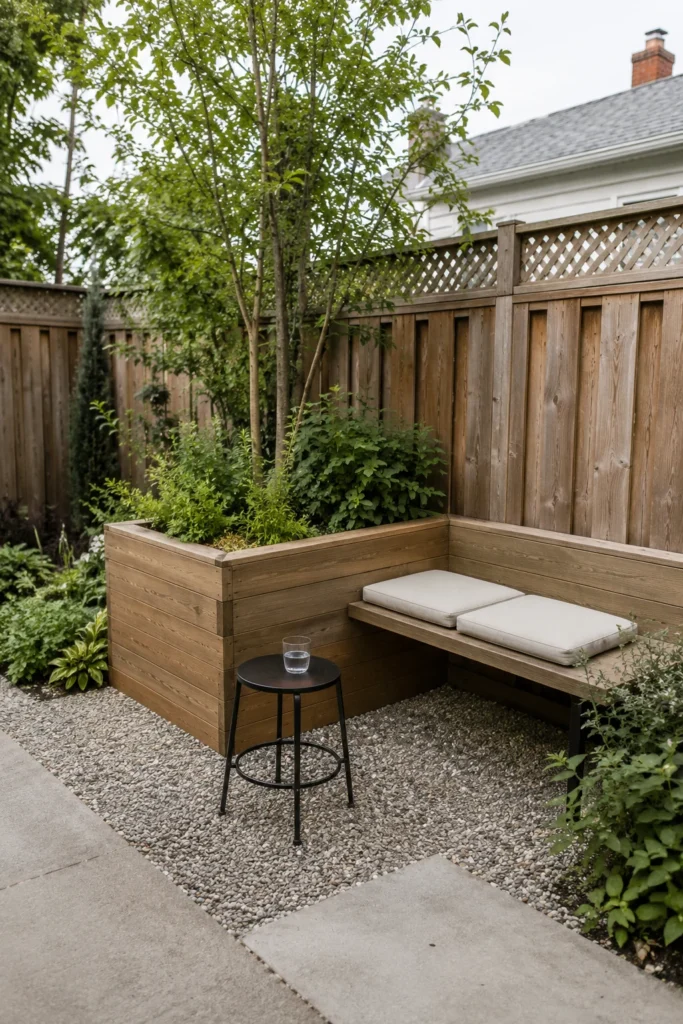
A simple bench built around part of a large planter can work well in a small courtyard or garden corner. The planter becomes the visual anchor while the bench creates one or two usable seats without adding separate chair footprints.
Keep the bench relatively narrow and let the planter occupy one end rather than placing a huge pot directly in the middle of the patio. A small movable stool can serve as a table when needed.
This kind of small garden seating arrangement feels intentional because the plants and furniture belong to the same zone.
Don’t overdo the planter size. One very large container can take up the footprint of an armchair. The goal is to consolidate greenery, not trade all your seating space for a giant pot.
Choose plants based on the local climate and sun exposure rather than copying a Pinterest photo from a completely different region.
14. Make a Low-Maintenance Patio With Metal Chairs and Gravel
For a patio that doesn’t need constant upkeep, keep the materials straightforward.
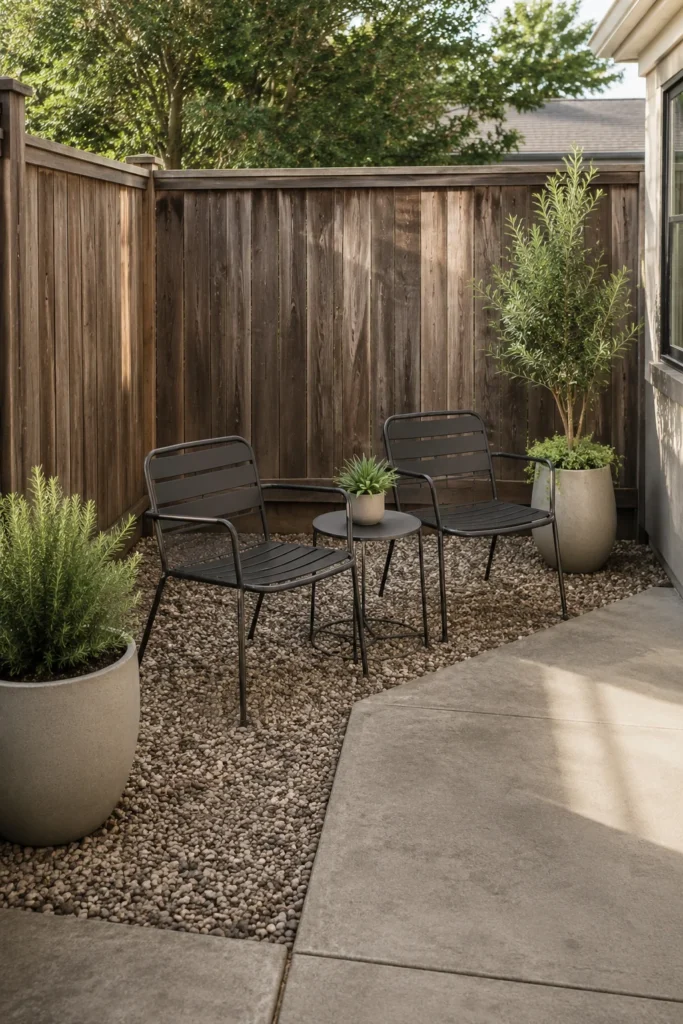
Use two powder-coated metal chairs on a gravel or paver surface with one weather-resistant side table between them. Add one or two larger planters rather than a collection of tiny containers.
This is a strong direction for backyard ideas low maintenance because the layout doesn’t rely on extensive planting, delicate upholstery, or furniture that has to be dragged indoors every night.
If you want cushions, choose removable outdoor-rated pads that are easy to store. Otherwise, chairs with comfortable mesh or perforated seats can work without cushions.
The visual lightness of metal frames also helps a compact space feel less crowded.
Low maintenance still depends on local conditions. Strong sun, salt air, heavy rain, or freezing temperatures affect materials differently, so check what the manufacturer recommends for your climate.
And while gravel is forgiving, use a surface stable enough that chair legs don’t wobble constantly.
15. Add Soft String Lights Above a Small Seating Area
Lighting can make a small patio feel more inviting after sunset, but it doesn’t need to resemble a wedding venue.
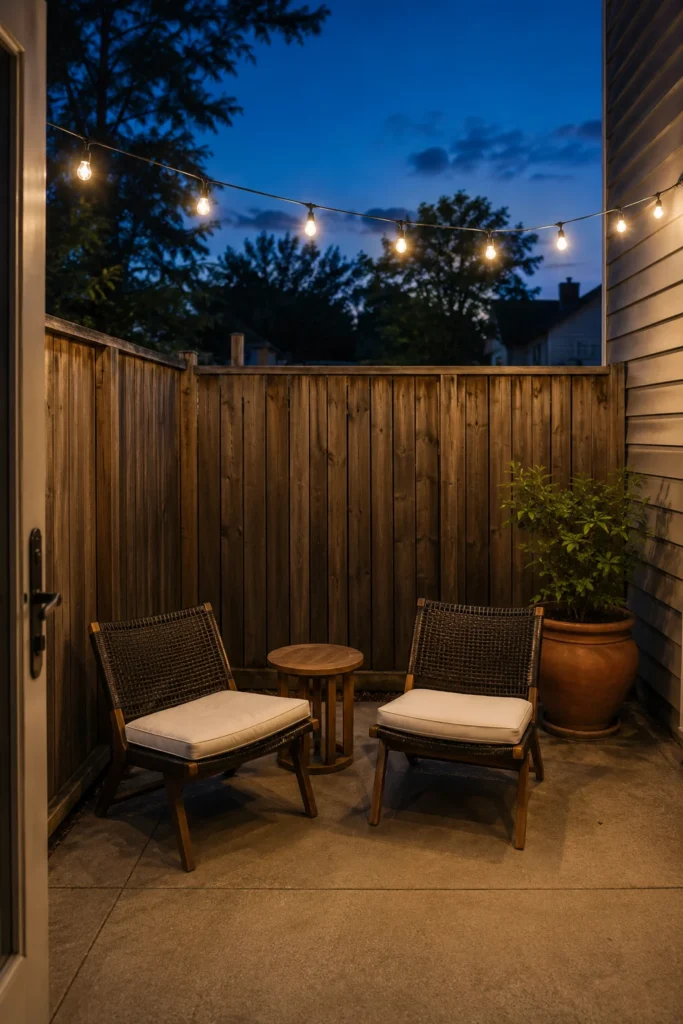
For a fenced patio with two lounge chairs and one side table, run a single strand or two of warm outdoor-rated string lights overhead in a clean path. Keep them high enough that no one feels as though the wires are hanging directly above their head.
The seating should still be the main feature. Use two slim chairs with light cushions, one small table, and perhaps one medium planter. The string lights provide the atmosphere rather than becoming the entire design.
This is one practical answer to how to light up backyard seating without adding a harsh floodlight.
Several low and gentle sources often work better in compact spaces than one very bright fixture. You can supplement the overhead lights with a small rechargeable lamp on the table if needed.
Make sure attachment points are secure and appropriate for the building. Don’t hang lights from unstable branches or improvised supports.
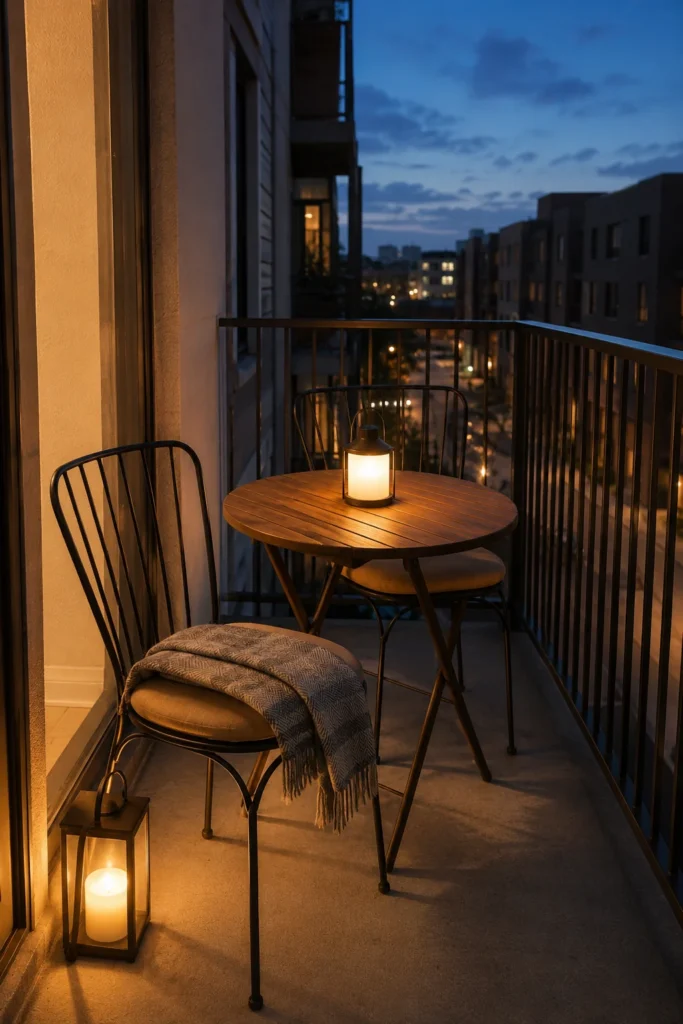
16. Light a Balcony With Rechargeable Lanterns
On a balcony where hanging lights aren’t allowed, portable lanterns are easier.
Arrange two compact chairs around a small table and place one rechargeable lantern on the tabletop. Add a second, slightly larger lantern on the floor beside the seating—not in the walking path.
The lower light sources make the balcony feel cozy without blasting the neighbors with a bright overhead fixture.
This is a useful version of backyard lantern ideas adapted to apartment living. Candle-style LED lanterns can give you the same visual warmth without the complications of open flames near railings, fabrics, or windy conditions.
Keep the seating itself simple: black metal café chairs, a warm wood table, and perhaps one folded outdoor throw.
Avoid filling every corner with lanterns. Three or four bright lights in a six-foot balcony can quickly become visually busy.
Rechargeable designs are particularly useful for renters because they don’t require wiring or permanent installation.
17. Pair a Loveseat With a Narrow Privacy Screen
Privacy can make an apartment patio far more usable, but enclosing every side can make a small space feel even smaller.
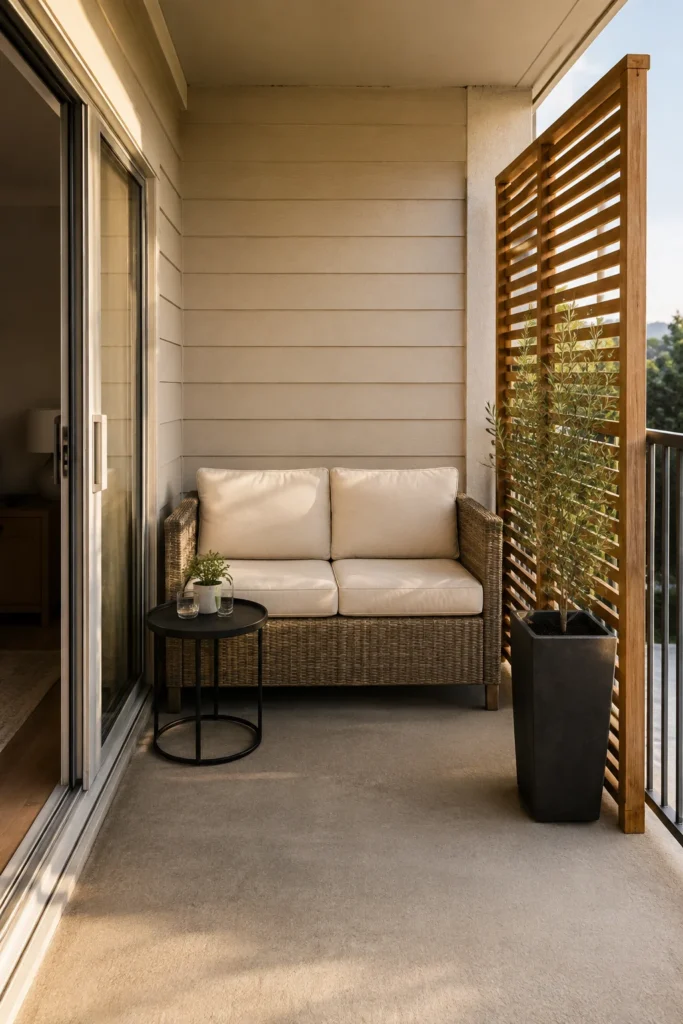
Place a compact loveseat against the most solid wall and use a narrow slatted privacy screen only along the side with the clearest neighbor sightline. Add a tall planter in front of one end of the screen to soften it.
Use a small side table rather than a full coffee table so the center remains open.
This approach works because the privacy element is directional rather than creating a box around the entire patio. The seating feels sheltered without losing all airflow or visual openness.
A 48- to 54-inch loveseat is usually enough for two people. Wider pieces can crowd the entrance surprisingly fast.
If you’re renting, look for freestanding screens rather than assuming you can drill into walls or railings. Also consider wind: tall lightweight screens need a stable base.
18. Create a Small Fire-Pit Seating Area Only Where It Makes Sense
A fire feature can make a small backyard seating area feel intimate, but this is one case where scale and safety have to come before aesthetics.
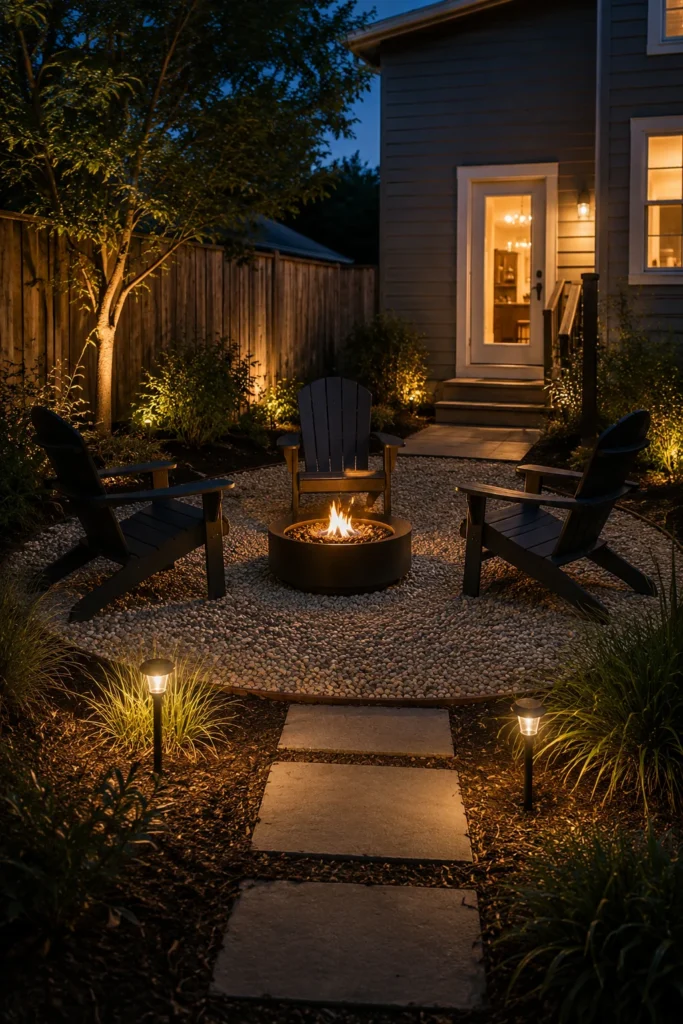
In a compact private yard, use two or three chairs around a small approved fire feature only if local rules, manufacturer clearances, overhead conditions, and surrounding surfaces allow it. Keep the seating simple—slim Adirondack-style chairs or compact metal lounge chairs work better than a large sectional.
Avoid forcing a fire pit into an apartment balcony or beneath a low roof simply because the idea looks cozy online.
Where permitted, position the seating so there’s still a clear route back to the house. Don’t wedge chairs against a fence just to make the circle fit.
A few low solar path lights can provide additional visibility without overpowering the firelight.
If required clearances leave almost no room for chairs, that is a good sign the space is too small for a fire feature.
A Simple Formula for Planning Your Own Small Patio
The best small patio ideas aren’t the ones that fit the most furniture into the least space. They’re the ones that make sitting outside easy.
Start with right-size seating + a clear walking path + one useful table + a little greenery + soft lighting.
Measure the patio before you shop, including the width of the doorway and the depth of any furniture you’re considering. Then think about how many people actually use the space on an ordinary day. Two comfortable chairs are usually more valuable than four cramped ones that nobody wants to sit in.
Once the main seating works, add one table where a drink can realistically reach it. Use plants to soften the edges rather than filling the entire floor with pots. At night, a rechargeable lamp, lantern, string lights, or a few subtle low lights are often enough.
Most importantly, leave room to move.
A cozy outdoor retreat should still be easy to enter, sit down in, sweep, rearrange, and maintain. If you have to squeeze sideways past the furniture every time you step outdoors, subtract something. In a genuinely small patio, a little empty space often makes the whole area feel more finished.
