
15 Easy DIY Outdoor Halloween Ghost Decoration Ideas
Some of the strongest diy halloween decorations outdoor are also the simplest. Ghosts work especially well in yards and on porches because they rely on shape, movement, and lighting more than tiny details. From the street, a clean white silhouette floating against a dark lawn usually reads better than a complicated prop covered in little features nobody can see.
A good rule is to make the silhouette readable first, then add face details, lighting, and props.
That might mean a rounded head, enough fabric to suggest shoulders and movement, and a clear height difference between figures. Once the basic shape works, simple black eyes, a soft backlight, or a lantern can make the decoration much more convincing.
You also don’t need an enormous yard. One glowing ghost can make a small porch feel finished, while three or five figures can turn a wider lawn into a full Halloween scene. Old sheets, tomato cages, garden stakes, pool noodles, thrifted curtains, plastic tablecloths, and battery lights can all become useful materials.
The ideas below range from quick beginner projects to a few more involved weekend builds.
15 Easy DIY Outdoor Halloween Ghost Decoration Ideas
1. Make a Trio of Classic Sheet Ghosts on Garden Stakes
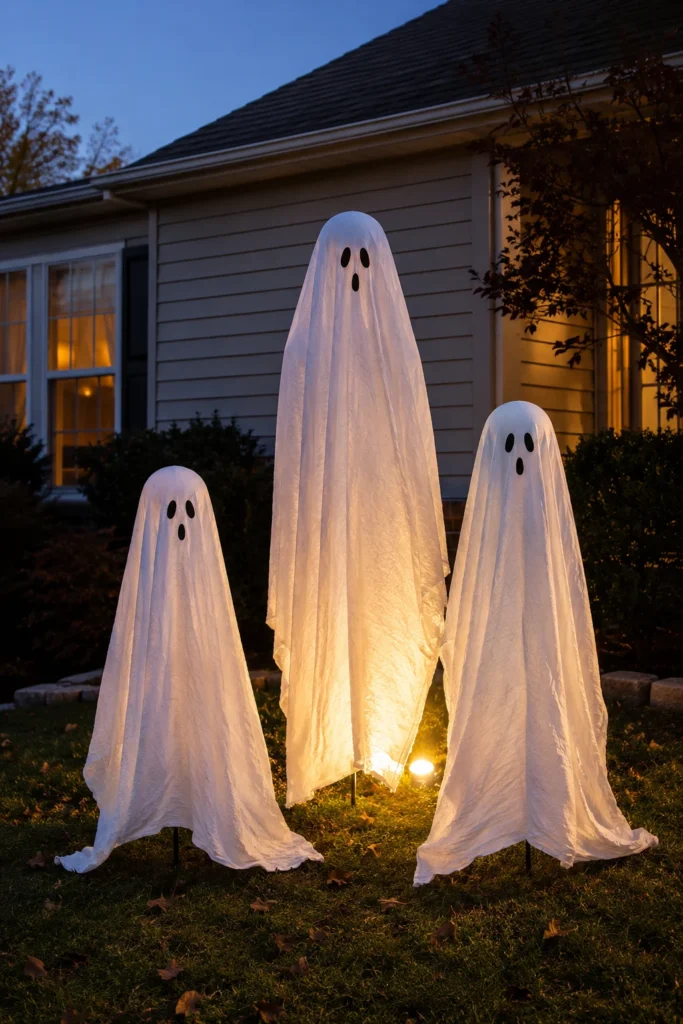
Three medium-size sheet ghosts usually make a stronger front-yard statement than one figure standing alone.
Place the tallest ghost near the back of the group, around five to six feet high, with two shorter ghosts positioned slightly forward and to either side. Don’t line them up evenly. A loose triangle looks more like a scene and less like decorations waiting in a row.
For each ghost, use a sturdy garden stake as the main support and a lightweight ball, foam sphere, or similar rounded object for the head. Drape an old white sheet over the top and give the fabric enough width to suggest shoulders. Large black felt or painted eyes and a small mouth are plenty.
This is one of the cheapest ways to make DIY front-yard ghosts that are easy to recognize from the curb.
Use extra ties or discreet anchoring points lower on the fabric so the whole sheet doesn’t wrap around the stake in wind. Too much loose fabric can turn a floating ghost into a twisted white rope.
2. Build Glowing Tomato-Cage Ghosts for the Porch
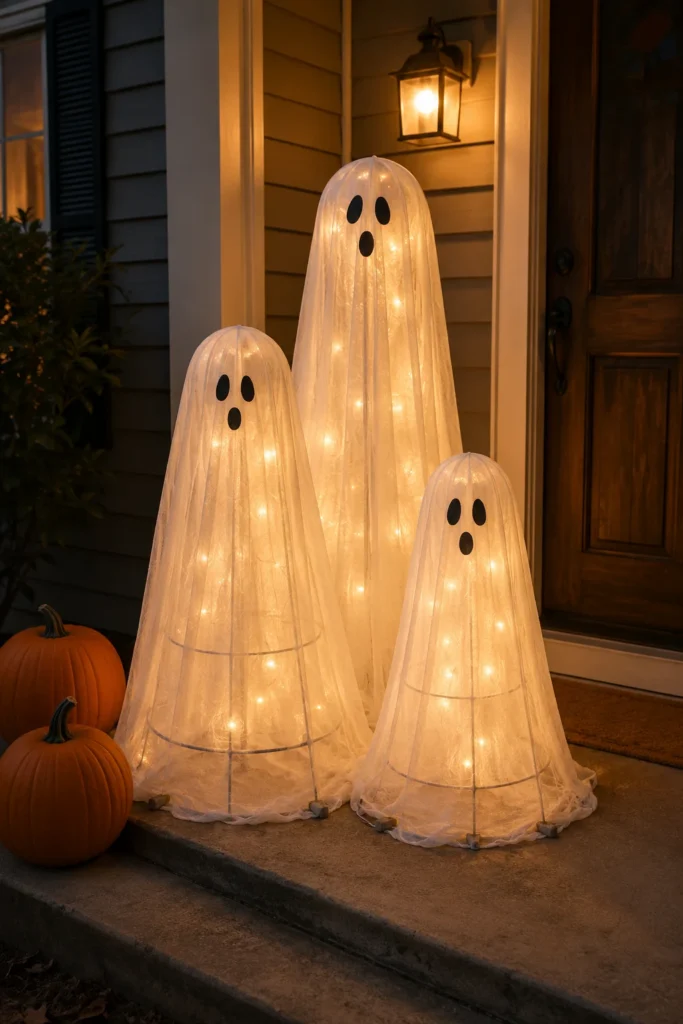
Tomato cages make excellent ghost frames because the wider base keeps the fabric from hanging straight down like a curtain.
Turn a cage upside down so the narrow end becomes the top. Attach a lightweight round head and drape white fabric over the frame. A thrifted sheer curtain, white sheet, or lightweight synthetic fabric can work depending on how exposed the porch is.
Place two or three cage ghosts beside the front steps or against the porch wall, varying their heights if your cages aren’t identical.
The real payoff comes after dark. A small outdoor-suitable LED light placed inside the lower section can make the fabric glow from within. Keep the face simple so the internal light doesn’t compete with too many details.
This is especially useful simple Halloween decor outdoors because the cages create volume without complicated construction.
Anchor them carefully. A tomato cage with fabric over it can catch wind like a sail. Porch corners offer some protection, but the base should still be weighted or secured appropriately.
3. Hang Two Cheesecloth Ghosts Under a Tree
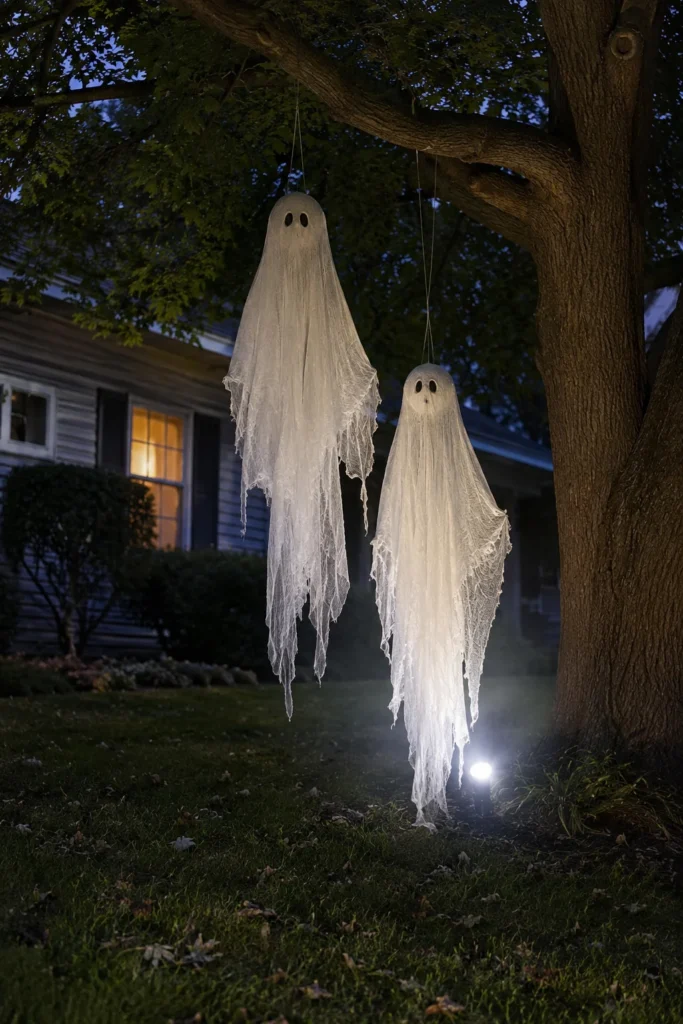
Cheesecloth creates a much lighter, more ragged silhouette than a classic sheet, so it works especially well for suspended ghosts.
Use two small or medium forms and hang them at different heights beneath a sturdy tree branch. The fabric should fall in uneven strips and layers rather than forming a neat hem.
These ghosts look best when there is enough air movement for the lower edges to shift gently. They can feel much eerier than a solid sheet without needing an elaborate face.
Keep the heads rounded but small, then use dark hollow-looking eyes rather than cartoon expressions.
At night, place a low light behind or below the figures so the cheesecloth catches highlights while the tree canopy stays mostly dark. Backlighting gives lightweight fabric more definition.
Cheesecloth is one of the less weather-resistant materials on this list. Prolonged rain can make it sag, cling, or lose shape, so this setup is better when the fabric can be taken down easily before poor weather.
Make sure hanging lines are secure and positioned well above normal walking height.
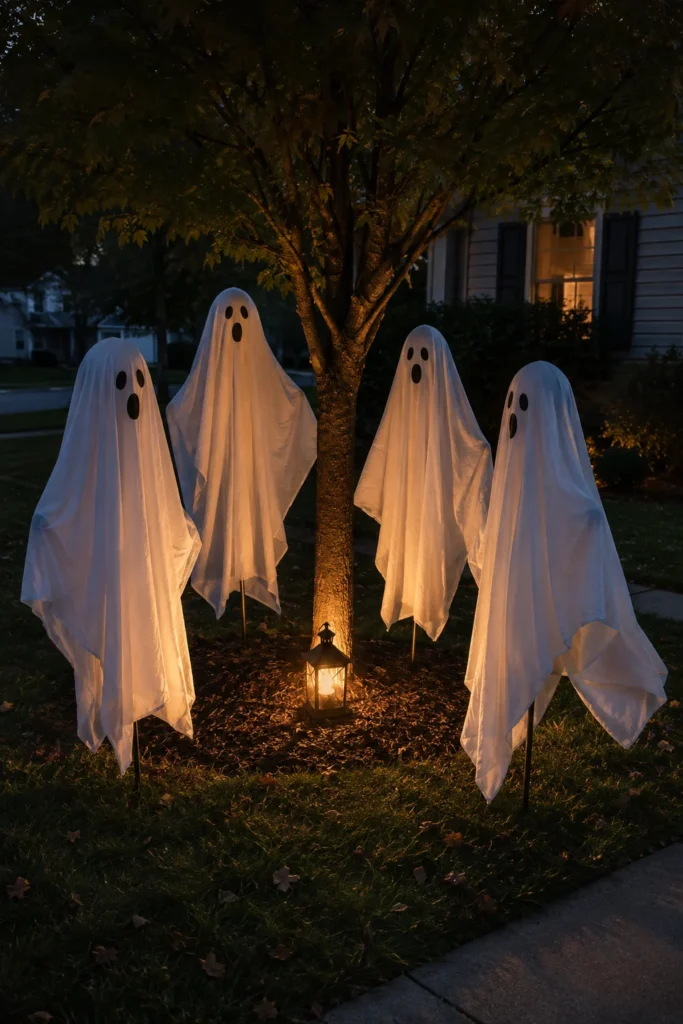
4. Make a Ghost Circle Around a Tree
A ring of ghosts becomes much more interesting when they appear to be interacting with something.
Place four medium sheet ghosts in a loose circle around a front-yard tree, with each figure angled slightly inward. They don’t need arms or complicated body shapes. The inward orientation does most of the storytelling.
Use stakes in the lawn and vary the height by a few inches so the group doesn’t look mass-produced. Simple black faces can look toward the tree trunk or toward one another.
This arrangement works because repetition makes the ghost theme obvious from the street, while the central tree gives the group a natural focal point. It reads as a scene instead of four unrelated props.
A single warm lantern or low light near the trunk can illuminate the center while leaving the ghosts partly in shadow.
Keep enough space between figures so lawn maintenance and walking remain practical. In a very small yard, three ghosts are enough. Five or six tightly packed figures can turn the circle into a wall of white fabric.
Secure every stake well before adding large sheets.
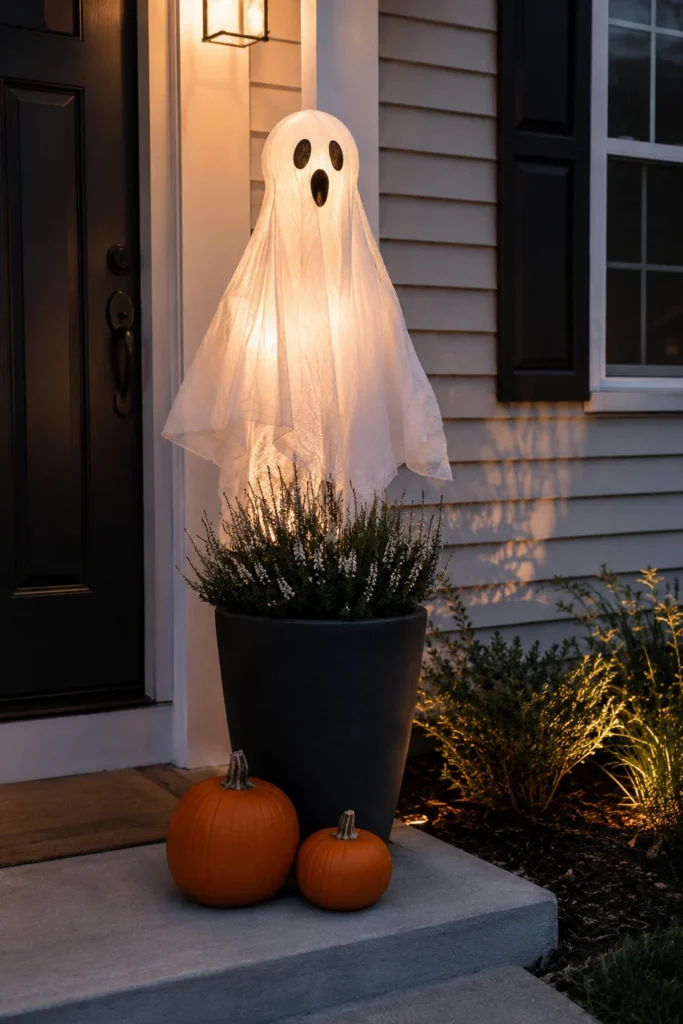
5. Create a Glowing Ghost Rising From a Porch Planter
If you only have a porch, townhouse entry, or apartment patio, use the vertical space you already have.
Start with one substantial outdoor planter and insert a secure support into the container without relying on loose soil alone to hold the entire prop. Add a lightweight round head and drape white or pale gray fabric over the support so it appears to rise from the planter.
Keep the ghost around three to four feet above the planter. Anything much larger can overwhelm a narrow entry.
A small battery or outdoor-suitable LED inside the upper body can make the fabric glow softly. Pair it with one or two pumpkins or leave the planter ghost completely alone.
This is a strong option for ghost porch decor because it occupies almost no additional floor area.
Choose fabric that won’t trail into the walkway. A dramatic two-foot fabric tail looks great in a photo until guests step on it.
In windy entrances, synthetic cloth or a trimmed plastic tablecloth may behave better than very lightweight cheesecloth.
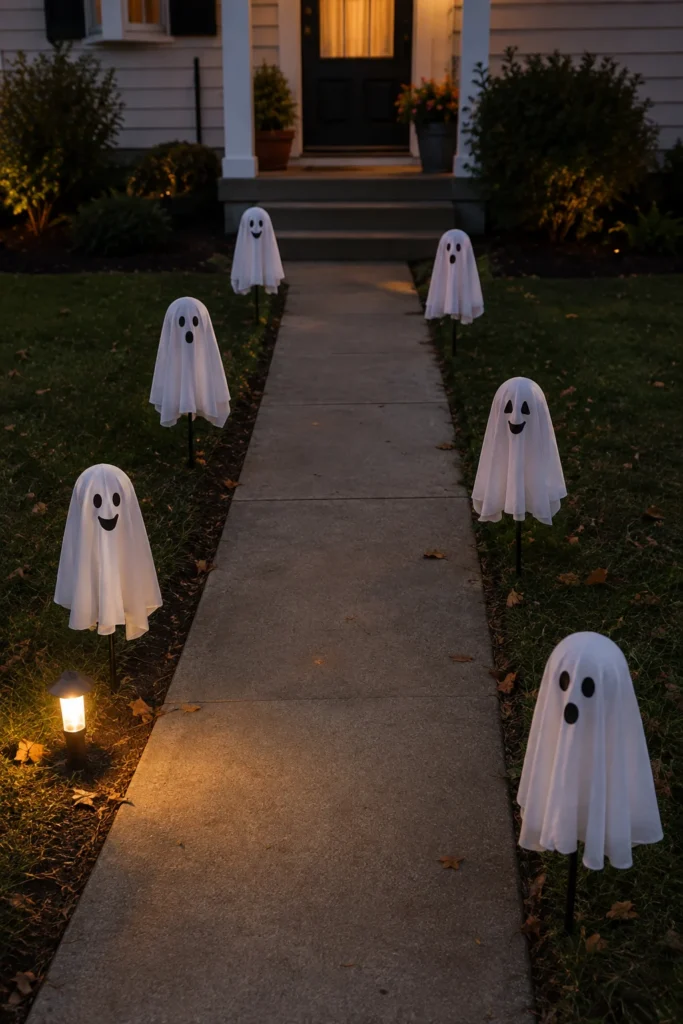
6. Line the Walkway With Mini Ghost Path Markers
Four or six mini ghosts can turn an ordinary walkway into a Halloween feature without occupying the lawn.
Make each figure around 18 to 24 inches high using short stakes and small rounded heads. Cover them with pieces of white fabric or weather-resistant white plastic tablecloth trimmed into loose uneven hems.
Place them on alternating sides of the walkway rather than directly opposite each other in perfectly matched pairs. Slightly staggered spacing feels more playful and less formal.
Small ghost faces need to be simple because visitors will mostly see the figures while approaching from several feet away.
Add low pathway lighting if you already have it, or use one discreet light near the beginning of the row so the white forms remain visible after dark.
This setup is cheap and especially useful for small front yards.
Keep every stake and fabric edge completely outside the walking surface. A Halloween decoration beside the path is fun; one leaning into the walkway becomes a trip hazard.
If you live somewhere windy, shorter ghosts are easier to keep upright than tall, narrow figures.
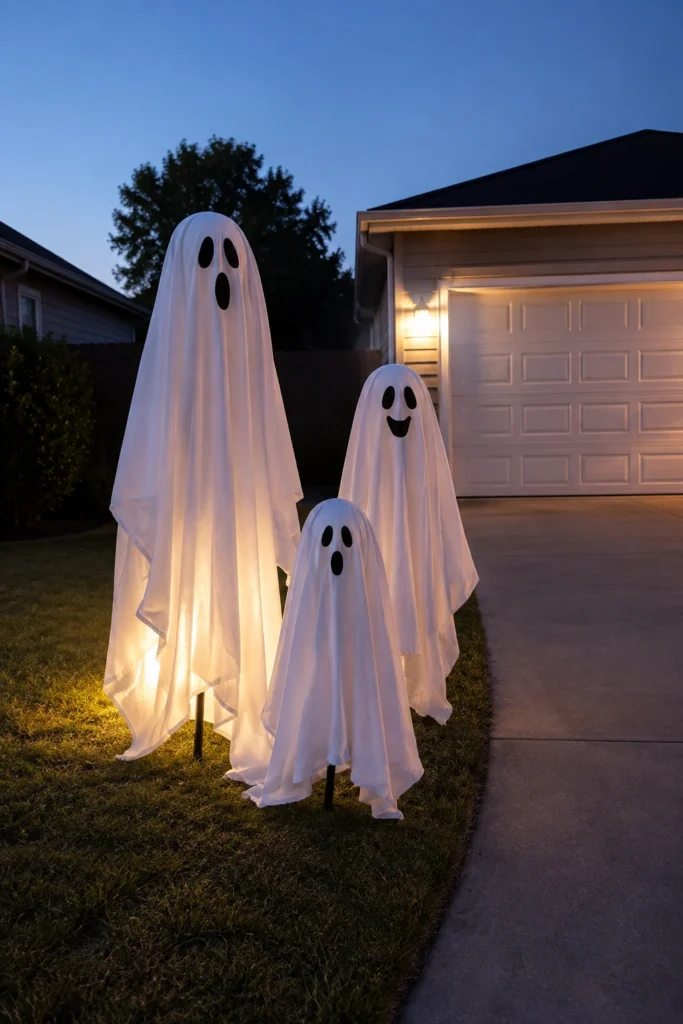
7. Make a Driveway Ghost Family at Different Heights
A driveway edge gives you enough depth to create a larger scene while keeping the lawn open.
Use three ghosts in distinctly different heights: one tall figure around six feet, one medium figure around four and a half feet, and one small figure around three feet. Arrange them close enough to read as a family but leave visible gaps between each one.
Use slightly different face shapes so they don’t look copied. One can have a long oval mouth, another a tiny round mouth, and the smallest can look more playful.
Place the group off to one side of the driveway rather than near the vehicle path.
A single ground light behind the tallest ghost can make all three silhouettes readable after dark without lighting every figure individually.
The varied scale creates instant storytelling, which is why three Halloween yard ghosts can feel more memorable than ten identical small ones scattered across the lawn.
Large figures need deeper or more secure anchoring than porch ghosts. If the yard is exposed to wind, reduce the amount of loose fabric on the tallest figure.
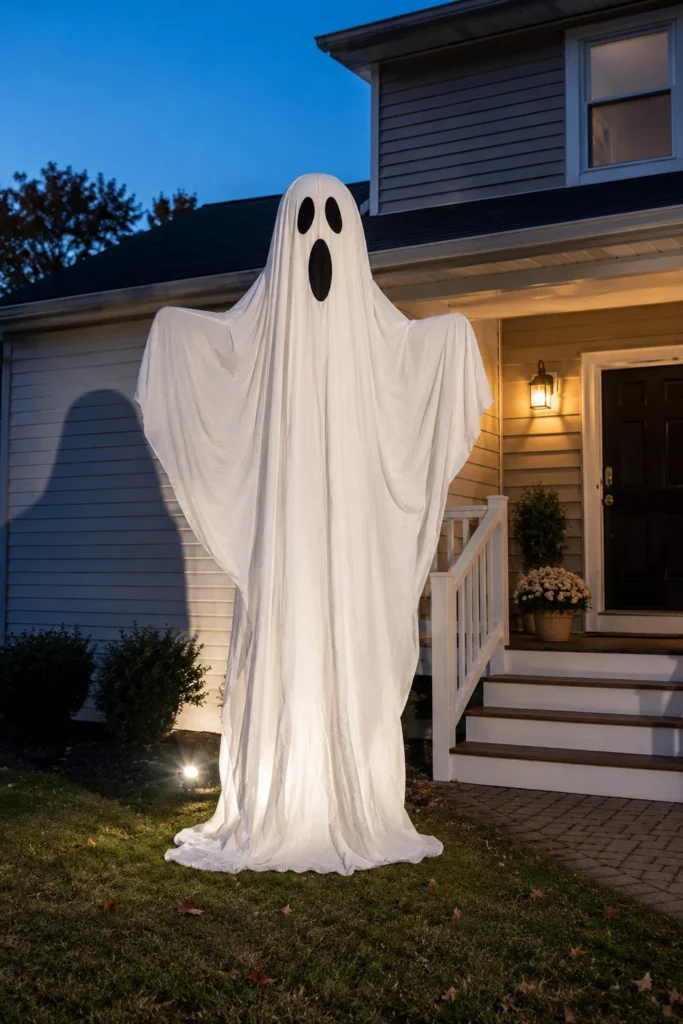
8. Add One Oversized Ghost Beside the Front Porch
One large ghost can have more visual impact than a collection of small decorations, especially in a modest yard.
Build a figure around seven feet tall with a stronger support than a standard garden stake. A simple PVC frame can work for this more involved project, giving you a central spine and enough width to suggest shoulders.
Drape a large thrifted sheet or lightweight outdoor fabric over the frame. Keep the face oversized too—large black eyes and one clear mouth so it reads from across the street.
Position the ghost beside the porch rather than directly in front of the entry. The house helps give the figure scale, and the porch wall can provide some protection from wind.
Low backlighting can throw a long shadow across the siding or lawn.
This is a moderate weekend build rather than a five-minute project. The larger the fabric area, the more wind pressure it catches, so anchoring matters significantly more than it does with mini ghosts.
Don’t let fabric trail across steps or sidewalks.
9. Hang a Cluster of Small Ghosts Around the Front Door
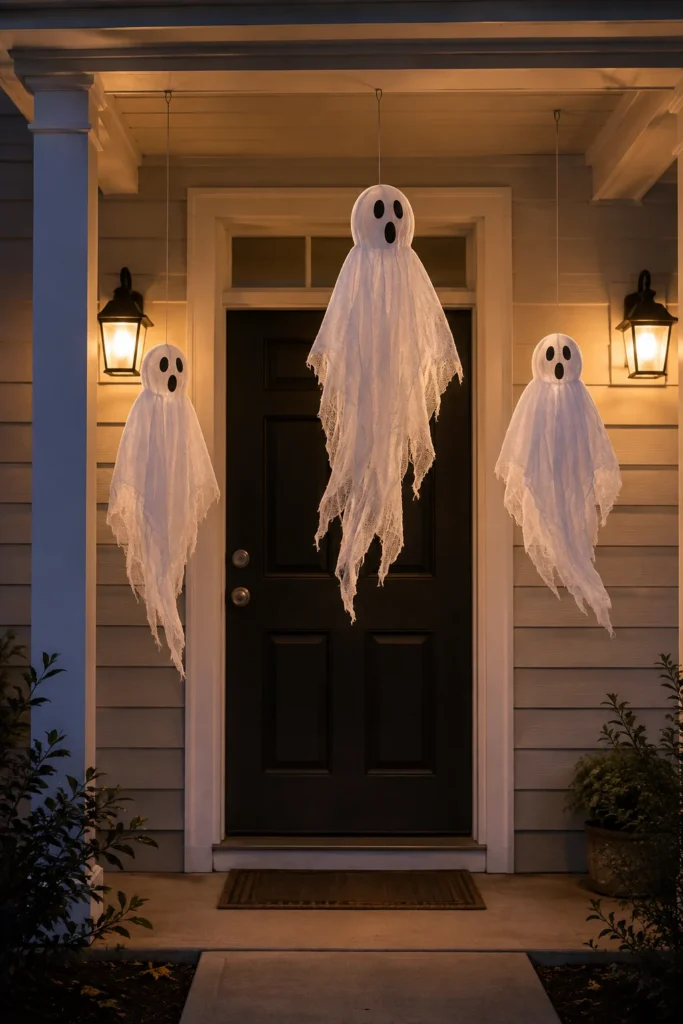
A doorway can handle several ghosts if you keep them small and lift them off the floor.
Create three lightweight hanging ghosts, each around 18 to 30 inches long, and suspend them at slightly different heights around the door frame using appropriate removable hooks or secure hanging points.
Use white gauze, lightweight fabric, or synthetic sheer material over small foam or paper forms. Keep the faces simple.
The cluster works because the front door naturally frames the decoration. You don’t need garlands, signs, skeletons, and dozens of pumpkins at the same time.
Let your normal porch sconces provide most of the illumination. If the ghosts are sheer, the side lighting can create enough shadow to make them stand out.
For an apartment patio or covered entry, this is much easier than building lawn props.
Be careful with the door swing and head clearance. A ghost that gets caught in the door every time someone comes home won’t stay charming for long.
In windy entries, shorten the lower fabric so it doesn’t wrap around handles or railings.
10. Build a Ghost Picnic Scene on the Lawn
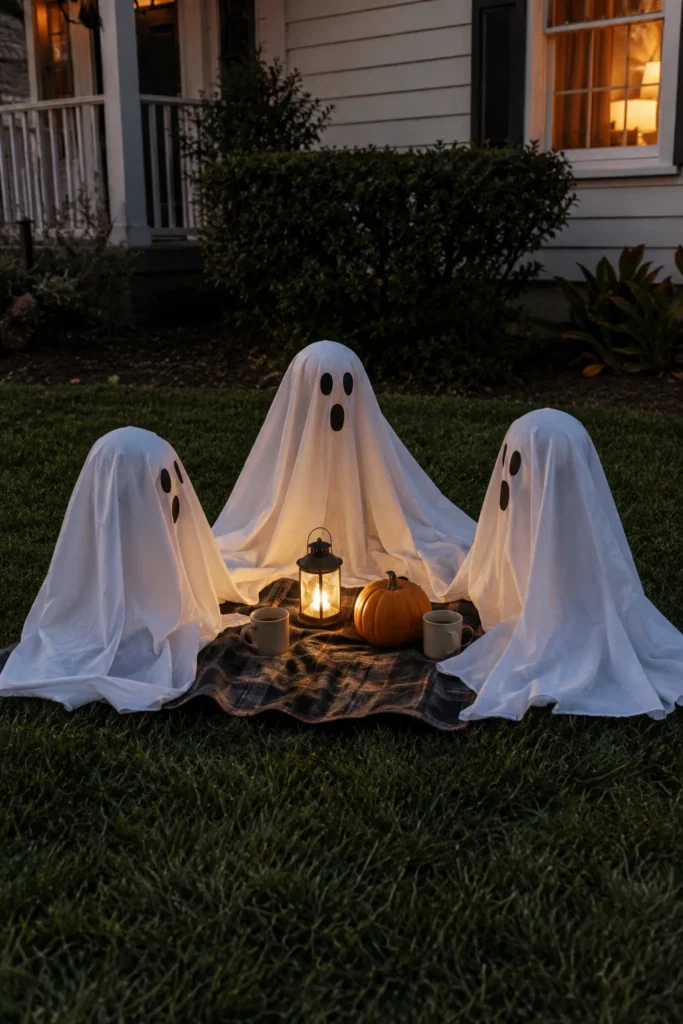
A little storytelling can make a basic sheet ghost setup feel much more memorable.
Arrange three seated or low-standing ghosts around a small picnic blanket or low outdoor table on one side of the front lawn. Use shorter supports than you would for upright yard ghosts so the figures appear gathered rather than towering.
Keep the scene simple: one small lantern, two faux mugs, and perhaps a pumpkin on the blanket are enough.
This is more playful than scary, which can work well for households with younger children.
The key is spacing. Don’t spread the figures ten feet apart; bring them close enough that their inward-facing positions clearly suggest interaction.
Use one lantern or low warm light at the center. Warm light gives the setup a slightly vintage Halloween feel and helps the ghost faces remain visible.
Anything lightweight on the blanket needs to be secured or removed on windy days. Also keep the scene well away from the sidewalk so children aren’t stepping through it while trick-or-treating.
11. Pair Three Ghosts With a Seated Skeleton Holding a Lantern
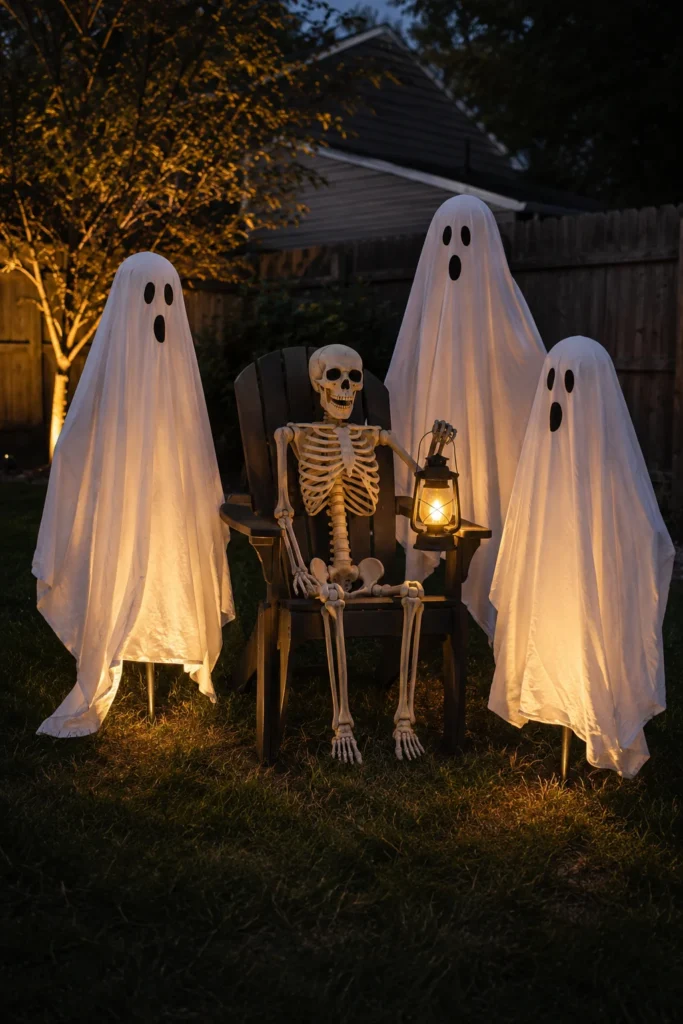
Skeletons work best in this article when they support the ghost scene rather than becoming the entire theme.
Set one simple seated skeleton on a sturdy outdoor chair near the edge of the yard, holding or positioned beside a lantern. Then arrange three medium sheet ghosts in a loose semicircle facing the skeleton.
The result looks like a strange little gathering.
The skeleton gives the eye a contrasting hard shape against the soft flowing ghost fabric. Meanwhile, the ghost repetition keeps the scene clearly centered on ghost-themed outdoor decorations.
This works well at dusk when the lantern creates a warm focal point and the ghosts remain partly shadowed.
A store-bought or basic DIY skeleton prop is enough; you don’t need a complex articulated build. If you’re making your own PVC-style skeleton accent, treat it as a moderate project and focus on a readable silhouette rather than realistic anatomy.
Secure the seated figure so it can’t fall forward in wind.
Avoid placing the lantern where loose ghost fabric could contact a real flame. LED light is the easier choice here.
12. Make a Funny Non-Graphic “Puking Skeleton” Ghost Scene
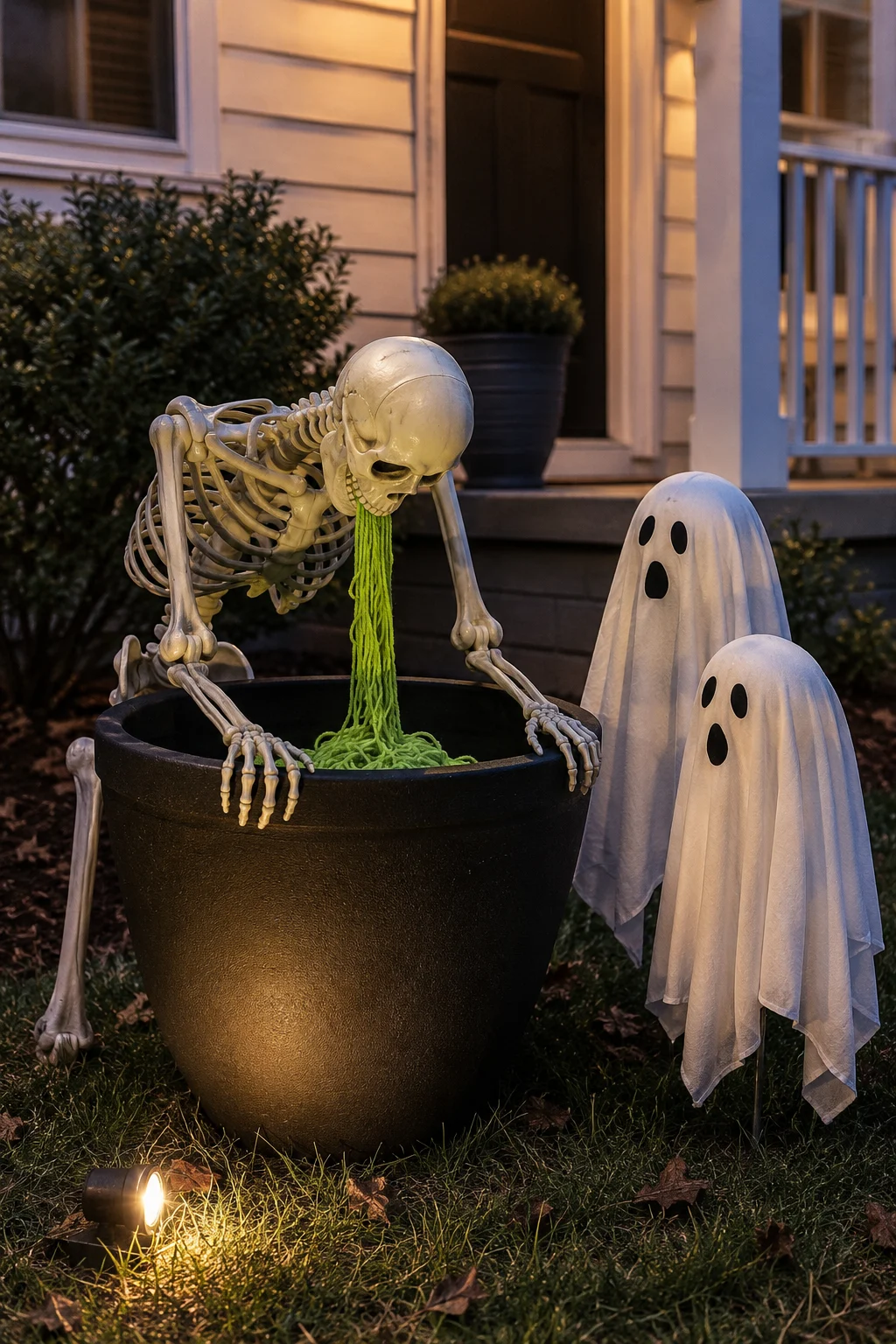
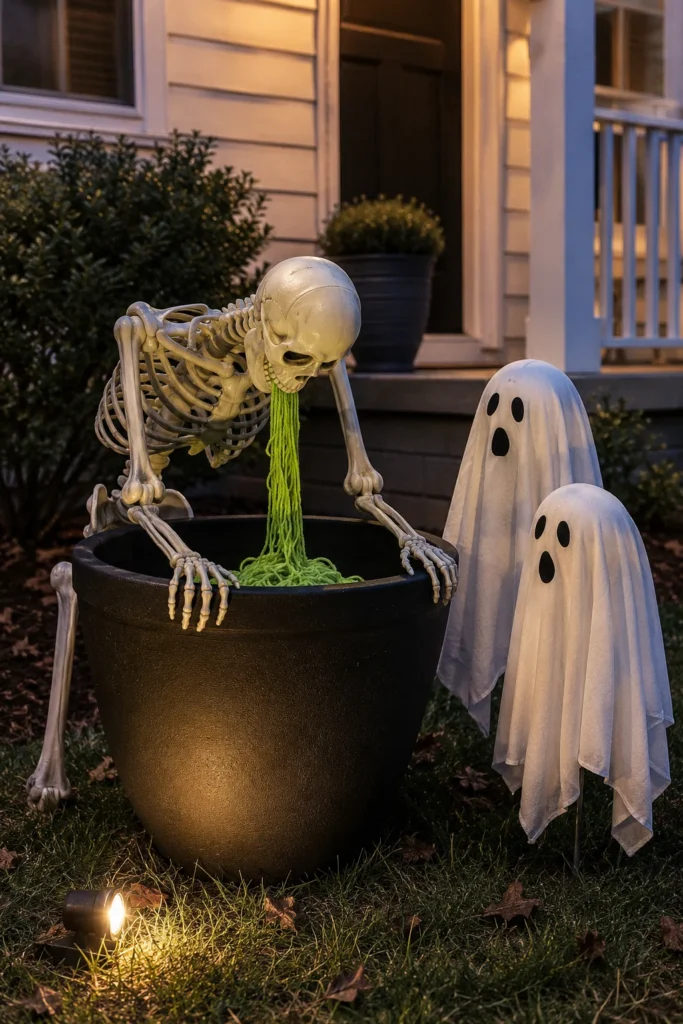
For a comedic setup, place one skeleton leaning over a large dark planter and use loose strands of bright green yarn or another lightweight faux material to create a deliberately silly, obviously fake “puking skeleton” effect.
Then add two small sheet ghosts standing nearby as if they’re watching.
The humor works because the ghosts make the whole scene read as a Halloween joke rather than a gross realistic display. Keep the skeleton setup exaggerated and cartoonish.
Place the arrangement near a porch or fence where it can be seen clearly but doesn’t block the walkway.
One low light aimed at the planter is enough to make the scene visible after dark. Avoid red lighting or anything that makes the effect look graphic.
This is an optional idea for readers interested in puking skeleton decoration DIY, but it should stay firmly in the playful category.
Anchor the skeleton and planter securely. Lightweight yarn can blow across the yard, so keep the faux material short and contained inside or immediately above the planter rather than stretching it onto the lawn.
13. Use a PVC Frame for a Standing Ghost With Arms
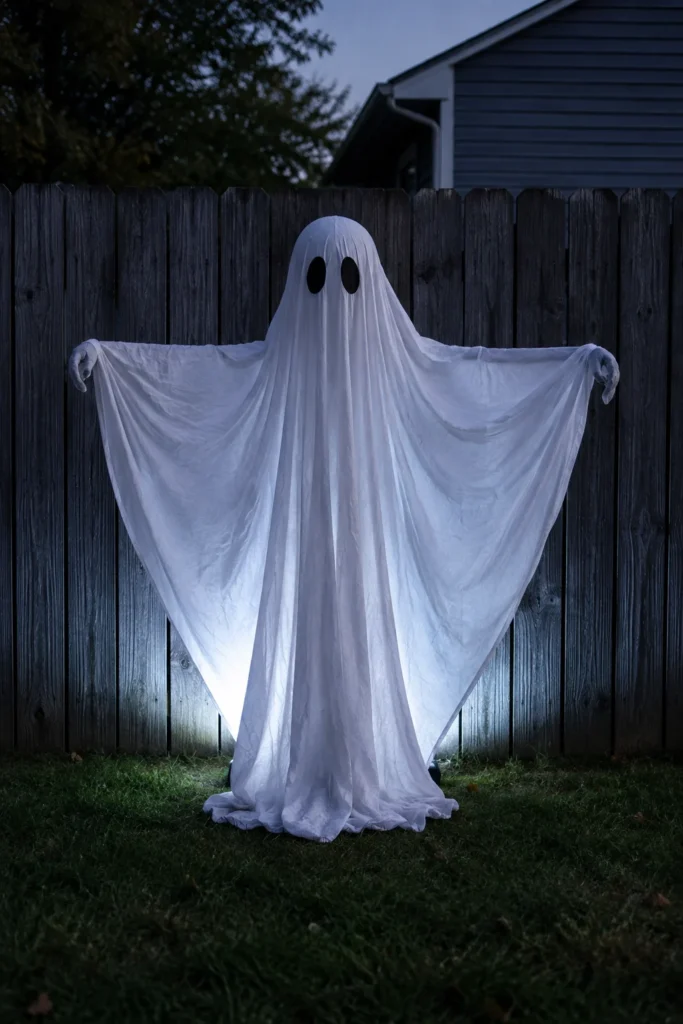
If you want a ghost that looks more human-shaped than a standard stake figure, a simple PVC frame can create shoulders and outstretched arms.
Build a basic upright support with a central body line and a horizontal arm section, keeping the construction straightforward rather than trying to create articulated hands or joints. A lightweight rounded head sits above the frame.
Drape one large white sheet over everything and secure portions of the fabric around the arm ends so the silhouette stays readable.
Position the ghost at the edge of a porch or against a dark fence where the horizontal arms will stand out.
This is a more involved project than tomato cages or garden stakes, but the clearer body shape can look excellent from a distance.
One cool-white ground light behind the figure can emphasize the arms and flowing lower fabric.
Don’t overextend the arms. A very wide PVC frame catches more wind and becomes harder to anchor. The prop should also stay clear of sidewalks and driveways.
Use outdoor-appropriate securing methods and treat the PVC frame as a rigid structure that needs a stable base.
14. Make Weather-Resistant Ghosts From White Plastic Tablecloths
Old sheets look great, but they aren’t always the best material for wet weather.
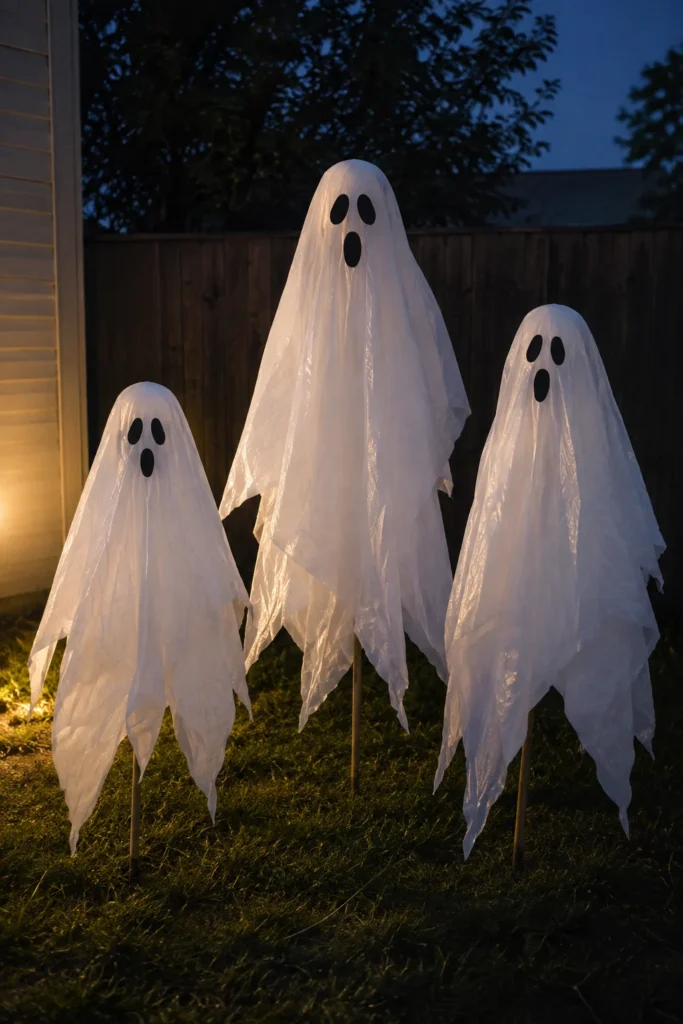
For a more rain-tolerant version, use inexpensive white plastic tablecloths over simple stake-and-head supports. Trim the lower edges into several broad uneven sections so the plastic has some movement instead of hanging like a rectangular bag.
Use felt, weather-suitable paint, or removable vinyl for the face depending on the material.
A group of three works particularly well along a fence or lawn edge.
Plastic catches light differently from fabric, so avoid putting a bright lamp directly in front of the ghosts. Soft side lighting or backlighting helps the surface look less shiny.
This is useful for outdoor Halloween decorations on a budget in climates where October weather is unpredictable.
Plastic is more water-resistant, but it can still tear in strong wind. Secure the lower sections loosely enough to allow movement while preventing them from whipping completely around the stakes.
After Halloween, the supports can be dismantled and stored compactly, which is a practical advantage over bulky foam props.
15. Create a Lantern-Lit Ghost Cluster for a Small Front Yard
For a compact yard, finish with one controlled group instead of spreading props everywhere.
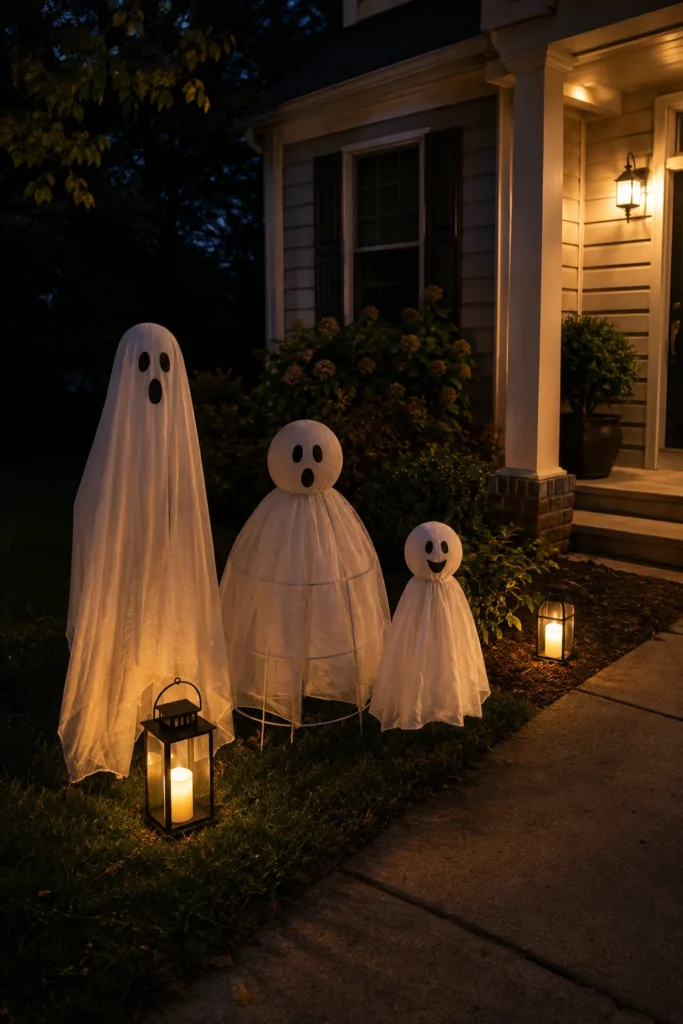
Arrange three ghosts of different heights in one corner of the lawn near the porch or walkway. Use one taller classic sheet ghost, one shorter tomato-cage ghost, and one small lightweight hanging-style figure secured on a low support.
That variation keeps the group interesting without needing more props.
Place one large LED lantern on the ground slightly in front of the cluster and a second smaller lantern closer to the porch. The low light catches the edges of the white fabric and creates long shadows across the lawn.
This setup works because the ghosts are close enough to read as one composition. The rest of the yard stays dark and empty, which actually makes the figures look stronger.
If you’re working with a townhouse entrance, scale the idea down to two ghosts and one lantern.
Don’t place lanterns directly in the walkway, and use outdoor-suitable LED lighting rather than open flames around loose fabric.
This is the kind of spooky but simple Halloween decor that still looks intentional in daylight.
A Simple Formula for DIY Outdoor Halloween Ghosts
The strongest diy halloween decorations outdoor don’t need expensive animatronics or complicated prop-building. A useful formula is clear silhouette + secure support + simple face + one lighting choice + enough empty space around the prop.
Start by looking at the space you actually have.
A narrow porch may only need one glowing planter ghost and two pumpkins. A small front yard can handle three medium figures grouped near a tree or walkway. A wider lawn can support five ghosts, but they still need enough space between them to read as individual shapes.
Varying the heights almost always makes a group look more natural. Keep facial details bold and simple enough to read from the street. Then use one thoughtful lighting approach—backlight, internal glow, lantern, or pathway light—instead of illuminating every prop from every direction.
Outdoor reality matters too. Wind can twist sheets, rain can flatten cheesecloth, and large figures need stronger anchoring than porch decorations. Keep fabric out of walkways, use outdoor-suitable lights, and plan how the props will come apart for storage.
A few well-positioned homemade ghosts usually create a more memorable Halloween setup than a yard crowded with unrelated decorations.
