
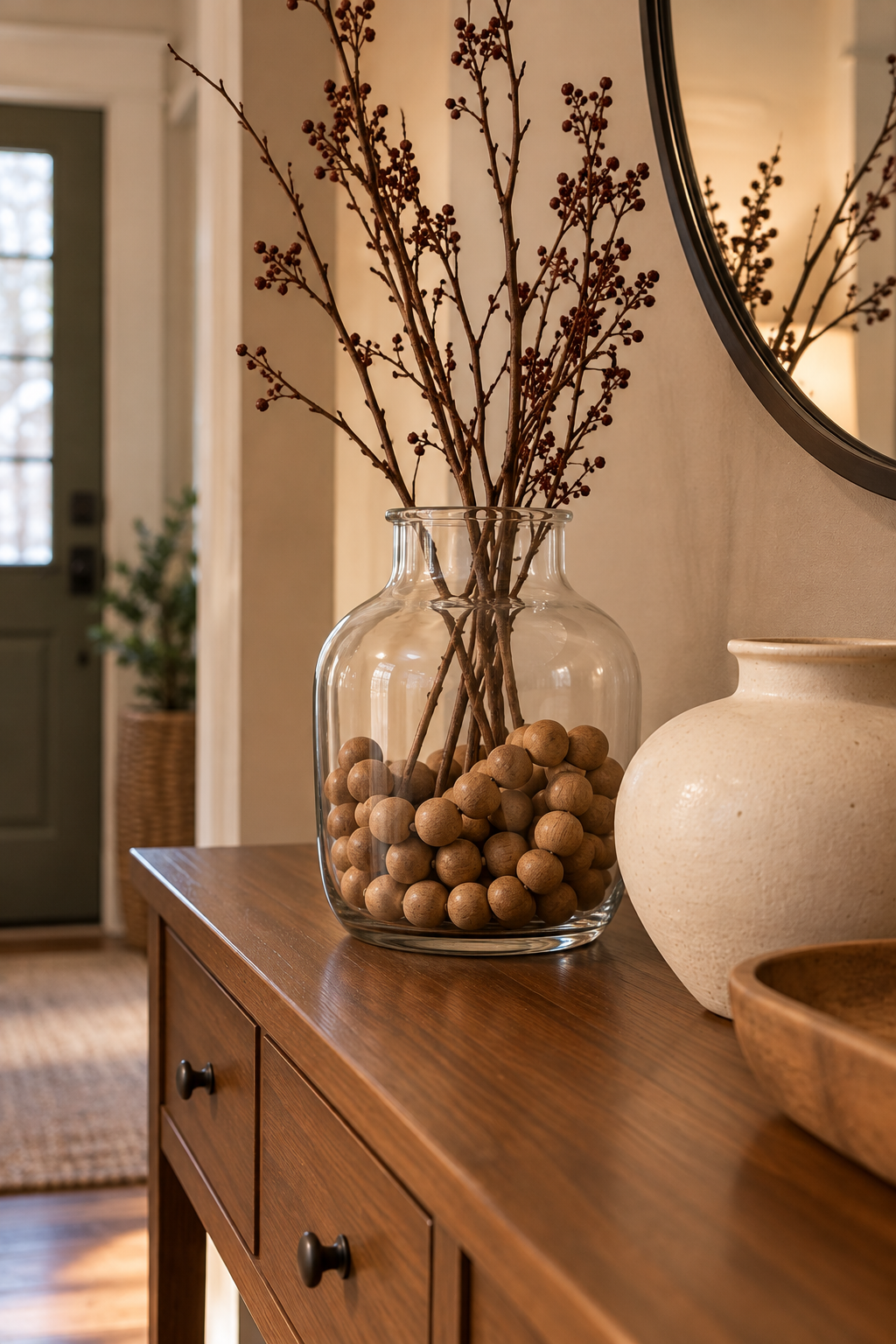
20 Winter Vase Filler Ideas for Easy Seasonal Displays
The easiest way to make a room feel wintery?
Grab a vase.
Put something seasonal inside it.
Congratulations.
We’re halfway done.
The best Winter Vase Filler Ideas don’t require expensive floral arrangements or obvious Christmas decorations. Once December ends, you can replace ornaments, bright ribbon, and holiday picks with quieter materials that work through January and February.
Think:
Evergreen.
Bare branches.
Pinecones.
Dried botanicals.
Deep burgundy.
Muted olive.
Natural brown.
Warm cream.
Wood.
And a little winter texture.
The vase itself matters too.
I love matte ceramic vessels in warm cream, mushroom, muted olive, burgundy, or charcoal because they already contribute to the display.
For clear vases, fillers become more visible, so keep things neat and intentional.
And remember that natural materials need a little common sense. Clean and dry collected materials appropriately, protect surfaces from moisture, keep combustible fillers away from open flames and significant heat, and keep small pieces away from children and pets where they could become hazards.
Ready to fill some empty vases?
Here are 20 Winter Vase Filler Ideas for Easy Seasonal Displays.
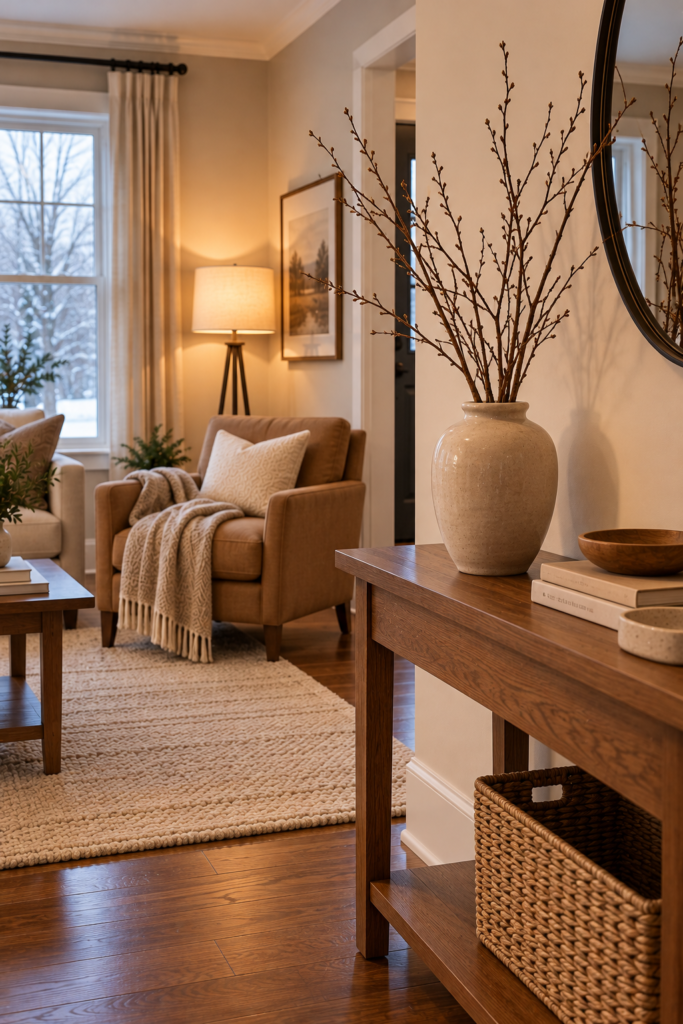
1. Fill a Vase With Bare Winter Branches
Start with the easiest winter arrangement.
Bare branches.
Choose a sturdy ceramic vase with enough weight to support them.
Use three to five clean, dry branches.
Vary the heights.
Keep the arrangement loose.
Don’t force every branch to stand perfectly straight.
The irregular shapes are the whole point.
Use warm-brown branches with a mushroom or warm-cream vase.
Keep taller arrangements away from narrow walkways and face level.
You want sculptural.
Not aggressive.
2. Use Evergreen Branches
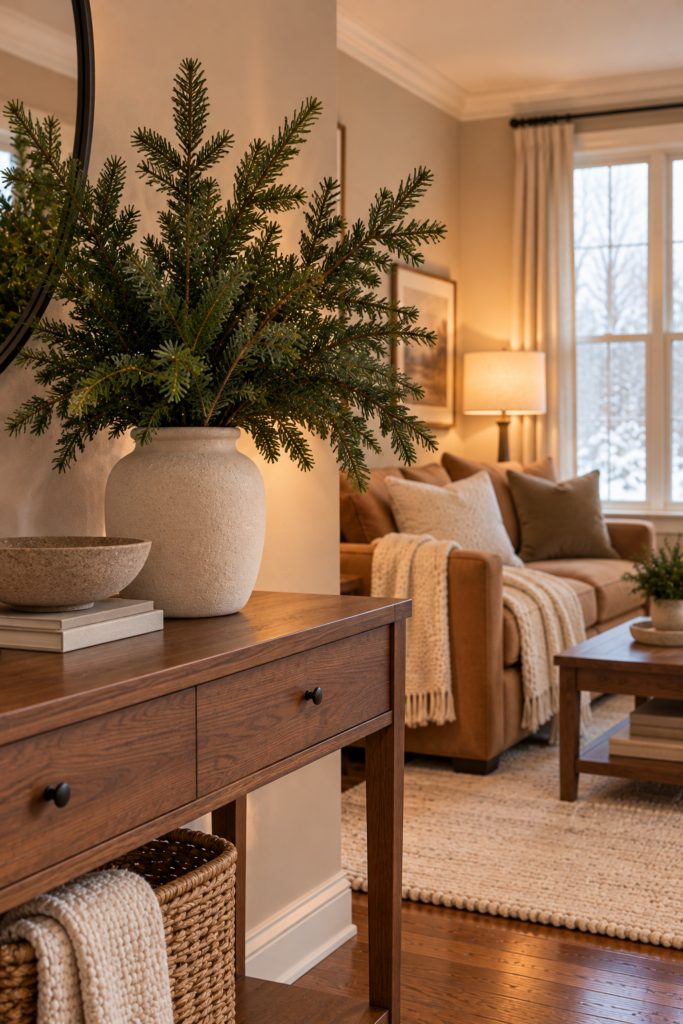
Evergreen works beautifully after Christmas.
The secret?
Remove everything Christmas-specific.
No ornaments.
No bows.
No bells.
No glitter.
Place several evergreen stems inside a warm-cream ceramic vase.
Let the greenery spread naturally.
If using fresh cut greenery, determine its care needs and whether it should be placed in water.
Protect furniture from moisture.
Monitor the material as it dries.
Evergreen alone says winter.
Evergreen wearing six ornaments says December 23.
Different assignment.
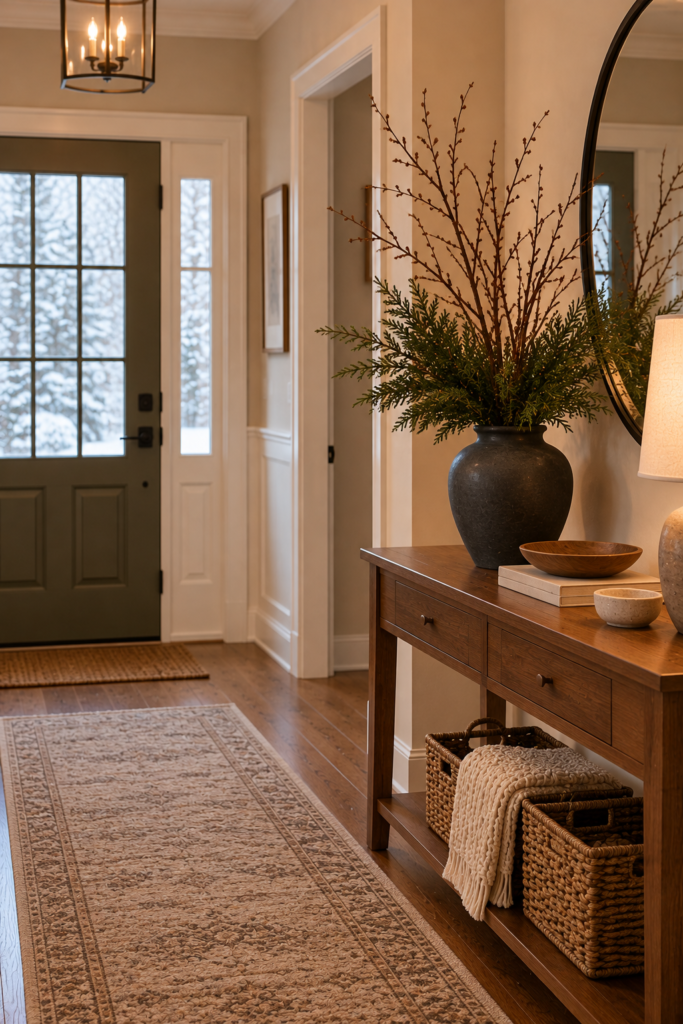
3. Mix Evergreen and Bare Branches
Want more structure?
Combine the first two ideas.
Start with evergreen for volume.
Add several bare warm-brown branches for height.
Keep the branches restrained.
Let the evergreen stay lower.
This creates a fuller arrangement without needing flowers.
Use a charcoal, mushroom, or warm-cream vase.
The contrast between soft greenery and angular branches is what makes the display interesting.
Nature has apparently understood texture layering for quite some time.
We are late to the meeting.
4. Add Pinecones Around Branches
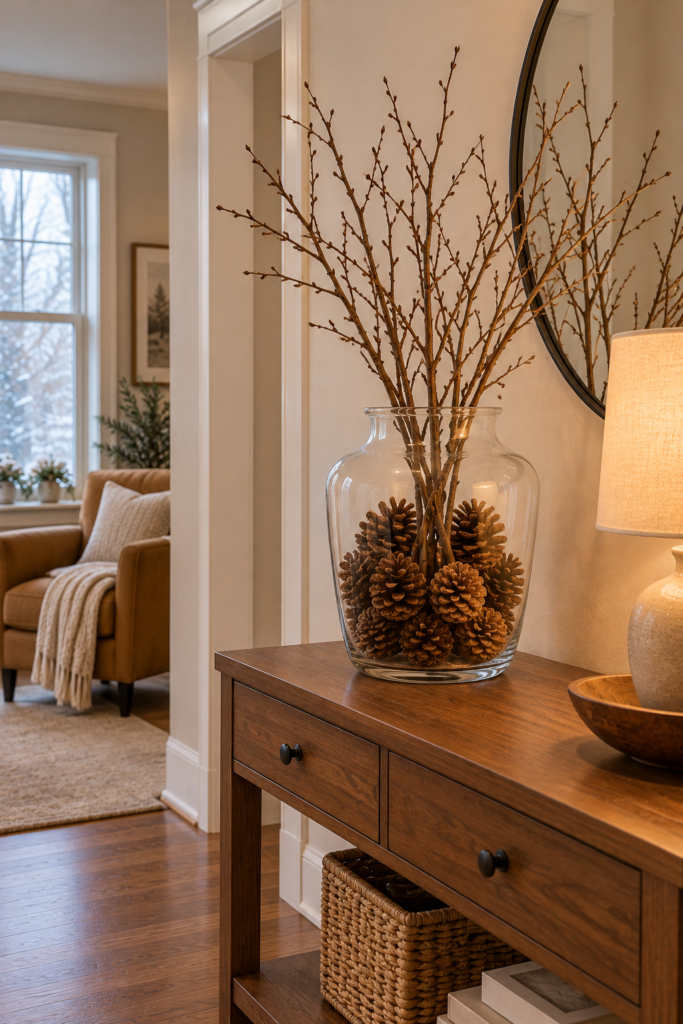
Use pinecones as a visible filler in an appropriate wide-mouth vessel.
Start with a sturdy transparent or open vessel.
Add several clean, fully dry pinecones.
Then insert a smaller supported container or appropriate structure for branches if needed.
The pinecones provide warm brown texture around the base.
Use bare branches above.
Or restrained evergreen.
Don’t cram pinecones tightly around delicate glass.
And remember that pinecones are combustible.
Keep the entire arrangement away from open flames and significant heat.
Pinecones are decorative.
They do not need to become fuel.
5. Use Deep Burgundy Botanical Stems
Winter decor doesn’t need to be completely neutral.
Bring in burgundy.
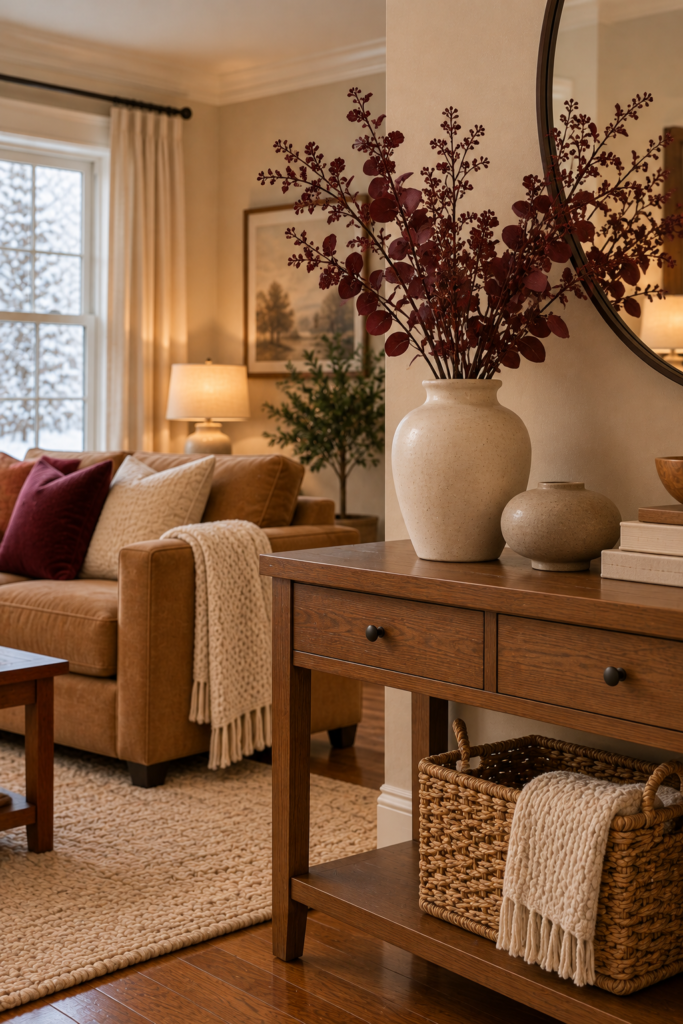
Use several deep muted burgundy botanical stems.
Place them in a warm-cream ceramic vase.
Keep the arrangement relatively simple.
Pair it with walnut furniture and mushroom textiles.
The burgundy provides enough color to make the display feel rich.
Without bright red berries or holiday ribbon, it doesn’t feel Christmas-specific.
Basically, burgundy is red after it learned indoor voice.
Useful skill.
6. Mix Burgundy With Evergreen
This combination is rich without needing Christmas decor.
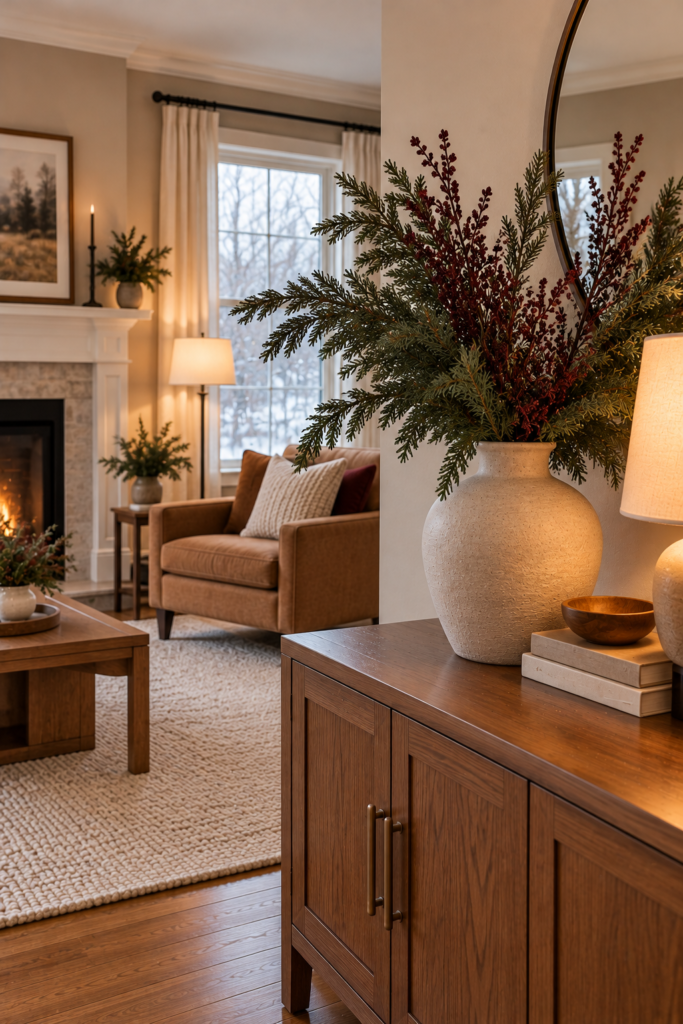
Use dark evergreen as the base.
Add a few deep burgundy stems.
Keep the burgundy concentrated on one side.
Don’t distribute every color perfectly.
A little asymmetry makes the arrangement feel more natural.
Use a mushroom or charcoal vase.
Add nothing else.
Evergreen.
Burgundy.
Ceramic.
Done.
Sometimes three ingredients are plenty.
Someone please tell my kitchen counter.
7. Fill a Vase With Dried Seed Pods
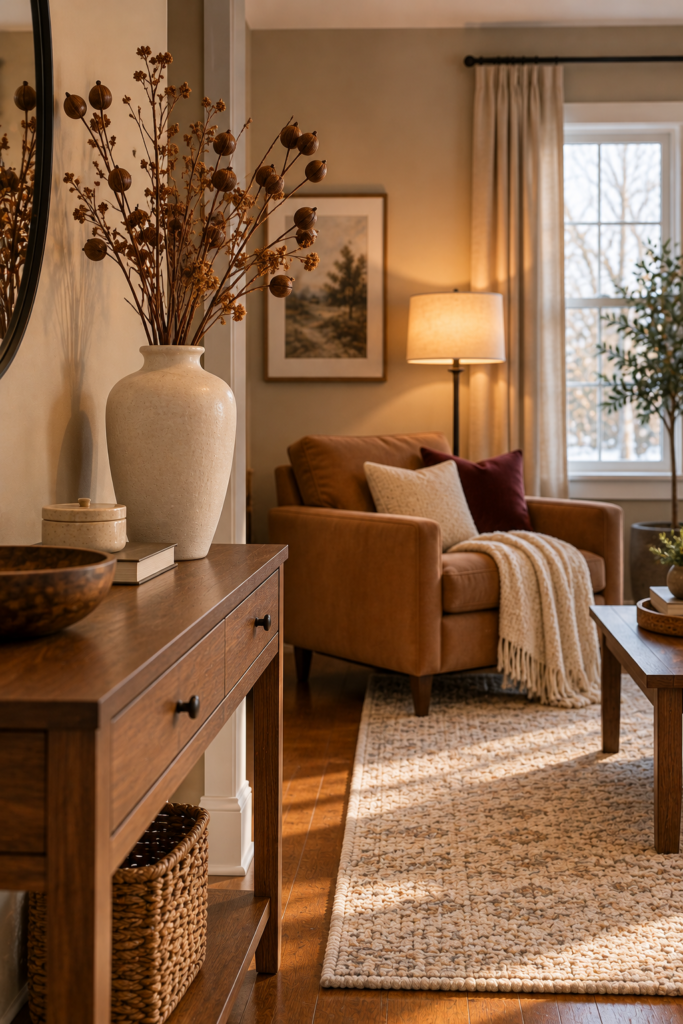
Dried seed pods bring beautiful texture to winter arrangements.
Choose sturdy, fully dried botanical material suitable for indoor decorative use.
Use a tall warm-cream or mushroom vase.
Add several stems.
Keep the arrangement loose.
Pair the earthy brown color with walnut furniture and cream textiles.
Because dried materials are combustible, keep them well away from fireplaces, heaters, open flames, and significant heat.
And don’t use unknown foraged plants unless you can safely identify and prepare them.
“Interesting thing I found outside” is not always a complete botanical safety assessment.
8. Use Dried Grasses for a Soft Winter Look
Dried grasses aren’t just for fall.
Choose restrained neutral varieties in warm beige and taupe.
Place them in a mushroom ceramic vase.
Keep the arrangement relatively compact.
Pair it with cream and walnut.
Avoid huge clouds of dried grass in tiny rooms.
They collect dust.
They occupy space.
And eventually the arrangement becomes the roommate with the largest bedroom.
Use enough for texture.
Not enough to establish territory.
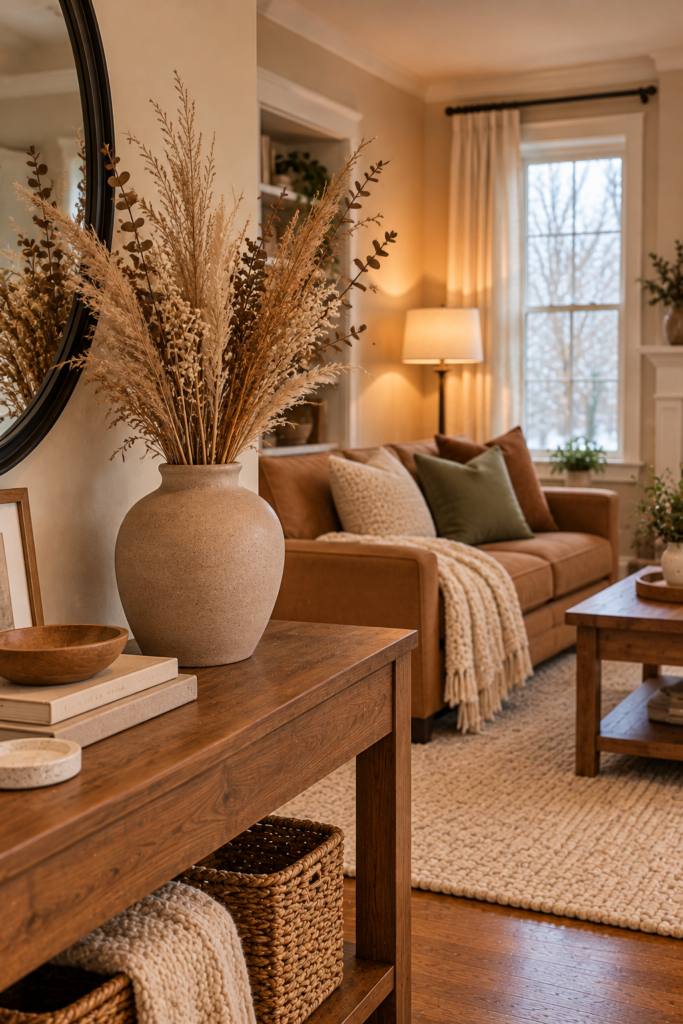
9. Add Natural Twigs to a Clear Glass Vase
Sometimes the simplest filler is just twigs.
Choose several clean, dry slender branches.
Place them in a substantial clear glass vase.
Let the natural brown color become the decoration.
Use a vessel with a stable base.
Keep the branches proportional to the vase.
And place the arrangement away from vulnerable table edges.
This looks especially good in modern or minimalist rooms.
It’s basically free sculpture.
Assuming the tree didn’t charge you.
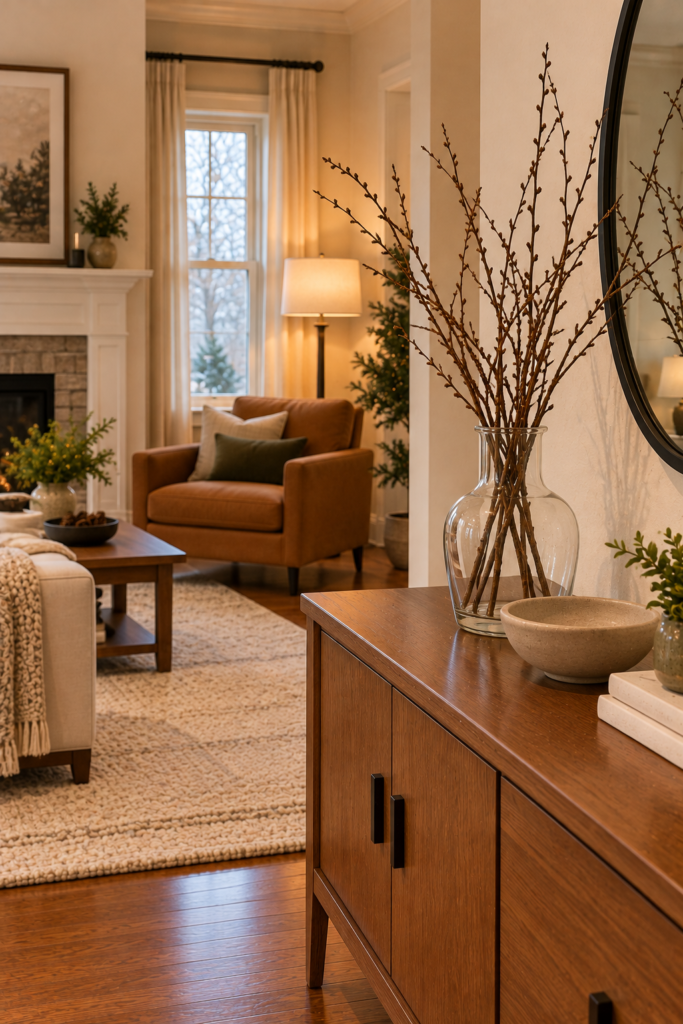
10. Use Cotton-Style Botanical Stems
Soft cream botanical stems can create a cozy winter arrangement without using flowers.
Choose decorative faux or dried cotton-style stems from a reputable craft source rather than relying on unknown collected material.
Use a medium walnut-toned or muted-olive vase.
Keep the arrangement simple.
Pair it with mushroom, cream, and warm brown.
The soft texture works especially well in bedrooms and neutral living rooms.
And because we’re aiming for winter rather than farmhouse overload, don’t add a wooden sign explaining what season it is.
The branches know.
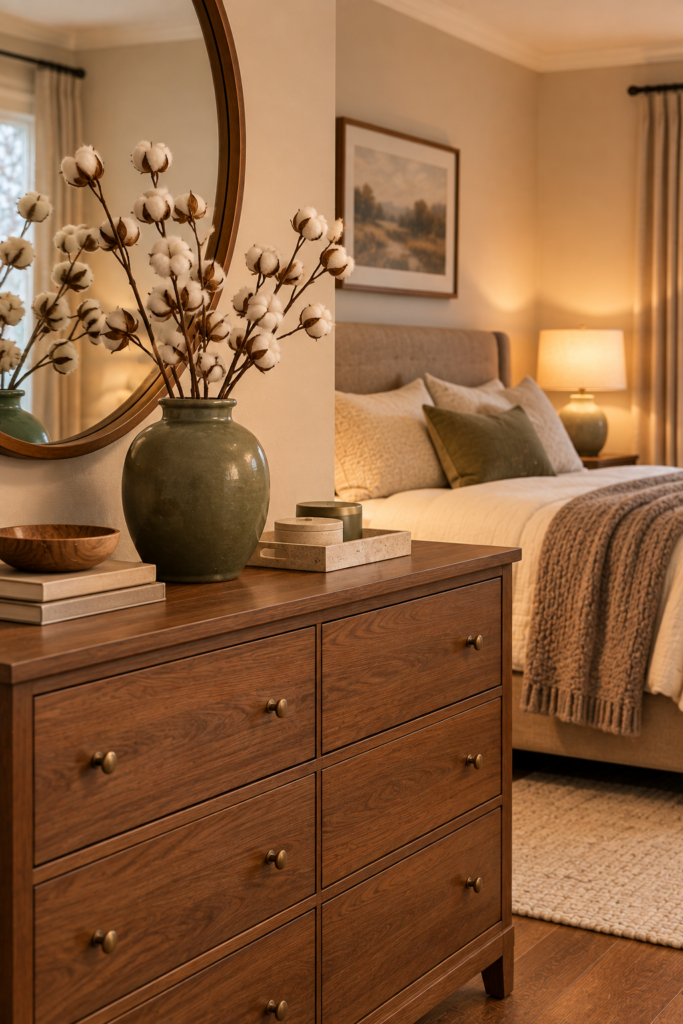
11. Fill a Clear Vase With Wooden Beads
Want something less botanical?
Use wooden beads.
Choose medium-toned natural wood.
Place a short strand loosely inside a sturdy clear glass vase.
Don’t pack it completely full.
Leave some negative space.
This works beautifully on a bookshelf or console.
If children or pets are present, remember that detached beads can present choking hazards.
Inspect the strand.
Keep small components inaccessible where necessary.
Decorative beads are lovely.
Unexpected floor marbles?
Less so.
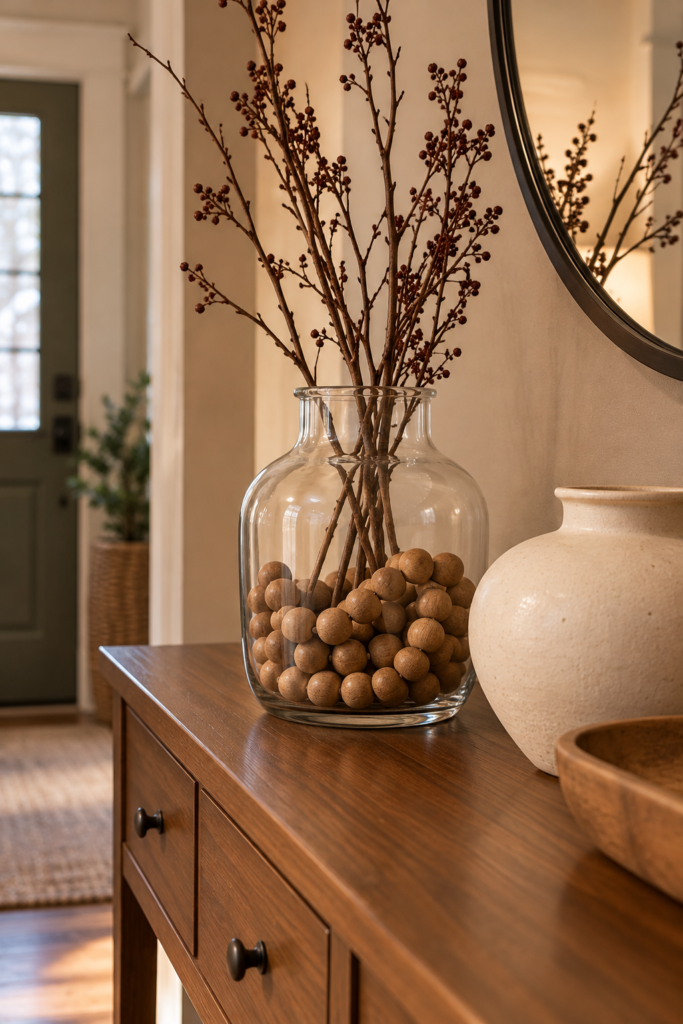
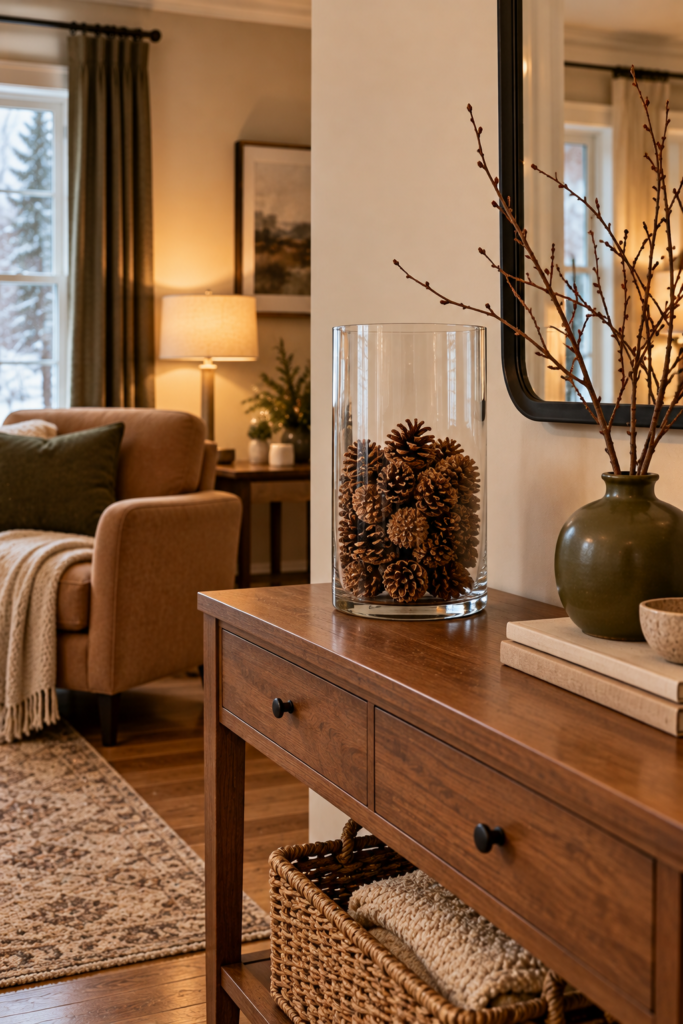
12. Use Small Pinecones in a Clear Vase
This is even easier.
Choose a sturdy clear glass vase.
Fill the lower portion with small clean, fully dry pinecones.
Stop around halfway.
Leave the top empty.
The negative space keeps the arrangement from feeling heavy.
Use it on a console, sideboard, or shelf that can safely support the vessel.
Avoid vulnerable edges.
Keep it away from open flames and significant heat.
And don’t use a delicate narrow-neck vase that requires you to spend 25 minutes trying to retrieve a pinecone with kitchen tongs.
Learn from imaginary mistakes.
13. Create a Muted Olive Botanical Arrangement
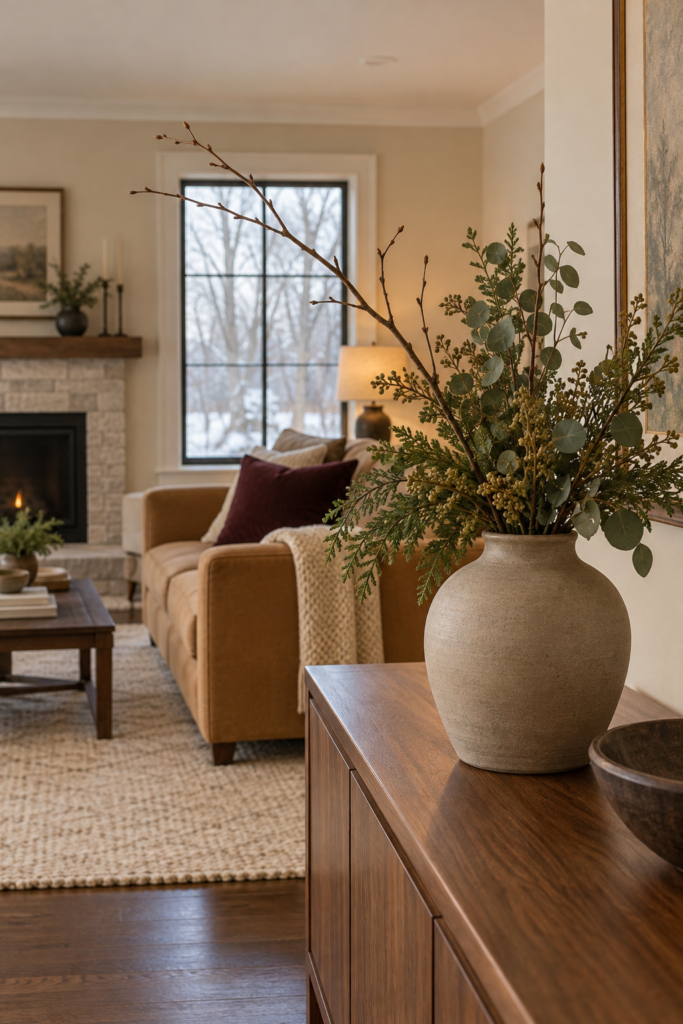
Use muted olive rather than dark evergreen.
Choose faux or dried gray-green botanical stems appropriate for indoor decorative use.
Place them in a mushroom ceramic vase.
Add one or two bare brown branches.
The muted green creates a softer winter look.
This is especially good if your room already uses burgundy or walnut.
Olive.
Burgundy.
Walnut.
Cream.
I keep coming back to this combination because it refuses to disappoint.
Very dependable group project.
14. Fill a Vase With Decorative Wood Pieces
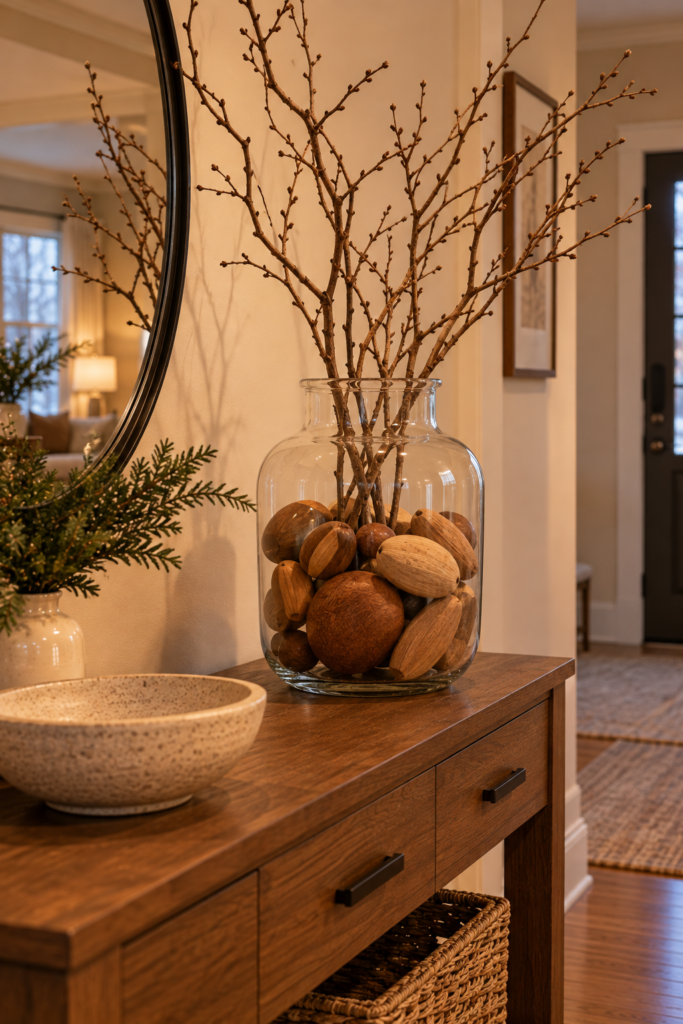
Use small natural wood pieces as visible filler.
Choose smooth decorative wood slices, blocks, or purpose-made craft pieces.
Place them loosely inside a substantial clear vase.
Keep the vessel partially filled.
Add a simple bare branch arrangement if the vase design safely accommodates it.
The wood creates warm texture without using greenery.
Avoid sharp splinters.
Use clean, dry materials.
And keep wood filler away from open flames and significant heat.
Wood is charming.
Wood remains wood.
Fire has opinions.
15. Use Faux Snow With Bare Branches
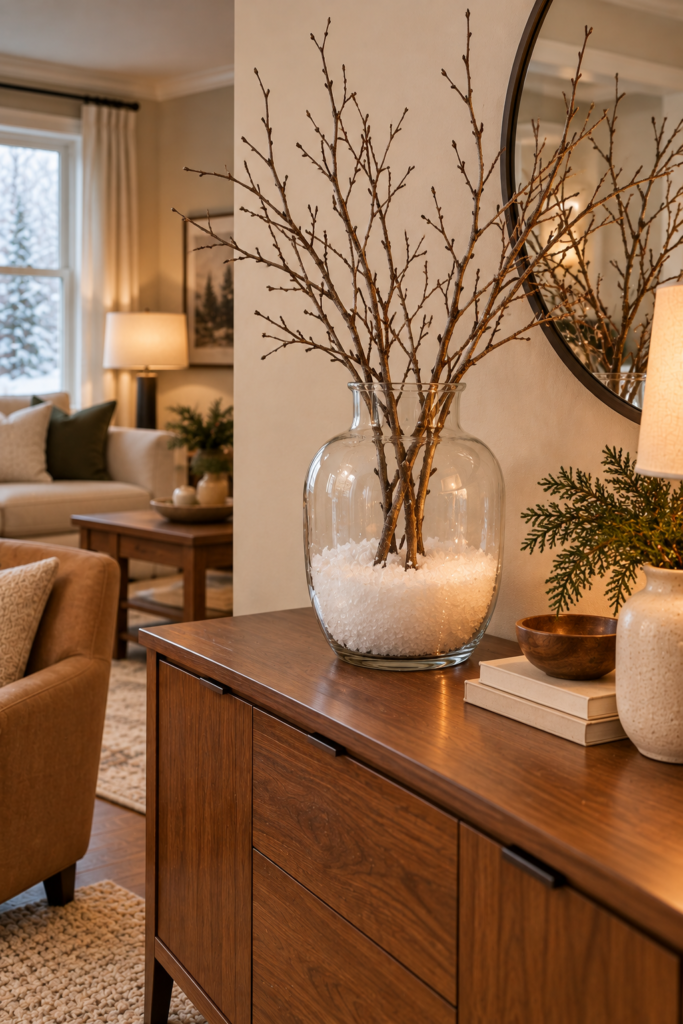
Want a slightly snowier look?
Use a small amount of decorative faux snow designed for indoor craft displays.
Place it in the bottom of a sturdy clear vase.
Add bare branches.
Keep the faux snow contained entirely inside the vessel.
Don’t scatter loose material around the table.
Check the product instructions, especially around children and pets.
And keep it away from food-preparation surfaces.
A little faux snow can look elegant.
An entire console covered in it looks like the weather got through the roof.
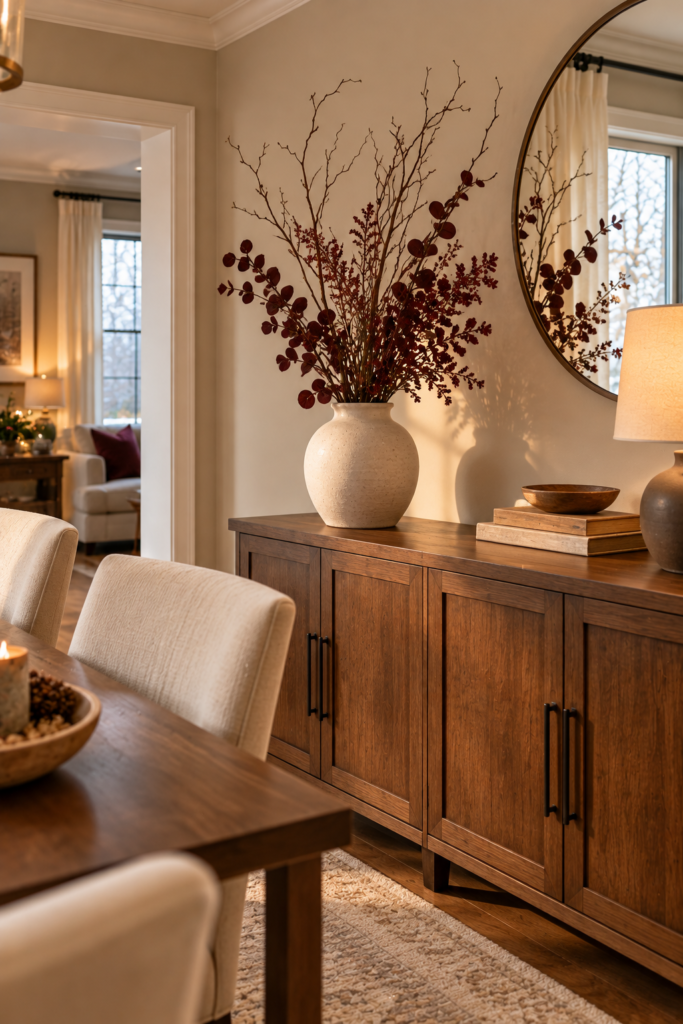
16. Create a Burgundy and Brown Branch Arrangement
Use warm brown branches as the structure.
Add several deep burgundy botanical stems.
Keep everything narrow and sculptural.
Use a warm-cream vase.
This creates a rich arrangement without greenery.
It’s especially good for a dining room sideboard or living room console.
The brown keeps the burgundy earthy.
The cream keeps it from becoming too dark.
Color theory?
Sure.
Mostly it just looks good.
Sometimes that’s enough.
17. Fill a Vase With Willow-Style Branches
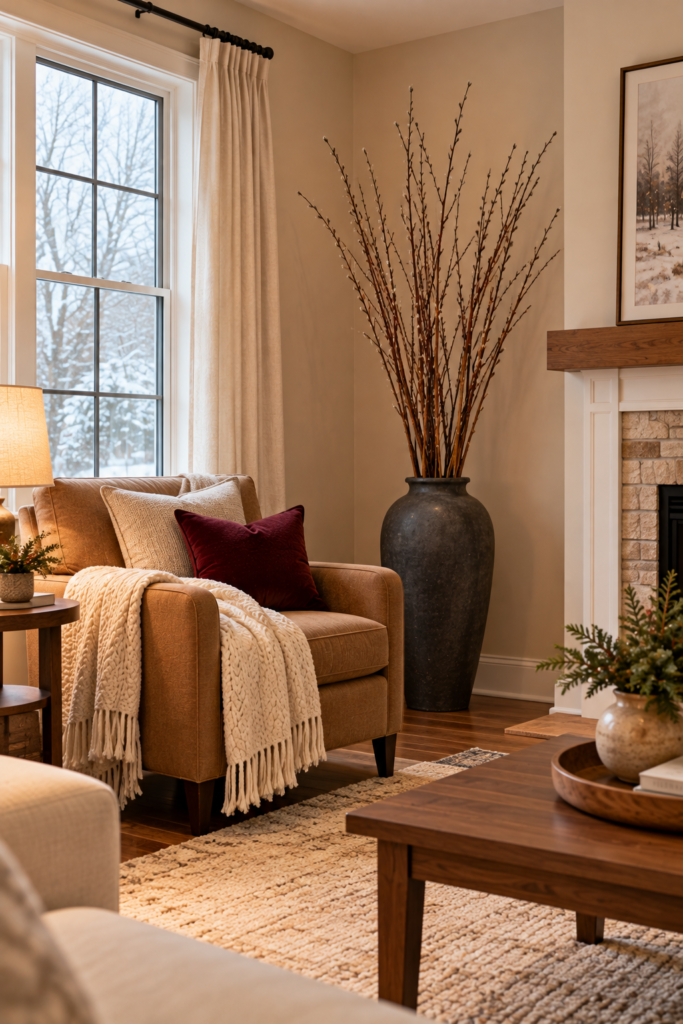
Long slender willow-style branches create height without needing lots of volume.
Use a heavy, stable floor vase.
Choose warm brown or charcoal.
Add several decorative branches.
Keep them controlled and below any ceiling fixture.
Place the vase in a quiet corner.
Not in a hallway.
Not beside a doorway.
Not somewhere every person walking past gets gently slapped by a branch.
Tall floor arrangements need room.
Give them some.
18. Create a Minimalist One-Branch Vase
Yes.
One branch.
That’s the entire idea.
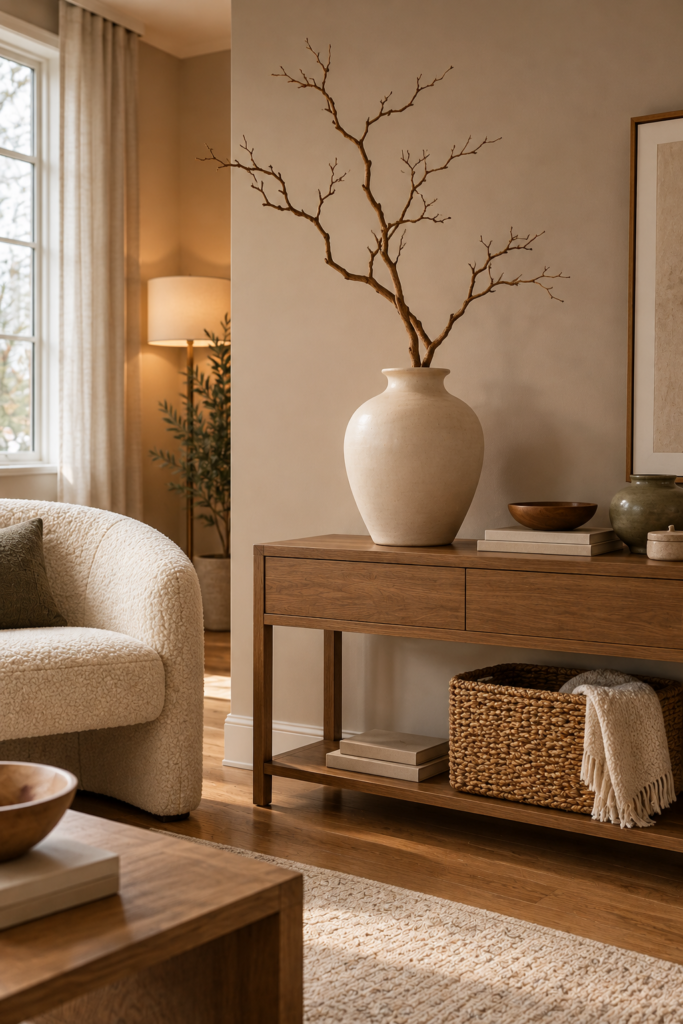
Choose a sculptural bare branch.
Place it in a substantial ceramic vase.
Use mushroom, warm cream, or muted olive.
Position it slightly off-center on a console.
Leave everything around it simple.
This works especially well in modern and Scandinavian-inspired rooms.
It costs almost nothing.
It takes approximately three minutes.
And somehow it looks more intentional than the shelf containing 14 tiny decorative objects.
Minimalism remains annoyingly effective.
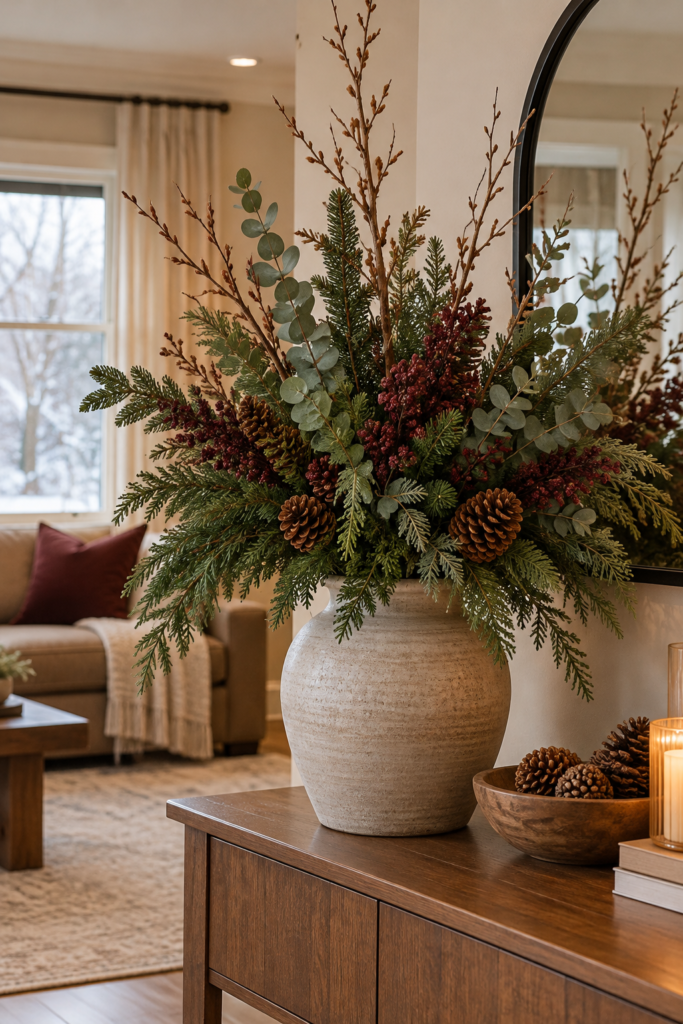
19. Mix Pinecones, Evergreen, and Burgundy
Want something fuller?
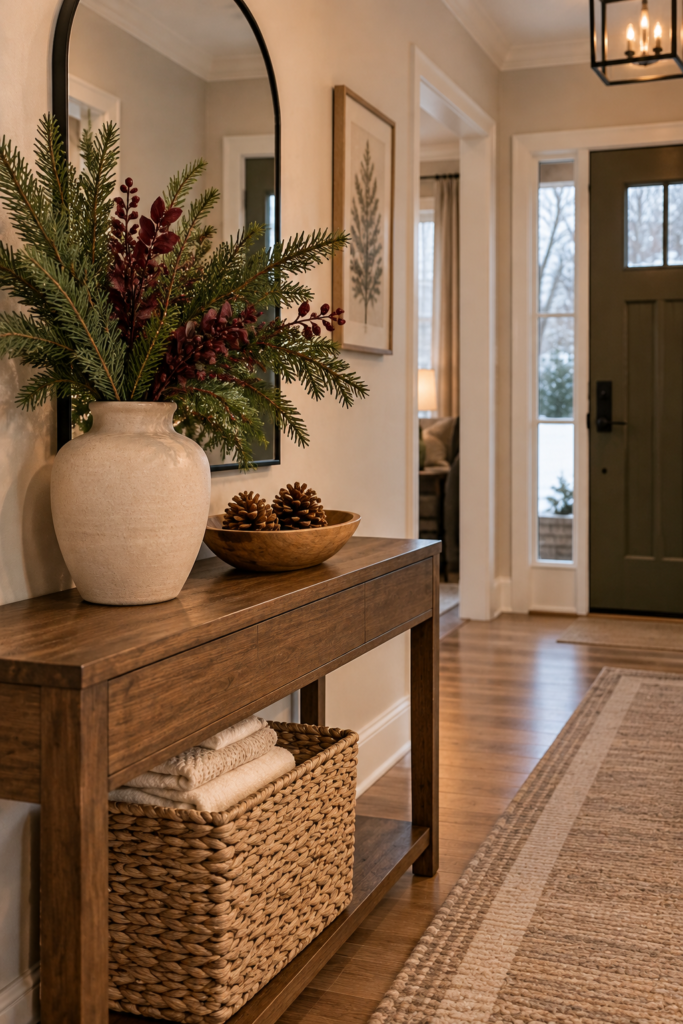
Use three ingredients.
Evergreen for volume.
Pinecones for texture.
Burgundy for color.
Place the greenery and burgundy stems inside a sturdy vase.
Use several pinecones around the base only if the vessel design safely accommodates visible filler, or place them in a separate shallow bowl beside the vase.
Don’t force loose pinecones into a narrow vessel.
Keep the arrangement balanced.
Rich?
Yes.
Christmas?
Not once the ornaments and ribbon are gone.
20. Build a Full Layered Winter Vase Arrangement
Ready for the complete winter arrangement?
Start with evergreen.
Add a second muted botanical texture.
Bring in bare warm-brown branches for height.
Add several deep burgundy stems.
Use pinecones nearby for texture.
Choose a substantial charcoal or mushroom vase.
Keep the tallest materials controlled.
Don’t make the arrangement wider than the surface can safely support.
And stop before it becomes a small indoor tree.
The goal is layered.
Not photosynthesis with a mortgage.
How Do You Fill a Vase for Winter After Christmas?
Start by removing obvious Christmas fillers.
Take out:
Ornaments.
Bright red berries.
Holiday picks.
Glitter stems.
Ribbon.
Bells.
Keep:
Evergreen.
Bare branches.
Pinecones.
Neutral botanicals.
Natural wood.
Then introduce one winter accent.
Burgundy works beautifully.
Muted olive works too.
The result should feel quieter than your December arrangements.
Winter decorating doesn’t need to announce itself from across the street.
Easy Winter Vase Filler Ideas
The easiest fillers are usually the simplest.
Try:
Bare branches.
Evergreen stems.
Pinecones.
Wooden beads.
Dried grasses.
Decorative seed pods.
Muted botanical stems.
You don’t need professional floral skills.
Choose one main material.
Place it loosely inside the vase.
Adjust the height.
Stop.
The stopping part remains the most advanced technique.
Winter Vase Filler Ideas Without Christmas Decor
Avoid holiday-specific materials.
Skip:
Ornaments.
Candy canes.
Christmas bells.
Bright ribbon.
Santa picks.
Holiday lettering.
Instead, use:
Bare branches.
Evergreen.
Pinecones.
Wood.
Burgundy botanicals.
Muted olive foliage.
Dried grasses.
Seed pods.
Neutral craft materials.
The arrangement can stay through January and February without looking outdated.
Winter Vase Filler Ideas With Pinecones
Pinecones work best in wider vessels.
Use clean, fully dry pinecones.
Choose a sturdy vase.
Don’t force oversized pinecones through narrow openings.
You can also display pinecones in a bowl beside a vase rather than inside it.
Keep them away from open flames and significant heat.
For clear vessels, mix different sizes for a more natural look.
Winter Vase Filler Ideas With Evergreen
Use several stems rather than overstuffing the vase.
Let branches spread naturally.
Combine evergreen with:
Bare branches.
Pinecones.
Burgundy.
Muted olive.
If using fresh greenery, identify its care needs.
Use water where appropriate.
Protect furniture.
Monitor the material as it dries.
Keep fresh and artificial greenery away from unsafe heat exposure.
Winter Vase Filler Ideas With Bare Branches
Use branches of different heights.
Keep the arrangement narrow in small rooms.
Use a heavy vase for taller branches.
Clean and fully dry natural material before bringing it inside.
Check for pests, loose bark, sharp points, or deterioration.
Keep branches away from face level and circulation.
For a minimalist arrangement, use only one branch.
Honestly, it may be the easiest idea in this entire article.
Winter Vase Filler Ideas With Burgundy
Use burgundy through:
Dried-style botanicals.
Faux botanical stems.
Fabric botanical elements.
Decorative craft stems.
Pair burgundy with warm cream.
Add natural brown.
Use muted olive or evergreen sparingly.
The combination creates a rich winter palette without traditional Christmas red.
Neutral Winter Vase Filler Ideas
Use:
Warm brown branches.
Beige dried grasses.
Natural wood.
Cream botanical stems.
Mushroom ceramics.
Muted olive foliage.
Neutral arrangements rely heavily on texture.
Mix something smooth with something rough.
Something vertical with something rounded.
Something structured with something soft.
That contrast keeps neutrals interesting.
Rustic Winter Vase Filler Ideas
Try:
Bare branches.
Pinecones.
Dried grasses.
Evergreen.
Wood.
Seed pods.
Use a cream or mushroom pottery vase.
Keep everything natural-looking.
Avoid excessive ribbon and novelty decor.
Rustic winter styling is at its best when the materials look like they could plausibly have come from outside.
Just preferably after being cleaned first.
Farmhouse Winter Vase Filler Ideas
Use simple evergreen.
Add bare branches.
Choose a warm-cream ceramic vase.
Include pinecones nearby.
Pair with medium walnut and matte-black accents.
Keep the arrangement loose.
You don’t need a decorative sign beside it.
The vase doesn’t need instructions.
People understand plants.
Scandinavian Winter Vase Filler Ideas
Use fewer stems.
Try one sculptural branch.
Or three restrained evergreen stems.
Use a warm-cream or mushroom vase.
Pair it with pale wood.
Leave plenty of negative space.
Avoid overly full arrangements.
Scandinavian-inspired winter styling depends more on shape, texture, and proportion than obvious seasonal decoration.
Modern Winter Vase Filler Ideas
Use a substantial sculptural vase.
Choose one material.
Bare branches work especially well.
Keep the arrangement asymmetrical.
Try charcoal, warm cream, or burgundy for the vase.
Use fewer stems.
Avoid tiny filler pieces.
Modern arrangements generally look stronger when every element has visual weight.
Translation?
Three good branches beat 37 confused twigs.
Winter Vase Filler Ideas for a Dining Table
Keep arrangements low enough for comfortable conversation.
Use short evergreen.
A small branch arrangement.
Or pinecones in a low vessel.
Avoid tall branches directly in the center of the table.
Keep loose decorative material away from food and serving dishes.
Don’t assume decorative botanicals are edible.
And don’t use open candles near dried or combustible vase fillers.
Your guests should be able to see each other.
Preferably without leaning around a tree.
Winter Vase Filler Ideas for a Coffee Table
Keep it small.
Use:
One short branch.
A tiny evergreen arrangement.
Three pinecones in a low vessel.
A few wooden beads inside a clear vase.
Keep the arrangement below seated sightlines.
Leave enough coffee table space for normal use.
A coffee table arrangement should coexist peacefully with coffee.
It’s literally in the job description.
Winter Vase Filler Ideas for an Entryway
Entryways can handle slightly taller arrangements.
But keep branches away from:
Door swings.
Walking paths.
Face level.
Coat storage.
Light switches.
Use a stable vase.
Choose medium-height branches.
Add evergreen or burgundy for fullness.
And don’t place fragile floor vases where bags, coats, pets, or children are likely to collide with them.
Winter Vase Filler Ideas for a Fireplace Mantel
Use extra caution.
Vase fillers such as:
Branches.
Pinecones.
Evergreen.
Dried grasses.
Seed pods.
Wood.
Fabric botanicals.
Can be combustible.
Follow the manufacturer instructions and required clearances for your specific fireplace, stove, insert, mantel, and surround.
Don’t assume the mantel is a cool zone.
Keep arrangements away from open flames and significant heat.
If the appropriate clearance isn’t available, put the vase on a console elsewhere.
The vase will recover emotionally.
What Can You Put in a Clear Vase for Winter?
Try:
Small pinecones.
Wooden beads.
Decorative wood pieces.
Contained faux snow.
Bare branches.
Evergreen stems.
You can also leave part of the vase empty.
Clear vessels don’t need to be filled from bottom to top.
Negative space makes the material inside easier to see.
And saves you from needing 400 pinecones.
Win-win.
How to Arrange Winter Vase Fillers
Start with the tallest structural element.
Usually branches.
Then add medium-height greenery or botanicals.
Add lower material for fullness.
Rotate the vase.
Check it from multiple angles.
Remove anything sticking awkwardly into the room.
Adjust the balance.
Then stop.
If you keep adding stems because there’s technically room?
That’s how the vase becomes a shrub.
How to Make Winter Vase Fillers Look Expensive
Limit the palette.
Use fewer materials.
Choose a substantial vase.
Vary heights.
Use asymmetry.
Try:
Evergreen + bare brown branches + deep burgundy.
Or:
Warm-brown branches + muted olive + warm cream.
Or:
Pinecones + wood + mushroom ceramics.
Avoid too many tiny filler stems.
A few substantial pieces usually look more intentional.
Also, let the arrangement breathe.
Negative space continues to be our least expensive luxury material.
How to Keep Winter Vase Displays From Looking Cluttered
Use one main filler.
Add one secondary material.
Maybe one accent.
That’s enough.
Don’t automatically combine:
Branches.
Evergreen.
Pinecones.
Berries.
Ribbon.
Beads.
Flowers.
Lights.
Snow.
Wood.
All in one vase.
The vase did nothing to deserve this.
Keep nearby surfaces simple too.
A substantial arrangement may not need any additional accessories beside it.
Winter Vase Filler Safety
Choose a vase appropriate for the height and weight of the arrangement.
Tall branches need a substantial stable base.
Avoid top-heavy arrangements.
Keep fragile glass vessels away from vulnerable table edges and high-traffic locations.
Keep tall branches out of walking routes and away from face level.
Control sharp branch ends.
Clean and appropriately prepare natural materials before bringing them indoors.
Be cautious with unknown plants, berries, seed pods, fungi, or other foraged materials.
Some natural materials may be irritating, toxic, allergenic, or unsuitable for indoor use.
Don’t assume decorative botanicals are edible.
Keep small fillers such as beads, tiny pinecones, stones, or craft materials inaccessible to young children and pets when they could present choking or ingestion hazards.
Keep combustible vase fillers away from open flames and significant heat.
This includes:
Evergreen.
Bare branches.
Wood.
Pinecones.
Dried grasses.
Seed pods.
Paper.
Fabric botanicals.
Use battery-operated LED candles rather than open decorative flames nearby.
If fresh material requires water, use a watertight vessel or appropriate inner container.
Protect wood furniture from moisture.
Check for leaks.
Refresh water where appropriate.
Monitor natural greenery as it dries.
Keep electrical decor separate from water-filled vessels.
And don’t position large arrangements where they block:
Doors.
Windows needed for egress.
Switches.
Outlets.
Vents.
Heating equipment.
Safety equipment.
A vase should decorate the room.
It should not quietly become an engineering problem.
How to Store Reusable Winter Vase Fillers
Clean artificial or reusable materials before storage.
Make sure everything is completely dry.
Separate fragile stems.
Use shallow boxes or long containers for branches.
Don’t crush faux botanicals beneath heavy items.
Store wooden beads and small fillers in labeled containers.
Keep dried natural materials only if they’re clean, dry, pest-free, and still in good condition.
Discard anything showing moisture damage, mold, pests, deterioration, or excessive shedding.
Future-you will appreciate opening a box of organized winter decor.
Instead of discovering a mystery ecosystem.
How to Transition Winter Vase Fillers Into Spring
Keep the vase.
Change the filler.
Remove:
Pinecones.
Dense evergreen.
Heavy bare branches.
Deep burgundy.
Add:
Simple leafy stems.
Muted sage.
Soft green botanicals.
Lighter branches.
A restrained floral accent if you want one.
Warm-cream and mushroom vases transition especially easily.
That’s why neutral vessels are worth having.
They basically refuse to take a season off.
Final Thoughts
The best Winter Vase Filler Ideas for Easy Seasonal Displays prove that you don’t need complicated floral arrangements to make your home feel cozy after Christmas.
Use bare branches.
Add evergreen.
Combine branches and greenery.
Bring in pinecones.
Try burgundy botanicals.
Mix burgundy with evergreen.
Use dried seed pods.
Add dried grasses.
Display simple twigs.
Try cream botanical stems.
Fill a clear vase with wooden beads.
Use small pinecones.
Bring in muted olive.
Add decorative wood pieces.
Try contained faux snow.
Combine burgundy and brown branches.
Use tall willow-style stems.
Go minimalist with one branch.
Mix evergreen, pinecones, and burgundy.
Or build one full layered winter arrangement.
Focus on natural textures, restrained winter colors, stable vessels, safe placement, and simple combinations.
Sometimes that’s all winter decorating needs.
A vase.
A branch.
And the self-control to stop before you’ve accidentally brought half the backyard indoors.
