
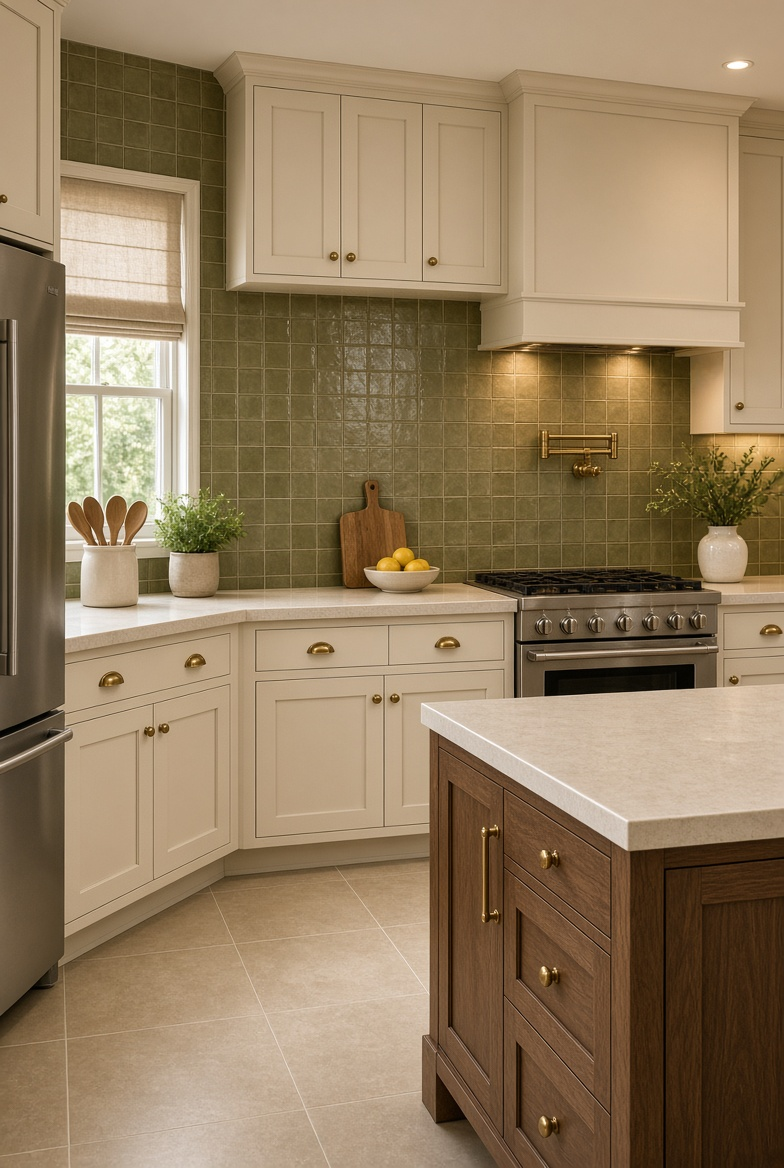
19 Tiles Kitchen Ideas for Floors, Walls, and Backsplashes
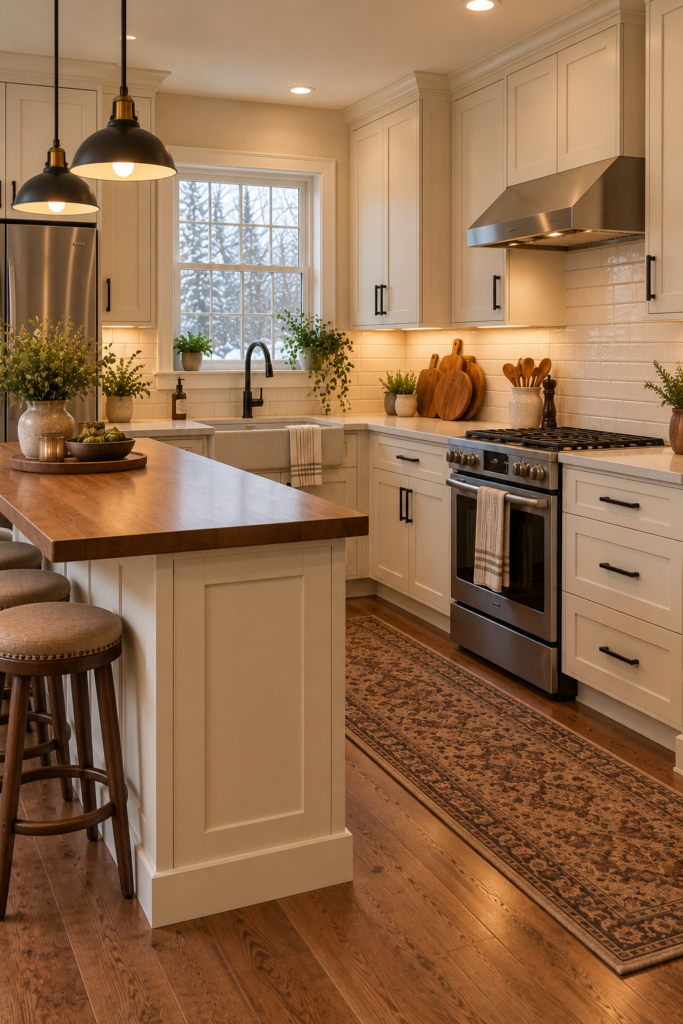
Kitchen tile can do more than protect walls and provide a durable floor. It can introduce color, texture, and pattern without taking up valuable counter space. From a simple cream backsplash to a checkerboard floor, the right tile can give an ordinary kitchen a more considered appearance.
The trick is knowing where to make a statement. A patterned floor and a detailed backsplash can compete for attention, while a single distinctive tile surrounded by quieter finishes often creates a more balanced result.
Warm cream, mushroom taupe, muted olive, deep burgundy, terracotta, and charcoal offer different ways to introduce character. Natural wood and restrained hardware can help connect these colors to the rest of the kitchen.
These 19 tiles kitchen ideas for floors, walls, and backsplashes cover a range of styles, along with practical guidance for choosing materials, coordinating grout, and planning installation.
1. Use Warm Cream Subway Tile
Warm cream subway tile provides a versatile backdrop for many kitchen styles. Its familiar rectangular shape adds subtle texture without requiring a strong color or elaborate pattern.
Pair it with cream cabinetry for a soft, coordinated appearance, or use it against muted olive, burgundy, or walnut cabinets for more contrast. Choose grout that complements the tile: a close color match creates a quieter surface, while contrasting grout makes each rectangle more prominent.
Before purchasing, compare tile and grout samples with the countertop and cabinet finishes. Cream can lean yellow, beige, or gray, and those undertones can look different under daylight and artificial lighting.
Keep the surrounding materials relatively simple if you want the backsplash to feel timeless. Subway tile doesn’t need complicated styling to work well.
2. Try Mushroom Backsplash Tile
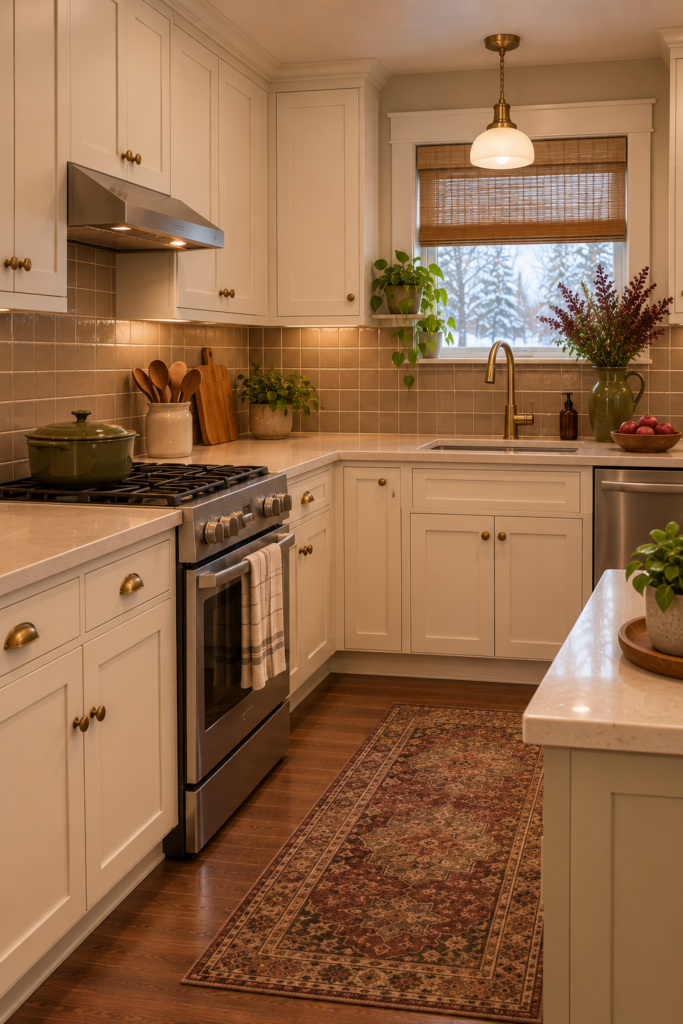
Mushroom backsplash tile brings warmth to a kitchen without introducing a strong color. Its mix of brown and gray undertones can work particularly well with cream cabinets, walnut accents, and understated hardware.
Choose a shade that complements the countertop rather than selecting each finish independently. A warmer mushroom can look inviting beside natural wood, while a cooler version may suit a more neutral contemporary kitchen.
Tile format also affects the final look. Rectangular tile creates a familiar linear pattern, while square tile can feel more traditional. Coordinated grout keeps the surface restrained.
This is a useful option when a white kitchen feels too stark but you don’t want a colorful backsplash. The added depth comes from the relationship between the materials rather than a dramatic pattern.
3. Add Muted Olive Backsplash Tile
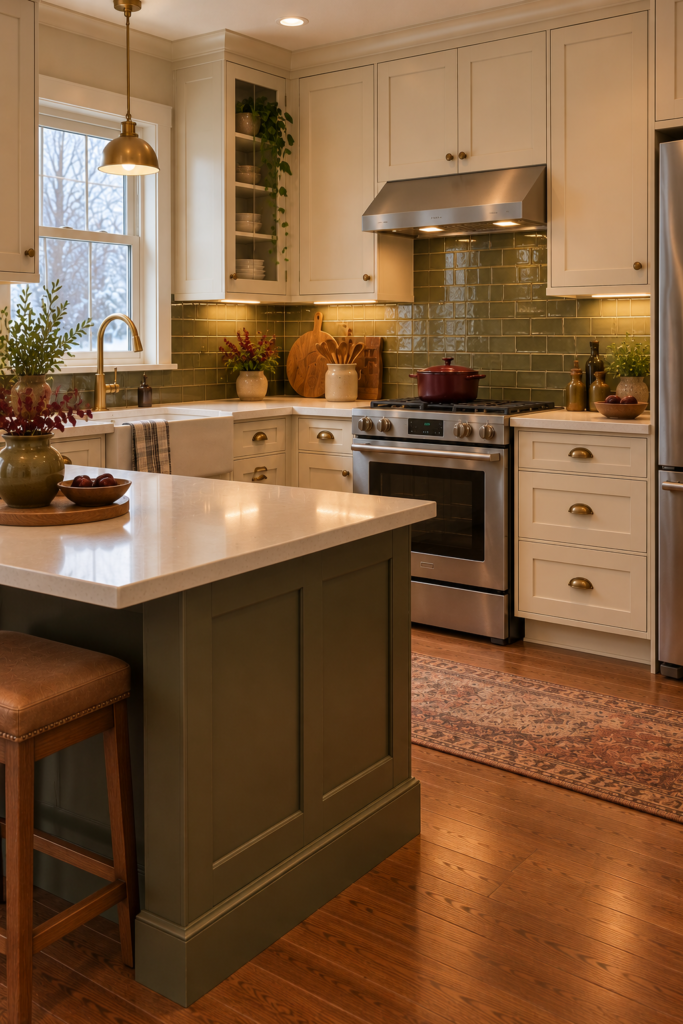
Muted olive tile introduces an earthy green accent without overwhelming the room. Pair it with warm cream cabinets, medium walnut, and relatively quiet countertops so the backsplash becomes the main color feature.
Choose a simple square or rectangular format if the cabinetry already has visible detailing. A more decorative tile may work too, but it needs enough visual space to stand out.
Compare olive samples with the wood finish and countertop. Some greens lean yellow, while others appear grayer or browner, and the surrounding materials can change how the shade reads.
Aged-brass-style hardware can add warmth, while matte black provides a stronger contrast. Keep the remaining finishes restrained so the kitchen feels connected rather than crowded.
For more ideas using warm wood and earthy colors, explore these natural earthy kitchen ideas for a warm organic space.
4. Use Deep Burgundy Tile as an Accent
Deep burgundy tile creates a rich focal point without requiring an entirely dark kitchen.
Use it on a defined backsplash section and pair it with cream cabinetry, walnut flooring, and warm neutral counters. The reddish tone adds depth while the lighter surfaces maintain contrast.
Consider the size of the tiled area before committing. A compact accent may be enough when the kitchen already has colored cabinets or patterned flooring. If the surrounding finishes are plain, a larger burgundy backsplash can become the main design feature.
Compare tile samples with the actual countertop and cabinet colors. Burgundy can lean toward plum or brown-red, and those differences affect the overall palette.
Choose tile suitable for the intended location and follow the manufacturer’s cleaning and installation recommendations.
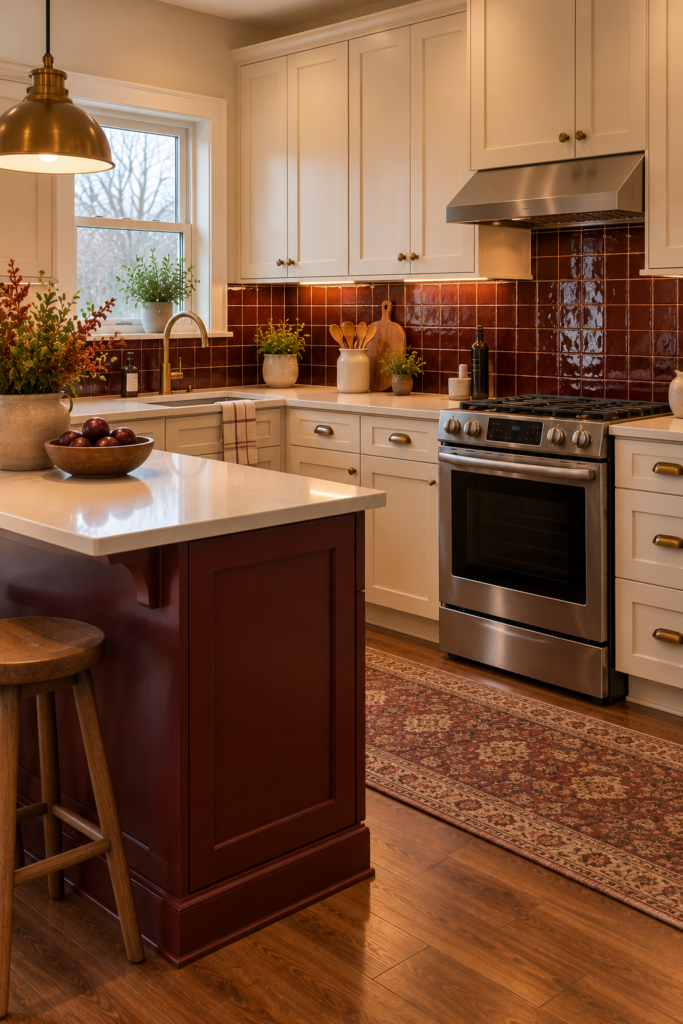
5. Try Classic Checkerboard Floor Tile
Checkerboard flooring brings a recognizable pattern that can feel traditional, vintage, or contemporary depending on the colors and surrounding finishes.
Instead of stark black and bright white, consider charcoal and warm cream, mushroom and cream, or brown and cream. These combinations introduce contrast without making the floor excessively sharp.
Because the pattern is already prominent, keep the backsplash and cabinetry relatively simple. Plain cabinets and a restrained wall tile allow the floor to remain the focal point.
Choose tile specifically rated for floor use and consider its slip characteristics in areas where spills may occur. Check the grout maintenance requirements as well.
Before installation, plan the pattern around the room’s shape, doorways, and cabinet lines. The placement of the grid and the finishing at the edges can make a noticeable difference to the completed floor.
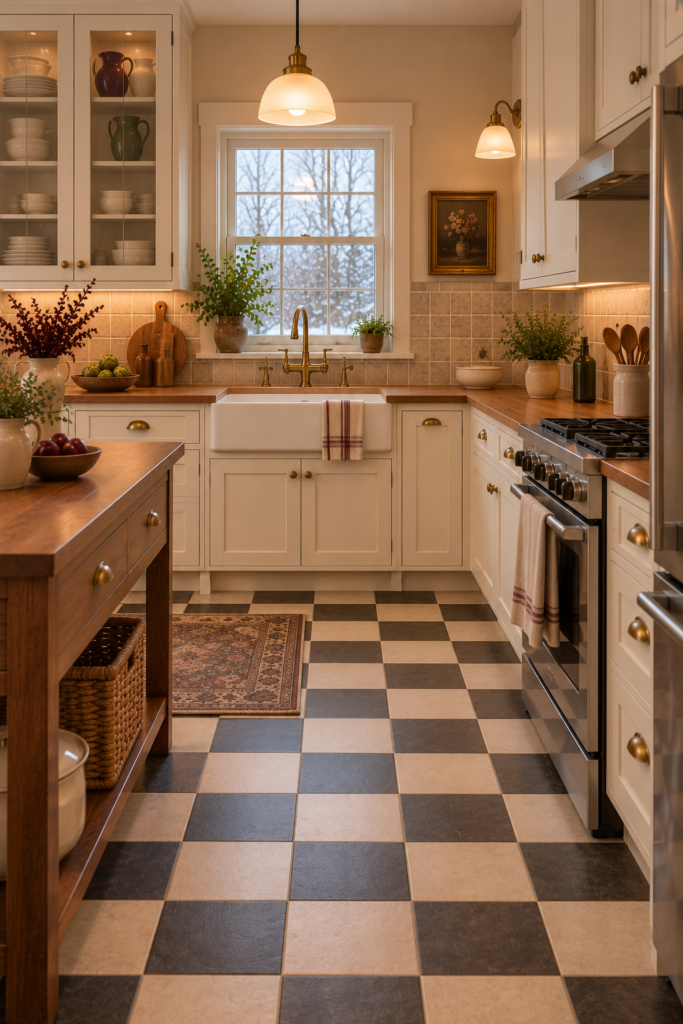
6. Use Terracotta-Look Kitchen Floor Tile
Terracotta-look floor tile adds reddish-brown warmth that suits Mediterranean, cottage, and earthy kitchens.
Pair it with warm cream cabinets, muted olive accents, and a restrained amount of walnut. The combination creates a grounded palette without requiring elaborate decoration.
You can choose real terracotta or a suitable terracotta-look product, depending on the appearance and maintenance requirements you prefer. Confirm that the selected material is appropriate for kitchen flooring and follow its care instructions.
Look carefully at the undertones before choosing. Some terracotta tiles appear orange-red, while others lean toward dusty brown. Compare samples with the cabinets and countertop so the floor doesn’t clash with the rest of the room.
Consider grout color and the finished floor’s texture as part of the decision. The floor should be practical to clean and suitable for the conditions in your kitchen, not simply attractive in a sample display.
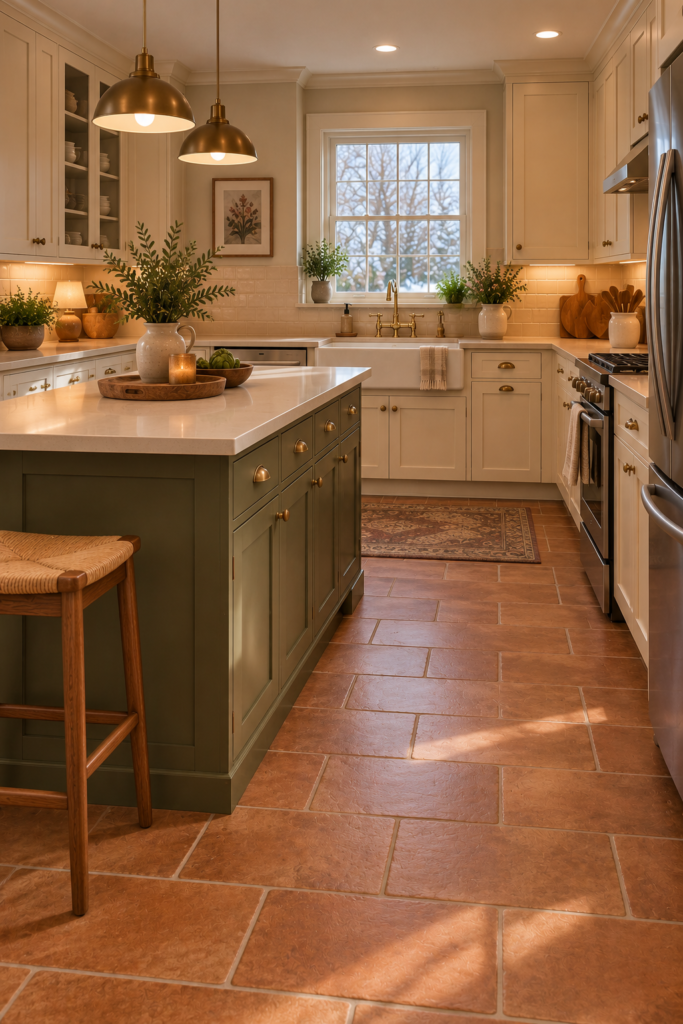
7. Try a Warm Stone-Look Floor
Stone-look tile can add natural variation while keeping the kitchen palette relatively neutral.
Consider warm gray, mushroom, beige, or soft brown. These colors work well with cream cabinetry and walnut accents, particularly when you want the floor to provide texture without becoming the main feature.
Look at multiple tiles together rather than judging a single sample. Color and pattern variation can become more noticeable across a large floor, and the installed appearance may differ from a small display piece.
Choose a product rated for floor use and check its slip characteristics, cleaning requirements, and suitability for the expected traffic. Extremely glossy finishes may not be the most practical choice in areas exposed to spills.
If the floor has noticeable movement or variation, keep the backsplash simpler. A quieter wall surface helps the natural-looking floor remain the dominant texture.
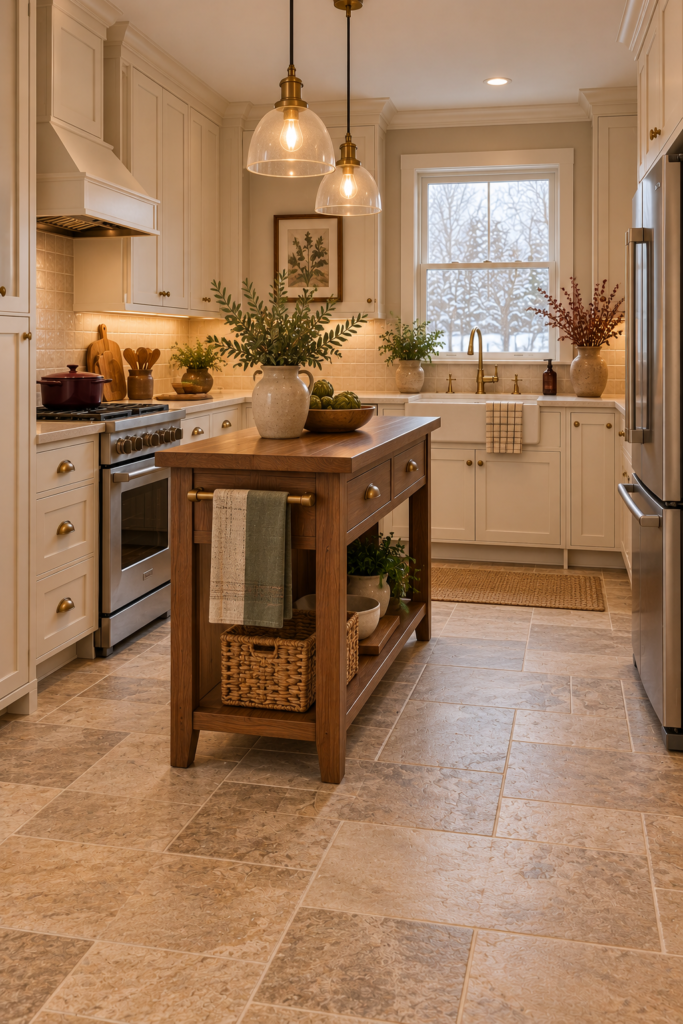
8. Add Small Square Backsplash Tiles
Small square tiles can give a kitchen a subtle vintage character. Warm cream, mushroom, and muted olive are all suitable color directions, depending on the cabinetry and countertop.
Use one shade for a restrained appearance or combine two related colors for a gentle variation. Consistent grout joints help the layout look intentional.
Small tiles naturally create more grout lines than larger formats. Consider how that will affect cleaning and maintenance, particularly near the sink and cooking area.
If the cabinetry already has decorative panels or the floor has a strong pattern, a simple square tile can provide texture without introducing another complicated design.
Check that the tile is appropriate for the backsplash location and follow the manufacturer’s recommendations for grout, installation materials, and maintenance.
9. Use Zellige-Style Tile
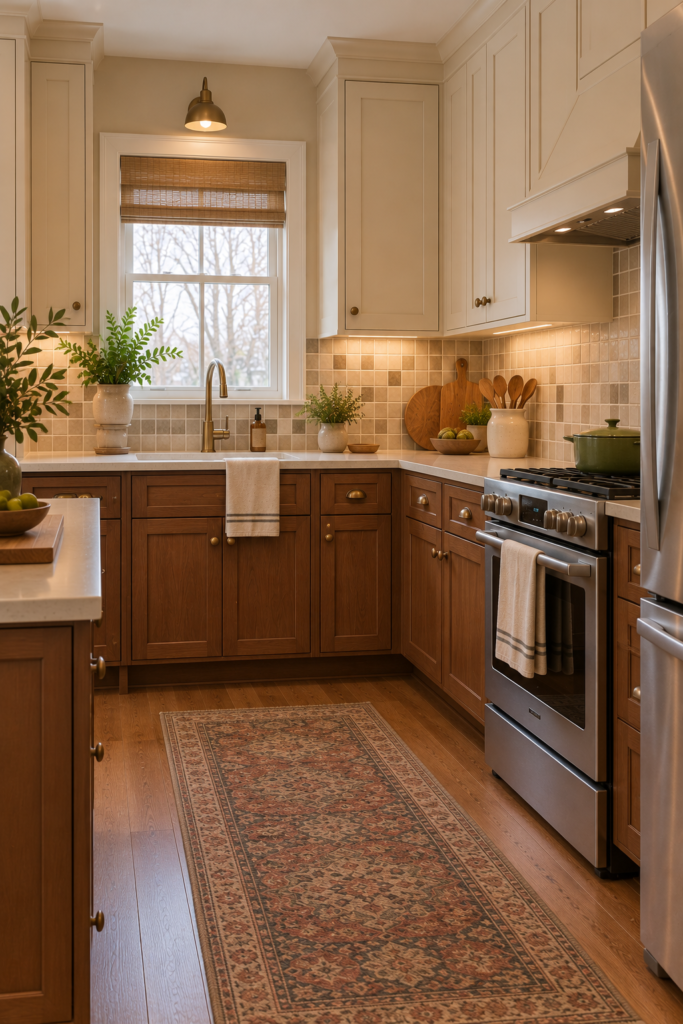
Zellige-style tile introduces subtle differences in glaze, color, and surface appearance. Those variations can make a backsplash feel more tactile than a perfectly uniform surface.
Warm cream is a versatile choice, especially when paired with walnut accents and muted olive cabinetry. A softer green or mushroom shade can work too, provided the other finishes remain relatively restrained.
Choose a product suitable for the intended kitchen application. Handmade-look tiles can vary in surface texture and edge shape, so review the manufacturer’s installation requirements before purchasing.
Grout selection matters. A closely matched color emphasizes the overall surface, while contrasting grout makes the individual tile shapes more noticeable.
Because the tile itself provides visual interest, you can keep the countertop and accessories simple. The result feels layered without requiring additional decorative objects.
10. Try Vertical Backsplash Tile
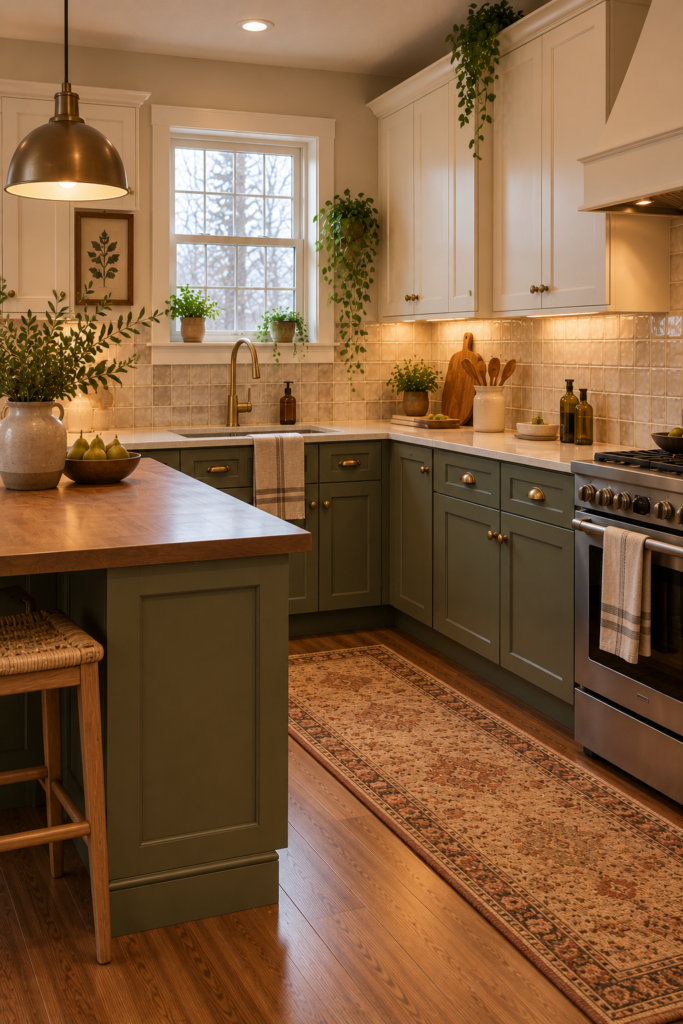
Installing rectangular backsplash tile vertically offers a different interpretation of a familiar format.
Choose cream or mushroom tile for a restrained look, or use a contrasting cabinet color such as burgundy on the lower cabinets. The vertical orientation introduces a more contemporary detail without requiring an elaborate pattern.
Plan the layout before installation, particularly around outlets, windows, cabinets, and countertop edges. The way the tile finishes at these points influences the overall result.
Grout can either emphasize the vertical arrangement or blend into the tile. Compare samples together to decide which effect suits the kitchen.
If the room already has a patterned floor or prominent countertop veining, a simple vertical layout can introduce interest without creating too many competing elements.
11. Add a Herringbone Backsplash
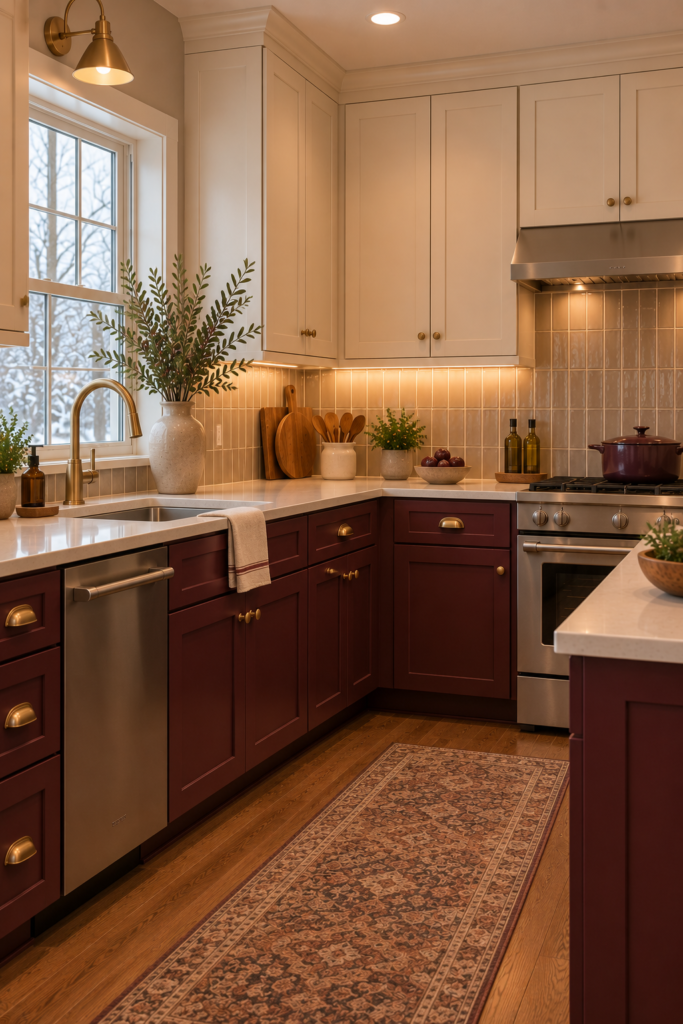
Herringbone tile creates movement through a repeating angled pattern. It works particularly well when you want a backsplash with more detail than a standard rectangular layout.
Warm cream tile with subtle grout can provide a classic look, while mushroom or muted olive introduces more color.
Because the pattern is visually active, consider pairing it with plain cabinets and a relatively simple floor. Combining several strong geometric patterns can make a kitchen feel busy.
Before installation, review how the pattern will meet corners, outlets, cabinets, and exposed edges. Accurate layout and consistent joints are especially important for a design with repeating angles.
A carefully executed herringbone backsplash can become the kitchen’s main decorative feature without requiring a bold color or additional wall decoration.
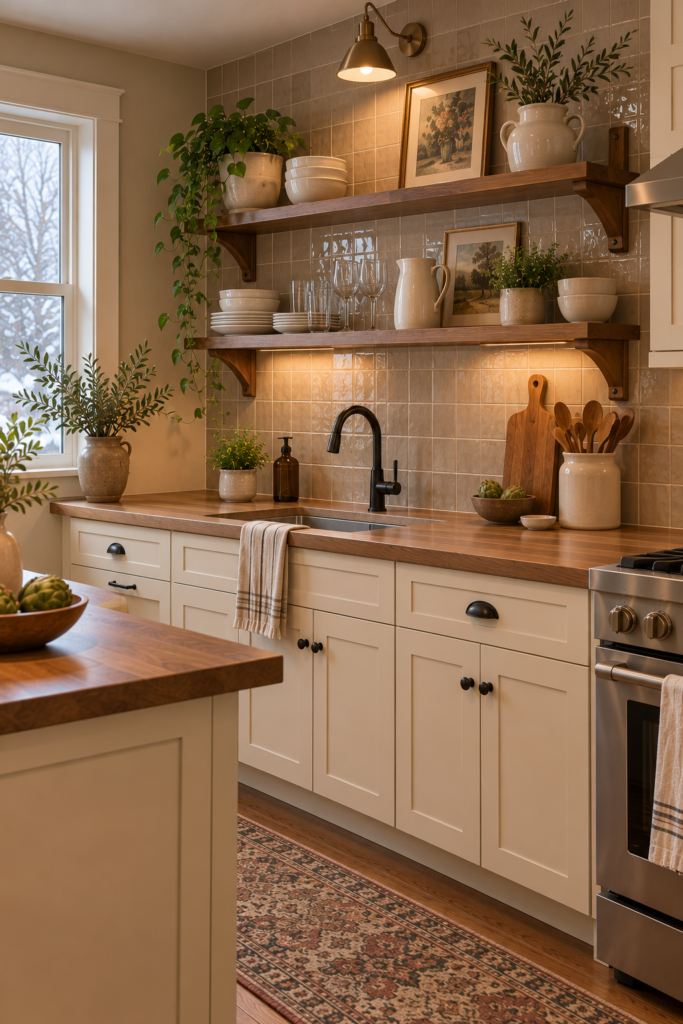
12. Use Tile Behind Open Shelving
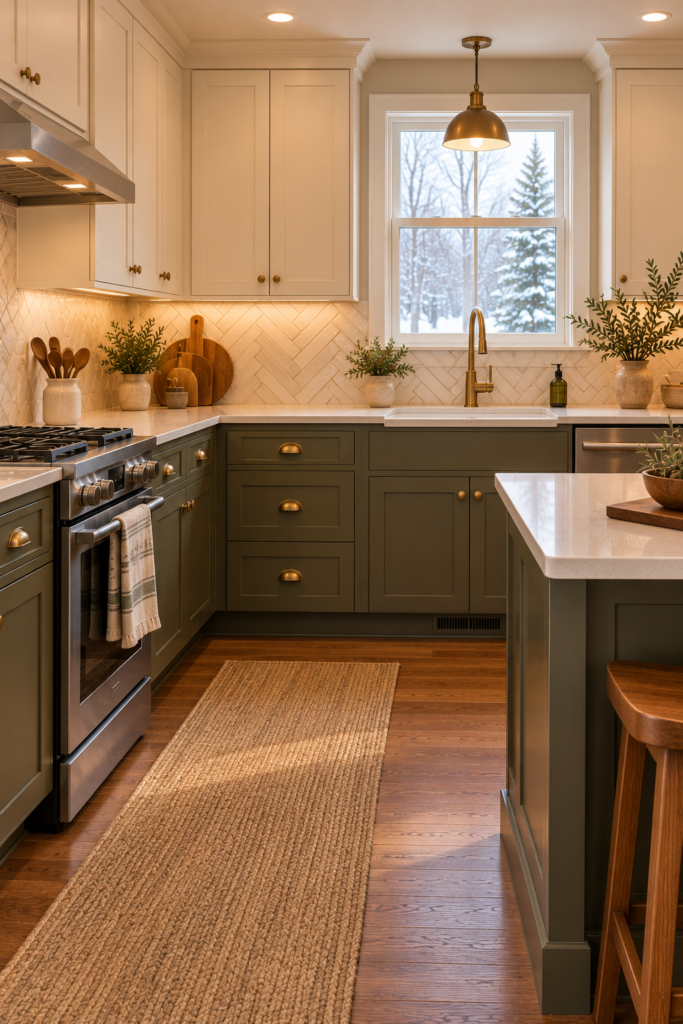
A tiled wall behind open shelves can make the display area feel more cohesive and finished.
Warm cream or mushroom tile works well with medium-walnut shelves and cream ceramics. Muted olive tile can provide more contrast when the shelves and surrounding cabinets are relatively simple.
Plan the tile layout before installing the shelves so the joints, brackets, and shelf edges work together. Shelves must be securely supported using fixings suitable for the wall construction and intended load.
Consider the location carefully. Tile behind shelves near a sink may need to withstand regular splashes, while areas near the cooktop may be exposed to grease and heat.
Keep the display practical. A few everyday dishes and useful objects can create a balanced arrangement without making the shelves difficult to clean or use.
For more ways to style practical open storage, see these kitchen shelves decor ideas for beautiful open storage.
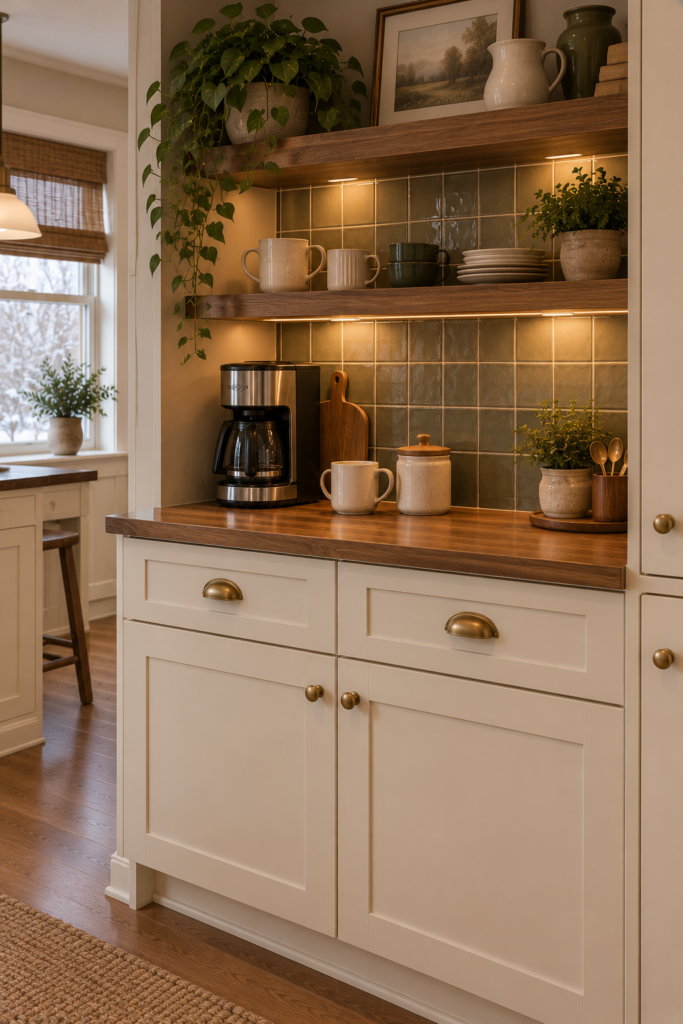
13. Tile a Kitchen Coffee Station
A coffee station is a useful place to introduce a different tile from the main backsplash.
Try muted olive square tile or burgundy rectangular tile behind the coffee area, while keeping the rest of the kitchen neutral. This creates a small feature without requiring the same strong color across the entire room.
Plan the tile around the counter, cabinets, and any shelves. Keep enough room for the coffee maker, mugs, and everyday preparation, and avoid crowding the area with decorative objects.
Choose materials suitable for the location and consider exposure to steam and occasional splashes. The appliance should remain on a stable surface with the required clearance, and electrical connections must be kept away from water.
A walnut tray or a few cream ceramics can connect the coffee station to the wider kitchen palette without competing with the tile.
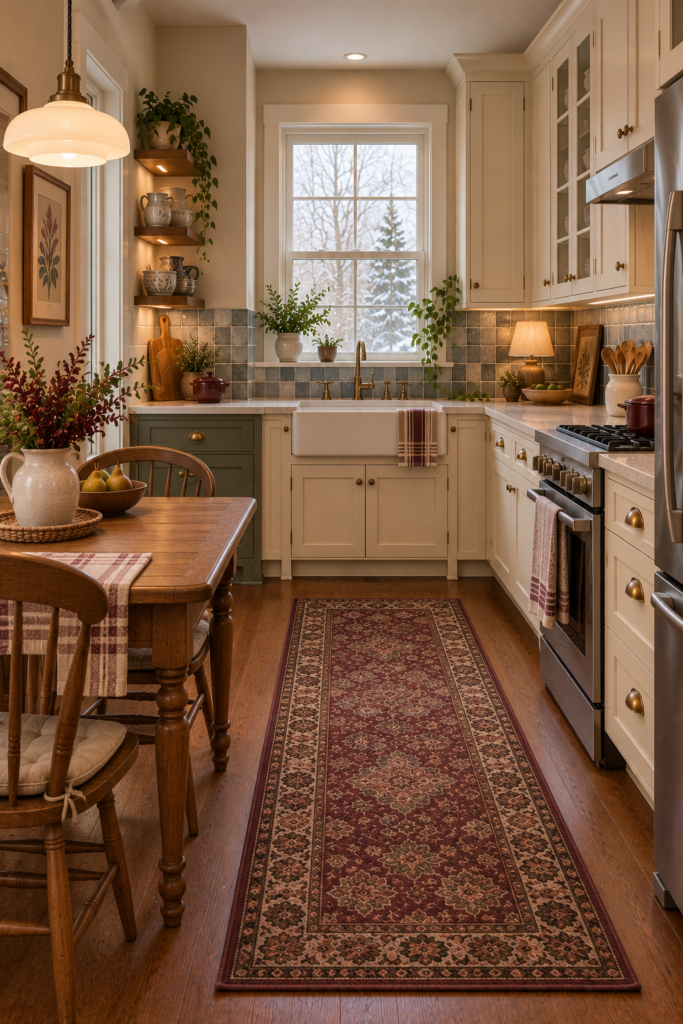
14. Add Tile to a Cottage Kitchen
Cottage kitchens suit tile with a softer color palette and a relatively simple format.
Warm cream, muted blue-gray, olive, and mushroom are useful choices for square or rectangular backsplash tile. Pair the tile with painted cabinets, a wood table, and a few practical textiles.
Consider how the backsplash relates to the floor. If the floor has a strong pattern, a simpler wall tile may create a better balance.
Choose grout that’s appropriate for the tile and intended location, and consider how easy the completed surface will be to clean around the sink and cooking area.
A restrained palette can create cottage character without requiring a collection of themed accessories. Natural wood, painted cabinetry, and well-chosen tile can provide enough detail on their own.
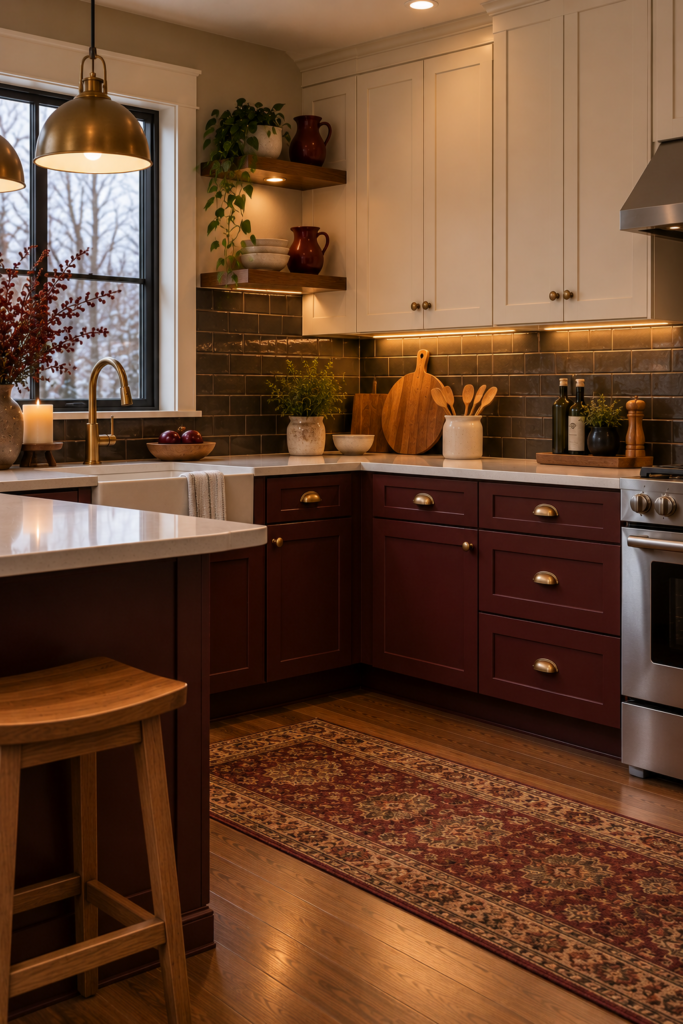
15. Use Dark Tile in a Moody Kitchen
Charcoal or deep brown tile can create a dramatic backsplash, especially when paired with warm cream countertops and walnut accents.
Muted olive or burgundy cabinetry can add further depth, but the overall palette needs enough contrast to keep the work areas practical.
Consider the room’s natural light before choosing a very dark tile. In a kitchen with limited daylight, lighter countertops and suitable task lighting can help prevent the space from feeling overly enclosed.
Choose a finish appropriate for the backsplash location and consider how its texture will affect cleaning. A heavily textured surface may require more attention in areas exposed to grease.
Keep other patterns restrained so the dark tile remains the main feature. A moody kitchen can feel warm and inviting without making every surface dark.
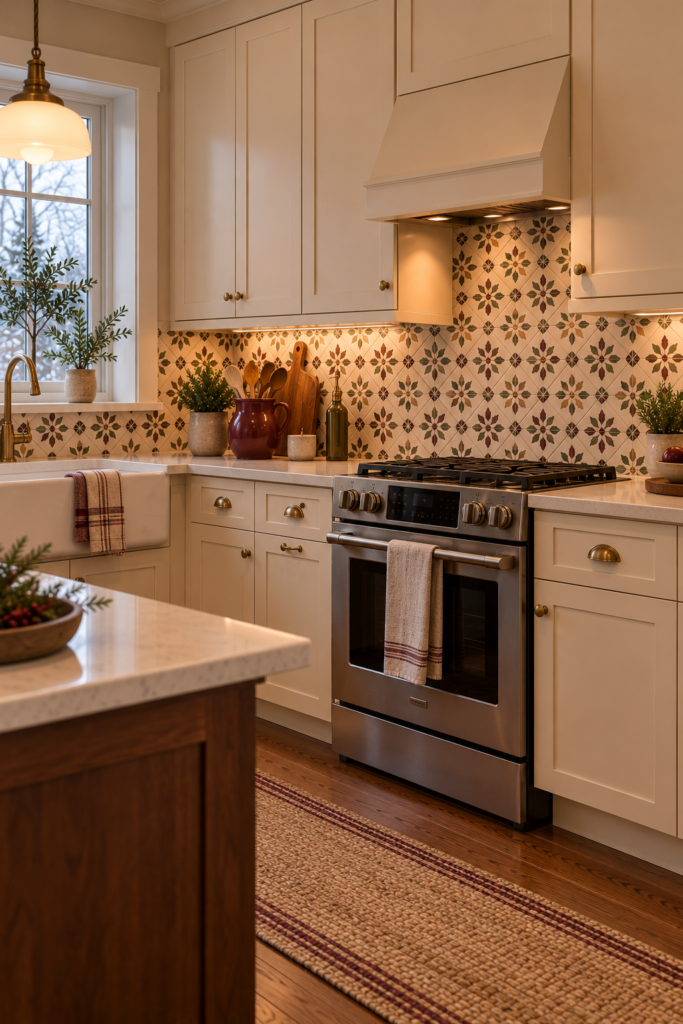
16. Use Patterned Tile Sparingly
Patterned tile can introduce personality through geometric shapes, botanical motifs, or repeating decorative designs.
Use it in one defined area, such as a small backsplash or the floor of an otherwise simple kitchen. Muted cream, olive, burgundy, mushroom, and charcoal can create a coordinated palette without introducing too many competing colors.
Consider the size of the pattern and the area it will cover. A small, intricate design may look different across a large floor than it does on a sample board.
If you choose patterned flooring, keep the backsplash relatively plain. If the backsplash is the focal point, a quieter floor can provide balance.
Confirm that the selected product is suitable for its intended use, especially when choosing between decorative wall tile and floor tile. Pattern should never take priority over the material’s suitability for the location.
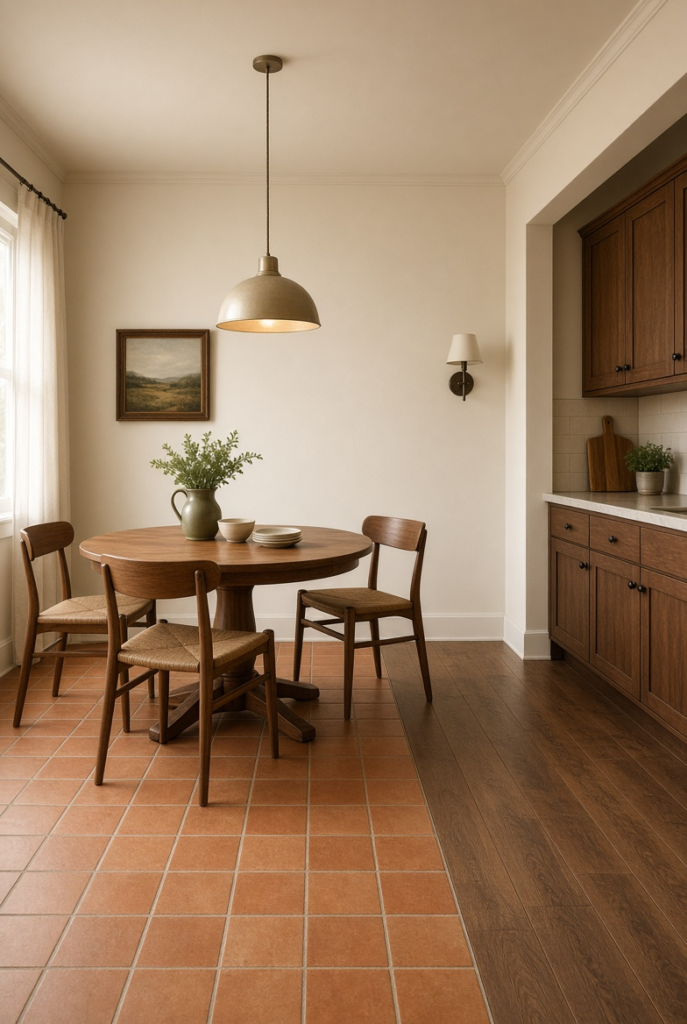
17. Create a Tiled Breakfast Nook Floor
Tile can help define a breakfast nook within an open kitchen, provided the floor layout and installation suit the space.
Warm stone-look or terracotta-look tile can work with a medium-walnut table, cream walls, and muted olive cushions or ceramics. The materials establish a distinct dining area without adding a partition.
Choose floor tile appropriate for the expected use and consider how its surface feels underfoot. A tiled floor can feel different from wood or resilient flooring, especially in a space where people sit for longer periods.
Plan transitions between flooring materials carefully. Changes in height should be properly detailed so they don’t create a trip hazard, and the tile substrate needs to suit the installation.
Keep furniture placement practical. Chairs should move comfortably, and the table shouldn’t obstruct the main route through the kitchen.
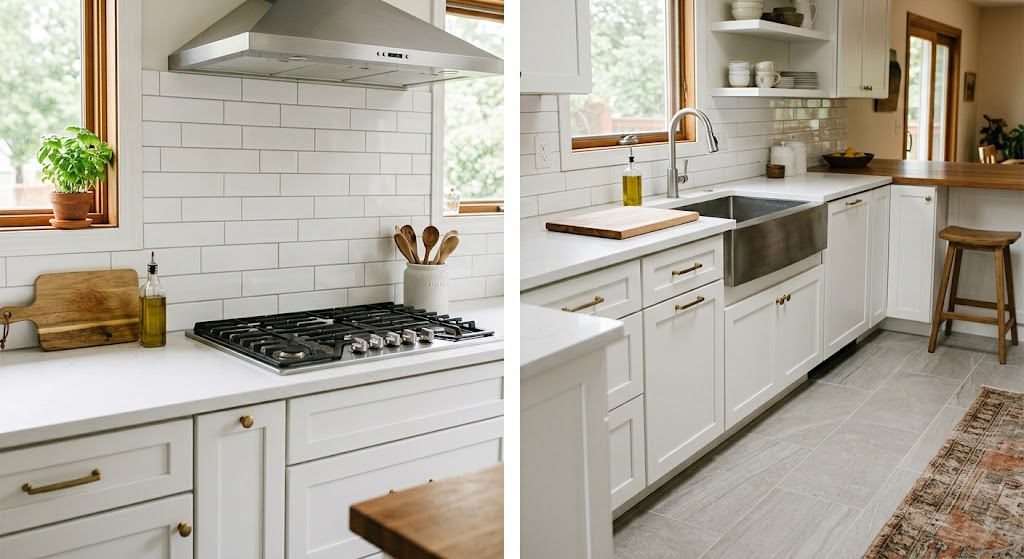
18. Combine Simple Floor and Backsplash Tile
Using tile on both the floor and backsplash can create a cohesive kitchen, provided the two surfaces don’t compete.
One option is a warm stone-look floor with simple cream backsplash tile. Alternatively, a patterned or colorful backsplash can be balanced with a quieter neutral floor.
Repeat one compatible color between the surfaces to connect them. Exact matching isn’t necessary; related undertones can provide continuity without making the kitchen look uniform.
Consider scale and texture together. A floor with strong variation may pair better with a simple wall tile, while a relatively quiet floor can support a more decorative backsplash.
Confirm that each product is rated for its intended location. Floor and wall tiles are not automatically interchangeable, and the installation methods and performance requirements may differ.
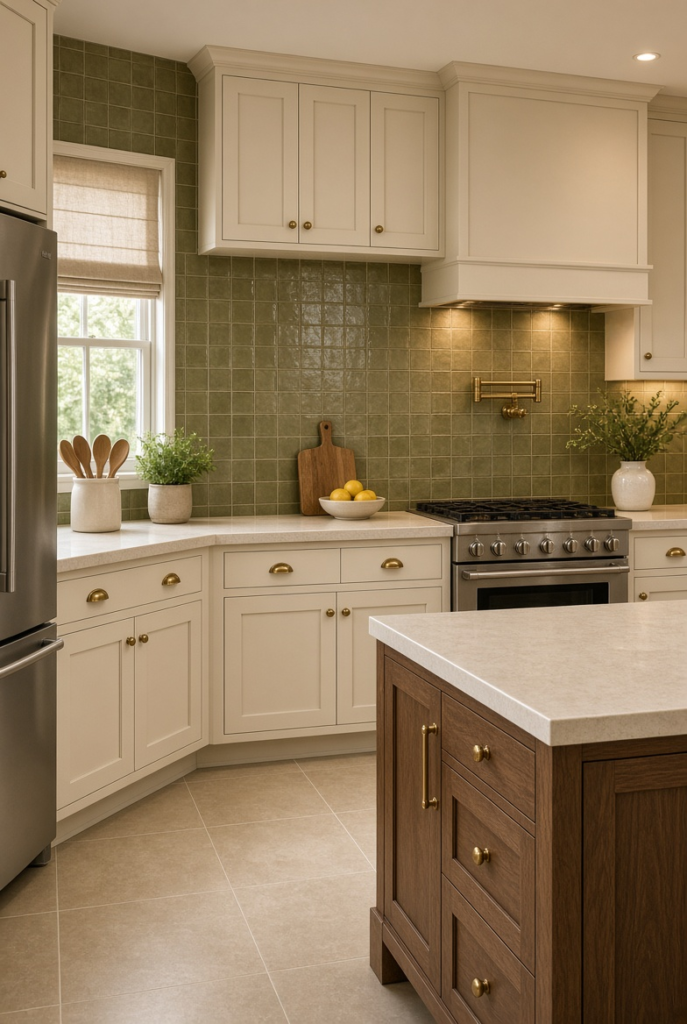
19. Build a Full Layered Tile Kitchen
A fully layered tile kitchen combines a feature tile with supporting materials that keep the room balanced.
For example, use a muted olive backsplash as the main feature, a quiet warm stone-look floor, cream cabinets, and medium walnut accents. Aged-brass-style hardware can introduce warmth while the countertops remain relatively simple.
Start with the largest surfaces and decide which tile should attract the most attention. If the backsplash has strong color or texture, let the floor support it rather than compete with it.
Compare tile, grout, cabinet, and countertop samples together. The undertones should work well under the kitchen’s actual lighting, and the tile pattern should suit the room’s proportions.
Good installation is essential to the finished look. Consistent joints, well-planned cuts, suitable edge details, and properly prepared substrates can make a simple tile look considered and cohesive.
How to Choose Kitchen Tile
Start by identifying where the tile will be installed. Floors, backsplashes, and other wall areas have different performance requirements.
Consider the product’s intended use, slip characteristics where relevant, water exposure, cleaning needs, stain resistance, and compatibility with the substrate and installation materials.
Look at multiple samples together to understand color variation. A tile that looks subtle on its own may appear more prominent across a large surface.
Grout type, joint width, sealing requirements, and maintenance depend on the selected products. Follow the manufacturers’ recommendations rather than assuming that one installation method works for every tile.
Kitchen Backsplash Tile Ideas
A backsplash is a useful place to introduce color and pattern because it can define a section of the kitchen without changing the floor or cabinetry.
Warm cream creates a versatile background, mushroom adds warmth, muted olive introduces earthy color, burgundy provides depth, and charcoal creates contrast. Patterned or handmade-look tile can add texture when the surrounding surfaces are relatively simple.
Consider the relationship between the backsplash, countertop, and upper cabinets. A well-balanced combination can make the kitchen feel connected without requiring all three surfaces to match.
Kitchen Floor Tile Ideas
Kitchen floors need to suit regular foot traffic, spills, cleaning, and the conditions of the room.
Choose a product rated for floor use and consider slip characteristics, surface texture, grout maintenance, and how the tile will meet adjacent flooring.
View several samples together when possible because color variation may become more noticeable over a larger area. Consider the effect of the floor on the rest of the kitchen before committing to a highly patterned or strongly colored design.
Tiles Kitchen Ideas for Small Kitchens
A connected color palette can help a small kitchen feel less visually fragmented.
Warm cream backsplash tile with cream cabinetry creates continuity, while a vertical rectangular layout can introduce a different sense of direction. Small-scale patterns can work too, but they don’t need to cover every surface.
Don’t assume a small room always requires small tiles. The best format depends on the room’s proportions, cabinet layout, grout pattern, and the effect you want to create.
Keep the number of competing patterns limited and choose tile according to its intended use.
How to Mix Two Kitchen Tiles
Give each tile a clear role. One can be the feature, while the other provides a quieter background.
A muted olive backsplash with a mushroom floor is one possible combination. Another is a patterned floor with a simple cream backsplash.
Repeat a compatible color between the two surfaces to connect them. Compare the samples together under the kitchen’s lighting and consider the scale of each pattern.
Kitchen Tile Grout Ideas
Grout has a significant effect on the appearance of tiled surfaces.
A contrasting shade emphasizes individual tiles and the layout, while a closer color match creates a more continuous appearance.
The right grout depends on the tile, joint requirements, installation conditions, and expected use. Sealing and cleaning requirements vary by product, so follow the manufacturer’s instructions.
If possible, compare grout samples with the actual tile before making the final selection.
How to Make Kitchen Tile Look Expensive
A carefully planned installation often matters more than choosing the most elaborate tile.
Prioritize a consistent layout, clean transitions, suitable edge finishing, thoughtful grout color, and proper substrate preparation. Plan the cuts around cabinets, windows, outlets, and exposed edges before work begins.
A simple tile installed carefully can create a more cohesive result than an expensive product with awkward cuts or inconsistent joints.
Kitchen Tile Safety and Installation
Use tile specifically rated for its intended application. Floor tile should suit the expected traffic and conditions, while backsplash materials must be appropriate for the location and any relevant heat or moisture exposure.
Prepare the substrate correctly and use suitable setting materials, grout, movement joints, waterproofing where required, and edge treatments. Maintain access to outlets, switches, vents, controls, and other service points.
Tile cutting can generate hazardous dust, including respirable crystalline silica from many products. Use appropriate dust-control methods and protective equipment, or have the work completed by qualified professionals.
Changes to electrical outlets, plumbing, structural supports, or other building systems should meet applicable requirements. If you’re unsure about substrate preparation, waterproofing, structural loading, or installation standards, consult an appropriately qualified professional.
Final Thoughts
The best tiles kitchen ideas for floors, walls, and backsplashes balance appearance with practical performance. Warm cream, mushroom, olive, burgundy, terracotta, charcoal, and natural stone-look finishes all offer different ways to create character.
Choose one main tile feature, then let the remaining surfaces support it. Consider the material’s intended use, grout requirements, cleaning needs, and installation details before committing.
A thoughtful combination of color, pattern, and texture can make a kitchen feel distinctive without overwhelming the room.
