
16 Soapstone Countertops Kitchen Ideas for a Timeless Look
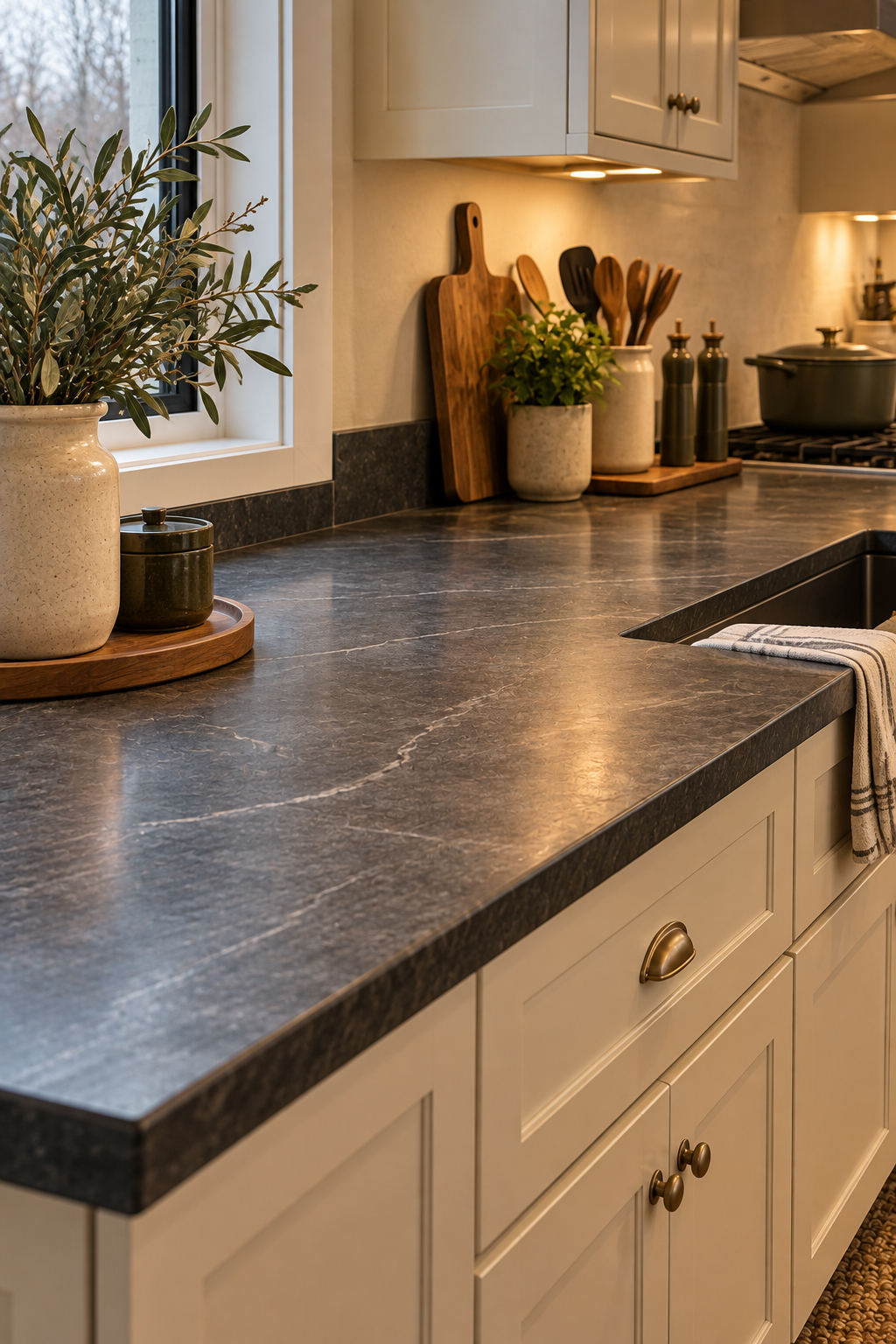
Soapstone countertops have a quieter personality than bright, polished stone. Their gray-to-charcoal tones, subtle veining, and naturally understated appearance can bring depth to a kitchen without demanding attention from every other finish.
Soapstone works with a range of interiors, from farmhouse and cottage kitchens to traditional and contemporary spaces. Pair it with warm cream cabinetry for contrast, walnut for richness, or muted olive for an earthy palette.
The material also develops character with use. Scratches and changes in appearance can become part of its patina, which appeals to some homeowners but may not suit everyone. Understanding that difference before choosing a countertop is just as important as selecting the right cabinet color.
These 16 soapstone countertops kitchen ideas for a timeless look explore ways to use the stone throughout the kitchen, along with practical guidance on care, installation, and coordinating finishes.
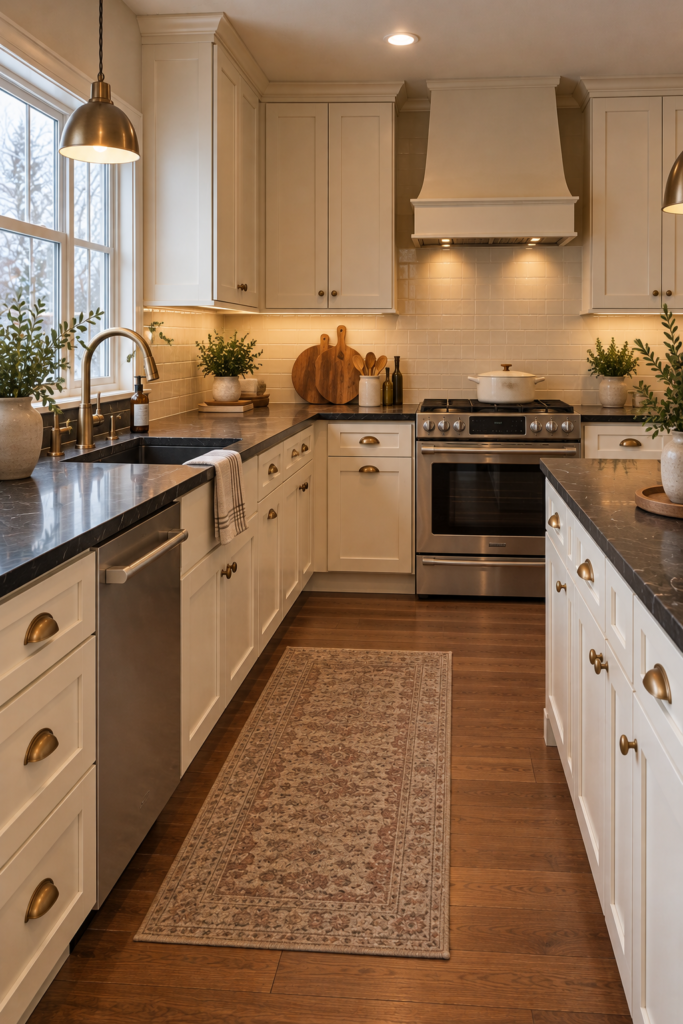
1. Pair Soapstone With Warm Cream Cabinets
Dark soapstone and warm cream cabinetry create a classic contrast. The countertop adds visual depth, while the lighter cabinets keep the kitchen from feeling dominated by dark surfaces.
Pair the combination with walnut flooring, simple hardware, and warm lighting. The result can feel traditional without requiring elaborate trim or decorative accessories.
When choosing cream cabinetry, compare samples with the actual stone. Some creams lean yellow, while others appear more neutral or beige. These undertones can change how the gray or charcoal stone looks beside them.
Also consider the countertop’s finish and veining. A slab with prominent movement will create a different effect from one with a relatively uniform appearance.
Keep the backsplash simple enough to let the stone and cabinets work together. This combination is especially suitable if you want a timeless kitchen palette that doesn’t depend on a particular decorating trend.
2. Pair Soapstone With Walnut Cabinets
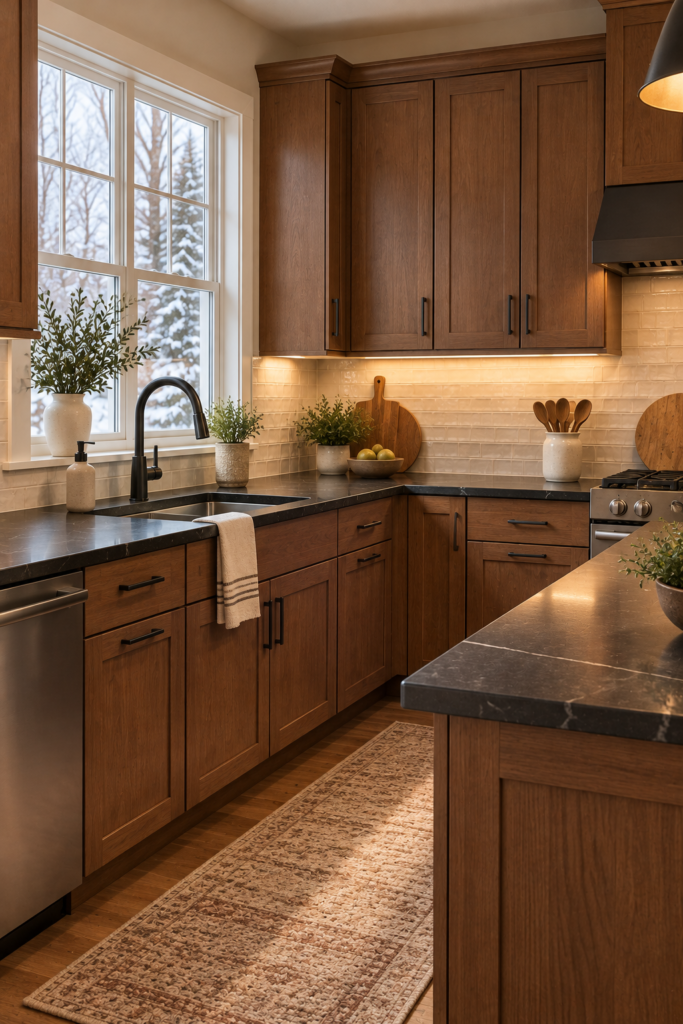
Walnut cabinetry creates a rich, natural backdrop for soapstone. The dark countertop and brown wood can feel cohesive when the remaining finishes introduce enough warmth and contrast.
Choose medium walnut rather than an extremely dark finish if you want the wood grain to remain visible. Warm cream walls and a restrained backsplash can lighten the composition.
Lighting matters with this combination. Use suitable general lighting and task lighting over the work surfaces so the darker materials don’t leave preparation areas difficult to see.
Compare the walnut finish with the specific soapstone slab before making a final selection. Some slabs appear cooler and more charcoal-colored, while others have warmer gray tones or noticeable veining.
Keep the hardware understated. The wood grain and natural stone already provide texture, so a simple finish can help the kitchen feel balanced rather than overly decorated.
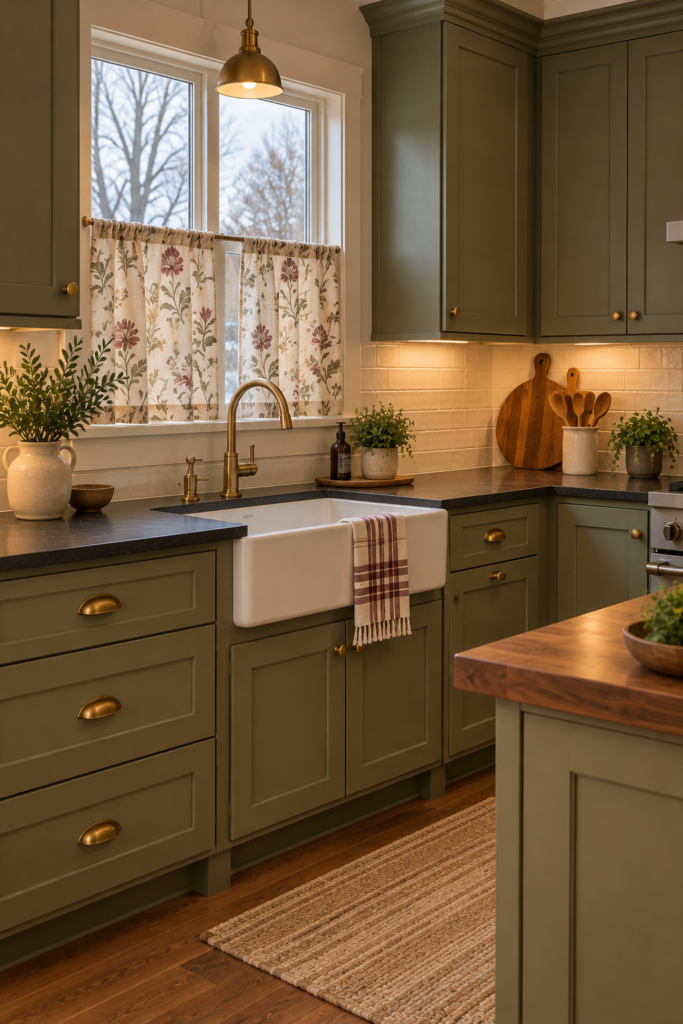
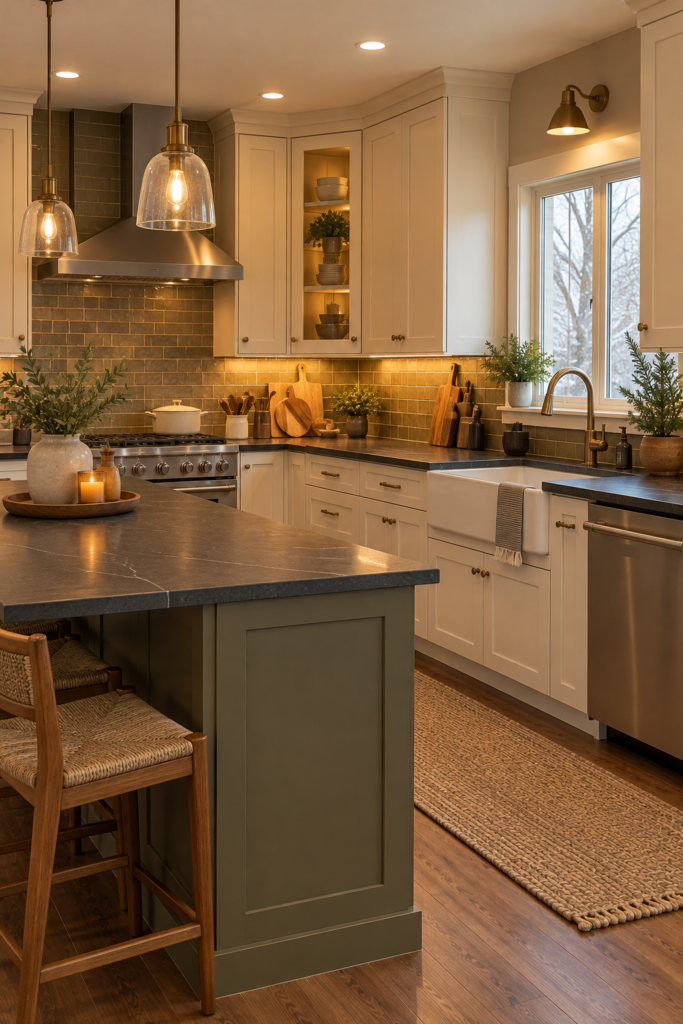
3. Pair Soapstone With Muted Olive Cabinets
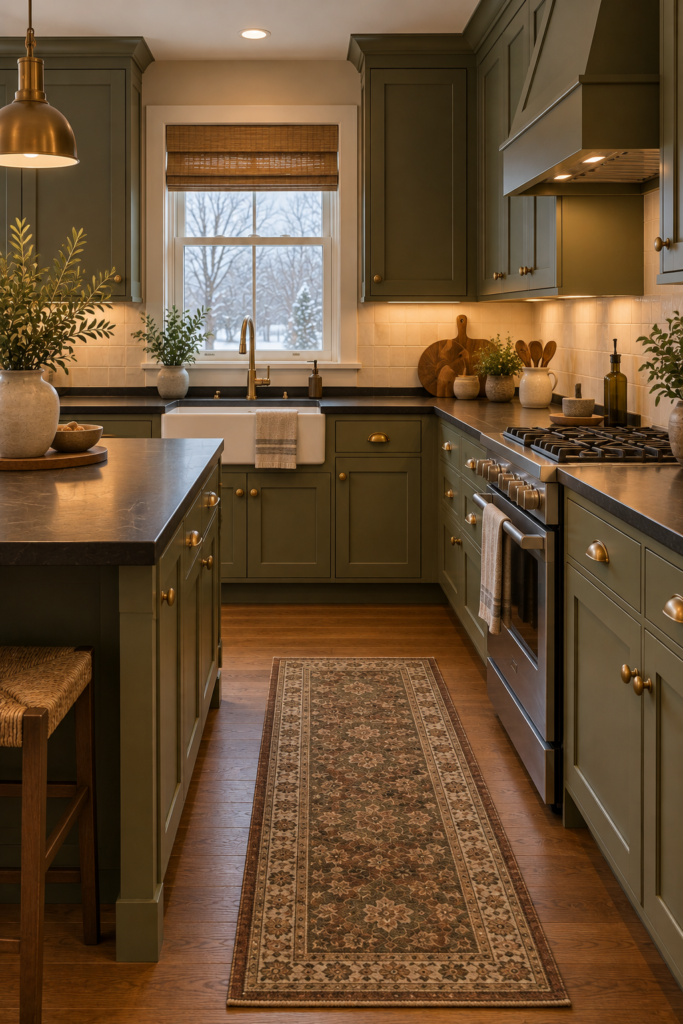
Muted olive cabinetry gives soapstone an earthy character. The green softens the dark counter, while walnut flooring and warm cream backsplash tile bring warmth to the room.
Choose an olive shade that complements the stone’s undertones. A gray-green can create a restrained, contemporary appearance, while a warmer olive may feel more traditional.
Compare the cabinet color and stone together under the kitchen’s actual lighting. Both materials can look different in daylight and under evening illumination.
Aged-brass-style hardware can introduce a warm metallic accent, but keep the remaining accessories relatively simple.
This combination works particularly well in cottage and traditional kitchens, where natural materials and subdued colors help create a comfortable atmosphere.
4. Use Soapstone on the Island
If you like soapstone but don’t want dark countertops across the entire kitchen, consider using it on the island.
Keep the perimeter countertops in a lighter material, then let the soapstone island become the focal point. Cream cabinetry and walnut stools can connect the two surfaces without making the kitchen feel overly dark.
Before choosing the countertop, consider the island’s dimensions, support structure, and intended use. Stone is heavy, and the cabinets and supporting components need to be suitable for the finished installation.
If the island includes seating, make sure any countertop overhang has appropriate support. Stools should also fit comfortably without obstructing the main walking route or nearby appliance doors.
This approach allows the natural character of soapstone to stand out while preserving a lighter appearance elsewhere in the kitchen.
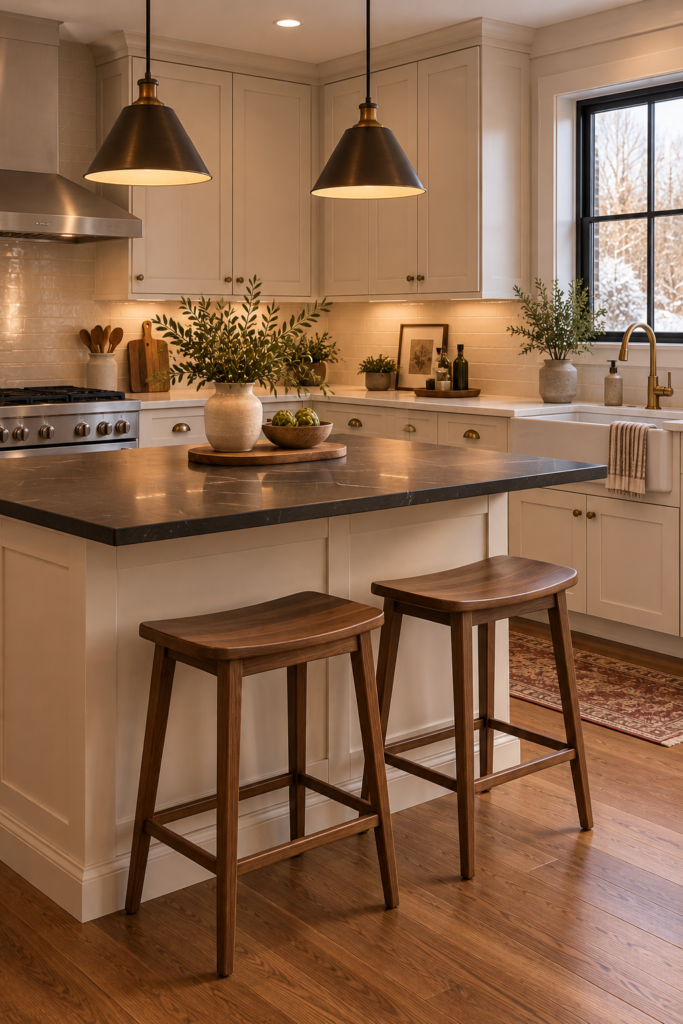
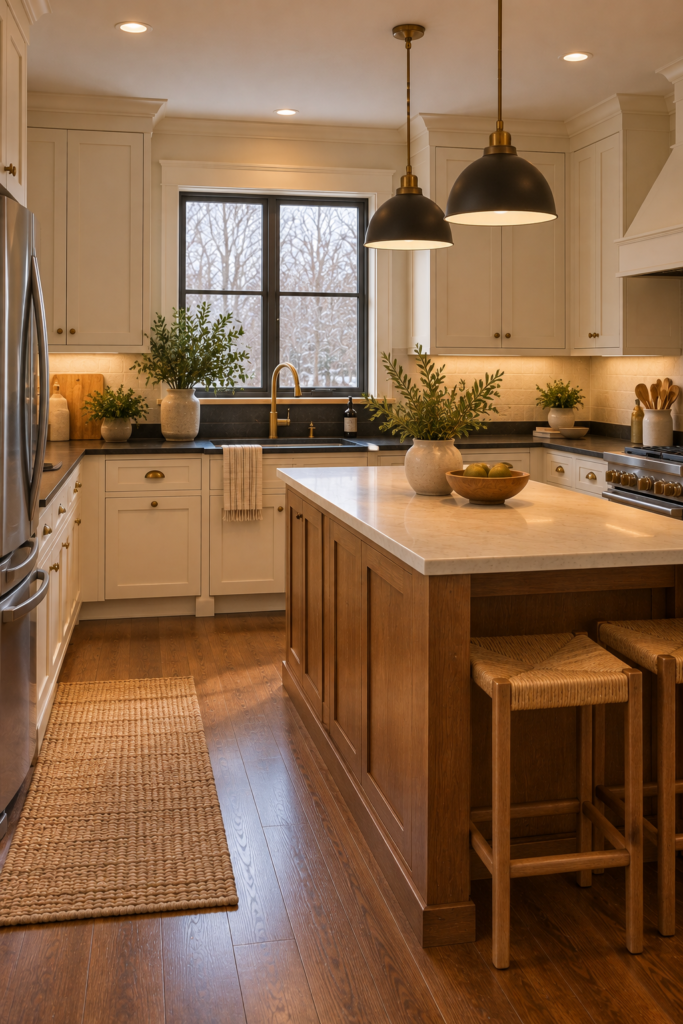
5. Use Soapstone on Perimeter Counters
Reversing the previous arrangement creates a different balance. Use soapstone along the perimeter counters and choose a lighter surface for the island.
This approach can make the island feel visually prominent while giving the sink and cooking areas a consistent dark countertop.
Warm cream cabinetry helps connect the surfaces, while light wood or a neutral island finish introduces contrast. Consider how the countertop edges and transitions will look where the two materials meet.
The island and perimeter don’t have to use matching finishes, but they should share compatible undertones.
Before choosing both materials, compare samples together and consider their maintenance requirements. Different countertop materials may need different cleaning products or care routines.
The result can feel layered and intentional without making every surface the same color.
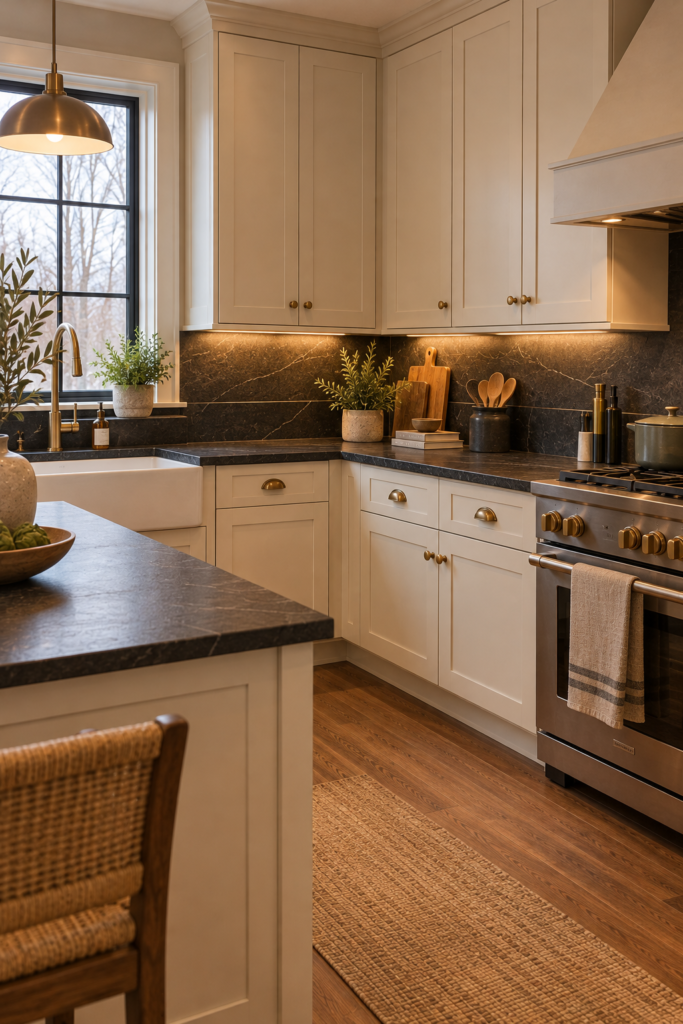
6. Add a Soapstone Backsplash
Extending soapstone from the countertop onto the wall creates a continuous material detail that can make the kitchen feel cohesive.
A short backsplash in the same stone works well with warm cream cabinets or natural wood. The repeated surface allows the stone’s color and veining to become part of the overall design rather than an isolated countertop feature.
Plan the transition carefully, particularly around the sink, wall joints, outlets, and other interruptions. The stone and installation system must be suitable for the intended location.
Keep other materials restrained. If both the counter and backsplash feature soapstone, a simple cabinet finish and understated hardware can provide enough contrast.
This approach is especially useful when you want a substantial, natural look without introducing a second prominent backsplash material.
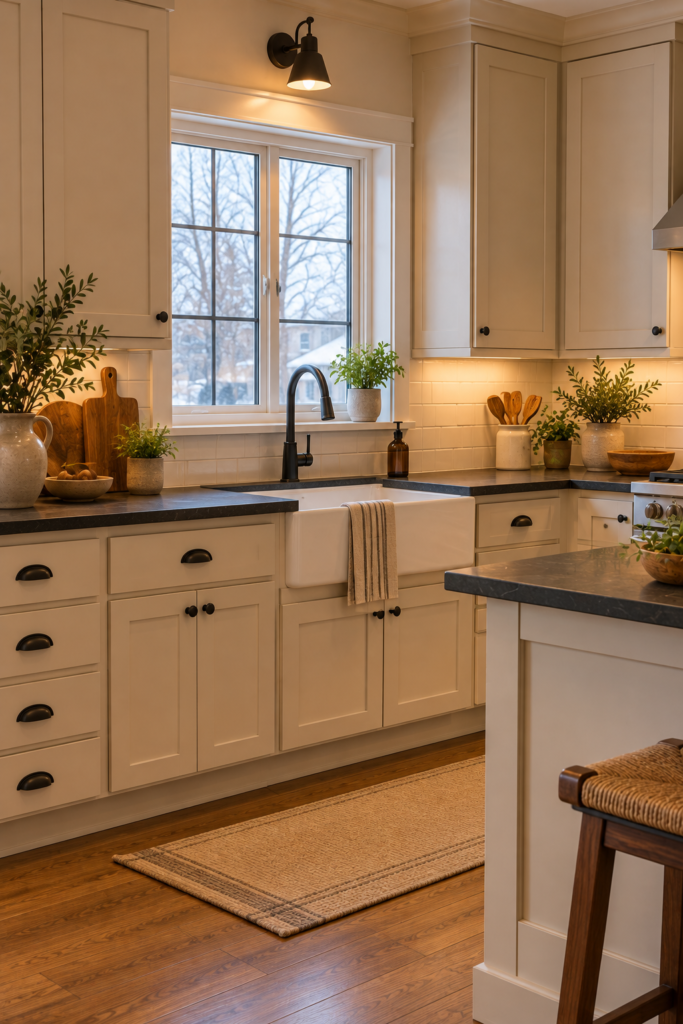
7. Create a Farmhouse Soapstone Kitchen
Soapstone fits naturally into farmhouse kitchens because its understated appearance complements traditional cabinetry and practical materials.
Pair the stone with cream shaker cabinets, a farmhouse-style sink, medium-toned wood, and simple hardware. The dark countertop provides contrast without requiring distressed signs or overtly rustic accessories.
Consider the sink carefully before finalizing the countertop. The opening, edge treatment, support requirements, and plumbing connections need to work together.
Choose wood finishes that complement the stone rather than competing with it. Medium oak and walnut can both work, depending on the color and veining of the slab.
Keep decorative objects selective. The combination of natural stone, wood, and traditional cabinet profiles already provides plenty of character.
8. Create a Cottage Soapstone Kitchen
A cottage kitchen can feel warm and relaxed with soapstone, muted green cabinets, cream tile, and natural wood.
A small floral café curtain can soften the window, while walnut accents provide depth. The dark counter prevents the lighter fabrics and ceramics from making the room feel overly sweet.
Choose a curtain that can be washed and remains clear of cooking heat, sink splashes, and window hardware.
If you introduce open shelving, confirm that the wall and supports can accommodate the intended load. Store heavier dishes on appropriately supported shelves and keep fragile objects away from the edge.
The goal is a balance between traditional charm and everyday practicality. A few useful ceramics and natural textures are more effective than filling every surface with decorations.
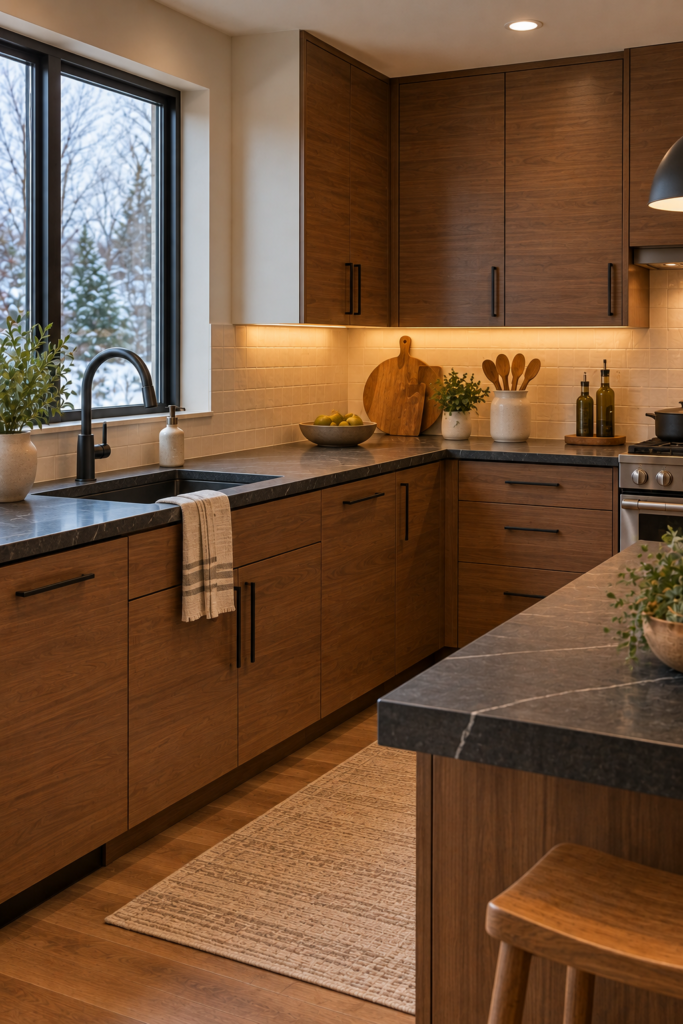
9. Create a Modern Soapstone Kitchen
Soapstone can work just as well in a contemporary kitchen as in a traditional one.
Pair the dark counter with flat-panel walnut cabinetry, warm cream walls, and minimal black hardware. The simple cabinet lines allow the stone’s natural appearance to become a defining feature.
Choose a backsplash that complements the stone without introducing too much pattern. A restrained surface helps the cabinetry and countertop feel connected.
Consider the room’s lighting before selecting darker finishes. Suitable task lighting over the sink and preparation areas is important, especially when the cabinetry and counters are both deep in color.
Keep accessories limited and prioritize usable counter space. Modern styling doesn’t require every surface to be empty, but each item should have a clear purpose.
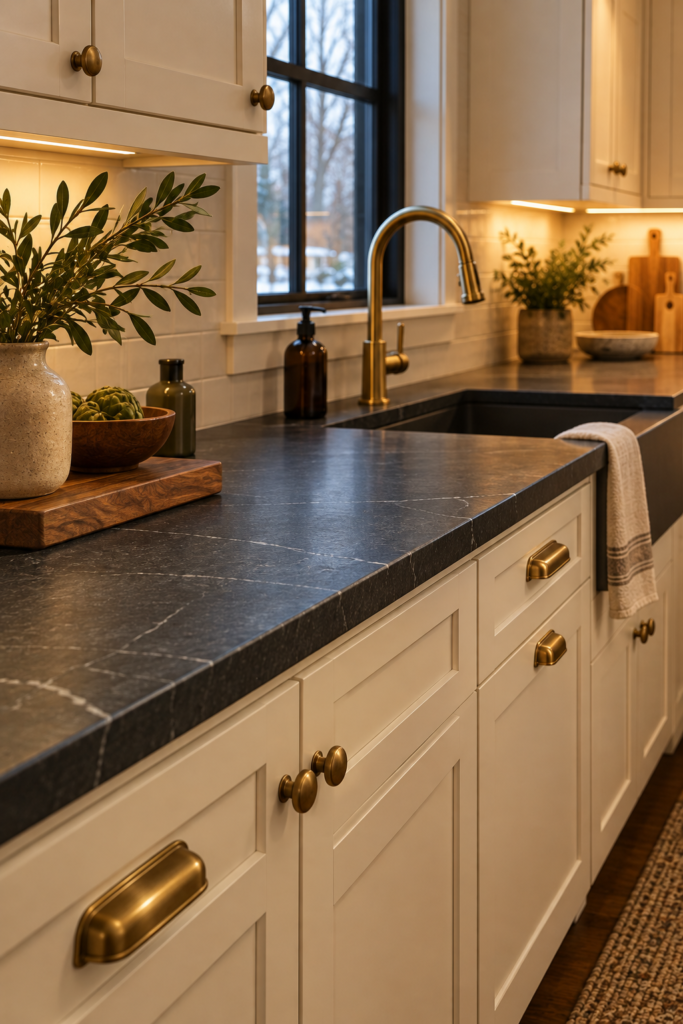
10. Pair Soapstone With Aged Brass
Aged-brass-style hardware can introduce warmth against charcoal soapstone and cream cabinetry.
Use simple knobs and pulls, then consider a compatible warm-metal faucet or lighting detail. The finishes don’t need to match exactly, but they should feel coordinated.
Brass varies in tone and sheen. Compare samples against the countertop and cabinet finish before committing, particularly if the soapstone has noticeable veining or a warmer gray color.
Consider how the hardware feels in everyday use as well as how it looks. Handles should be comfortable to grip and suitable for regular cleaning.
Keep the metallic accents restrained. The goal is to soften the dark stone, not make every fixture a competing focal point.
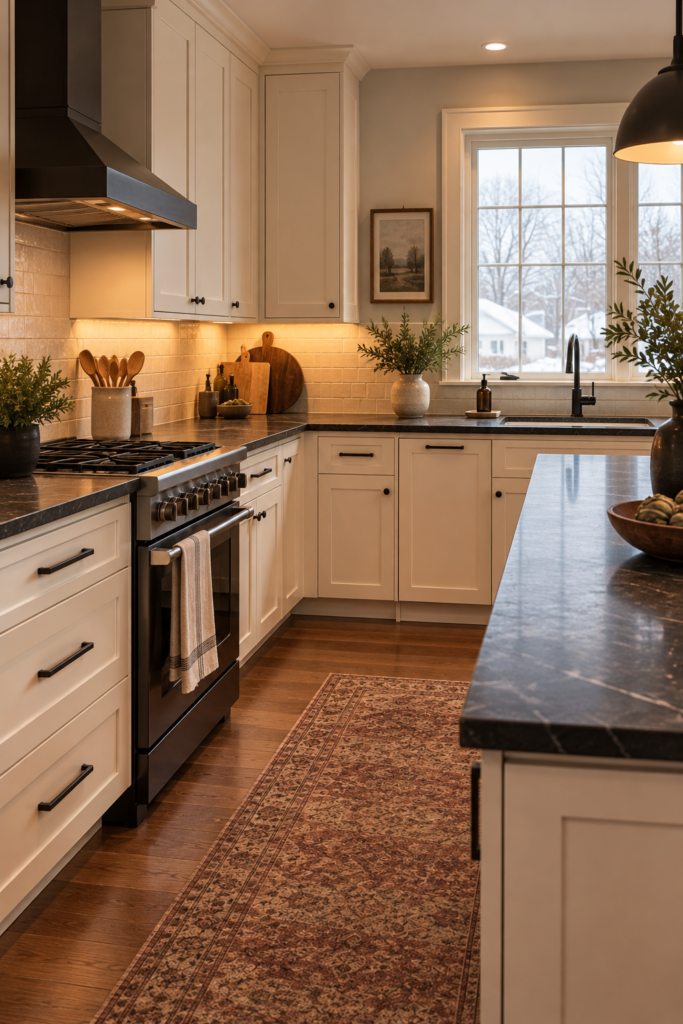
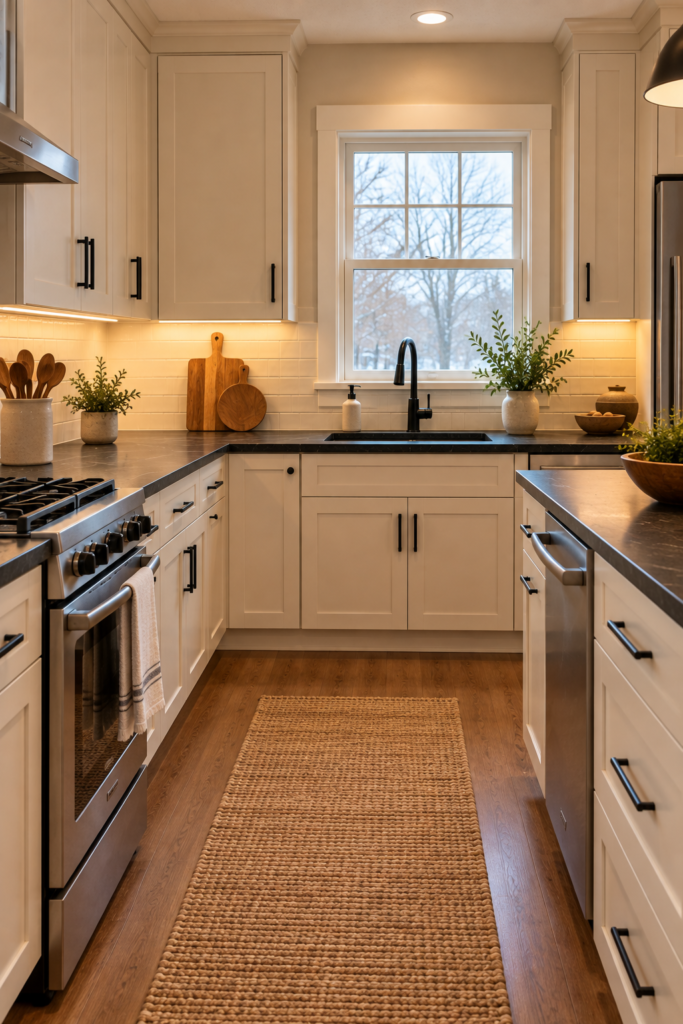
11. Pair Soapstone With Matte Black
Matte-black hardware creates a more restrained, contemporary palette with soapstone.
Pair black knobs and pulls with cream or walnut cabinetry, then use warm lighting to balance the dark finishes. The black relates to the countertop without requiring an exact match.
Consider how much dark color the room can accommodate. If the kitchen already has dark flooring or limited natural light, cream cabinets and a lighter backsplash can help maintain contrast.
Choose hardware that suits the cabinet style and feels comfortable to use. Simple shapes generally work well when the natural stone is the main visual feature.
The combination can feel sophisticated without looking cold, provided the lighting and surrounding materials introduce enough warmth.
12. Use Soapstone in a Small Kitchen
A small kitchen can benefit from the contrast of dark soapstone, provided the surrounding finishes are balanced.
Pair the countertop with light cabinetry, warm cream walls, and a relatively simple backsplash. Preserving daylight and adding suitable under-cabinet lighting can help keep the work surfaces clearly visible.
Consider whether the dark countertop will be used throughout the room or only on a limited section. A soapstone island or a short counter run can introduce the material without making every horizontal surface dark.
Avoid adding furniture or storage that restricts circulation. Clear access to drawers, appliances, and work areas matters more than adding another decorative feature.
A small kitchen doesn’t need to be entirely white to feel inviting. Contrast can create definition when the layout and lighting remain practical.
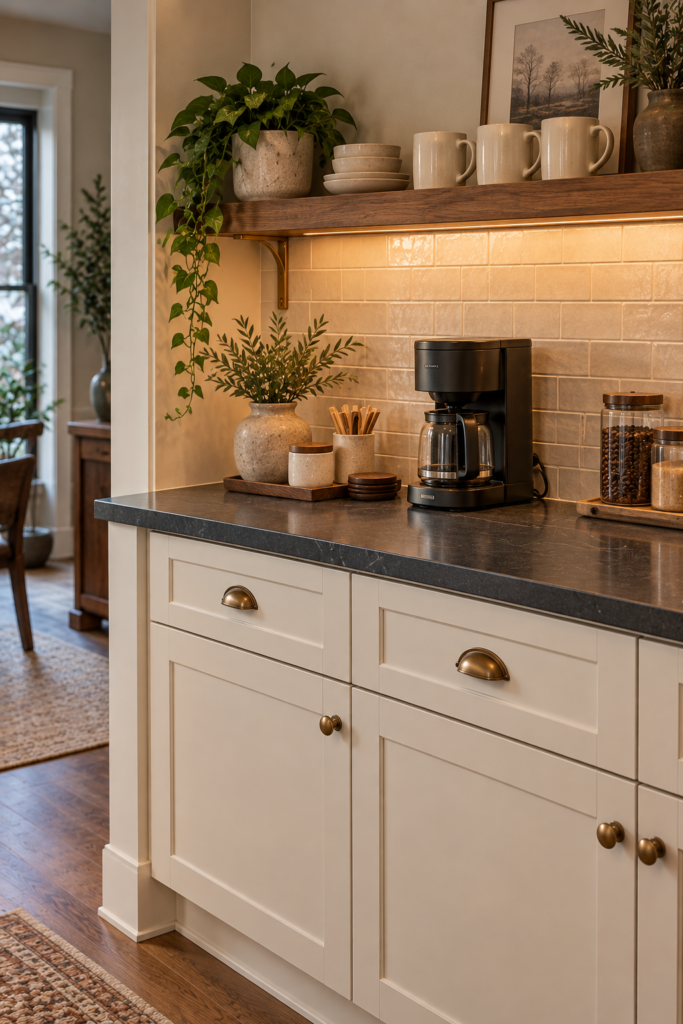
13. Add a Soapstone Coffee Station
A small soapstone countertop section can give a coffee station a distinctive focal point.
Pair the dark surface with cream cabinetry and a securely supported walnut shelf above. Keep mugs nearby and place the coffee maker on a stable, dry counter area with enough room for normal operation.
Before installing the shelf, confirm the wall construction and choose supports suitable for the intended load. Store heavier items where they can be reached comfortably and safely.
Follow the coffee maker’s instructions for ventilation and steam clearance. Keep electrical connections away from water and route cords safely.
Soapstone can provide a visually grounded surface for a small beverage area without requiring the same material throughout the kitchen.
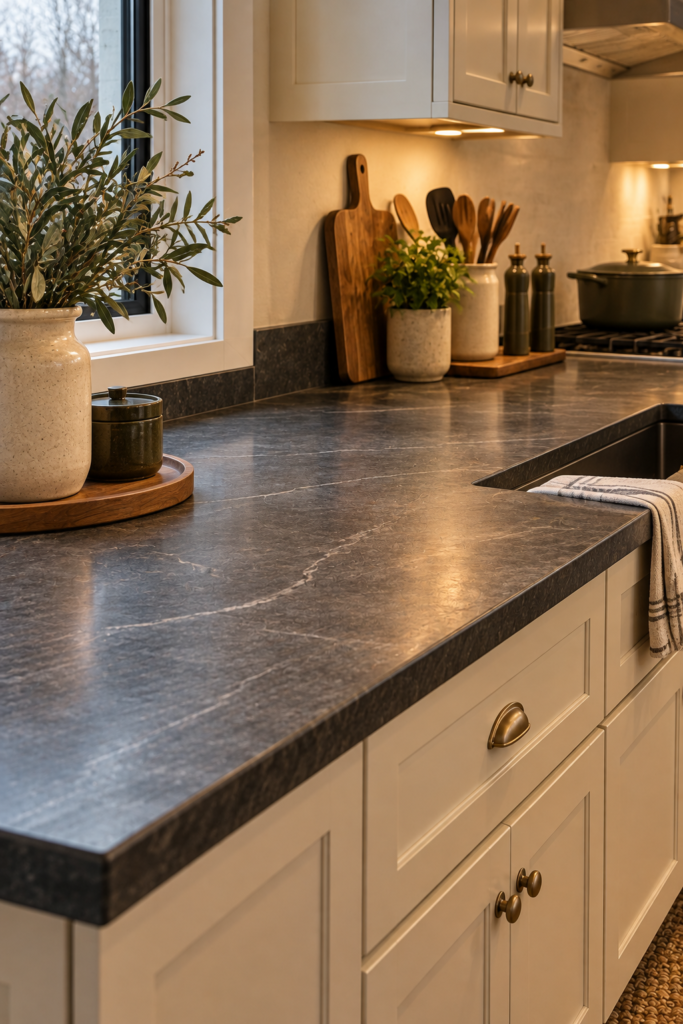
14. Let Soapstone Develop Character
Soapstone can develop scratches and signs of use over time. Depending on the specific stone, finish, lighting, and care, those changes may become part of its patina.
For some homeowners, this gradual change adds character. Others prefer countertops that retain a more uniform appearance.
Before purchasing, ask the supplier or fabricator about the particular slab’s characteristics and recommended maintenance. Don’t assume every soapstone countertop will look or behave identically.
Consider how you use the kitchen. A heavily used work surface may show signs of everyday activity differently from a countertop that sees occasional food preparation.
If you appreciate natural materials that change with use, soapstone may appeal to you. If a consistently uniform appearance is essential, consider whether another countertop material would better match your preferences.
15. Pair Soapstone With Handmade-Look Tile
Handmade-look tile can add texture behind a soapstone countertop without competing with the stone’s quieter appearance.
Try warm cream or muted olive tile, coordinated grout, and simple cabinetry. Subtle variation in the tile glaze creates contrast with the darker, more uniform countertop.
Choose tile suitable for the intended backsplash location and consider how easily the surface and grout can be cleaned around the sink or cooking area.
Plan the transition between the countertop and backsplash carefully. The finished joint should suit the materials and installation system.
Keep the remaining finishes relatively simple. Two complementary textures are often enough to create a layered kitchen without making the space feel crowded.
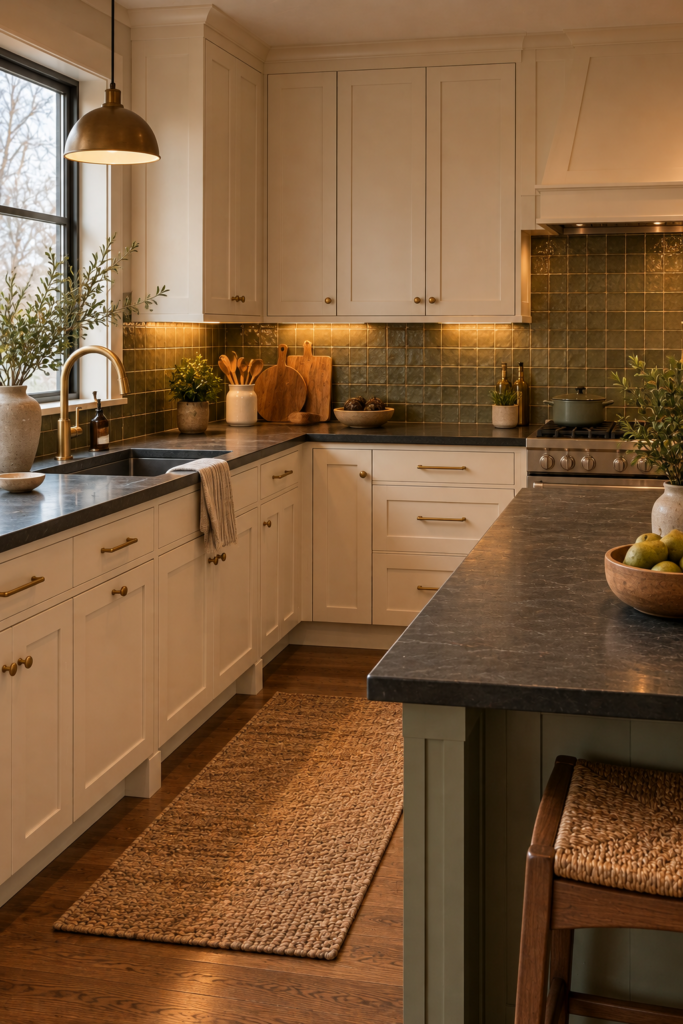
16. Layer a Complete Soapstone Kitchen
A fully coordinated soapstone kitchen brings together the stone, cabinetry, wood, metal finishes, and lighting.
Pair charcoal soapstone with warm cream cabinets, walnut accents, muted olive details, mushroom-colored walls, and restrained aged-brass hardware. Each material contributes a different texture while supporting the overall palette.
Start with the largest surfaces and choose smaller accents afterward. If the countertop has prominent veining, consider a simpler backsplash; if the stone is relatively uniform, the surrounding materials may provide more of the visual interest.
Compare samples together under daylight and artificial lighting before making permanent decisions. Undertones can look different when materials sit beside one another.
Use suitable task lighting over the preparation areas and keep the countertop functional. The most successful combination lets the natural materials work together without overwhelming the room.
What Is Soapstone?
Soapstone is a natural stone used for countertops and other applications. Its appearance varies, with kitchen countertop slabs commonly ranging from gray to deeper charcoal and sometimes showing visible veining.
Individual slabs can differ in color, pattern, and physical characteristics. Examine the specific material and ask the supplier or fabricator about its suitability for your intended kitchen use.
The stone’s appearance and maintenance requirements should be considered alongside cabinet colors, lighting, and the overall design.
Does Soapstone Scratch?
Soapstone can develop scratches and signs of use. How noticeable they are depends on the specific stone, finish, lighting, and maintenance.
Some homeowners appreciate the developing patina, while others prefer a more consistent surface appearance.
Ask the supplier or fabricator what to expect from the particular slab and how to care for it. Understanding the likely changes before purchasing can help you decide whether the material suits your preferences.
Does Soapstone Need Sealing?
Don’t assume that soapstone needs the same treatments as other countertop materials. Maintenance recommendations depend on the specific stone and finish.
Ask the supplier or fabricator for instructions for the material being installed. Follow those recommendations rather than automatically applying a sealant or other treatment intended for a different stone.
Use cleaning products and maintenance methods that are appropriate for the actual countertop.
What Cabinet Colors Go With Soapstone?
Warm cream is a versatile choice because it creates contrast with dark gray or charcoal stone. Walnut provides a richer, wood-focused appearance, while muted olive creates an earthy palette.
Mushroom taupe can soften the contrast, and matte-black or aged-brass-style hardware can complement different combinations.
Choose colors according to the undertones of the actual slab and the amount of daylight in the kitchen. Comparing physical samples together is more useful than relying on isolated color swatches.
Soapstone Countertop Installation and Safety
Soapstone countertops are heavy and require appropriate cabinetry and structural support. Sink openings, seams, edges, and transitions need to be planned for the selected material and installation.
Use an experienced fabricator and qualified installers. Follow the supplier’s recommendations for support, handling, maintenance, and the specific countertop assembly.
Keep work areas safe during installation and ensure that any associated plumbing, electrical, cabinetry, gas, or ventilation changes meet applicable requirements. Use appropriately qualified professionals for work that requires specialist installation.
Final Thoughts
The best soapstone countertops kitchen ideas let the stone’s natural character provide depth and contrast without overwhelming the rest of the room.
Pair it with cream for a classic look, walnut for warmth, or muted olive for an earthy palette. You can use soapstone on an island, along the perimeter, or in a smaller coffee station, depending on the kitchen’s layout and your preferences.
Consider how the material changes with use, ask about the care requirements for your specific slab, and plan the installation details carefully.
Soapstone’s appeal lies in its understated appearance and natural character. With compatible materials and practical planning, it can become a distinctive part of a kitchen designed for everyday living.
