
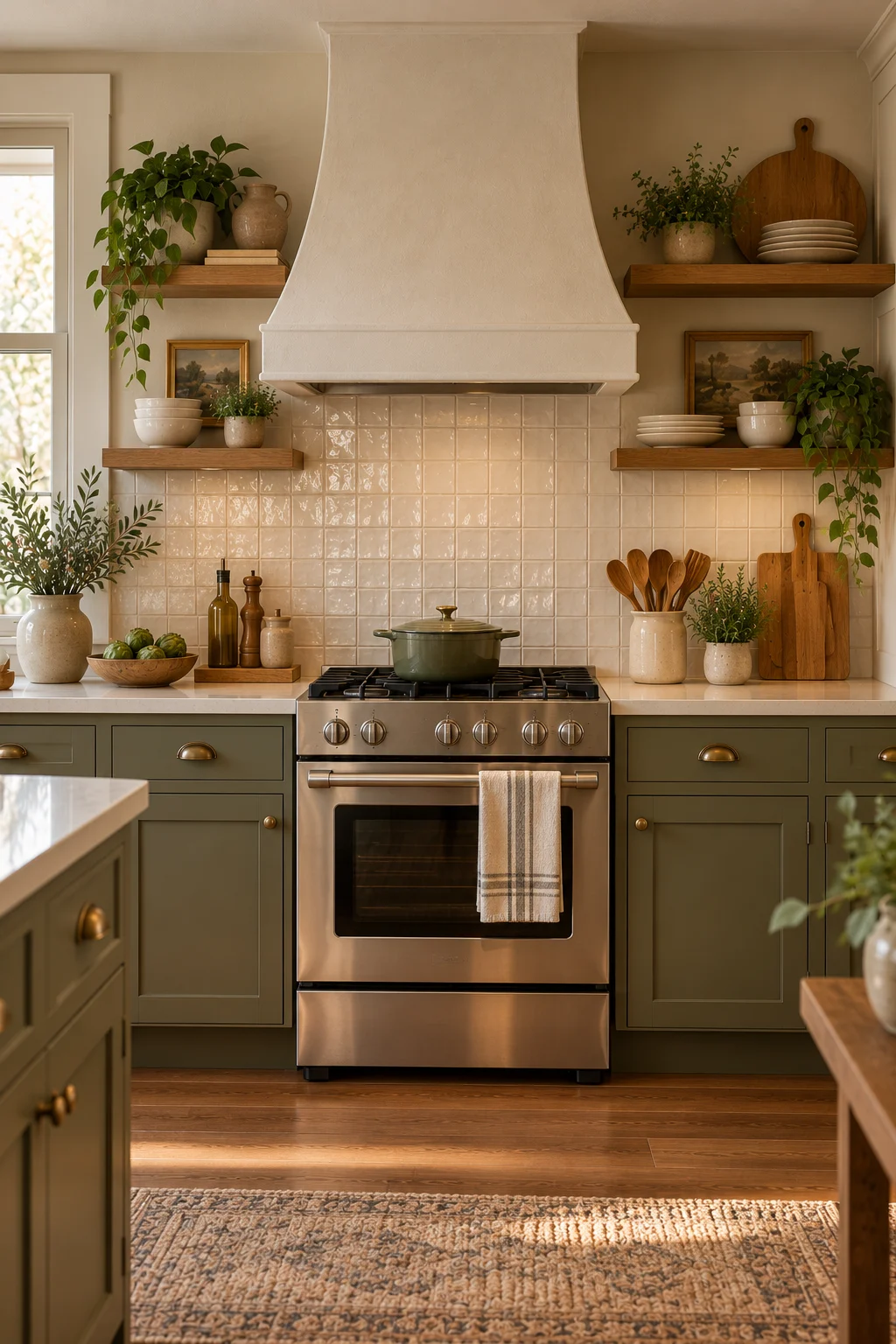
14 European Cottage Kitchen Ideas for a Warm Old-World Look
A kitchen can be perfectly functional yet still feel a little cold or unfinished. Smooth cabinets, plain walls, and modern appliances sometimes lack the warmth and individuality that make traditional European cottage kitchens so inviting.
European cottage kitchens combine natural materials, timeworn furniture, gentle colors, and practical details. These 14 ideas explore ways to bring old-world character into a modest kitchen, whether you prefer rustic French countryside charm, English cottage warmth, or a simple European farmhouse atmosphere.
Start with one lasting feature, such as natural wood cabinetry or traditional floor tiles, and build the surrounding details gradually.
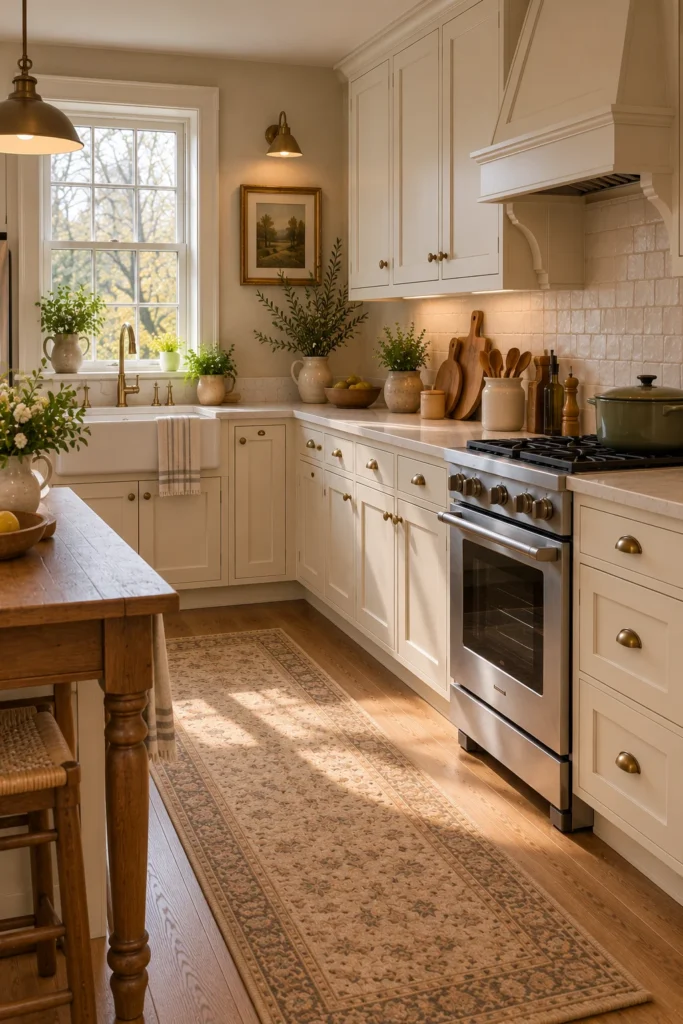
1. Choose Warm Cream Cabinets With Traditional Details
Warm cream cabinetry creates a soft, welcoming foundation for a European cottage kitchen. Unlike bright white cabinets, creamy tones complement natural wood, aged metal, and earthy materials without making the room feel stark.
Choose recessed-panel doors with simple profiles and restrained hardware. A muted ivory or buttery cream finish can work beautifully with oak flooring, pale stone-look counters, and handmade-look ceramic tile.
Keep decorative details proportionate to the kitchen. Heavy moldings and elaborate cabinet doors can overwhelm an ordinary room with an eight-foot ceiling.
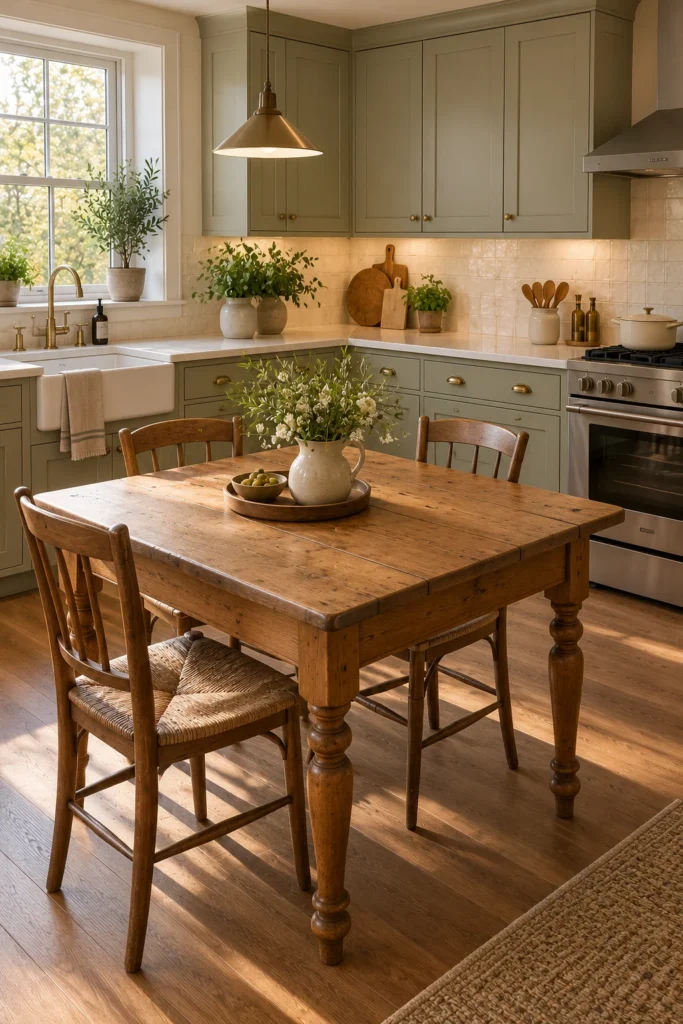
2. Add a Rustic Wooden Kitchen Table
A rustic wooden table introduces the comfortable, furniture-filled appearance associated with traditional European homes. It can replace a conventional kitchen island or create a small gathering place beside the cooking area.
Look for a sturdy oak or pine table with a straightforward silhouette and visible wood grain. Turned legs, a gently worn finish, or a simple apron can add character without looking overly decorative.
Choose a size that preserves comfortable access to cabinets and appliances. A large farmhouse table may look attractive in photographs but can make a modest kitchen difficult to navigate.
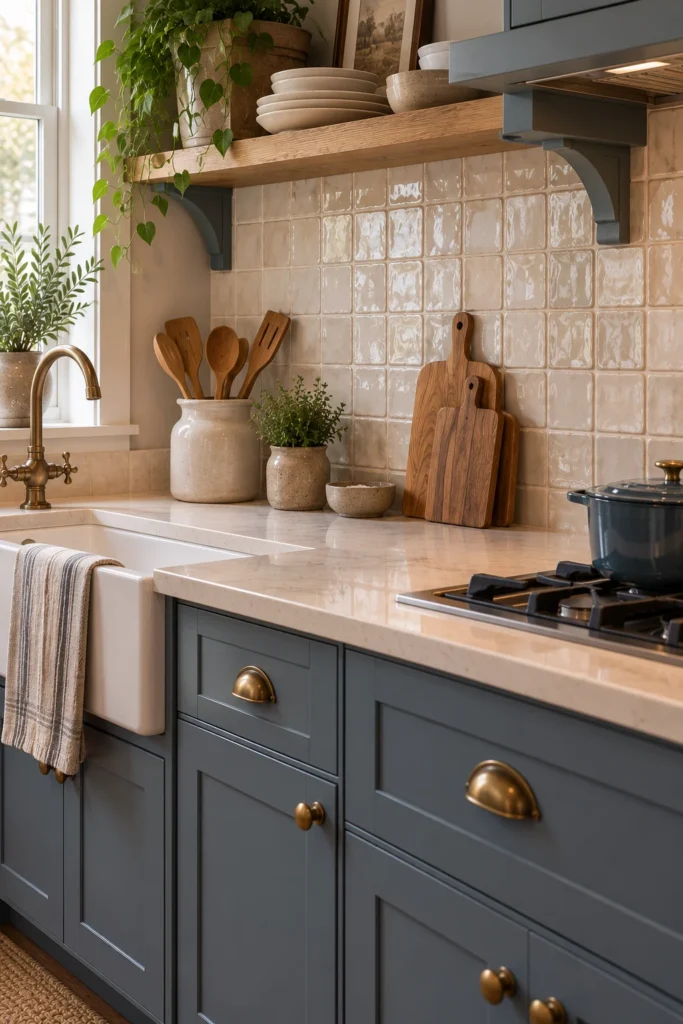
3. Install Handmade-Look Zellige-Style Backsplash Tiles
Handmade-look tiles bring subtle variation and texture to a European cottage kitchen. Their slightly irregular surfaces create depth that perfectly uniform tiles sometimes lack.
Choose cream, pale olive, soft gray, or faded blue ceramic tiles with gentle glaze variation. Small square or rectangular formats work well behind traditional countertops and painted cabinetry.
Use grout that complements the tile rather than creating an overly strong grid. Avoid pairing highly varied tiles with busy countertops, since the competing patterns can make a small kitchen feel cluttered.
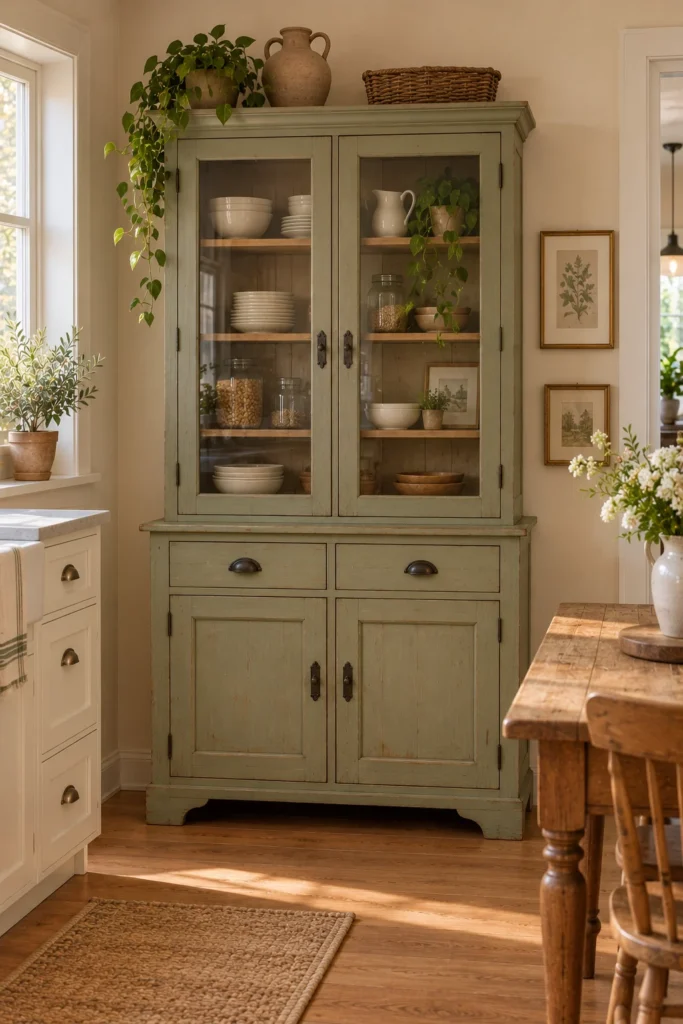
4. Introduce a Freestanding Antique-Style Cupboard
A freestanding cupboard makes a cottage kitchen feel as though its furniture has been collected over time. Unlike continuous built-in cabinetry, a separate storage piece adds individuality and a relaxed, traditional atmosphere.
Choose a cupboard with paneled doors, a natural wood finish, or gently worn paint. Use it for everyday dishes, table linens, and serving pieces that do not need to occupy valuable preparation space.
Position the cupboard against a suitable wall and secure tall furniture appropriately. Avoid choosing an oversized piece that blocks natural light or makes the kitchen circulation feel cramped.
5. Use Natural Stone-Look Floor Tiles
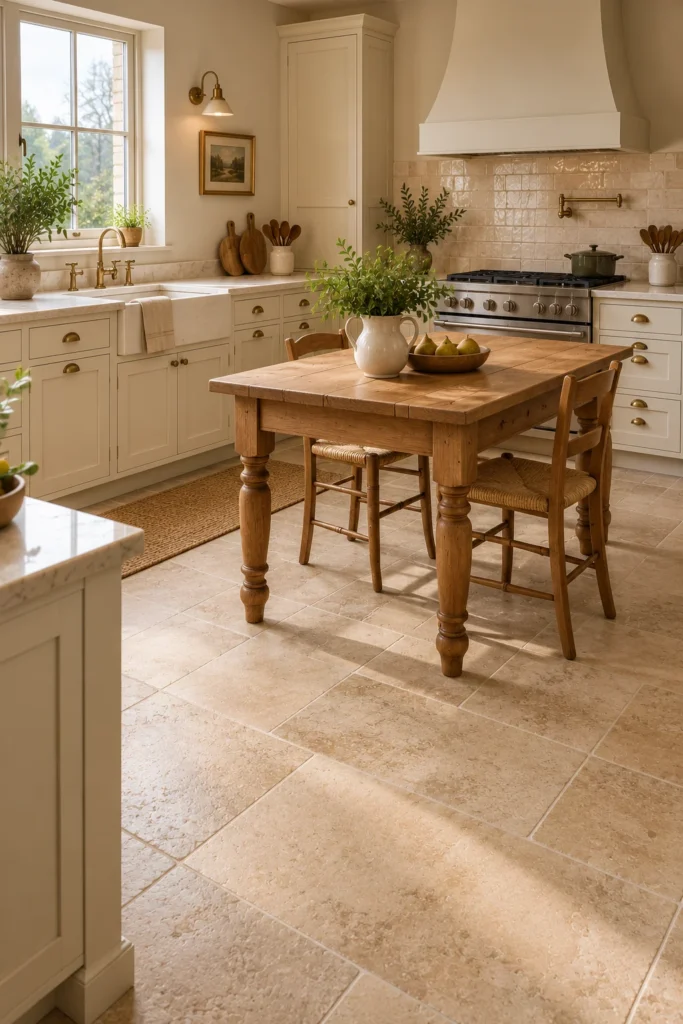
Stone-inspired flooring provides a practical foundation for a European cottage kitchen. Softly textured tiles in limestone, sandstone, or weathered slate tones can suggest the character of older rural homes.
Choose kitchen-appropriate porcelain or ceramic tiles with a realistic stone appearance. Warm beige, pale gray, and earthy taupe tones coordinate naturally with wood furniture and painted cabinetry.
Consider the scale and layout of the tiles before installation. Very large tiles can feel too contemporary in some cottage kitchens, while extremely busy patterns may compete with traditional furnishings.
6. Choose a Traditional Apron-Front Kitchen Sink
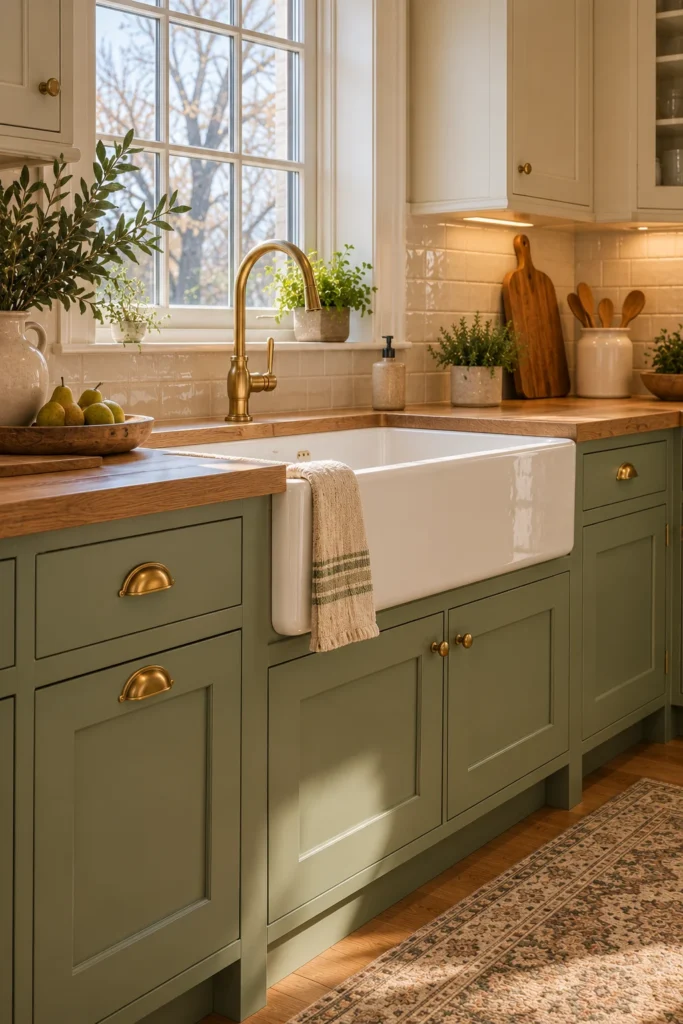
An apron-front sink gives a European cottage kitchen a familiar traditional focal point. Its exposed front panel adds visual interest to the cabinet run while maintaining a practical washing area.
White fireclay-style sinks work particularly well with cream, sage, or natural wood cabinetry. Pair the sink with a traditional curved faucet in aged brass, nickel, or dark bronze.
Make sure the sink is compatible with the supporting cabinet and plumbing layout. Avoid selecting an oversized basin that leaves too little usable countertop on either side.
7. Display Cream Ceramics on Wooden Shelves
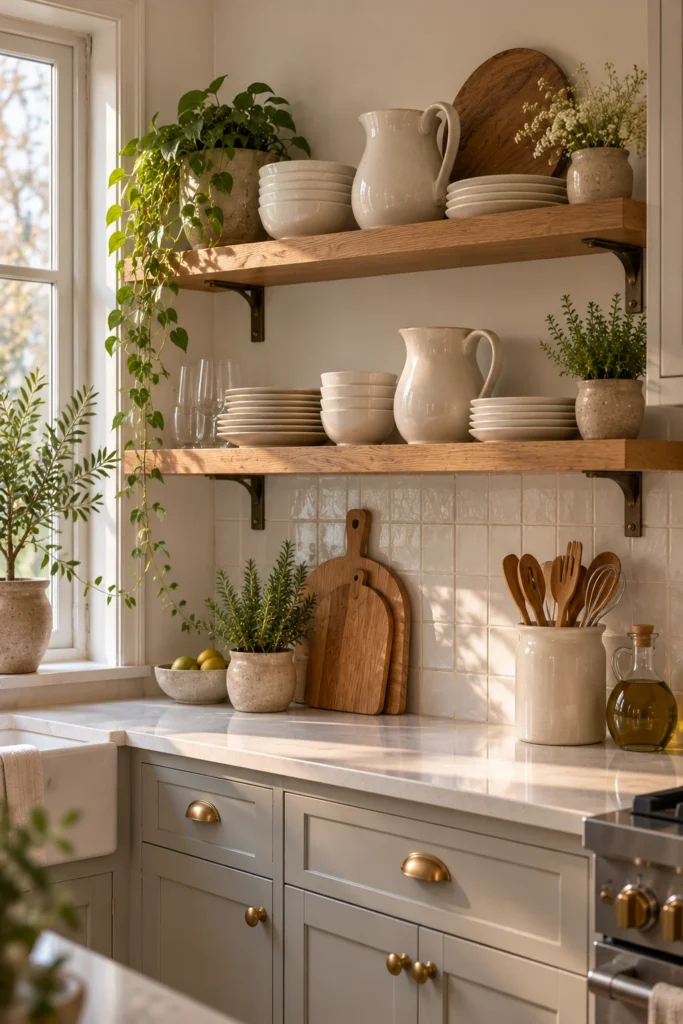
Open wooden shelves can make a cottage kitchen feel relaxed and lived-in. Everyday dishes become part of the decoration, adding gentle shapes and natural materials to the room.
Choose securely supported oak or pine shelves and arrange a restrained collection of cream bowls, pitchers, and plates. Leave some empty space between groups to prevent the display from appearing overcrowded.
Keep frequently used pieces within comfortable reach and store heavier cookware in lower cabinets. Avoid treating open shelves as unlimited storage, especially when their brackets or wall supports have limited capacity.
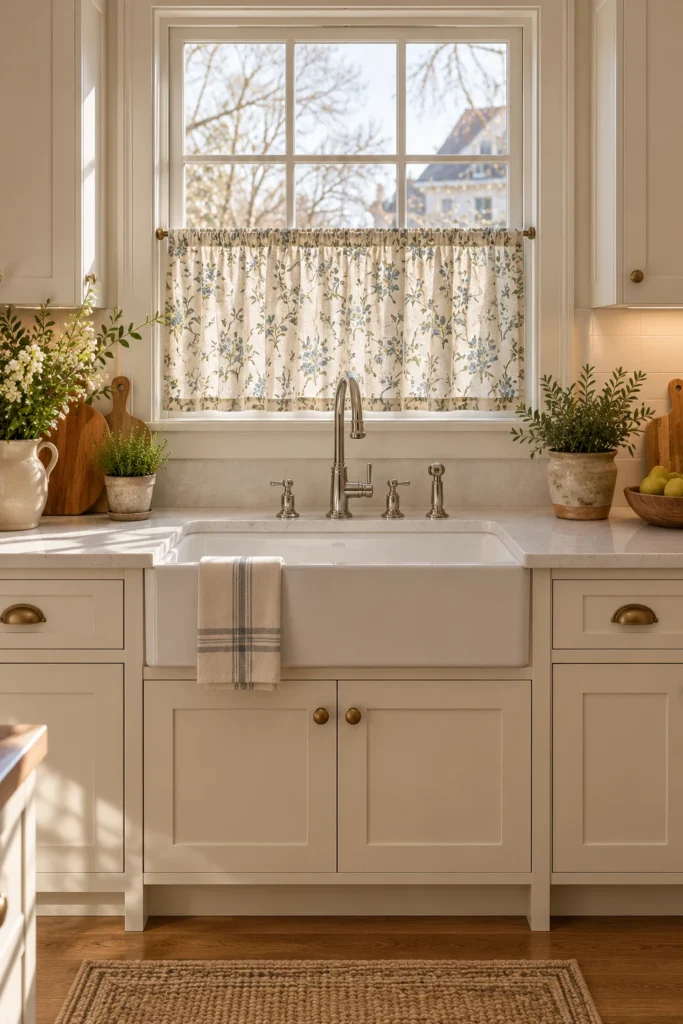
8. Add a Muted Floral Café Curtain
A floral café curtain softens a kitchen window and introduces the informal charm of traditional cottage interiors. Small botanical patterns can add personality without dominating the room.
Choose cotton or linen-look fabric with faded olive, dusty blue, soft red, or ochre flowers on a cream background. A short curtain allows daylight to enter through the upper glass while providing some privacy below.
Keep the fabric securely mounted and away from the faucet and wet countertop. Avoid long ties or heavy gathers that interfere with opening the window.
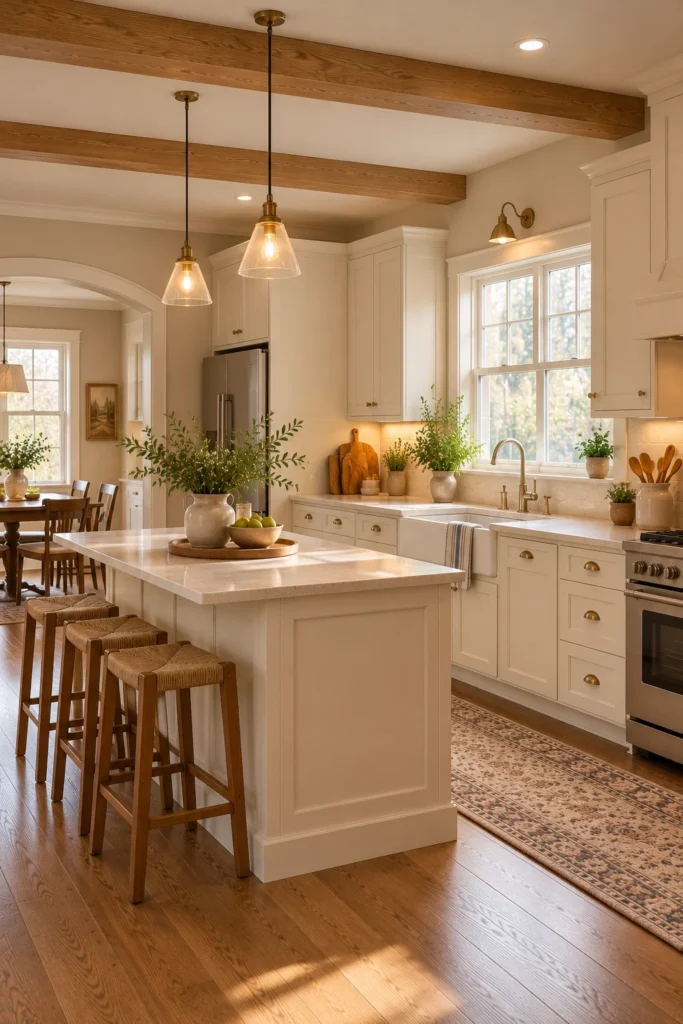
9. Incorporate Exposed Wooden Ceiling Beams
Wooden ceiling beams can add architectural warmth to a European cottage kitchen. Their natural grain creates a strong connection to rustic interiors and traditional building materials.
In a room with sufficient ceiling height, appropriately installed structural or decorative beams can establish a distinctive focal point. Choose a restrained wood tone that complements the flooring or furniture.
For a standard eight-foot ceiling, avoid bulky decorative beams that visually lower the room. A smaller beam detail or another natural wood feature may provide a better sense of proportion.
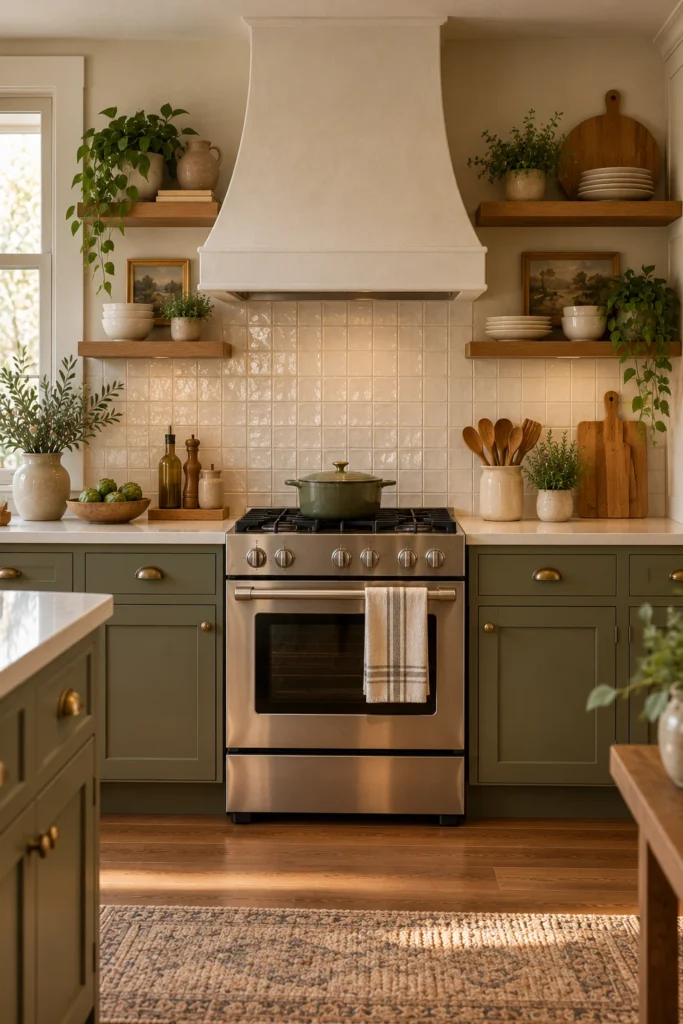
10. Choose a Classic Cottage Range Hood
A traditional range hood can become a quiet architectural focal point above the cooking area. A painted or plaster-look enclosure adds softness compared with an exposed industrial-style hood.
Choose a simple shape with a modest profile and a finish that coordinates with the surrounding cabinetry. Cream, warm white, and muted beige work particularly well in European cottage interiors.
Keep the hood properly sized and installed for the cooking appliance. Avoid adding decorative wooden trim or accessories in locations exposed to excessive heat.
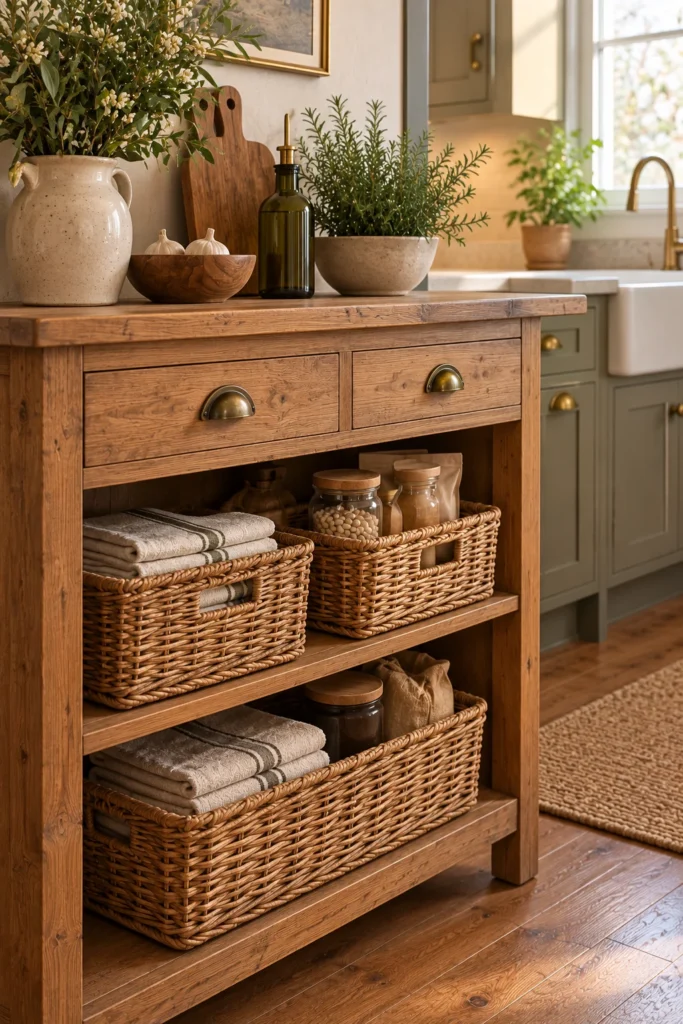
11. Bring in Woven Baskets for Everyday Storage
Woven baskets introduce natural texture and practical organization to a European cottage kitchen. Their relaxed appearance helps soften painted cabinets, ceramic surfaces, and metal appliances.
Use sturdy baskets for clean kitchen linens, packaged pantry items, or other dry household essentials. Place them on accessible lower shelves or inside a suitable cupboard.
Choose a small number of baskets in complementary natural tones rather than filling every open surface. Avoid storing damp items in woven containers, since trapped moisture can damage the material.
12. Introduce Aged Brass and Dark Iron Details
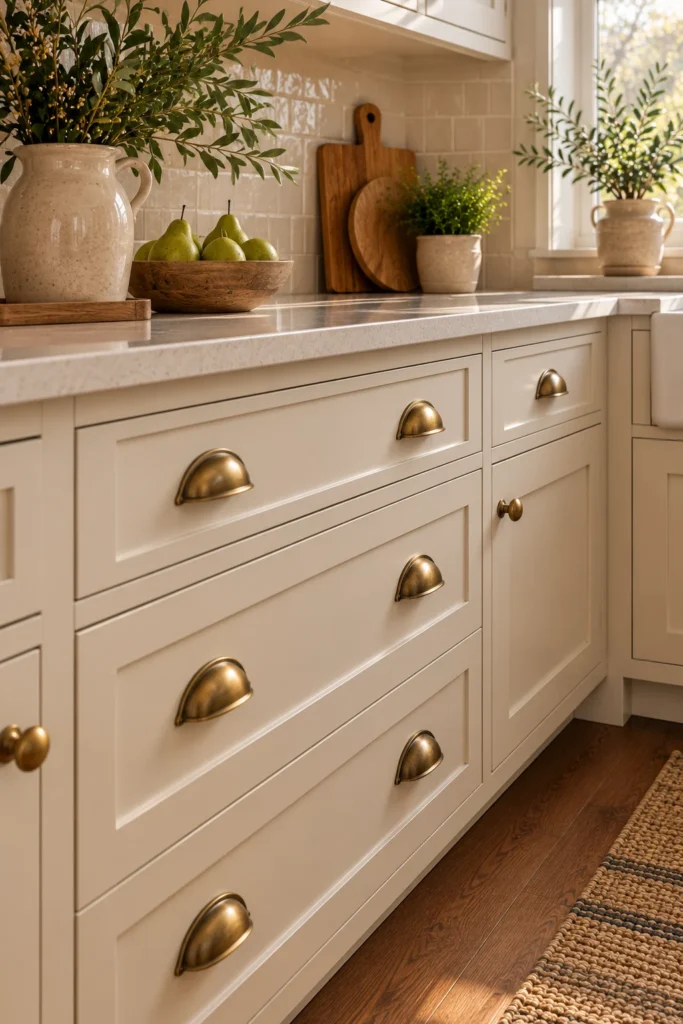
Traditional metal finishes can make a cottage kitchen feel more established. Aged brass introduces warmth, while dark iron-style hardware creates a slightly more rustic atmosphere.
Choose one dominant metal finish for cabinet knobs, drawer pulls, and nearby fixtures. Small differences in patina can feel natural, but the shapes should remain visually compatible.
Use decorative metal accents sparingly. Too many elaborate handles, hooks, and fittings can distract from the natural materials that give cottage kitchens their character.
13. Add a Small Cottage Breakfast Nook
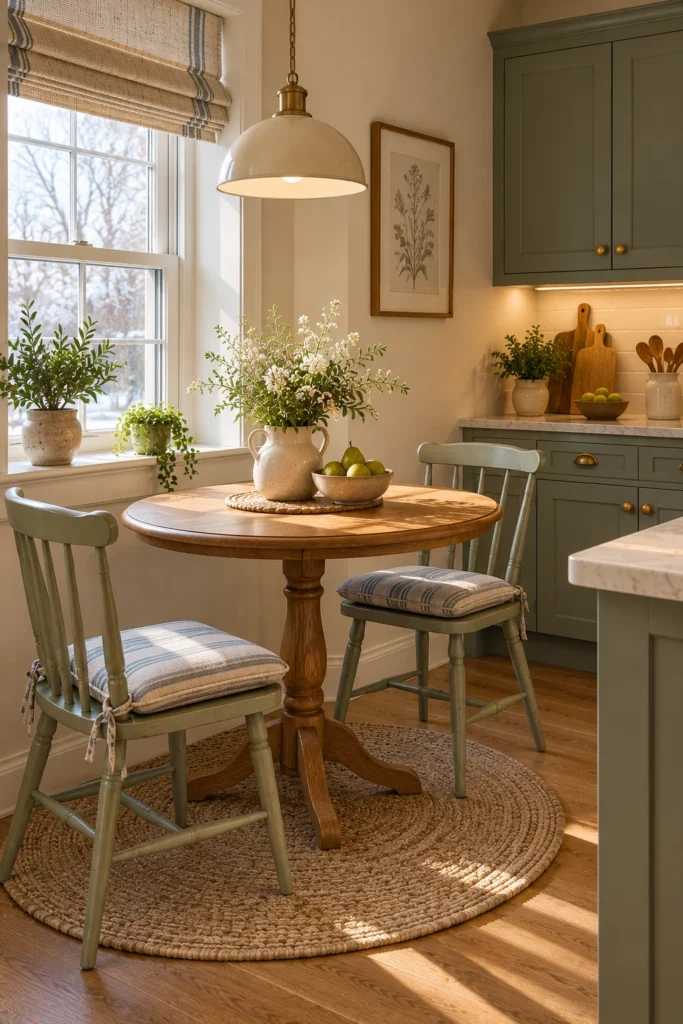
A breakfast nook gives a European cottage kitchen a comfortable place for everyday meals. It can also make use of an underutilized corner without requiring a separate dining room.
Choose a compact round wooden table with two simple chairs or a properly sized built-in bench. Soft striped or checked seat cushions can introduce a gentle traditional pattern.
Keep the furniture scaled to the available floor area and maintain access to nearby cabinets. Avoid oversized seating that makes the nook difficult to enter or clean.
14. Layer Natural Materials for a Collected Cottage Look
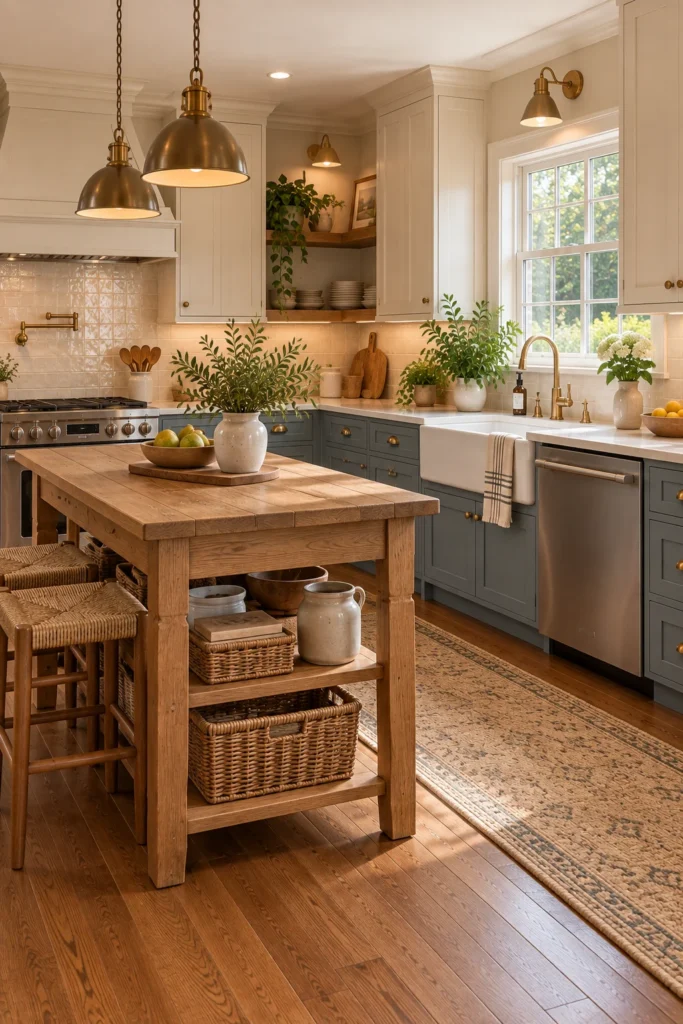
The most inviting European cottage kitchens often combine several simple materials rather than relying on one dramatic feature. Painted wood, natural oak, ceramic tile, woven fibers, and traditional metal details create a room that feels gradually furnished.
Begin with a consistent foundation of cabinetry and countertops, then add a few contrasting textures. A wooden table, ceramic dishes, and a woven basket may provide enough variety for a modest space.
Maintain practical surfaces and clear circulation throughout the room. Avoid adding decorative objects to every corner, since a collected kitchen should still feel comfortable and easy to use.
How to Choose a European Cottage Kitchen Color Palette
A European cottage kitchen benefits from colors that feel soft and naturally connected. Warm cream, muted sage, dusty blue, mushroom beige, and gentle gray can all create a traditional atmosphere.
Choose one dominant cabinet color and one or two supporting shades. Natural wood can provide contrast without requiring an additional strong paint color.
Test paint samples in the kitchen at different times of day. A shade that looks warm in bright daylight may appear cooler beneath artificial lighting.
Making Cottage Style Work in a Small Kitchen
A small kitchen does not need large antique furniture or elaborate architectural details to feel like a cottage. Simple cabinet hardware, a short café curtain, and a few traditional ceramics can establish the character without taking up much space.
Choose compact furniture and preserve clear countertops. A small wooden shelf or narrow cupboard may offer enough display space for a collected look.
Keep windows unobstructed where possible. Natural light helps the layered materials feel welcoming rather than visually heavy.
Budget-Friendly European Cottage Kitchen Updates
Painting existing cabinets can make a substantial difference when the surfaces are suitable for refinishing. Traditional knobs or drawer pulls offer another manageable update.
Secondhand wooden chairs, ceramic pitchers, and simple baskets can introduce cottage character without a complete renovation. Look for useful pieces with sound construction rather than buying decorative objects solely for their aged appearance.
A modest curtain or small section of beadboard can also change the room’s atmosphere. Choose updates that complement the existing kitchen instead of creating additional work elsewhere.
Common Cottage Kitchen Decorating Mistakes
One common mistake is adding too many rustic finishes. Heavily distressed cabinetry, rough wood, patterned tile, and numerous vintage accessories can compete rather than create a harmonious room.
Another is choosing furniture that is too large. Cottage kitchens often feel comfortable because their furnishings are practical and proportionate, not because every available corner is filled.
Avoid neglecting modern kitchen needs. Adequate lighting, ventilation, accessible storage, and easy-to-clean surfaces remain essential.
Caring for Natural Cottage Kitchen Materials
Wood furniture and countertops need cleaning methods appropriate to their finishes. Wipe spills promptly and avoid allowing water to collect around joints or edges.
Ceramic tile and grout should be maintained according to the material and installation requirements. Some natural-looking finishes need more care than their appearance suggests.
Wash fabric curtains and cushions according to their care instructions. Dust open shelving and woven baskets regularly to keep the kitchen feeling fresh.
Safety and Practical Considerations
- Secure freestanding cupboards and tall furniture against tipping.
- Use appropriate brackets and wall fixings for open shelves.
- Keep fabric curtains and wooden accessories clear of cooking heat.
- Choose flooring appropriate for kitchen moisture and foot traffic.
- Ensure that sinks, faucets, and ventilation equipment are installed correctly.
- Avoid using antique containers for food when their materials or finishes are uncertain.
- Maintain clear walkways and unobstructed access to appliance doors and windows.
A European cottage kitchen feels most welcoming when traditional details support everyday life. By combining gentle colors, natural materials, and useful furniture, you can create a warm old-world atmosphere without losing the convenience of a modern home.
