
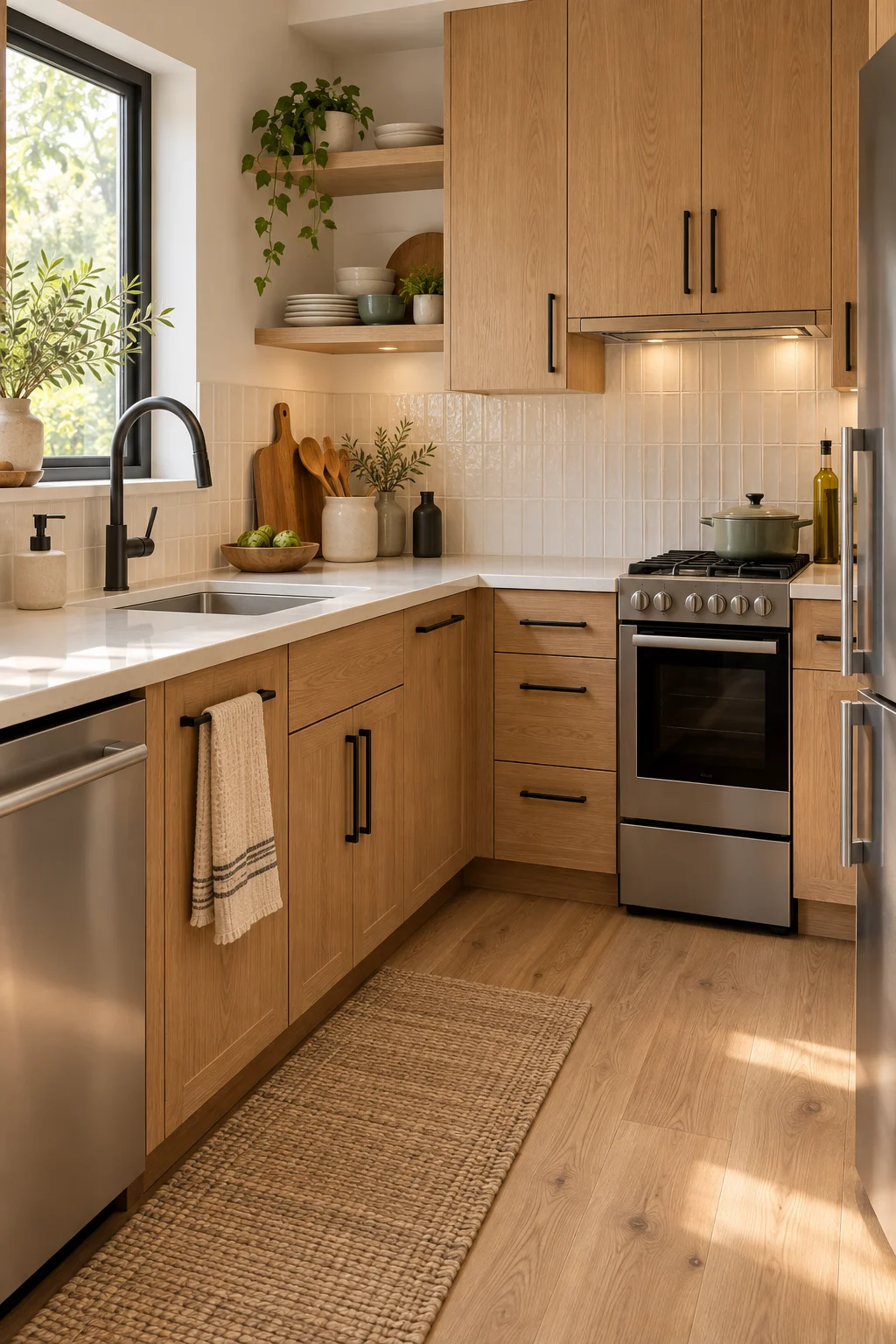
17 Kitchen Japandi Ideas for a Warm and Minimal Cooking Space
A Japandi kitchen has a way of making everyday life feel a little less chaotic. Natural wood cabinets, warm neutral colors, simple shapes, and uncluttered countertops come together to create a space that feels peaceful without being cold or empty.
The style blends Japanese-inspired simplicity with the warmth and functionality often associated with Scandinavian interiors. Instead of relying on elaborate decoration, it emphasizes useful objects, natural textures, thoughtful proportions, and materials that look beautiful without demanding attention.
And no, you don’t need a custom-built kitchen with enormous windows and an unlimited renovation budget.
A modest American kitchen with standard eight-foot ceilings, ordinary cabinets, and limited floor space can embrace the Japandi look through a few intentional changes.
These 17 Japandi kitchen ideas explore everything from natural oak cabinetry and ceramic backsplashes to compact dining areas and concealed appliance storage. The goal is to create a kitchen that looks calm while still being comfortable to cook, clean, and live in.
1. Choose Natural Oak Cabinetry
Natural oak cabinetry is one of the most recognizable features of a Japandi kitchen.
The wood’s visible grain adds warmth and character without requiring decorative carvings, ornate door profiles, or elaborate hardware.
For a contemporary appearance, choose flat-panel oak doors with a natural or lightly warm finish. The clean shape allows the wood itself to become the main design feature.
Pair the cabinetry with warm white walls, pale beige countertops, and understated hardware.
If your kitchen already has wood flooring, compare the undertones before choosing a cabinet finish. The two surfaces don’t need to match perfectly, but they should feel related.
In a small kitchen, you can also combine oak lower cabinets with warm white upper cabinets to prevent the room from feeling visually heavy.
If replacing cabinetry isn’t practical, a natural oak shelf or compact wooden breakfast table can introduce a similar sense of warmth.
The important part is choosing wood finishes that feel calm and cohesive rather than mixing several unrelated stains.
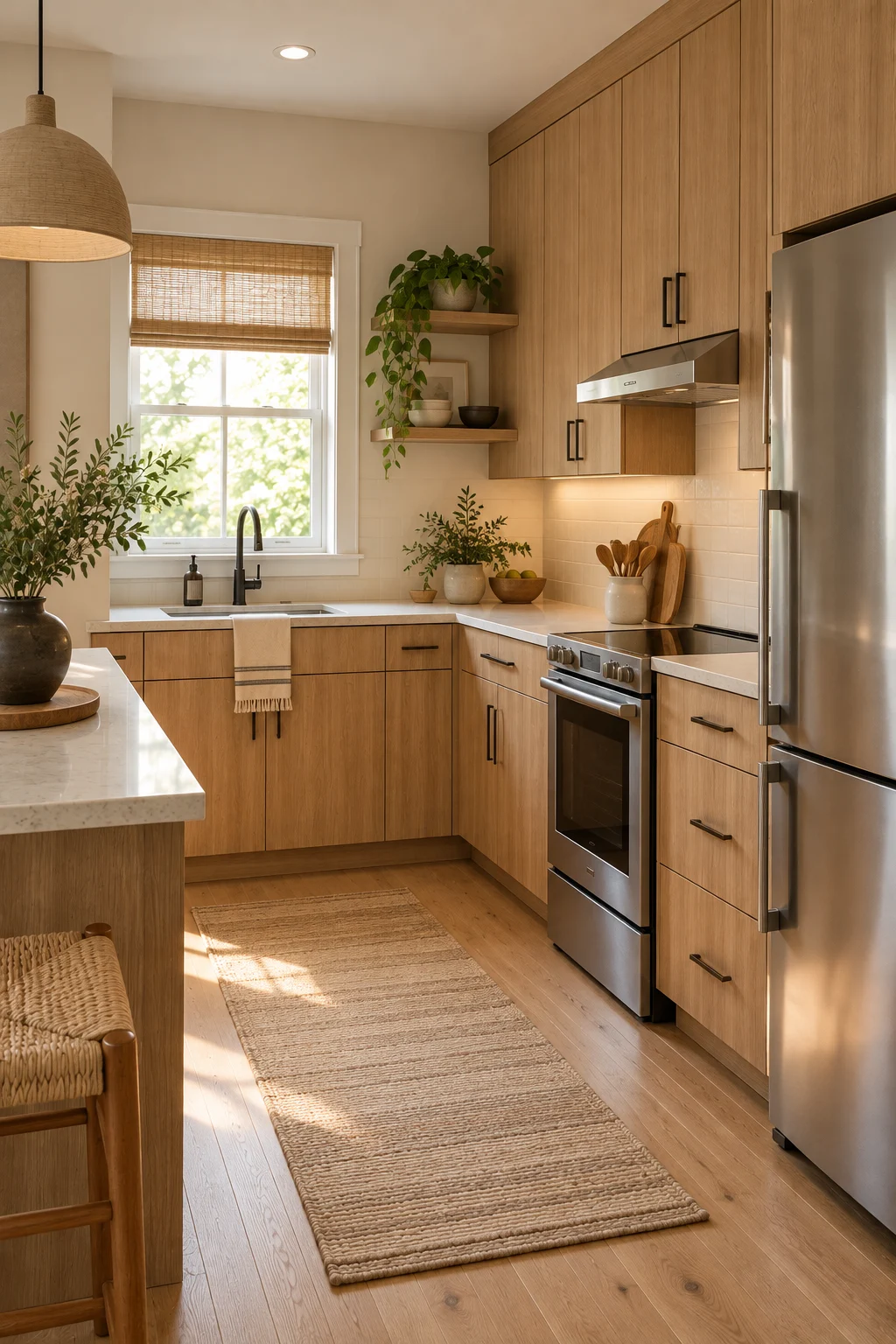
2. Use Warm White and Beige Surfaces
Warm white and beige provide the quiet foundation that allows natural materials to stand out.
Choose creamy white walls, pale beige countertops, or a soft ivory backsplash rather than relying entirely on stark white and cool gray.
These warmer neutrals complement oak cabinetry and create a comfortable atmosphere without making the kitchen feel overly decorative.
Texture can make the palette more interesting. A subtly mottled countertop or lightly glazed ceramic tile introduces variation without requiring strong patterns.
Pay attention to undertones when selecting finishes.
A countertop with a pink-beige undertone may look different beside yellow-toned oak than a more neutral sand-colored surface.
Bring samples into the actual kitchen and compare them under daylight and evening lighting.
A restrained combination of warm white, sand, and natural wood can feel layered and inviting even when the room has very little decoration.
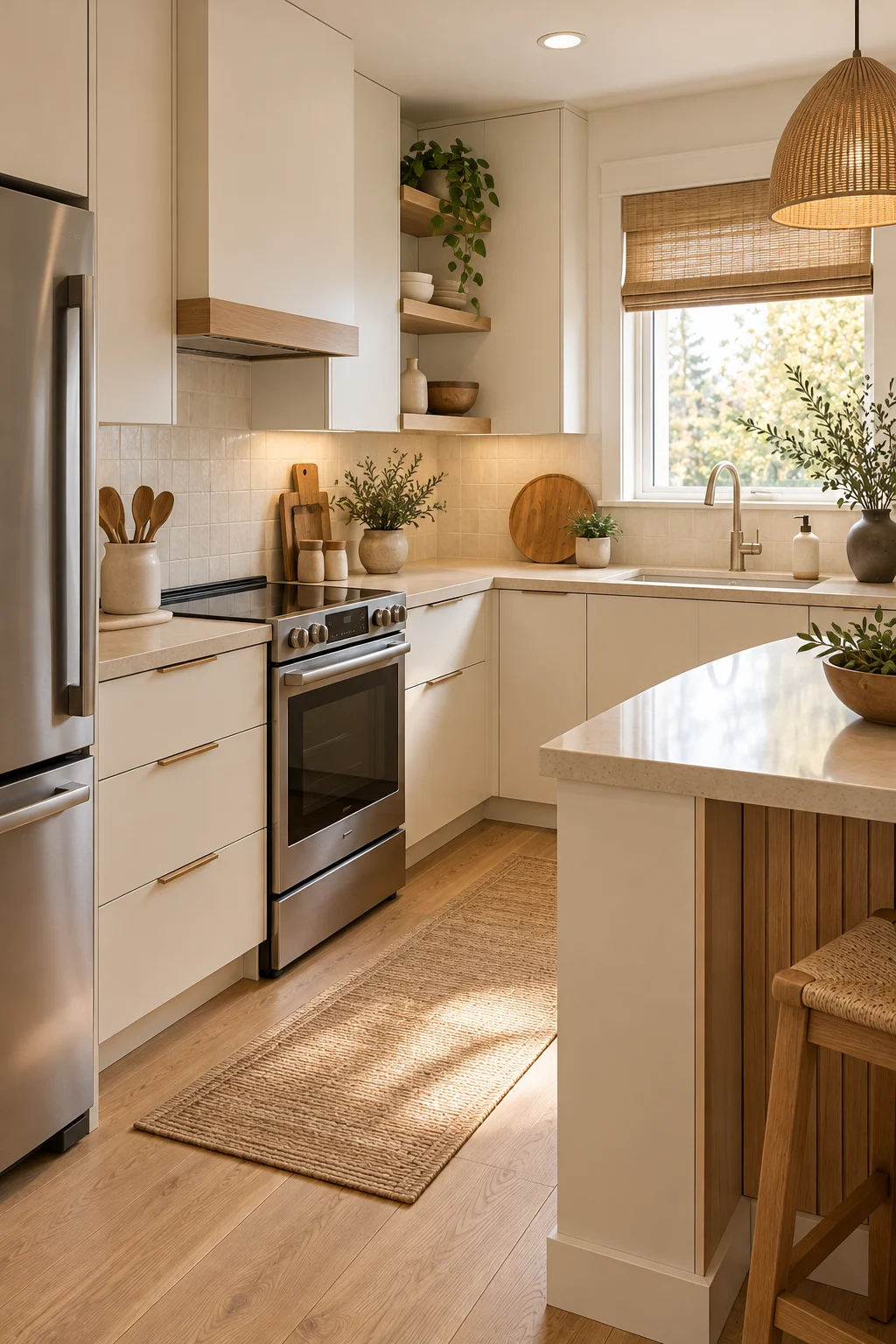
3. Keep Cabinet Hardware Minimal
Minimal cabinet hardware helps maintain the clean appearance of Japandi cabinetry.
Simple matte-black pulls, small brushed-metal handles, or integrated cabinet pulls can provide everyday function without becoming major decorative features.
Choose a finish that complements the faucet, lighting, and other visible metal details.
You don’t need to remove every handle to achieve a minimalist look.
In fact, completely handleless cabinets aren’t always the most practical choice, especially when drawers are heavy or frequently used.
Prioritize hardware that feels comfortable in your hand and makes the cabinetry easy to open.
If you’re updating existing cabinets, measure the current screw-hole spacing before purchasing replacements.
A consistent hardware finish can help ordinary cabinets feel more coordinated without requiring a full renovation.
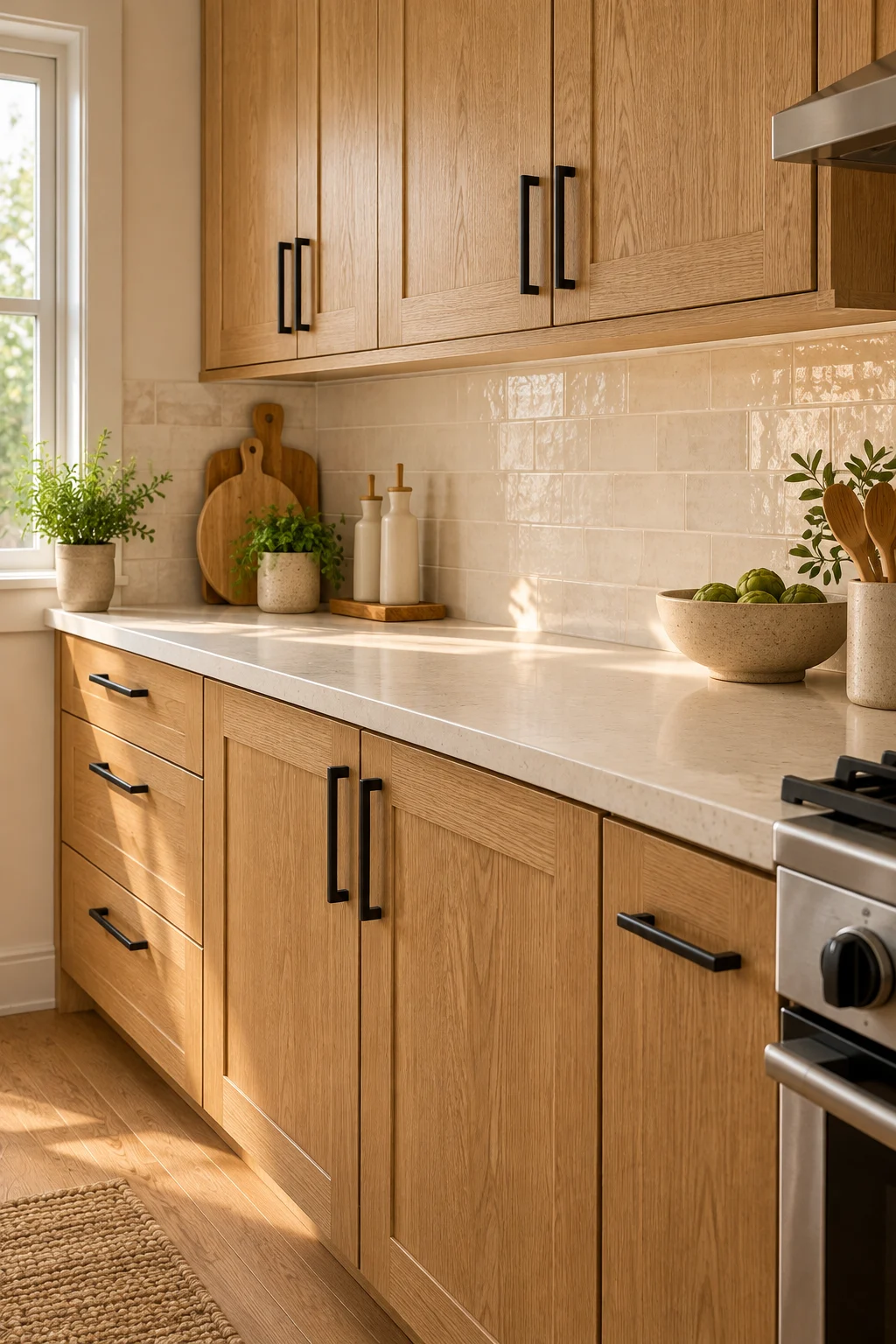
4. Add a Compact Wooden Breakfast Counter
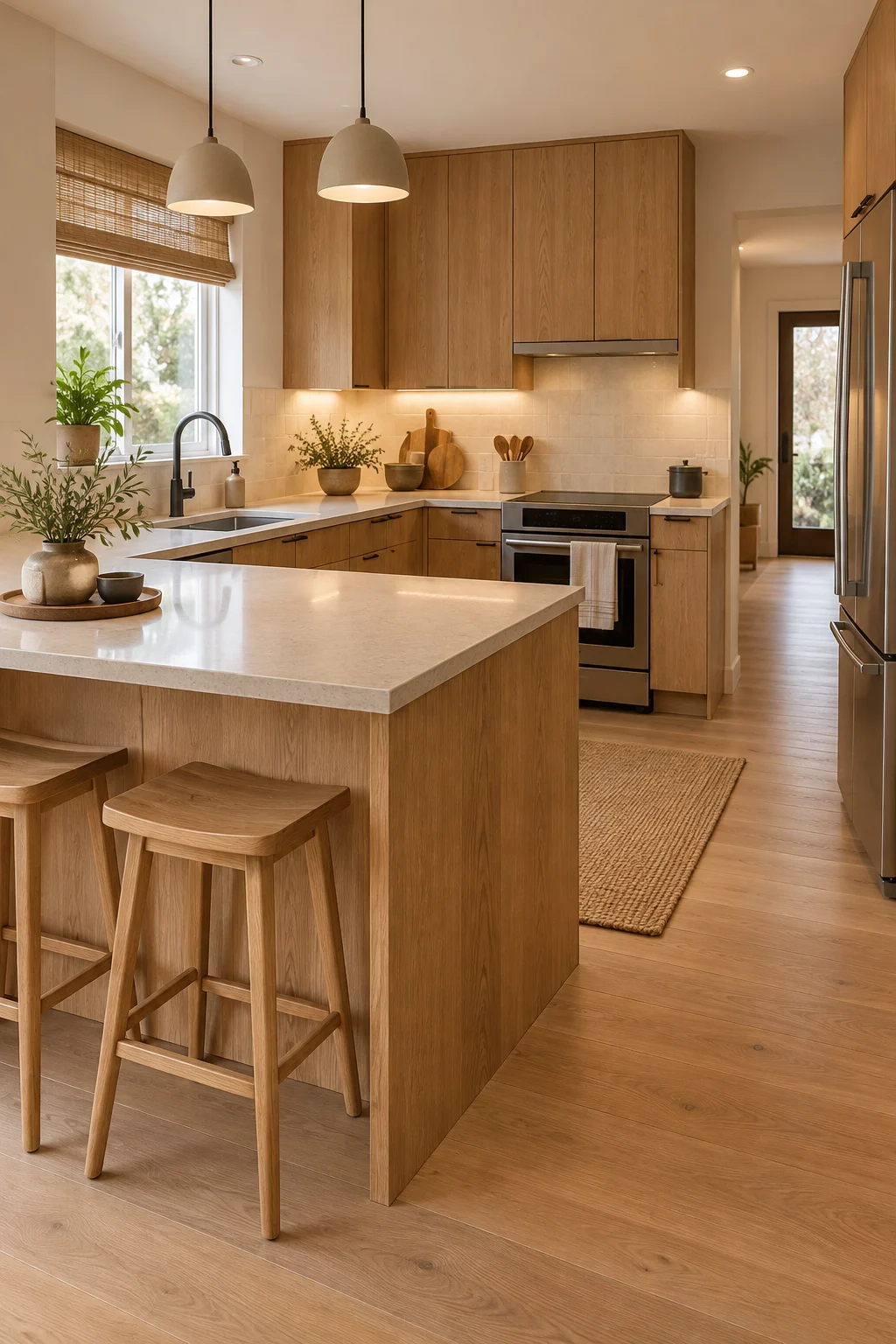
A compact wooden breakfast counter can bring natural warmth into the kitchen while creating a useful place for coffee, quick meals, or casual conversation.
Choose a simple rectangular design with clean edges and a natural wood finish.
A short peninsula or appropriately supported counter extension may work better than a freestanding island in a smaller room.
Pair it with compact wooden stools that can slide beneath the surface when not in use.
Keep the wood tone related to the cabinetry or flooring so the counter feels integrated with the rest of the kitchen.
Before adding seating, think about how people move between the refrigerator, sink, and cooking area.
A breakfast counter should improve the room’s function, not create a bottleneck.
Avoid elaborate decorative supports or oversized overhangs that don’t suit the kitchen’s proportions.
A simple, well-placed wooden surface is enough to introduce Japandi character.
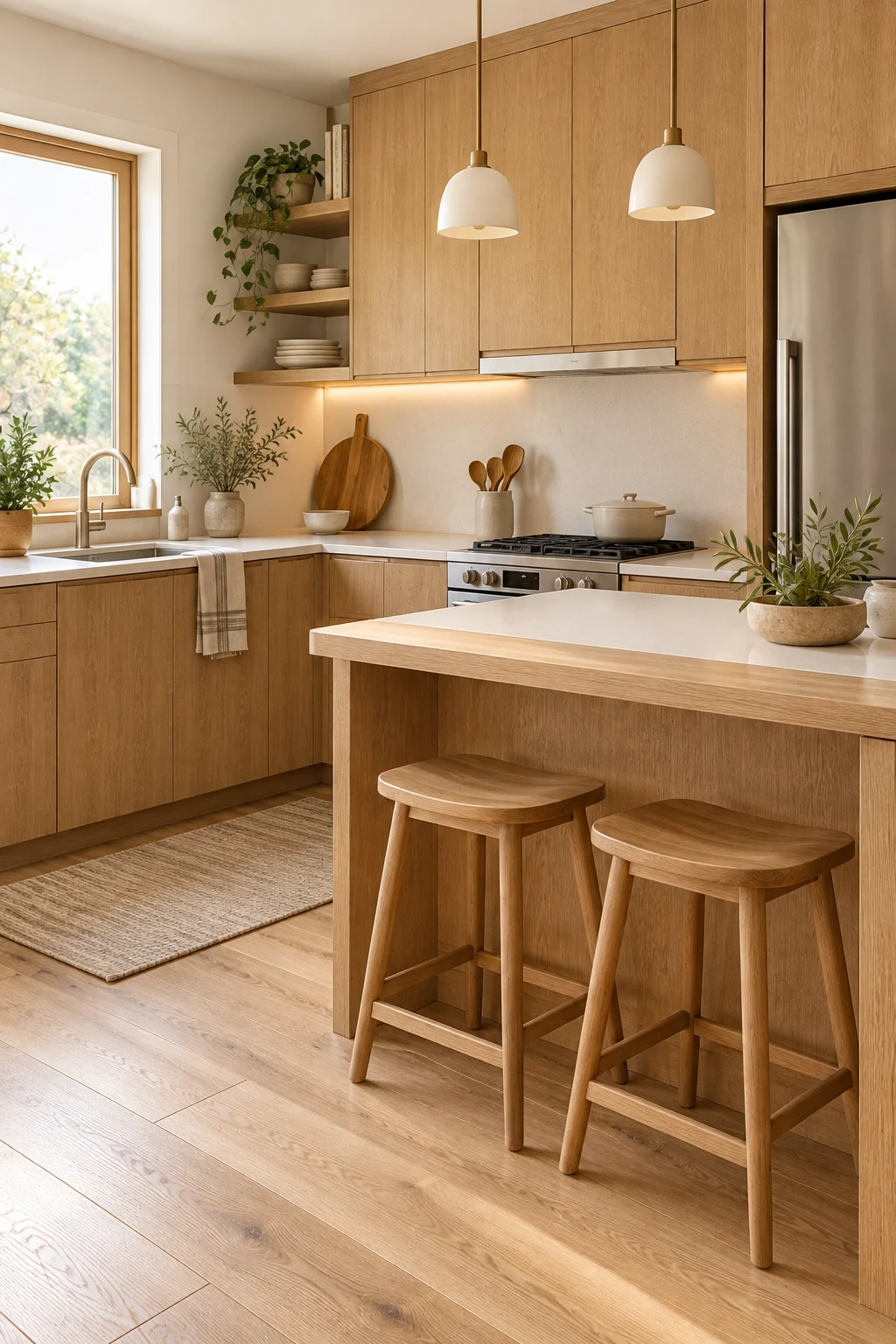
5. Choose Simple Ceramic Accessories
Ceramic accessories are a lovely way to add personality to a Japandi kitchen without creating clutter.
Choose a small stoneware bowl, matte cream vase, or understated utensil holder.
Look for subtle glaze variation and simple, organic shapes rather than highly decorative patterns.
Ivory, sand, charcoal, and muted olive are particularly easy to coordinate with natural oak cabinets.
You might place a small ceramic bowl on a wooden tray or use a simple stoneware container for frequently used utensils.
Try to choose objects that serve a purpose whenever possible.
A bowl you actually use for fruit or a container that holds cooking tools contributes more to everyday life than a collection of purely decorative pieces.
Keep the arrangement limited to one small area and leave the main preparation surfaces clear.
The result should feel thoughtfully styled, not like every countertop has become a display shelf.
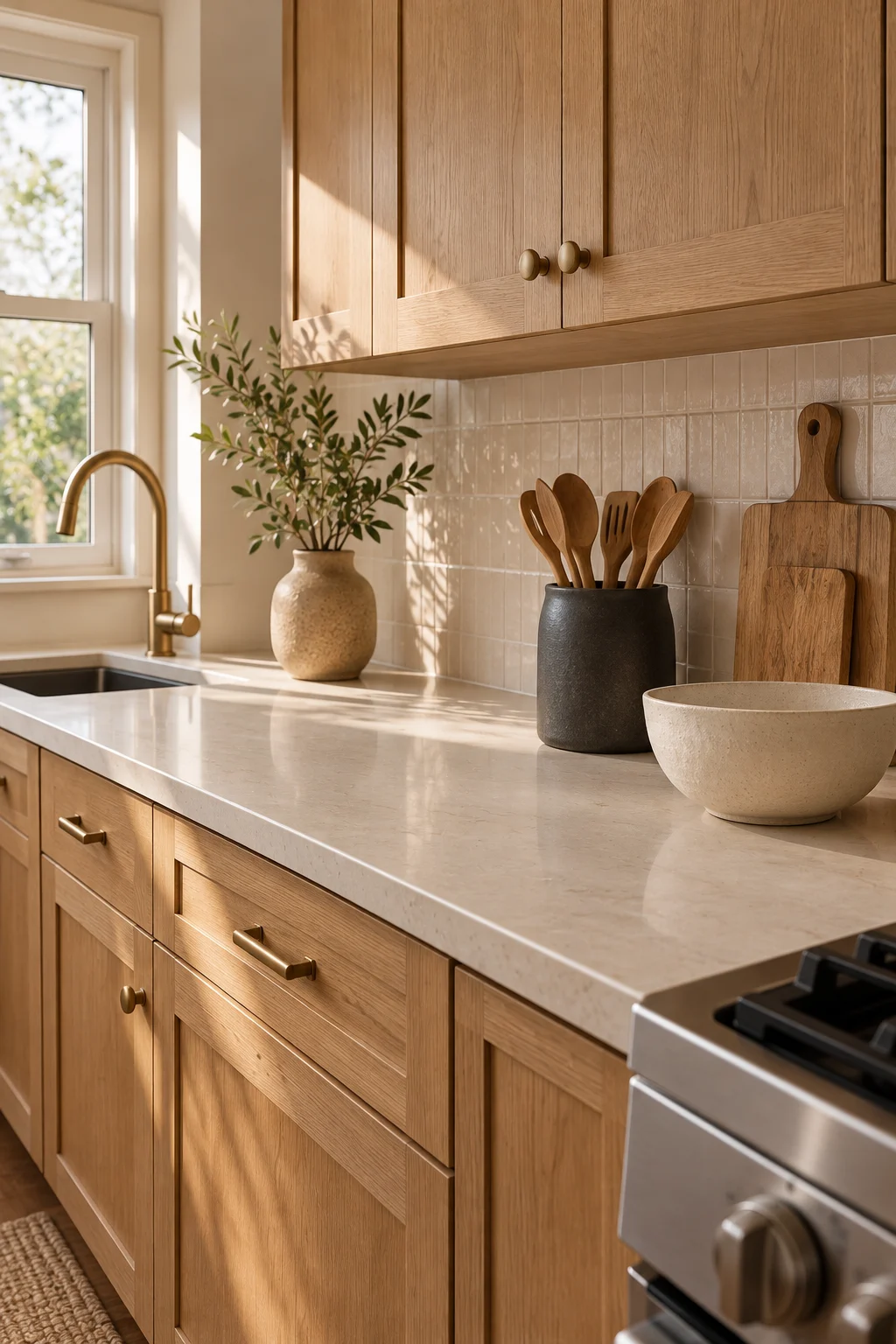
6. Use Soft, Diffused Lighting
Lighting plays an important role in making a Japandi kitchen feel warm and comfortable.
Rather than relying on one harsh ceiling fixture, combine suitable general lighting with focused illumination over work areas.
Under-cabinet lighting can help brighten countertops while remaining visually discreet.
Choose fixtures with simple shapes and finishes that complement the cabinetry.
Warm-neutral lighting often works beautifully with natural oak, cream walls, and beige countertops.
If you’re adding a pendant above a breakfast counter, keep its proportions appropriate for the ceiling height.
In a modest kitchen with an eight-foot ceiling, a compact fixture may feel more balanced than an oversized hanging light.
Don’t make the room too dim in pursuit of atmosphere.
Food preparation, cleaning, and cooking require practical visibility, so decorative softness should always be balanced with sufficient task lighting.
For related inspiration, explore 16 Kitchen Lamps on Counter Ideas for Cozy Layered Lighting.
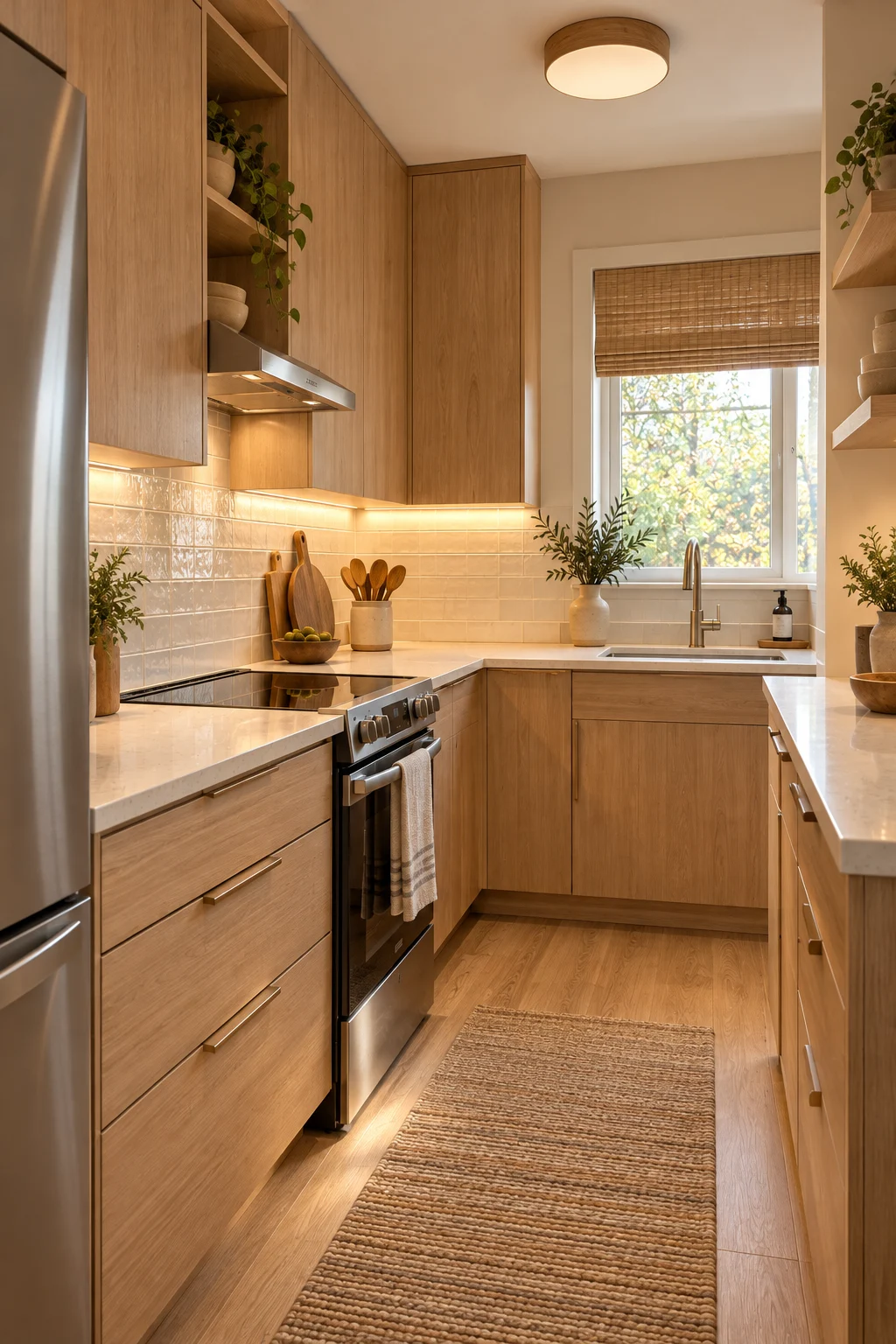
7. Introduce Muted Green as a Natural Accent
Muted green can bring a subtle connection to nature into a Japandi kitchen.
Soft sage, gray-green, and muted moss tones work particularly well with oak cabinetry, cream walls, and pale beige countertops.
For a more noticeable update, consider muted green lower cabinets paired with natural wood shelving.
If you prefer a quieter look, introduce the color through a ceramic vase, a small painted cabinet section, or a few everyday accessories.
Keep the shade subdued rather than choosing a highly saturated emerald or bright green.
The purpose is to complement the natural materials, not compete with them.
If your kitchen already includes several wood tones, a muted green accent can also help create visual separation between the surfaces.
Repeat the color selectively, then allow the rest of the palette to remain neutral.
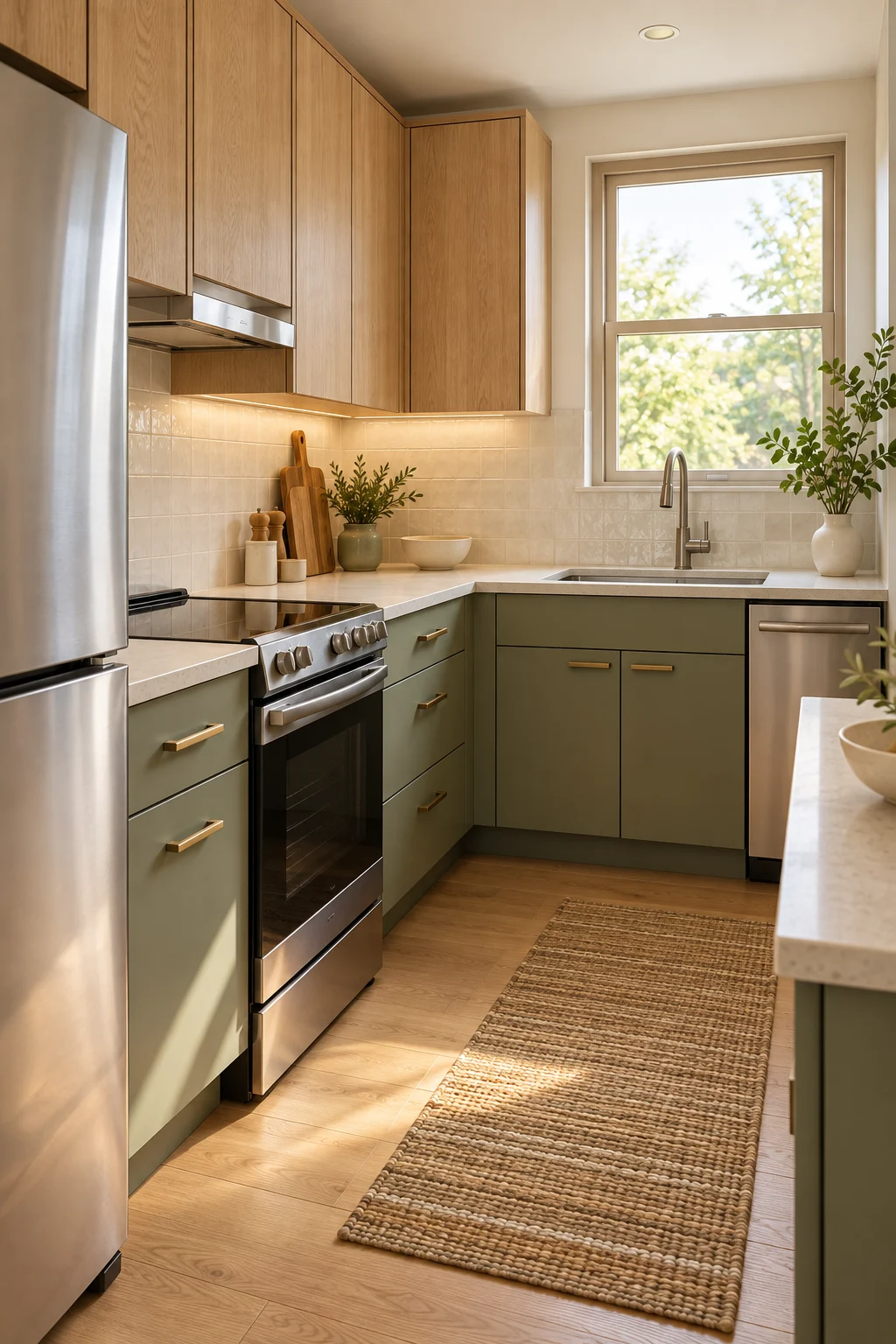
8. Use Open Shelving Sparingly
Open shelving can make a Japandi kitchen feel lighter, but the key word is sparingly.
One natural oak shelf displaying a few everyday dishes may be more effective than replacing every upper cabinet with open storage.
Choose simple shelf shapes and keep the arrangement functional.
A small collection of cream bowls, a ceramic mug, and one wooden serving board can create a balanced display without excessive styling.
Leave some visible space between objects so the shelf doesn’t feel crowded.
Think about cleaning, too. Open shelves near cooking areas may collect grease and dust more quickly than enclosed cabinets.
Choose suitable supports and mounting hardware for the expected load.
For more ideas on arranging useful objects beautifully, see 18 Kitchen Shelves Decor Ideas for Beautiful Open Storage.

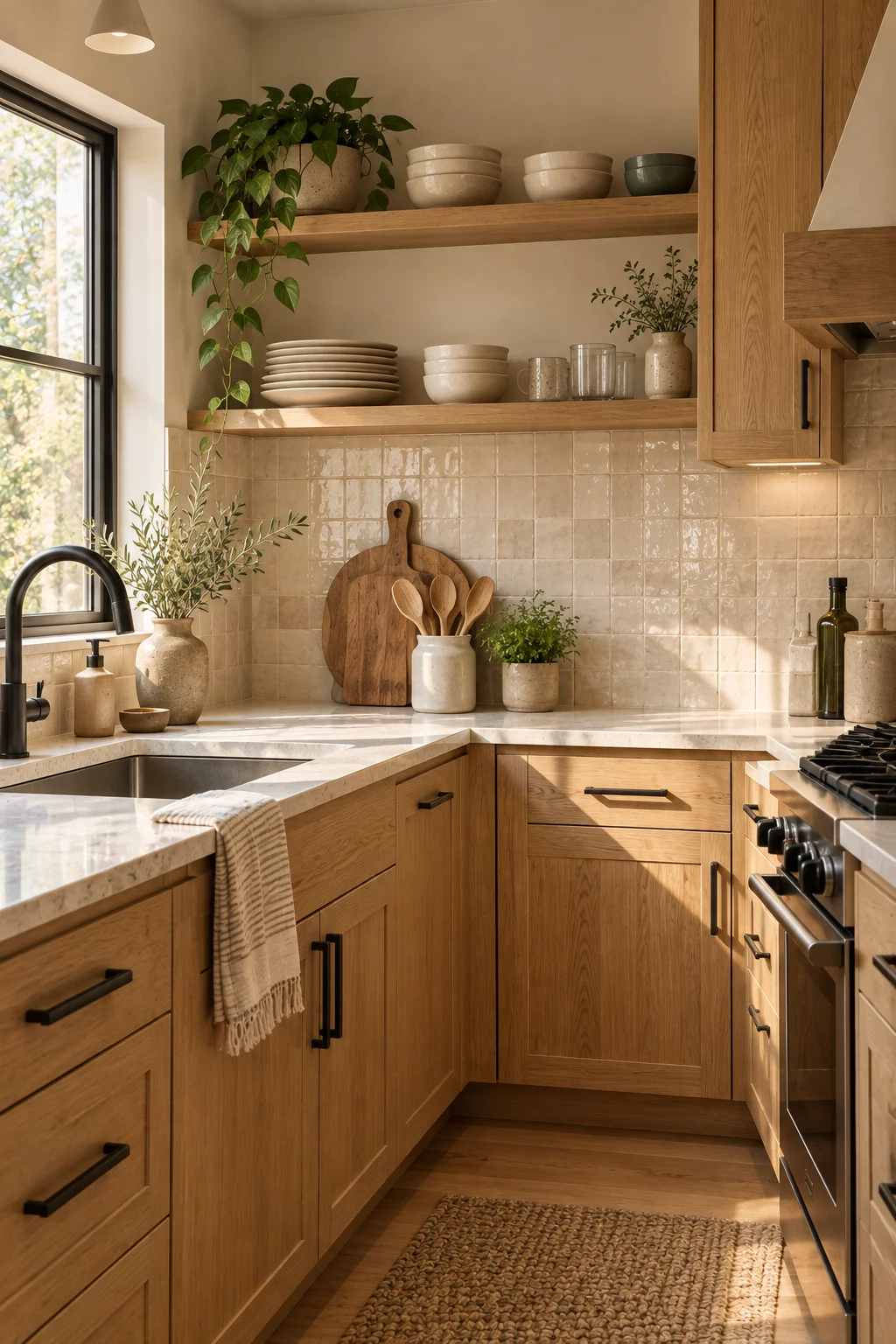
9. Choose a Simple Ceramic Backsplash
A simple ceramic backsplash can introduce subtle texture while keeping the overall kitchen calm.
Look for warm white, ivory, or pale beige tiles with a matte or softly glazed finish.
Rectangular or square tiles arranged in a straightforward pattern work particularly well with flat-panel oak cabinetry.
A little glaze variation can provide interest without making the backsplash the dominant feature.
If the cabinets already have noticeable wood grain, choose a relatively quiet tile rather than a bold geometric pattern.
Consider the grout color as well. A close match to the tile creates a softer appearance, while darker grout makes the individual shapes more noticeable.
Choose materials suitable for kitchen splashes, grease, and routine cleaning.
A restrained backsplash allows the wood cabinetry, lighting, and natural textures to remain the main elements of the design.
10. Keep the Kitchen Island Simple
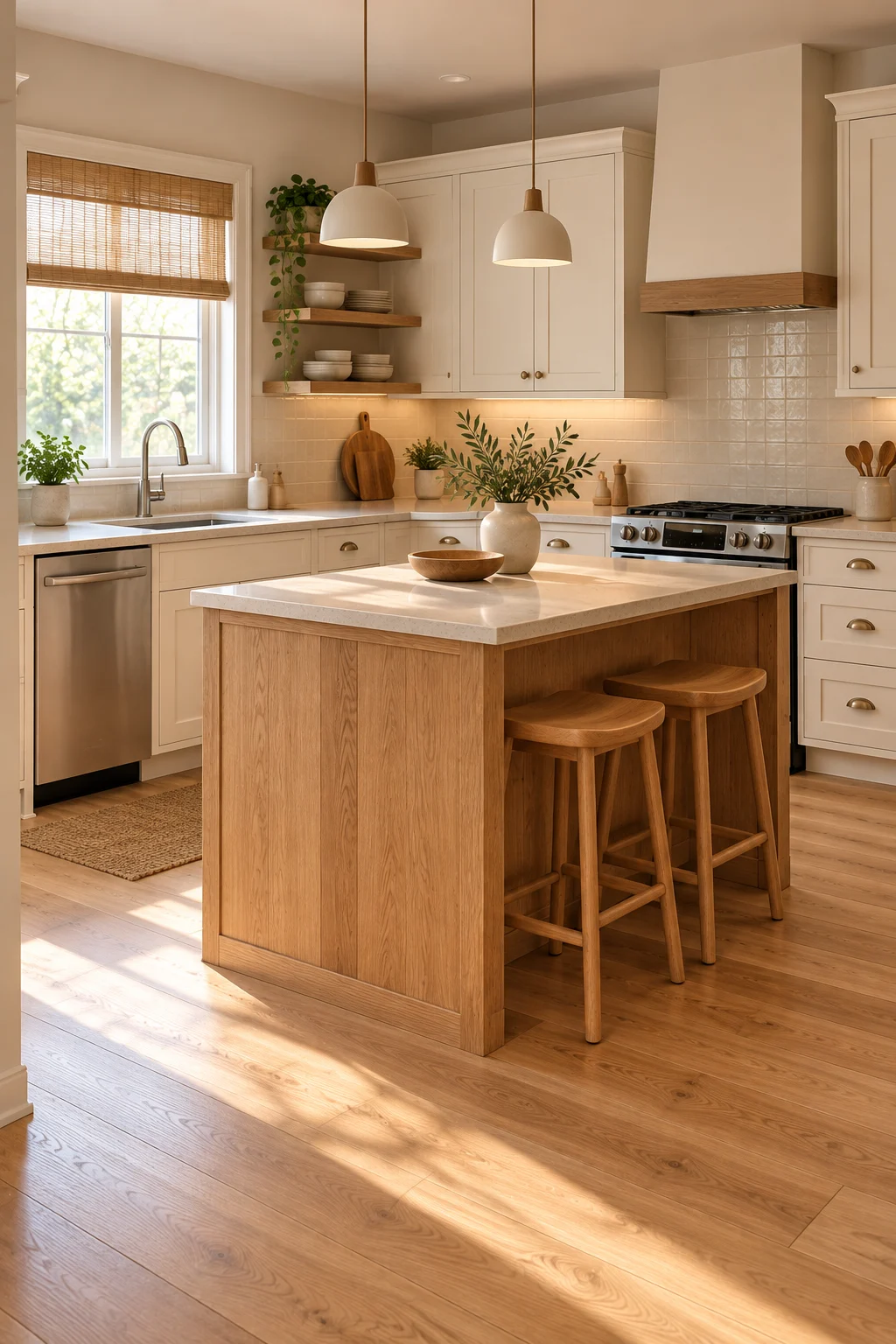
A Japandi kitchen island should feel useful and proportionate rather than oversized or decorative.
Choose a straightforward rectangular form with clean cabinet fronts and a simple countertop.
Natural oak, muted beige, or warm white cabinetry can all work beautifully.
If the surrounding cabinets are oak, consider a pale island to create gentle contrast.
If the perimeter cabinets are warm white, a natural wood island can introduce additional warmth.
Focus on storage and preparation space before adding decorative features.
Deep drawers, accessible cabinets, and a practical work surface may be more valuable than elaborate paneling.
In a small kitchen, a compact island may be appropriate, but only if there’s enough space to move comfortably around it.
For layouts where an island makes sense, explore 13 Small Island Kitchen Ideas That Make the Most of Limited Space.
11. Add Texture Through Linen and Wood
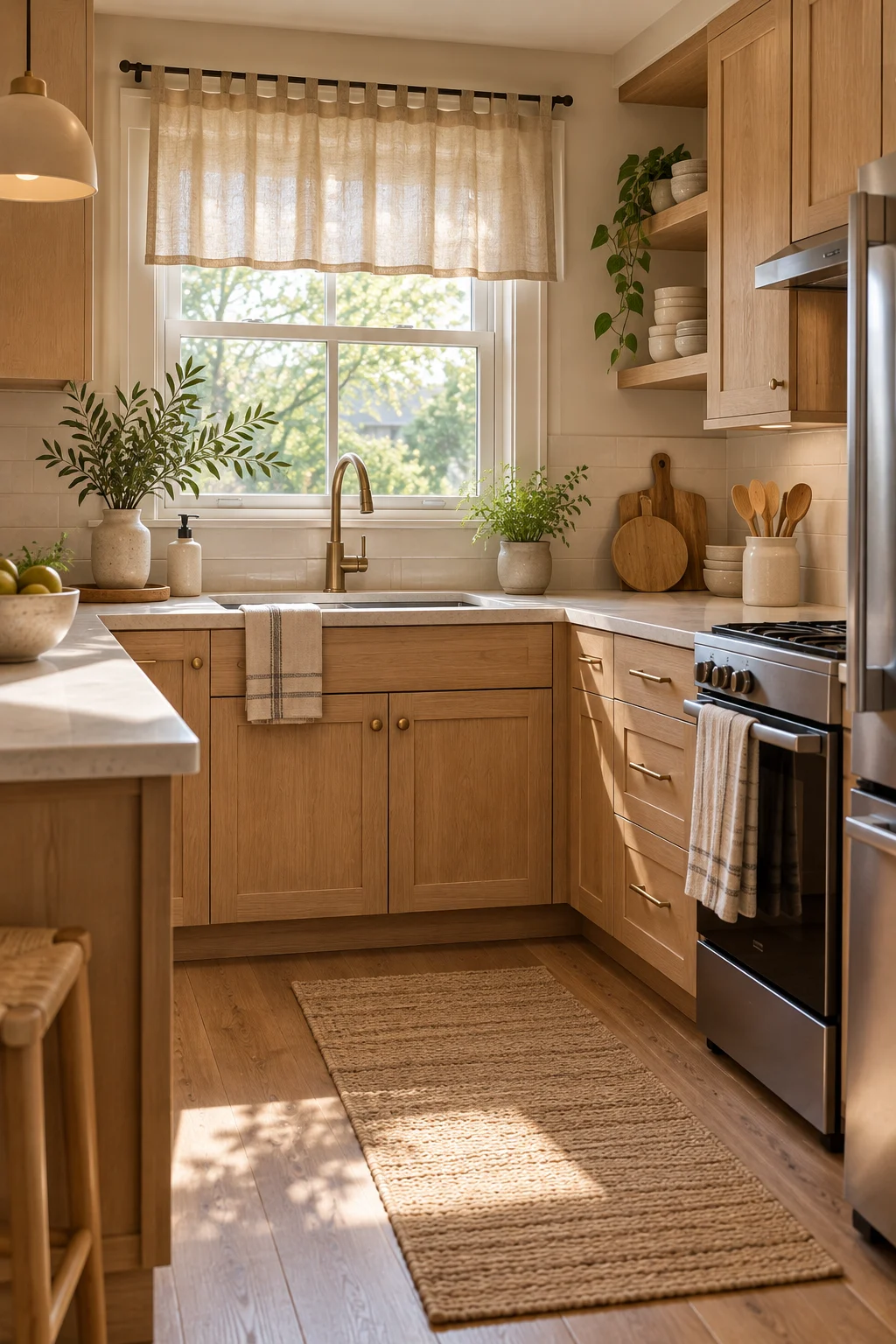
Japandi kitchens don’t need bold patterns to feel interesting.
Texture can provide much of the visual variety.
A linen-look curtain, a simple cotton towel, a wooden cutting board, and natural oak cabinets can create a warm, layered appearance.
Choose textiles in flax, oatmeal, warm gray, or cream.
Keep the shapes and patterns understated so the materials themselves provide the detail.
A single wooden serving board leaning against a suitable dry backsplash area can add warmth, while a neatly folded towel introduces softness.
Choose washable fabrics that can handle everyday kitchen use.
Avoid long or loose textiles near cooking heat and keep decorative fabrics away from frequent splashes.
A few practical natural textures can make a minimalist kitchen feel comfortable rather than bare.
12. Choose a Simple Dining Nook
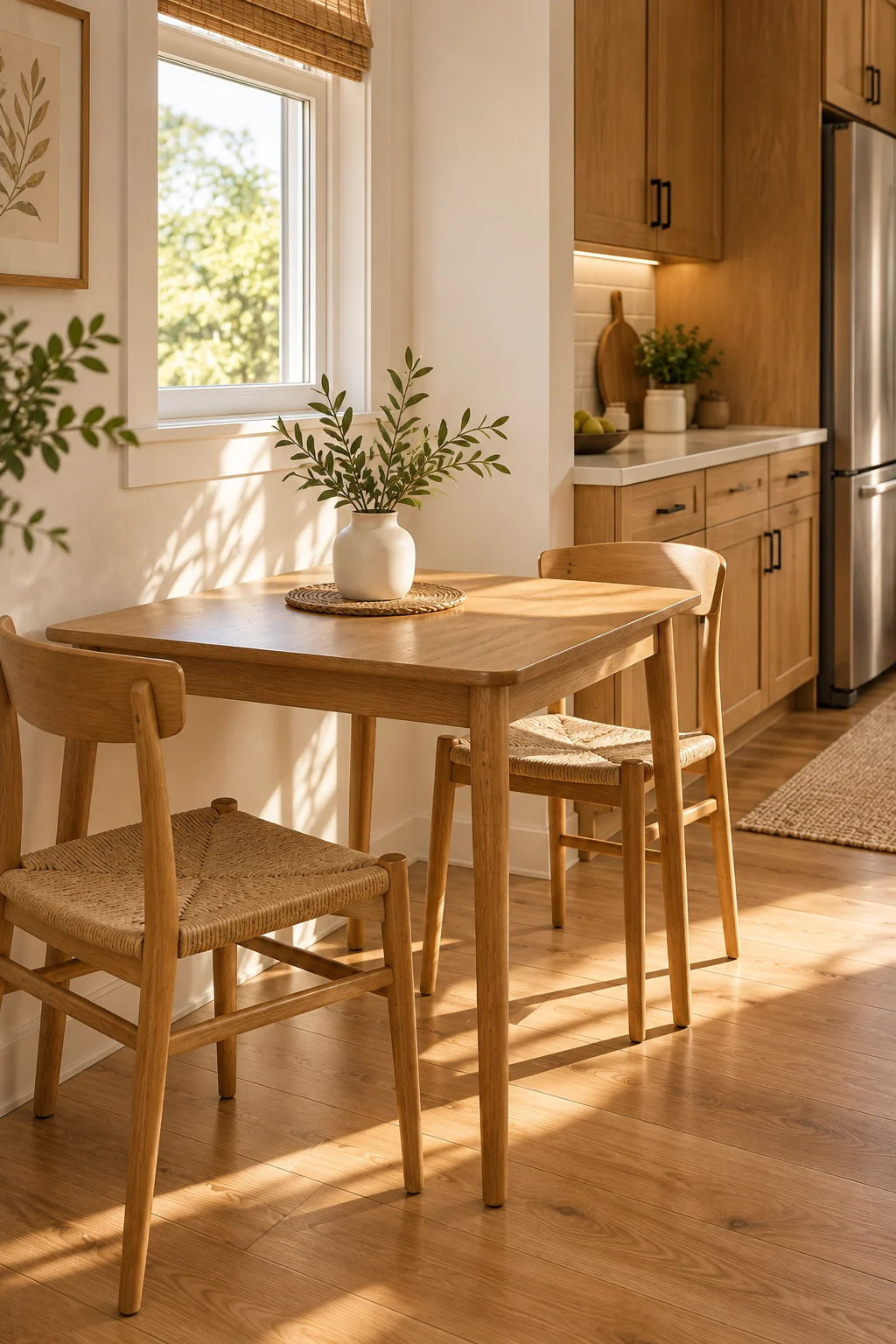
A small dining nook can extend the Japandi aesthetic beyond the cooking area.
Choose a compact natural wood table with simple chairs and comfortable proportions.
Light oak furniture pairs beautifully with warm white walls and neutral flooring.
A small ceramic bowl or understated vase can serve as the centerpiece without taking over the table.
Avoid bulky seating or oversized furniture that makes the kitchen difficult to navigate.
If the nook sits beside a window, keep the window treatment simple to preserve natural light.
The dining area doesn’t need to match the cabinetry exactly.
A related wood tone and a consistent neutral palette can make the spaces feel connected.
The result should be a comfortable place for everyday meals, not a display that requires constant rearranging.
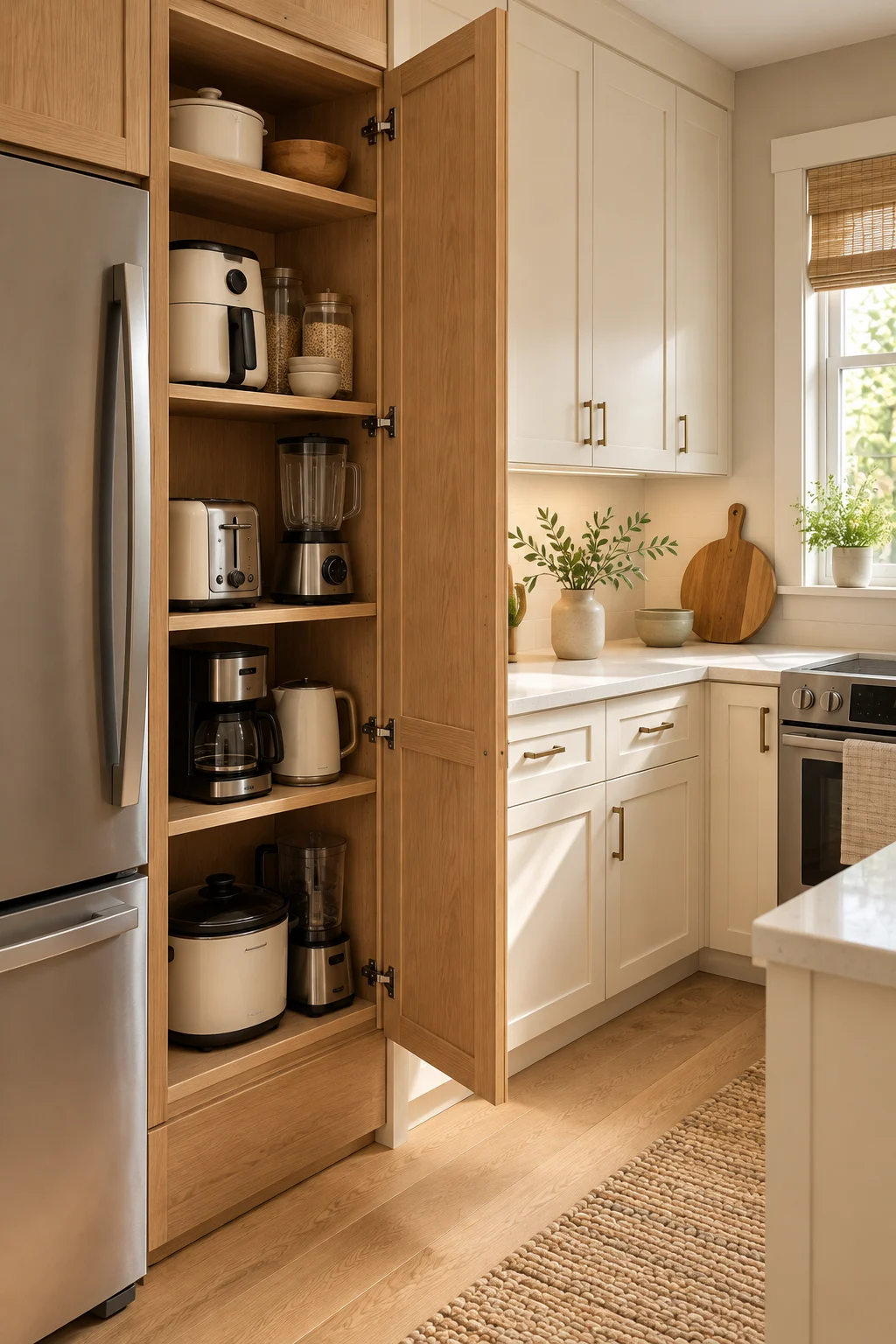
13. Use Concealed Storage for Small Appliances
One of the most practical ways to create a calm Japandi kitchen is to give everyday appliances a dedicated storage location.
Toasters, blenders, mixers, and coffee accessories can quickly make a countertop feel crowded.
If you have enough cabinet space, assign one accessible area to the appliances you don’t use constantly.
Choose storage that allows each item to be removed easily without moving several others first.
A deep drawer or appropriately sized cabinet may work better than stacking appliances on a high shelf.
Keep heavier items in locations that are comfortable to access.
Importantly, storing an appliance in a cabinet doesn’t automatically mean it’s safe to operate it there.
Follow the manufacturer’s ventilation and clearance instructions, and remove appliances for use unless the installation is specifically approved for enclosed operation.
Concealed storage should make the kitchen more functional, not create extra steps or safety concerns.
14. Introduce a Dark Accent for Definition
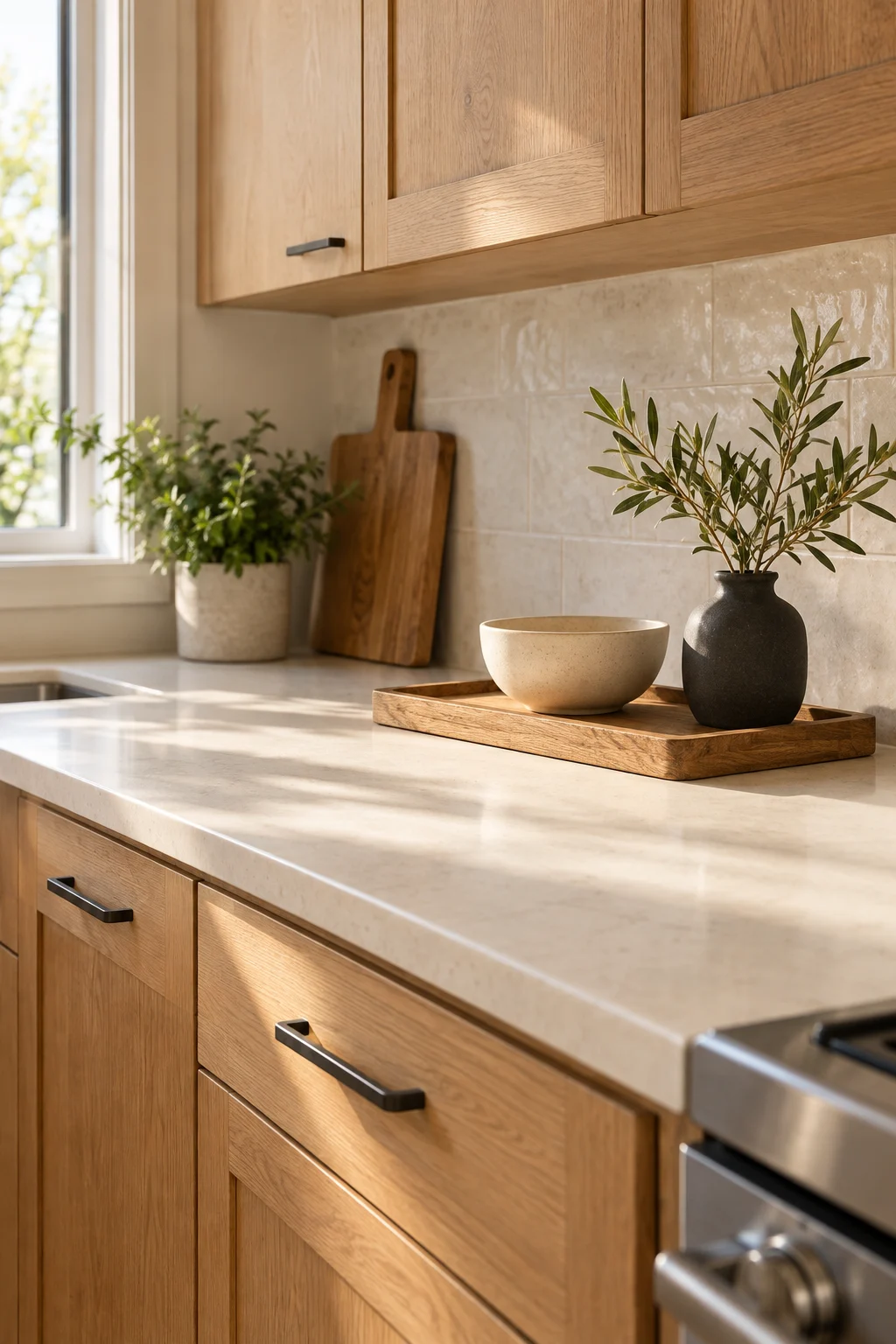
A small amount of charcoal or matte black can give a Japandi kitchen visual definition.
Think a simple dark faucet, slim cabinet pulls, or one charcoal ceramic vase.
Against natural oak cabinetry and warm white surfaces, these darker details create contrast without requiring a dramatic color scheme.
Choose one or two areas to repeat the dark finish.
For example, matte-black cabinet handles can coordinate with a simple black faucet.
You don’t need to introduce dark lighting fixtures, dark countertops, and dark furniture all at once.
Too much contrast can make the room feel sharper and busier than intended.
A restrained dark accent helps define the clean lines while preserving the overall warmth.
15. Use Natural Stone-Look Surfaces
Natural stone-look surfaces can complement the quiet material palette of a Japandi kitchen.
Choose a countertop in pale beige, warm gray, or soft ivory with subtle movement.
A restrained stone pattern can add depth without competing with oak cabinet grain.
You don’t necessarily need natural stone.
Suitable engineered or laminate surfaces with a convincing, understated stone appearance may provide a similar visual effect, depending on the product and budget.
Compare samples with the cabinet finish and backsplash before purchasing.
Avoid selecting dramatic veining if the kitchen already includes several noticeable wood textures or strong patterns.
Consider the material’s cleaning, stain resistance, heat limitations, and maintenance requirements.
A simple countertop that works well for everyday cooking is more valuable than an impressive finish that’s difficult to care for.

16. Keep Decorative Displays Low and Useful
In a Japandi kitchen, decorative objects should feel intentional.
A small oak tray holding a cream ceramic bowl and one understated vase can provide enough interest for an entire countertop section.
Choose objects that relate to the room’s materials and colors.
Natural wood, matte ceramics, and muted charcoal work beautifully together.
Keep the display compact so it doesn’t interrupt food preparation or access to everyday appliances.
Avoid scattering small decorative items across every open surface.
If you want to add another object, consider removing something first.
This approach doesn’t mean the kitchen has to look empty.
It means allowing a few well-chosen objects to stand out while keeping the space easy to use.
17. Create a Balanced Japandi Kitchen Palette
A cohesive Japandi kitchen begins with a limited selection of colors and materials.
Natural oak, warm white, beige, and charcoal provide a versatile foundation.
You can introduce muted olive or soft gray-green if you want a little additional color.
Start with the largest surfaces: cabinetry, countertops, walls, and flooring.
Then choose smaller details that complement those finishes.
For example, natural oak cabinets, warm white walls, pale beige countertops, and matte-black hardware can create a complete palette without requiring colorful accessories.
Use texture to provide variation.
Wood grain, lightly glazed ceramic tile, soft textiles, and simple stoneware can make a neutral kitchen feel layered.
Before buying another decorative piece, consider whether it contributes to the room’s appearance or solves a practical need.
The goal is a kitchen that feels calm, connected, and comfortable for everyday life.
How to Choose Japandi Kitchen Materials
Start with materials that are suitable for a working kitchen and complement one another visually.
Natural oak or realistic wood-look cabinetry can provide warmth, while ceramic tile and pale countertops introduce practical surfaces.
Choose finishes with compatible undertones rather than assuming all beige, white, and wood colors will work together.
Matte and softly textured surfaces often suit the style, but consider how easily each material can be cleaned.
A heavily textured finish may look attractive in a sample yet require more maintenance near the stove or sink.
Keep the number of main finishes limited and let natural grain and subtle texture provide interest.
Japandi Ideas for Small Kitchens
Small kitchens can benefit from the simplicity of Japandi design.
Flat-panel cabinetry, practical drawers, and restrained color combinations can help the room feel organized.
Use vertical storage where it improves access, but don’t replace useful cabinets with decorative shelves simply to create a minimalist appearance.
Choose appropriately scaled furniture and avoid adding an island unless the layout comfortably accommodates it.
A clear countertop, natural wood details, and suitable task lighting can make a noticeable difference without requiring a full renovation.
The goal isn’t to remove everything from view. It’s to make the kitchen easier to use and visually calmer.
Budget-Friendly Japandi Updates
You don’t need custom oak cabinetry to create a Japandi-inspired kitchen.
Start by simplifying countertop displays and improving storage for frequently used items.
Replace overly decorative cabinet hardware with simple, comfortable pulls if the existing cabinets are in good condition.
Introduce a natural wood serving board, a small ceramic bowl, or a restrained neutral textile.
If painting cabinetry, choose a suitable cabinet finish and prepare the surfaces according to the product instructions.
Improving task lighting may also make the room feel more comfortable and functional.
Focus on changes that work with the materials you already have rather than replacing everything at once.
Common Japandi Kitchen Mistakes
One common mistake is confusing minimalism with having too little storage.
A kitchen still needs room for dishes, cookware, food, and appliances.
Removing upper cabinets or leaving countertops completely empty may look attractive in photographs but can be inconvenient in daily life.
Another mistake is combining too many unrelated wood finishes and neutral colors.
A restrained palette should feel intentional, not accidental.
Avoid choosing delicate materials solely for their appearance without considering cleaning and durability.
Finally, don’t make the lighting too dim.
A calm atmosphere is important, but the kitchen still needs sufficient illumination for safe, comfortable cooking.
Cleaning and Maintenance
Choose a cleaning routine appropriate for each material.
Wipe cabinet fronts, countertops, and backsplashes according to the manufacturer’s recommendations.
Clean spills promptly, particularly around wood finishes and cabinet seams.
Dust open shelves regularly and avoid allowing decorative accessories to collect grease near cooking areas.
Wash textiles according to their care labels.
Check cabinet hardware, drawer mechanisms, and shelf supports periodically.
A simple kitchen is easier to maintain when storage and materials are chosen for everyday use.
Safety and Practical Considerations
Keep appliance doors, drawers, and walkways unobstructed.
Secure cabinets and shelves with suitable hardware and follow the manufacturer’s load requirements.
Store heavier cookware and appliances in accessible lower cabinets where practical.
Maintain the required ventilation and clearances around cooking appliances.
Keep textiles and decorative objects away from cooking heat.
Use suitable task lighting for food preparation, cooking, and cleaning.
Ensure breakfast counters and islands are appropriately supported and don’t interfere with circulation.
Follow appliance instructions when planning enclosed storage, especially for devices that generate heat or steam.
Final Thoughts
A Japandi kitchen combines natural warmth with thoughtful simplicity.
Oak cabinetry, warm neutral surfaces, subtle ceramics, and practical storage can make an ordinary kitchen feel more peaceful without requiring an expensive renovation.
Start with the finishes you already have, introduce a few natural textures, and give everyday items convenient places to live.
The best Japandi kitchen isn’t necessarily the one with the fewest objects. It’s the one where everything feels useful, balanced, and comfortably connected.
