
18 Beach Kitchen Ideas for a Relaxed Coastal-Inspired Space
A beach-inspired kitchen doesn’t need seashell decorations, anchor signs, or an ocean view to feel coastal. Sometimes, all it takes is a soft blue cabinet color, warm white walls, natural wood, and a few carefully chosen textures.
The best coastal kitchens feel bright, relaxed, and easy to live in. They’re inspired by sandy beaches, sea glass, weathered wood, and soft ocean colors, but they still function like practical everyday kitchens.
You also don’t need a large coastal home to achieve the look. A modest American kitchen with standard ceilings, builder-grade cabinetry, and limited counter space can feel completely different with the right colors and materials.
These 18 beach inspired kitchen ideas explore simple ways to introduce coastal character through cabinetry, backsplashes, lighting, rugs, furniture, and accessories. Whether you’re planning a larger update or refreshing a few details, the goal is to create a kitchen that feels fresh without becoming overly themed.
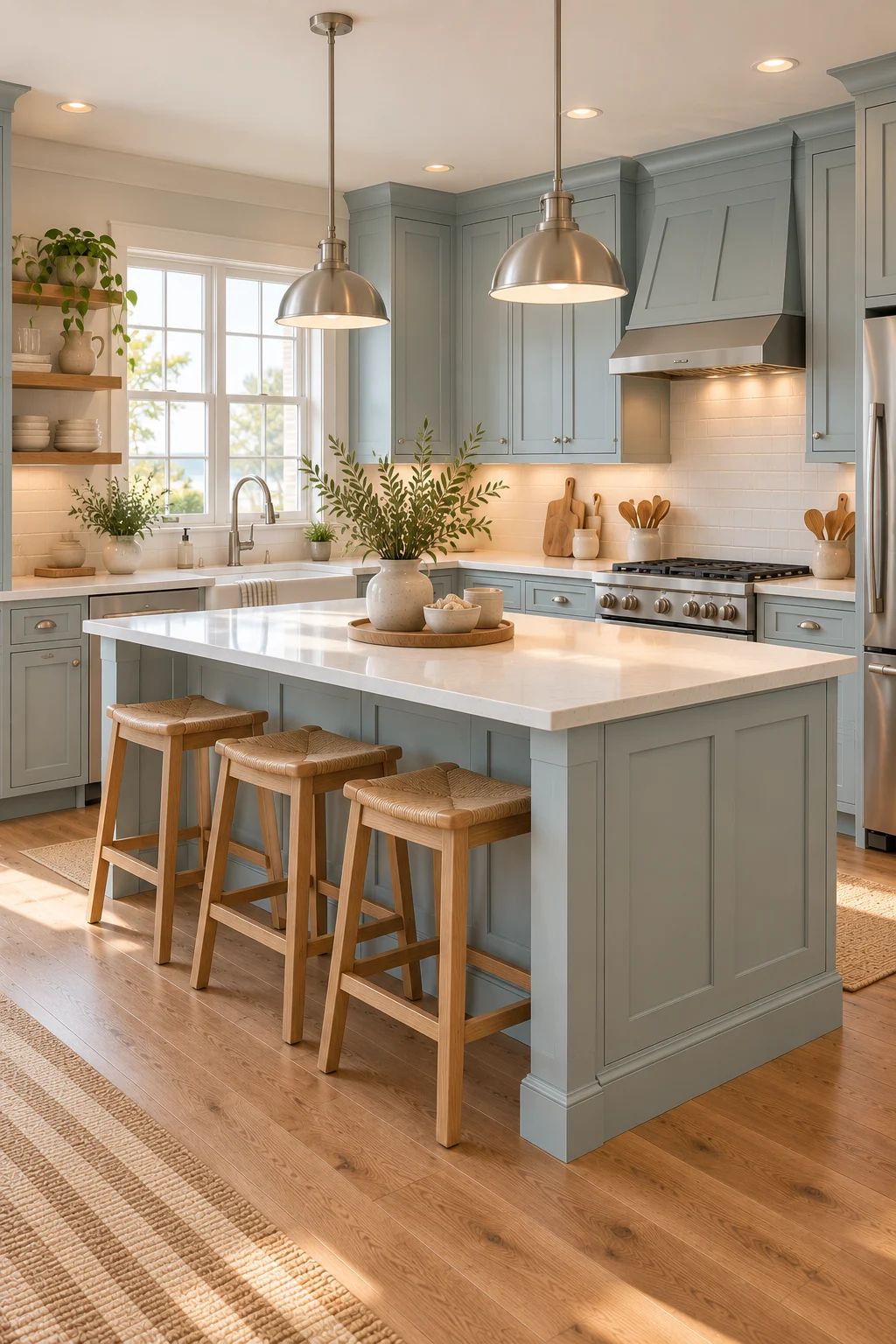
1. Choose Soft Sea-Glass Blue Cabinets
Sea-glass blue cabinets are a beautiful way to introduce coastal color without making the kitchen feel overly bright or themed.
Look for a softened blue with subtle gray or green undertones. These shades work particularly well with warm white countertops, pale wood flooring, and simple brushed nickel hardware.
You don’t have to paint every cabinet blue. In a smaller kitchen, consider using sea-glass blue on the lower cabinets while keeping the upper cabinets warm white. This creates a gentle contrast without making the room feel visually heavy.
If you’re updating existing cabinets, test the paint on a sample board before committing. Blue shades can look surprisingly different under daylight and warm evening lighting.
Keep the surrounding finishes relatively simple. A white backsplash, natural wood accents, and a few neutral accessories will allow the cabinet color to remain the main feature.
For more ways to introduce color into kitchen cabinetry, explore these 15 Mint Green Kitchen Ideas for a Fresh and Charming Space.

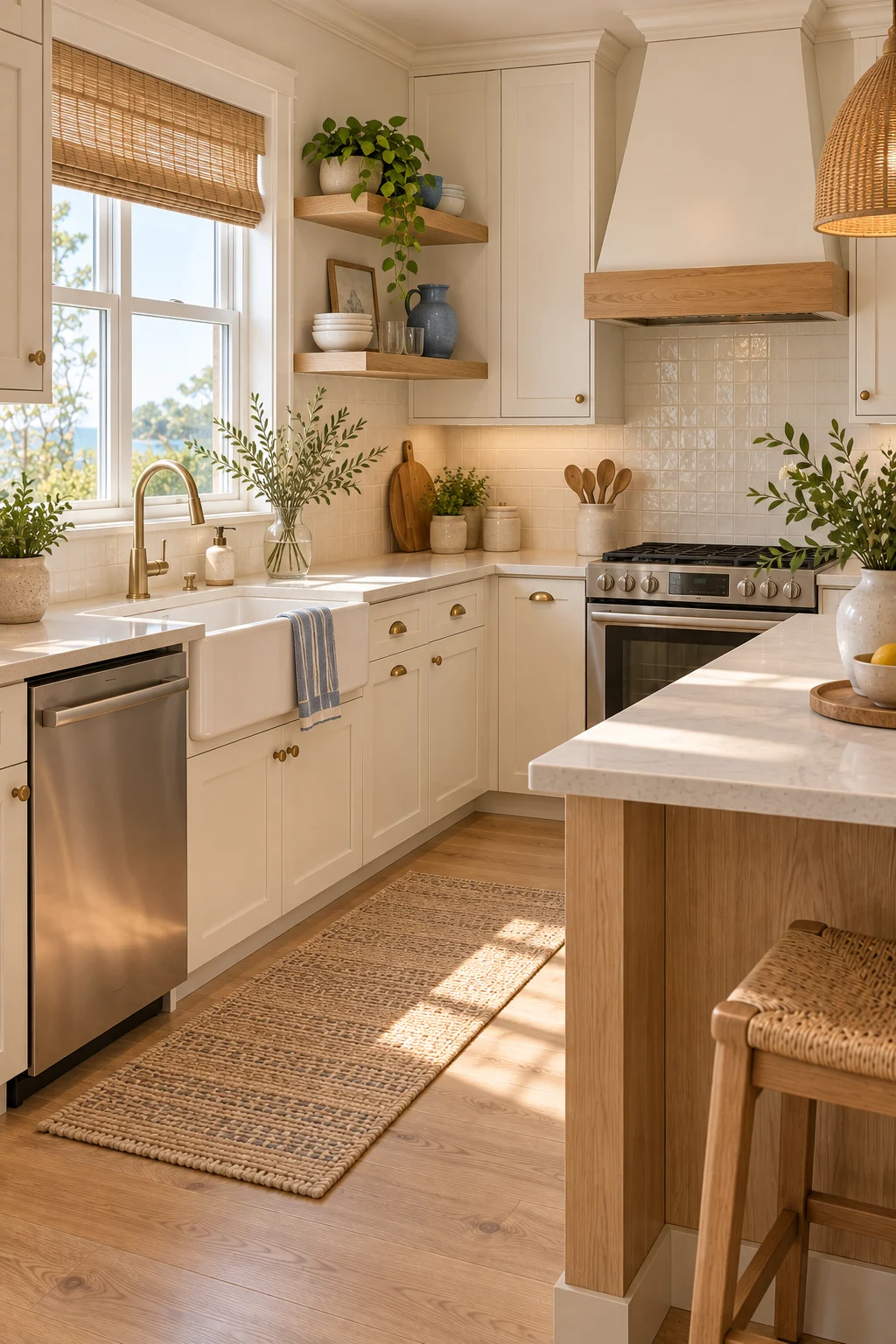
2. Use Warm White Cabinets and Natural Wood
Warm white cabinets create a bright foundation for a beach-inspired kitchen, while natural wood adds the warmth that keeps the room from feeling cold or sterile.
Choose a creamy white rather than a stark, blue-toned white. Pair it with natural oak, maple, or another light wood finish.
A compact wooden breakfast table, simple open shelf, or pair of wooden stools can introduce the coastal texture without requiring new cabinetry.
If your kitchen already has medium-brown flooring, you don’t necessarily need to replace it. Choose wood accessories with compatible undertones and let the warm white cabinetry create contrast.
Avoid mixing too many unrelated wood finishes. Two complementary tones are often enough to create depth without making the kitchen feel disconnected.
The result is a relaxed, timeless kitchen that feels coastal through its materials rather than obvious beach decorations.
3. Add a Pale Blue Backsplash
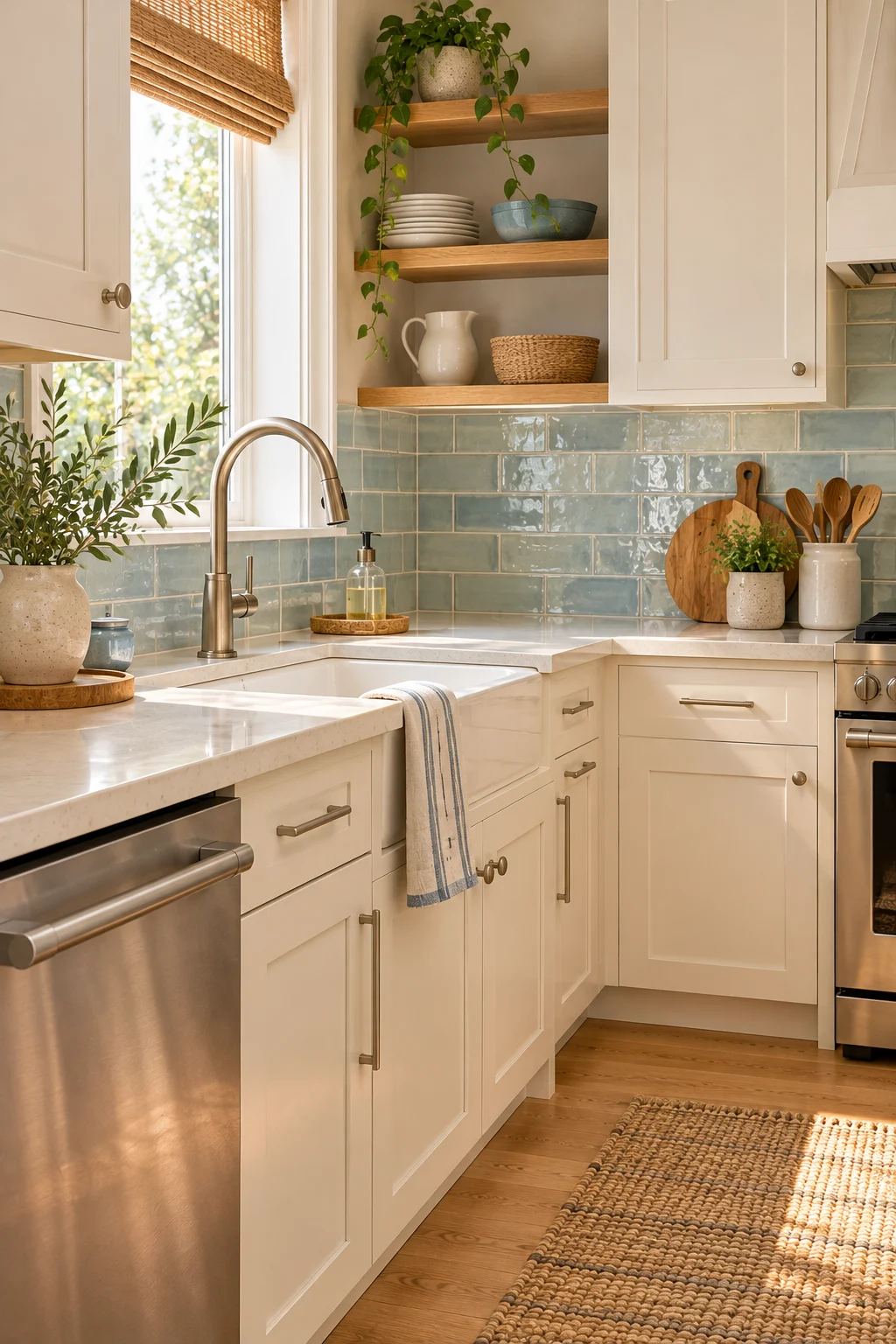
A pale blue backsplash can introduce a gentle coastal accent while allowing the cabinetry and countertops to remain neutral.
Choose ceramic tiles in soft powder blue, sea-glass blue, or a slightly gray-toned shade.
Simple rectangular tiles with subtle glaze variation can create interest without requiring a complicated pattern. A lightly textured finish may also reflect natural light beautifully.
Pair the backsplash with warm white cabinets and a pale beige or white countertop.
Before ordering, compare tile samples in the actual kitchen. The surrounding cabinet color, countertop, and lighting can change how blue the tile appears.
Choose a tile and grout system suitable for the kitchen’s splash and cleaning requirements.
If the backsplash is the main decorative feature, keep nearby accessories understated. A small wooden tray or cream ceramic bowl may be all the extra styling the counter needs.
4. Choose a Driftwood-Inspired Island
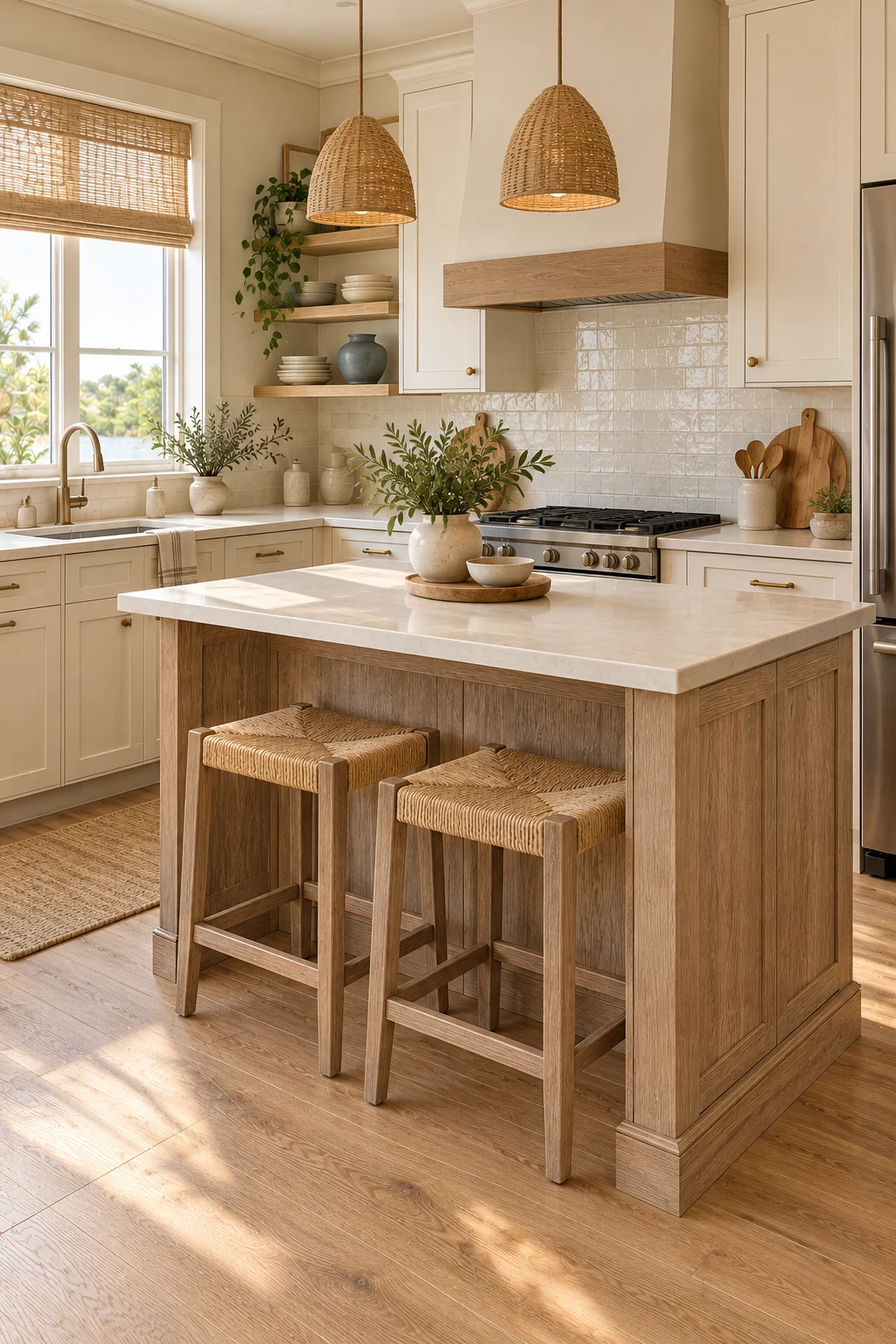
A driftwood-inspired island introduces coastal character through the appearance of weathered wood.
You don’t need actual reclaimed driftwood to achieve the look. A durable kitchen island with a softly weathered oak or gray-brown finish can create a similar effect.
Pair it with warm white cabinets and a light countertop so the wood texture becomes a gentle focal point.
Choose a restrained finish rather than heavily distressed surfaces with deep grooves or rough edges. Smooth, cleanable materials are more practical for everyday food preparation.
In a compact kitchen, consider a narrow island or a small freestanding piece rather than a large built-in unit.
Measure the available space carefully and account for appliance doors, drawers, and walking routes before purchasing.
A weathered-look island works best when it adds natural texture without overwhelming the layout.
5. Introduce Natural Woven Textures
Woven textures are one of the simplest ways to make a kitchen feel relaxed and coastal.
Think small storage baskets, woven-seat stools, or a natural-fiber pendant in a suitable location.
These materials introduce warmth and contrast against smooth cabinetry, tile, and countertops.
You don’t need several woven pieces to create the effect. One well-placed basket or a pair of simple stools can be enough.
Keep woven accessories away from areas exposed to frequent splashes, cooking grease, or significant heat.
If you’re using baskets for storage, choose ones that fit the shelves or cabinets properly rather than leaving them protruding into the workspace.
Natural textures look particularly attractive alongside cream cabinets, pale blue accents, and warm wood.
For additional storage inspiration, see these 12 Wicker Basket Kitchen Ideas for Beautiful Everyday Storage.
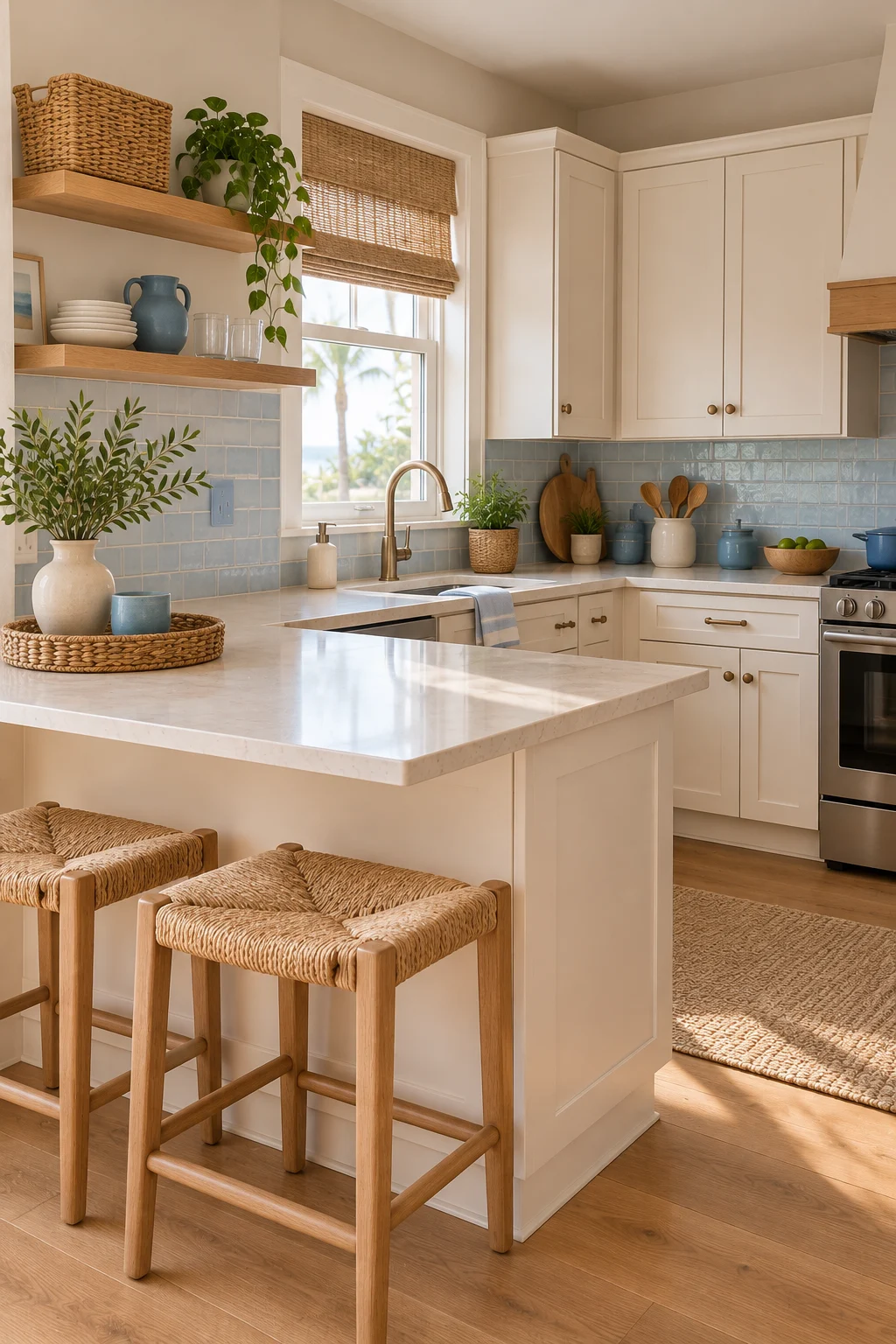
6. Use Sand and Beige as Supporting Colors
A coastal kitchen doesn’t have to rely entirely on blue and white.
Sand, warm beige, and mushroom taupe can create a softer, more natural foundation inspired by the beach itself.
Use these shades on walls, countertops, backsplash tiles, or selected accessories.
For example, warm white cabinets paired with a pale beige countertop and natural oak accents can feel coastal even without a strong blue feature.
If you want a little color, introduce muted sea-glass blue through a runner, ceramic bowl, or small cabinet section.
Pay attention to undertones when combining neutrals. A yellow-leaning beige may look awkward beside a cool gray countertop, while warm sand tones often work more naturally with cream and wood.
A restrained neutral palette can make the kitchen feel welcoming throughout the year, not just during summer.
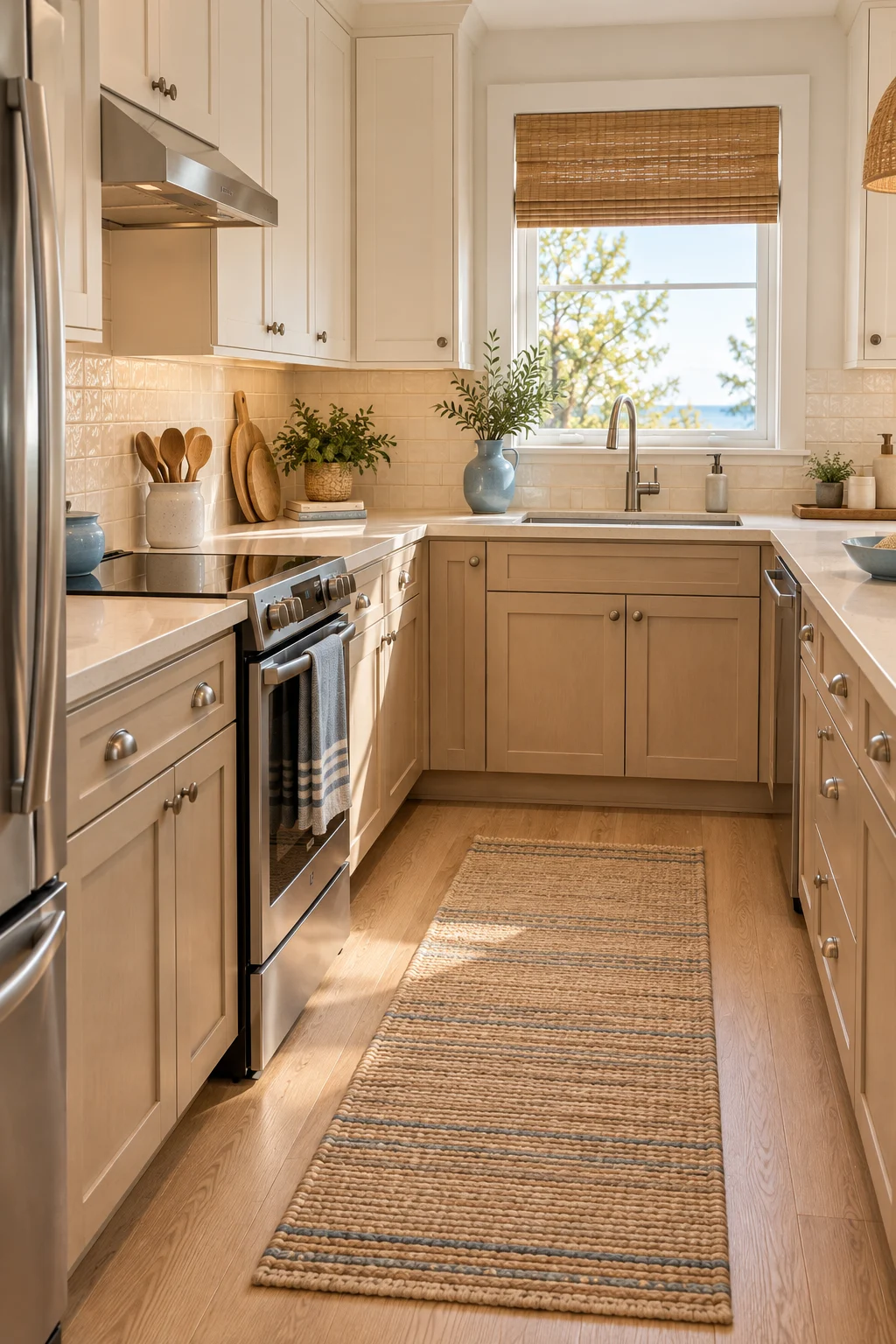
7. Choose Simple Coastal Pendant Lighting
Pendant lighting can introduce coastal character without requiring a major renovation.
Choose compact fixtures with pale shades, simple glass forms, or understated natural textures.
A small pendant above a breakfast counter can create a gentle focal point, while two appropriately scaled fixtures may suit a larger island.
Avoid oversized nautical lanterns unless they genuinely complement the kitchen’s architecture. The goal is a relaxed coastal atmosphere rather than a themed restaurant.
Consider the ceiling height and the island’s dimensions before choosing fixtures. In a kitchen with a standard eight-foot ceiling, a compact pendant may feel more balanced than a large hanging design.
Use lighting that provides useful illumination for the area, not just decorative appeal.
For a softer atmosphere, pair suitable overhead lighting with other practical light sources.

8. Add a Blue and White Runner
A blue-and-white runner can introduce coastal color without changing any permanent kitchen finishes.
Choose a simple stripe, faded geometric design, or subtle woven pattern.
The runner can work particularly well in a galley kitchen or along a clear section of floor between cabinets.
Look for a low-profile design that’s easy to clean and suitable for kitchen use.
Check the dimensions carefully before purchasing. The rug shouldn’t interfere with appliance doors, catch beneath cabinets, or create an obstacle in the main walking route.
If the backsplash already features a strong pattern, choose a quieter runner to maintain balance.
A simple blue-and-white textile can connect pale cabinetry, natural wood flooring, and other coastal accents without making the kitchen feel overly decorated.
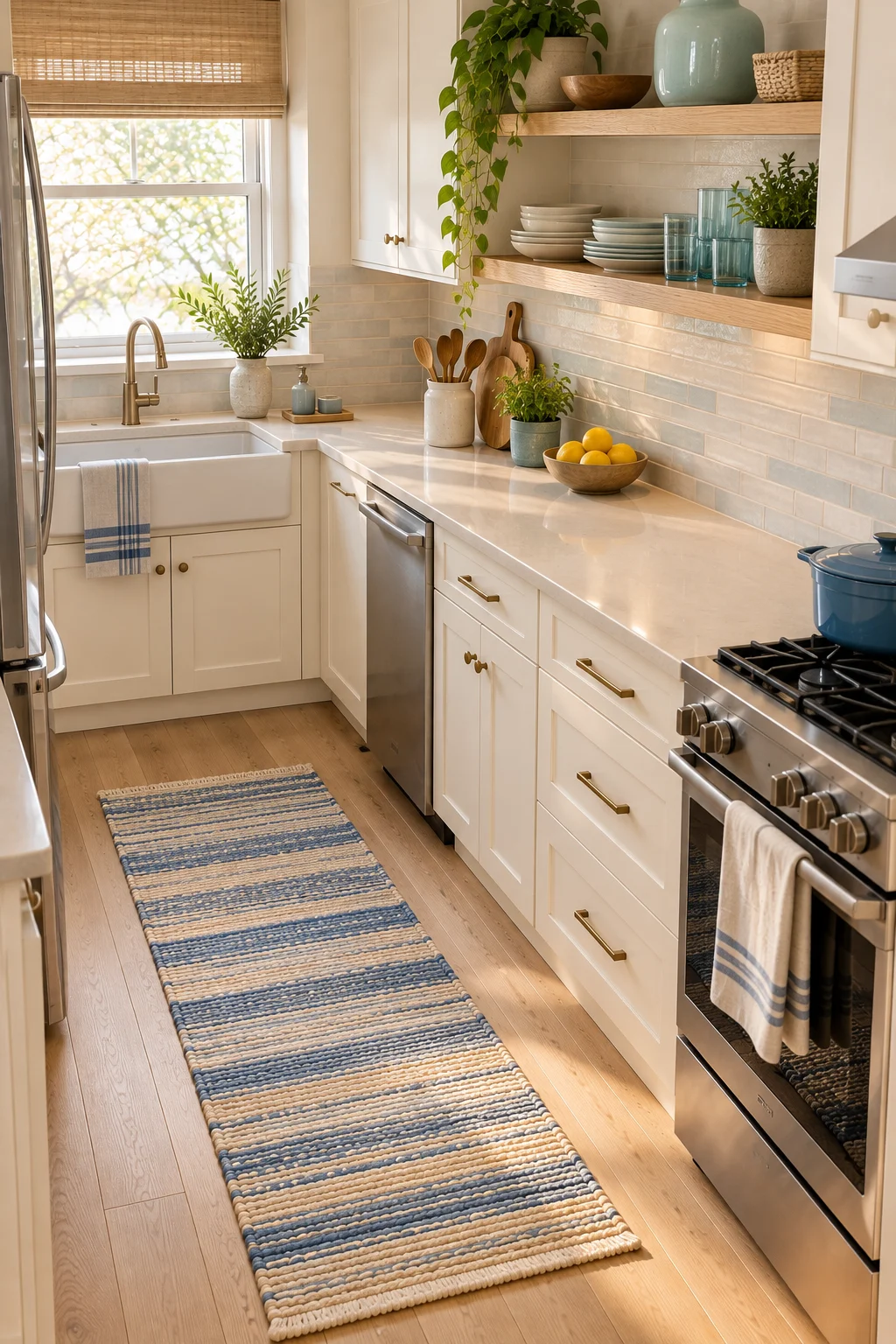
9. Display Simple Coastal Ceramics
Ceramics are a practical way to introduce coastal color through everyday objects.
Choose pale blue bowls, cream stoneware, sand-colored vases, or simple white serving pieces.
Rather than filling the counter with decorative items, create one small arrangement on a wooden tray or secure shelf.
A pale blue bowl beside a cream ceramic vase can introduce enough variation without requiring shells, anchors, or nautical signs.
Use pieces that are genuinely useful whenever possible. Everyday bowls and serving dishes can contribute to the decor while remaining part of the kitchen’s normal routine.
Keep fragile objects away from counter edges and cooking areas.
The most appealing displays usually have a limited palette and enough open space around them to feel intentional.
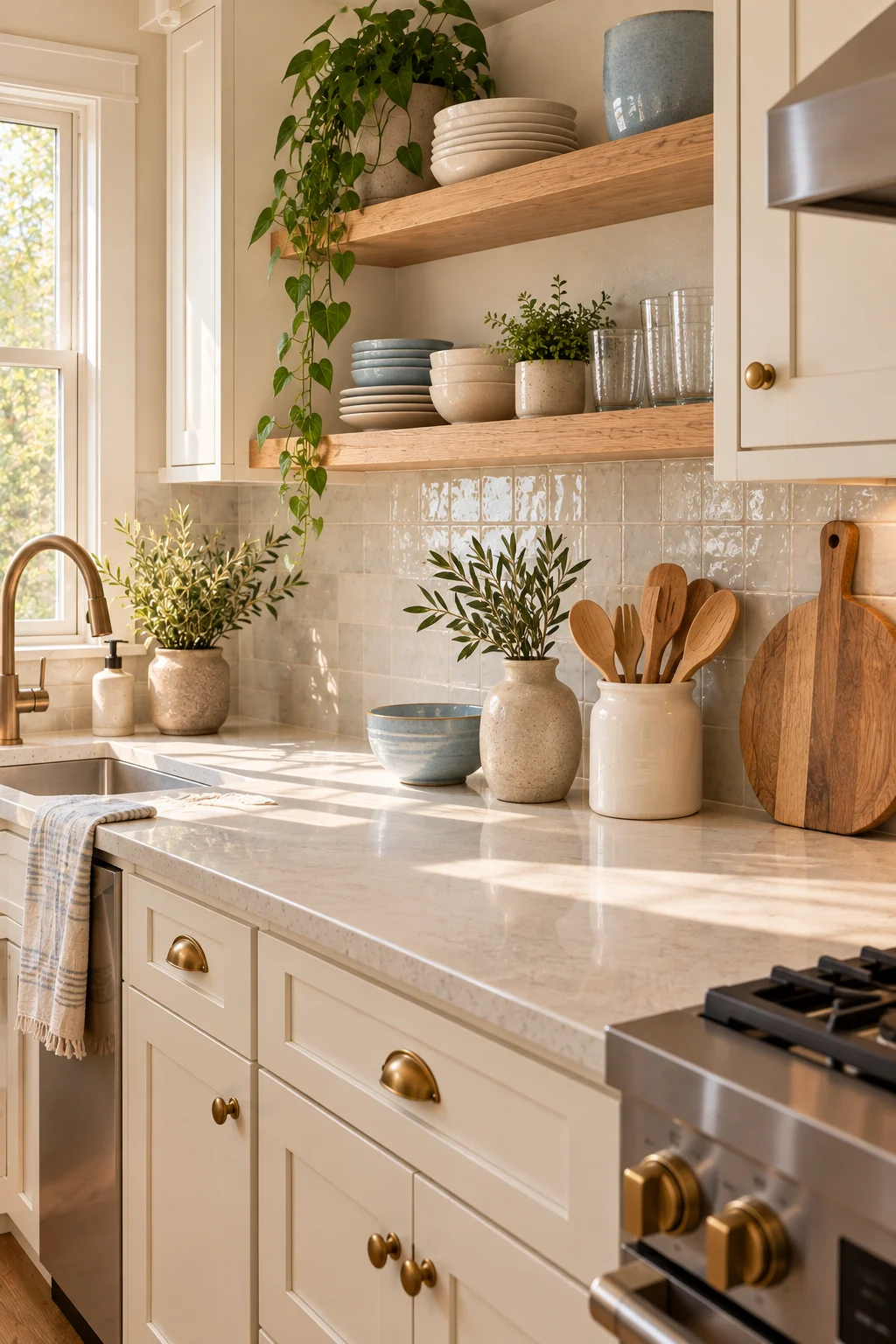
10. Choose Brushed Nickel Hardware
Brushed nickel hardware works beautifully in beach-inspired kitchens because it introduces a subtle metallic finish without demanding attention.
Simple cabinet pulls and knobs complement warm white, sea-glass blue, and pale beige cabinetry.
The finish also pairs naturally with stainless steel appliances and many contemporary faucets.
If you’re updating existing cabinets, check the spacing of the current hardware before buying replacements. Choosing compatible hole spacing may help avoid unnecessary cabinet repairs.
For a coordinated appearance, repeat the brushed nickel finish through cabinet handles and a suitable faucet.
You don’t need to replace every metal detail, but limiting the number of competing finishes can help a small kitchen feel more cohesive.
Brushed nickel is a useful choice when you want the cabinetry and natural materials to remain the main visual features.
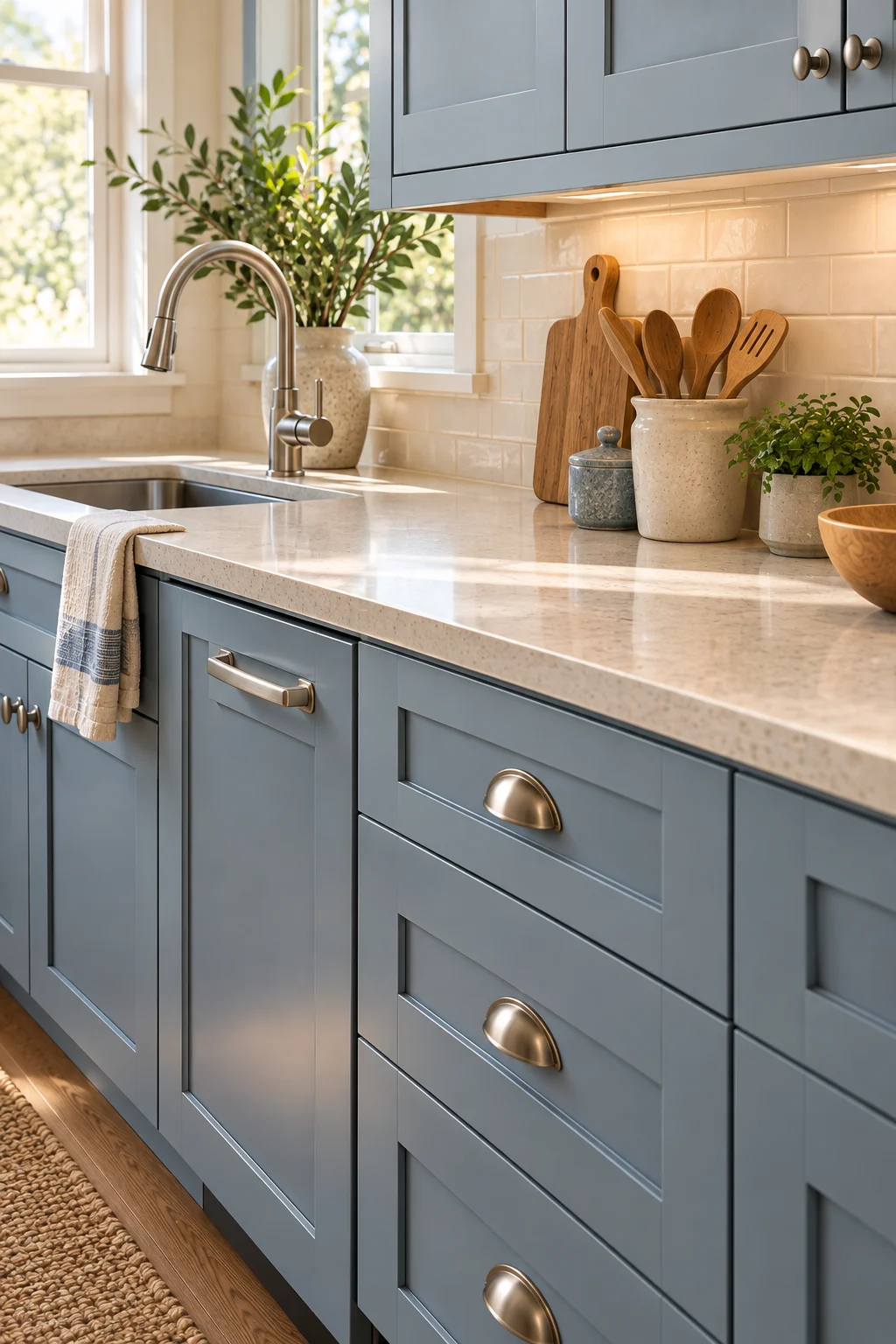
11. Use Glass-Front Cabinets to Lighten the Room
Glass-front cabinets can make a coastal kitchen feel more open while still providing enclosed storage.
Choose clear or lightly textured glass and display a restrained collection of white dishes, pale blue bowls, or cream ceramics.
The glass introduces subtle reflections and breaks up the appearance of solid cabinet doors.
You don’t need to replace every upper cabinet. One or two glass-front sections may provide enough visual variety.
Keep the contents organized because everything inside will contribute to the room’s appearance.
Avoid using the cabinets to display cluttered packaging or unrelated decorative objects.
If you’re modifying existing cabinetry, use appropriate glass and hardware, and ensure the doors are suitable for the cabinet construction.
Glass-front cabinets work especially well when paired with warm white cabinetry, a simple backsplash, and natural wood accents.
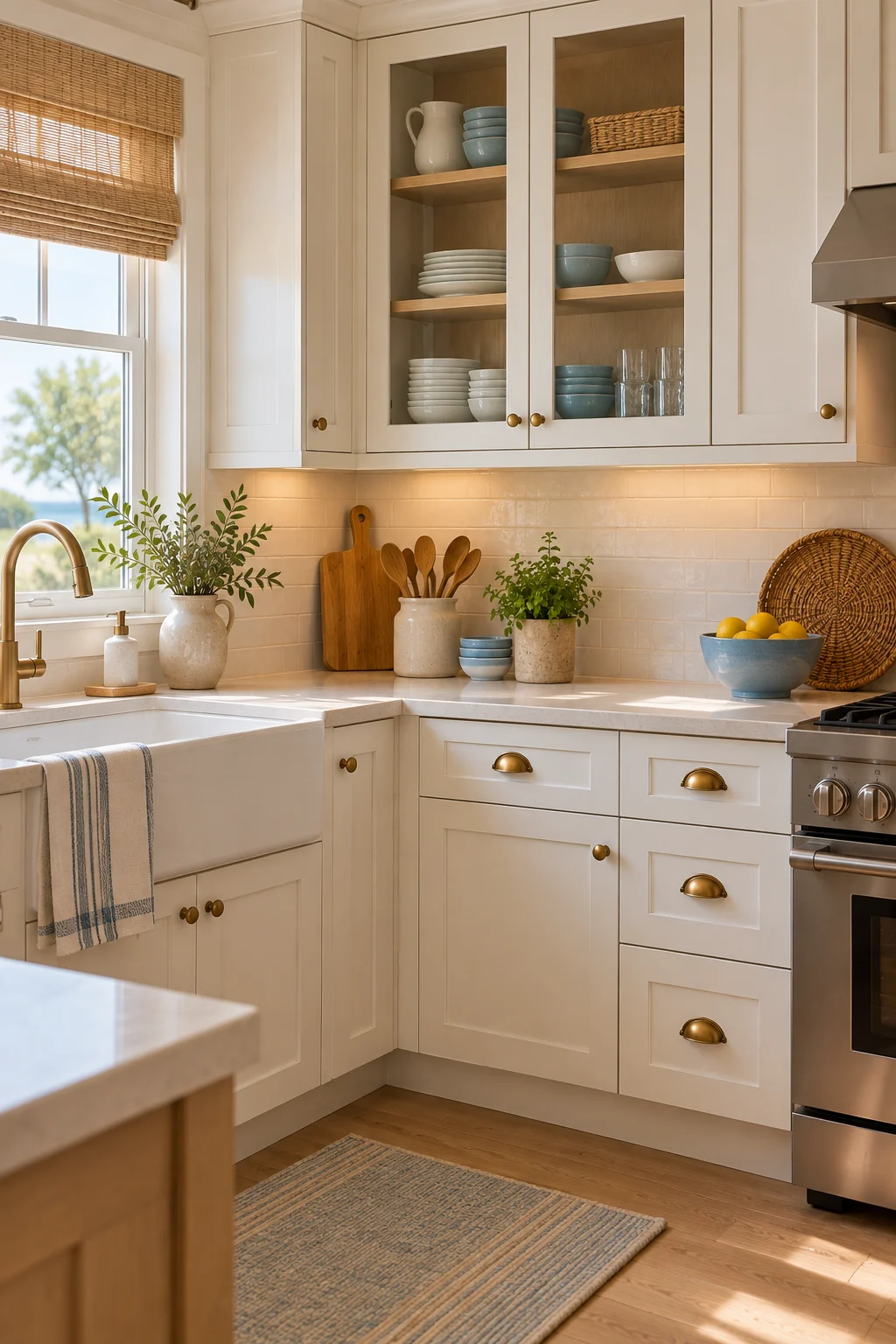
12. Add a Small Coastal Breakfast Nook
A breakfast nook can extend the beach-inspired palette into a comfortable everyday dining area.
Choose a compact wooden table with simple chairs or a small bench where the layout allows.
Natural oak, cream upholstery, and pale blue cushions create a relaxed combination without requiring nautical motifs.
Keep the furniture appropriately scaled. A large dining table may make a small kitchen feel crowded, while a compact round or rectangular table can provide useful seating.
Think about chair movement and access to nearby cabinets or appliances.
A simple pendant or suitable wall light can help define the nook if the room’s lighting arrangement allows.
Keep tabletop decor minimal. A small ceramic vase or wooden bowl is enough to connect the dining area to the kitchen’s coastal palette.
The nook should feel comfortable for actual meals rather than existing only as a decorative feature.
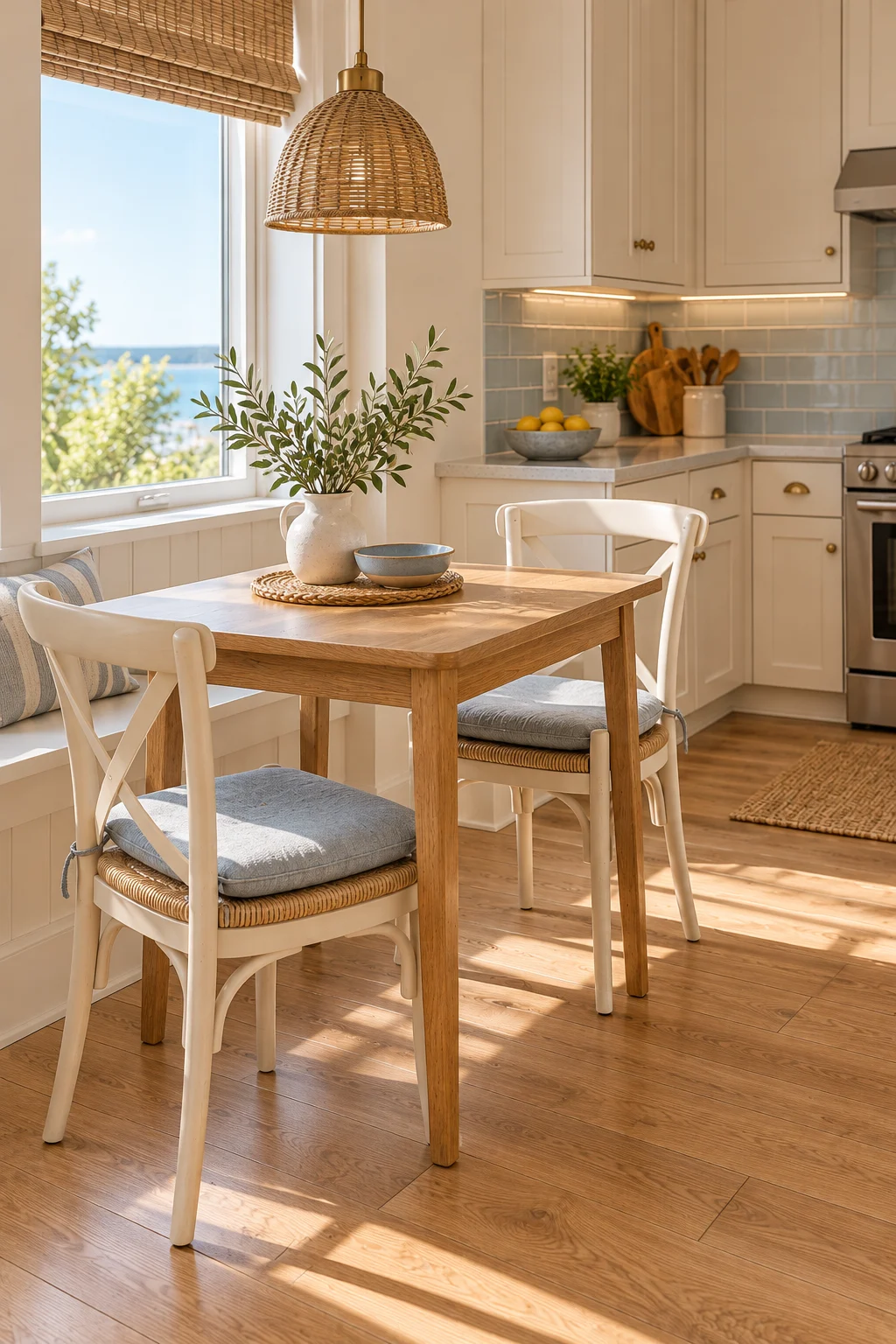
13. Introduce a Soft Green Accent
Soft green is a lovely alternative to blue in a coastal kitchen.
Pale sage, muted eucalyptus, and gray-green shades can evoke sea glass and coastal vegetation while remaining understated.
Use green through a small cabinet section, ceramic accessories, or a compact plant.
Pair it with warm white cabinets, pale wood, and beige countertops.
If the kitchen already includes blue, choose a green with compatible undertones so the colors feel connected.
Avoid introducing several unrelated blue and green shades in a small space.
A soft green accent works particularly well when you want a coastal look that feels natural and relaxed rather than obviously beach-themed.

14. Use a Natural Wood Breakfast Counter
A natural wood breakfast counter can introduce warmth while creating a useful place for casual meals.
Choose a durable wood surface with a finish appropriate for kitchen use.
Pair it with warm white cabinetry, pale blue accents, and simple stools that can be tucked beneath the counter when not needed.
The wood grain provides natural texture and helps balance smoother surfaces such as ceramic tile and painted cabinets.
Before adding a counter, consider the available space and how people will move around it.
Check that the countertop and any seating overhang have appropriate structural support.
A narrow breakfast counter may work better than a large island in a modest kitchen.
For more compact-layout inspiration, explore these 13 Small Island Kitchen Ideas That Make the Most of Limited Space.
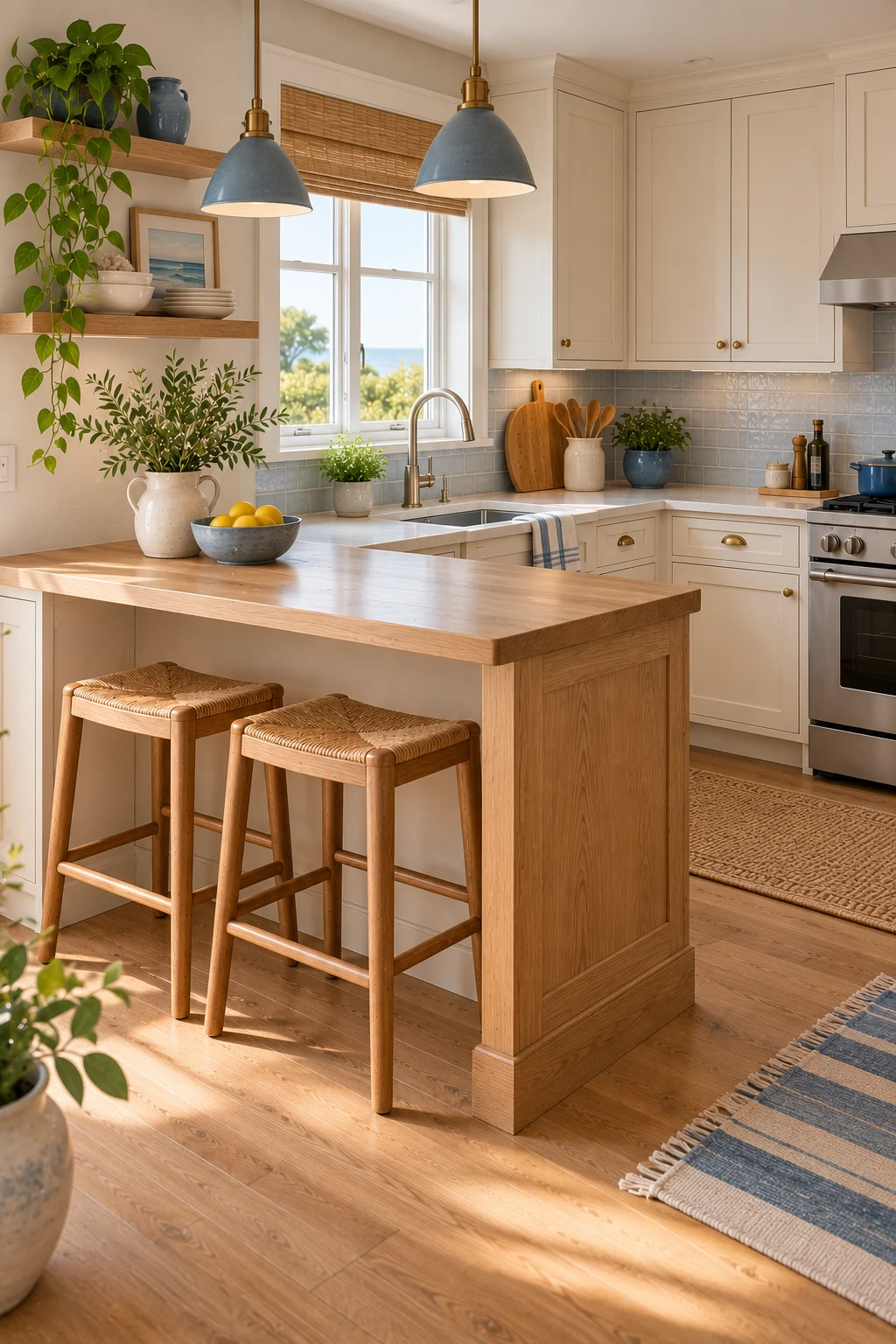
15. Keep Coastal Wall Art Subtle
Coastal wall art can add personality without making the kitchen feel like a souvenir shop.
Choose abstract blue shapes, soft seascapes, muted landscape prints, or simple botanical illustrations.
A single piece in a light wood frame can introduce enough coastal character for a compact kitchen.
Position the artwork on a clear wall away from direct cooking heat, moisture, and frequent splashes.
Avoid filling the space with several signs, slogans, or obvious nautical decorations.
If the kitchen already has blue cabinets or a patterned backsplash, choose artwork with a quieter palette.
A restrained piece of art can help connect the room’s colors while maintaining the relaxed atmosphere that makes coastal interiors appealing.
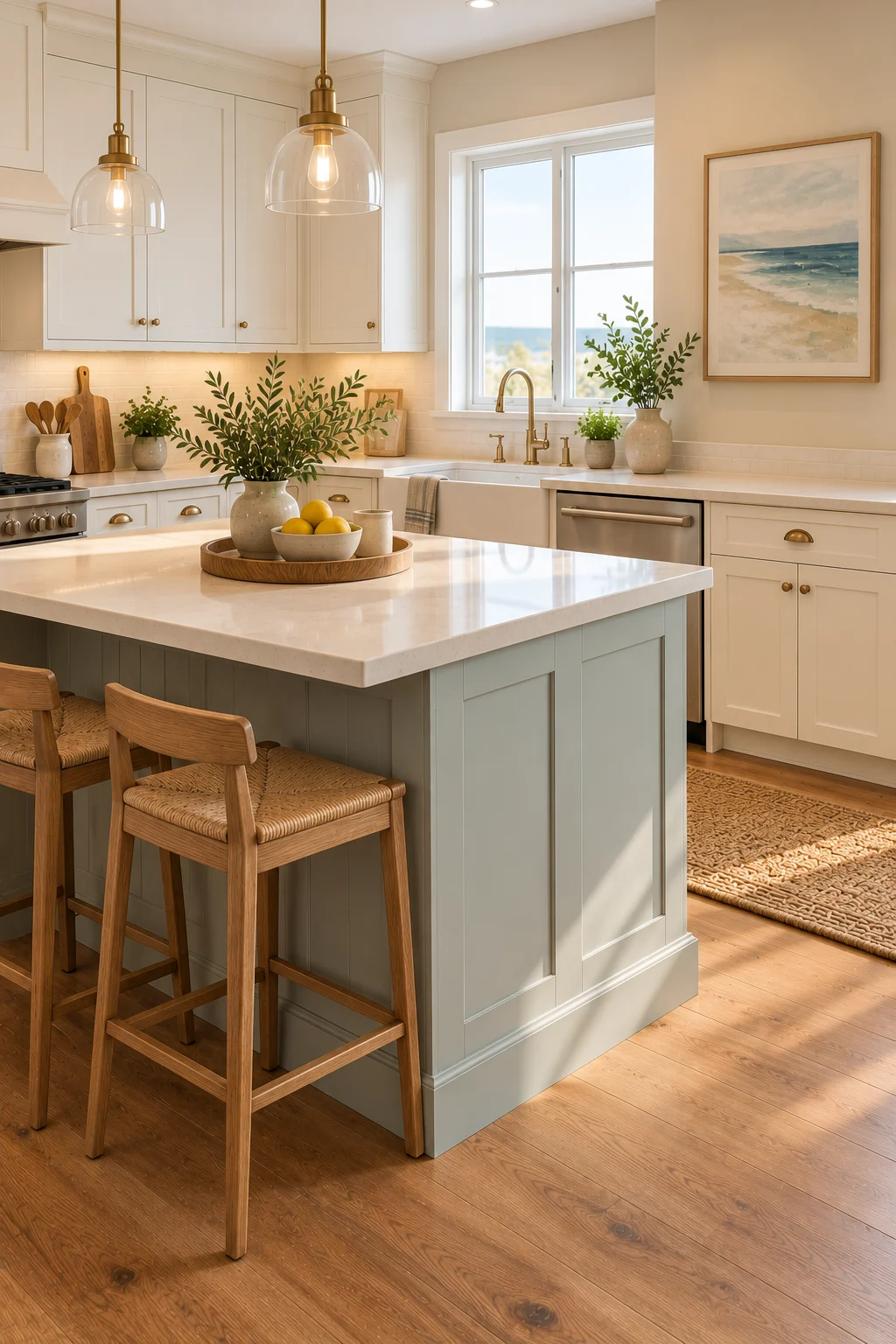
16. Choose a Simple White Ceramic Backsplash
A white ceramic backsplash creates a bright, versatile foundation for a coastal kitchen.
Choose warm white or soft ivory tiles that complement the cabinets and countertops.
Simple rectangular tiles, square tiles, or a restrained handmade-look glaze can introduce subtle texture without competing with the other finishes.
If the cabinets are sea-glass blue, a warm white backsplash can provide a clean contrast.
If the cabinets are already white, choose a tile with gentle tonal variation to prevent the surfaces from looking completely flat.
Select materials and grout suitable for kitchen splashes and regular cleaning.
For additional inspiration, see these 19 Tiles Kitchen Ideas for Floors, Walls, and Backsplashes.
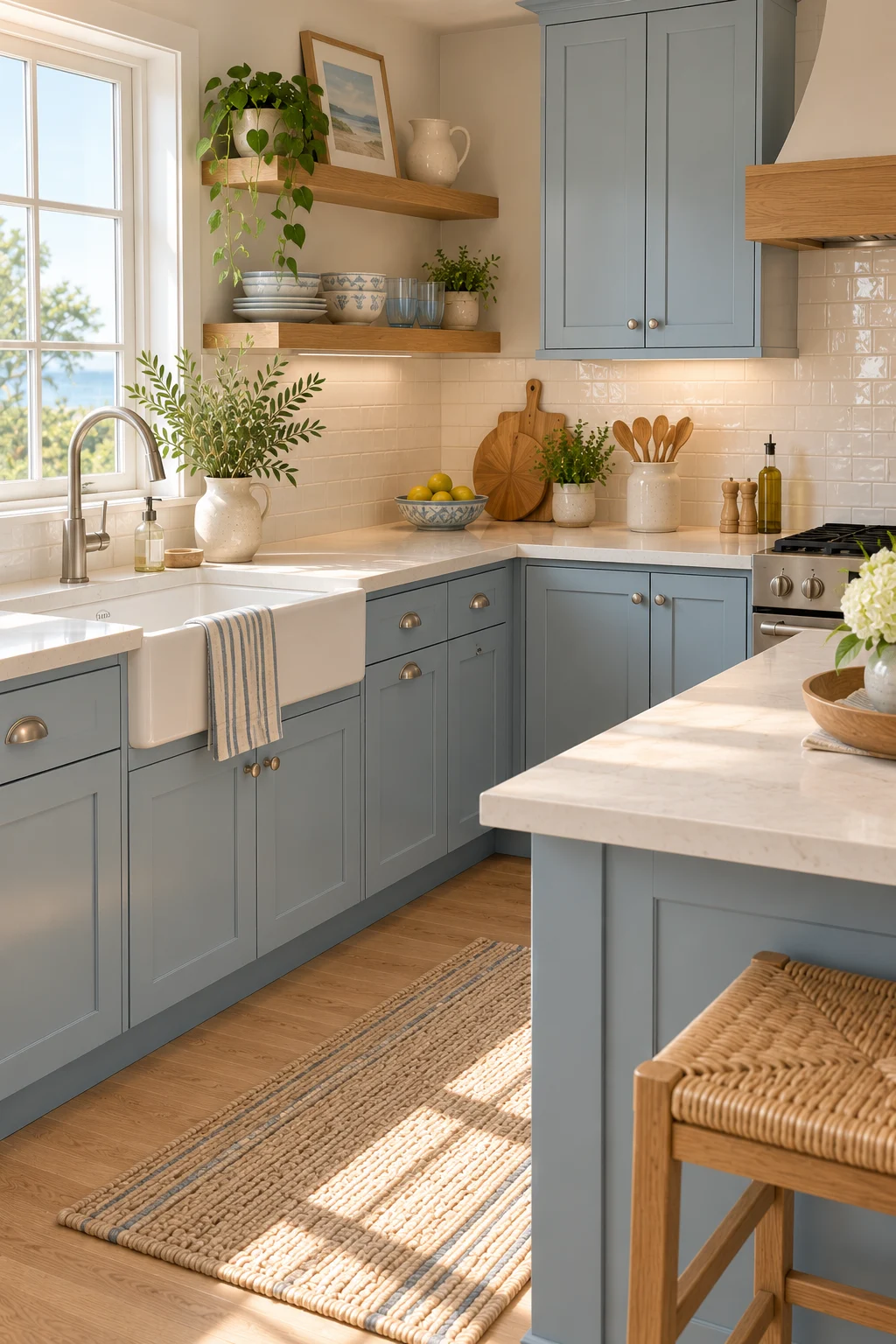
17. Add a Small Herb Plant
A small herb plant can introduce fresh greenery while serving a practical purpose.
Choose a compact pot of basil, parsley, mint, or another herb suited to the available light and indoor conditions.
Place it on a bright windowsill or another suitable surface where it won’t interfere with food preparation.
A cream ceramic pot or simple terracotta container can complement the coastal palette.
Choose a stable planter and manage drainage carefully to protect the countertop or windowsill.
Avoid placing the plant too close to cooking heat or in a position where it blocks window operation.
One healthy plant can introduce enough natural color without requiring a collection of decorative greenery.

18. Create a Cohesive Coastal Kitchen Palette
The most successful beach-inspired kitchens feel connected from one surface to the next.
Start with a simple foundation of warm white cabinets, pale countertops, and natural wood.
Then introduce one main coastal accent, such as sea-glass blue or soft sage green.
Repeat that color selectively through the backsplash, textiles, or ceramics.
Keep the materials consistent. Natural wood, ceramic tile, woven textures, and understated metal finishes can work beautifully together when the palette remains restrained.
Step back and look at the kitchen as a whole before adding more accessories.
If the cabinets, backsplash, and rug already introduce plenty of color, the countertop may need only one small decorative arrangement.
The goal is a relaxed kitchen that feels cohesive and practical rather than a collection of unrelated coastal decorations.
How to Choose Coastal Kitchen Colors
Begin with the largest surfaces in the room: cabinets, countertops, flooring, and walls.
Warm white, sand, pale beige, soft blue, and light wood are useful starting points.
Choose one main accent color and repeat it in a few places.
If the kitchen has limited natural light, test paint and tile samples under both daylight and evening lighting.
Pay attention to undertones. Warm cream cabinets may pair more naturally with softened blue-green than with an icy, highly saturated blue.
A coordinated palette will usually create a stronger coastal atmosphere than adding numerous decorative beach accessories.
Coastal Ideas for Small Kitchens
A small kitchen can feel coastal without requiring major changes.
Choose simple cabinetry, restrained patterns, and a limited number of decorative accessories.
A pale backsplash, natural wood shelf, or washable blue-and-white runner can introduce the style without taking up valuable counter space.
Keep frequently used work surfaces clear and prioritize storage that suits the room.
Avoid oversized islands, bulky decorative furniture, or accessories that interfere with appliance doors.
The best small coastal kitchens feel relaxed because the layout remains easy to use.
Budget-Friendly Coastal Kitchen Updates
You don’t need a complete renovation to introduce beach-inspired style.
Start with changes that work with the existing cabinetry and countertops.
Updating cabinet hardware, adding a suitable runner, introducing a few ceramic pieces, or painting a small accent area can create a noticeable difference.
If your kitchen already has warm white cabinets or natural wood finishes, use them as the foundation rather than replacing them.
Choose accessories that remain attractive throughout the year instead of buying highly seasonal decorations.
A restrained coastal palette can feel fresh in summer and equally welcoming during colder months.
Common Coastal Kitchen Decorating Mistakes
One common mistake is relying too heavily on literal nautical decorations.
A few shells or coastal references may be appropriate, but combining anchors, rope details, signs, and multiple blue-and-white patterns can make the room feel overly themed.
Another mistake is introducing too many competing shades of blue and green.
Choose a main accent and allow the neutral materials to support it.
Avoid sacrificing storage or food preparation space for decorative displays.
Finally, remember that coastal style doesn’t require everything to be white. Natural wood, warm beige, and muted colors can create a more comfortable and layered appearance.
Care and Maintenance
Choose finishes and accessories that suit the demands of a working kitchen.
Clean cabinet surfaces, countertops, and backsplashes according to the manufacturer’s instructions.
Wipe spills promptly, particularly around wood finishes and woven materials.
Wash runners and other textiles according to their care labels.
Keep baskets and natural-fiber accessories away from prolonged moisture and heavy grease.
Check potted plants regularly and prevent excess water from damaging the windowsill or counter.
A practical cleaning routine helps the kitchen remain as welcoming as it looks.
Safety and Practical Considerations
Keep walkways, appliance doors, and frequently used work surfaces clear.
Choose suitable countertop, backsplash, and flooring materials for kitchen use.
Secure wall art, shelves, and lighting fixtures with appropriate hardware.
Use nonslip backing for runners where needed, and keep rug edges flat.
Position textiles, woven accessories, and decorative objects away from cooking heat.
Maintain access to windows, ventilation, electrical outlets, and safety devices.
If you’re installing a breakfast counter or island, ensure the worktop and any overhang are properly supported.
Keep plants stable and manage drainage to prevent water damage.
Final Thoughts
A beach-inspired kitchen is less about nautical decorations and more about creating a relaxed atmosphere through color, texture, and practical design.
Warm white cabinetry, soft sea-glass blue, natural wood, and a few carefully chosen accessories can make an ordinary kitchen feel fresh and welcoming.
Start with the finishes you already have, introduce one or two coastal elements, and keep the layout comfortable for everyday cooking.
The result can be a kitchen that feels light, timeless, and inviting throughout the year.
