
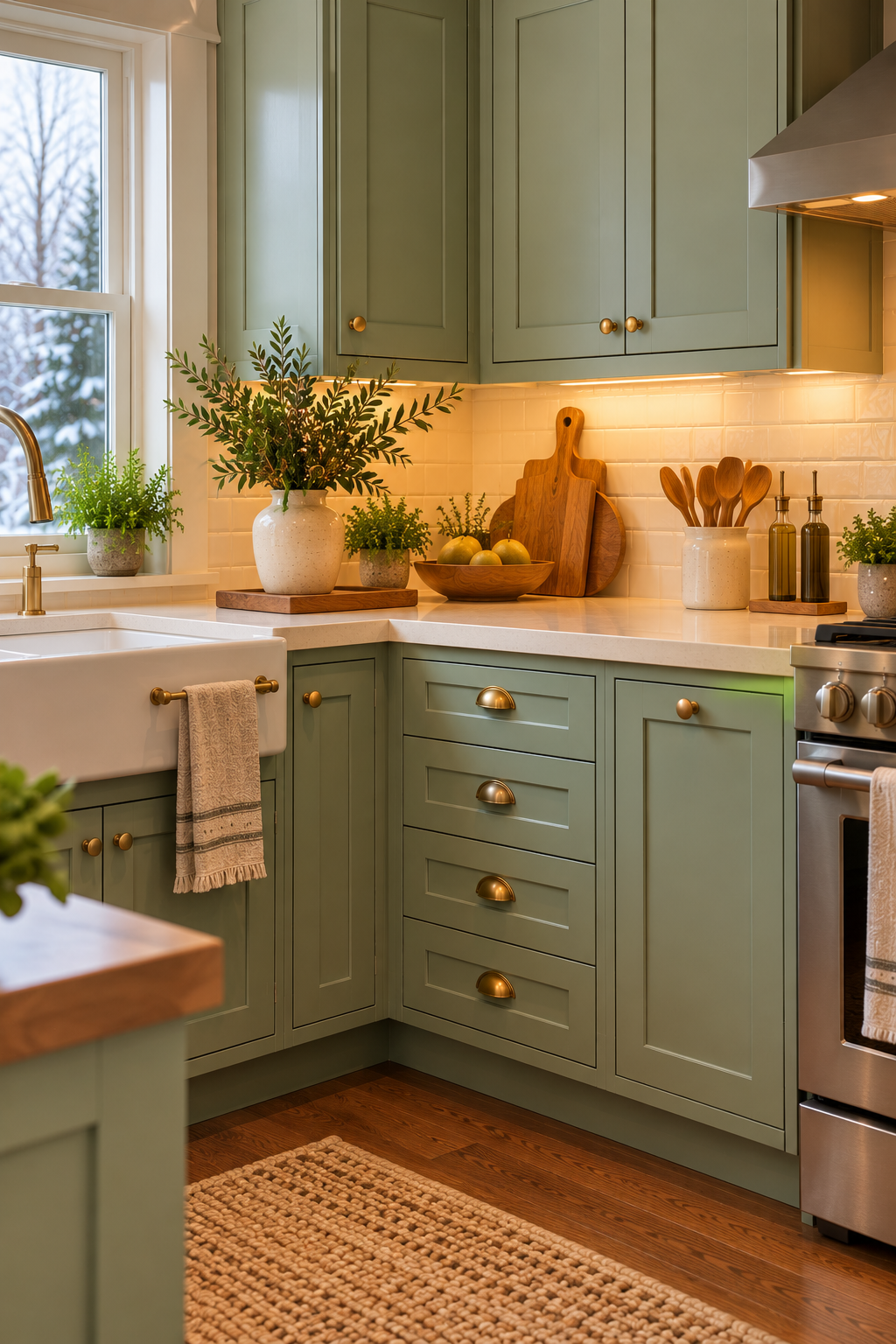
15 Mint Green Kitchen Ideas for a Fresh and Charming Space
Mint green can make a kitchen feel fresh, cheerful, and full of character without demanding a complete renovation. Softer than emerald and less earthy than olive, it brings color into the room while working with familiar materials such as wood, cream cabinetry, and ceramic tile.
The trick is choosing the right shade and giving it a balanced setting. A muted mint with a little gray or warmth can feel timeless, while an overly bright pastel may dominate the room. Natural wood, simple hardware, and warm neutral surfaces help the green feel intentional rather than sugary.
You can introduce mint through lower cabinets, an island, a backsplash, or even a few ceramic accessories. These 15 mint green kitchen ideas explore different ways to use the color in traditional, cottage, vintage, and contemporary spaces.
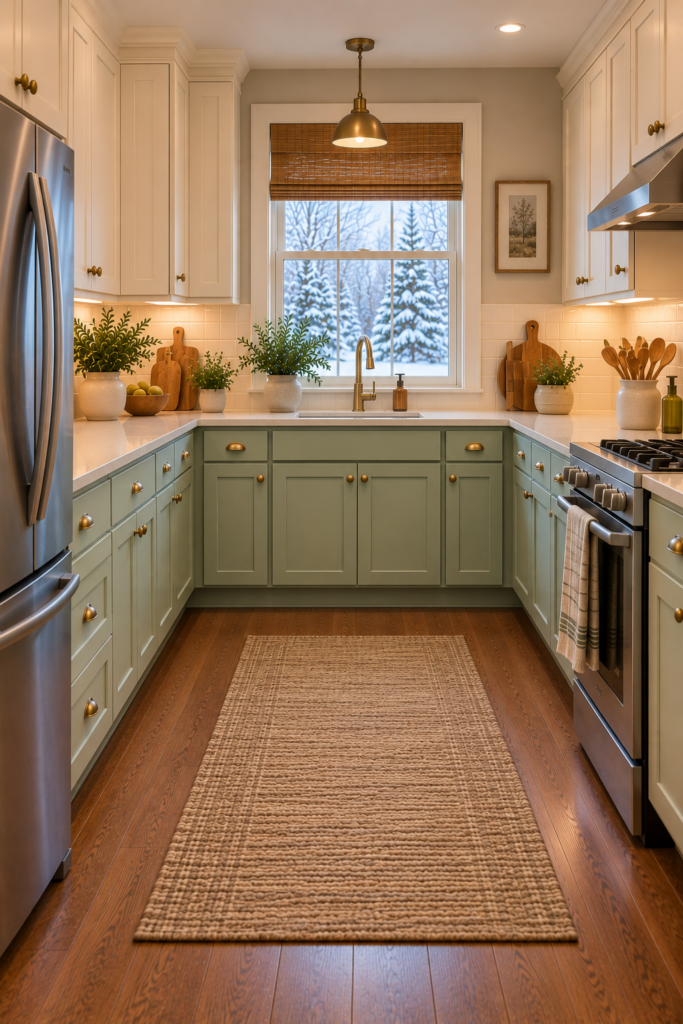
1. Paint Lower Cabinets Mint Green
Painting the lower cabinets mint green is a straightforward way to introduce color while keeping the upper half of the kitchen light.
Pair muted mint base cabinets with warm cream upper cabinets, light countertops, and medium-toned wood flooring. The contrast gives the room definition without making the cabinetry feel too heavy.
Choose a shade that works with your existing finishes. A mint with gray undertones may feel more subdued, while a yellow-leaning green can appear warmer beside oak or walnut.
If you’re updating existing cabinets, assess the current finish and follow the paint manufacturer’s instructions for cleaning, preparation, priming, and curing. Cabinet paint needs to withstand regular handling and cleaning.
Keep the backsplash relatively simple so the cabinet color remains the main feature. This approach is particularly useful in a compact kitchen where lighter upper surfaces can help preserve a sense of openness.
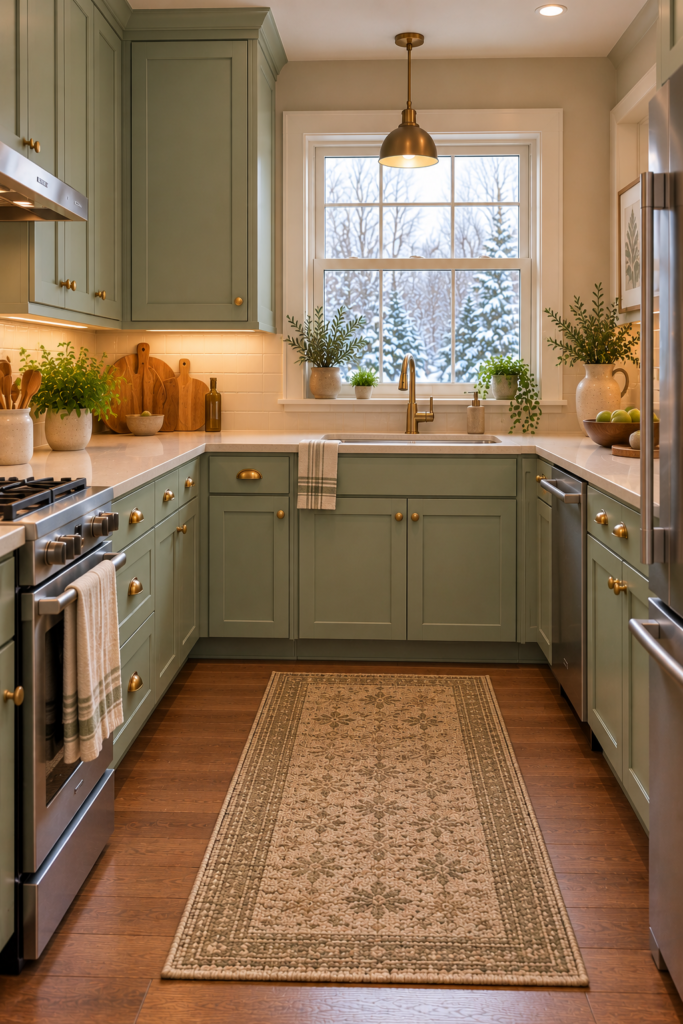
2. Try Full Mint Green Cabinetry
If you want a more immersive color statement, carry mint across both the upper and lower cabinets.
A muted, slightly gray-green shade can feel sophisticated when paired with warm cream walls, understated countertops, and natural wood flooring. The wood adds depth, while the neutral surfaces prevent the green from overwhelming the room.
Before committing to the entire kitchen, compare paint samples against the countertop, backsplash, and flooring. A shade that looks gentle on a small sample may appear much more prominent across a large area.
Lighting matters, too. In a bright kitchen, mint may look fresh and airy; under dimmer lighting, the same color may appear duller or more saturated.
Keep the cabinet profiles and hardware relatively simple. When the cabinetry provides most of the color, restrained details help the kitchen feel cohesive rather than overly decorated.
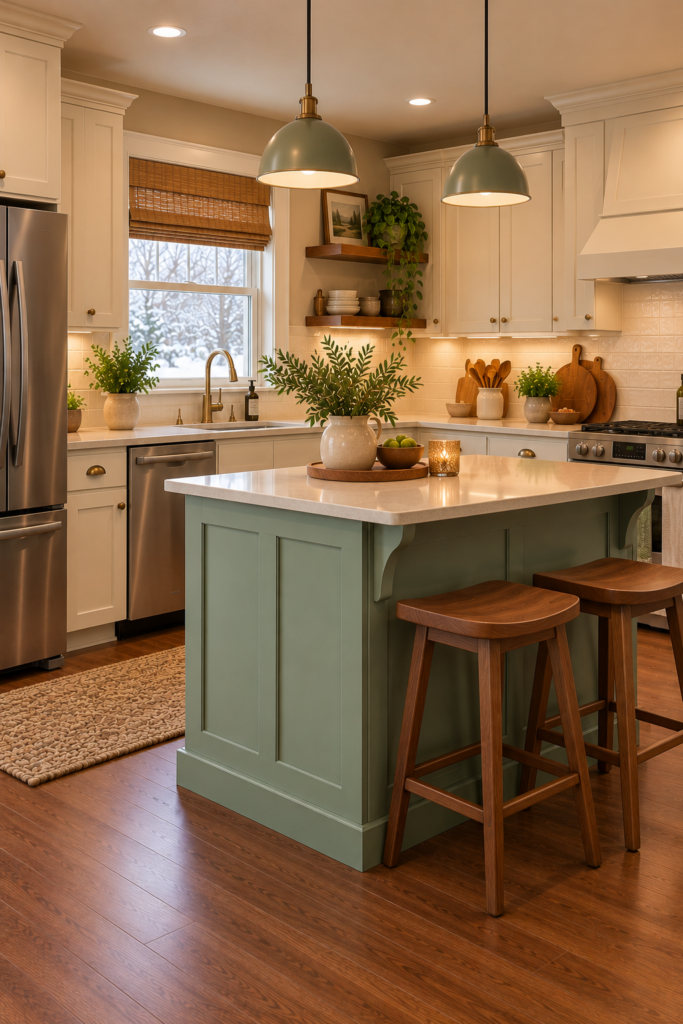
3. Add a Mint Green Kitchen Island
A mint green island introduces color in one defined area while leaving the perimeter cabinetry neutral.
Consider cream cabinets around the room, a mint island, a warm light countertop, and medium-oak or walnut stools. This arrangement creates a focal point without requiring every cabinet to be repainted.
Choose the island’s green according to the surrounding finishes. A soft gray-green works well with cooler stone-look surfaces, while a warmer mint can complement honey-toned wood.
If you’re repainting an existing island, check that the finish is suitable for the amount of handling and cleaning it receives.
Before changing the island or adding one, consider the kitchen’s actual circulation. Cabinets, drawers, appliance doors, and walkways should remain comfortably accessible.
For smaller kitchens, a compact island or freestanding worktable may offer the same color accent without taking up more space than the layout can support.
4. Pair Mint Green With Walnut
Walnut introduces rich brown tones that balance mint’s lighter, fresher appearance. Together, the colors create a kitchen that feels warm and grounded rather than overly pastel.
Use mint cabinetry with walnut shelves, a wood island, or walnut-look flooring. A warm cream backsplash can connect the two finishes without adding another strong color.
The wood doesn’t have to match the cabinetry exactly. Related brown tones can create a layered look, while slight variations in grain and finish keep the room from feeling too uniform.
When selecting finishes, compare the undertones side by side. Some walnut finishes lean reddish, while others appear more neutral or chocolate brown.
Keep decorative details restrained so the contrast between the green and wood remains the main feature. This combination works particularly well when you like color but want a kitchen that still feels mature and timeless.
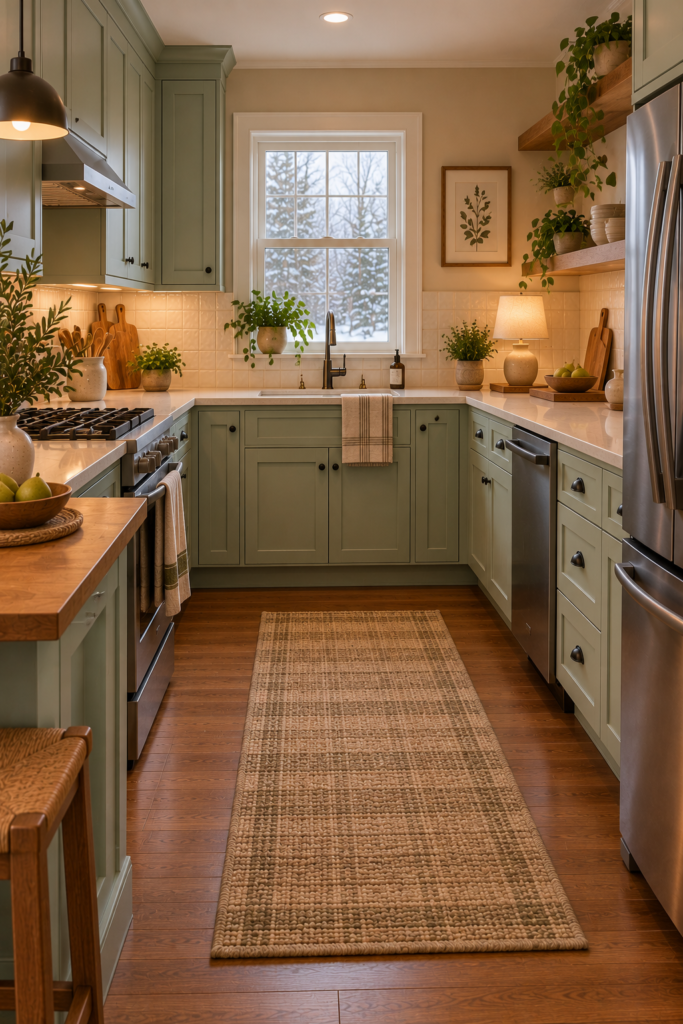
5. Use a Mint Green Backsplash
A mint green backsplash is a useful option when you want to introduce color without repainting the cabinets.
Pair ceramic tile in a muted mint shade with warm cream cabinetry, light countertops, and wood accents. Subtle glaze variation can add texture without requiring an elaborate pattern.
Choose the tile format according to the size of the kitchen and the appearance of the existing cabinet fronts. Simple rectangular tiles create a quiet backdrop, while smaller formats introduce more detail.
Grout color also influences the final look. A close match creates a softer surface, while contrasting grout emphasizes the tile pattern.
Before purchasing, check that the tile is suitable for the intended location and consider how easily it can be cleaned near the sink and cooking area.
If you’re renting, investigate removable backsplash options that are appropriate for the surface and permitted by your lease. Don’t assume every peel-and-stick product can be removed without damaging the finish underneath.
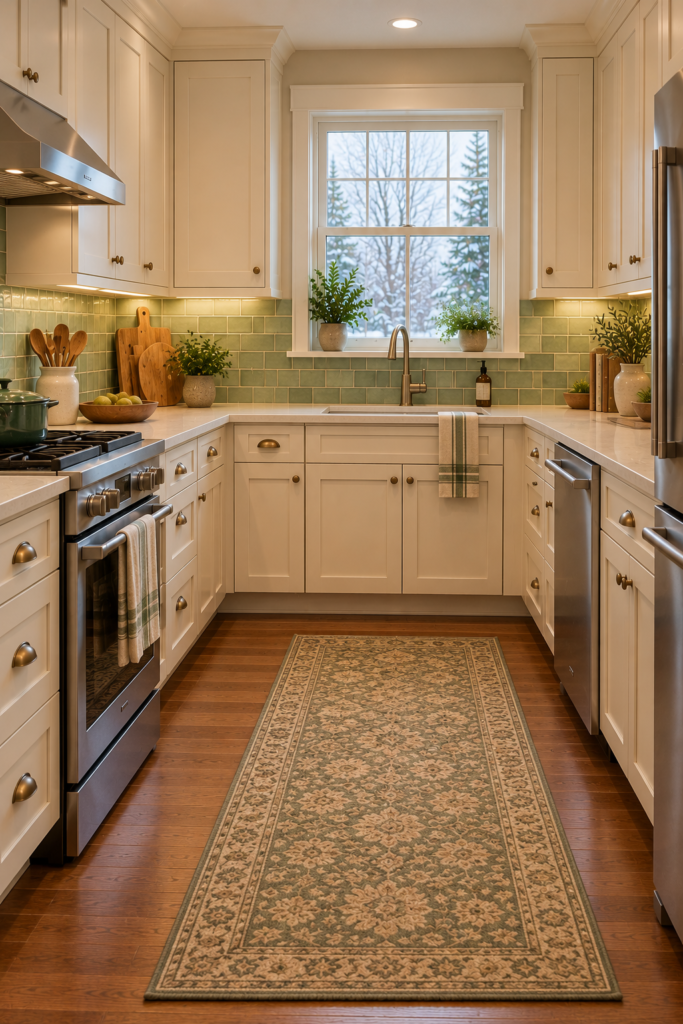
6. Create a Mint Green Cottage Kitchen
Mint green works naturally with cottage-inspired details because it pairs well with warm wood, simple ceramics, and delicate patterns.
Try mint lower cabinets, cream upper cabinets, and a small floral café curtain. Add a few cream dishes or a ceramic pitcher, then let the cabinetry and natural materials establish the style.
A light floral print can soften the window without making the room feel overly decorated. Choose a fabric that can be washed and keep it clear of cooking heat, repeated sink splashes, and window hardware.
Wood flooring or a wooden work surface can bring warmth to the palette. If the kitchen already contains patterned tile, use a simpler curtain or fewer decorative accessories.
The goal is a comfortable cottage atmosphere rather than a collection of unrelated vintage objects. Choose pieces that complement one another and still serve a practical purpose.
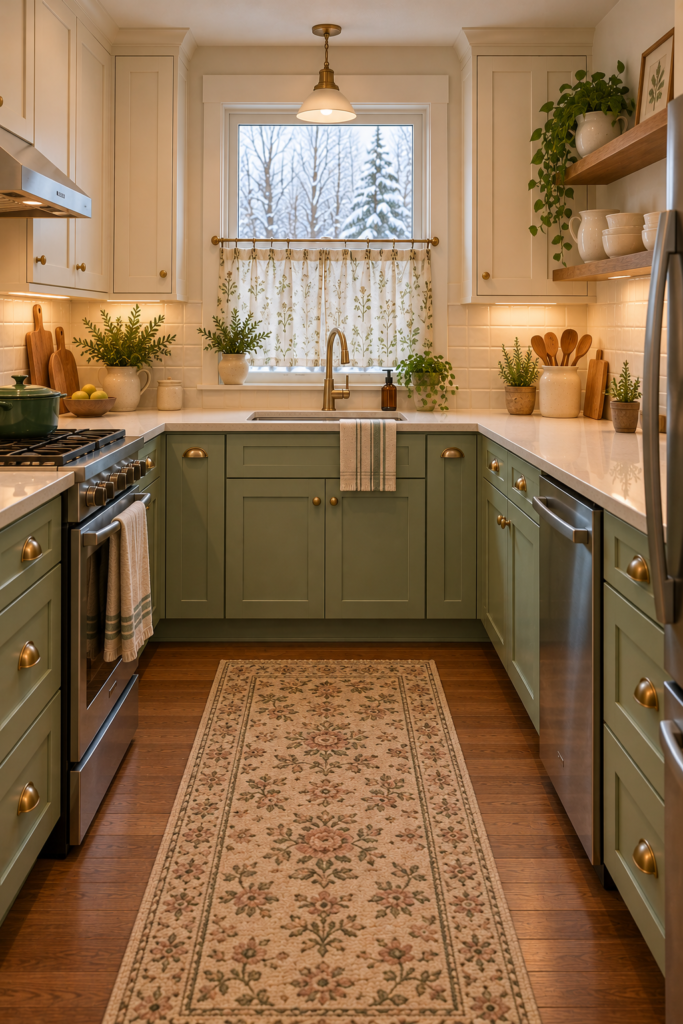
7. Add Aged Brass Hardware
Aged-brass hardware introduces warmth and definition against mint green cabinets.
Simple knobs and pulls work well with both shaker-style and more contemporary cabinet fronts. Their warm metallic finish complements walnut, cream surfaces, and muted green without requiring additional decorative colors.
Brass finishes vary considerably, from softly brushed gold to darker antique-looking tones. Compare samples with the actual cabinet color before replacing all the hardware.
Consider how the handles feel in everyday use. Drawer pulls should be comfortable to grip, and the finish should suit the amount of cleaning and handling the kitchen receives.
You don’t need matching brass on every fixture. A coordinated selection of cabinet hardware and perhaps one related lighting detail is often enough.
Keep the surrounding surfaces relatively simple so the combination of mint and warm metal remains clear and balanced.
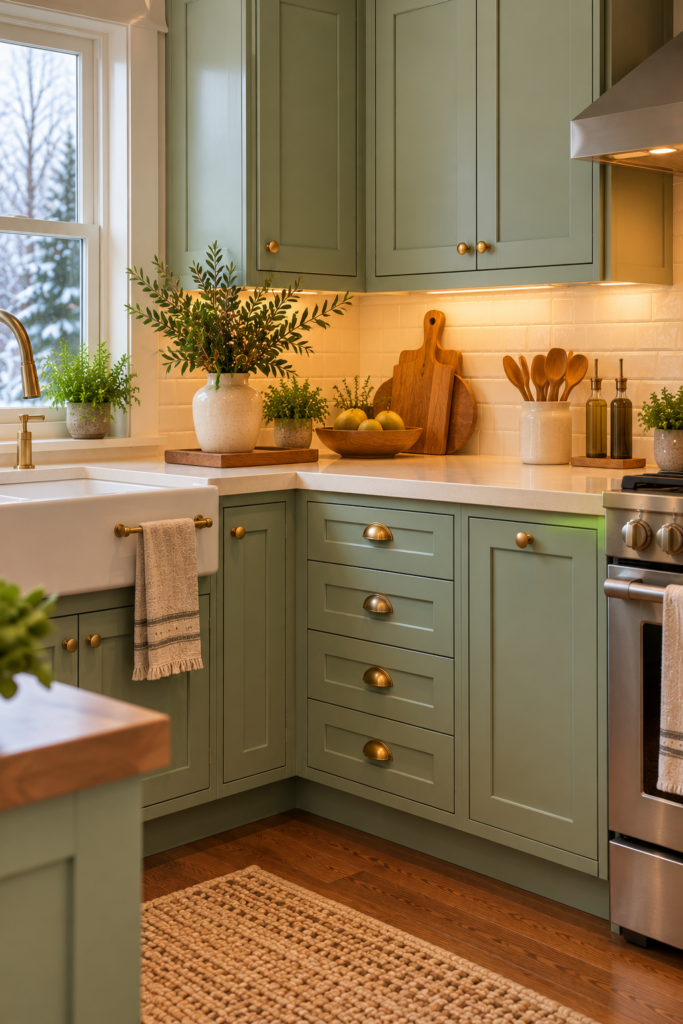
8. Pair Mint Green With Matte Black
Matte black hardware gives mint green cabinetry a more contemporary edge.
Black knobs and pulls create a defined contrast against pale green, while a compatible faucet or light fixture can connect the accents across the kitchen.
Pair the black details with warm cream countertops and natural wood to keep the room from feeling too stark. A wood floor or walnut shelf can soften the contrast.
Before choosing a black faucet or other fixture, consider the existing plumbing arrangement and the practical requirements of installation. Decorative coordination shouldn’t require unnecessary changes to working fixtures.
Use black selectively if the kitchen is small or has limited daylight. A few well-placed details can provide enough contrast without making the room feel visually heavy.
This approach is particularly effective when you like the freshness of mint but prefer clean lines over a traditional cottage look.
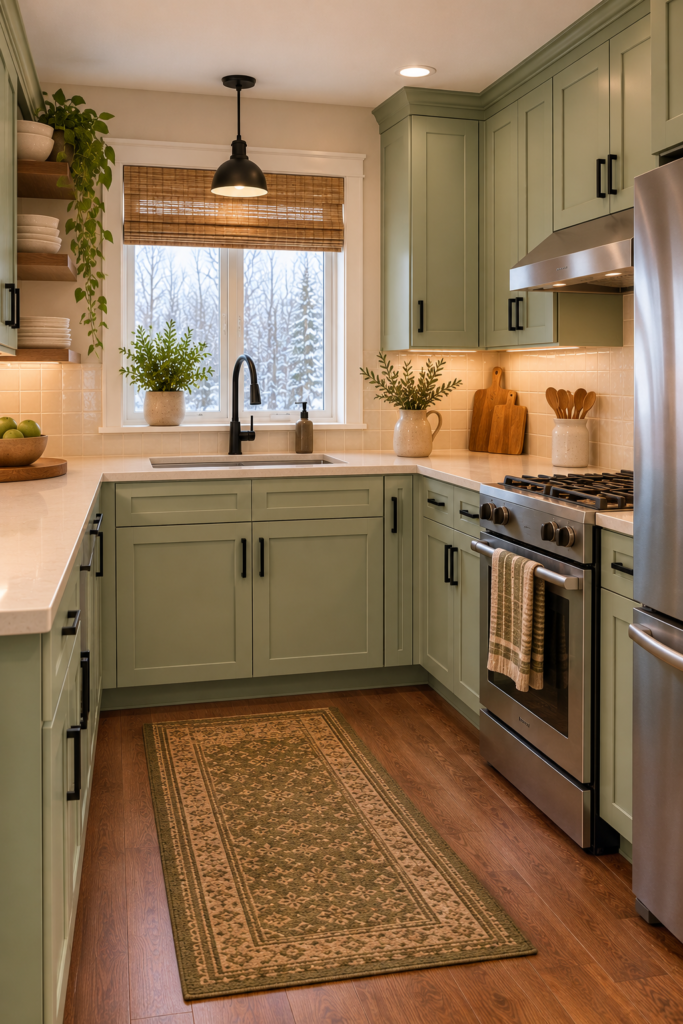
9. Create a Vintage Mint Kitchen
Mint green has a strong association with vintage interiors, making it a natural choice for a kitchen with retro-inspired details.
Pair mint cabinets with warm cream square backsplash tile, wood flooring, and simple lighting with a classic silhouette. A few vintage-style accessories can add personality without turning the entire kitchen into a period set.
Choose one or two nostalgic elements, such as a traditional wall clock or a simple ceramic canister. Keep everyday appliances and storage practical for the way you use the room.
The shade of mint matters. A muted green can evoke vintage character while still working with contemporary finishes, whereas a brighter pastel creates a more pronounced retro statement.
If you already have patterned flooring or decorative tile, keep the accessories restrained. The strongest vintage kitchens balance character with enough plain surfaces to let the details stand out.
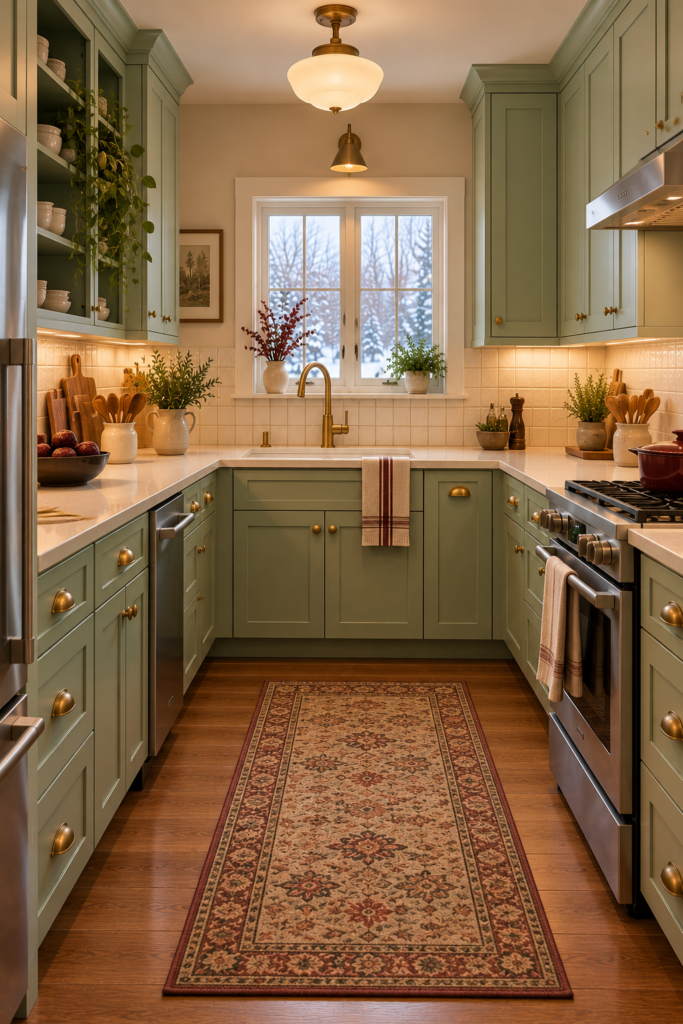
10. Use Mint in a Small Kitchen
Mint green can add personality to a small kitchen without requiring a bold, dark color across every surface.
Choose a light, muted shade for lower cabinets or one defined section, then pair it with cream counters and simple wall finishes. Natural wood introduces warmth without adding another dominant color.
Good lighting helps the cabinetry and work surfaces remain clear and inviting. Under-cabinet task lighting can be particularly useful where upper cabinets cast shadows across the countertop.
Avoid introducing several competing patterns at once. If the mint cabinets provide the main decorative feature, choose a simple backsplash and understated accessories.
Consider the existing layout before adding an island, shelving, or furniture. A compact kitchen benefits more from comfortable circulation and useful storage than from extra objects that crowd the work area.
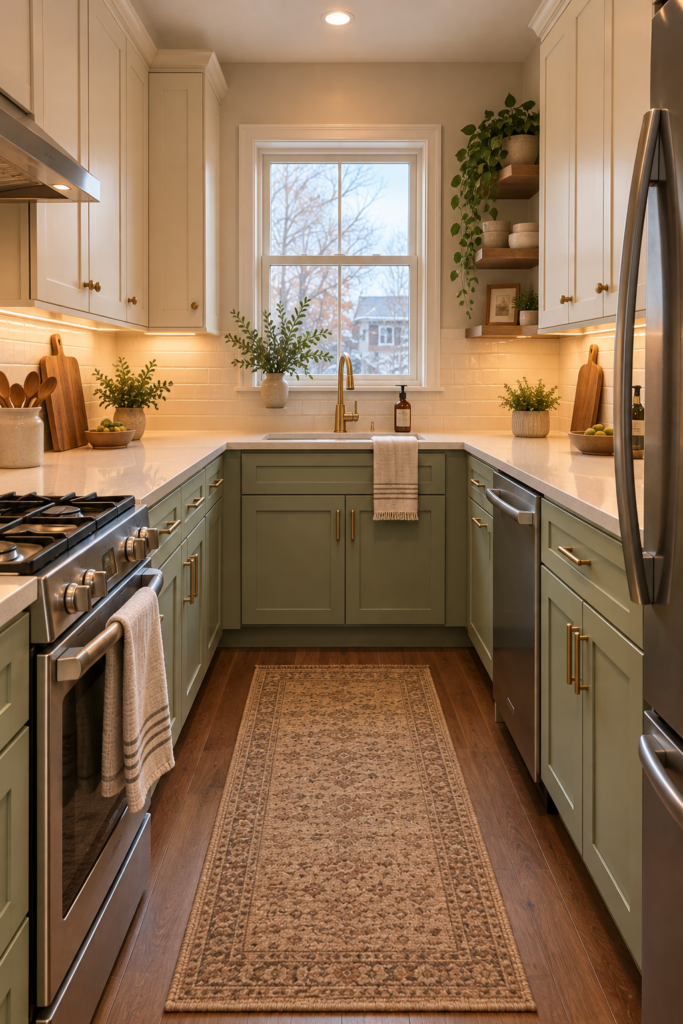
11. Add Mint Green Open Shelving Accents
If repainting cabinets feels like too much commitment, introduce mint through the objects displayed on open shelves.
Walnut shelves with cream dishes, a few mint ceramics, and one small plant create a softer color story without changing the permanent finishes.
Vary the shapes and heights of the objects, but leave enough space to remove dishes and clean the shelves. A small collection usually looks more intentional than filling every available inch.
Before installing new shelves, confirm the wall construction and use suitable supports for the intended load. Store heavier dishes on lower shelves and avoid placing fragile objects near the edge.
For more ideas on balancing display and practical storage, explore these kitchen shelves decor ideas for beautiful open storage.
This is one of the easiest ways to test whether mint works with the rest of your kitchen before committing to a larger color change.
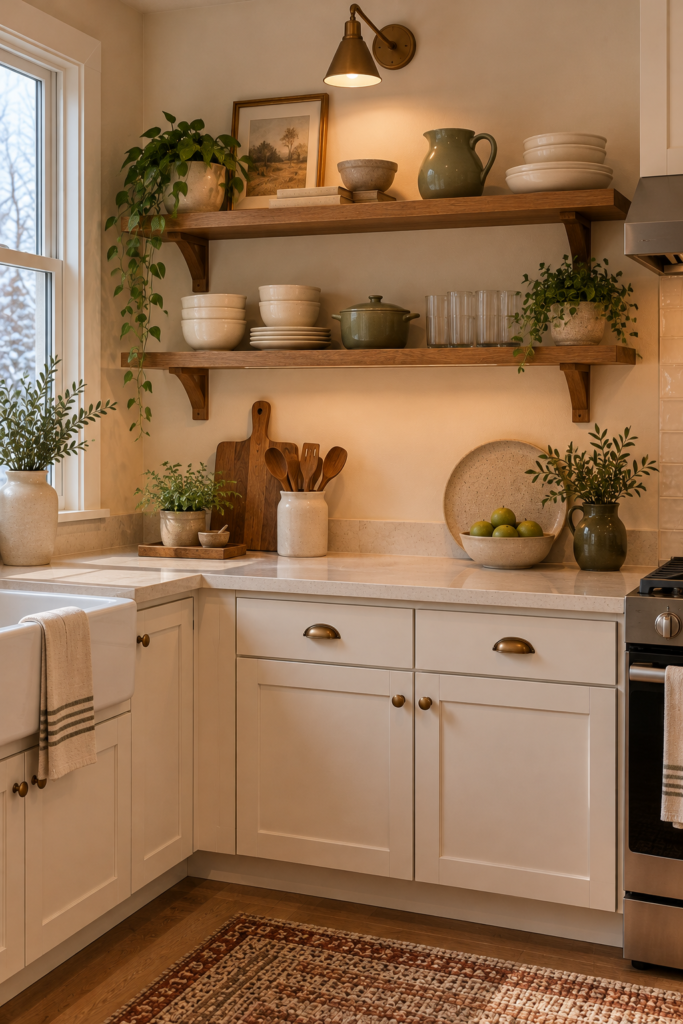
12. Pair Mint With Mushroom Taupe
Mushroom taupe offers a warmer, earthier alternative to a purely white backdrop.
Pair mint cabinetry with mushroom-colored walls or backsplash tile, then add walnut or medium-oak accents. The neutral tone softens the green and helps the kitchen feel layered rather than overly pastel.
Choose the taupe carefully. Some shades lean pink, while others have stronger gray or brown undertones. Compare samples with the mint paint and wood finish under the room’s usual lighting.
This combination works well when you want color without a sharp contrast between every surface.
Keep hardware simple and avoid introducing several additional accent colors. The relationship between mint, taupe, and wood can provide plenty of visual interest on its own.
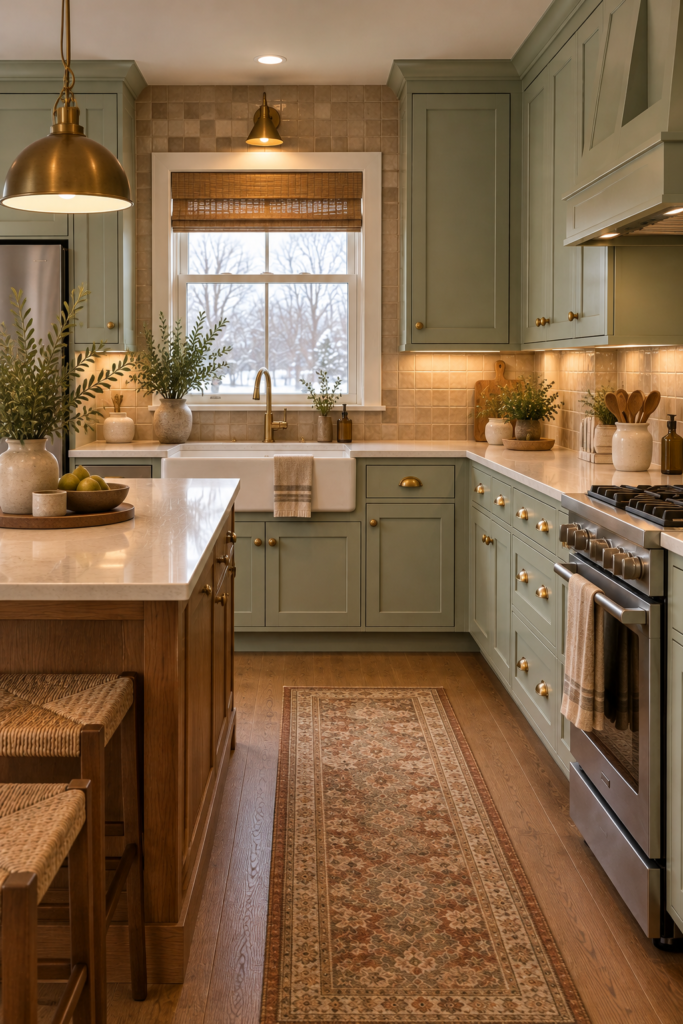
13. Add Dusty Burgundy Accents
Dusty burgundy creates an unexpected contrast with mint green. Used sparingly, it can make the green feel more considered while adding depth to an otherwise light palette.
Introduce burgundy through a ceramic bowl, a low-profile runner, or a small Roman shade. Keep cream and natural wood as connecting elements between the two colors.
Consider the size of the accent. A large burgundy surface may compete with mint cabinetry, while a few smaller details can create contrast without changing the overall character of the kitchen.
If you choose a runner, make sure it lies flat, suits the floor surface, and remains clear of appliance doors and walking routes. Window treatments should stay away from cooking heat and shouldn’t interfere with the window or sink.
The goal is to use burgundy as a supporting color, not allow it to become the dominant feature.
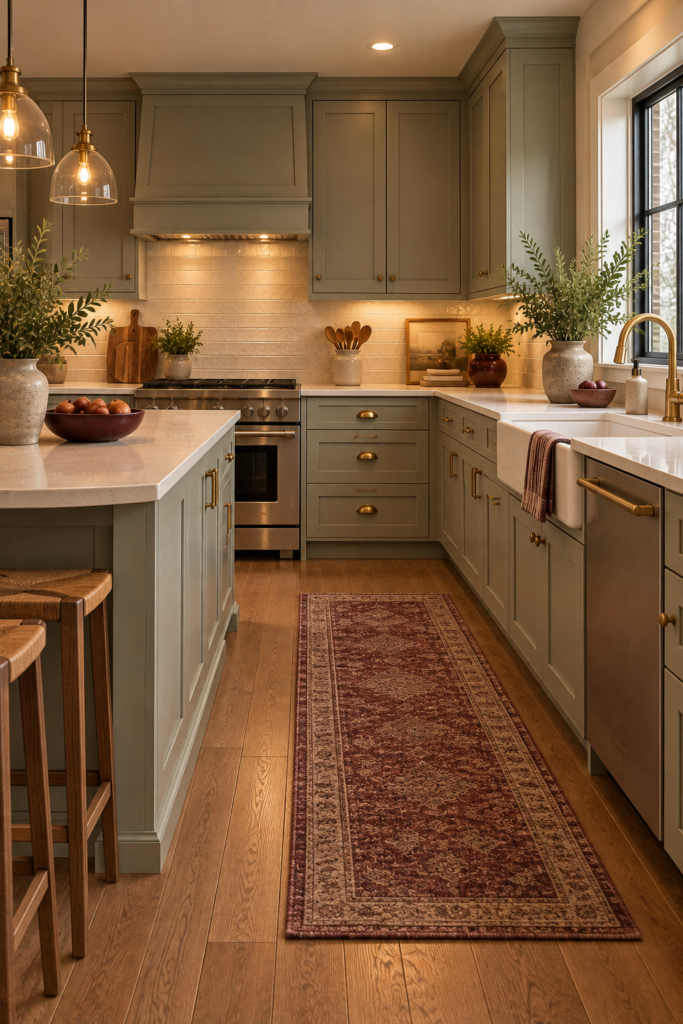
14. Create a Modern Mint Green Kitchen
For a contemporary look, combine muted mint with flat-panel cabinetry, simple hardware, and uncluttered surfaces.
Walnut tall cabinets can introduce warmth, while cream counters and a restrained backsplash provide a light background. Matte black hardware adds definition without requiring elaborate decoration.
Choose a mint with gray undertones if you prefer a more subdued appearance. Compare the cabinet color with the wood and countertop before making a final selection.
Keep storage practical and avoid filling every surface with accessories. The clean lines are part of what makes the modern interpretation work.
For a related approach that combines natural materials with streamlined cabinetry, see these Craftsman kitchen ideas full of warm wood and character.
This style is a good fit if you want a colorful kitchen that feels contemporary rather than overtly vintage or cottage-inspired.
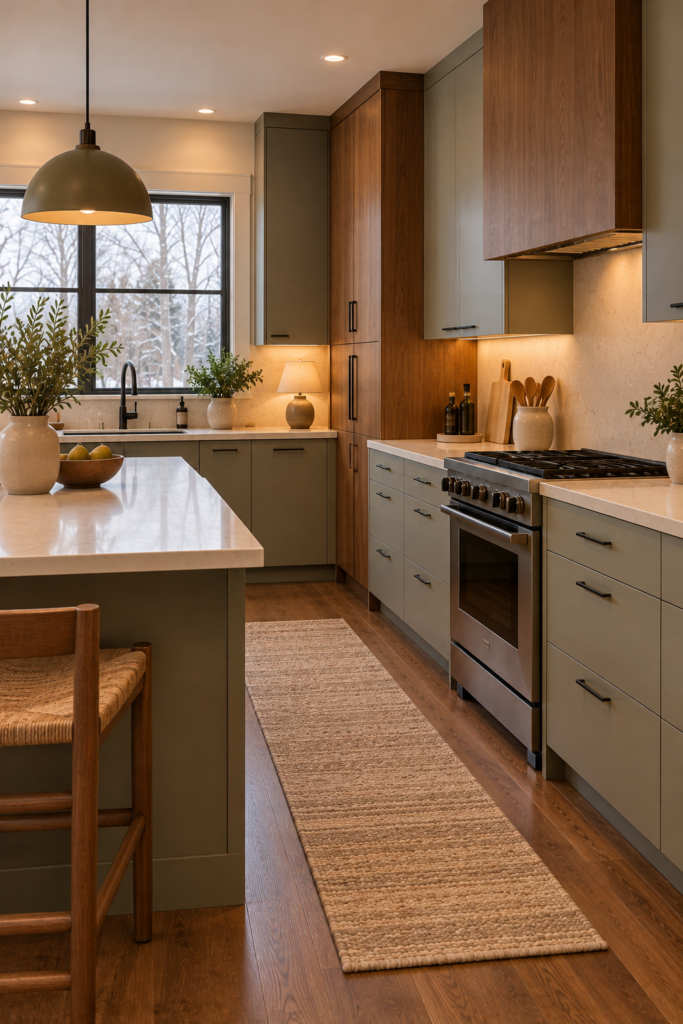
15. Layer a Complete Mint Green Kitchen Palette
A fully layered mint kitchen brings together the colors and materials that work best with the green.
Start with muted mint cabinetry and warm cream surfaces. Add walnut accents, mushroom-colored tile, aged-brass hardware, and perhaps a small touch of dusty burgundy.
Warm lighting can help the wood and green feel connected after sunset. Use suitable task lighting over work surfaces, and keep counters clear enough for everyday cooking.
The balance between materials matters more than the number of decorative elements. Choose one main green, one dominant wood finish, and a small selection of supporting colors.
Compare samples together before making permanent changes. A green that looks appealing alone may appear too cool or too bright beside a particular countertop or floor.
The finished kitchen should feel fresh and welcoming because the finishes complement one another, not because every possible color has been included.
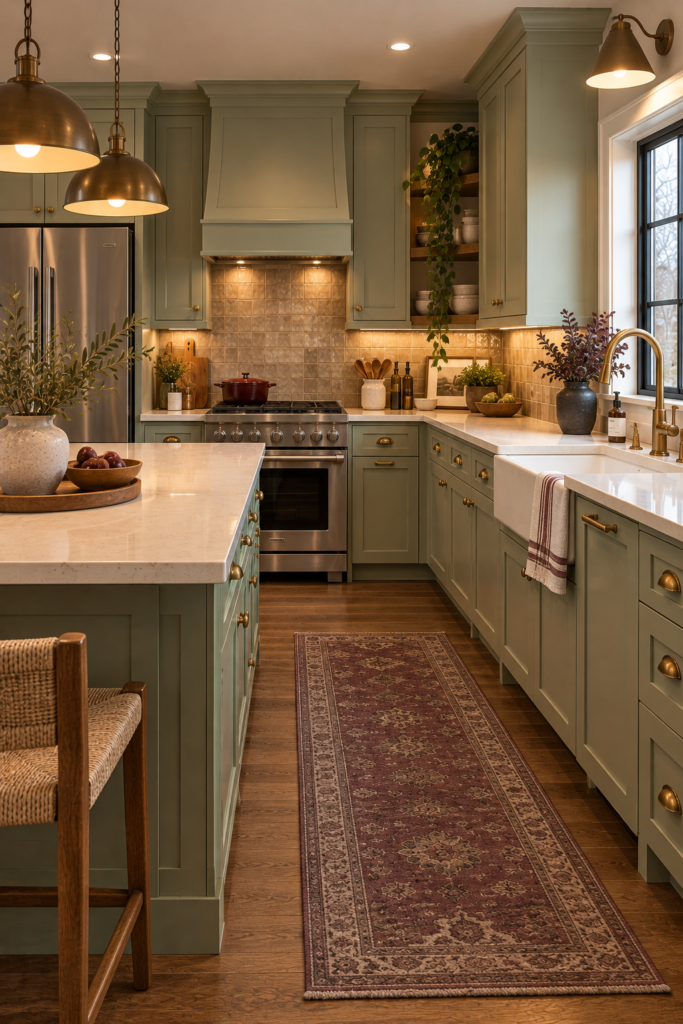
What Colors Go With Mint Green in a Kitchen?
Mint green pairs well with warm cream, medium walnut, mushroom taupe, aged brass, matte black, and dusty burgundy. Each creates a different effect: cream keeps the palette light, wood adds warmth, and darker accents provide contrast.
Choose colors according to the undertones of your cabinetry and existing finishes. A gray-green mint may work especially well with cooler neutrals, while a warmer mint can complement honey-toned wood.
Compare samples in the kitchen’s actual lighting before committing to paint, tile, or hardware.
Is Mint Green Good for a Small Kitchen?
Yes. A light, muted mint can introduce color without making a compact kitchen feel visually crowded.
Consider using mint on lower cabinets or a single island while keeping upper cabinets and countertops light. Simple patterns and uncluttered work surfaces can help the room feel more open.
Good task lighting and comfortable circulation are still important. Color can change the visual impression of a space, but it doesn’t replace practical storage or a well-planned layout.
How to Make Mint Green Cabinets Look Sophisticated
Choose a muted shade rather than a highly saturated pastel, then balance it with natural wood and warm neutral surfaces.
Keep the hardware simple, limit competing patterns, and use decorative accessories selectively. The cabinetry should remain the main color statement.
Before painting, assess the existing cabinet finish and follow the product instructions for preparation, application, ventilation, drying, and curing.
Mint Green Kitchen Safety and Practicality
Use coatings suitable for kitchen cabinetry and follow the manufacturer’s instructions for surface preparation, ventilation, drying, and curing. Keep textiles away from significant cooking heat and ensure runners lie flat without obstructing appliance doors or walkways.
Secure shelves with supports appropriate for the wall construction and intended load. Maintain required appliance clearances and keep windows, outlets, switches, vents, doors, and safety equipment accessible.
Protect moisture-sensitive materials from sink splashes and steam. Electrical, plumbing, gas, structural, and ventilation work should be assessed and completed by appropriately qualified professionals.
Final Thoughts
Mint green works best in a kitchen when the surrounding materials give it warmth and balance. Cream surfaces, natural wood, simple hardware, and a few carefully chosen accents can make the color feel fresh without becoming overly sweet.
You might start with lower cabinets, a mint island, a backsplash, or a few ceramic pieces on open shelving. Choose the approach that fits your kitchen’s existing finishes, lighting, and storage needs.
With a thoughtful palette and practical details, mint green can bring character to a kitchen while keeping the room comfortable for everyday use.
