
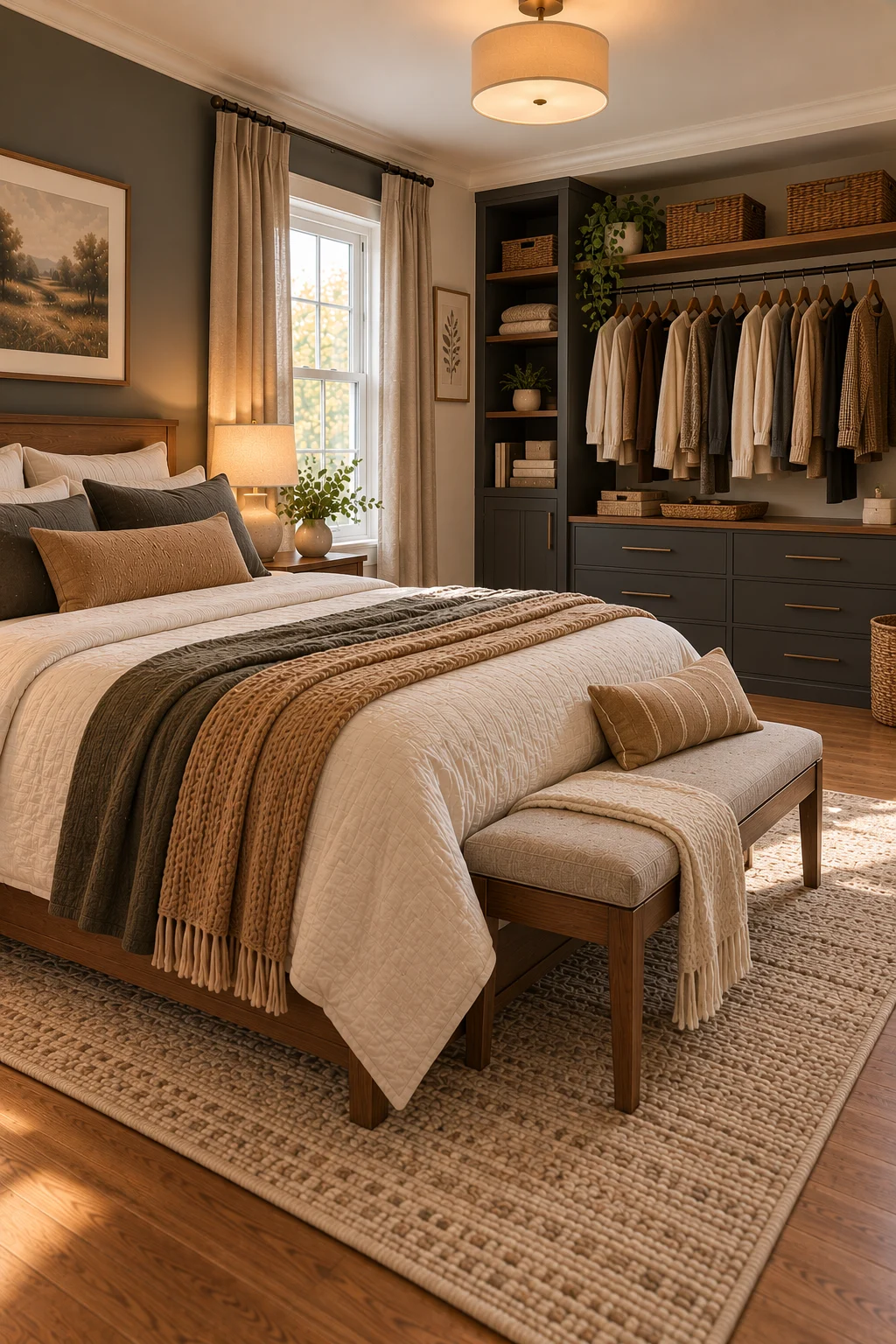
15 Loft Style Bedroom Ideas for a Cool and Character-Filled Space
Loft style bedrooms have a distinctive appeal. They combine the raw character of industrial spaces with the warmth and comfort of a personal retreat. Think exposed-brick-look walls, black metal furniture, natural wood, textured bedding, and lighting that feels both practical and atmospheric.
While traditional loft apartments often feature tall ceilings and expansive windows, you don’t need a converted warehouse to achieve the aesthetic. A standard bedroom can capture the same character through thoughtful materials, restrained colors, and furniture with clean, uncomplicated lines.
The secret is balance. Too many hard surfaces can make a bedroom feel cold, while excessive industrial decorations can make the design look forced. Cream bedding, warm walnut furniture, and soft textiles help create a space that feels inviting rather than unfinished.
Whether you’re decorating a compact bedroom or refreshing a larger space, these 15 loft style bedroom ideas offer practical ways to introduce industrial character without sacrificing everyday comfort.
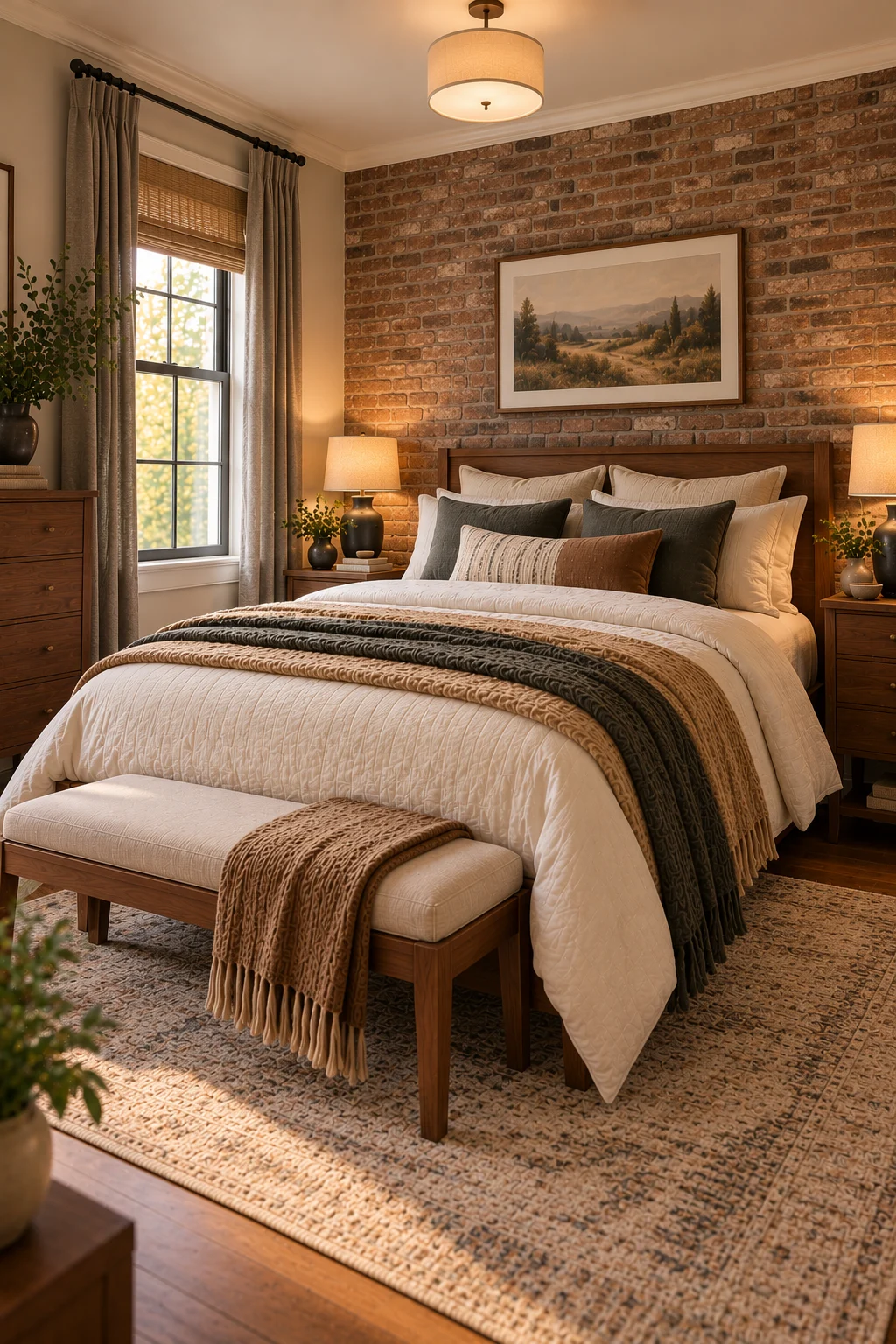
1. Exposed-Brick-Look Accent Wall
An exposed-brick-look accent wall is one of the easiest ways to introduce loft character into an ordinary bedroom. The textured appearance adds architectural interest without requiring an actual brick building.
Choose a brick-effect wallpaper, lightweight decorative panels, or another interior-rated finish in a muted red-brown, weathered gray, or warm neutral tone.
Use the treatment on one wall rather than covering the entire room. A wall behind the bed or dresser can provide a strong focal point while allowing the other surfaces to remain simple.
Pair the brick texture with cream bedding, walnut furniture, and a few black metal accents. These softer materials prevent the industrial elements from overwhelming the room.
For a bedroom with a standard eight-foot ceiling, a single accent wall is usually more convincing than adding multiple imitation warehouse features.
Practical tip: Check that decorative panels are appropriate for interior bedroom use and follow the manufacturer’s installation instructions. Avoid covering outlets, vents, or other functional wall features.
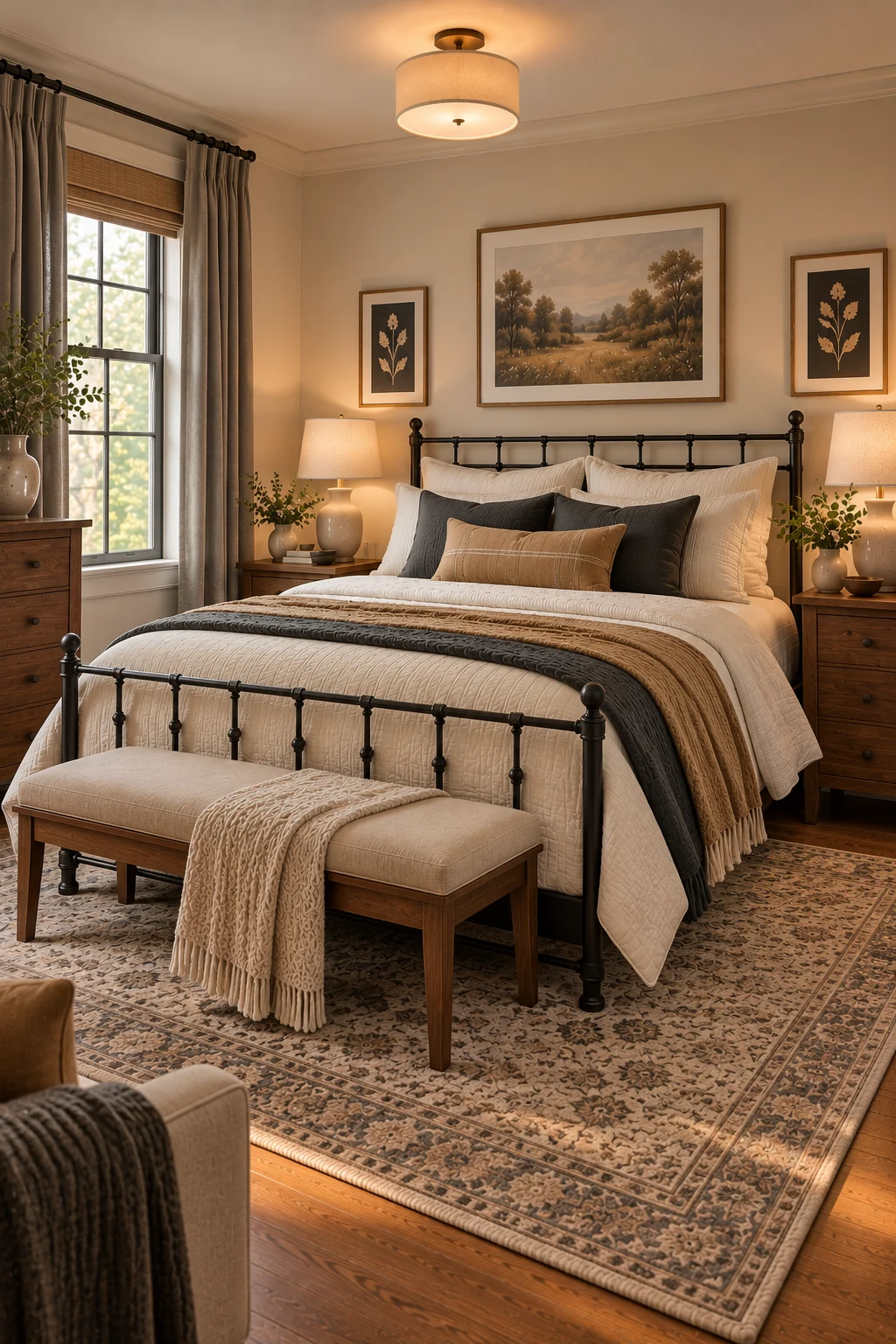
2. Black Metal Bed With Cream Bedding
A black metal bed frame introduces industrial character through its clean lines and understated finish.
Choose a simple design with a low or medium-height headboard. Slim metal rails and an uncomplicated silhouette create a loft-inspired appearance without making the bed feel heavy.
Balance the dark frame with cream cotton or linen bedding. An ivory duvet, mushroom-colored pillows, and a camel throw soften the contrast.
Warm wood nightstands work particularly well beside a black metal bed because they introduce natural texture.
Keep surrounding decorations restrained. A framed abstract print or simple bedside lamp can provide enough visual interest.
Styling tip: Repeat the black finish in one or two nearby elements, such as a lamp or picture frame. This helps the bed feel connected to the room without turning every accessory into an industrial statement.
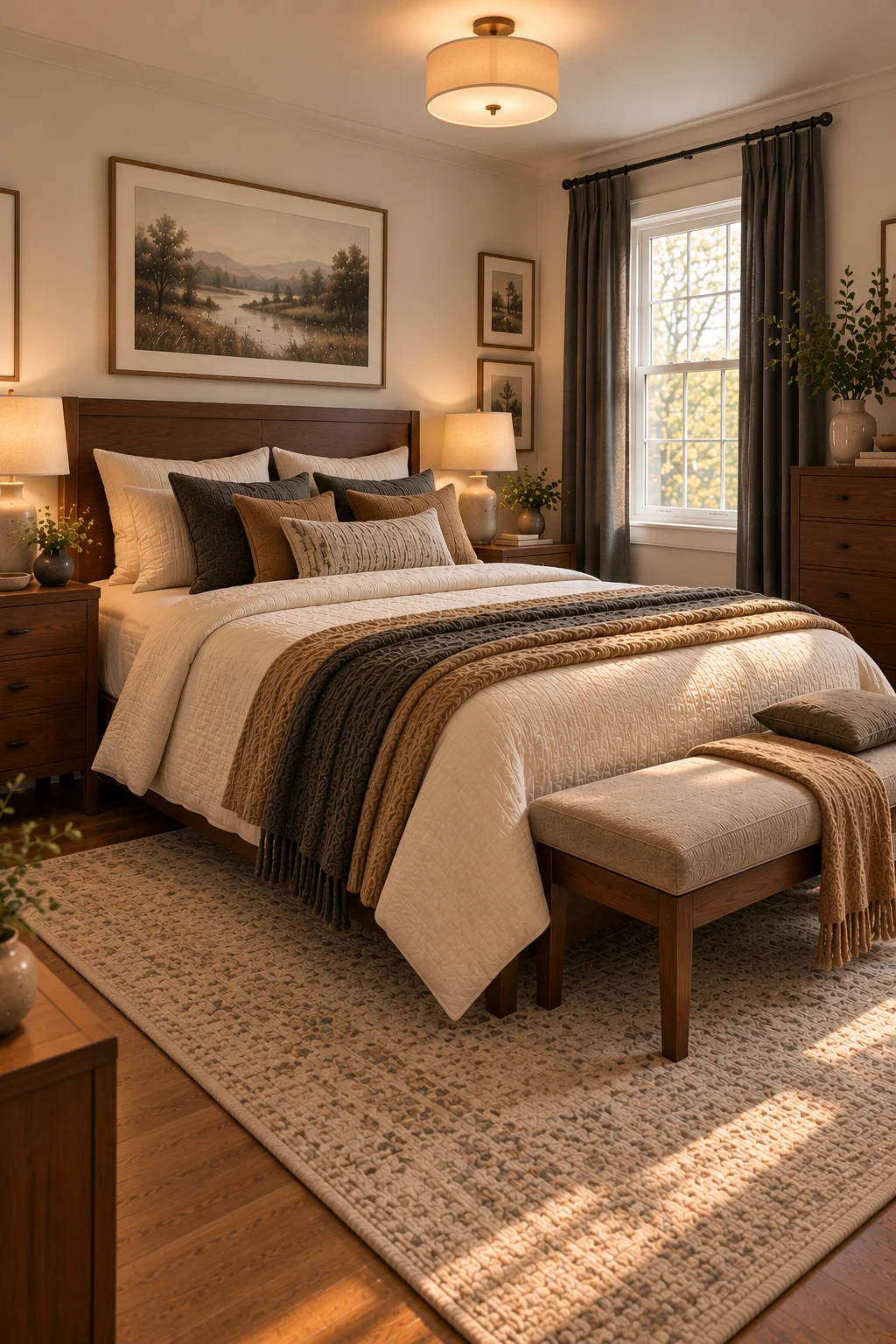
3. Walnut Furniture Against Warm White Walls
Walnut furniture adds warmth and depth to a loft style bedroom, especially when paired with warm white walls.
Choose furniture with visible wood grain and straightforward shapes. A low walnut dresser, rectangular nightstand, or simple bed frame can establish the room’s character.
Warm white walls provide a clean backdrop that allows the furniture’s natural finish to stand out.
Introduce charcoal through small accessories, such as a metal lamp or framed artwork, rather than using dark colors across every surface.
Complete the arrangement with cream bedding and a soft gray rug for a balanced combination of industrial simplicity and bedroom comfort.
Design tip: You don’t need every wooden piece to match perfectly. Choose finishes with compatible warm undertones, and avoid combining too many unrelated wood colors in a compact room.
4. Simple Industrial Pendant Lighting
Industrial pendant lighting can add architectural character while keeping bedside surfaces free for everyday essentials.
Look for a fixture with a simple metal shade, matte black finish, or understated warehouse-inspired shape.
In a standard-height bedroom, scale matters. Choose a compact pendant that fits the room rather than an oversized fixture designed for a tall commercial space.
A pendant can work near a bedside area or as a central ceiling fixture, depending on the layout and available clearance.
Pair dark metal lighting with cream walls and walnut furniture to prevent the arrangement from feeling overly stark.
Use warm-white LED bulbs to create a softer evening atmosphere.
Installation tip: Confirm the fixture’s dimensions and required clearances before purchasing. Hardwired lighting should be installed according to applicable electrical requirements, and hanging fixtures must not interfere with movement around the bed.
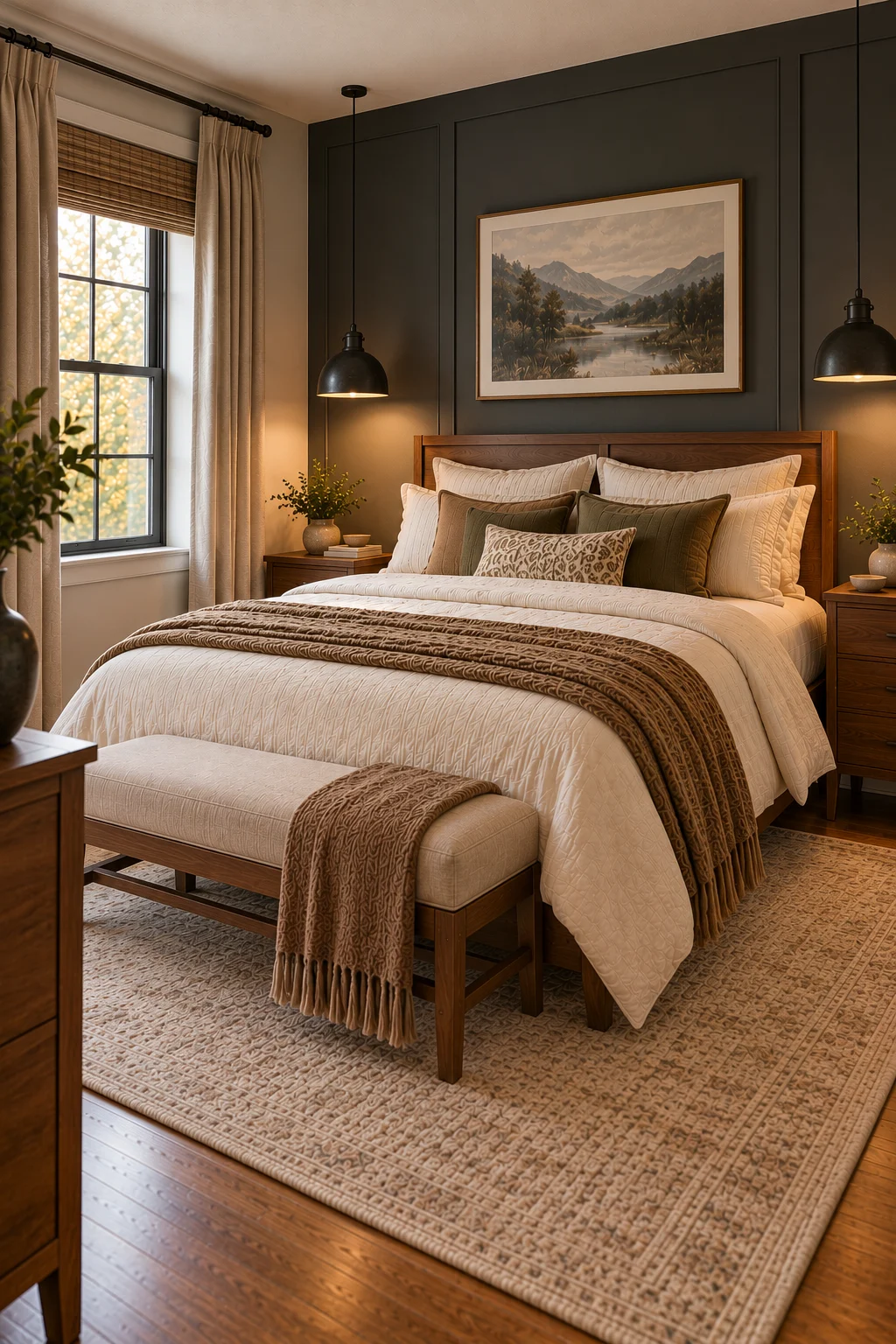
5. Muted Charcoal Feature Wall
A muted charcoal feature wall creates a dramatic backdrop without requiring brick, concrete, or other textured materials.
Choose a charcoal paint with a warm gray undertone rather than a flat, intense black. The softer shade provides depth while remaining versatile.
Apply the color to the wall behind the bed or another clear focal wall.
Balance the dark surface with cream bedding, a walnut headboard, and camel-colored textiles.
A simple framed print or a pair of compact bedside lamps can complete the look without competing with the wall color.
For smaller bedrooms, keep the remaining walls warm white or light greige to preserve brightness.
Paint tip: Test several charcoal samples in both daylight and evening light. Some shades develop blue undertones, while others appear brown or nearly black depending on the room’s lighting.
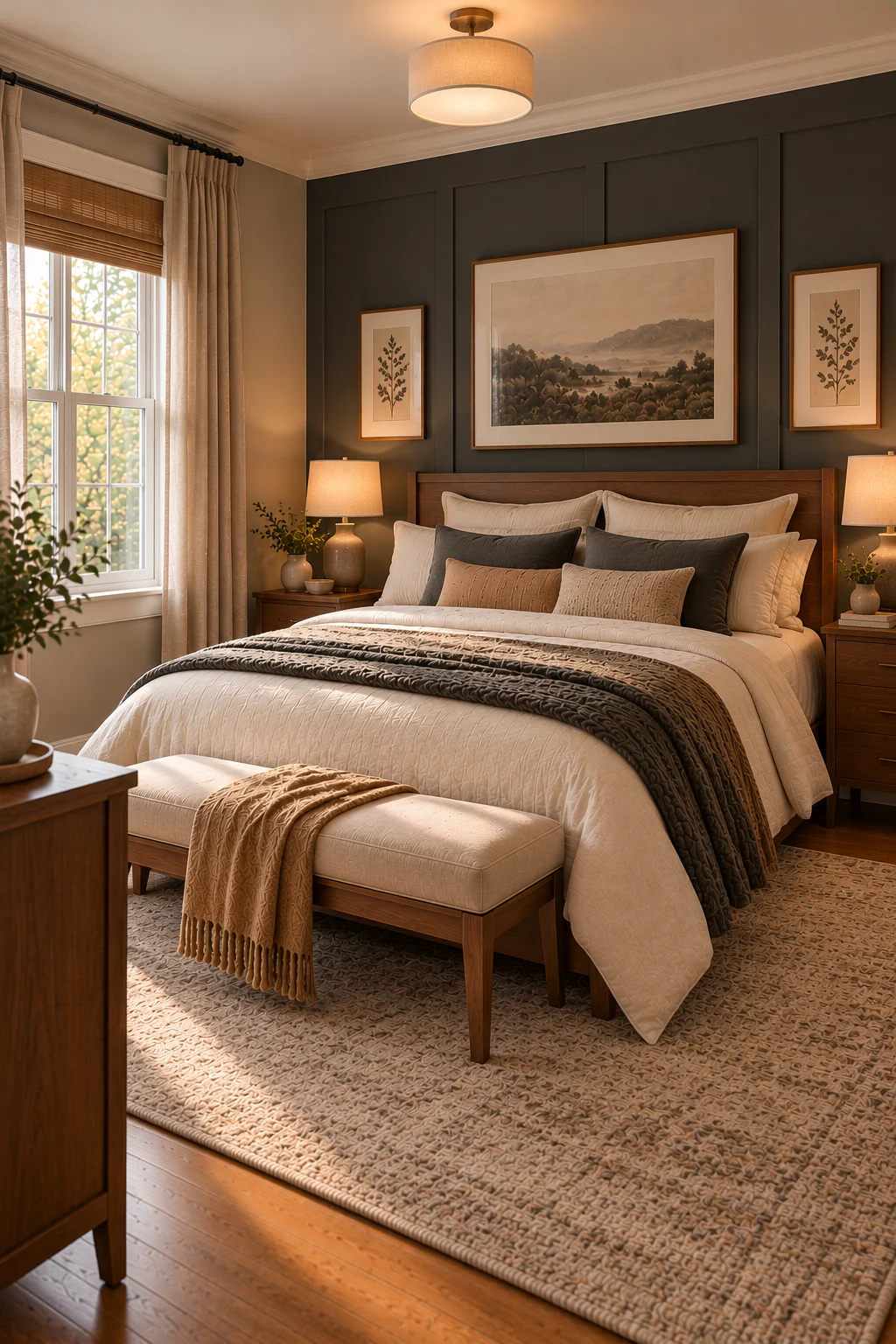
6. Reclaimed-Wood-Look Headboard
A reclaimed-wood-look headboard introduces rustic texture that pairs naturally with industrial materials.
Choose a headboard with a weathered walnut, oak, or warm brown finish. Subtle variations in the wood grain give the piece character without making it look overly distressed.
Position the headboard against a cream or warm gray wall to highlight its texture.
Layer the bed with ivory bedding, charcoal cushions, and a camel throw for a balanced palette.
Simple metal bedside lamps can reinforce the loft aesthetic without adding unnecessary decoration.
If you’re considering a DIY headboard, select smooth, properly prepared wood that is suitable for interior furniture.
Safety tip: Avoid unknown salvaged wood that may contain old coatings, pests, or protruding fasteners. Ensure the finished headboard is stable and securely attached according to its design.
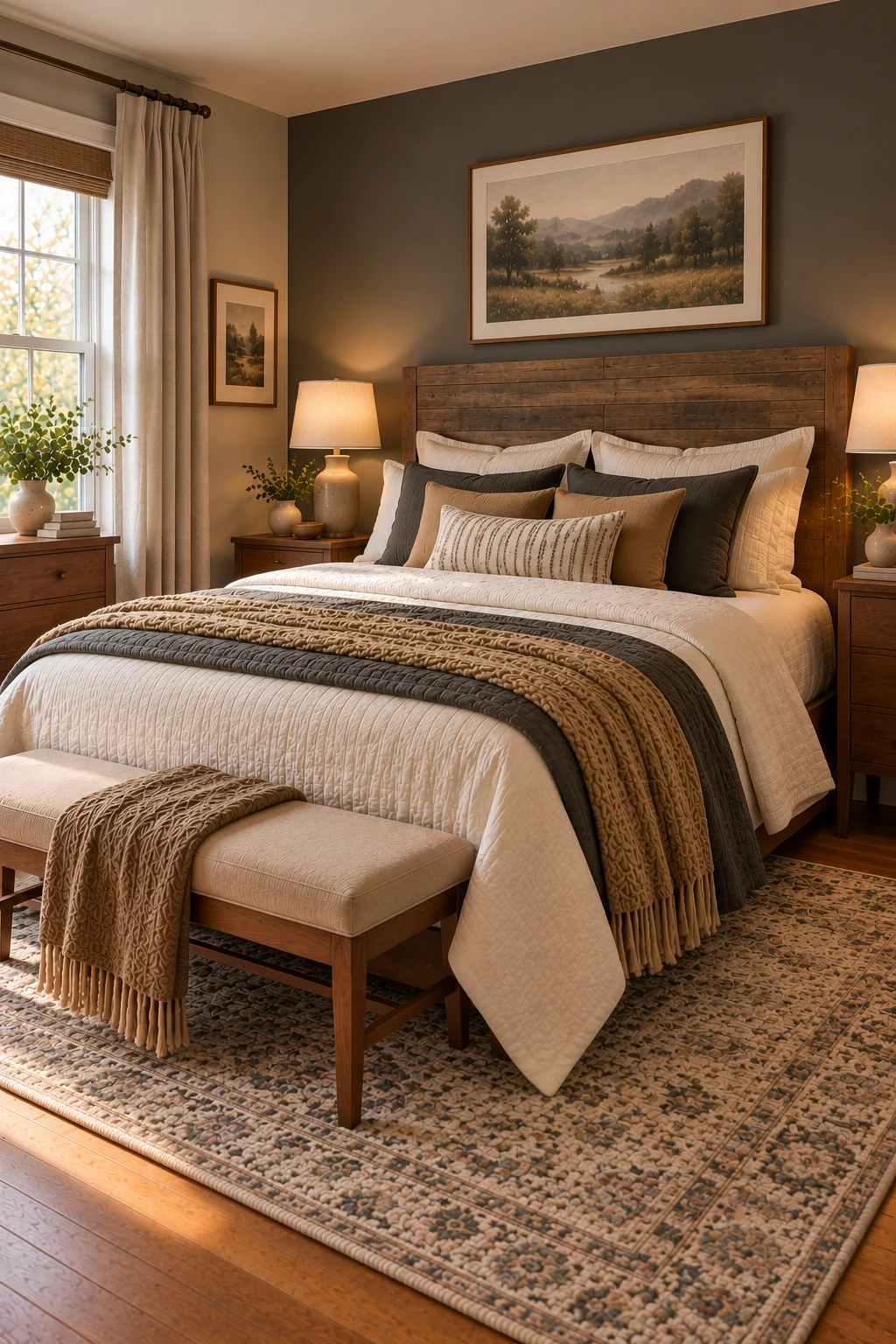
7. Soft Textiles Against Hard Finishes
One of the most important elements of a successful loft bedroom is the contrast between hard materials and soft furnishings.
Brick-look walls, metal furniture, and smooth wood surfaces provide the industrial foundation. Bedding, rugs, curtains, and cushions make the room comfortable.
Choose a cream duvet, a textured camel throw, and a low-pile rug in warm gray or mushroom.
Mix a few different fabric textures, such as linen, cotton, and soft knit, to add depth without relying on bold patterns.
Keep the palette cohesive so the room feels intentional rather than crowded.
Even a single generously sized rug can make a noticeable difference, especially in bedrooms with hardwood or laminate flooring.
Comfort tip: Choose washable textiles where possible and use an appropriate nonslip rug pad. Avoid placing loose rugs where their edges could become a tripping hazard.
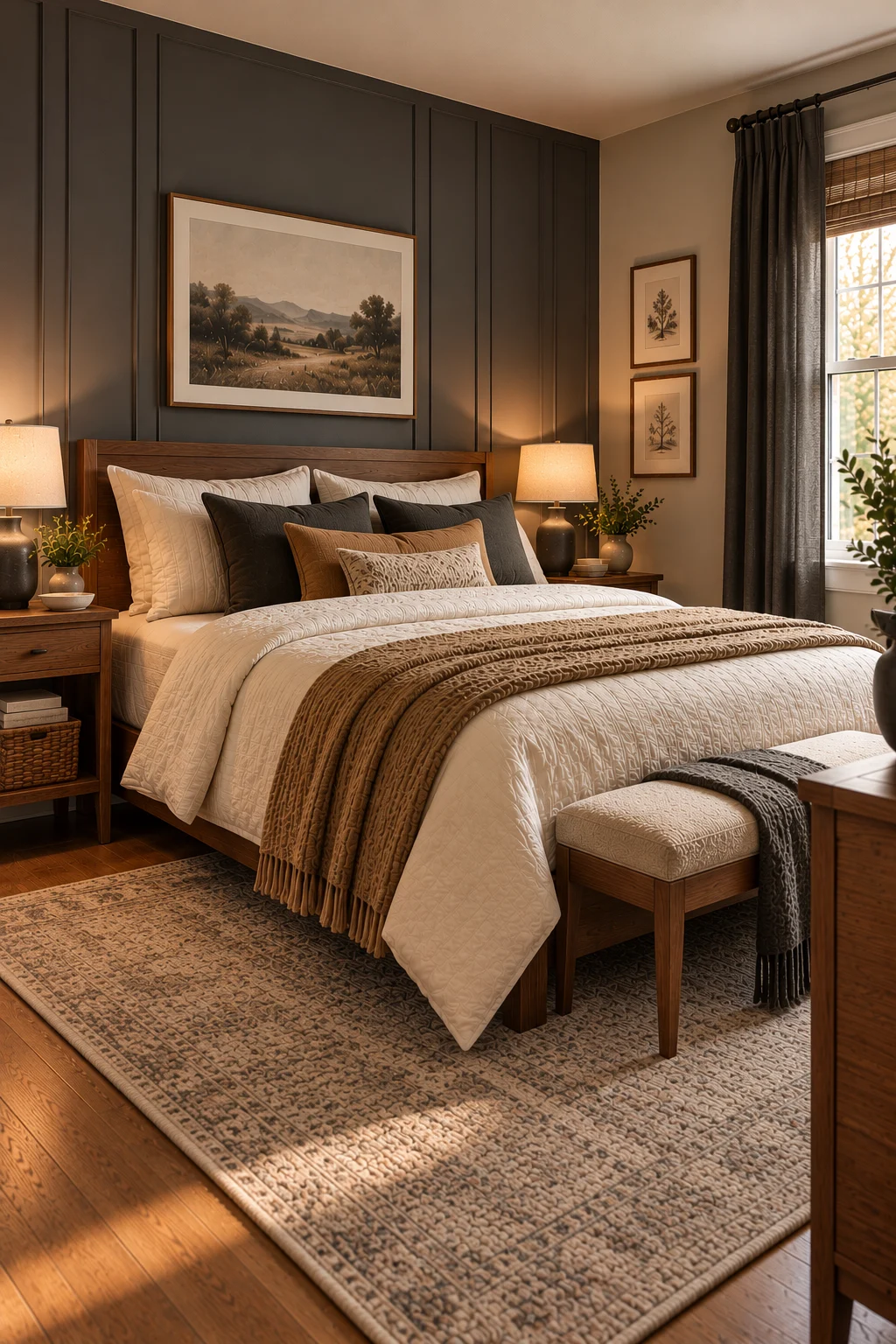
8. Open Clothing Rail With Closed Storage
An open clothing rail can give a bedroom a casual loft-inspired appearance while making frequently worn pieces easy to access.
Choose a sturdy black metal rail with simple proportions. Position it along an available wall where hanging clothes won’t interfere with doors or walkways.
Keep the visible clothing selection relatively small and organized by color or garment type.
Combine the rail with closed storage, such as a walnut dresser or wardrobe, for items that would create visual clutter.
Matching hangers can make the open section feel more coordinated.
A woven basket or small storage box may provide a convenient place for accessories without adding another large furniture piece.
Organization tip: Treat the open rail as a practical extension of the closet rather than a decorative display. Check its weight capacity and stability, and secure the unit according to the manufacturer’s instructions.
9. Large Framed Abstract Artwork
A single large abstract artwork can bring personality to a loft style bedroom without requiring a complicated gallery wall.
Choose a piece featuring charcoal, cream, warm gray, and camel tones.
Abstract shapes, textured compositions, and minimalist line work complement industrial furniture particularly well.
Display the artwork above a dresser or on another clear wall where its scale feels balanced with the surrounding furniture.
A slim black or natural-wood frame provides a simple finish.
Keep nearby decorations minimal so the artwork remains the main focal point.
For a smaller bedroom, a medium-size framed print may be more appropriate than an oversized canvas.
Placement tip: Use painter’s tape to mark the artwork’s dimensions on the wall before purchasing. Mount it with hardware appropriate for its weight, and avoid placing heavy frames directly above sleeping areas.
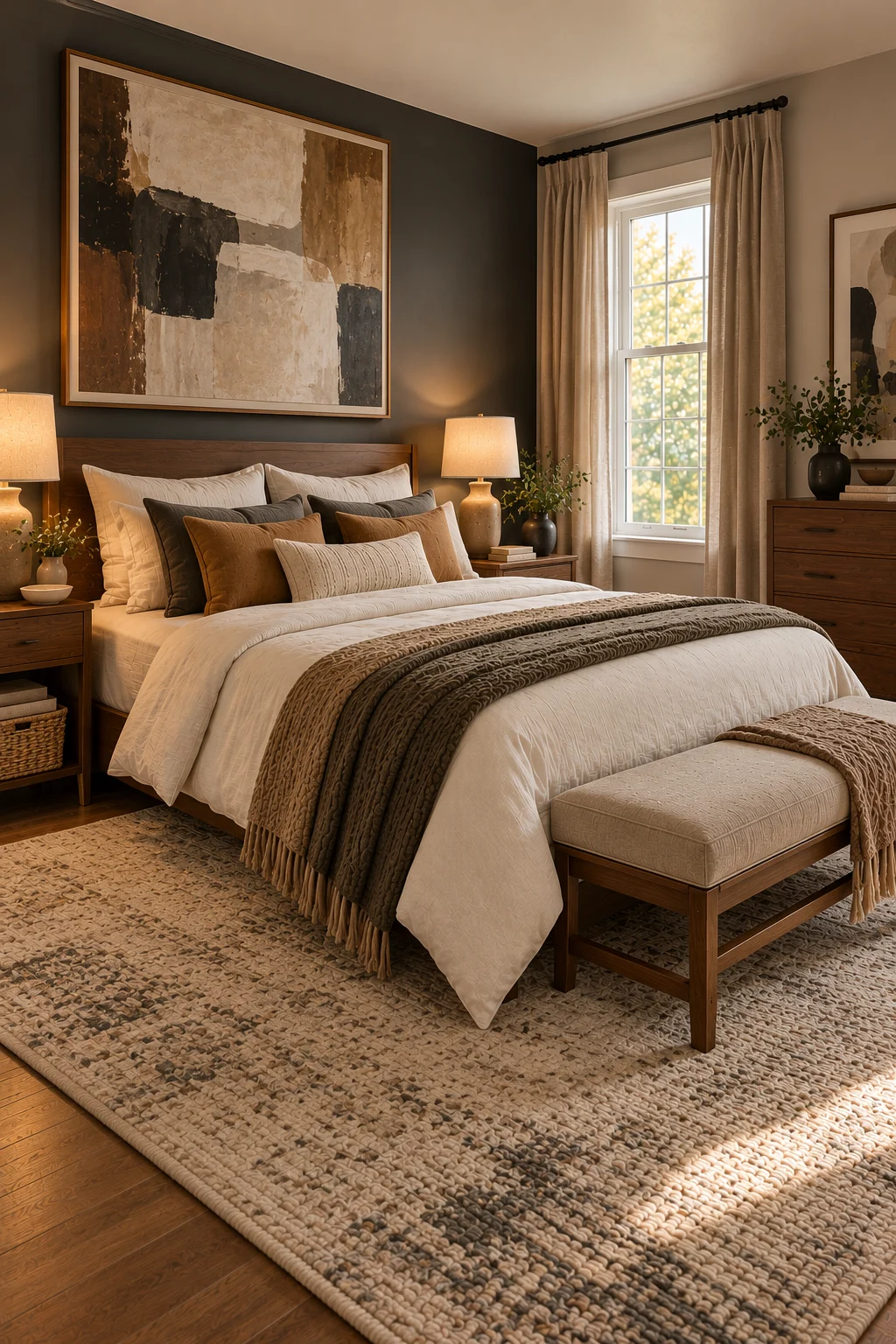
10. Warm Gray and Camel Palette
Warm gray and camel create a softer interpretation of loft style that works particularly well in an everyday bedroom.
Use warm gray on the walls or through larger textiles, then introduce camel through a throw, upholstered chair, or decorative cushions.
The combination creates contrast without relying heavily on black.
Walnut furniture adds another layer of warmth, while cream bedding keeps the room feeling fresh.
Use matte black sparingly through a lamp, bed frame, or picture frame to maintain the industrial connection.
For a more cohesive appearance, choose grays with slightly brown undertones rather than cool blue-gray shades.
Color tip: Compare paint and fabric samples beside the flooring and furniture. Camel can appear more orange next to cool gray, so selecting compatible undertones makes the finished room feel more harmonious.
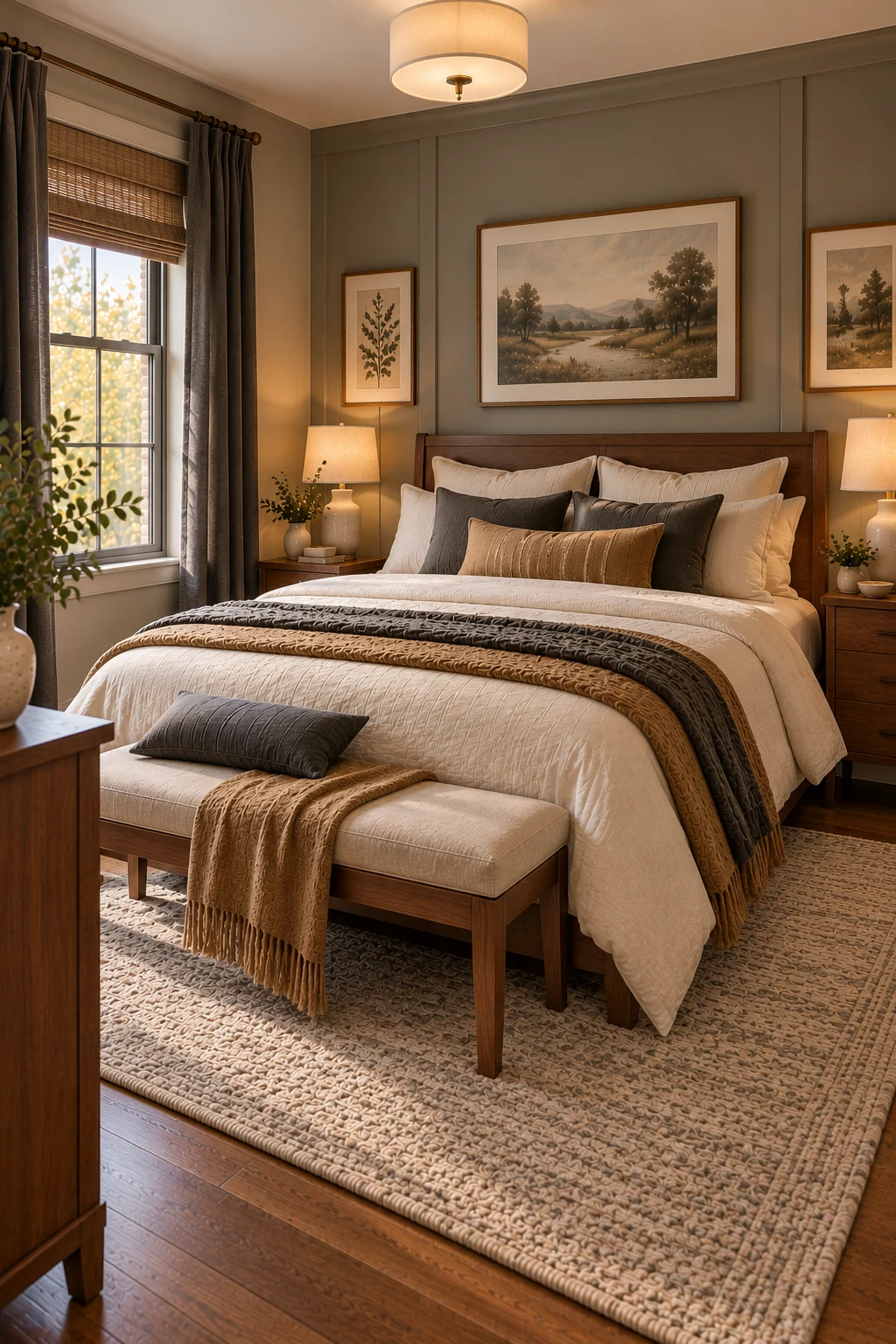
11. Slim Desk in a Loft Bedroom
A slim desk can introduce a practical workspace without making the bedroom feel like a full home office.
Choose a narrow walnut or wood-look desktop supported by simple black metal legs.
Position it along a clear wall or near a window if the layout allows.
Add a compact task lamp, a comfortable chair, and a small organizer for everyday supplies.
Keep the desktop mostly clear so it remains useful for work, studying, or occasional creative projects.
A single framed print above the desk can connect the workspace to the room’s industrial aesthetic.
Space-saving tip: Check the desk depth and chair clearance before buying. A shallow desk can work well for a laptop, but make sure it still supports comfortable use and doesn’t restrict access around the bed.
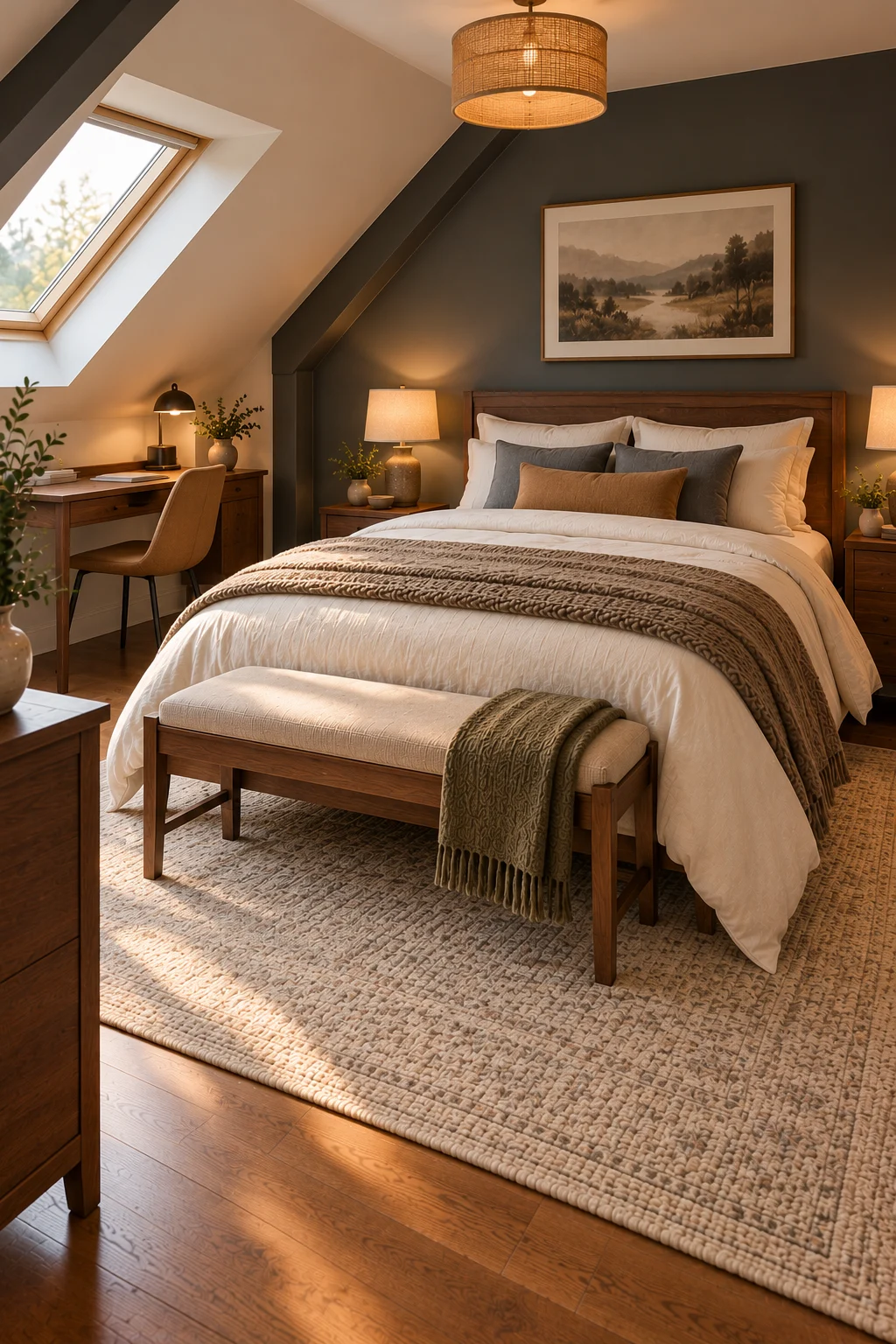
12. Minimal Metal and Wood Nightstands
Nightstands combining metal and wood are a natural fit for loft style because they bring together two of the aesthetic’s defining materials.
Choose a simple design with a walnut or oak top and a matte black metal frame.
An open lower shelf can hold a book or small storage basket, while a drawer provides space for items you’d rather keep out of sight.
Keep the tabletop practical with a lamp, phone, and a few everyday essentials.
If the room is narrow, consider compact nightstands that provide enough surface space without crowding the bed.
Matching nightstands can create symmetry, but two different pieces with similar materials may feel equally intentional.
Shopping tip: Check the nightstand height against the mattress. A bedside surface close to mattress height is generally easier to reach when sitting or lying in bed.
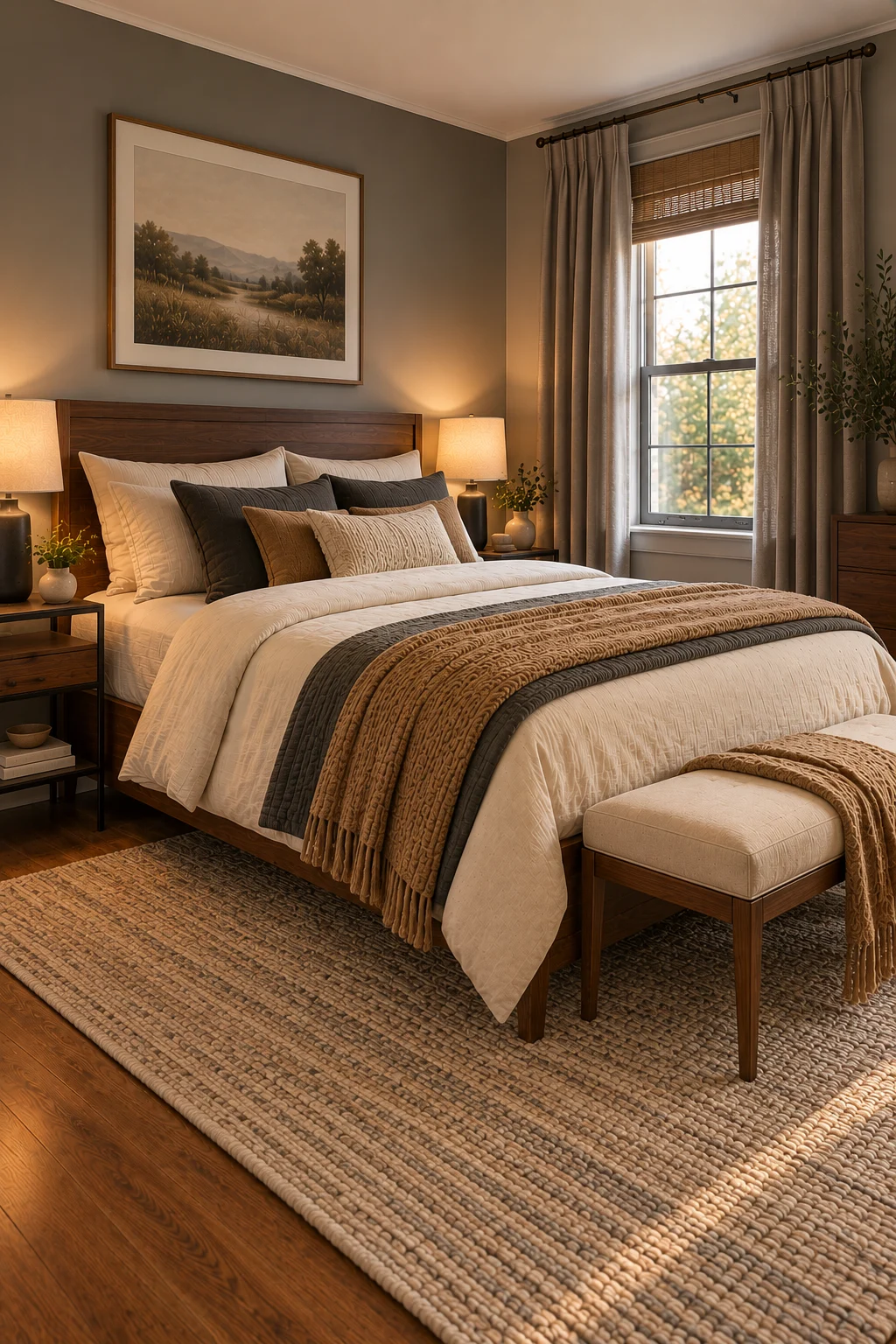
13. Low-Profile Platform Bed
A low-profile platform bed gives a loft style bedroom a streamlined, contemporary appearance.
Choose a simple frame in walnut, dark wood, or matte black with minimal ornamentation.
The lower silhouette can make the room feel more open, especially when the ceiling height is modest.
Pair the bed with cream bedding, a charcoal throw, and a low-pile rug to introduce softness.
Compact nightstands and understated wall art help maintain the clean lines.
A platform bed with integrated storage may also be useful in a smaller bedroom, provided the drawers or compartments remain accessible.
Practical tip: Check the finished mattress height before purchasing. Very low beds may be uncomfortable for people who prefer an easier sitting and standing position. Follow the bed manufacturer’s mattress support and assembly requirements.
14. Layered Warm Lighting
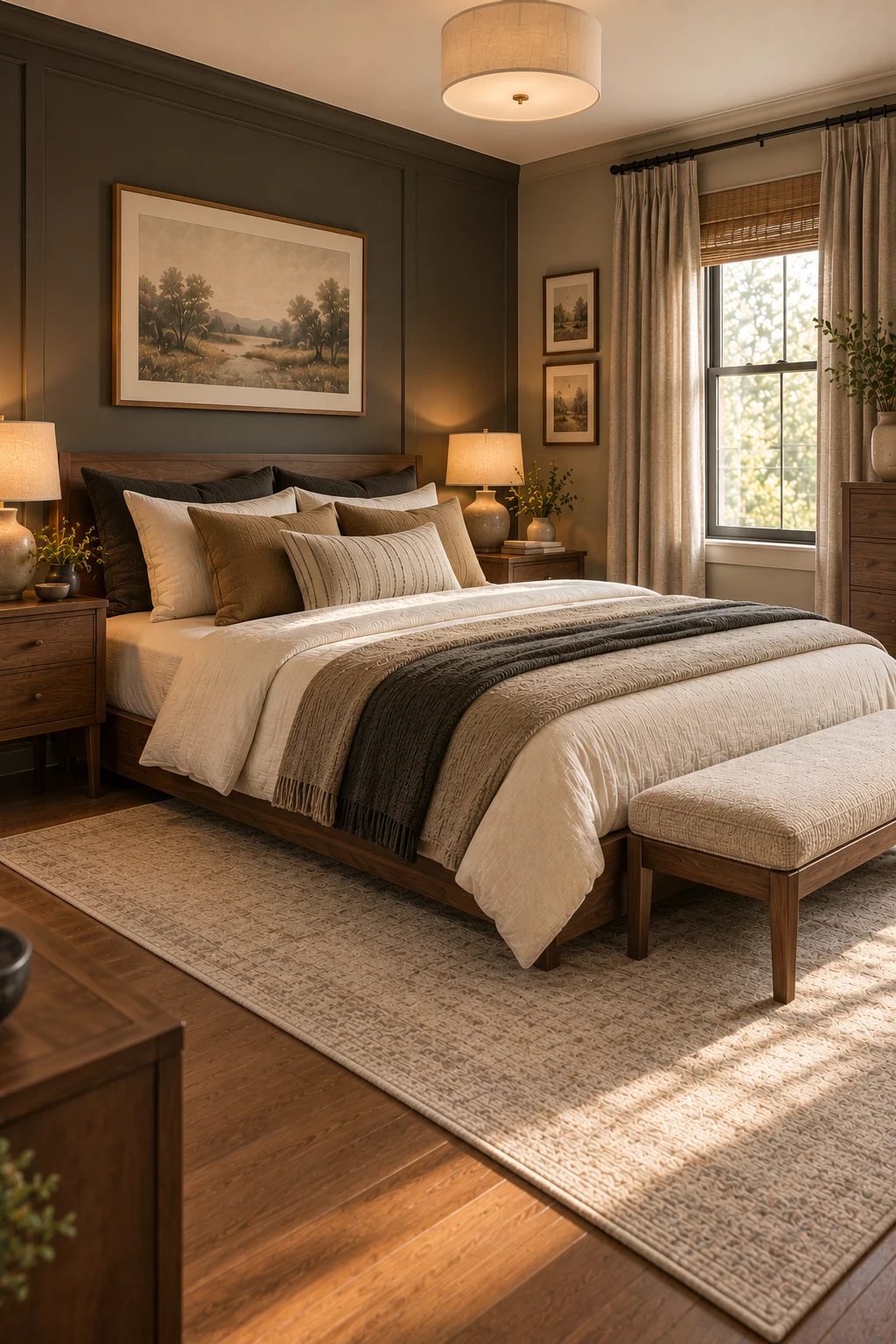
Layered lighting helps a loft style bedroom feel comfortable after dark while highlighting its textured materials.
Start with general ceiling lighting that provides enough brightness for everyday activities.
Add a bedside lamp or wall-mounted reading light for focused illumination.
A small accent light can highlight a brick-look wall, framed artwork, or shelving arrangement without making the room overly bright.
Choose warm-white LED bulbs around 2700K–3000K to complement walnut furniture, cream bedding, and charcoal accents.
Matte black or aged-metal fixtures can reinforce the industrial aesthetic, but keep the designs simple.
Use dimmable lighting where compatible if you want to adjust the atmosphere throughout the evening.
Lighting tip: Avoid relying on exposed decorative bulbs alone. They can create glare and may not provide enough useful light for reading or dressing. Follow fixture specifications and keep cords and electrical accessories properly organized.
15. Fully Coordinated Modest Loft Bedroom
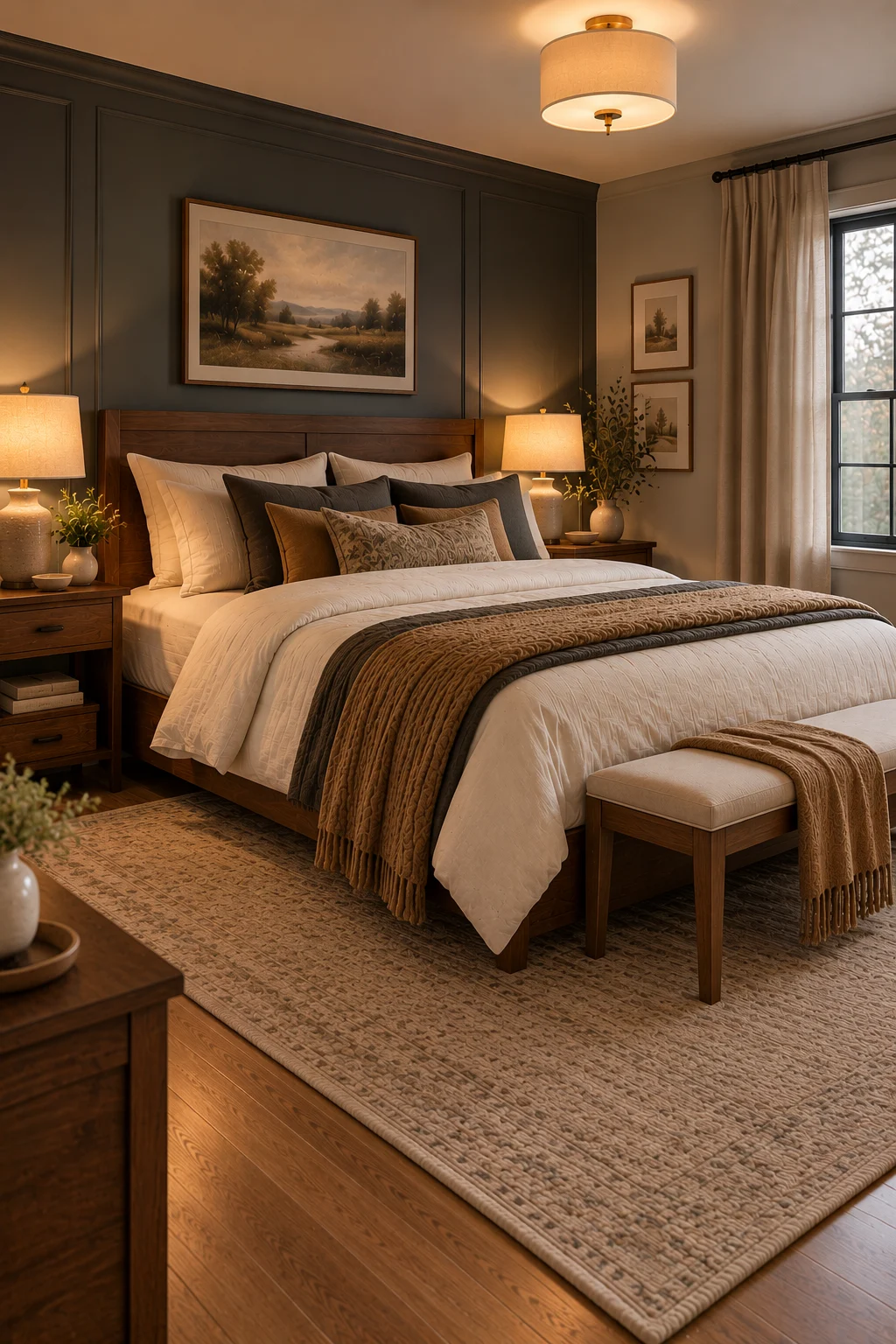
A fully coordinated loft bedroom combines industrial materials, warm colors, and comfortable furnishings without trying to imitate an oversized warehouse apartment.
Begin with a restrained palette of charcoal, warm gray, camel, cream, and walnut.
Choose one defining feature, such as a brick-look accent wall, black metal bed, or charcoal painted wall.
Then introduce supporting elements through a walnut dresser, simple nightstands, and understated lighting.
Layer the bed with cream bedding and a camel or mushroom throw to balance the harder finishes.
Keep artwork minimal and use closed storage to prevent everyday clutter from distracting from the design.
A low-pile rug can add comfort while helping the room feel complete.
Final design tip: Look at the bedroom as a whole before adding more accessories. If the wall treatment, furniture, and lighting already provide enough character, allow some surfaces to remain simple. A modest room can feel distinctly loft-inspired without being visually crowded.
Plan the Layout Before Buying
Before decorating, evaluate the bedroom’s actual dimensions and existing furniture arrangement.
Measure the bed, dresser, nightstands, and available wall space. Note where doors open, windows are positioned, and electrical outlets are located.
Decide which loft-inspired feature will have the greatest visual impact. A brick-look wall, black metal bed, or charcoal accent wall may be enough to establish the style.
For a standard bedroom with an eight-foot ceiling, choose furniture and lighting that fit the available height comfortably.
Avoid oversized pendant lights, bulky storage units, or unnecessarily large decorative panels.
If you plan to add a desk or clothing rail, confirm that drawers and doors can still open and that walking routes remain clear.
A simple floor-plan sketch or painter’s tape can help you test furniture placement before purchasing.
Choose Colors and Materials
Loft style bedrooms are defined by a combination of industrial finishes and comfortable, natural materials.
A balanced color palette helps the room feel cohesive without becoming too dark.
Consider using:
- Charcoal: Feature walls, metal bed frames, lighting, and picture frames.
- Warm gray: Walls, rugs, curtains, and upholstered furniture.
- Camel: Throws, cushions, and occasional seating.
- Cream: Bedding, curtains, and lighter wall surfaces.
- Walnut: Bed frames, dressers, desks, and nightstands.
- Matte black metal: Furniture frames, clothing rails, and industrial-inspired fixtures.
- Brick-look textures: A single accent wall or carefully chosen architectural feature.
Choose one or two prominent materials and repeat them in smaller details.
For example, a black metal bed can relate to a bedside lamp, while a walnut dresser can coordinate with a desk or nightstand.
Balance hard finishes with soft fabrics so the bedroom remains welcoming.
Lighting That Supports the Look
Lighting plays an important role in making industrial decor feel comfortable rather than cold.
During the day, maximize available natural light and use window treatments that provide privacy without unnecessarily darkening the room.
In the evening, combine general lighting with focused bedside illumination.
Warm-white LED bulbs around 2700K–3000K often work well with brick-look surfaces, walnut furniture, and cream textiles.
Choose fixtures with simple metal finishes rather than overly elaborate industrial designs.
For smaller rooms, compact table lamps or appropriately positioned wall lights may be more practical than large hanging pendants.
Make sure every fixture provides useful light and is installed according to its specifications.
Keep cords away from walking routes and preserve access to outlets, ventilation openings, and smoke alarms.
Budget and Shopping Priorities
You can introduce loft style into an existing bedroom without replacing every piece of furniture.
Start with one meaningful change and build the design gradually.
Consider these budget-friendly updates:
- Paint a charcoal accent wall: A single dark wall can create a strong industrial backdrop.
- Add brick-look wallpaper: A carefully chosen wall treatment can provide texture without structural renovation.
- Update bedding: Cream linens and a camel throw soften existing dark furniture.
- Replace a bedside lamp: A simple black metal fixture can introduce industrial character.
- Reuse wood furniture: Existing walnut or oak pieces may already suit the aesthetic.
- Add abstract artwork: One well-scaled print can complete a wall without requiring a gallery collection.
- Introduce a neutral rug: A low-pile rug adds warmth and comfort to hard flooring.
Prioritize practical needs such as a comfortable mattress, functional storage, and adequate lighting before purchasing decorative accessories.
If you’re installing wall panels, shelves, or fixtures, include suitable hardware and preparation materials in the budget.
Common Mistakes and Easy Fixes
One common mistake is trying to recreate a warehouse interior in a bedroom that doesn’t have the same architectural proportions.
Oversized industrial lighting, excessive faux brick, and heavy metal furniture can make a modest room feel cramped.
Instead, choose one strong feature and support it with simpler furnishings.
Another mistake is relying too heavily on dark colors. Charcoal and black provide contrast, but cream bedding and warm wood are essential for balance.
Other mistakes include:
- Using too many imitation finishes: Limit faux brick, concrete-look surfaces, and distressed wood to a few carefully chosen areas.
- Ignoring comfort: Add soft bedding, curtains, and rugs to balance hard materials.
- Choosing oversized furniture: Measure the room before purchasing large beds, desks, or storage units.
- Overdecorating surfaces: Keep nightstands and dressers functional rather than filling them with industrial accessories.
- Using inadequate lighting: Decorative bulbs should not replace practical reading and general illumination.
- Forgetting storage: Combine open displays with drawers or cabinets to control clutter.
A successful loft style bedroom feels relaxed and intentional, with enough industrial character to be distinctive and enough softness to remain comfortable.
Cleaning, Safety, and Long-Term Use
Industrial-inspired materials can be relatively easy to maintain when chosen carefully.
Dust metal furniture frames and lighting fixtures regularly, and wipe wood surfaces with products appropriate for their finish.
Choose washable bedding and durable rugs that can handle everyday use.
For brick-look wallpaper or decorative panels, follow the manufacturer’s cleaning recommendations. Textured surfaces may collect dust more readily than smooth painted walls.
Keep open clothing rails organized and avoid exceeding their stated weight limits.
Secure tall furniture against tipping where appropriate, and use suitable mounting hardware for artwork, shelves, and wall treatments.
Avoid hanging heavy decorations directly above sleeping areas.
Maintain clear access to doors, windows, ventilation openings, outlets, and smoke alarms.
Use lighting fixtures according to their specifications and keep loose textiles away from heat sources.
These practical considerations help ensure that the bedroom remains attractive, comfortable, and functional long after the initial decorating project.
Final Thoughts
A loft style bedroom doesn’t need towering ceilings, exposed pipes, or an industrial building to capture the aesthetic.
The most inviting designs combine a few distinctive materials with comfortable furnishings and practical everyday features.
An exposed-brick-look accent wall, black metal bed, charcoal paint, or reclaimed-wood-look headboard can establish the industrial character.
Walnut furniture, cream bedding, camel textiles, and warm lighting then bring softness and balance to the space.
Start with one idea that suits your existing room and gradually introduce complementary details.
With a thoughtful mix of industrial textures, warm natural materials, and cozy furnishings, you can create a loft inspired bedroom that feels stylish, personal, and comfortable every day.
