
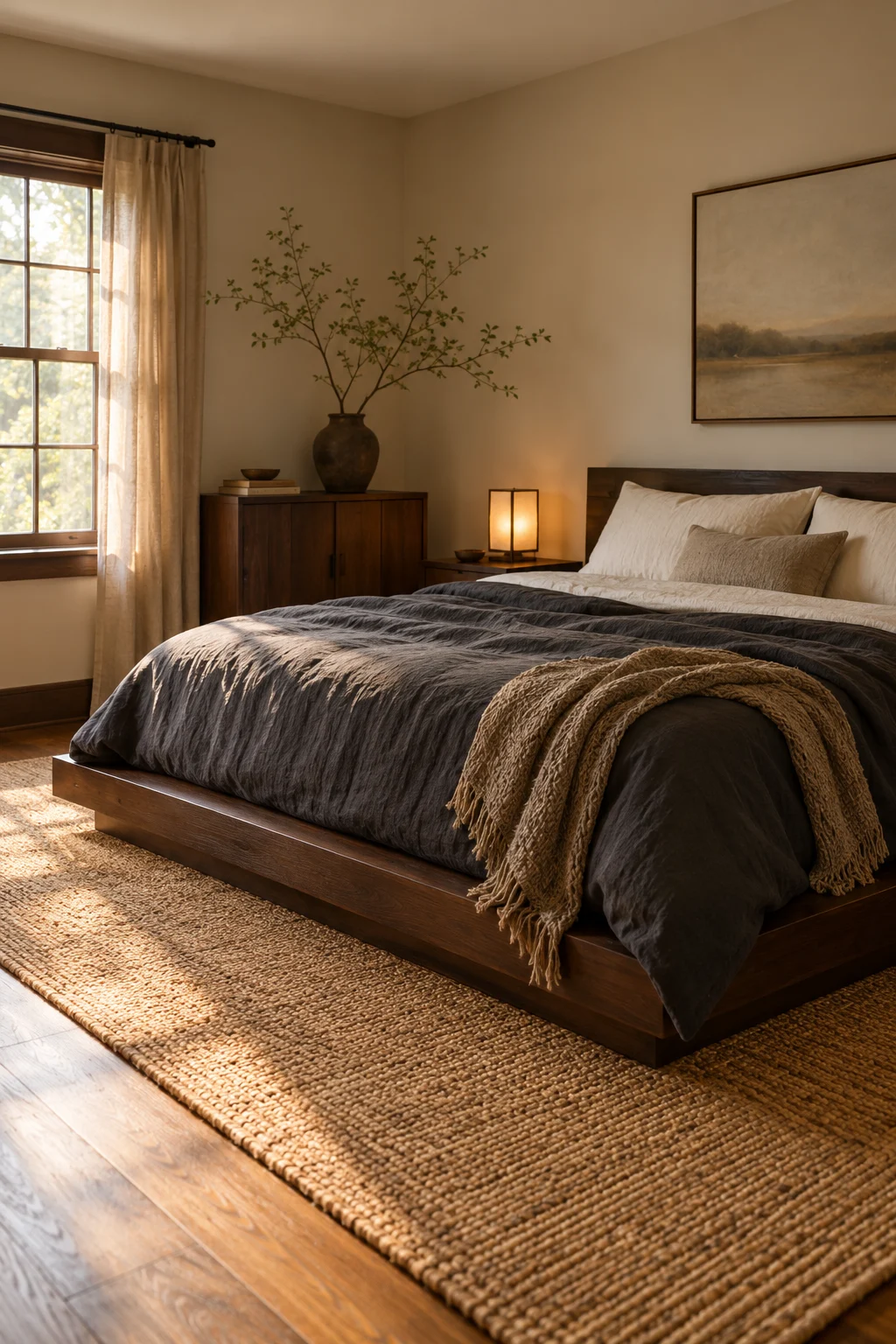
17 Platform Bedroom Ideas for a Modern and Streamlined Space
The bed frame arrives, the mattress goes on top, and suddenly the room feels crowded—even though nothing else has changed. A platform bed can solve that visual problem by keeping the main piece of furniture lower and more deliberate. These platform bedroom ideas explore wood, upholstery, storage, and layouts that work in ordinary homes, from small apartments to attic retreats. The goal is not to strip every room bare. It is to give the bed a clean outline, make daily movement easier, and add enough warmth that the bedroom still feels personal. Some designs rely on the frame itself; others use color, texture, or carefully chosen surrounding furniture. Here are seventeen ways to build that streamlined look without losing comfort.
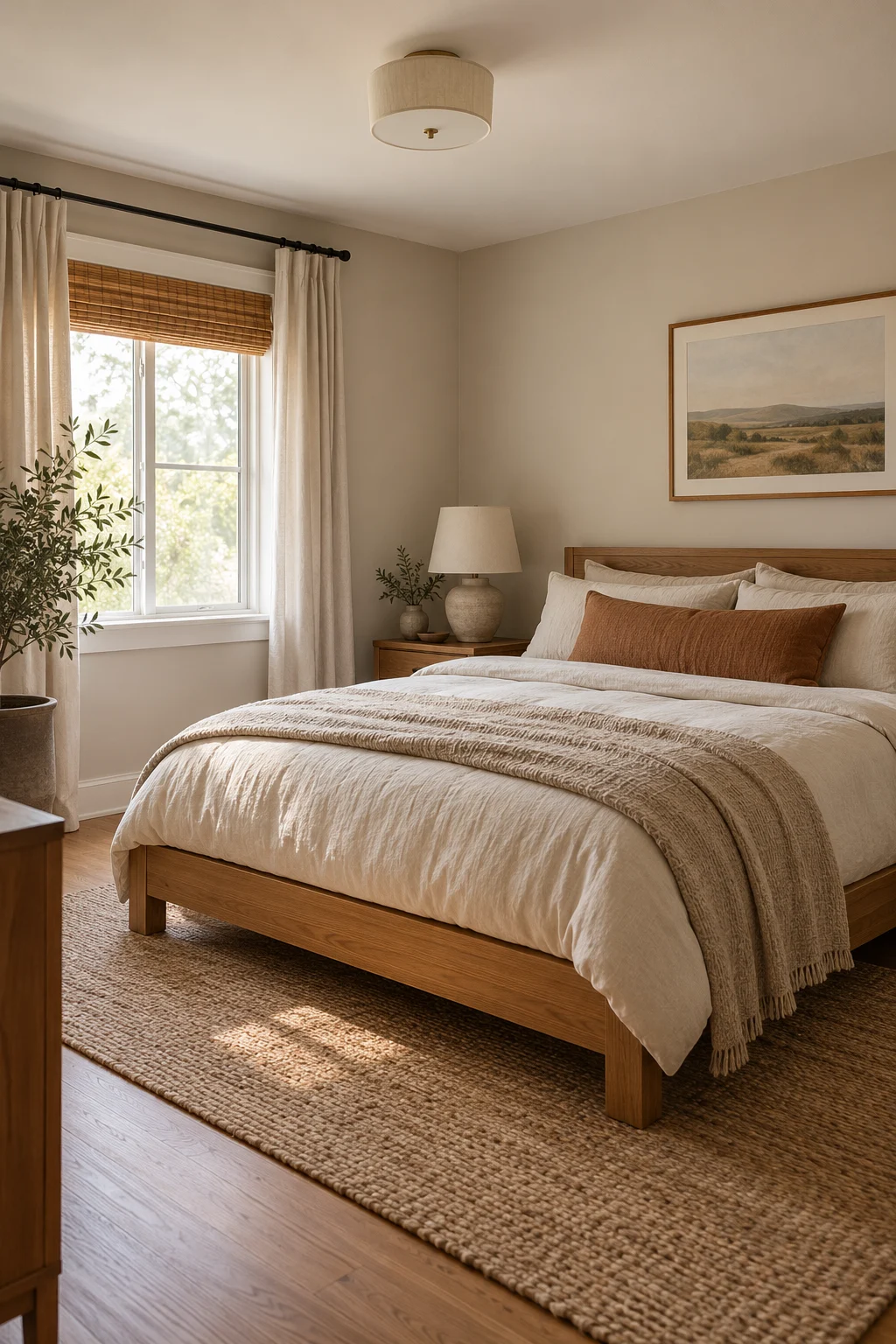
1. Low Oak Platform With Linen Layers
A low natural-oak platform bed brings a grounded silhouette to a bedroom without making the room feel unfinished. Look for a frame with a continuous solid-looking edge and a mattress that sits securely within its intended support system. Cream linen bedding, a clay-colored lumbar pillow, and a loosely folded oatmeal blanket keep the straight lines from feeling severe. This arrangement suits a compact primary bedroom where a tall headboard would dominate the wall. Keep the nightstands slightly taller than the mattress surface so a glass of water is easy to reach. Oak finishes can vary noticeably between retailers, so compare samples against the floor before committing. A simple ceramic lamp adds a soft shape beside the angular frame.
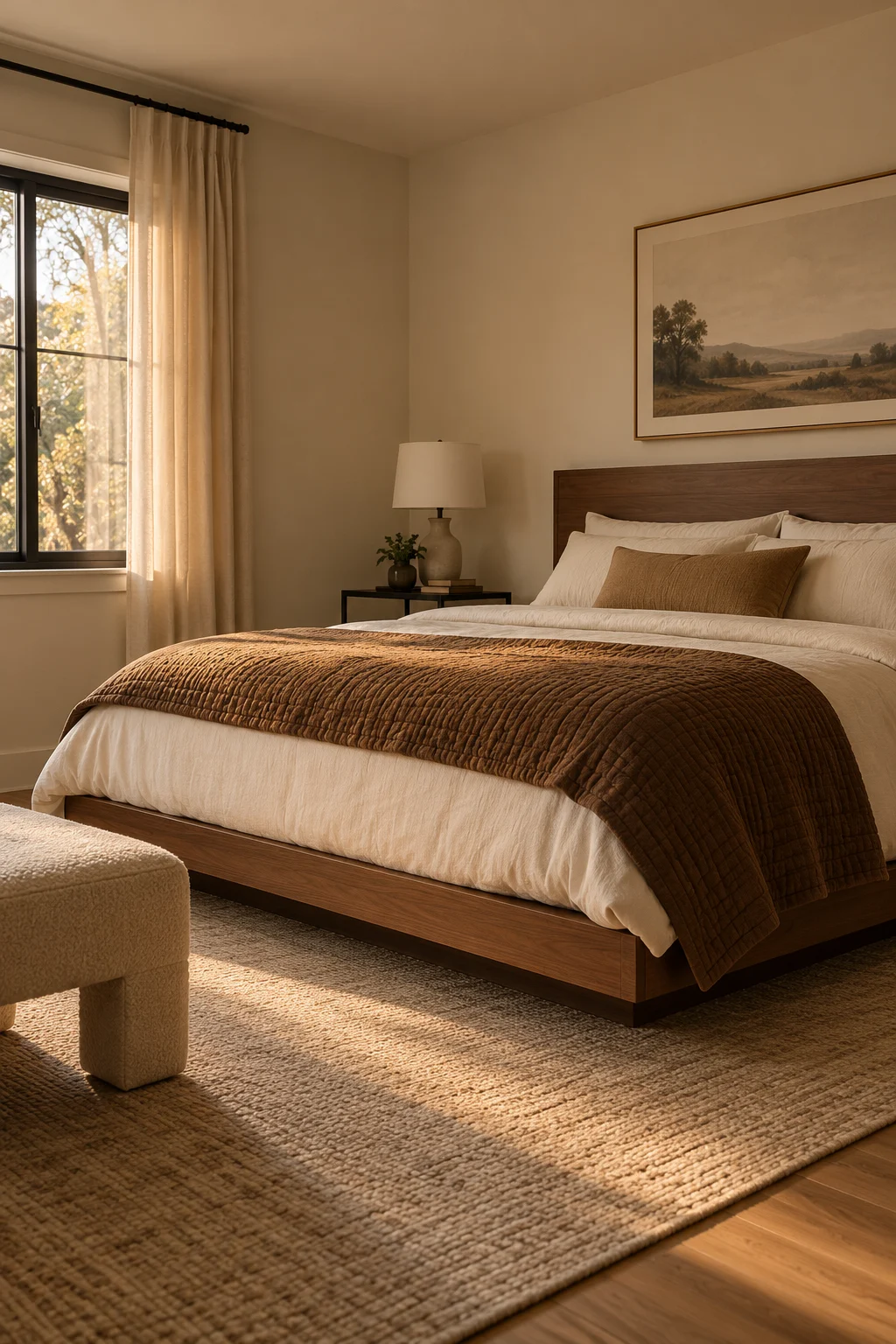
2. Walnut Floating Frame With Shadow Gap
A walnut platform with recessed legs creates the impression that the mattress is floating just above the floor. The shadow beneath the frame provides visual lightness while the darker wood adds definition. Pair it with ivory bedding and a tobacco-colored quilt instead of repeating walnut on every surface. A narrow black metal nightstand makes a useful contrast. This style works particularly well against warm off-white walls and a simple upholstered bench at the foot. Be aware that deeply recessed legs can make it awkward to retrieve dropped objects or clean beneath the bed. Check the manufacturer’s center-support specifications, especially for larger mattress sizes. The result is architectural without requiring a dramatic renovation.
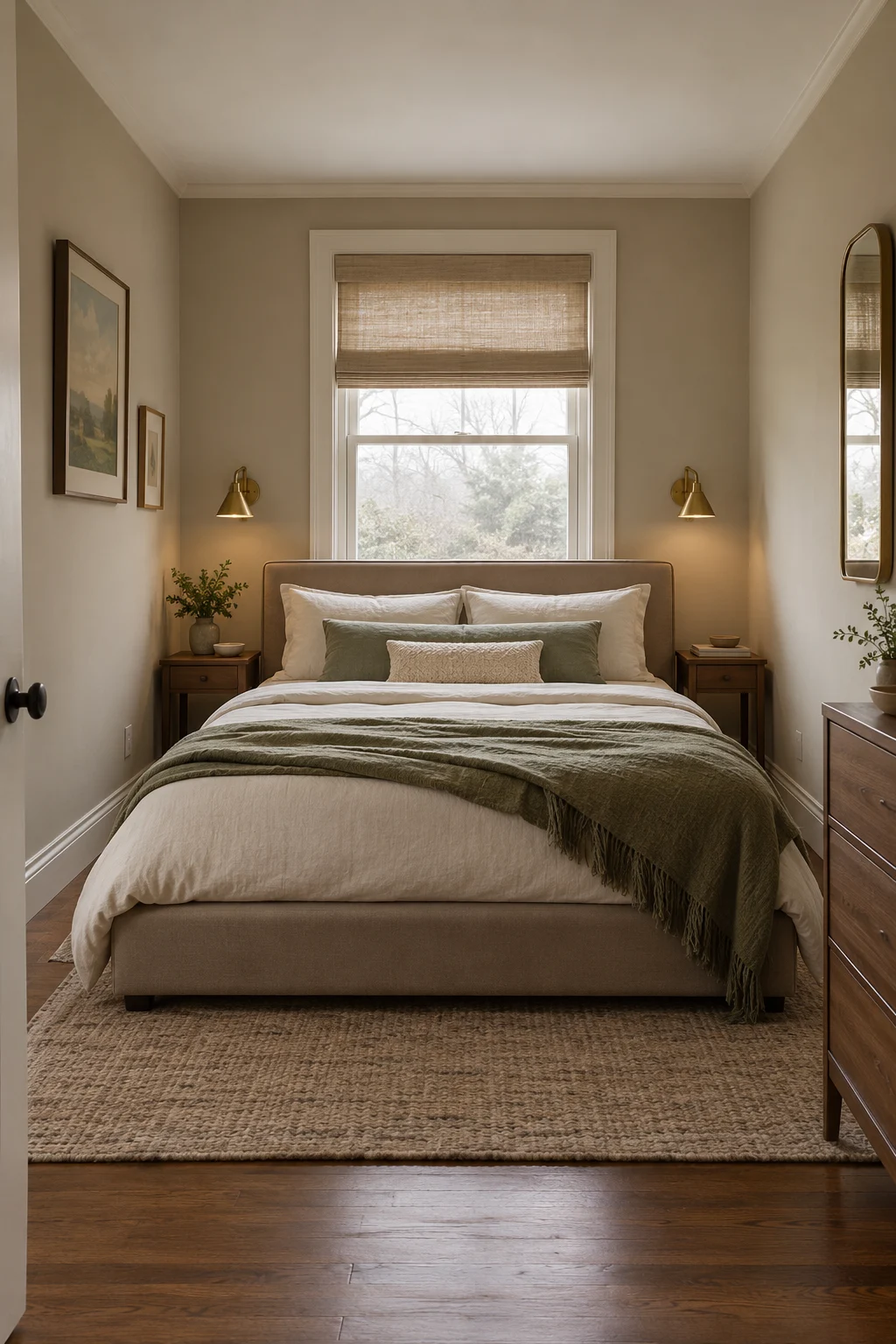
3. Upholstered Platform in Mushroom Taupe
If a wooden frame feels too sharp, an upholstered platform can create the same low profile with a softer outline. Mushroom-taupe fabric is forgiving alongside cream walls, walnut flooring, and a muted sage throw. Choose a tightly woven upholstery that can be vacuumed easily, particularly in a bedroom shared with pets. A slim padded headboard keeps pillows from slipping against the wall without taking over the space. Leave enough clearance to pull bedding around the corners; heavily padded rails can make that task less convenient. A pair of small brass-look sconces preserves bedside surface area when the room is narrow. Keep their placement practical for reading rather than purely decorative.
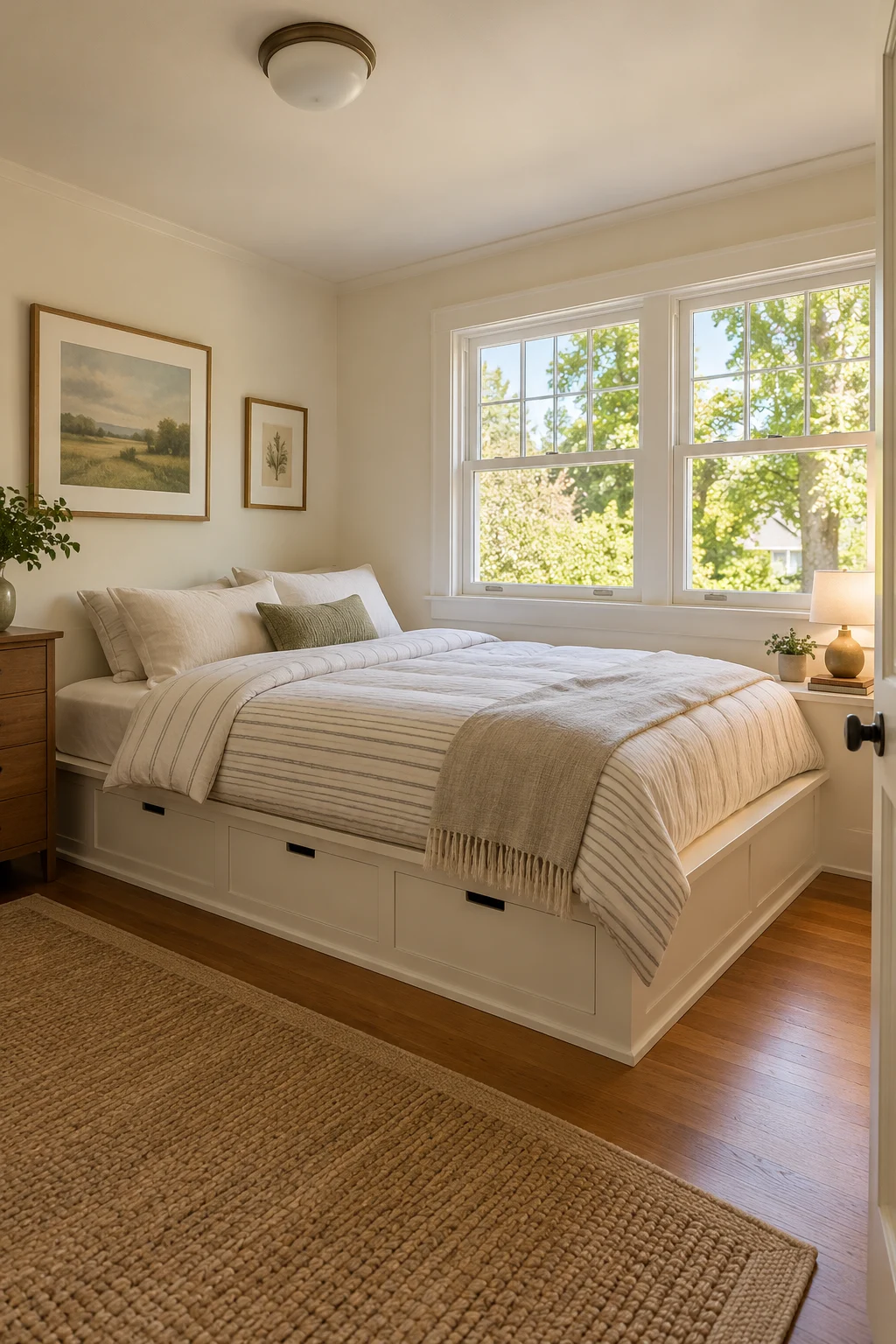
4. Built-In Platform Across a Window Wall
A built-in platform can make an awkward window wall feel purposeful when the bed fits between existing trim and outlets. The most successful versions look like simple furniture rather than a raised stage. Painted warm white, the base can blend with the walls while a narrow ledge provides space for a book and small lamp. Keep window access, ventilation, and any required emergency escape route completely clear. This option is best for a room where the layout is unlikely to change, since built-ins are harder to relocate than freestanding beds. Ask a qualified professional about structure and attachment rather than improvising supports. Soft striped bedding adds just enough pattern to the restrained design.
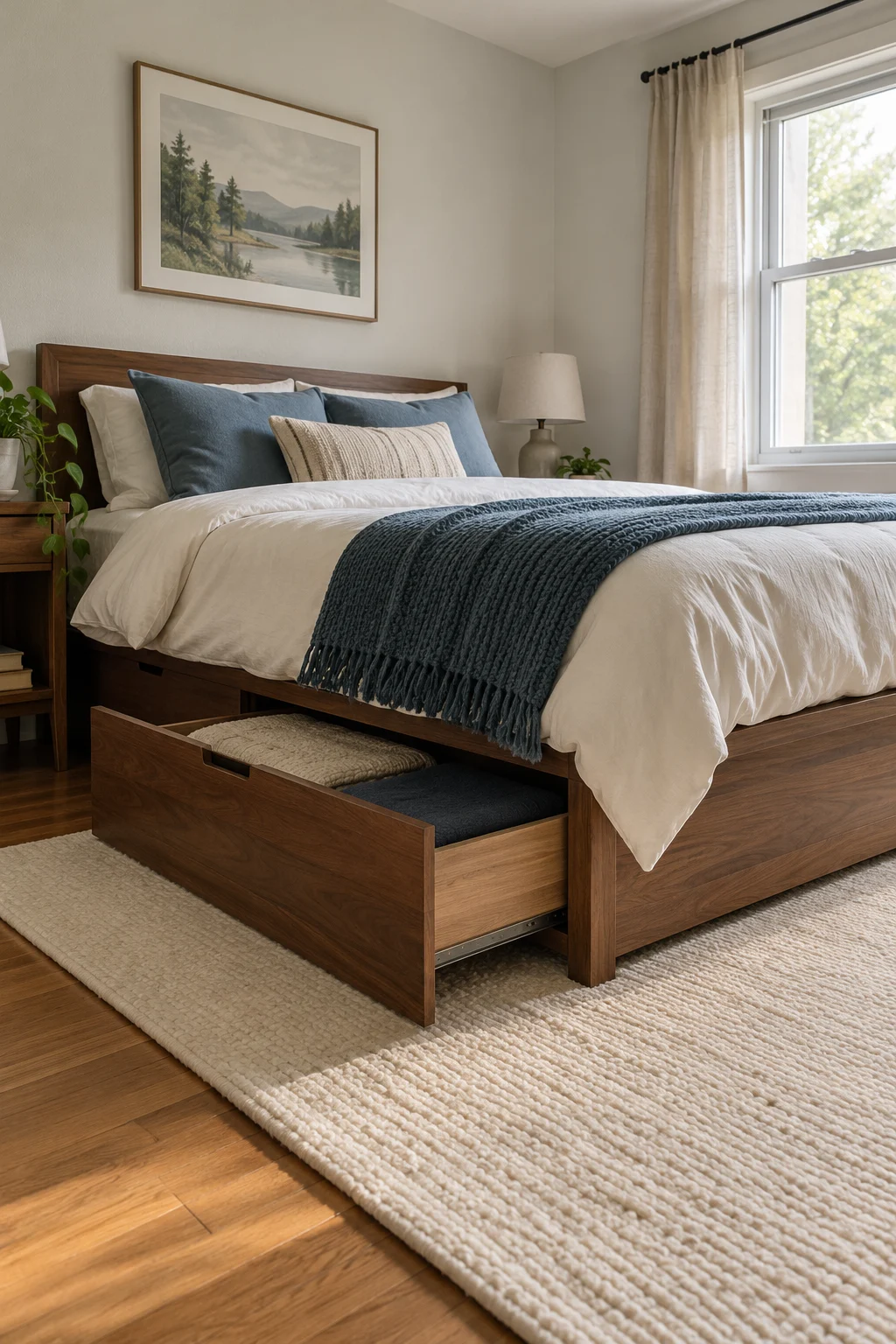
5. Platform Bed With Hidden Drawer Storage
Deep drawers beneath a platform bed can replace a bulky dresser in a small bedroom. They are especially handy for extra sheets, off-season clothing, or folded blankets that do not need daily access. Select drawers that open toward the clear side of the room; a drawer that hits a nightstand is storage only in theory. A medium-walnut finish looks warm with a white cotton duvet and dusty-blue pillows. Full-extension hardware can make the back of each drawer easier to reach, though it may increase the price. Before buying, consider whether a thick rug will interfere with the drawer fronts. Leave the top of the bed visually quiet so the functional base remains the main detail.
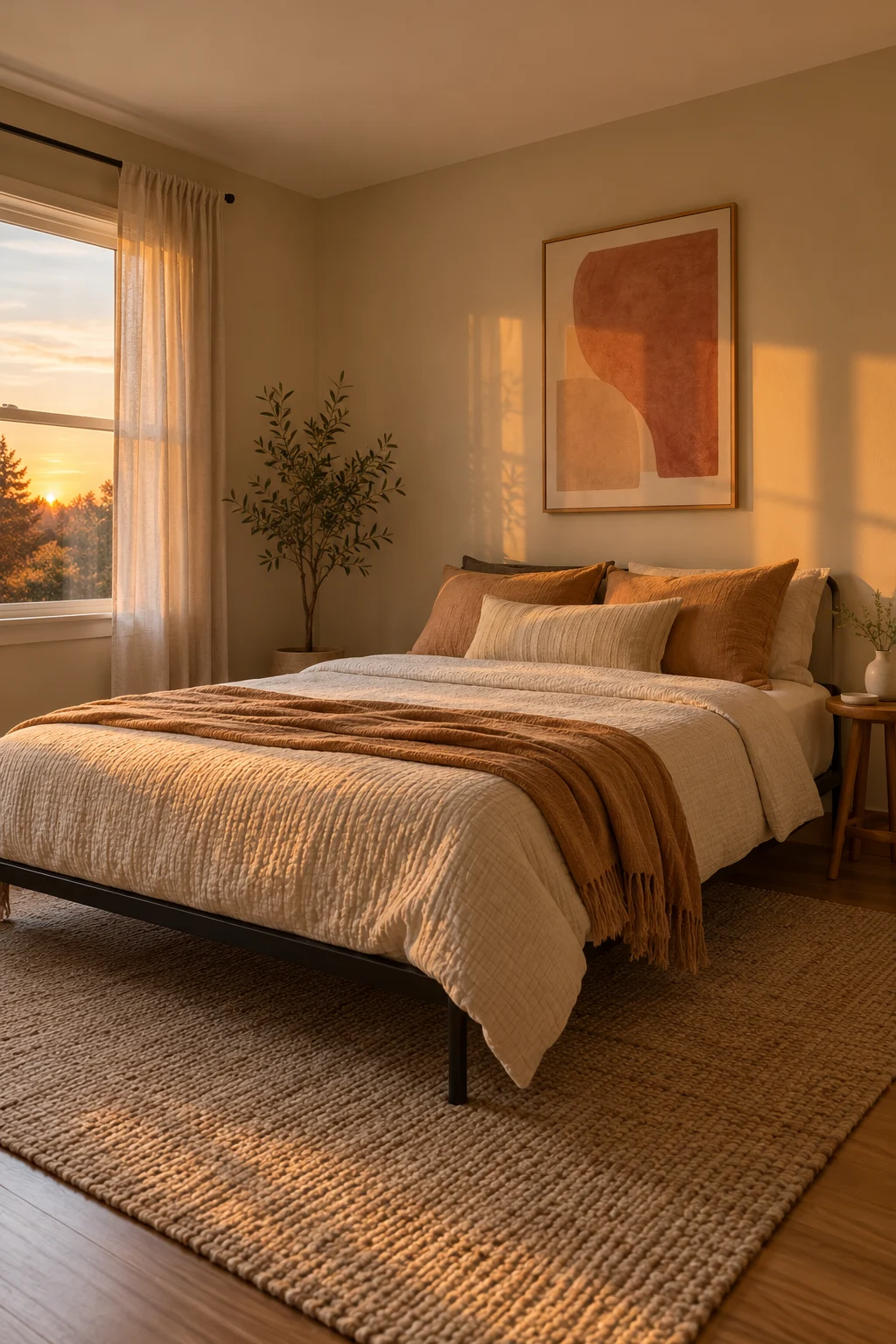
6. Minimal Black Platform Against Warm Walls
A matte-black platform bed creates a crisp outline that does not require a black-and-white bedroom. Warm beige walls, camel pillows, and a textured ecru coverlet soften the contrast while allowing the frame to remain distinctive. Keep the platform narrow enough that the outer edge does not become an obstacle when walking around the bed. This look suits someone who likes modern furniture but still wants a welcoming, relaxed room. Add a single large abstract artwork in muted terracotta rather than a crowded gallery. Fingerprints and dust may show on some dark finishes, so a washable matte coating is worth considering. A small wood stool beside the bed prevents the palette from feeling too rigid.
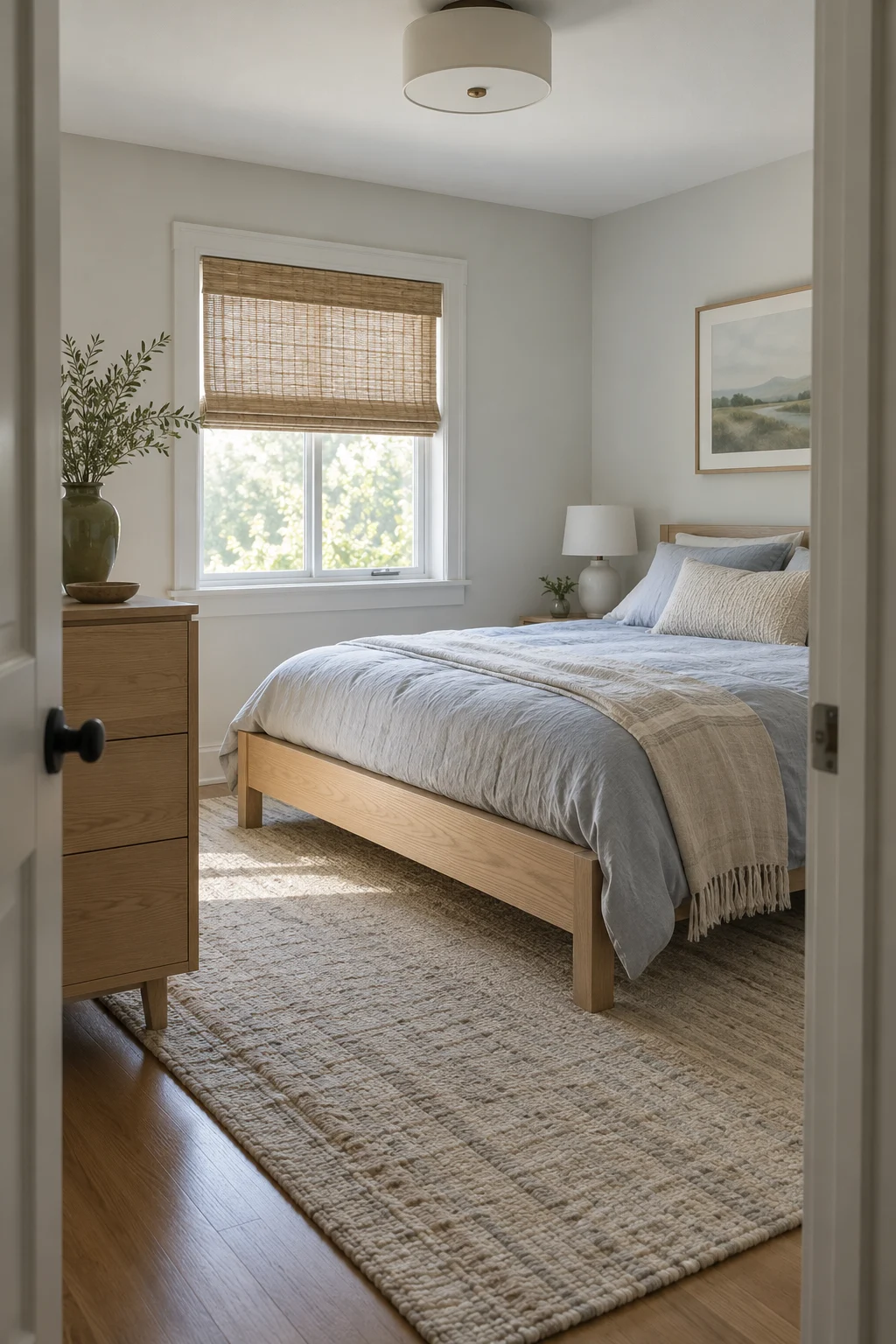
7. Pale Ash Platform for Airy Bedrooms
Pale ash wood gives a platform bed a light, almost Scandinavian character without relying on an all-white scheme. Combine it with pale gray-blue bedding, natural woven shades, and one olive ceramic vase on a dresser. The bed should feel simple but substantial, with visible joinery or clean uninterrupted side rails. This is an appealing direction for bedrooms that receive limited daylight because the wood does not absorb much visual attention. Avoid pairing it with several different pale woods that almost match but not quite; one secondary wood tone is enough. A washable flat-weave rug adds texture without making the room look busy. The final effect is open and restful, even in a modest footprint.
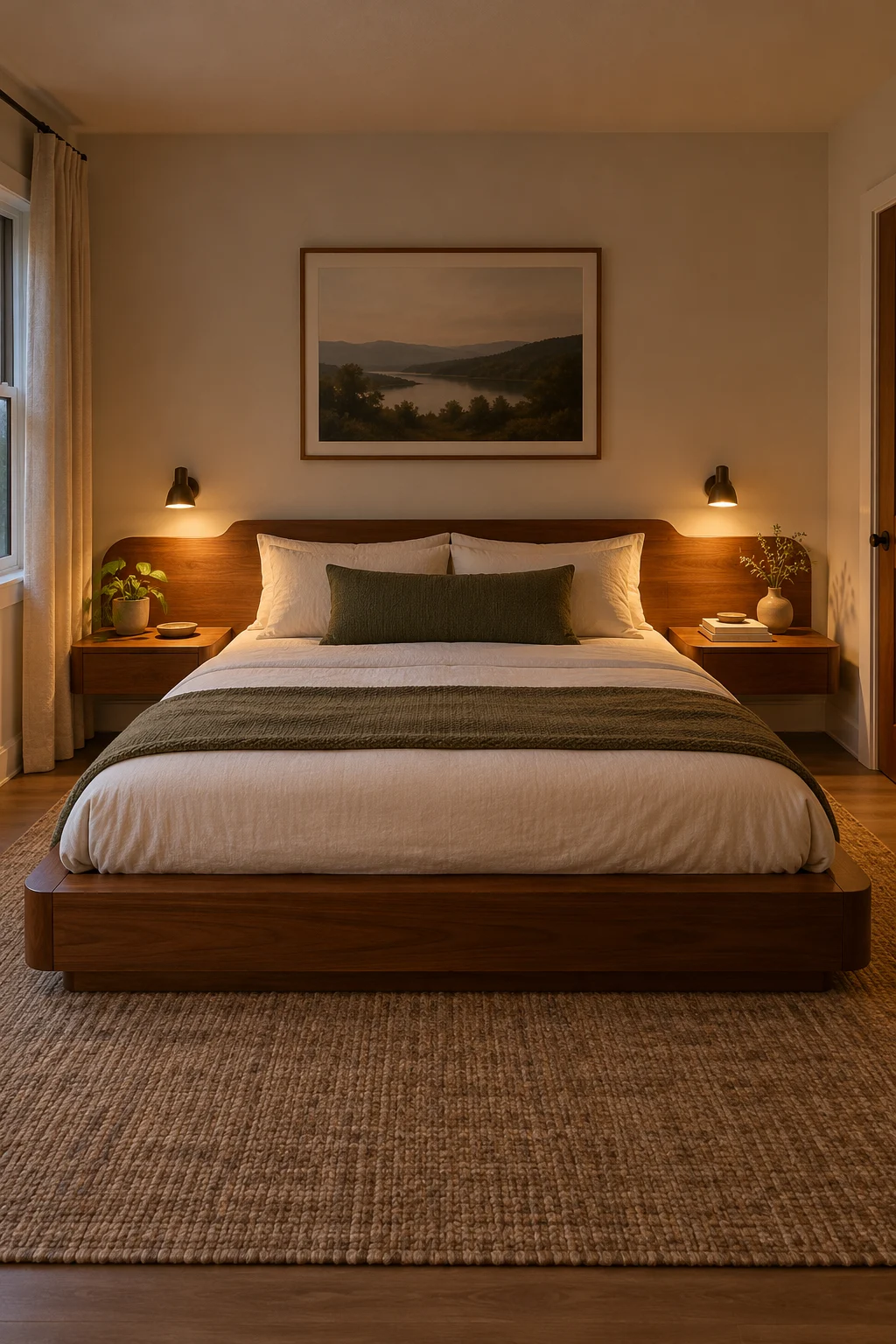
8. Platform With Extended Bedside Ledges
A platform that extends beyond the mattress can form slim bedside ledges in place of separate nightstands. The uninterrupted line looks tailored and works best when the ledges are wide enough for essentials but not so wide that they crowd circulation. Choose rounded or softened corners for areas you pass in the dark. A chestnut wood base pairs well with ivory sheets, a deep green accent cushion, and simple wall-mounted reading lights. Keep drinks on stable coasters and avoid piling books along the edge where they can fall. This is a thoughtful choice for a narrow room with symmetrical bedside access. Because the ledges are part of the frame, replacing them later is less flexible than swapping ordinary tables.
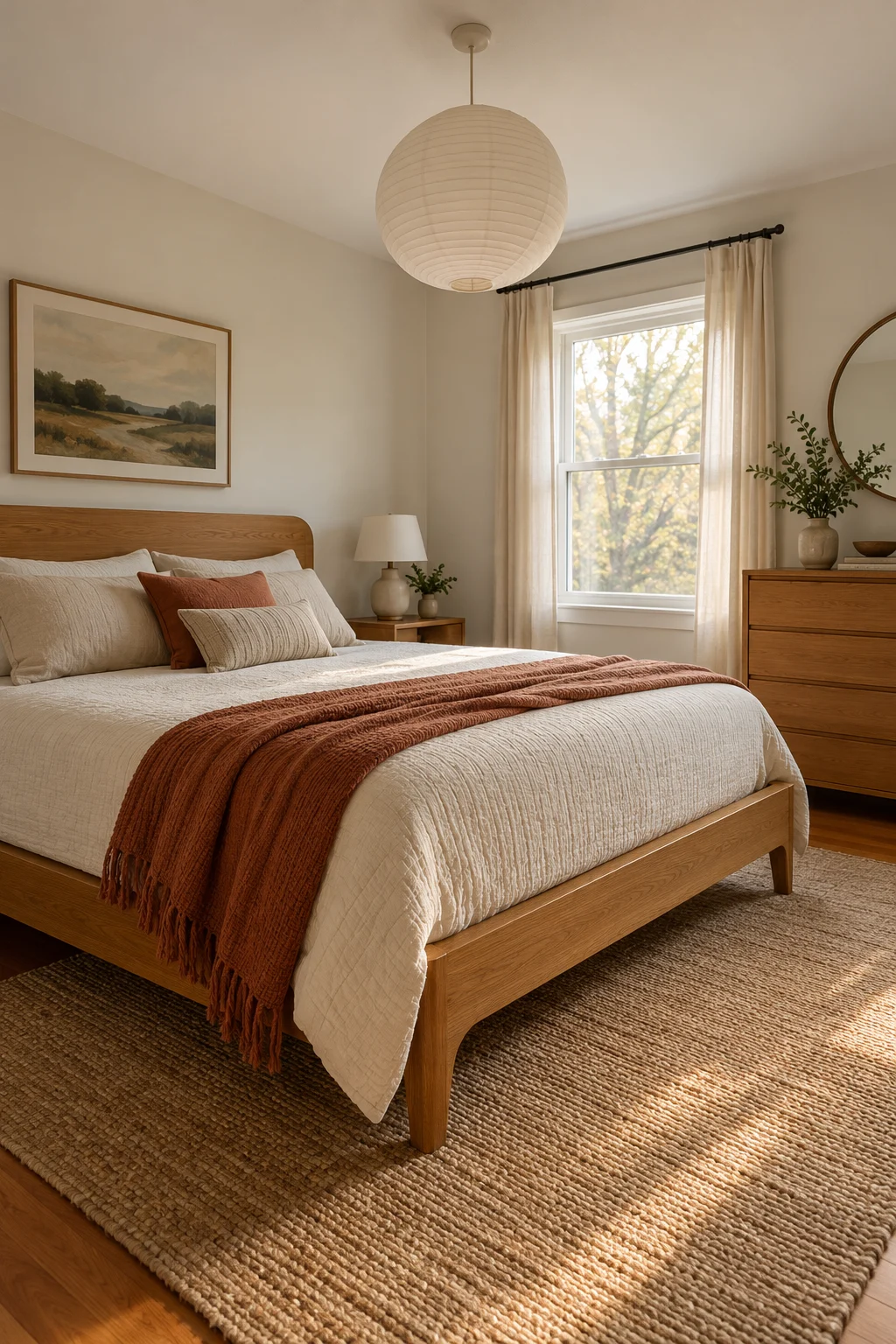
9. Softly Rounded Platform Bed Corners
Curved corners can make a low platform feel less boxy while keeping the clean geometry that defines the style. A honey-oak frame with gently rounded rails works beautifully with a cream quilt and muted rust throw. It is a good fit for a guest room where different people will move around the bed and appreciate fewer sharp edges. The curve should be subtle enough that the mattress still sits on a properly designed support surface. Use a round paper-shade pendant positioned at safe height to echo the softened silhouette. Too many rounded accessories can make the design look overly themed, so keep the dresser and wall art straightforward. This small detail makes the platform feel intentional rather than plain.
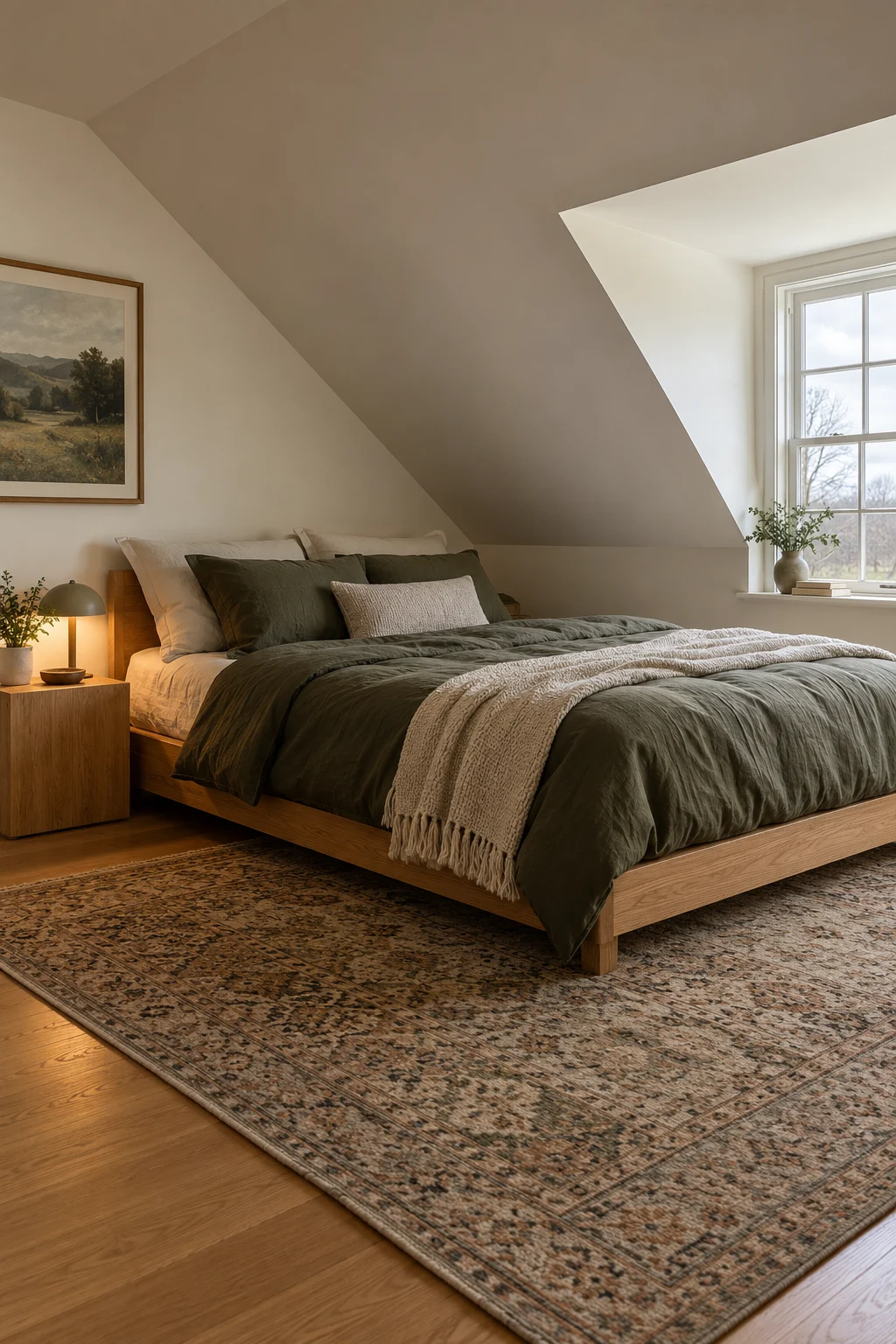
10. Low Platform Under a Sloped Ceiling
A platform bed is particularly useful beneath a sloping ceiling because its reduced height preserves a sense of headroom. Place the head of the bed where sitting upright remains comfortable, rather than forcing it beneath the lowest section. Warm-white walls and a dark olive duvet can make an attic bedroom feel cozy without visually shrinking it. A low oak bedside cube fits beneath the slope more naturally than a tall lamp table. Avoid blocking eaves access panels or ventilation openings. This arrangement works best when the room has a clear standing route beside the bed. A small framed landscape on the full-height wall gives the eye somewhere to rest beyond the roofline.
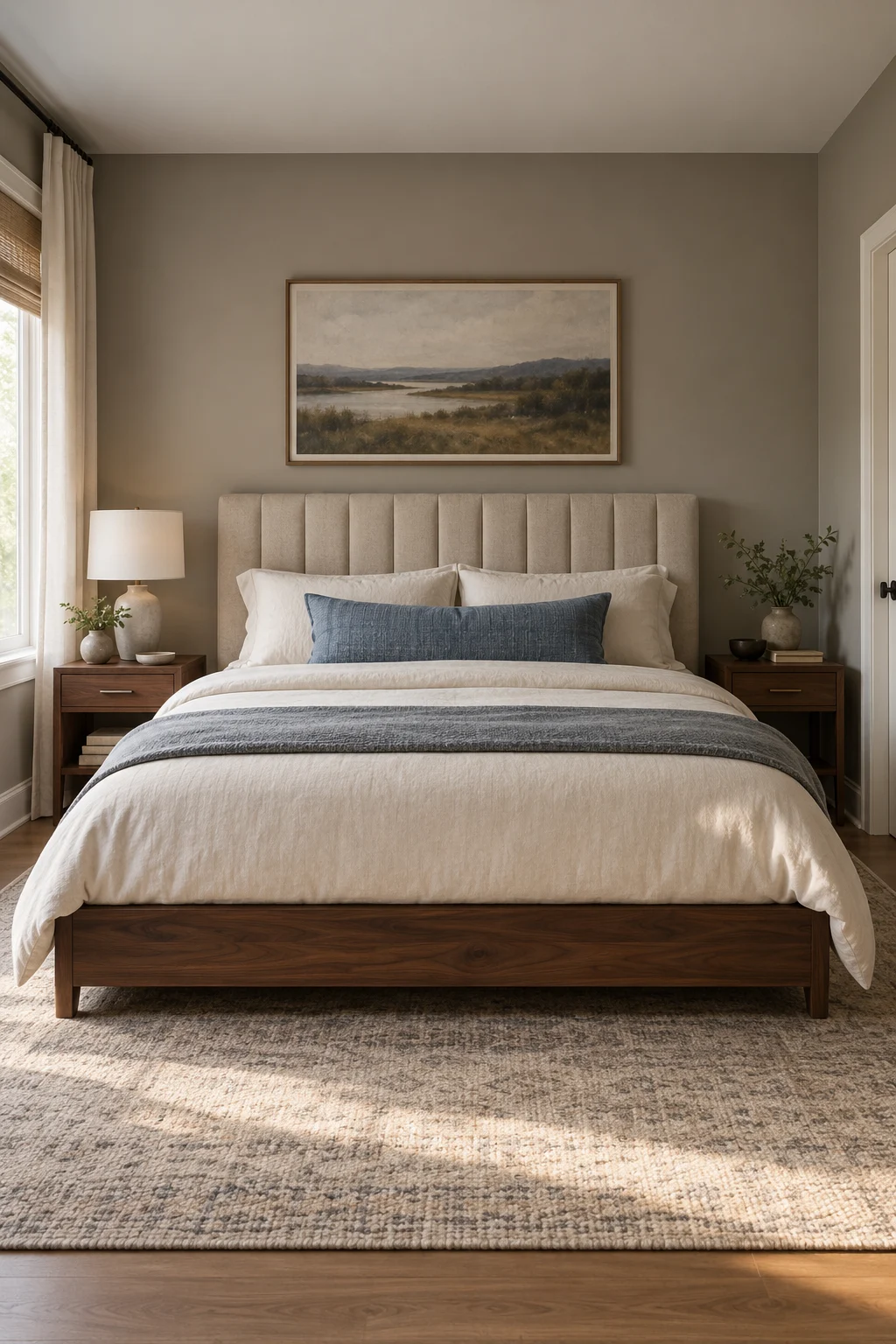
11. Textured Headboard Above a Simple Base
A separate fabric headboard can add depth to an otherwise spare platform bed. Pair a plain walnut base with a vertically channeled oatmeal headboard that ends well below the ceiling. The different textures keep the composition interesting while the bed remains streamlined. Cream bedding and one faded indigo cushion are enough to complete the look. A headboard that attaches to the wall requires appropriate hardware and knowledge of the wall construction; do not rely on decorative adhesive alone. This style is useful when you already own a platform frame and want a visual update without replacing it. Keep surrounding art minimal so the subtle channels remain noticeable.
12. Japanese-Inspired Platform With Tatami Texture
A Japanese-inspired low bed can feel serene when the details remain understated. Use a dark stained wood platform, a natural-fiber-look area rug, and a charcoal linen duvet with warm cream pillows. A single branch arrangement on a low cabinet introduces an organic shape without adding clutter. Authentic tatami has particular care requirements, so a durable woven rug may be easier for a busy household. Keep the mattress on the support system specified by its maker rather than placing it directly on an unsuitable surface. This direction suits anyone drawn to restrained materials and negative space. A modest bedside lantern-style electric lamp provides soft illumination while keeping the arrangement practical.
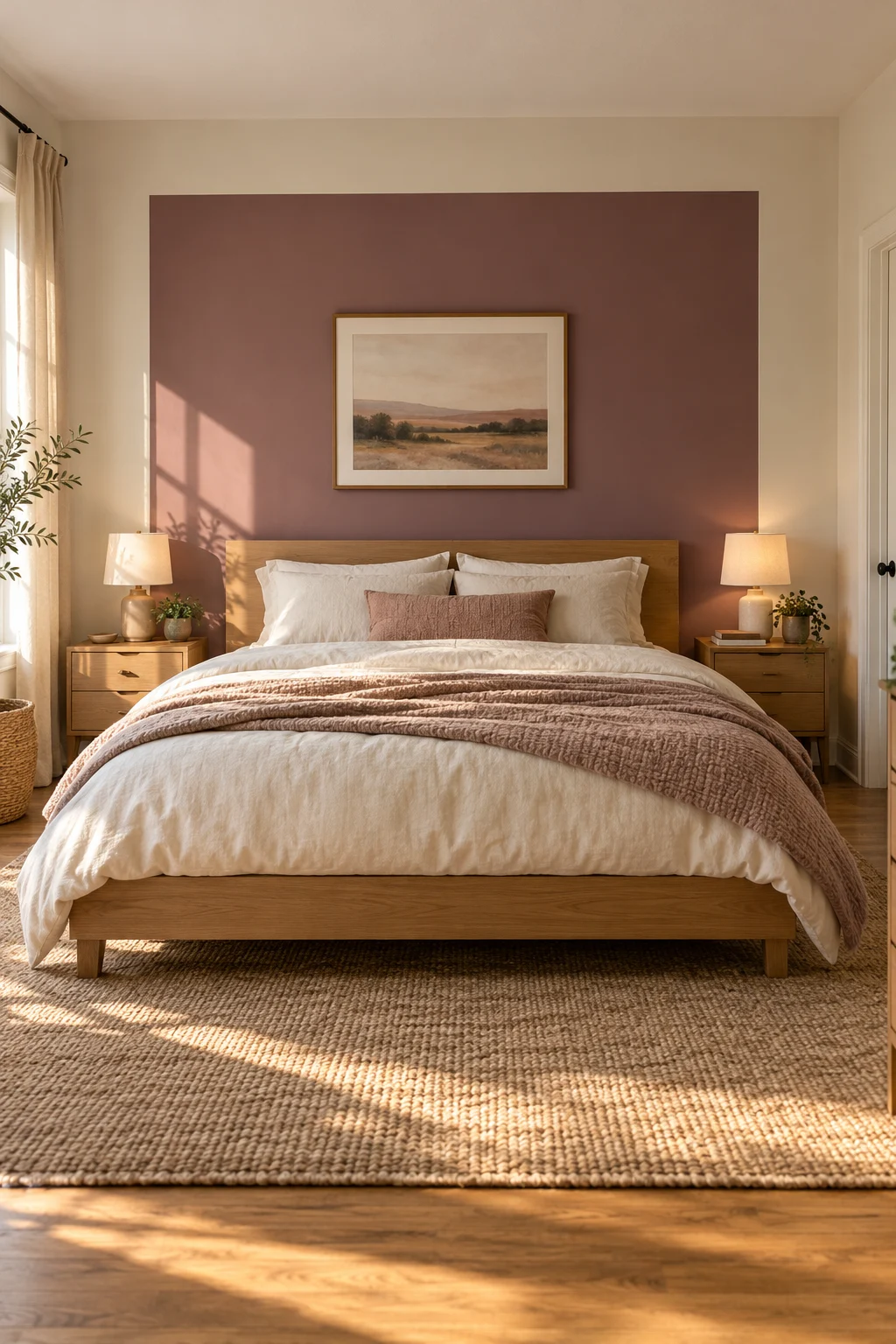
13. Color-Blocked Wall Behind the Platform
A painted color block can give a low bed visual presence without a tall headboard. Try a broad dusty-plum rectangle that rises above a light-oak platform and extends slightly beyond the mattress width. Keep the surrounding walls warm white and dress the bed in ivory with a muted blush blanket. Painter’s tape and a level are the main tools for a clean edge, but allow sufficient drying time before moving furniture back. This is a relatively reversible update for renters who have permission to paint. Avoid placing the block too close to the ceiling; the negative space above it is part of the composition. One small bedside lamp keeps the graphic wall from competing with other decorative features.
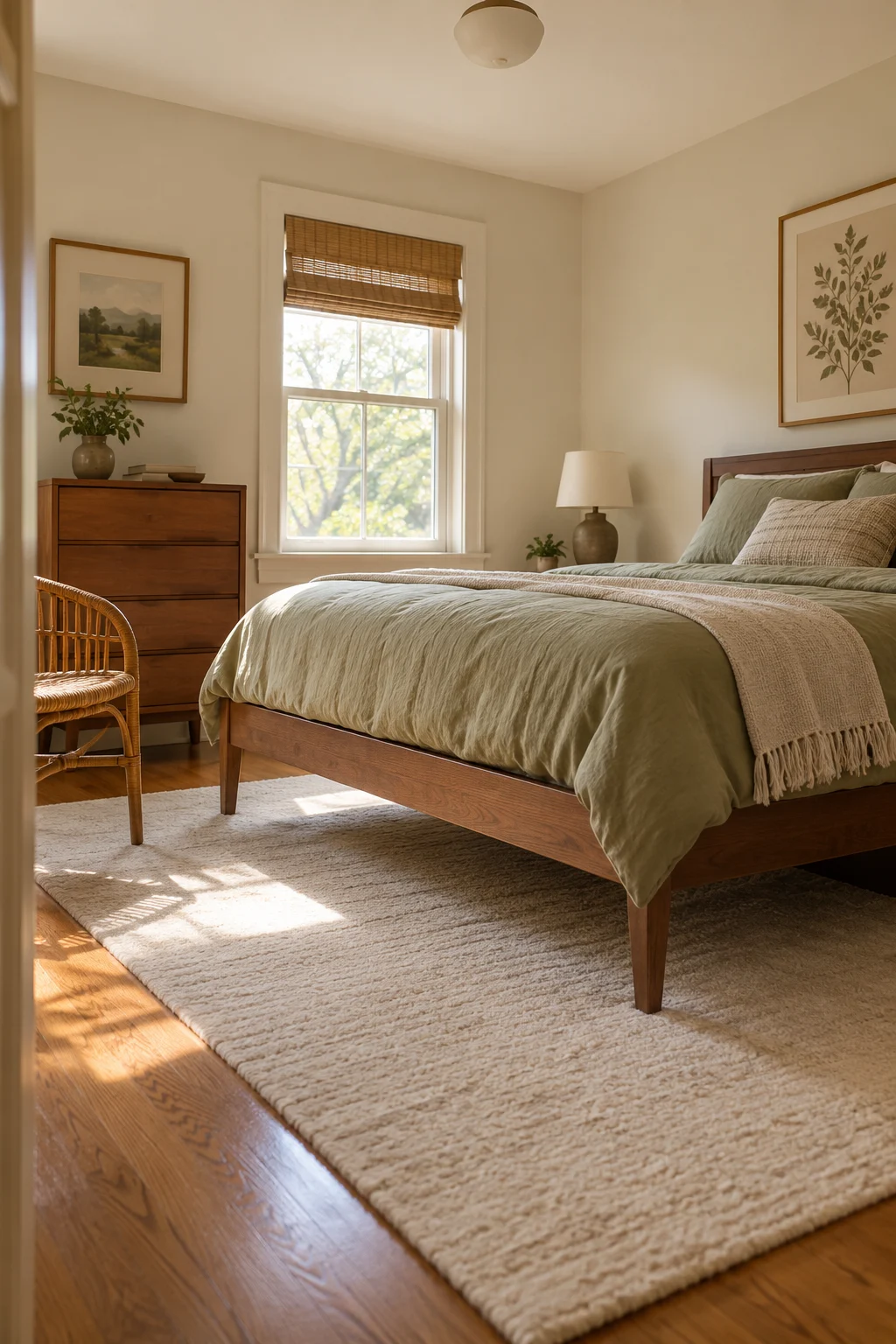
14. Platform Bed With Open Underbed Space
An open-legged platform creates breathing room beneath the mattress and can make a small bedroom appear less crowded. Select a frame with a clearly visible floor gap and enough structural support for the intended mattress. A medium-brown wood bed looks inviting beside a cream rug, pale olive bedding, and a slender rattan chair. The open space is easier to vacuum than enclosed plinth designs, though stray shoes and bags will be more noticeable. Resist turning the gap into improvised storage if the goal is an uncluttered appearance. This style is ideal for a room where you want the furniture to feel light but not delicate. A compact dresser completes the arrangement without overwhelming the bed.
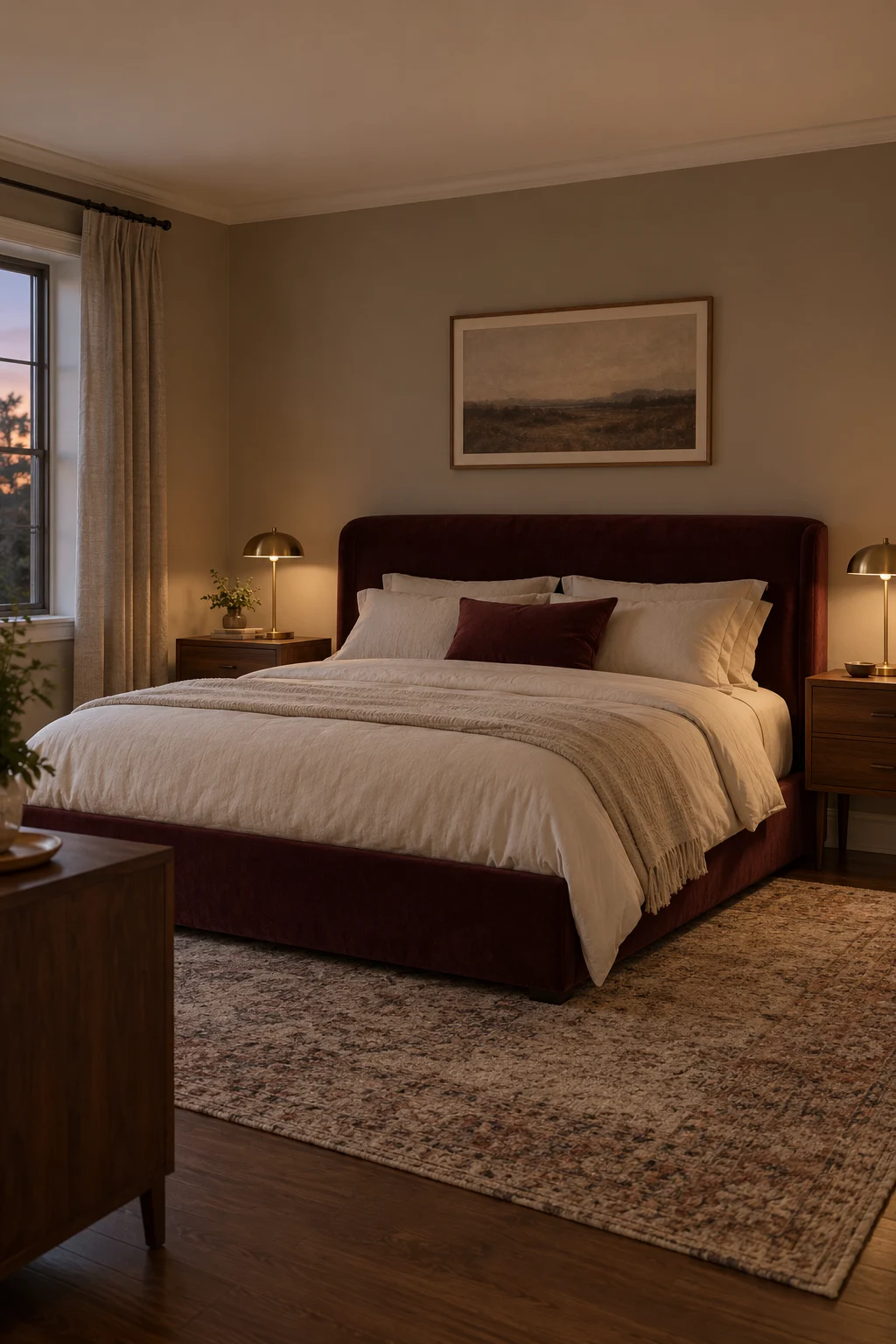
15. Deep Burgundy Platform as the Accent
A deep muted burgundy upholstered platform bed can carry the color scheme on its own. Keep the walls mushroom greige, the bedding warm ivory, and the nightstands medium walnut so the saturated frame feels balanced. A pair of brass-look table lamps introduces a little warmth without turning the room formal. Burgundy fabric may reveal lint, especially in bright daylight, so consider an upholstery texture that is easy to maintain. This is a strong choice for someone who wants a modern bedroom with a richer, more cocooning mood. Skip additional large burgundy furniture; a small coordinating cushion is plenty. The low frame helps the bold color feel grounded instead of imposing.
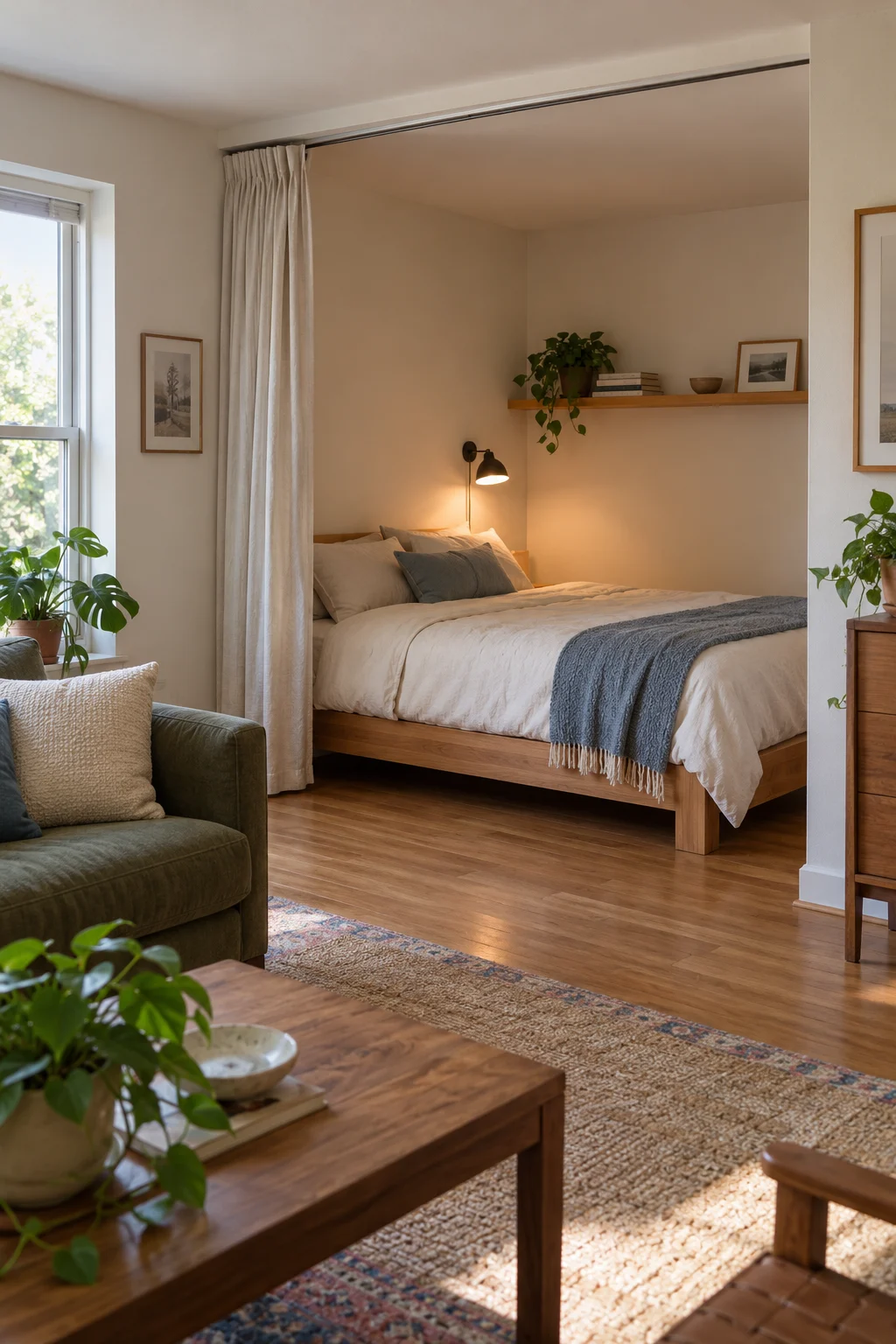
16. Compact Platform in a Studio Alcove
A platform bed tucked into a studio alcove can mark the sleeping area without needing a partition. A pale walnut frame, cream duvet, and muted blue throw keep the nook bright, while a small wall shelf replaces a conventional nightstand. Position the bed so its accessible side remains usable for changing sheets and entering comfortably. A curtain mounted outside the alcove can provide optional separation, provided it does not interfere with ventilation or access. This arrangement is best for one person or for a layout where both sleepers can enter the bed easily. A soft wall-mounted reading light gives the nook its own identity. Avoid oversized art that makes the compact space feel crowded.
17. Layered Neutral Platform With Bench
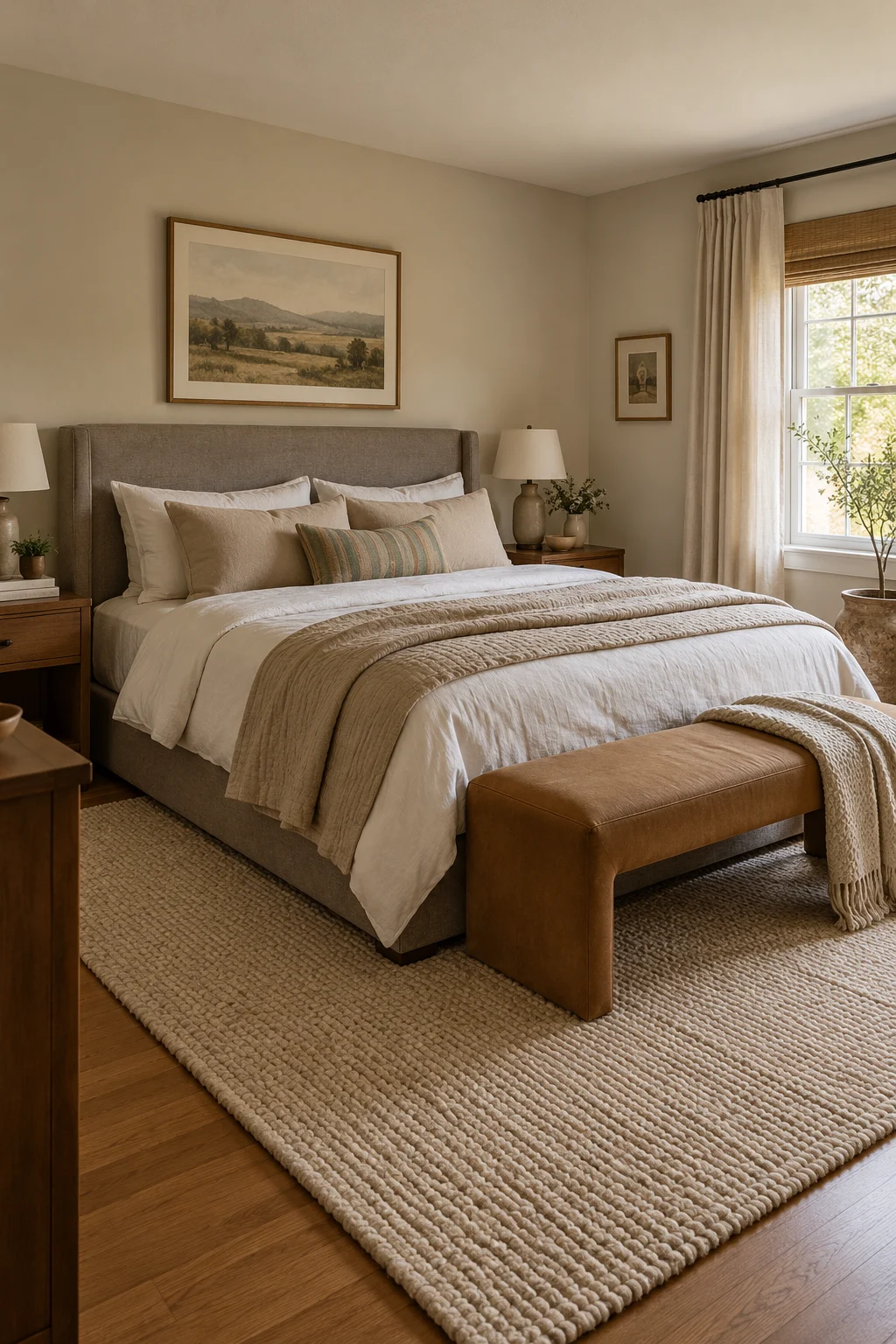
A low platform bed can still look inviting when you layer fabrics carefully. Start with a warm-gray upholstered base, add a white duvet, then fold a sand-colored cotton blanket across the foot. A small camel bench gives you a place to sit while putting on shoes without extending the bed itself. The bench should not obstruct the path to the closet or doorway. This approach works for someone who likes a polished bedroom but wants furniture that remains easy to live with. Vary the textures more than the colors: crisp cotton, softly woven upholstery, and a lightly nubby rug create depth. Keep decorative pillows limited so making the bed stays simple.
How to Choose the Right Platform Height
Platform beds vary more in height than their photographs suggest. A very low frame may suit someone who enjoys a grounded look, but getting in and out can feel awkward for anyone with limited mobility or sore knees. Think about the combined height of the frame and mattress, not the frame alone. Sit on a bed at a furniture showroom if possible, and notice whether your feet reach the floor comfortably. The thickness of your mattress also changes the finished silhouette: a deep pillow-top can make a minimal platform appear surprisingly tall. Check whether the bed requires a particular foundation or slat spacing. If the mattress warranty specifies a support system, follow that guidance. A streamlined bedroom should make everyday use easier, not turn bedtime into a floor exercise.
Plan Circulation Before Choosing Furniture
A low bed does not automatically create more usable floor area. Some platforms extend several inches beyond the mattress on every side, making them wider than a conventional frame. Sketch the room with doors, closet openings, and the direction drawers swing. Then mark the full outer footprint of the platform, including any built-in ledges. Aim for comfortable routes where people actually walk, especially between the bed and bathroom at night. In narrow rooms, a compact frame with a flush mattress edge may be the better design decision. Remember that a bench, chair, or laundry basket needs space too. Tape on the floor can help you visualize furniture edges before ordering. This small planning exercise prevents the most frustrating outcome: a beautiful bed that makes the room harder to navigate.
Budget for the Parts You Cannot See
A platform bed’s price reflects more than its visible finish. The support structure, joinery, hardware, and quality of drawer runners can affect how well it performs over time. Compare product specifications carefully instead of judging by a staged photograph. Check whether a center rail or additional legs are included for larger sizes, and whether assembly tools come in the box. Delivery charges and removal of an old frame may change the total cost. If the bed is upholstered, consider how easily the fabric can be cleaned; if it is wood veneer, ask about care instructions for the surface. Spending on a reliable base while keeping bedding and accessories simple is often a sensible balance. A modest frame that supports the mattress properly will serve the room better than elaborate trim.
Lighting That Works With Low Furniture
When the bed sits closer to the floor, bedside lighting needs extra thought. A lamp placed on a tall chest may illuminate the room but leave the reading area in shadow. Try positioning a lamp or adjustable wall fixture where light reaches your book without shining directly into your eyes. Use warm bulbs for evening comfort and provide a separate brighter source for cleaning or getting dressed. If you choose wall-mounted fixtures, plan the location around the actual mattress height and pillow position. Keep electrical cords controlled and away from walking routes, and use qualified installation for hardwired fittings. A ceiling light can still be useful, but it should not be the only source. Layered lighting makes even the simplest platform arrangement feel considered and usable.
Keep a Streamlined Bedroom Easy to Maintain
Clean lines look their best when the surfaces around them are manageable. Set aside a small place for glasses, charging devices, and a book so these essentials do not migrate across the mattress or floor. Choose bedding you can wash according to its care label, and avoid collecting more decorative cushions than you want to move each evening. Dust can gather along recessed plinths, upholstery seams, and underbed spaces, so consider access before settling on a frame. For wood surfaces, follow the manufacturer’s cleaning recommendations rather than applying harsh household products. If the room has a rug, keep its edges flat and out of frequently used paths. A practical maintenance routine is what lets a minimal bedroom stay calm after the photographs are forgotten.
Common Platform Bedroom Ideas to Reconsider
Some platform bedroom ideas look impressive online but are frustrating in a lived-in room. A bed that spans nearly wall to wall can make changing sheets unnecessarily difficult. Oversized integrated side shelves may look sculptural yet leave too little space to pass. Extremely low frames can be inconvenient for some sleepers, while a mattress placed on an unsuitable solid surface may not receive the ventilation or support its maker requires. Resist choosing a bed solely because the room around it is styled beautifully. Focus on the frame’s real dimensions, the materials you can maintain, and the way you move through the space. If you want a bold statement, use one strong element—such as color or texture—and let the rest of the room support it.
Frequently Asked Questions
Do platform beds need a box spring?
Many platform beds are designed to support a mattress without a traditional box spring, but construction varies. Follow the instructions for both the bed and mattress. Slat spacing, center support, and weight requirements matter more than the label on the frame.
Are low platform beds suitable for small bedrooms?
They can make a room appear more open, particularly when the frame has a narrow profile. However, some designs have wide rails or built-in ledges that occupy extra floor area. Compare the outer frame dimensions with the available walking space before choosing.
What bedding looks best on a platform bed?
Bedding with a relaxed drape tends to soften the frame’s straight lines. Cotton, linen, and lightly textured quilts all work well. You do not need many layers; a comfortable duvet, one folded throw, and a small number of pillows can be enough.
Can a platform bed work with a thick mattress?
Yes, provided the frame and mattress are compatible. A thick mattress changes the bed’s total height and may hide some of the low-profile design. Check the intended mattress depth and support requirements rather than relying on photographs alone.
Conclusion
A platform bed can give a bedroom a more intentional shape, but the best design is the one that fits how you actually live. Choose a frame that supports your mattress, leaves room to move, and works with the furniture you already own. Texture and lighting can provide warmth without cluttering the space. Start by outlining your preferred bed frame on the floor with painter’s tape, then see how the room feels when you walk around it.
