
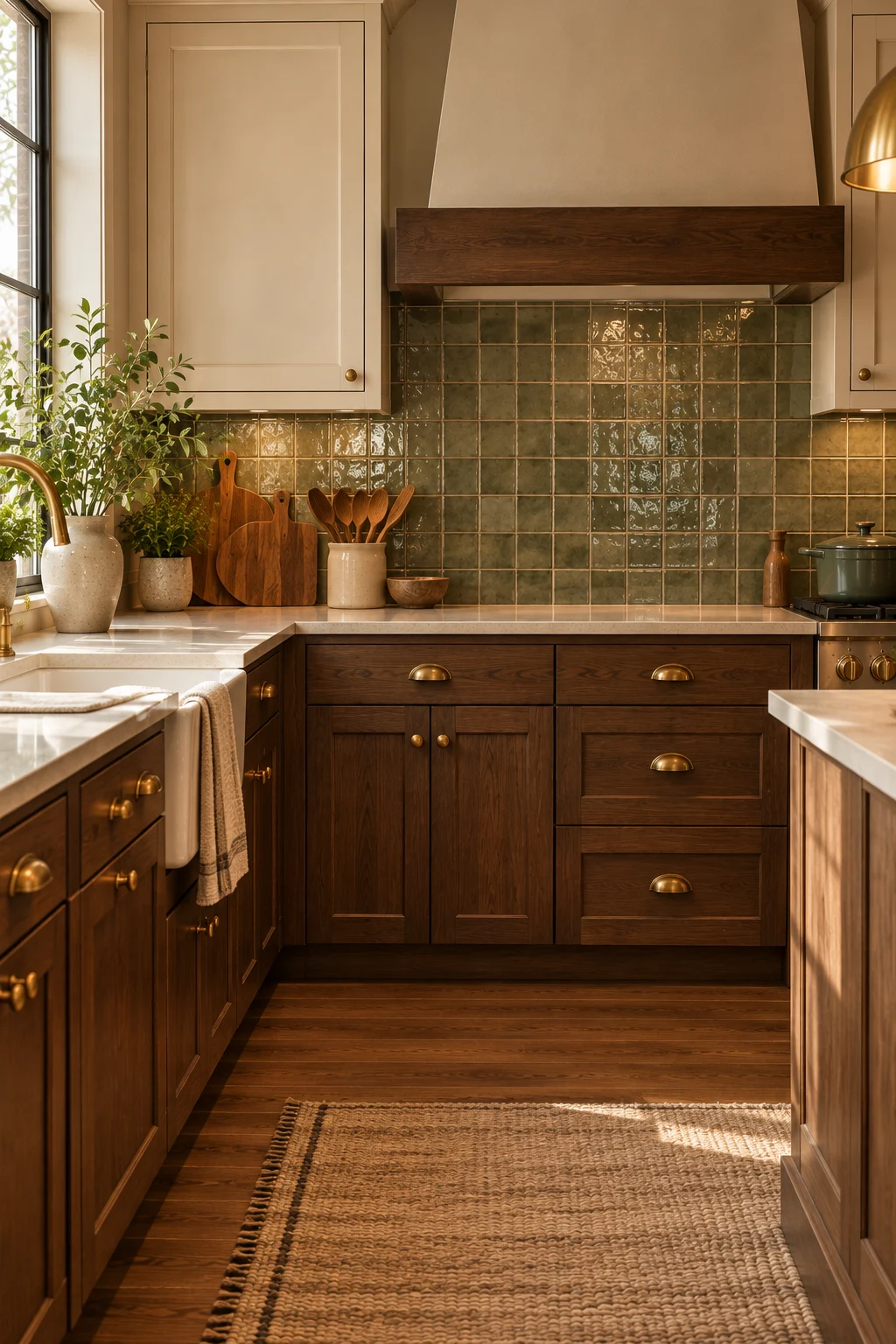
13 Green and Brown Kitchen Ideas for a Warm Earthy Palette
A kitchen can feel cold or overly polished when every surface is white, gray, or glossy. Adding color helps, but choosing shades that work together without overwhelming the room can be challenging.
Green and brown create a naturally inviting combination inspired by leaves, trees, and earthy materials. These 13 green and brown kitchen ideas explore cabinet colors, wood finishes, countertops, backsplashes, and decorative accents that bring warmth and balance into everyday kitchens.
Start by deciding which color will dominate. Green cabinets with brown wood accents create a different atmosphere from a wood-focused kitchen with smaller touches of green.
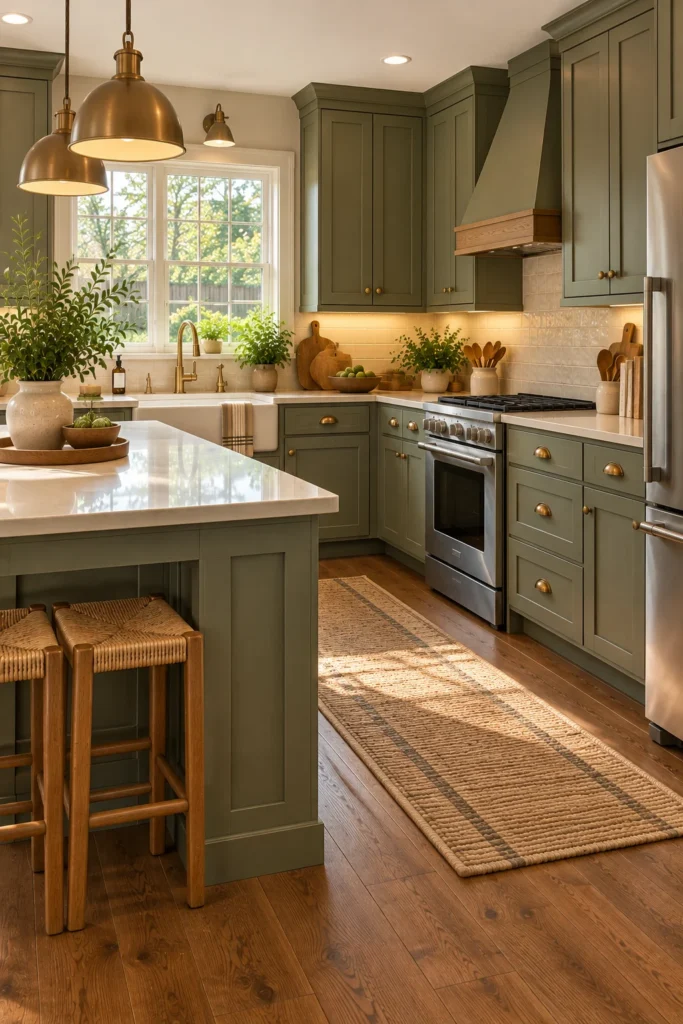
1. Pair Sage Green Cabinets With Medium Walnut Flooring
Sage green cabinets and medium walnut flooring create a soft, grounded kitchen palette. The muted green introduces gentle color, while the brown flooring adds warmth and visual depth.
Choose sage cabinets with gray or olive undertones rather than a bright yellow-green finish. Medium walnut-look flooring provides enough contrast to define the cabinets without making the room feel dark.
Complete the combination with warm cream countertops and simple hardware. Avoid adding several additional strong colors, since the green and brown already provide a distinctive foundation.
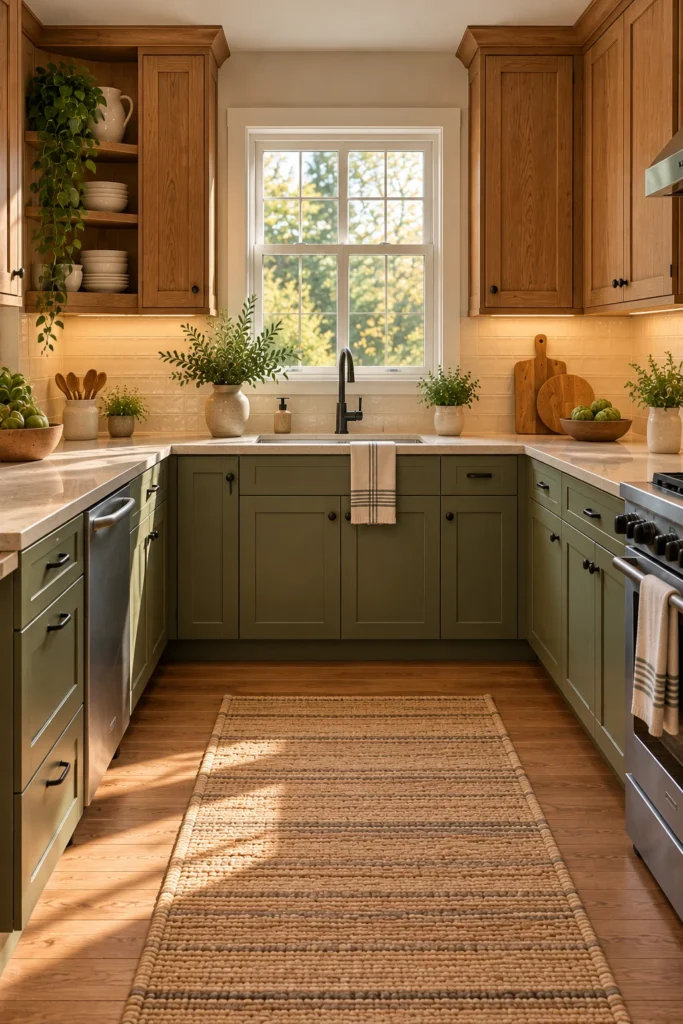
2. Combine Olive Green Lower Cabinets With Brown Wood Uppers
Olive green lower cabinets paired with natural brown wood uppers create a warm, layered appearance. This combination works especially well in kitchens that need color without feeling overly decorative.
Choose a muted olive finish for the lower cabinets and medium oak or walnut-look wood for the upper sections. A light backsplash between the two finishes helps keep the arrangement balanced.
Maintain consistent cabinet profiles and simple hardware to connect the materials. Avoid choosing very dark upper cabinets in a small kitchen with limited daylight, since they can make the room feel top-heavy.
3. Choose Forest Green Cabinets With Warm Oak Countertops
Forest green cabinets bring depth and richness to a kitchen, while warm oak countertops soften their dramatic appearance. The contrast creates an earthy combination that feels both traditional and contemporary.
Choose a deep green with a muted undertone rather than a highly saturated emerald shade. Pair it with appropriately finished oak countertops or wood-look surfaces designed for kitchen use.
Use lighter walls and backsplash tiles to prevent the room from feeling enclosed. Avoid combining dark green cabinets with dark brown floors and walls unless the kitchen has sufficient light.
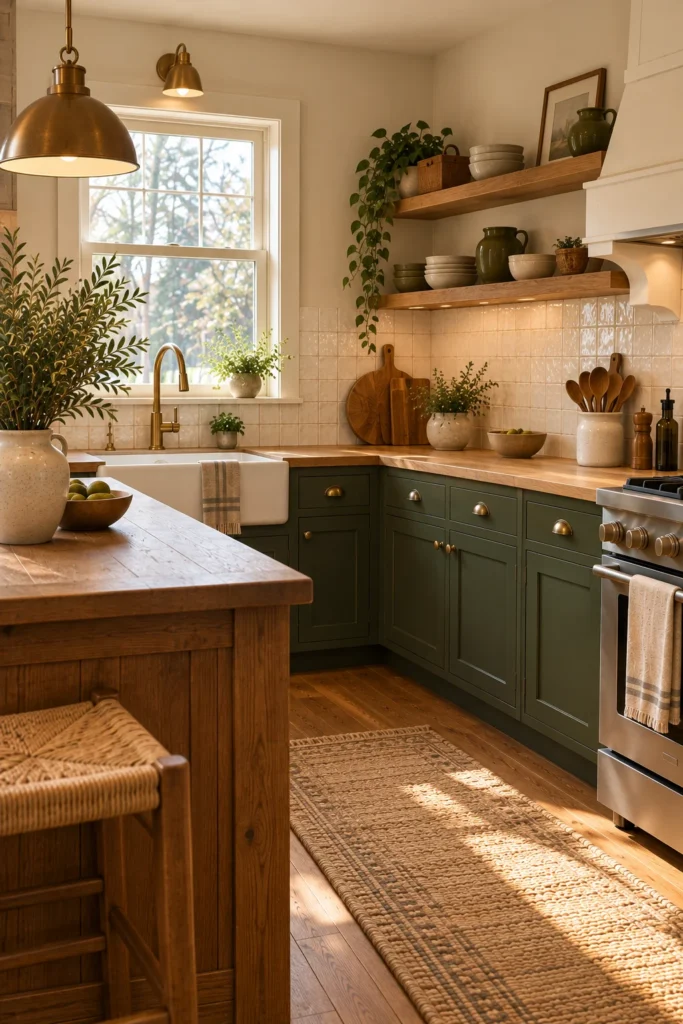
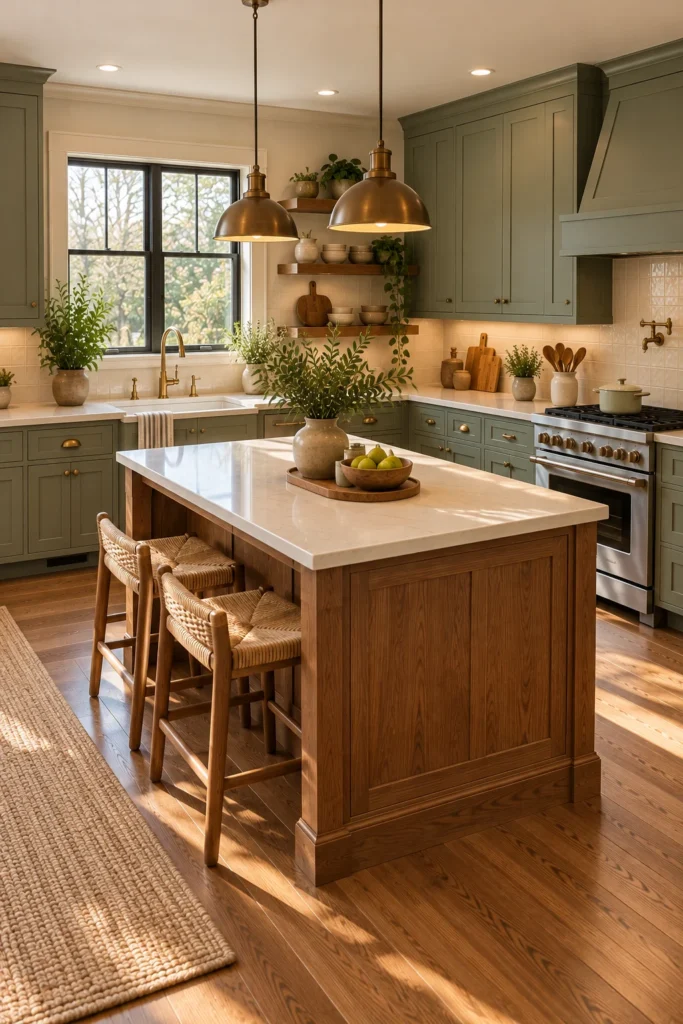
4. Introduce a Brown Wood Kitchen Island With Green Perimeter Cabinets
A brown wood island creates a natural focal point in a kitchen with green perimeter cabinets. It introduces furniture-like warmth while allowing the surrounding cabinetry to carry the main color.
Choose a compact island with visible wood grain and a countertop that coordinates with the perimeter surfaces. Medium walnut, oak, and warm brown wood-look finishes pair comfortably with sage or olive cabinetry.
Keep the island proportionate to the available floor space. Avoid choosing a large island that restricts access to the sink, refrigerator, or cooking area.
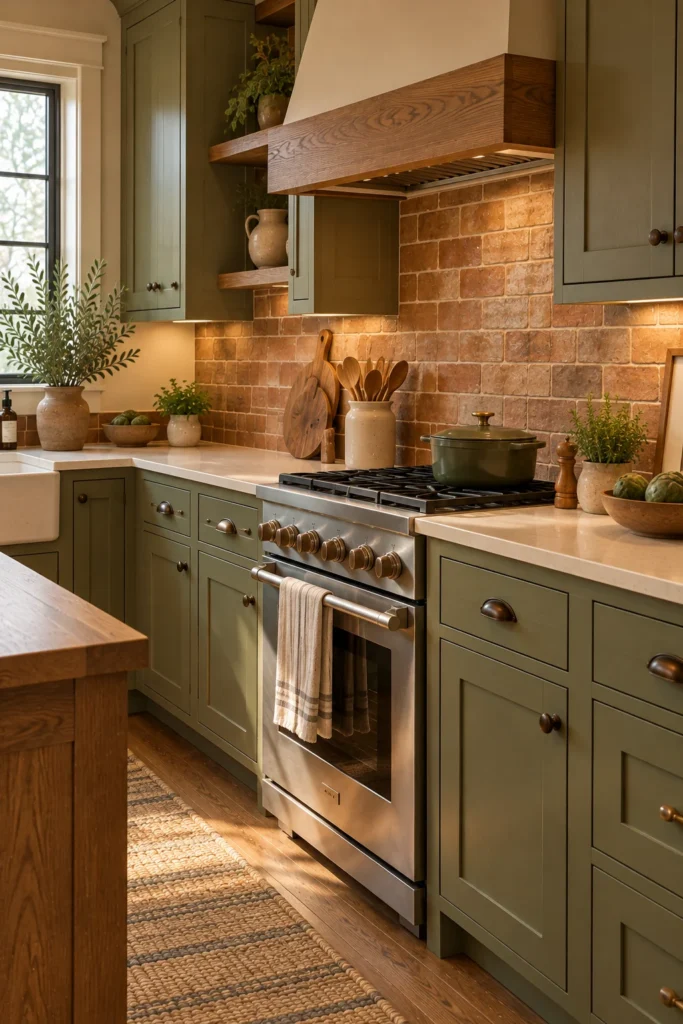
5. Pair Muted Green Cabinets With a Brown Brick-Look Backsplash
A brown brick-look backsplash introduces earthy texture to green cabinetry. Its warm reddish and brown tones create a relaxed rustic atmosphere without requiring extensive decorative accessories.
Choose kitchen-appropriate ceramic or porcelain tiles with a restrained brick appearance. Soft terracotta-brown, weathered tan, and muted clay tones work well with olive or sage cabinets.
Keep countertops relatively simple to balance the textured backsplash. Avoid combining strongly varied brick-look tiles with heavily patterned countertops or flooring.
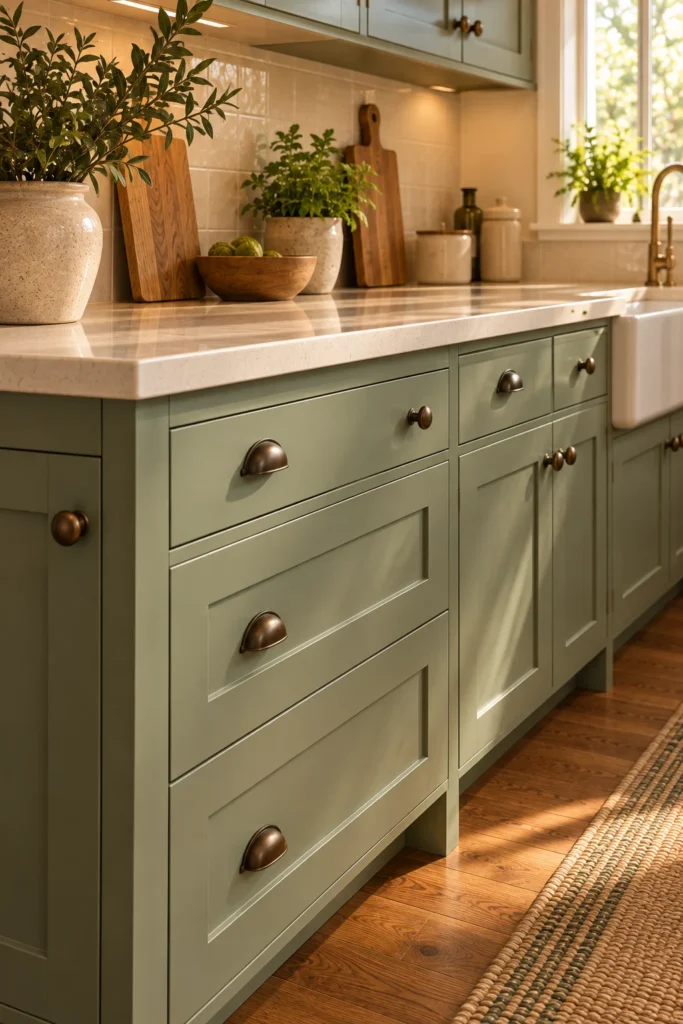
6. Use Light Green Cabinets With Dark Brown Hardware
Light green cabinetry can feel more grounded when paired with dark brown hardware. The contrast defines the cabinet doors while maintaining a gentle, natural color palette.
Choose pale sage, eucalyptus, or gray-green cabinets with dark bronze or oil-rubbed bronze-look knobs and pulls. Simple traditional shapes complement both cottage and transitional kitchen designs.
Coordinate the hardware with nearby fixtures where practical. Avoid using several unrelated dark metal finishes, which can make the cabinet details appear inconsistent.
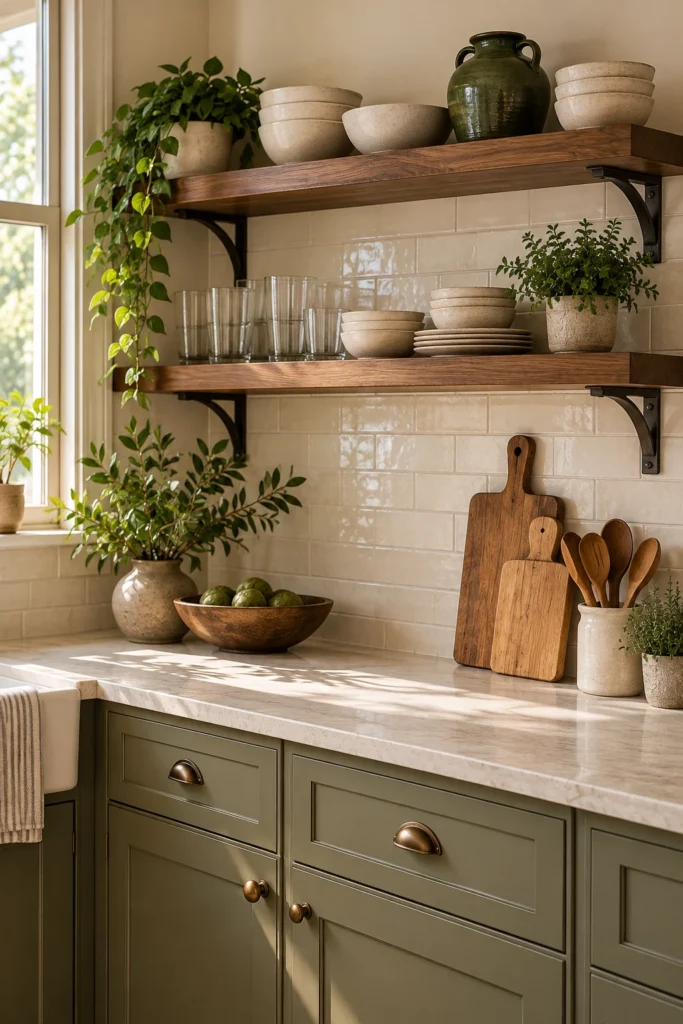
7. Create a Green and Brown Kitchen With Natural Wood Shelves
Natural wood shelves bring brown tones into a green kitchen without requiring additional cabinetry. They create a lighter appearance and provide useful space for everyday dishes.
Choose sturdy oak or walnut shelves with properly installed structural brackets. Display cream ceramics, clear glasses, and a few muted green pieces to connect the shelves with the cabinetry.
Leave enough space between objects to preserve an uncluttered appearance. Avoid placing heavy cookware on shelves that are not specifically designed for substantial loads.
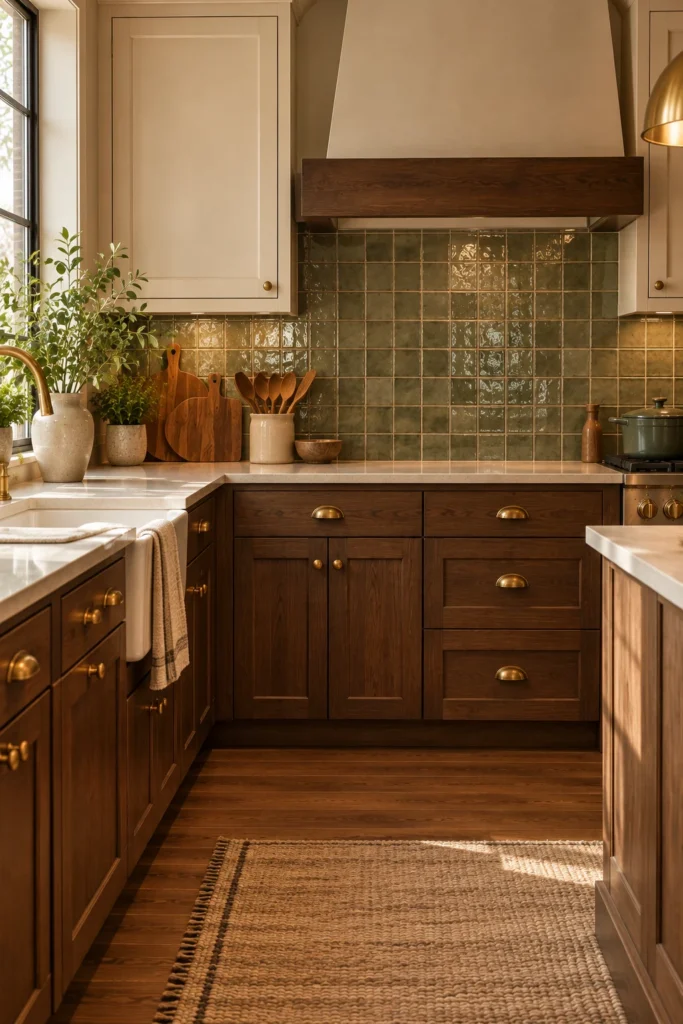
8. Choose Dark Brown Cabinets With a Sage Green Backsplash
Dark brown cabinetry provides a rich foundation for a kitchen, while a sage green backsplash introduces a softer natural accent. This arrangement allows the wood to remain the dominant material.
Choose walnut-look or dark oak cabinets with visible grain. Pair them with handmade-look sage ceramic tiles that have subtle glaze variation rather than a glossy, highly saturated finish.
Use light countertops to separate the two darker elements. Avoid choosing a green backsplash that is too close in darkness to the cabinets, since the surfaces may visually blend together.
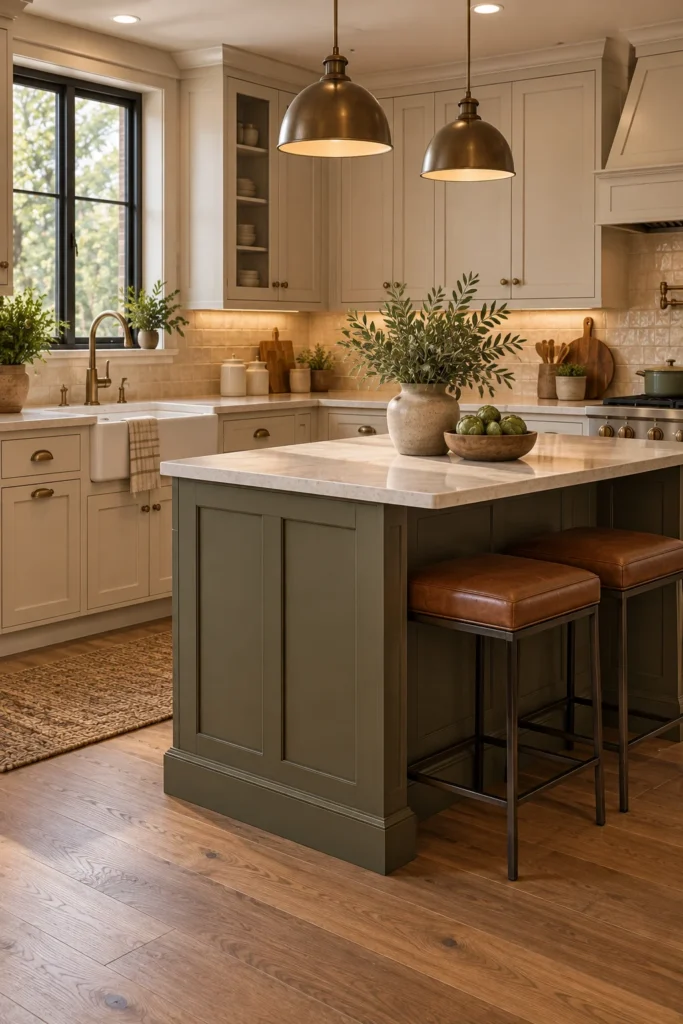
9. Add Brown Leather-Look Stools to a Green Kitchen Island
Brown leather-look seating adds warmth and texture to a green kitchen island. The contrast creates a comfortable, furnished appearance without introducing another major cabinet finish.
Choose compact stools with easy-clean brown upholstery and sturdy wooden or metal frames. Camel, chestnut, and medium chocolate tones pair particularly well with muted green cabinetry.
Select stools that fit beneath the island overhang and preserve clear walkways. Avoid oversized upholstered seating that makes the kitchen feel crowded.
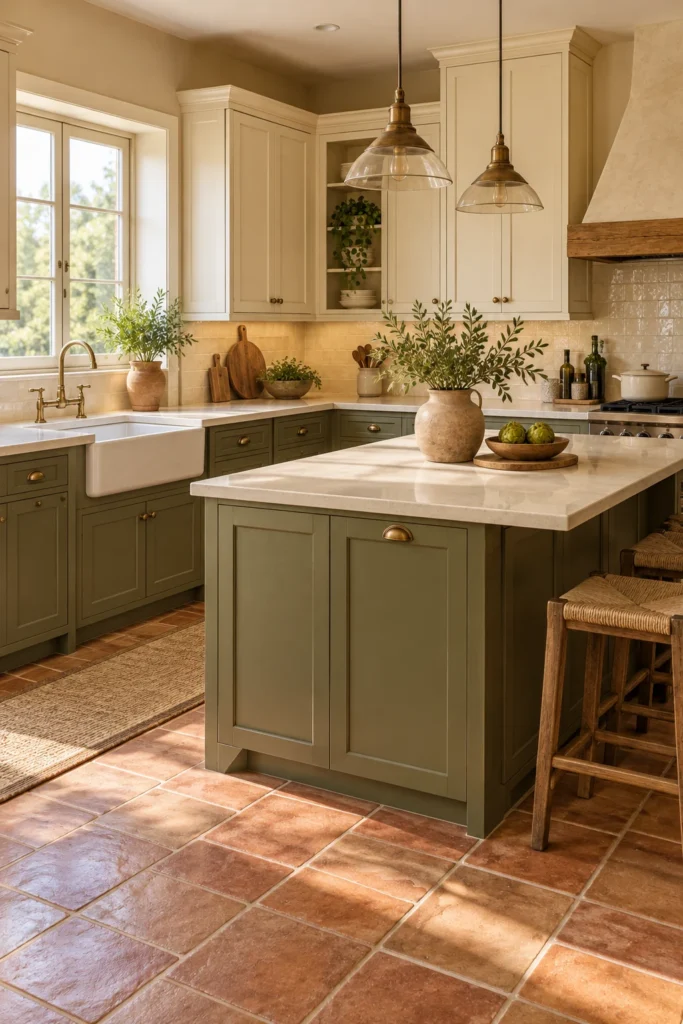
10. Combine Green Cabinets With Warm Brown Terracotta Flooring
Terracotta-inspired flooring adds earthy warmth to green cabinetry. The reddish-brown tones create a Mediterranean or country-inspired atmosphere while maintaining a natural palette.
Choose durable kitchen flooring in muted clay, cinnamon, or warm brown terracotta tones. Matte ceramic or porcelain tiles can provide the desired appearance with different maintenance requirements.
Balance the floor with lighter walls and countertops. Avoid adding too many competing warm colors, since the combination of green cabinetry and terracotta flooring already creates strong visual character.
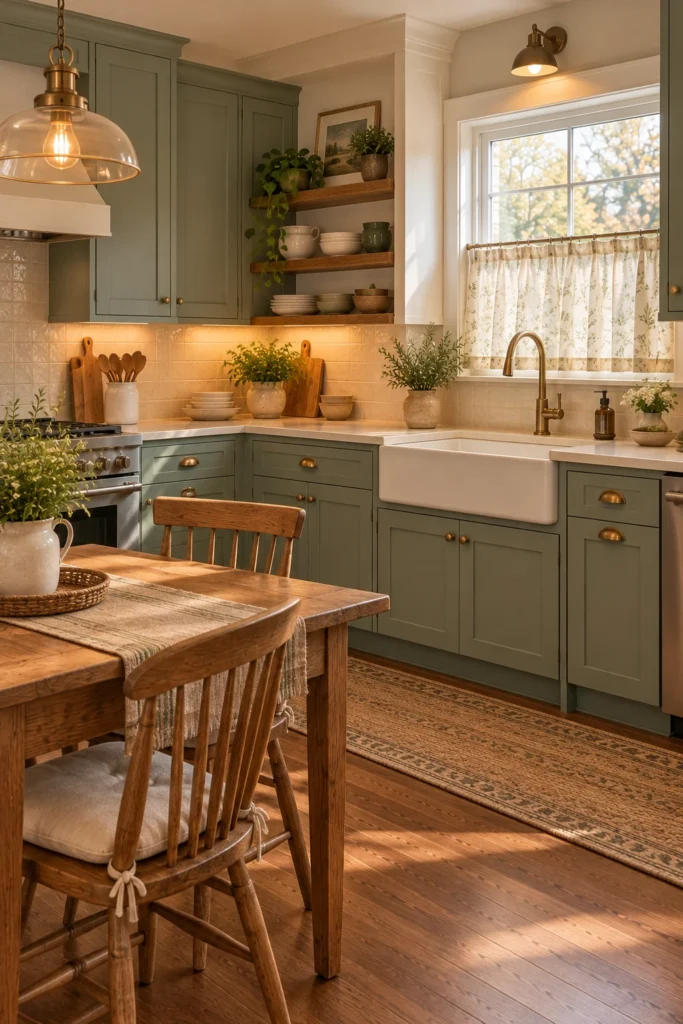
11. Use a Soft Green and Brown Cottage Kitchen Palette
A cottage-style kitchen offers a relaxed way to combine green and brown. Muted green cabinets, wooden furniture, and simple cream surfaces create an inviting room that feels collected rather than overly coordinated.
Choose a pale sage or gray-green cabinet finish and add a compact brown oak table or wooden stools. Small traditional details, such as ceramic pitchers or a restrained floral curtain, can reinforce the cottage character.
Keep the decorative elements practical and limited. Avoid filling every shelf and countertop with accessories that reduce usable space.
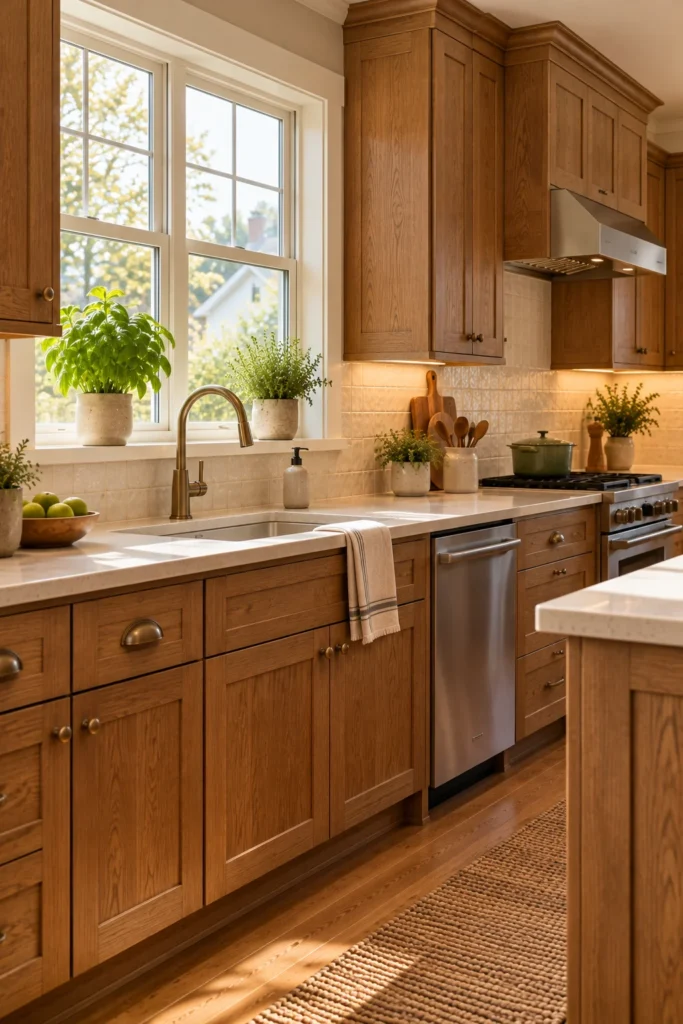
12. Add Green Botanical Accents to Brown Wood Cabinets
Brown wood cabinetry can feel more lively with a few carefully chosen green botanical accents. Plants introduce a natural connection between the kitchen’s wood tones and the surrounding environment.
Choose compact plants suited to the available daylight and kitchen conditions. A small herb pot near a bright window or a leafy plant on a stable dry shelf can provide enough color.
Use protective saucers and keep plants away from cooking heat and electrical equipment. Avoid crowding the sink area or blocking window operation with oversized planters.
13. Create a Fully Layered Green and Brown Kitchen
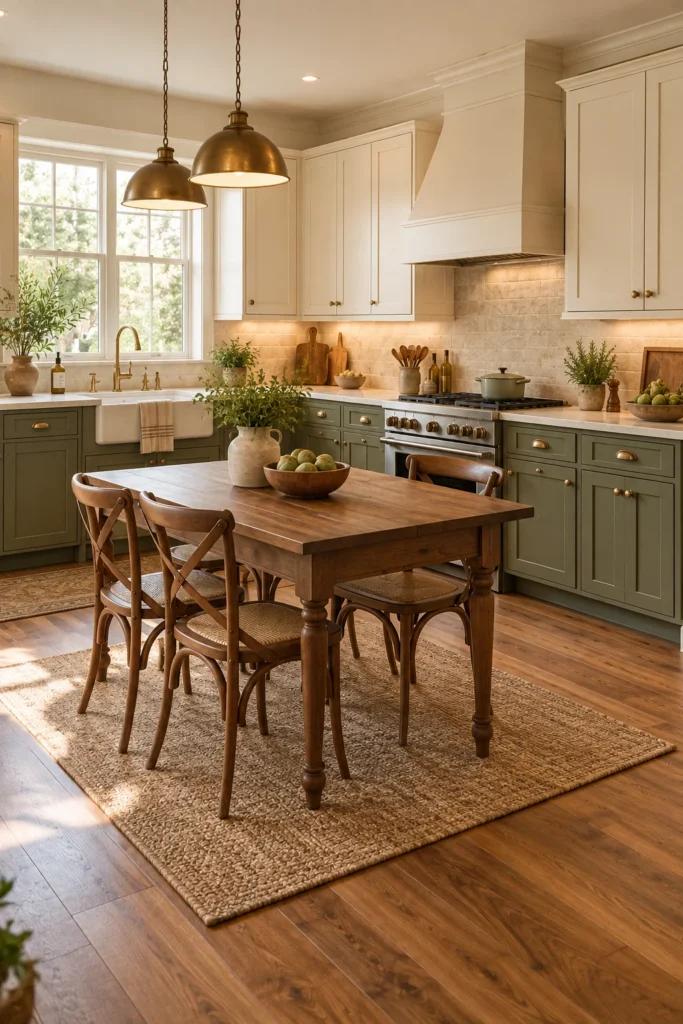
A complete green and brown kitchen feels most balanced when the two colors appear through different materials. Painted cabinetry, natural wood, earthy flooring, and small decorative accents can create depth without requiring a dramatic renovation.
Begin with muted green cabinets and one consistent brown wood tone. Add light countertops, a restrained backsplash, and practical furnishings that reinforce the natural palette.
Keep the overall arrangement simple enough for the materials to stand out. Avoid introducing too many unrelated finishes, which can weaken the calm earthy atmosphere.
How to Choose the Right Green and Brown Combination
The undertones of green and brown influence how well the colors work together. Sage green often pairs comfortably with medium oak, while deeper olive and forest green can complement richer walnut tones.
Consider whether you want a light and airy kitchen or a darker, more intimate atmosphere. Pale green cabinetry with warm wood floors feels different from deep green cabinets and dark brown furniture.
Test cabinet paint and wood samples in the actual room. Natural daylight and warm artificial lighting can change how green and brown finishes appear.
Making Green and Brown Work in a Small Kitchen
A small kitchen can use green and brown successfully when the contrast is balanced. Choose lighter green cabinets or introduce brown through flooring and compact furniture rather than covering every surface in dark wood.
Warm cream countertops and simple backsplashes help keep the palette from feeling heavy. Clear countertops and good task lighting also make the room more comfortable.
Avoid combining dark green walls, dark brown cabinets, and dark flooring in a room with limited daylight. Keeping at least one major surface light helps preserve visual openness.
Budget-Friendly Green and Brown Kitchen Updates
Painting existing cabinets can introduce green without replacing the entire kitchen. Choose a cabinet-appropriate finish and prepare the surfaces carefully.
Brown wood accents can come from practical additions such as stools, shelves, cutting boards, or a small breakfast table. These pieces introduce warmth without requiring new flooring or countertops.
A simple runner with muted green and brown tones can also connect the palette. Choose a low-profile rug that lies flat and does not interfere with appliance doors.
Common Green and Brown Kitchen Decorating Mistakes
One frequent mistake is combining too many wood tones. Strongly contrasting oak, walnut, reddish pine, and dark brown stains can make the room feel disjointed.
Another is choosing a green paint color without considering its undertone. A bright yellow-green may clash with a cool gray-brown finish, even when both colors look attractive separately.
Avoid adding too many decorative objects in the same palette. Repeating green and brown through every accessory can make the kitchen appear overly themed.
Caring for Green Cabinets and Brown Wood Finishes
Painted cabinets should be cleaned with products appropriate to their finish. Wipe handles and frequently touched surfaces regularly to prevent grease buildup.
Natural wood countertops, furniture, and flooring require maintenance suited to their protective coatings. Clean spills promptly, particularly around sinks and preparation areas.
Protect wooden furniture from prolonged moisture and excessive heat. Inspect finishes periodically and address small areas of wear before they become more noticeable.
Safety and Practical Considerations
- Secure wooden shelves and tall storage furniture using appropriate supports.
- Keep plants, decorative wood objects, and fabrics away from cooking heat.
- Choose flooring suitable for kitchen moisture and regular cleaning.
- Maintain clear walkways around islands, stools, and breakfast tables.
- Use appropriate protective finishes on wood surfaces exposed to kitchen conditions.
- Keep electrical outlets, ventilation equipment, and window hardware accessible.
Green and brown kitchen ideas offer a versatile way to create a warm, naturally inspired interior. By combining muted green tones with carefully chosen wood finishes and practical materials, you can create a kitchen that feels grounded, welcoming, and comfortable for everyday life.
