
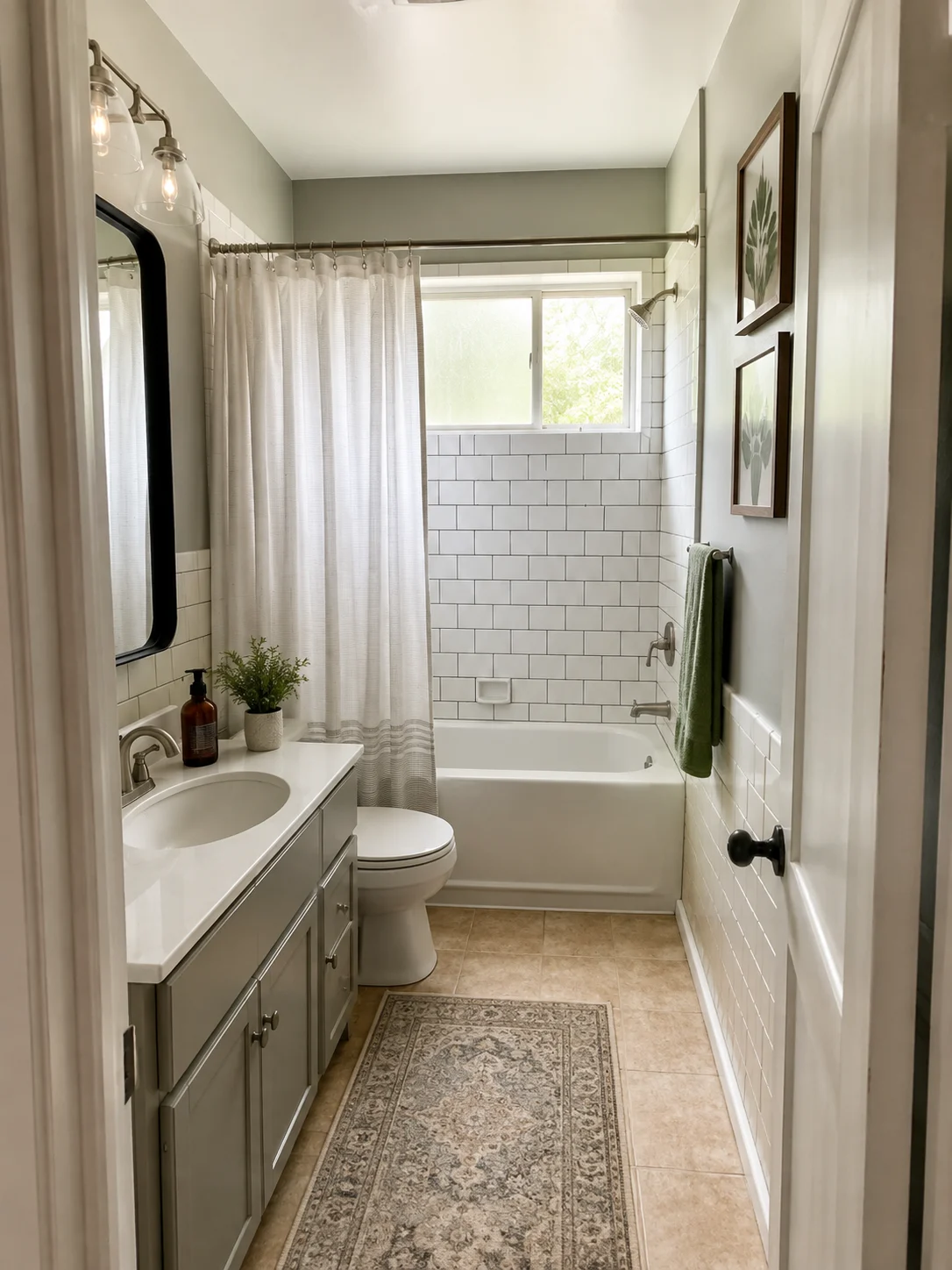
15 Budget Small Bathroom Makeover Ideas That Look Good Without Moving Plumbing
A small bathroom can look noticeably better without relocating the toilet, moving the shower drain, or opening walls to reroute pipes. Keeping the existing plumbing in place allows you to focus on visible surfaces, practical storage, lighting, and finishes that influence how the room looks and functions.
The most useful changes often involve the vanity, mirror, grout, shower curtain, wall color, and everyday accessories. However, even straightforward updates need a little planning. The wrong paint can peel in a humid room, an oversized cabinet can restrict movement, and replacement hardware may not fit existing holes.
These budget small bathroom makeover ideas focus on cosmetic improvements and manageable updates that work with your existing layout. Whether you’re refreshing a dated family bathroom or making a rental feel more personal, start with the changes that address your biggest everyday frustrations.
1. Paint a Sound Vanity Instead of Replacing It
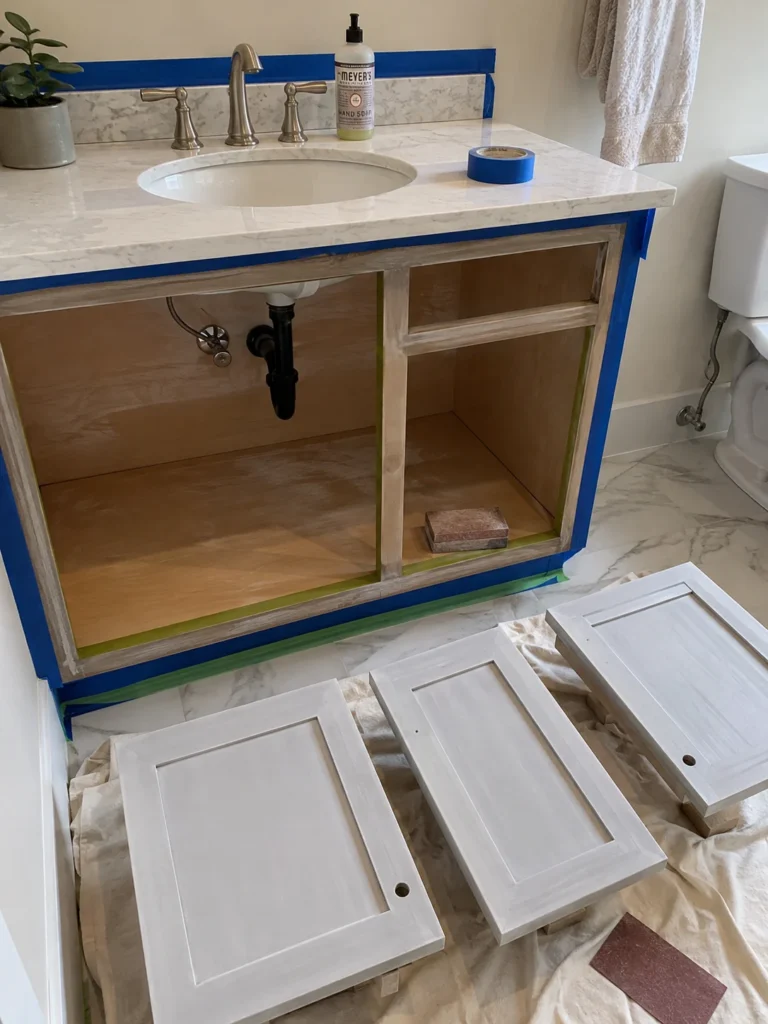
A fresh coat of paint can transform an older bathroom vanity without disturbing the sink or plumbing connections. When the cabinet box is structurally sound, a new finish can make the entire room feel more coordinated while allowing you to keep the existing countertop and fixtures.
Begin by cleaning away soap residue, grime, and other buildup. Remove the doors and hardware where practical, prepare the existing finish according to the coating manufacturer’s instructions, and repair minor surface imperfections before painting. Choose a durable coating intended for cabinetry and suitable for the bathroom environment.
Color selection matters, too. A muted green, soft blue, charcoal, or warm neutral can introduce character without requiring new tile. Compare paint samples with the existing countertop, flooring, and wall color before committing to a shade.
Avoid painting over swollen particleboard, loose laminate, peeling finishes, or significant water damage. Those problems require appropriate repairs first. A fresh finish should improve a sound cabinet rather than conceal an underlying problem.
2. Make an All-White Bathroom Feel Layered
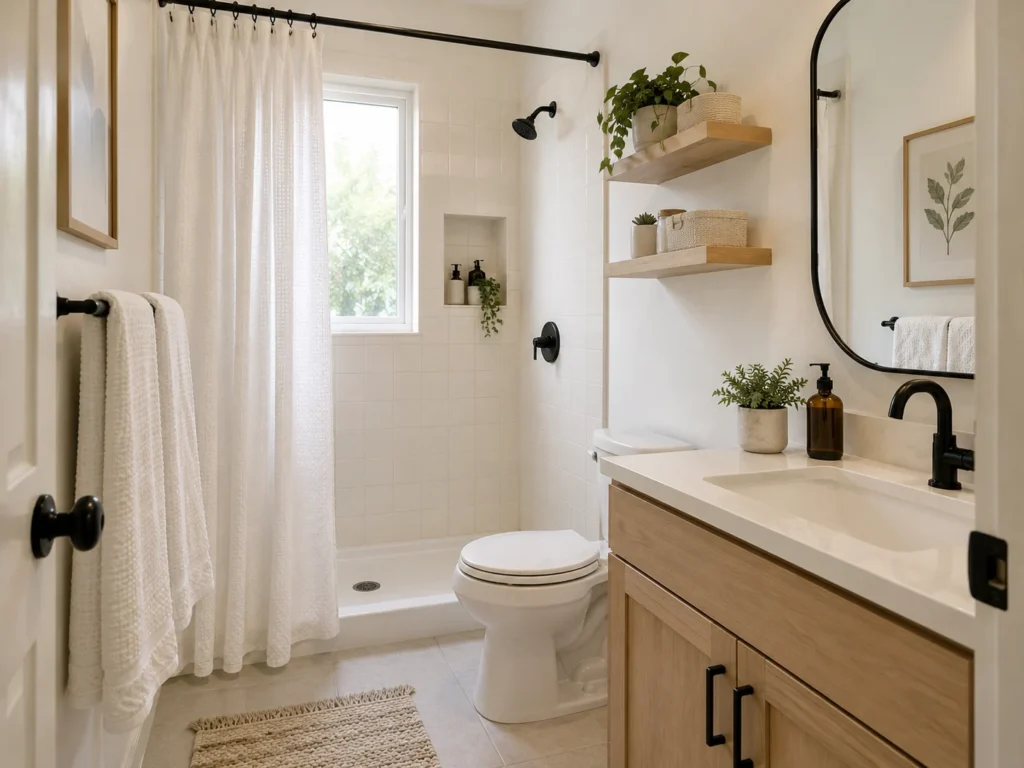
An all-white bathroom can look fresh and spacious, but using exactly the same shade and finish everywhere may make the room feel flat. Subtle differences in texture and tone create depth without adding visual clutter.
Combine warm-white walls with slightly creamy tile, softer grout, textured towels, and a natural wood accent. Brushed metal or restrained black hardware can provide definition without requiring a complete fixture replacement. If the bathroom already has cool white tile, select accessories that complement its undertones rather than introducing too many competing neutrals.
The key is to vary the finishes while keeping the overall palette controlled. A textured towel or wood-framed mirror may contribute more warmth than another decorative object.
Before repainting, compare the proposed wall color against the existing tile in both daylight and artificial light. Whites can look very different under different lighting conditions, and a shade that appears neutral on a paint card may look noticeably cool or yellow beside older fixtures.
3. Update Cabinet Hardware Without Creating More Work
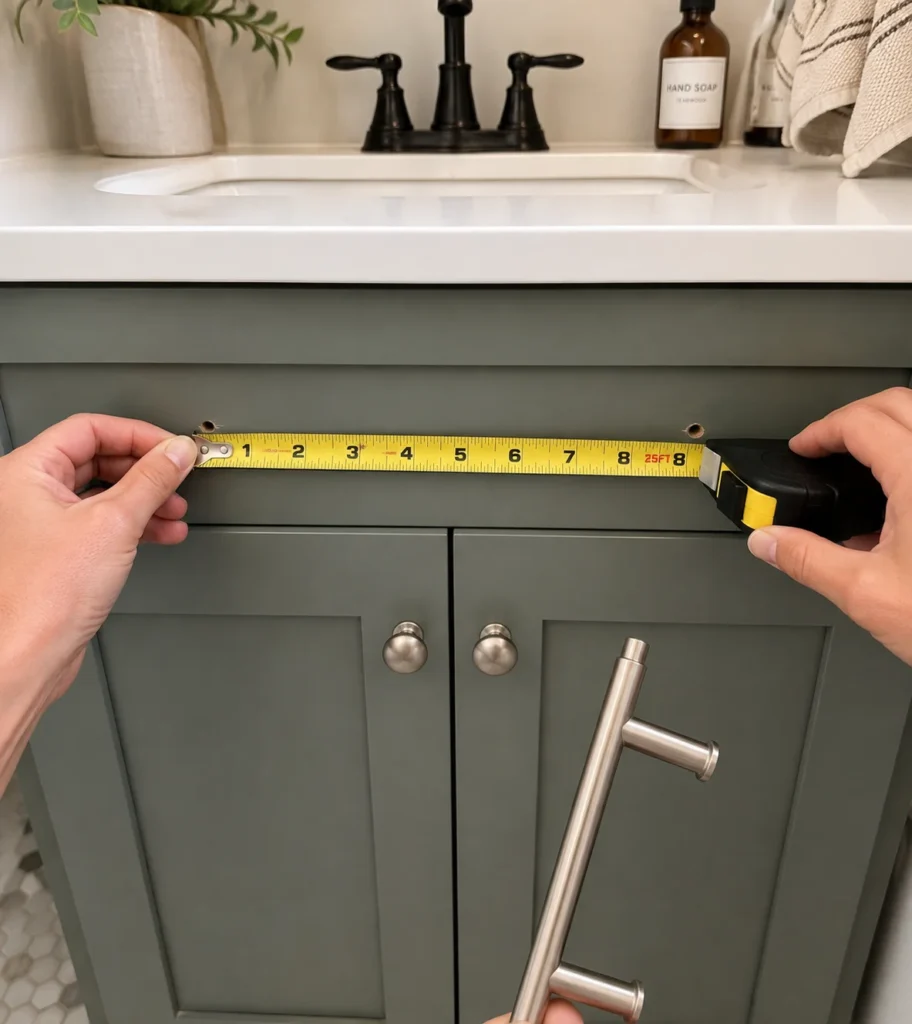
Replacing worn knobs or pulls is a relatively simple way to refresh a vanity. New hardware can make older cabinetry feel more deliberate without changing the cabinet doors, countertop, or plumbing.
Before shopping, remove an existing pull if possible and check the distance between its screw holes. Choosing a replacement with compatible spacing can help you avoid filling old holes, repainting the doors, and drilling new ones. If you’re changing from knobs to pulls, use painter’s tape to preview the proposed position and check that the handles will be comfortable to use.
Finish matters, but consistency is more important than matching every metal surface exactly. Matte black can create contrast against light cabinetry, while brushed nickel or warm metal finishes can complement more traditional bathrooms. Existing faucets and shower fittings can remain if they’re functional and in good condition.
Choose hardware that suits the scale of the vanity and has a comfortable grip. Oversized pulls may dominate a small cabinet, while tiny knobs can be inconvenient on heavier doors.
4. Replace a Too-Small Mirror With a Better-Proportioned One
A mirror that’s too small for the vanity can make the wall feel fragmented. A wider mirror can reflect more of the room, distribute available light, and create a more unified appearance above the sink.
Look for a mirror that relates comfortably to the vanity width and surrounding fixtures. A simple frameless design can keep the wall visually quiet, while a slim wood or metal frame adds definition. The best choice depends on the bathroom’s existing finishes and how much visual detail is already present.
Before purchasing, mark the proposed mirror outline on the wall with painter’s tape. Check the space around the faucet, wall lights, medicine cabinet, outlets, and nearby doors. Make sure the mirror won’t obstruct access to existing fixtures or controls.
A larger mirror is useful only when it fits the wall and can be mounted securely. Follow the manufacturer’s mounting instructions, use suitable fixings for the wall construction, and consider professional installation for a heavy mirror or an uncertain mounting surface.

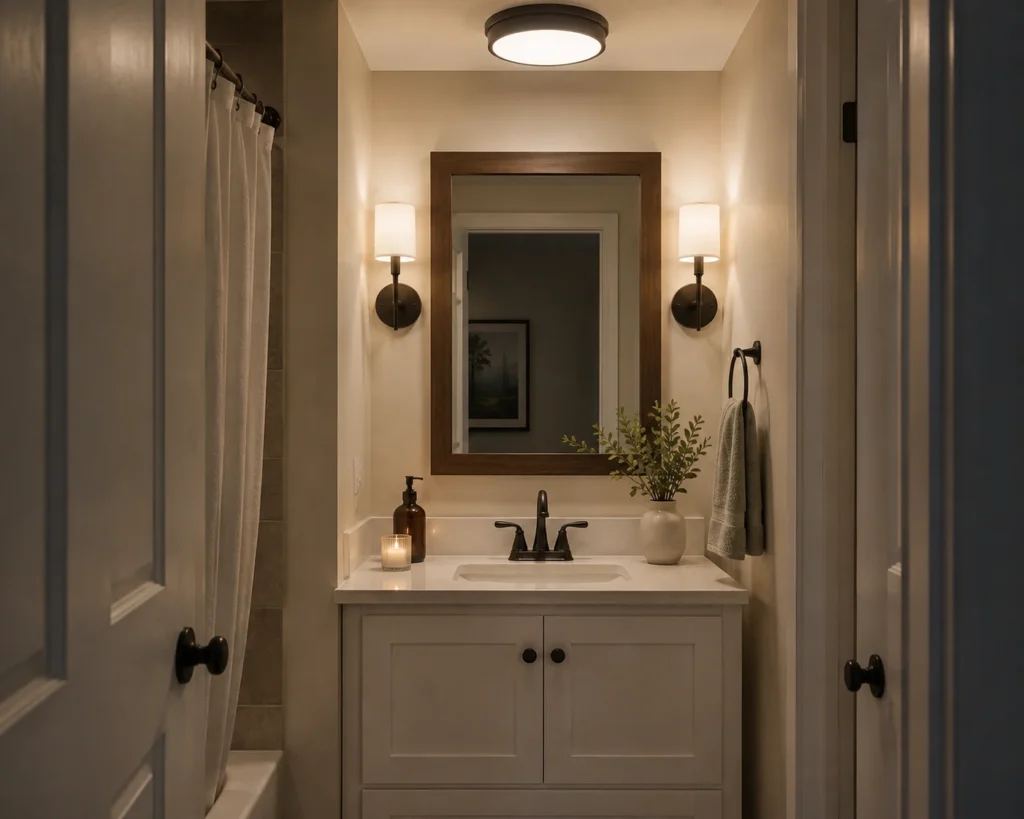
5. Improve Vanity Lighting Instead of Just Changing the Fixture Style
Lighting can influence how every other finish in a small bathroom looks. A single overhead light may leave shadows across your face at the mirror, while a better-positioned fixture can make everyday grooming more comfortable.
Where the layout permits, side lighting around face level can provide more even illumination. A broad fixture above the mirror can also work when there isn’t enough wall space for lights on both sides. Choose a style that suits the mirror and vanity without crowding the wall.
Light quality deserves attention alongside fixture design. A comfortable warm-to-neutral residential light can feel more inviting than an excessively cool blue-white glow, while sufficient brightness remains important for grooming and cleaning.
Check the fixture’s suitability for its intended bathroom location and follow applicable electrical requirements. If replacing the light involves new wiring, unfamiliar connections, or changes to electrical fittings near water, use a qualified professional where required rather than attempting an improvised installation.
6. Refresh Grout Before Assuming the Tile Needs Replacing
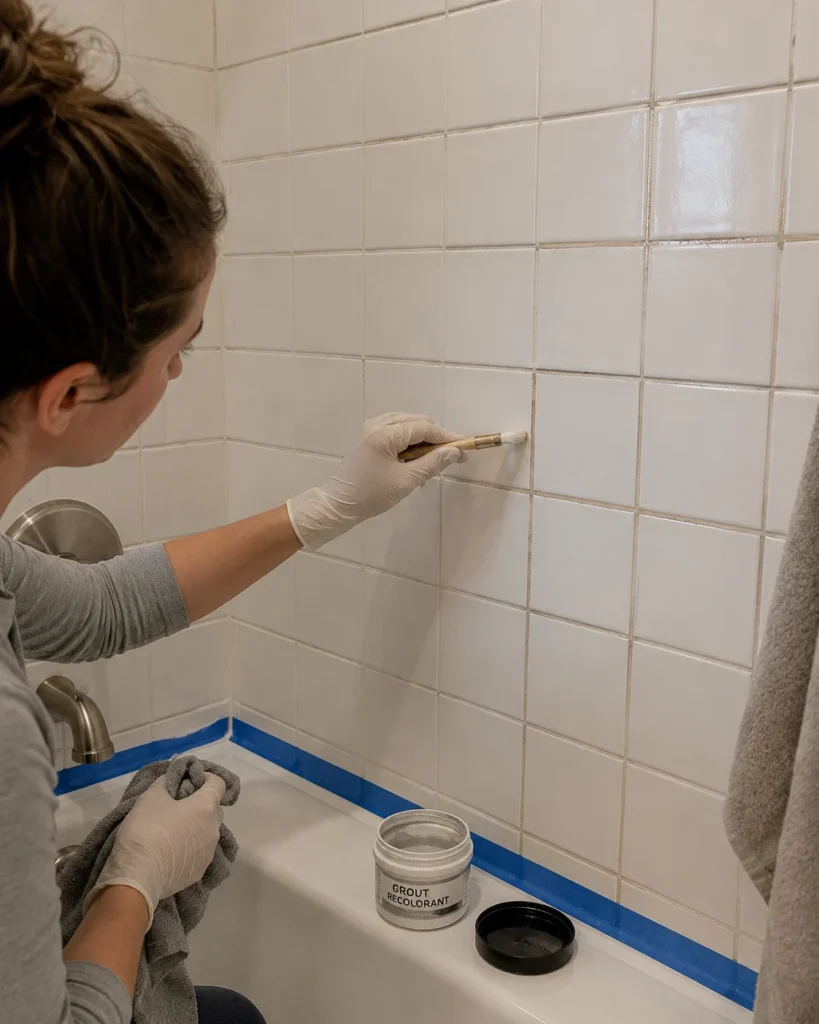
Discolored grout can make otherwise attractive bathroom tile look tired. Cleaning and repairing the grout may improve the appearance of the entire surface without the disruption of replacing tile.
Start with a suitable grout cleaner and follow the product instructions. Once the area is clean and dry, inspect the joints carefully. If the grout is structurally sound but stained, a compatible grout colorant may help create a more consistent finish. Small areas of damaged grout may need localized repair instead.
Choose a grout color that works with the tile and the overall look you want. A shade close to the tile creates a quieter surface, while greater contrast emphasizes the tile pattern. Existing grout color can also influence whether replacement products blend naturally with the surrounding finish.
Don’t cover crumbling grout, loose tiles, persistent dampness, or signs of failed waterproofing with a cosmetic product. Those conditions need proper investigation and repair. Cosmetic improvements work best when the underlying tile assembly is sound.
7. Raise the Shower Curtain Rod for Better Proportion
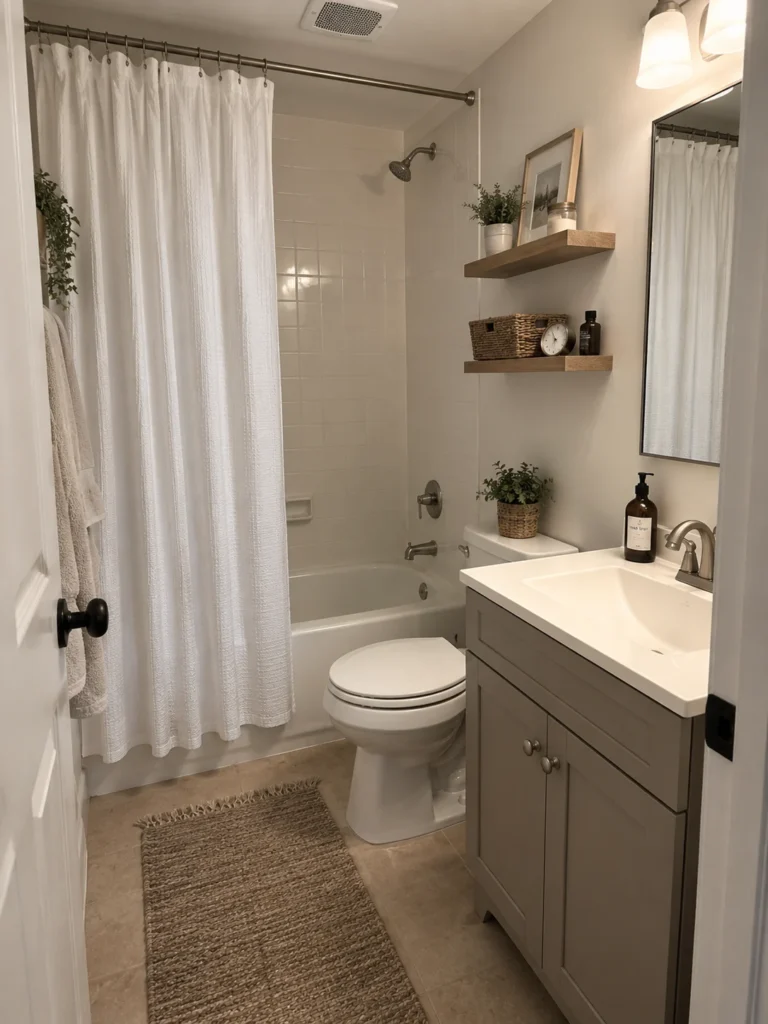
A shower curtain covers a substantial part of the wall in many small bathrooms, making its length and placement important to the room’s appearance. Raising the rod where the wall construction and layout allow can emphasize vertical lines and make the shower area feel taller.
Choose a curtain that hangs neatly from the proposed rod position without dragging on the floor or bunching awkwardly. A longer curtain with soft vertical folds can make a basic tub surround feel more finished, especially when the surrounding tile is plain.
Consider the fabric and pattern in relation to the existing bathroom. A solid curtain can calm a busy tiled wall, while subtle stripes can introduce movement without overwhelming a narrow room. Washable materials are generally easier to maintain in a frequently used bathroom.
The functional liner must still contain shower water properly. Keep it positioned inside the tub or shower enclosure during use, and ensure the curtain doesn’t interfere with faucets, handles, doors, or safe entry and exit.
For more options, explore these elegant shower curtain ideas for small bathrooms.
8. Add Controlled Wall Color Instead of Repainting Everything White
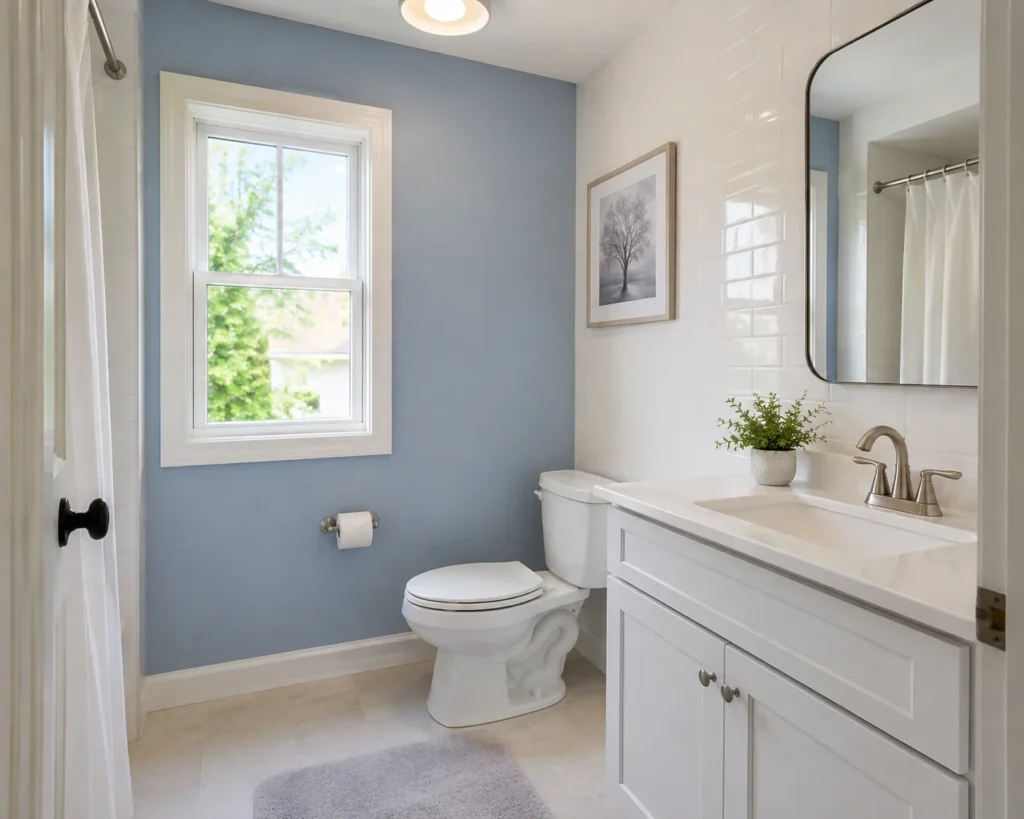
A small bathroom doesn’t have to be entirely white to feel open. A carefully chosen accent color can give the room personality while leaving the larger surfaces relatively light.
Consider muted green, dusty blue, warm clay, or a deeper neutral on the vanity or a suitable dry wall. These colors can complement existing white tile and fixtures without requiring a complete renovation. If the bathroom already has patterned flooring or distinctive tile, keep the new color restrained so the room doesn’t feel visually crowded.
Where you place the color matters as much as the shade itself. Painting the vanity can create a focal point without changing the surrounding walls, while a single accent wall can add interest when the other surfaces are relatively simple.
Test the color under both daylight and artificial lighting before painting the entire surface. Windowless bathrooms can make certain shades appear darker or more saturated than expected, so consider how the room looks with its normal lights switched on.
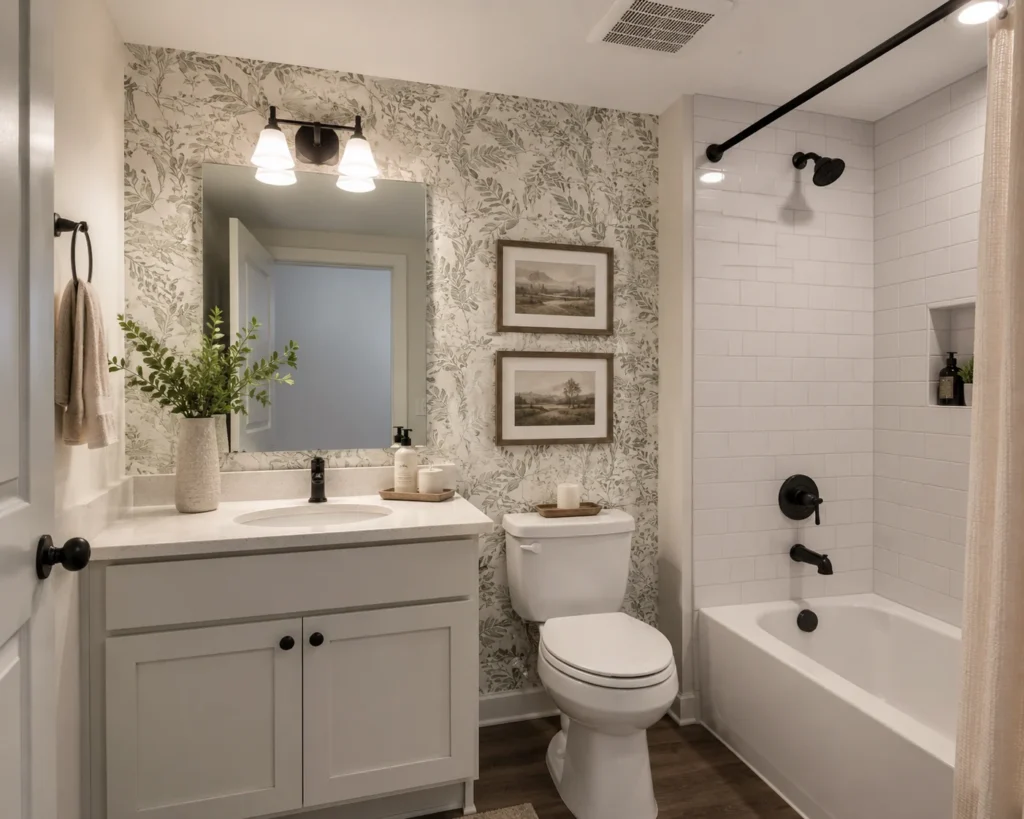
9. Use Bathroom-Appropriate Wallpaper on a Dry Wall
Wallpaper can introduce pattern and texture without the expense and disruption of replacing tile. In a small bathroom, it can be particularly effective on a vanity wall or another relatively dry surface that needs visual interest.
Choose a product specifically suitable for the expected humidity and follow its installation requirements. Good ventilation and wall preparation are important because moisture can affect adhesion and contribute to deterioration. Keep ordinary wallpaper away from direct shower spray unless the product and installation are specifically designed for that exposure.
Pattern scale should suit the room. Small botanical prints, restrained stripes, or subtle geometric designs can complement simple tile, while a large, busy pattern may compete with existing flooring and fixtures.
If you’re using peel-and-stick wallpaper, don’t assume that it is automatically moisture-proof or easily removable from every painted surface. Test a discreet area first and follow the manufacturer’s guidance for application and removal.
Wallpaper is most successful when it adds character to a suitable wall rather than creating another surface that is difficult to maintain.
10. Add Shallow Storage Instead of Bulky Cabinets
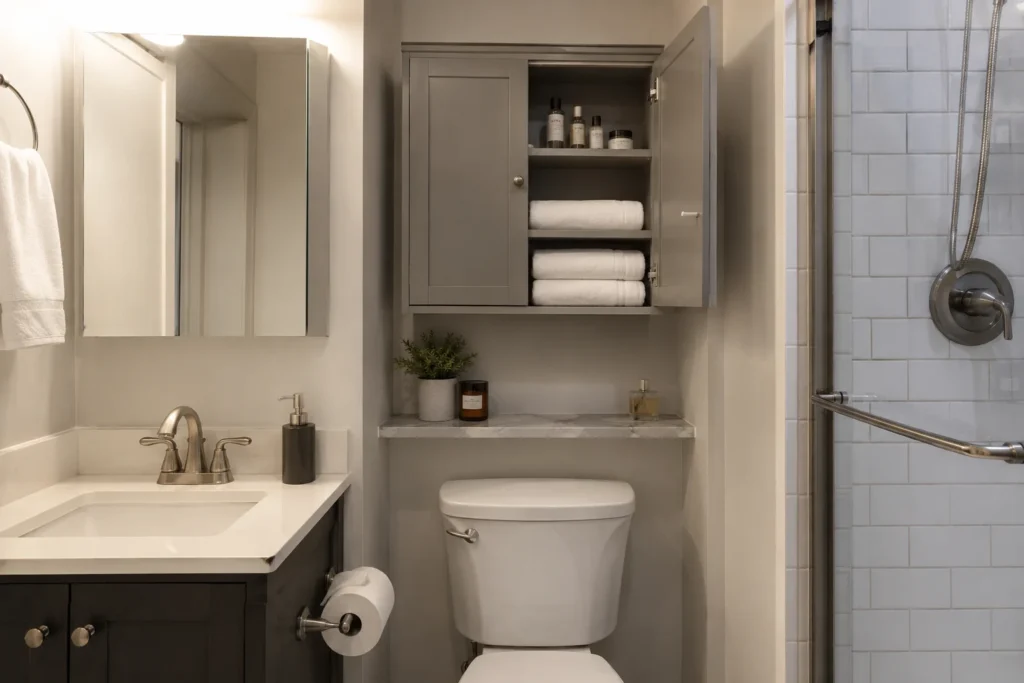
Adding storage can solve a practical problem, but a deep cabinet may make a small bathroom harder to move around in. Shallow storage can provide a place for toiletries and everyday essentials without taking over valuable shoulder or floor space.
Depending on the layout, useful options include a slim wall cabinet, narrow shelf, compact ledge, recessed medicine cabinet, or a few well-positioned hooks. Choose the solution according to what you need to store and where you can reach it comfortably.
Before buying, make a cardboard template that matches the proposed storage depth. Hold it in position and walk through the room, open the door, and check access around the toilet and vanity. This helps reveal awkward projections before you drill holes or purchase furniture.
Recessed storage can be useful where the wall construction permits it, but check for plumbing, wiring, studs, and other obstructions before opening a wall. A shallow surface-mounted cabinet may be simpler when a recess isn’t practical.
The aim is to improve access while preserving comfortable movement through the bathroom.
11. Simplify Open Shelving Before Adding More of It
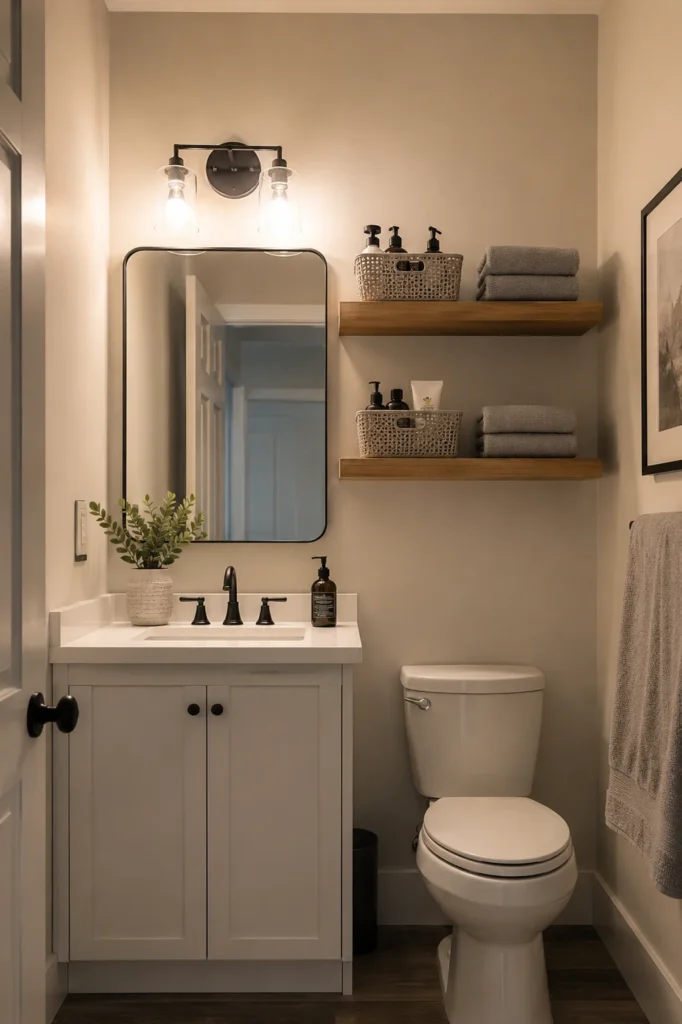
Open shelving provides convenient access to toiletries and towels, but too many visible products can make a small bathroom feel cluttered. Sometimes the most effective makeover is reorganizing the shelves you already own.
Group everyday essentials in a small container or basket, keep backup supplies behind closed doors where possible, and leave some shelf space open. This makes the arrangement easier to use and gives the room a calmer appearance.
Think about what belongs within easy reach. Frequently used items should be accessible without moving several other products, while occasional-use supplies can be stored elsewhere. Choose containers that are easy to clean and suitable for the bathroom environment.
If the shelves are already securely installed, editing their contents may be all you need. If new shelves are necessary, select suitable supports and fixings for the wall construction and intended load. Avoid placing heavy or breakable objects where they could fall onto someone.
A shelf should make daily routines easier, not turn every bottle into part of the decor.
12. Treat the Ceiling as a Real Surface
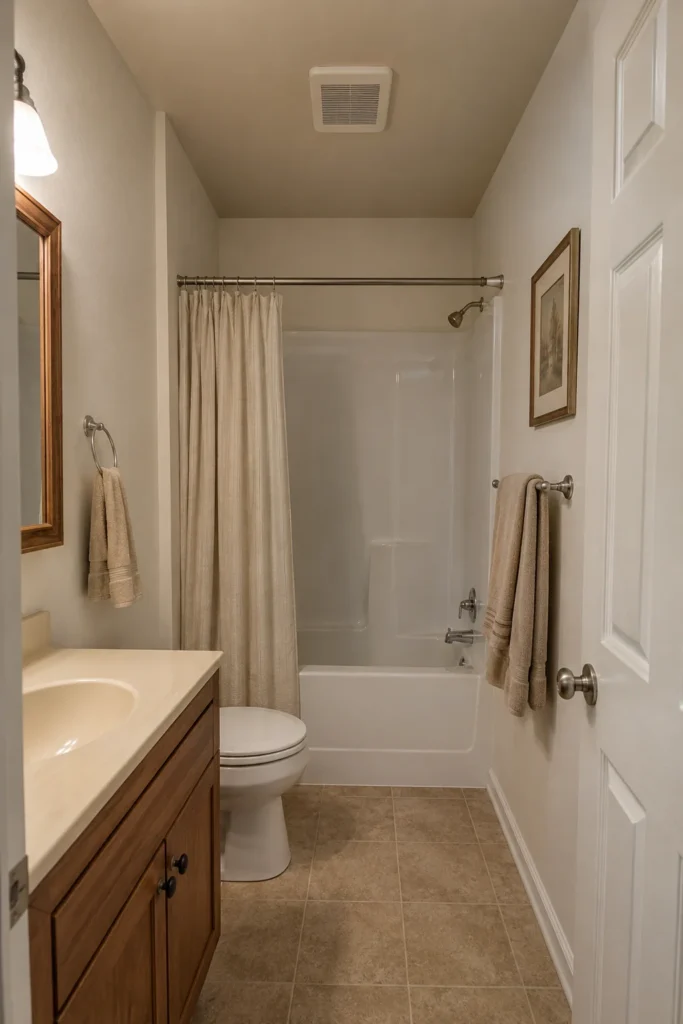
The ceiling is often overlooked during a bathroom refresh, even though its color can influence how the room feels. Painting it can create a more coordinated finish without moving plumbing or replacing fixtures.
In a tall or narrow bathroom, a slightly deeper ceiling color may create a more intimate effect. If the room already feels low, a shade close to the wall color can maintain a more continuous visual field. The choice depends on the existing proportions, lighting, and surrounding finishes.
Use a paint system suitable for bathroom conditions and prepare the surface properly. Before painting, check for peeling, staining, or recurring condensation. These can indicate moisture or ventilation problems that paint alone will not solve.
Keep the finish consistent with the rest of the room. A ceiling color that coordinates with the walls and tile can make the space feel considered without introducing another competing feature.
Address ventilation and persistent moisture first. Even an attractive new finish may deteriorate if condensation regularly collects on the ceiling.
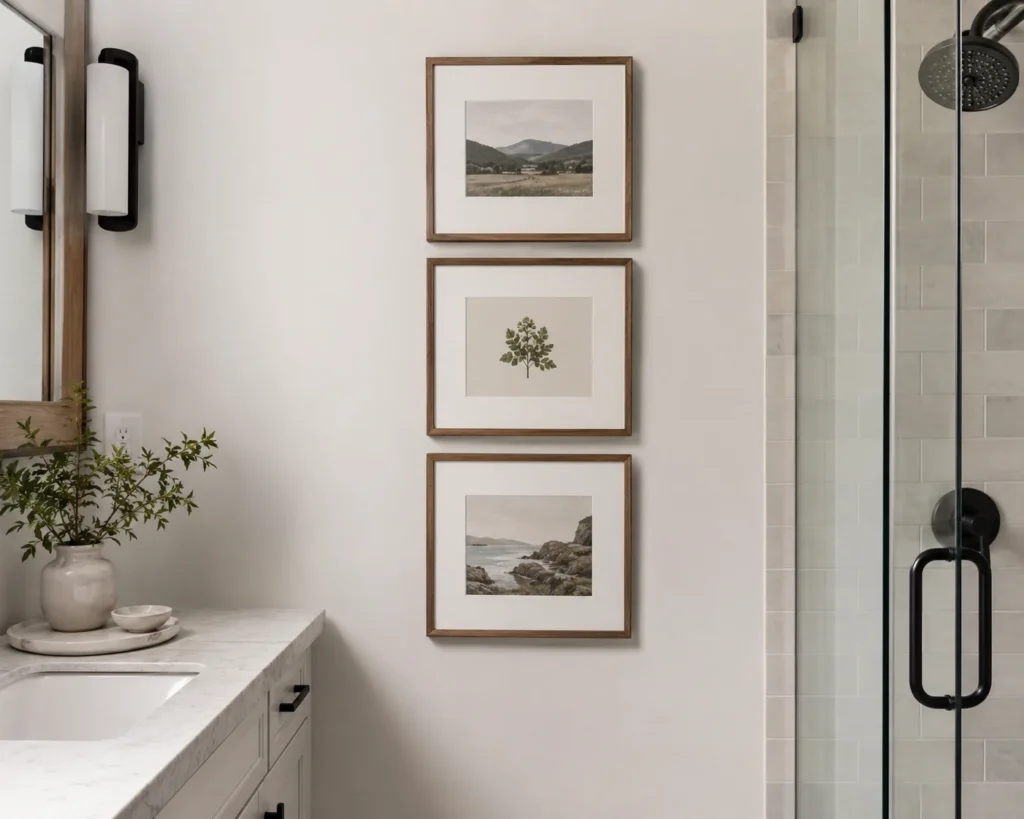
13. Add a Small Bathroom Gallery Wall Carefully
Artwork can give a plain bathroom more personality without using countertop or floor space. A compact gallery wall can introduce color, texture, or a theme while leaving the existing fixtures untouched.
Choose artwork that complements the bathroom’s palette rather than competing with it. Botanical prints, simple abstract designs, or understated landscapes can work well with plain tile and neutral walls. If the room already contains strong patterns, a quieter arrangement may be more effective.
Plan the grouping before making holes. Arrange the frames on the floor or use paper templates on the wall to check their positions, spacing, and relationship to the mirror or vanity. A compact, balanced arrangement generally looks more intentional than scattered frames on every available wall.
Select frames and artwork that can tolerate the room’s humidity, and keep moisture-sensitive materials away from direct splashes and areas with heavy condensation. Use mounting hardware appropriate for the wall type and the weight of the frames.
In a very small bathroom, one well-chosen piece may be enough. The goal is to add character without making the walls feel overcrowded.
14. Coordinate Hardware Instead of Matching Every Metal Perfectly
A bathroom can feel more cohesive without replacing every faucet, shower fitting, and cabinet handle. Instead of pursuing an exact match across every surface, choose a dominant finish and repeat it thoughtfully through smaller details.
Start with the hardware that is easiest to change, such as vanity pulls, towel hooks, or a mirror frame. Matte black can create definition, while brushed nickel offers a restrained contemporary look. Warm metal finishes can complement traditional cabinetry and warmer wall colors.
Existing plumbing fixtures can remain if they work properly and their finish still suits the room. Replacing functional faucets or shower hardware solely to coordinate with a new cabinet pull may add unnecessary expense without improving everyday use.
Mixed metals can look intentional when a finish appears in more than one place. For example, a mirror frame and cabinet handles can share a finish while the existing faucet remains a different but complementary metal.
Before purchasing replacement hardware, check hole spacing, mounting requirements, and the condition of the existing fittings. A coordinated appearance should come from a few considered choices rather than replacing everything at once.
15. Edit the Counter and Add Hooks Where You Actually Need Them
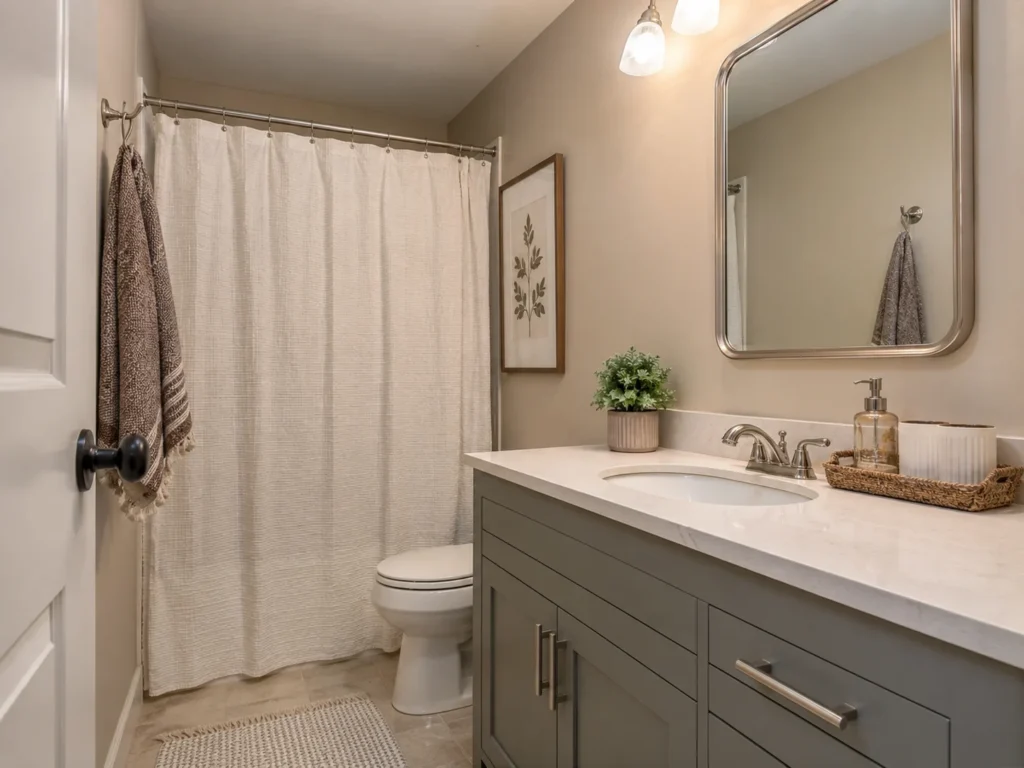
Clearing the vanity counter is one of the simplest ways to refresh a small bathroom. When bottles, containers, and backup supplies cover most of the available surface, the room can feel crowded even if the fixtures themselves are well proportioned.
Keep the items you use every day within easy reach and move backups into closed storage. A small tray can contain frequently used products, provided it leaves enough space for washing, grooming, and other daily tasks.
Hooks can provide a practical alternative to bulky towel bars when wall space is limited. Place them where towels and robes are easy to reach, but make sure they don’t interfere with the door, switches, or movement around the shower and toilet. Towels also need enough room to dry properly.
Before buying more accessories, temporarily remove the items sitting on the counter and see how the space functions without them. You may discover that better organization makes a bigger difference than another decorative purchase.
For more layout and storage options, browse these small full bathroom ideas.
Safety and Practical Maintenance
Before beginning a bathroom makeover, check for leaks, loose tiles, damaged grout, peeling finishes, and persistent moisture. Cosmetic products should not conceal water damage or failed waterproofing. Address underlying problems before painting, applying wallpaper, or installing new storage.
Use paints, adhesives, grout products, and other materials according to their instructions, including preparation, drying, and ventilation requirements. Keep the bathroom adequately ventilated during and after work, particularly when using products that release strong fumes.
Mount mirrors, shelves, cabinets, artwork, and curtain rods with hardware suited to the wall construction and intended load. Check for concealed wiring and plumbing before drilling, and seek qualified help when the installation or electrical work is beyond your experience or requires it.
Keep electrical fixtures and products appropriate for their bathroom location. Follow applicable electrical requirements, and don’t improvise wiring or connections near sinks, tubs, or showers. Maintain access to outlets, switches, plumbing connections, ventilation, and other essential controls.
Finally, preserve clear walking space and safe access to the toilet, sink, and shower. Choose suitable bath mats that lie flat and resist slipping, and avoid adding furniture or storage that obstructs doors or narrows the main route through the room.
A budget bathroom makeover works best when the improvements solve real problems. A freshly painted vanity, better mirror, cleaner grout, more useful storage, or a well-chosen shower curtain can change the room’s appearance without relocating plumbing. Start with the update that will make your daily routine easier, then build on it with finishes and accessories that complement the bathroom you already have.
