
15 DIY Garden Cascade & Small Fountain Ideas for Any Yard
The nicest water features in the garden aren’t necessarily the biggest ones. A small fountain tucked beside a patio or a short cascade slipping through a planting bed can change how a yard feels without requiring a full pond, major excavation, or a landscape crew.
The first decision shouldn’t be what the fountain looks like. Start with the sound and footprint you want, then choose the fountain or cascade style. A feature beside lounge chairs may only need a quiet bubbling sound. Something farther from the house can handle a wider spill or two short drops without becoming intrusive.
Scale matters just as much. A three-foot garden bed usually looks better with one well-proportioned bubbling urn than with a miniature version of a dramatic mountain waterfall. Good small features keep the mechanics discreet, use stone and planting to settle the feature into the yard, and leave access for cleaning.
Some of the ideas below are approachable weekend projects. Others involve more grading, heavy stone, or plumbing and are better treated as intermediate projects. The goal isn’t to make every project sound easy. It’s to show what can realistically work in different yards.
15 DIY Garden Cascade & Small Fountain Ideas for Any Yard
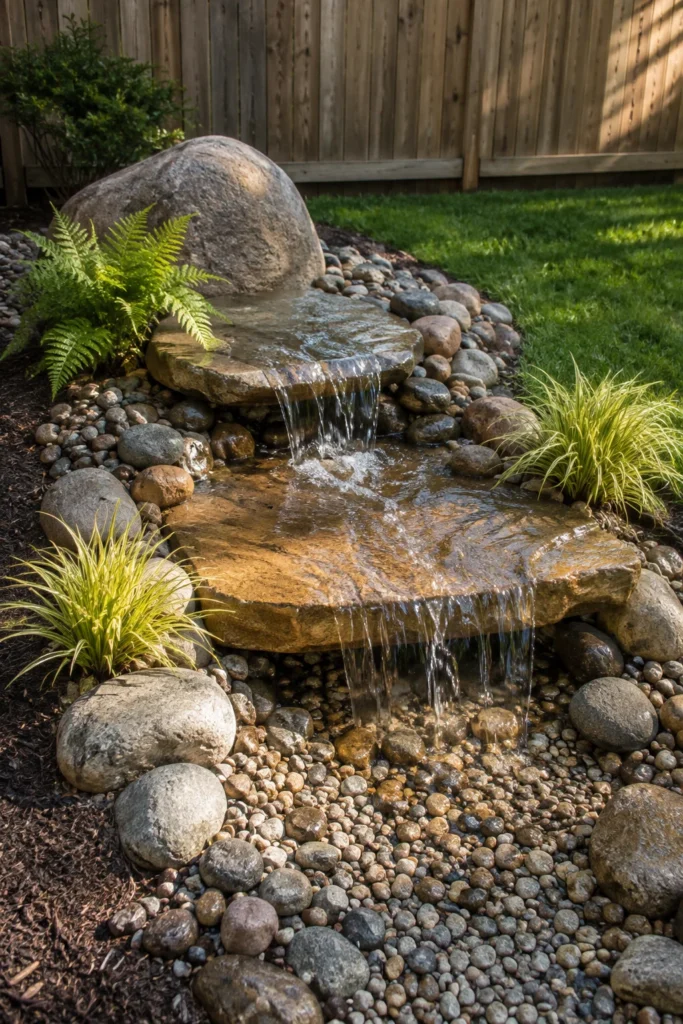
1. Build a Two-Level Stacked-Stone Mini Cascade
Mini waterfalls often look artificial when three matching rocks are stacked like stairs. A better small-scale cascade uses only two short drops and lets the stones vary in size and shape.
In a compact planting bed, use one broad flat piece of sandstone as the lower spill stone and a slightly smaller irregular ledgestone above it. Offset the two rather than centering them perfectly. A few medium river rocks along the sides help transition into gravel, while one larger partially buried stone gives the upper section some visual weight.
The water can disappear into a small concealed reservoir below, so you don’t need an open pond.
This is a manageable DIY-inspired project if the stones are small enough to move safely and you’re comfortable working with a basic recirculating system. Keep access to the pump beneath a removable section of gravel rather than burying everything permanently.
A tiny pump may struggle with several levels, which is another reason to stop at two controlled drops rather than forcing a complicated cascade into a small footprint.
2. Turn a Weathered Boulder Into a Bubbling Fountain
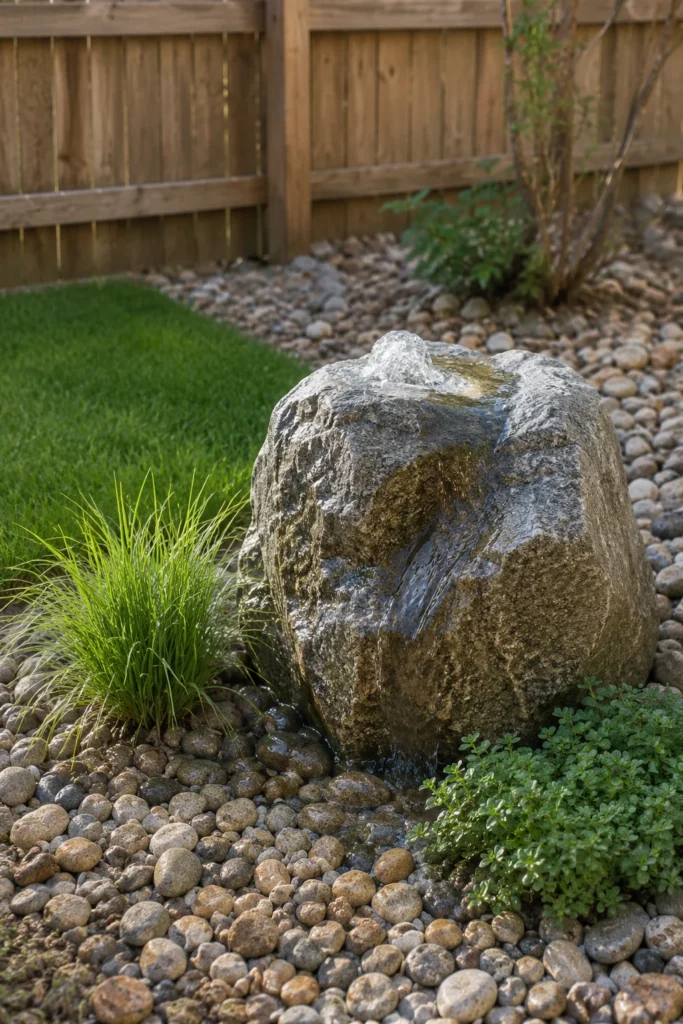
A bubbling boulder is one of the simplest ways to add water without giving up much garden space.
Choose a naturally shaped stone about knee height or slightly smaller and set it into a bed of river rock. The water should emerge gently from the top, then follow the existing contours of the stone rather than shooting upward like a fountain jet.
A concealed basin below keeps the footprint compact. Surround the boulder with gravel and just a few plants—perhaps one clump of sedge and a low groundcover—rather than building a decorative ring around it.
This works because the stone is doing most of the visual work. You don’t need extra statues, pots, or several smaller fountains nearby.
It can be a moderate DIY project if the boulder is reasonably sized. Once the rock becomes too heavy to position safely by hand, getting help is the sensible choice.
Keep the bubbling flow low. More water isn’t always better; a stronger stream can splash outside the catch area and require frequent topping up.
3. Make a Ceramic Pot Fountain Beside the Patio
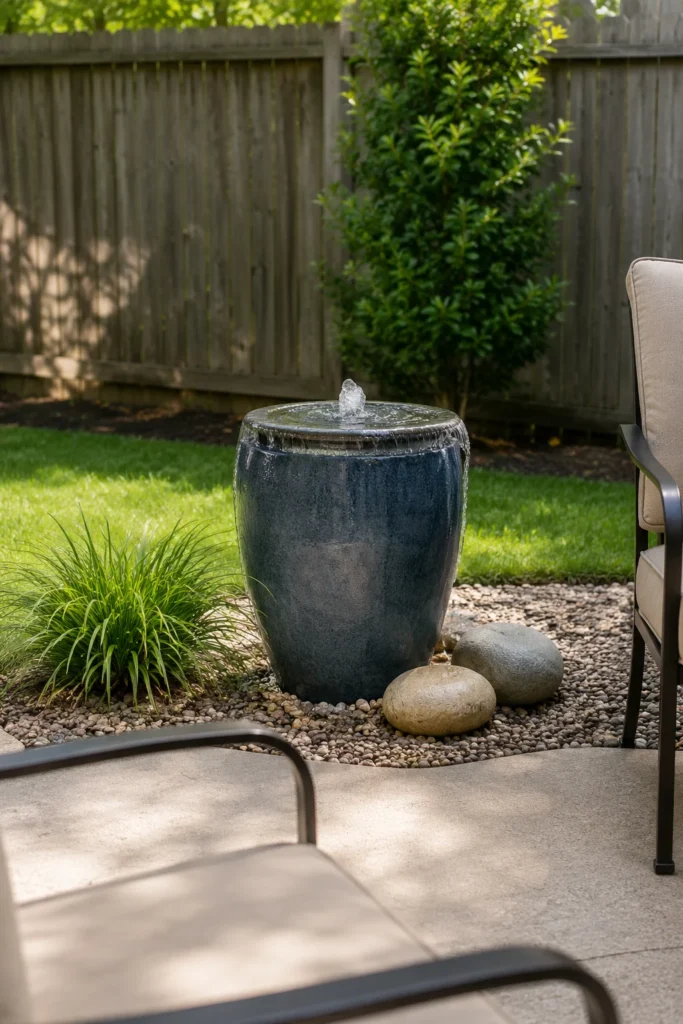
If you only have a few feet beside a patio, a vertical fountain often makes more sense than a pond.
Use one tall ceramic pot—roughly 24 to 30 inches high—with a broad enough base to feel stable. Water can rise gently from the center and run over the rim into a concealed catch basin beneath gravel.
Set the pot slightly beyond the patio edge rather than directly beside a chair. Frame it with two medium natural stones and one ornamental grass. That’s enough to make the fountain feel integrated without crowding the area.
This is one of the easier patio water feature ideas to adapt on a moderate budget, particularly if you already own a suitable container. The visual trick is hiding the mechanical parts so the ceramic vessel remains the focal point.
Keep the water movement subtle. A patio fountain is much closer to people than a feature at the back of the yard, so a loud splash can become tiring surprisingly quickly.
Lightweight decorative pots aren’t automatically suitable. Choose a stable container appropriate for outdoor conditions and the water setup.
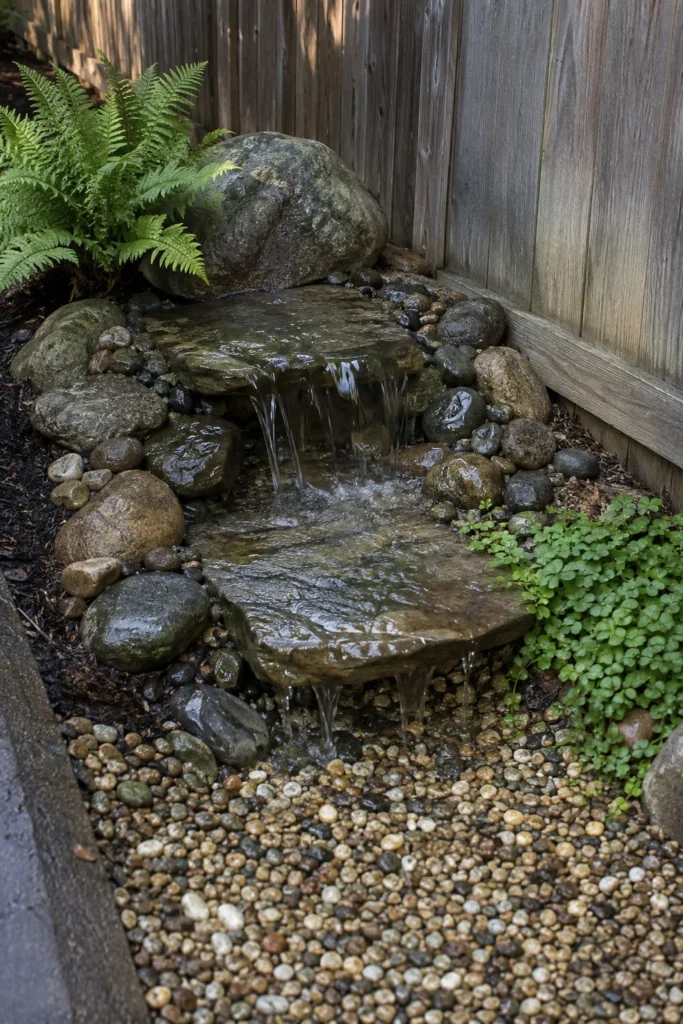
4. Create a Pondless Waterfall in a Fence-Side Bed
A pondless waterfall gives you visible moving water without sacrificing several feet of yard to an open pond.
In a 3- to 4-foot-wide planting bed along a fence, create a short flow that drops twice over flat fieldstone or sandstone before disappearing into a gravel-covered reservoir.
The top should look as though the water is emerging from between a few planted stones. Use one larger anchor stone near the source, medium transition stones beside the falls, and smaller river gravel toward the basin.
This works particularly well in a small yard because the feature stays narrow and vertical rather than spreading across the lawn.
It takes more planning than a bubbling pot because water has to return cleanly to the concealed basin without escaping the intended path. Still, a compact version can be an approachable intermediate project.
Don’t place it directly beneath a tree that drops heavy amounts of leaves unless you’re prepared to clear the gravel and intake regularly. Pondless doesn’t mean maintenance-free.
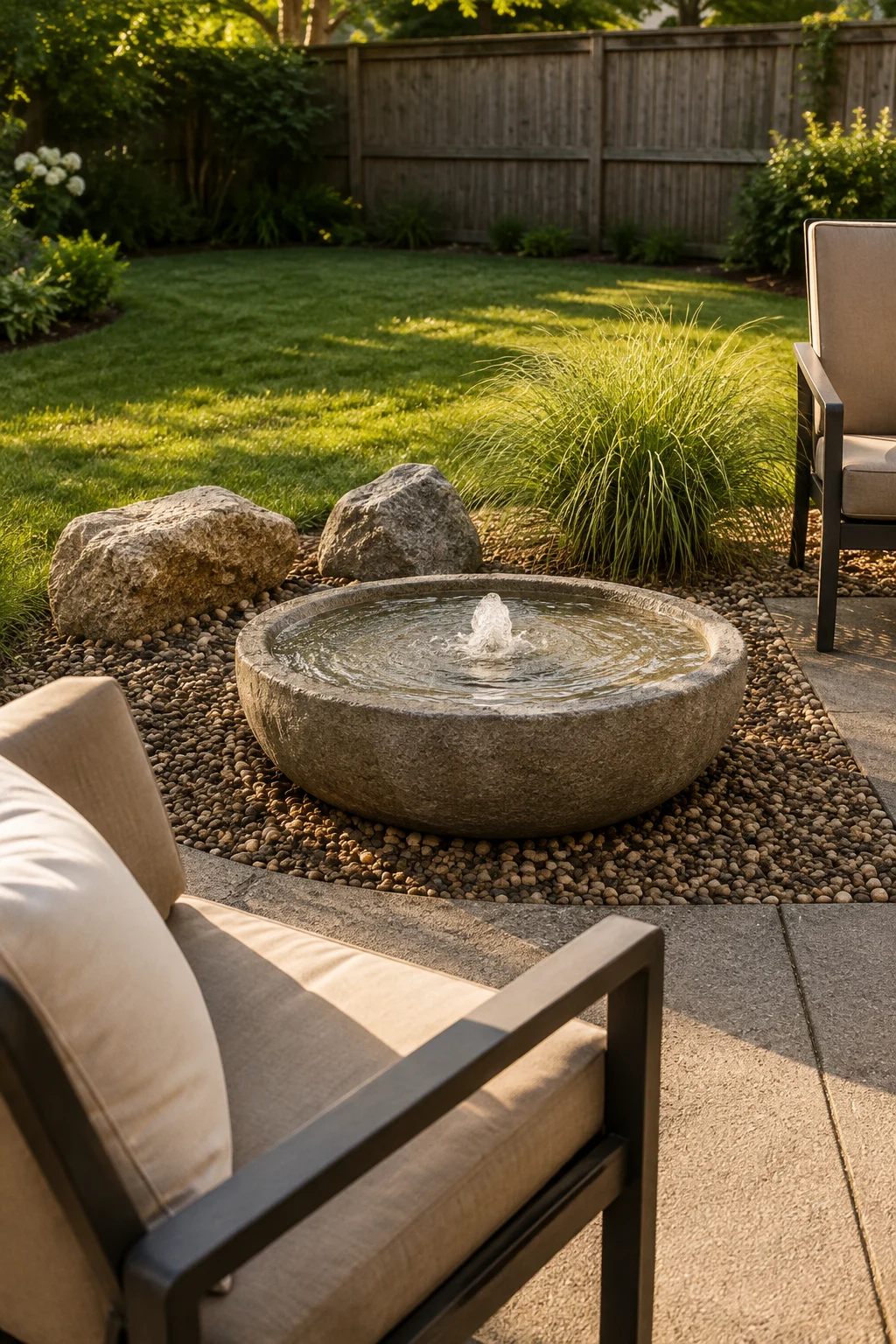
5. Use a Low Stone Bowl for a Quiet Patio Fountain
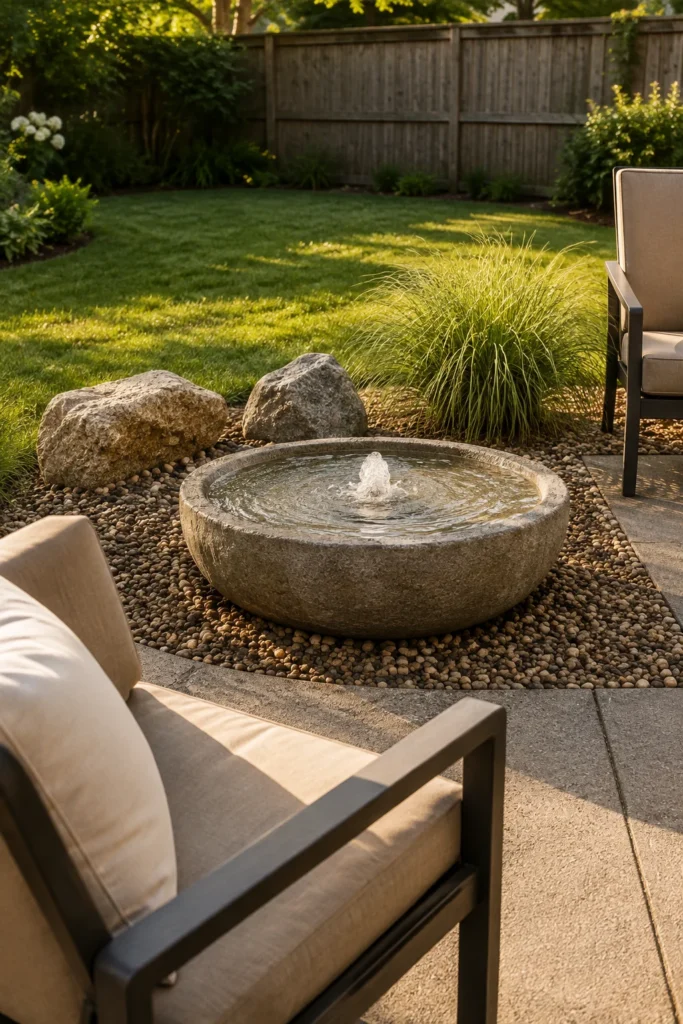
A low bowl with water moving gently across the surface can look more intentional beside seating than a tall tiered fountain squeezed into the same corner.
Choose a wide natural-stone or stone-look basin around 24 to 30 inches across and position it just beyond the main walking route. A small bubbling point in the center creates enough movement to catch light without throwing water everywhere.
Because the bowl is broad and low, it doesn’t block sightlines from the chairs. It’s also easier to visually connect to the garden if you set it into a small gravel bed with two irregular stones and one soft grass behind it.
This is a good option for readers who want small fountain ideas outdoors without the look of a traditional pedestal fountain.
Keep the bubble low enough that the water stays inside the basin during wind. Small basins can lose water faster in hot weather, so expect to check the level.
If the fountain sits near a path, leave enough clearance that damp stone isn’t where people naturally step.
6. Build a Tiny Three-Step Cascade Into a Gentle Slope
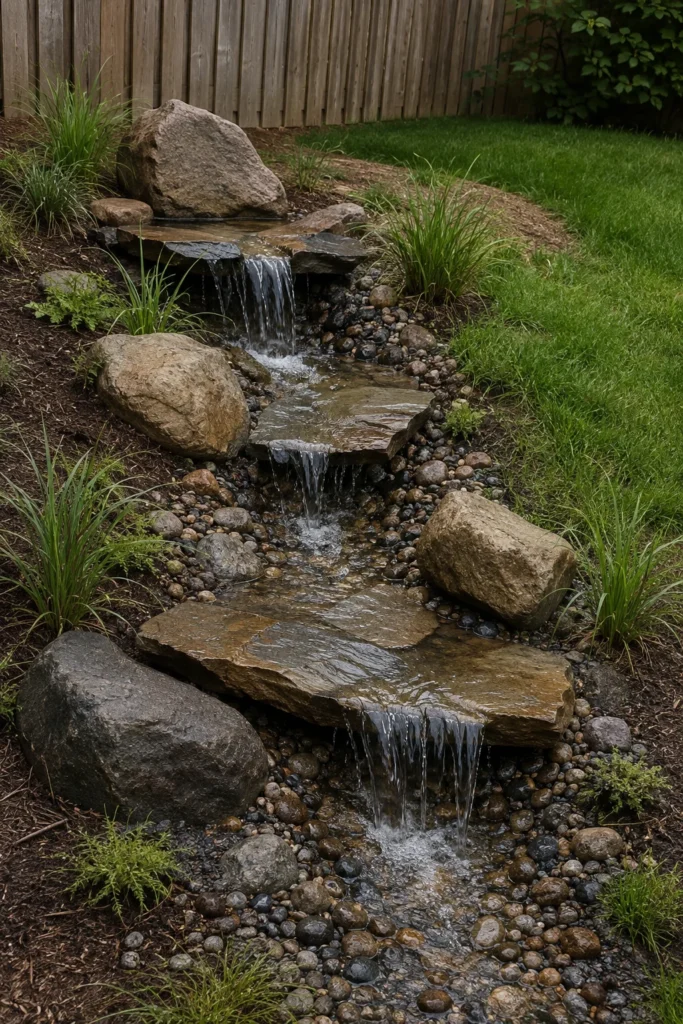
A slight slope can do the work that flat-yard fountain projects often try to fake.
Use the existing grade to create three very short water drops instead of building one tall stack. Flat slate or sandstone can form the spill points, with each level shifting slightly left or right so the cascade doesn’t resemble a staircase.
Let small pockets of water form between the drops, then send the final flow into a concealed basin or shallow lower reservoir.
This is one of the better garden cascade ideas for a sloped yard because the water has an obvious reason to travel downhill.
It is also more involved than a simple pot fountain. Grading, erosion, stable stone placement, and water return all matter. A gentle existing slope is helpful; major earthmoving or retaining work pushes the project beyond casual weekend DIY.
Use a few partially buried anchor stones rather than lining both sides with rocks. Groundcovers and sedges can soften the gaps while leaving the water visible.
Three short drops can sound surprisingly lively, so consider how close the feature is to windows and seating.
7. Set a Fountain Into a Simple Gravel Bed
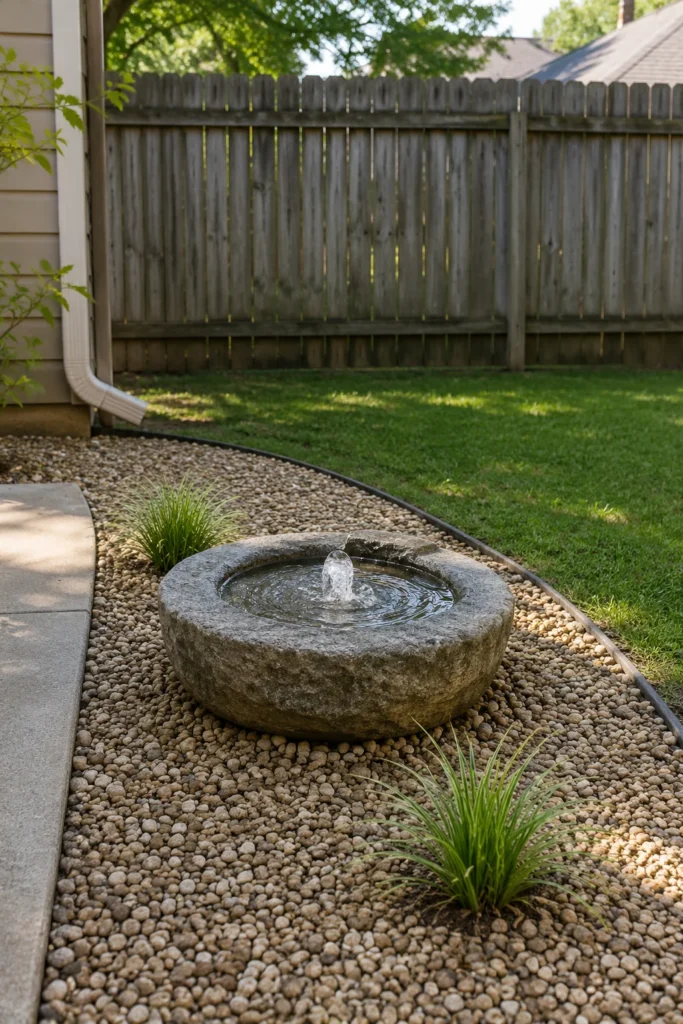
A fountain often looks disconnected when it’s placed directly on lawn with nothing relating it to the surrounding garden.
Instead, create a compact gravel zone and let one small fountain become the only strong object in it.
A simple round basin, low pedestal fountain, or compact bubbling stone can sit in the middle or slightly off-center. Use a 3- to 4-foot-wide gravel bed, edge it quietly, and add only one or two plants near the perimeter.
This is an easy way to make a budget garden fountain look more deliberate without paying for custom masonry. Gravel creates a visual base and makes it easier to conceal parts of a small reservoir or tubing route where appropriate.
Avoid decorating the gravel bed with ten extra rocks. One fountain plus a few supporting natural materials usually feels calmer.
If you’re using a solar pump, remember that shaded beds may not provide consistent charging. Solar can be useful in the right location, but it isn’t automatically the best solution for every garden corner.
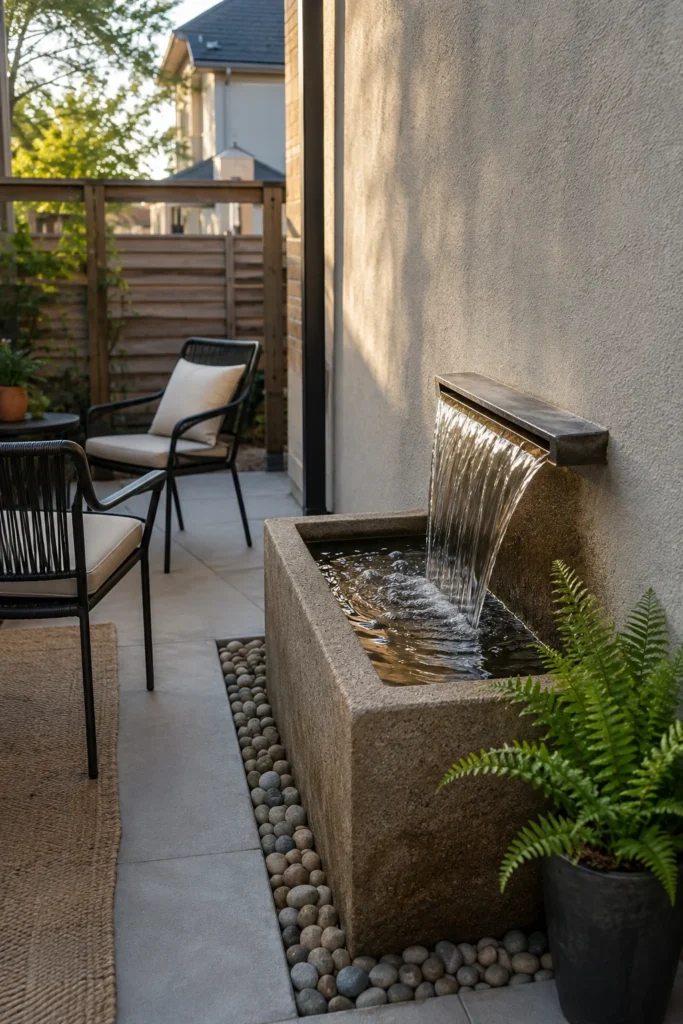
8. Add a Wall-Adjacent Spill Fountain in a Narrow Patio
A narrow patio often has more usable vertical space than floor space.
Place a slim rectangular basin against a solid wall and use a short spill lip or narrow sheet of water that drops into the lower reservoir. Keep the total width around 24 to 36 inches so the feature doesn’t project too far into the walking area.
The clean shape suits a townhouse patio or compact courtyard where a pile of natural rocks might feel too bulky. You can still make it feel softer by using river gravel at the base and one plant off to the side.
This is a moderate DIY project depending on the fountain system. The important part is keeping the wall-adjacent setup stable, outdoor-suitable, and accessible for cleaning.
A wider sheet of falling water can make more sound than a simple bubble, so don’t automatically maximize the flow. If the feature is three feet from a chair, a gentle spill is usually enough.
Keep furniture far enough away that small wind-driven splashes won’t repeatedly wet cushions or wood surfaces.
9. Make a Small Stream-Style Cascade for a Side Yard
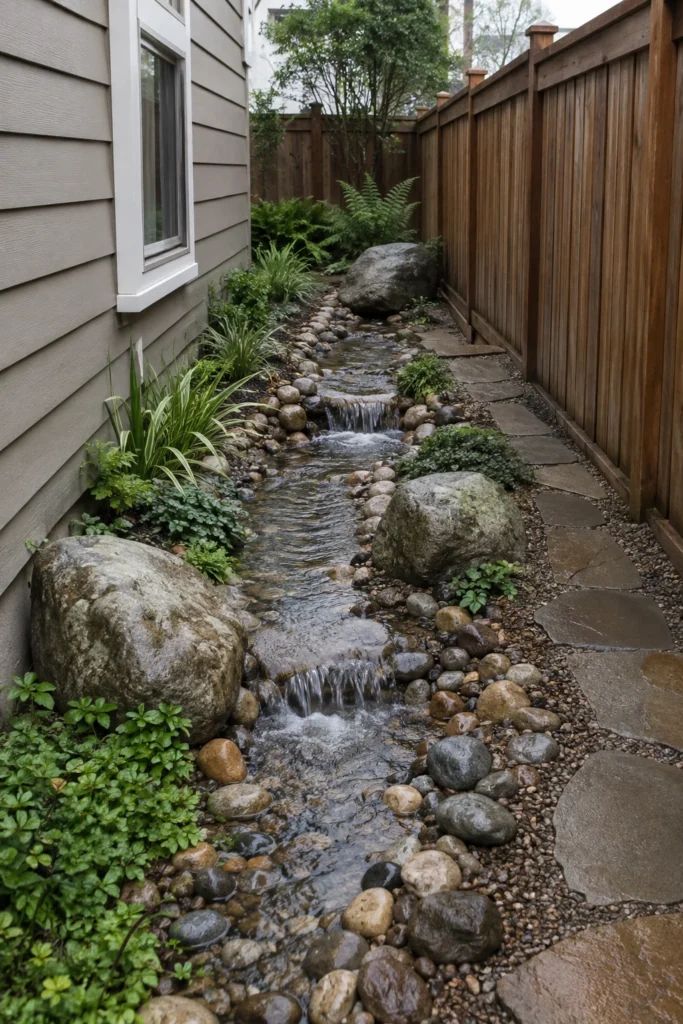
A narrow side yard doesn’t need a pond to support a water feature.
Use a slim channel about 18 to 24 inches wide and create one or two shallow drops as the water travels toward a concealed reservoir. Rounded creek stone works well along the channel, with a larger irregular stone at each bend.
Avoid making the stream perfectly straight. A slight curve gives the watercourse depth and makes the side yard feel longer.
This concept takes more planning than a self-contained fountain because you need a consistent water route and enough room to access the system. But it can still be a moderate project if the feature stays compact and the grade is gentle.
Groundcovers can soften parts of the edge, while larger plants should stay back far enough that the water remains visible.
One practical issue is debris. Side yards often sit near gutters, fences, and trees, so leaves can collect quickly. Leave an accessible section instead of sealing every edge under stone and planting.
10. Repurpose a Rustic Metal Basin as a Bubbling Fountain
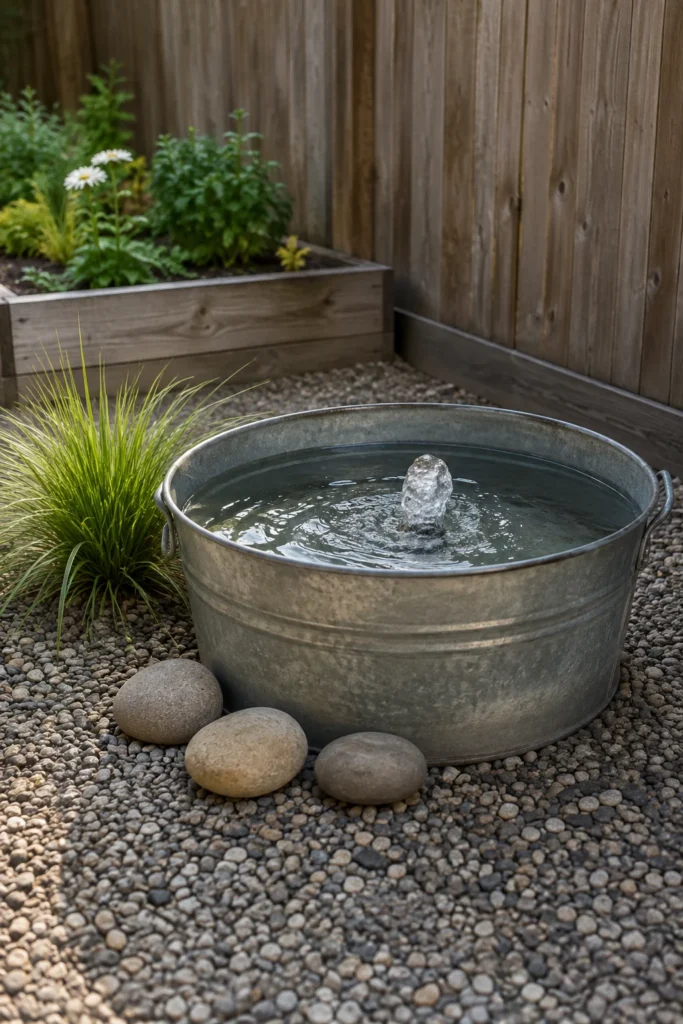
A galvanized or weathered metal basin can work as a fountain if the style already makes sense in your garden.
Use a broad, relatively low container and keep the water movement simple: one central bubbler or a small cluster of gentle upward streams. Place the basin in gravel near a wood fence or vegetable garden and surround it with only a few natural materials.
The contrast between metal, water, and greenery can be enough. Adding a ring of decorative stones, signs, lanterns, and multiple pots usually makes the setup busier rather than better.
This is one of the more approachable creative garden projects because the visual structure is simple. The container must be stable and suitable for the intended water use, and the pump still needs safe outdoor power or an appropriate alternative.
Because metal surfaces can heat up in direct sun, placement matters. A partly shaded location may be more comfortable for the system and reduce rapid water loss, though conditions vary.
Keep the basin shallow enough to suit your household situation, especially if children or pets regularly use the yard.
11. Integrate a Small Fountain Into a Large Planter
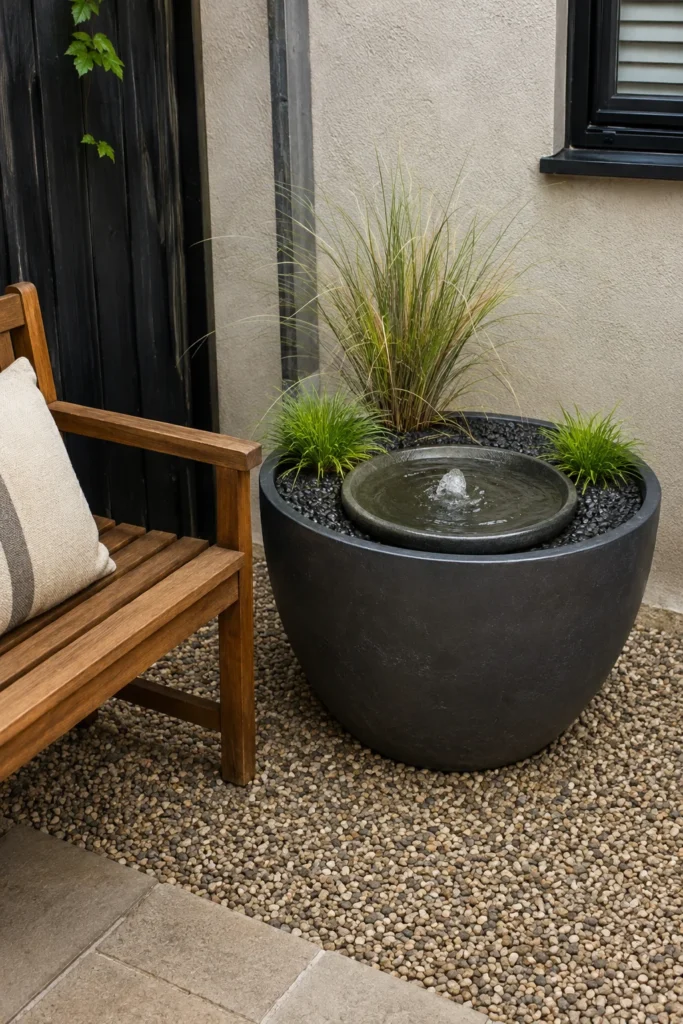
If floor space is limited, let one container do two jobs.
Use a wide, sturdy planter with enough room for a central water element and planting around part of the perimeter. A small bubbling insert or low fountain bowl can sit toward one side, while grasses, sedges, or another compact plant soften the opposite edge.
The arrangement should still leave the water clearly visible. If plants completely surround the fountain, maintenance becomes awkward and the feature disappears visually.
This is especially useful on a patio or small courtyard where separate planters and a separate fountain would create clutter.
The project can stay fairly approachable if you’re working with a purpose-suited basin or insert rather than improvising a complicated waterproof container.
Remember that the planting and fountain don’t necessarily want identical conditions. Avoid assuming any container plant will thrive beside constantly splashing water.
Also make sure the planter remains stable when filled. Large containers become extremely heavy, so decide on the location before everything is loaded.
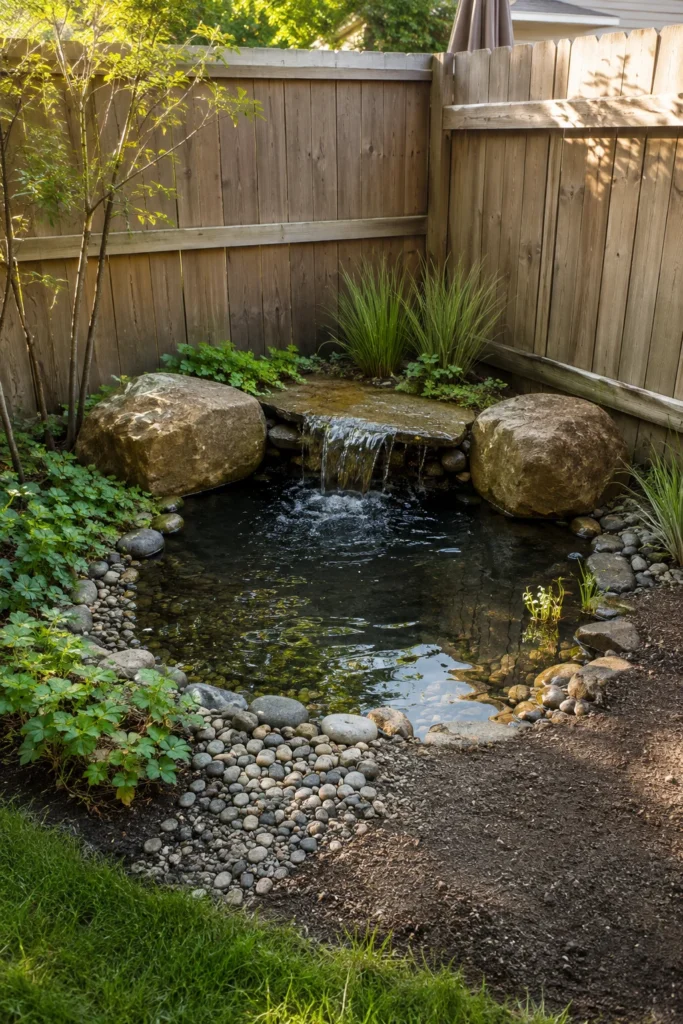
12. Add a Short Trickling Waterfall to a Corner Pond
For readers who want a little open water without committing to a large pond, a compact corner setup can be enough.
Use a small preformed or lined pond around 4 by 5 feet, shaped and softened so the edge doesn’t read as a perfect manufactured outline. Add one low spill stone at the rear with a short six- to eight-inch trickle.
Use two larger fieldstones as anchors and transition into gravel and planting rather than ringing the entire pond with identical rocks.
This is one of the more approachable DIY backyard pond ideas, but it takes more maintenance than a sealed fountain. Leaves, algae, water levels, and the pump all need periodic attention.
The trickle should stay gentle. In a small corner pond, a dramatic waterfall can churn the whole surface and overwhelm the scale.
Leave one section open for maintenance and avoid packing every edge with plants immediately. Marginal plants and groundcovers will grow, and you’ll appreciate having room to reach the water.
Check local considerations if you’re planning anything deeper or if young children have access to the yard.
13. Use a Stepped Basin Fountain on a Sloped Yard
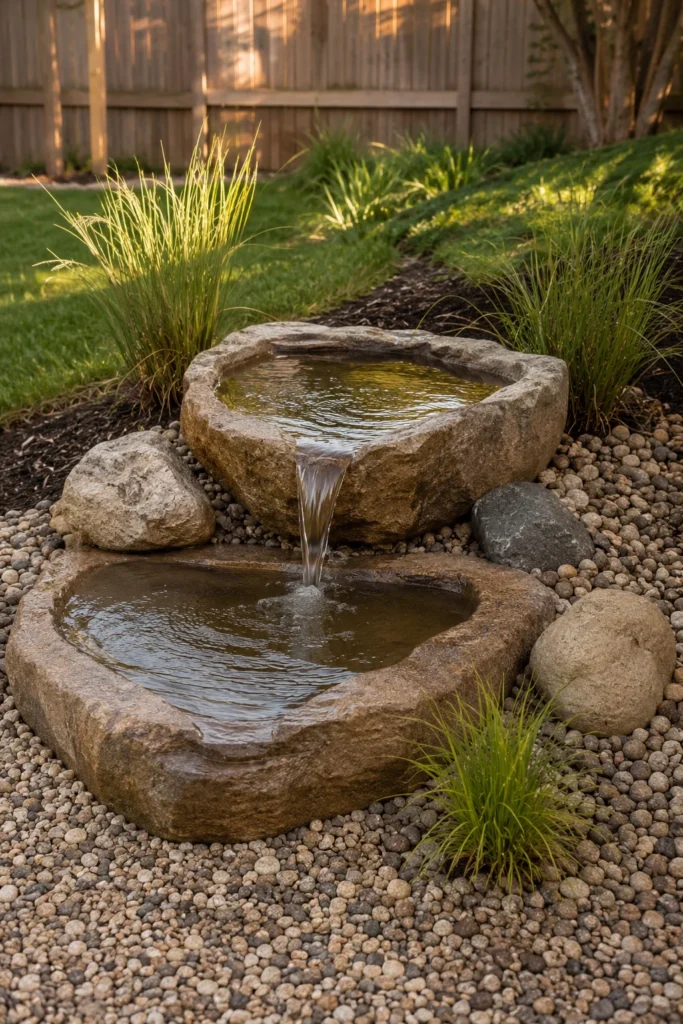
If your yard already changes elevation, a pair of basins can make more sense than trying to force one fountain onto a level platform.
Set an upper shallow stone or concrete basin slightly uphill and allow water to spill through a narrow lip into a lower basin. The two should overlap visually so the flow feels connected rather than like separate birdbaths.
Use gravel and a few natural stones around the transition to settle the feature into the slope. Keep both basins relatively low and broad.
This is an intermediate project because stability and grade matter more than they do with a single pot. If the slope needs retaining work or significant regrading, it may be worth getting help.
The appeal is that you’re letting gravity become part of the design. The water movement feels logical because it follows the yard.
Don’t add three or four more basins just because there is space uphill. Several drops become louder, harder to balance visually, and more demanding on the pump.
Two levels are often enough for a small residential slope.
14. Use a Simple Urn Fountain for a Three-Foot Garden Bed
A narrow planting bed is often better suited to one vertical object than a horizontal cascade.
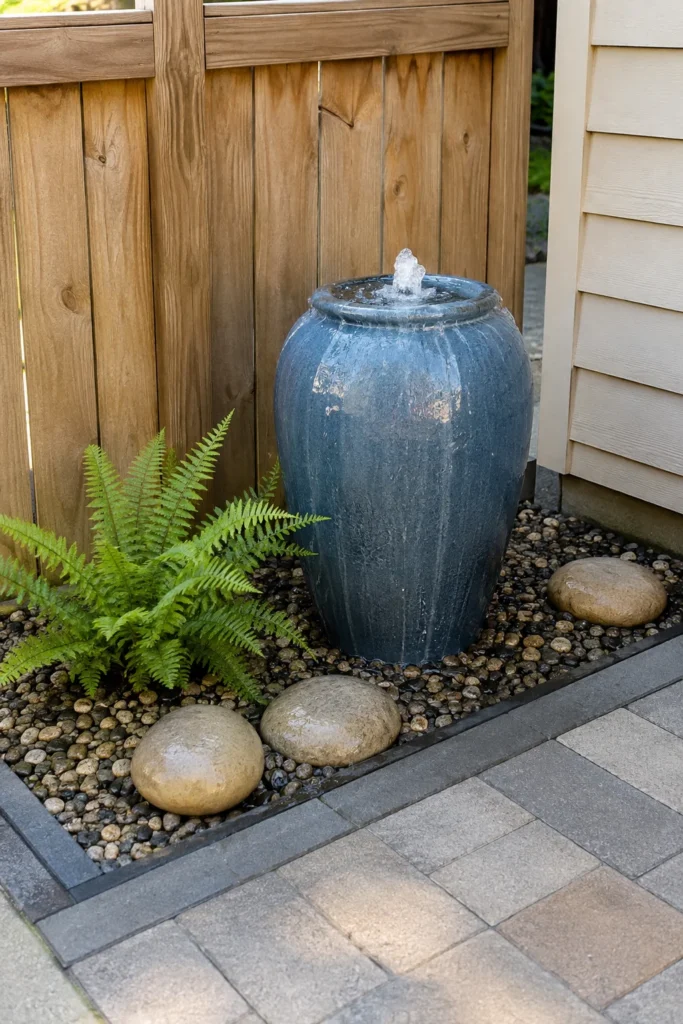
Choose a ceramic or stone urn around 20 to 28 inches tall and place it toward the back half of a 3-foot-deep bed. Let water bubble gently from the top and sheet down the sides into a concealed gravel-covered basin.
Frame it asymmetrically with three river stones and one fern or grass. The urn should remain the clear focal point.
This is one of the easiest small fountain approaches because the footprint is compact and the form already has enough visual presence without lots of landscaping around it.
Watch the splash pattern before planting right up against the feature. Water running down a textured urn can change direction unpredictably, especially in wind.
Small reservoirs also need topping up more frequently during hot or dry weather.
If you’re using a solar pump, make sure the charging conditions match the site. A shaded bed against the north side of a house may not be a good candidate.
15. Place a Low Fountain Beside a Garden Bench
Sometimes the most useful water feature is the one you can hear from where you actually sit.
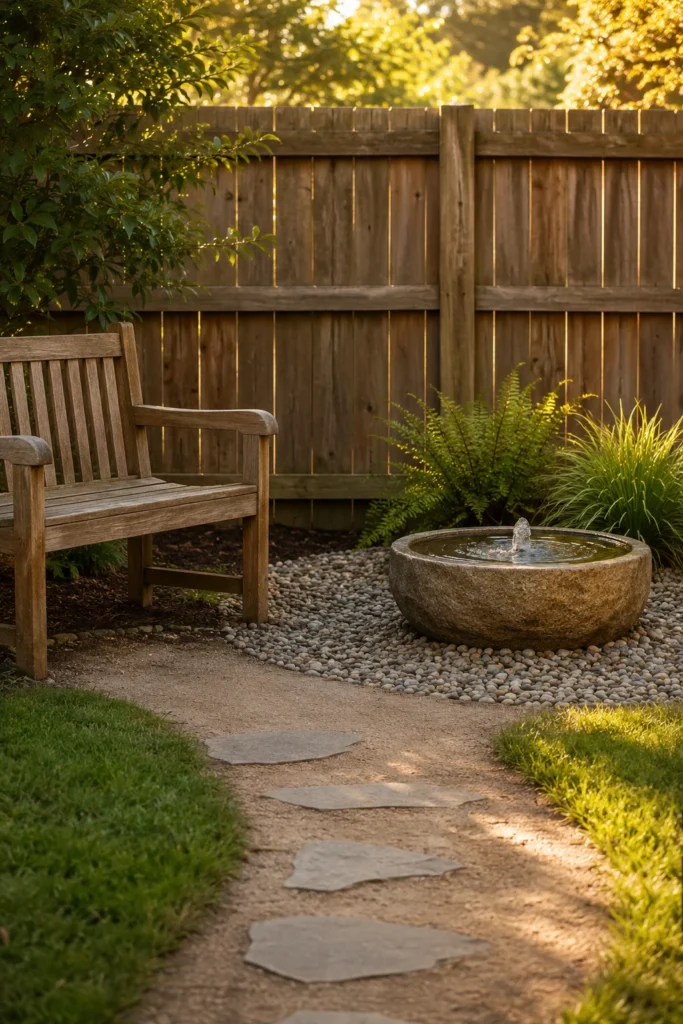
Place a low stone basin or compact bubbling rock three to five feet from a simple garden bench. Keep the water movement soft enough that it adds background sound without dominating conversation.
A broad low basin works well because it keeps the water visible from the bench without blocking the garden beyond it. Add a small gravel transition and one or two plants near the rear, but leave the front open.
This is a particularly useful piece of relaxing outdoor space inspiration because the fountain supports the seating area rather than becoming a separate attraction at the opposite end of the yard.
It’s also straightforward to scale down for a small garden.
Before committing to the strongest pump setting, sit on the bench and listen. A fountain that sounds pleasantly energetic from 15 feet away may feel much louder at four feet.
Keep the route between bench and fountain dry and uncluttered. Wet stepping stones are not an upgrade.
A Simple Formula for Choosing the Right Small Water Feature
Successful water features in the garden don’t have to be large, expensive, or complicated. A better framework is right-size feature + believable water flow + concealed mechanics + a few natural materials + easy maintenance access.
Start with the smallest feature that gives you the effect you actually want.
If the goal is gentle sound beside the patio, a bubbling pot or stone bowl may do the job better than a three-level waterfall. If the yard already slopes, a short cascade can make that grade feel intentional instead of trying to flatten everything first.
Keep stone varied rather than perfectly matched. Hide pumps and basins without making them impossible to reach. Use planting to soften selected edges, but don’t cover the feature until you can barely see the water.
And think about ordinary life around it: power access, sun and shade, splash, water top-ups, leaves, nearby seating, children or pets, and winter conditions where relevant.
A compact fountain that fits the yard and stays easy to care for usually feels more successful than an ambitious water feature that consumes the space around it.
