
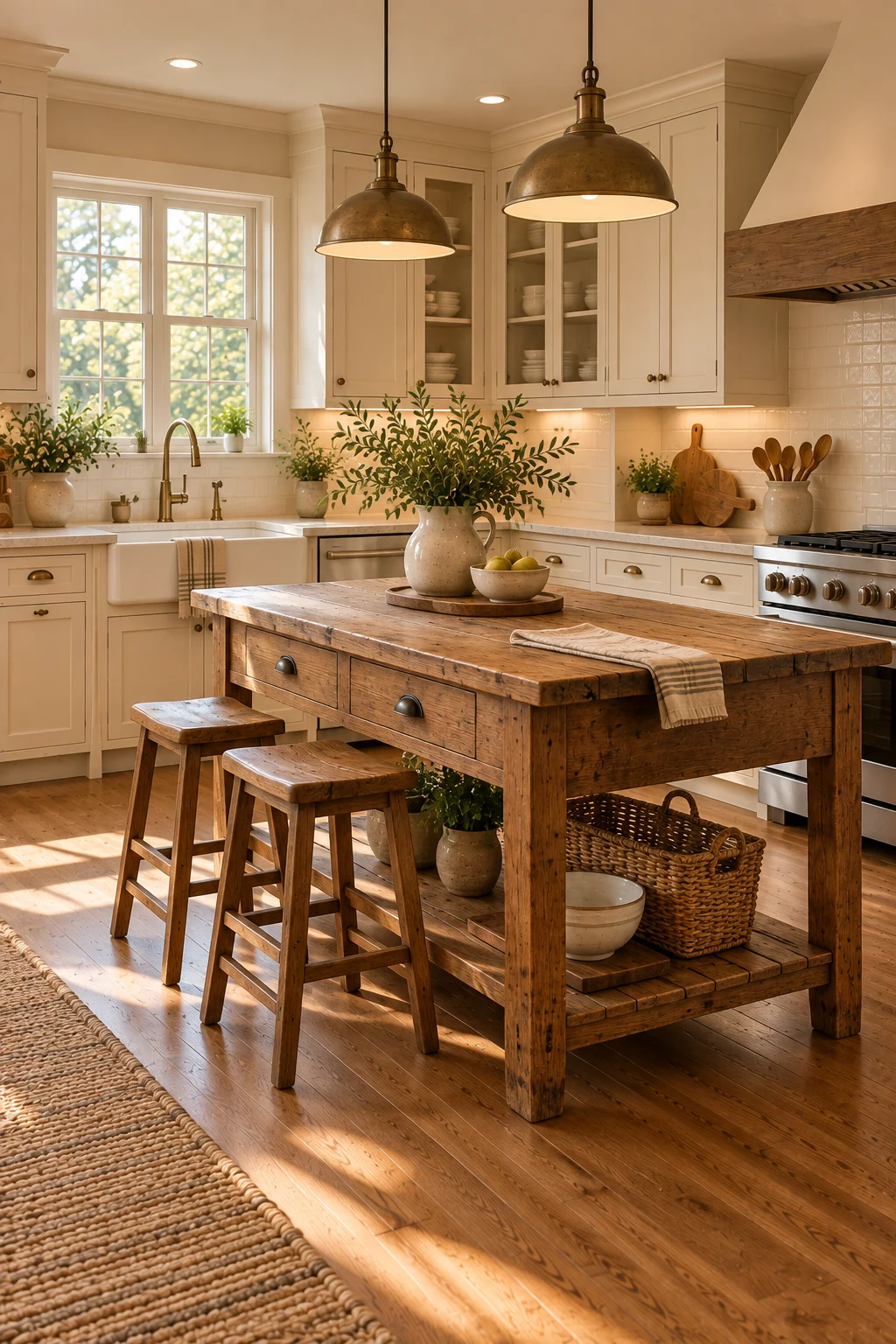
13 Antique Kitchen Island Ideas Full of Vintage Character
A kitchen island can provide valuable preparation space, but a brand-new design sometimes feels too polished in a home filled with traditional details. Antique-inspired finishes, furniture-style construction, and timeworn materials can give the kitchen a more personal character without sacrificing everyday function.
Antique kitchen islands bring together the charm of older furniture and the practical needs of a modern kitchen. These 13 ideas explore painted finishes, reclaimed wood, vintage hardware, repurposed furniture, and classic island designs that add warmth and individuality to an American home.
Before choosing a style, consider how the island will be used. A piece designed primarily for food preparation needs a different surface and storage arrangement from one intended for casual dining or displaying decorative accessories.
1. Choose a Distressed Painted Kitchen Island
A distressed painted island introduces the appearance of an older furniture piece into an otherwise modern kitchen. Softly worn edges, traditional paneling, and understated hardware can create vintage character without making the entire room look dated.
Choose a muted color such as dusty blue, sage green, faded charcoal, or warm ivory. A contrasting countertop in a suitable stone-look material or sealed wood helps define the island and gives the finish a practical foundation.
Keep distressing restrained and believable, concentrating it on selected edges rather than covering every surface with artificial wear. For food-preparation areas, choose a durable finish that can be cleaned easily and maintained without excessive effort.

2. Repurpose an Antique Wooden Worktable
An old wooden worktable can provide the visual character of an antique island while preserving a straightforward, furniture-like appearance. Its sturdy legs, visible joinery, and naturally varied finish make it an appealing alternative to conventional fitted cabinetry.
Look for a stable table with a useful surface and proportions suited to the kitchen. Oak, maple, and other durable woods can complement painted cabinets, while an open base maintains a lighter appearance.
Check the table’s structural condition before putting it to regular use, especially if it will support heavy cookware or food preparation. Protect the surface appropriately, and avoid using an untreated or unstable antique as a substitute for a properly designed worktop.

3. Add a Deep Green Antique-Style Island
Deep green cabinetry creates a rich traditional focal point, especially when paired with warm wood and light countertops. The color recalls older painted furniture while offering a sophisticated alternative to conventional neutral islands.
Choose forest green or a muted heritage green with a slightly subdued undertone. Traditional paneled sides, simple brass-look pulls, and a pale countertop help the island feel established rather than overly contemporary.
Keep the surrounding cabinets lighter if the kitchen is modest or receives limited daylight. Avoid combining very dark green with equally dark walls and flooring, since the island may visually overwhelm the room.

4. Use Reclaimed Wood for a Weathered Island
Reclaimed wood introduces natural variation and the appearance of age through knots, grain changes, and subtle surface irregularities. It can make a kitchen island feel like a salvaged furniture piece rather than a newly installed cabinet.
Choose properly prepared wood that is suitable for indoor use and appropriate to the intended surface. A restrained finish helps preserve the character of the material while making the island easier to coordinate with existing cabinetry.
Use reclaimed wood selectively if the kitchen already has prominent grain or patterned flooring. Avoid materials with unknown contamination, unstable joints, exposed fasteners, or rough surfaces that are difficult to clean around food preparation.

5. Choose a Cream Island With Traditional Furniture Details
A cream island with furniture-style detailing creates a softer interpretation of antique kitchen design. Turned feet, recessed panels, and simple decorative molding can suggest the appearance of an older freestanding piece.
Choose warm ivory or soft parchment paint and pair it with a wood or light stone-look countertop. Small dark knobs or understated aged-brass-look hardware can reinforce the traditional style without making the island look overly ornate.
Keep decorative trim proportionate to the kitchen. Avoid oversized corbels, excessive molding, or elaborate carvings that reduce usable space or make a modest island feel too formal.

6. Install Vintage-Style Cup Pulls and Knobs
Hardware can change the character of an ordinary island without requiring a complete renovation. Traditional cup pulls, rounded knobs, and gently aged metal finishes evoke the appearance of older kitchen furniture.
Choose a hardware finish that complements the island color and the rest of the kitchen. Dark bronze works well with distressed paint, while brass-look fittings can warm up cream, green, or blue cabinetry.
Check the size and spacing of each pull before installation, especially on existing drawers. Avoid mixing too many hardware styles or selecting decorative pieces that are uncomfortable to grip during everyday use.

7. Add a Butcher-Block Top to a Vintage Island
A butcher-block countertop creates a warm, traditional surface that pairs naturally with an antique-inspired island base. The visible grain softens painted cabinetry and gives the piece a practical, furniture-like appearance.
Choose a suitable hardwood top or a well-made wood-look alternative, depending on the kitchen’s maintenance needs. Maple and oak create lighter combinations, while medium brown finishes give the island a deeper vintage character.
Protect the surface according to its finish and intended use. Wipe up spills promptly, avoid prolonged moisture around joints, and keep hot cookware away from surfaces that could be damaged by heat.

8. Create a Small Antique Island From a Vintage Dresser
A vintage dresser can inspire a charming kitchen island when its proportions and construction suit the space. Drawer fronts provide an immediate furniture-like appearance and can create convenient storage for utensils, linens, and other appropriate kitchen supplies.
Look for a stable piece with drawers that move smoothly and a structure that can accommodate the intended countertop. Any conversion should account for moisture protection, cleaning requirements, and the island’s overall stability.
Keep the dresser away from areas where its drawers interfere with appliances or walkways. Avoid placing a fragile or top-heavy piece in the center of a busy kitchen without appropriate reinforcement.

9. Pair a Vintage Island With a Stone-Look Countertop
A stone-look countertop balances the character of an antique island with a clean, practical surface. Its restrained texture can contrast with distressed paint or naturally weathered wood without competing with the furniture details.
Choose warm ivory, soft gray, or pale beige tones with subtle variation. These finishes work well with traditional green, cream, blue, and brown island bases.
Coordinate the countertop with the perimeter kitchen surfaces so the island feels connected to the room. Avoid heavily patterned stone-look materials when the island already has prominent wood grain, elaborate paneling, or decorative hardware.

10. Add Open Storage to a Vintage Kitchen Island
Open storage can make an antique-style island more useful by providing a convenient place for cookbooks, serving bowls, or everyday baskets. It also allows the furniture-like base to remain visually lighter than a solid bank of cabinets.
Choose an island with a lower shelf or a small open compartment that suits the items you plan to store. Keep the arrangement simple, using a few coordinated bowls or sturdy baskets rather than a crowded display.
Place heavier objects securely and keep the floor around the island clear. Avoid storing delicate items where feet, stools, or passing traffic could knock them over.

11. Incorporate a Vintage Island With a Breakfast Overhang
An antique-inspired island can provide casual seating as well as additional preparation space. A modest countertop overhang allows family members to sit nearby without requiring a separate dining table.
Choose compact stools that complement the island’s traditional finish. Natural wood, simple upholstered seats, or restrained metal frames can work well with painted or reclaimed-wood bases.
Plan the seating area around the actual room dimensions and the required countertop support. Avoid adding stools where they block cabinet doors, appliance access, or the main route through the kitchen.

12. Use an Antique Island as a Contrasting Furniture Piece
An island does not have to match every cabinet in the kitchen. Treating it as a contrasting furniture piece can make the room feel collected and less uniform.
Pair simple cream perimeter cabinets with an island in dark oak, faded blue, muted green, or warm brown. A traditional silhouette and restrained hardware can help the island stand out without making it look disconnected from the rest of the room.
Repeat one of the island’s materials or colors elsewhere, such as in a wooden shelf or a small ceramic accessory. Avoid introducing so many different finishes that the island appears unrelated to the kitchen.

13. Style an Antique Kitchen Island With Restrained Vintage Accessories
A few carefully chosen accessories can reinforce the character of an antique island without turning the countertop into a display shelf. Simple pottery, a wooden bowl, or a small vase can provide texture while leaving space for practical tasks.
Choose accessories that relate to the island’s color and materials. Cream stoneware, natural wood, muted green ceramics, and aged metal details can complement many traditional finishes.
Keep decorative objects grouped in one small area of the counter and away from cooking heat. Avoid placing fragile pieces close to the edge or covering the main food-preparation surface with accessories.

How to Choose the Right Antique Kitchen Island
Start with the island’s purpose. A piece used for chopping and preparation needs a suitable work surface, while an island intended for storage or casual dining may benefit more from drawers, shelves, or a seating overhang.
Consider the scale of the kitchen and the visual weight of the island. Open legs and a lighter painted finish can suit a compact room, while a substantial wooden island may work better in a larger kitchen.
Inspect antique furniture carefully before repurposing it. Structural stability, surface condition, drawer function, and the suitability of its materials all matter when the piece will be used regularly.
Making an Antique Island Work in a Small Kitchen
A compact furniture-style island can provide extra work space without making a small kitchen feel enclosed. Open legs, modest dimensions, and a restrained finish can help maintain a sense of openness.
Measure the available area and consider how cabinet doors, drawers, and appliances operate. The island should leave comfortable routes between the main work areas rather than create an obstacle.
If a permanent island will not fit, consider a suitable freestanding worktable that can be repositioned when necessary. Make sure any movable piece remains stable during use.
Budget-Friendly Antique Island Updates
An existing island may only need a new paint finish, updated hardware, or a suitable countertop to achieve a more vintage appearance. Repairing sound cabinetry can be more practical than replacing it.
Secondhand furniture can provide distinctive character, but check its condition and the work needed to make it suitable for kitchen use. A sturdy table may be a simpler option than a complicated conversion.
Prioritize structural repairs and practical surfaces before buying decorative accessories. The island should remain useful and easy to maintain after its appearance has been updated.
Common Antique Kitchen Island Decorating Mistakes
One common mistake is choosing an island that is too large for the room. A substantial antique piece may look appealing on its own but can interfere with movement and appliance access.
Another is overdoing the distressed finish. Excessive artificial wear, elaborate hardware, and multiple decorative details can make the island appear contrived.
Avoid overlooking the countertop’s intended use. An attractive vintage base still needs a surface that suits food preparation, cleaning, and the demands of everyday kitchen life.
Caring for Antique-Style Kitchen Islands
Clean painted cabinetry with products suitable for its finish and pay attention to drawer pulls, corners, and other frequently touched areas. Avoid abrasive cleaning methods that could damage the paint or decorative details.
Wood surfaces need care appropriate to their protective coating. Wipe up spills promptly, prevent standing water from collecting around joints, and use suitable protection when placing hot or damp items on the countertop.
Check the island’s legs, drawer hardware, and countertop supports periodically. Prompt attention to loose fittings or damaged finishes helps preserve both its appearance and practical function.
Safety and Practical Considerations
- Make sure the island is stable and suitable for its intended use.
- Keep sufficient space around the island for appliance doors, drawers, and walkways.
- Use a food-appropriate surface for food preparation and follow its care requirements.
- Secure any added shelves, countertop extensions, and structural components properly.
- Keep decorative objects away from cooking heat and the countertop edge.
- Store heavy items low and avoid overloading drawers or open shelves.
- Check repurposed furniture for loose joints, splinters, protruding fasteners, and unstable legs.
An antique kitchen island can bring warmth, individuality, and a sense of history into an ordinary kitchen. By choosing a suitable piece, balancing its finish with the surrounding cabinetry, and keeping the design practical, you can create a distinctive centerpiece that feels comfortable for everyday use.
