
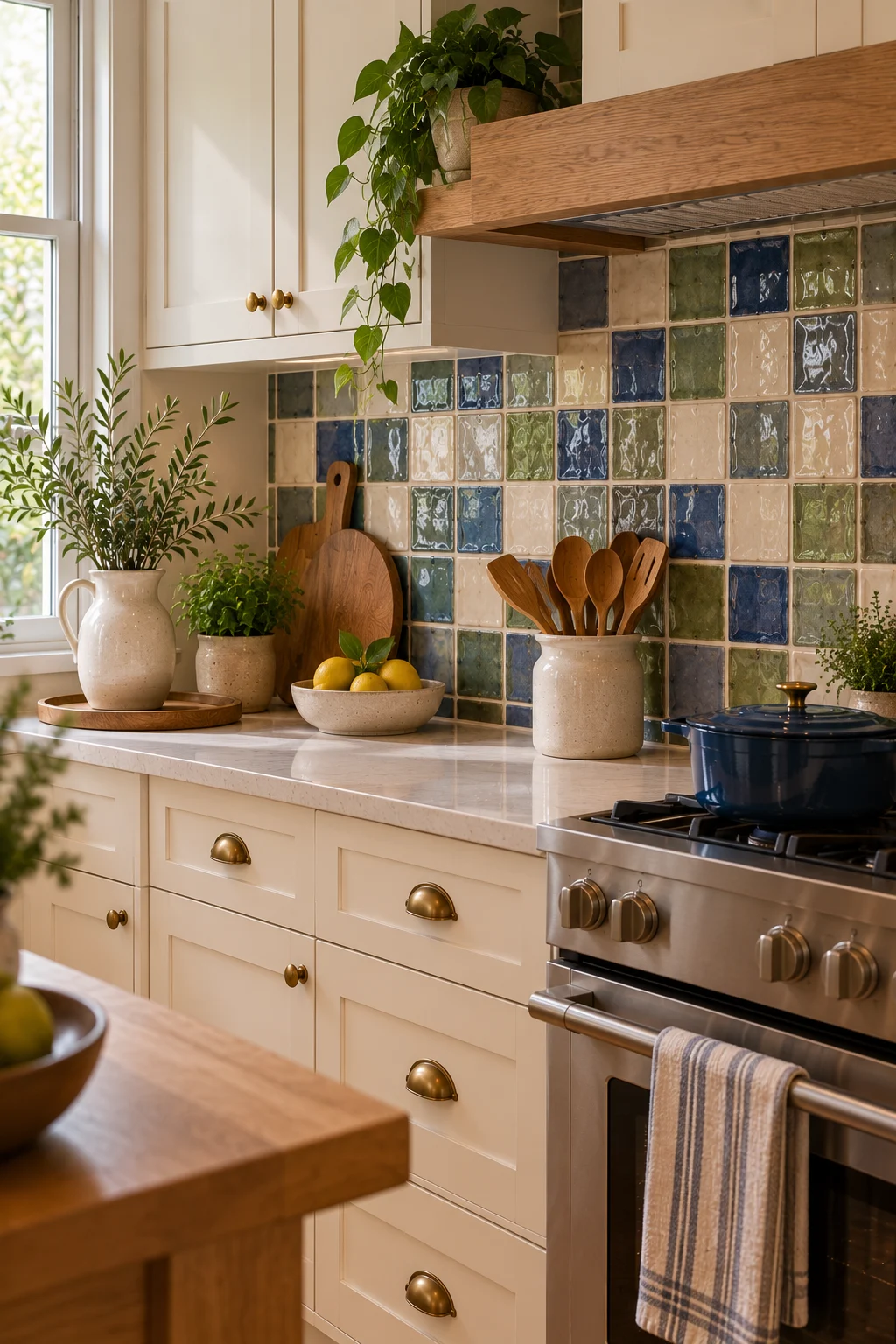
19 Artsy Kitchen Ideas for a Creative and Personality-Filled Space
A kitchen can be practical and beautifully organized yet still feel a little predictable. When every cabinet, countertop, and accessory follows the same style, the room may lack the individuality that makes a home feel personal.
Artsy kitchens bring creativity into everyday spaces through expressive colors, handmade ceramics, unexpected artwork, sculptural lighting, and distinctive materials. These 19 artsy kitchen ideas explore ways to introduce personality while keeping the room functional, comfortable, and suitable for everyday cooking.
Start with one element that expresses your taste, such as a colorful backsplash, an unusual pendant, or a favorite piece of artwork, and build the rest of the room around it.
1. Create a Colorful Kitchen With Contrasting Cabinets
Contrasting cabinet colors can give an artsy kitchen an expressive, collected appearance. Rather than using the same finish everywhere, combine two complementary shades that create a deliberate visual relationship.
Try muted teal lower cabinets with warm white uppers, or pair dusty rose cabinetry with a deeper plum island. Keep the countertops and larger wall surfaces relatively simple so the cabinet colors remain the main feature.
Choose colors with compatible undertones and test samples under the kitchen’s actual lighting. Avoid introducing too many unrelated cabinet colors, which can make a small room feel fragmented.

2. Display Abstract Artwork on an Empty Kitchen Wall
Abstract artwork introduces personality without requiring a renovation. A carefully selected print or original painting can connect the kitchen’s colors while making an otherwise plain wall more interesting.
Choose artwork with a palette that complements the cabinetry, backsplash, or nearby dining furniture. Organic shapes, expressive brushstrokes, and color-block compositions can all work well in a contemporary artsy kitchen.
Place the artwork on a dry wall away from direct cooking splashes and excessive heat. Use a suitable frame and secure mounting hardware, avoiding oversized pieces that interfere with cabinets or dominate the room.

3. Choose an Artistic Handmade-Look Backsplash
A backsplash with visible texture and subtle irregularity can make an artsy kitchen feel distinctive. Handmade-look ceramic tiles introduce variations in glaze and shape that give the wall more character than a completely uniform surface.
Consider glossy cobalt blue squares, softly varied green tiles, or a combination of muted colors arranged in a deliberate pattern. Keep the countertop comparatively quiet when the backsplash has strong color or movement.
Select tiles suitable for kitchen use and choose grout that supports the intended design. Avoid combining several competing patterns across the backsplash, countertop, and flooring.

4. Add Sculptural Pendant Lighting
An unusual pendant can function as both a practical light source and a decorative focal point. Rounded ceramic shades, softly curved glass, and sculptural metal forms introduce artistic character without occupying countertop space.
Choose a fixture proportionate to the kitchen and install it above an island, peninsula, or dining table where it provides useful illumination. A simple cabinet palette allows the shape and material of the pendant to stand out.
Consider the ceiling height, sightlines, and required clearances before selecting the fixture. Avoid oversized designs that overwhelm a modest kitchen or obstruct views across the room.

5. Introduce Colorful Open Shelving
Open shelving provides an opportunity to display everyday objects as part of the kitchen’s design. A thoughtful arrangement of colored dishes, small sculptures, and handmade ceramics can make the room feel personal without adding large decorative furniture.
Choose shelves with appropriate structural support and arrange objects in a limited color palette. A mixture of cream dishes, blue glassware, and a few colorful bowls creates variety while leaving room for everyday use.
Keep heavier items securely supported and place frequently used dishes within comfortable reach. Avoid filling every shelf with decorative objects that collect grease or reduce practical storage.

6. Paint a Kitchen Island in a Bold Accent Color
A brightly colored island can become the centerpiece of an artsy kitchen while allowing the perimeter cabinetry to remain understated. It offers a way to experiment with color without committing every cabinet to the same statement shade.
Try deep turquoise, muted paprika, dusty lilac, or rich blue, depending on the atmosphere you want to create. Pair the island with a neutral countertop and surrounding cabinets that complement the selected color.
Keep the island appropriately scaled to the room and preserve comfortable movement around it. Avoid adding several equally strong colors to nearby cabinetry, flooring, and backsplash surfaces.

7. Display a Collection of Handmade Ceramics
Handmade ceramics bring irregular shapes, tactile surfaces, and individual character into a kitchen. Even a small collection can make an ordinary countertop or dining shelf feel more expressive.
Choose a few pieces with related colors but different shapes, such as a sculptural pitcher, a shallow serving bowl, and a textured vase. Arrange them on a dry counter or sturdy shelf where they do not interfere with food preparation.
Consider the actual purpose of each object and keep frequently used surfaces clear. Avoid crowding fragile ceramics near the edge of a countertop or placing decorative pieces close to cooking heat.

8. Use Checkerboard Flooring With an Artistic Twist
Checkerboard flooring can give a kitchen a graphic foundation that feels both traditional and creative. Choosing unexpected colors instead of the familiar black-and-white combination makes the pattern more individual.
Consider terracotta and cream, dusty blue and ivory, or sage and pale beige. Matte ceramic or porcelain tiles can create a practical surface with a distinctive visual rhythm.
Keep the cabinetry relatively simple so the floor remains readable. Avoid combining oversized floor patterns with several other high-contrast patterns in a compact room.

9. Create a Small Gallery Wall Near the Dining Area
A gallery wall can turn a kitchen dining corner into a more personal and visually interesting space. Small illustrations, abstract prints, and colorful still-life artwork can reflect the household’s interests without taking up useful counter space.
Choose frames in a coordinated finish and arrange the artwork as a balanced group. A mixture of portrait and landscape formats creates movement, while a shared color palette keeps the display cohesive.
Keep the frames away from direct cooking splashes and mount them securely. Avoid placing delicate artwork where heat, grease, or frequent cleaning could damage it.

10. Combine Unexpected Colors in a Kitchen Nook
A breakfast nook is an ideal place to experiment with color because it occupies a relatively small area. Contrasting cushions, painted chairs, and a colorful table accessory can introduce artistic character without changing the entire kitchen.
Try a mustard-yellow chair beside a muted blue bench, or combine dusty pink upholstery with a natural oak table. Repeat one of these shades in a nearby ceramic piece or artwork to connect the arrangement.
Keep the furniture compact and comfortable, with clear access to the kitchen. Avoid choosing too many contrasting patterns that make the nook feel busy.

11. Add a Colorful Runner With an Abstract Pattern
A patterned runner can bring art-inspired color into a kitchen without changing permanent finishes. It is particularly useful in a neutral room that needs a stronger decorative element.
Choose a low-profile runner with an abstract pattern that includes colors already present in the cabinetry or artwork. Muted coral, blue, mustard, and cream can work together when their proportions are balanced.
Use a suitable nonslip backing and keep the runner clear of appliance doors. Avoid thick rugs that create a tripping hazard or interfere with kitchen circulation.

12. Choose Colorful Bar Stools With Distinctive Shapes
Bar stools can function as small sculptural accents in an artsy kitchen. Their color, silhouette, and material offer a way to add personality without changing the main cabinetry.
Choose stools with rounded backs, curved wooden legs, or simple molded seats in a color that complements the island. Dusty pink, muted teal, mustard, and natural wood are all possible choices.
Measure the counter height and available knee space before purchasing. Avoid stools with wide bases or awkward proportions that make the kitchen harder to navigate.

13. Introduce a Statement Color Through the Backsplash
A colorful backsplash can give an artsy kitchen a strong visual identity. Because it occupies a defined section of the room, it allows experimentation without requiring every surface to become decorative.
Consider deep cobalt blue, dusty rose, muted turquoise, or a carefully arranged mix of complementary tiles. A simple countertop and understated cabinet finish will help the color remain the focal point.
Choose durable materials suitable for the intended kitchen area. Avoid pairing an intensely colored backsplash with equally busy countertops and heavily patterned flooring.

14. Use Sculptural Fruit Bowls as Everyday Art
A fruit bowl can be both functional and decorative when its shape and material are chosen thoughtfully. An unusual ceramic or wooden vessel introduces artistic character without requiring an additional decorative object.
Choose a bowl with a distinctive silhouette in a color that complements the kitchen. Place it on a dry section of counter or dining table where it does not interfere with preparation work.
Keep the bowl stable and avoid placing it close to the counter edge. Do not let decorative styling interfere with food storage or hygiene.

15. Add a Painted Geometric Accent Wall
A geometric accent wall can bring a contemporary artistic touch to a kitchen dining area. Simple color blocks or broad curved shapes introduce visual movement without requiring wallpaper or decorative tile.
Choose two or three compatible colors and apply the design to a suitable dry wall away from heavy cooking splashes. Muted blue, warm terracotta, pale peach, and cream can create a playful but balanced composition.
Keep the pattern proportionate to the wall and surrounding furniture. Avoid placing busy geometric shapes directly behind other prominent artwork or heavily patterned curtains.

16. Mix Vintage Furniture With Contemporary Cabinets
Combining vintage furniture with simple modern cabinetry gives an artsy kitchen the feeling of a collected space. An old wooden sideboard or small antique table can introduce a different silhouette and material.
Choose a sturdy vintage piece with proportions suited to the room. Its wood tone or painted finish can contrast with the fitted cabinets while remaining connected through the overall color palette.
Inspect furniture condition and ensure it is stable for its intended use. Avoid placing a delicate antique where it will be exposed to frequent splashes, excessive heat, or heavy kitchen work.

17. Display Artistic Glassware in Open Cabinets
Colored glassware adds transparent color and reflective detail to an artsy kitchen. Blue tumblers, amber glasses, and softly tinted bowls can create visual interest while remaining useful for everyday dining.
Choose a limited range of glass colors and arrange the pieces on a stable shelf or behind glass-front cabinet doors. Natural daylight can highlight their colors without requiring additional decorative lighting.
Store fragile pieces securely and keep them away from crowded edges. Avoid displaying glassware where cooking grease or steam makes frequent cleaning difficult.

18. Introduce an Artistic Ceiling or Wall Light
A distinctive wall light or ceiling fixture can give an artsy kitchen a finished appearance while providing practical illumination. Sculptural forms offer visual interest without consuming storage space.
Consider a simple wall light with a curved metal arm, a ceramic base, or a rounded shade near a breakfast corner. Select a fixture that complements the kitchen’s existing hardware and provides the appropriate light for its location.
Use suitable mounting and professional electrical installation where needed. Avoid decorative fixtures that create glare, obstruct movement, or provide insufficient task lighting.

19. Create a Cohesive Artsy Kitchen With Collected Details
An expressive kitchen feels most successful when its creative elements relate to one another. Colorful cabinetry, artwork, handmade ceramics, and distinctive lighting can create a lively atmosphere without making the room difficult to use.
Begin with a restrained foundation, then repeat a few colors across different materials. A cobalt backsplash might connect to glassware, while terracotta ceramics can echo an accent chair or abstract print.
Leave preparation surfaces open and allow each statement piece enough visual space. Avoid introducing every artistic trend at once, since a cohesive kitchen needs balance as much as personality.

How to Choose an Artsy Kitchen Color Palette
A creative kitchen can use strong colors successfully when they have a clear relationship. Start with a dominant shade, such as blue, green, terracotta, or pink, and choose supporting colors that complement its undertones.
Neutral surfaces provide breathing room between more expressive elements. Warm white cabinets, natural wood, and pale countertops can balance a colorful backsplash or a bold island.
Consider the kitchen’s natural light before choosing darker colors. Test paint and tile samples together so their appearance remains harmonious under both daylight and artificial lighting.
Making an Artsy Kitchen Work in a Small Space
Small kitchens can express plenty of personality without relying on large decorative installations. A colorful backsplash, one framed print, or a collection of handmade mugs can establish a creative style.
Use wall space selectively and preserve the most useful countertop areas. Choose compact furniture and practical storage so the decorative elements do not interfere with cooking.
Keep the palette focused. A few coordinated colors usually create a more intentional result than filling every available surface with different patterns.
Budget-Friendly Ways to Add Artistic Character
Painting a small cabinet section or changing existing hardware can introduce color without replacing the entire kitchen. Secondhand artwork, handmade-looking ceramics, and vintage furniture are also useful ways to create a collected appearance.
Rearranging objects you already own may reveal new combinations. Grouping a few ceramics together or moving a colorful print to a more visible wall can change the room’s character without adding clutter.
Prioritize the details that make the biggest visual difference. A single expressive feature may be more effective than numerous small purchases.
Common Artsy Kitchen Decorating Mistakes
One common mistake is combining too many bold patterns. A colorful backsplash, geometric flooring, patterned curtains, and busy artwork can compete for attention.
Another is choosing decorative objects without considering scale. Oversized artwork or sculptural lighting may dominate a modest kitchen and make the room feel cramped.
Avoid sacrificing useful storage or preparation space for decoration. Creative kitchens should remain comfortable and functional throughout the day.
Caring for Artistic Kitchen Finishes
Colorful painted cabinets, ceramic tiles, and decorative surfaces require care appropriate to their materials. Use suitable cleaning products and avoid abrasive methods that could damage finishes.
Keep handmade ceramics and decorative glassware clean, especially when they are displayed near cooking areas. Regularly dust shelves and artwork frames to prevent grease and residue from accumulating.
For fabric runners and upholstered stools, follow the material’s care instructions and address spills promptly.
Safety and Practical Considerations
- Secure artwork, mirrors, shelves, and tall furniture with appropriate fixings.
- Keep decorative objects away from cooking heat and active preparation areas.
- Choose kitchen-appropriate flooring and use nonslip backing beneath runners.
- Ensure pendant and wall lighting is properly installed and does not obstruct movement.
- Store fragile glassware securely and keep heavy objects on stable shelves.
- Maintain clear access to appliances, windows, outlets, and walkways.
- Keep countertops usable for food preparation rather than filling them with decorations.
An artsy kitchen does not need to look like a gallery or require a major renovation. With expressive colors, thoughtful artwork, and a few distinctive materials, you can create a kitchen that reflects your personality while remaining practical for everyday life.
