

15 Budget Small Bathroom Makeover Ideas That Look Good Without Moving Plumbing
A small bathroom can look completely different without moving the toilet, rerouting the shower drain, or tearing open half the walls. In fact, leaving the existing plumbing where it is is often one of the smartest ways to keep a makeover manageable while still getting a noticeable visual change.
The biggest wins usually come from surfaces you see every day: the vanity, mirror, lighting, grout, shower curtain, wall color, and storage. Those changes sound simple, but details matter. The wrong paint can peel, a pretty shelf can make a tiny walkway worse, and new hardware becomes a headache if the holes don’t line up.
So rather than treating this like a list of pretty bathroom inspo, these ideas focus on cosmetic and light-DIY changes you can actually reproduce in a small or very small bathroom.
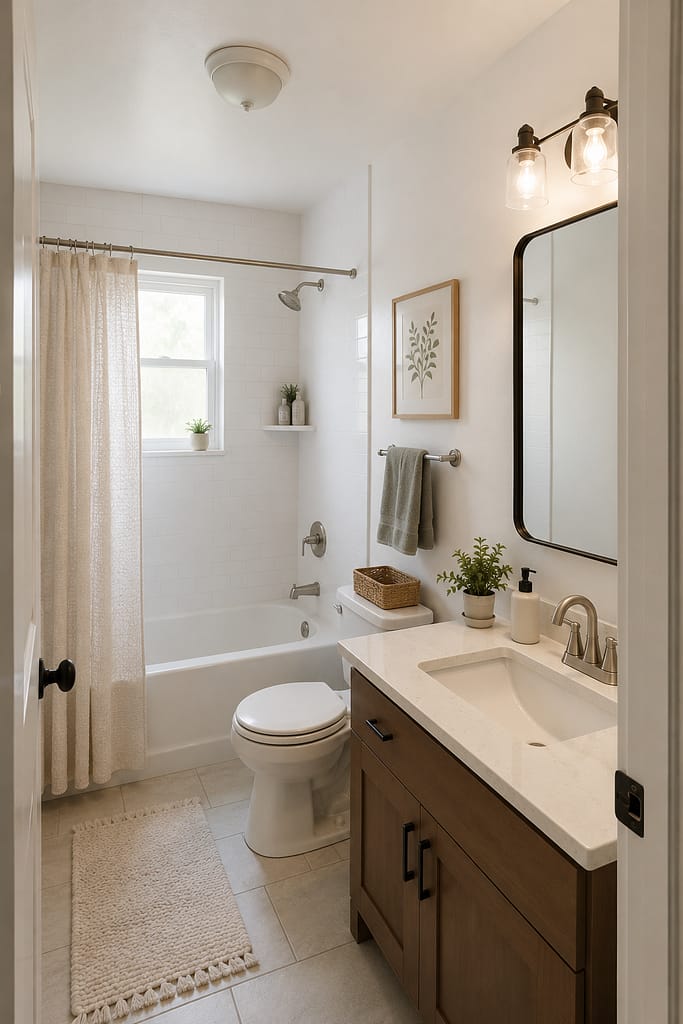
1. Paint a Sound Vanity Instead of Replacing It
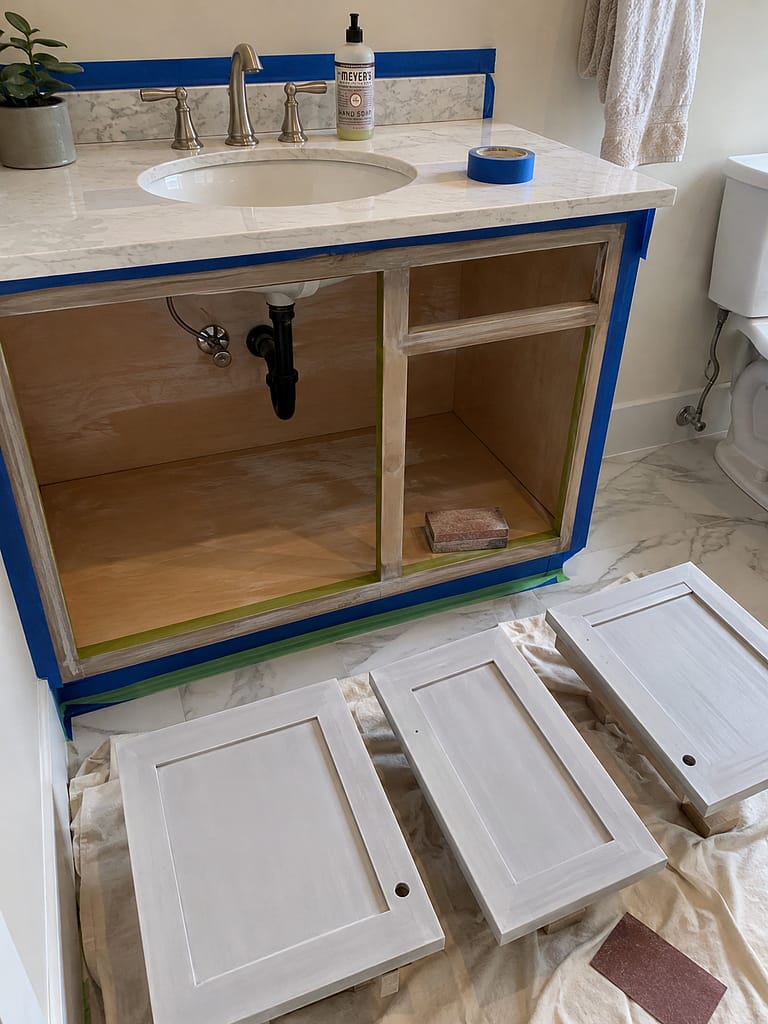
If the vanity box is solid, painting it can change the room without disturbing plumbing. Start by removing doors and hardware, cleaning away soap residue and grime, repairing small dents, and lightly preparing the existing finish so the new coating can bond properly. Use a durable paint system appropriate for cabinetry and a humid room. Don’t paint over swollen particleboard, peeling laminate, or serious water damage; those problems usually need repair or replacement rather than camouflage.
2. Make an All-White Bathroom Feel Layered
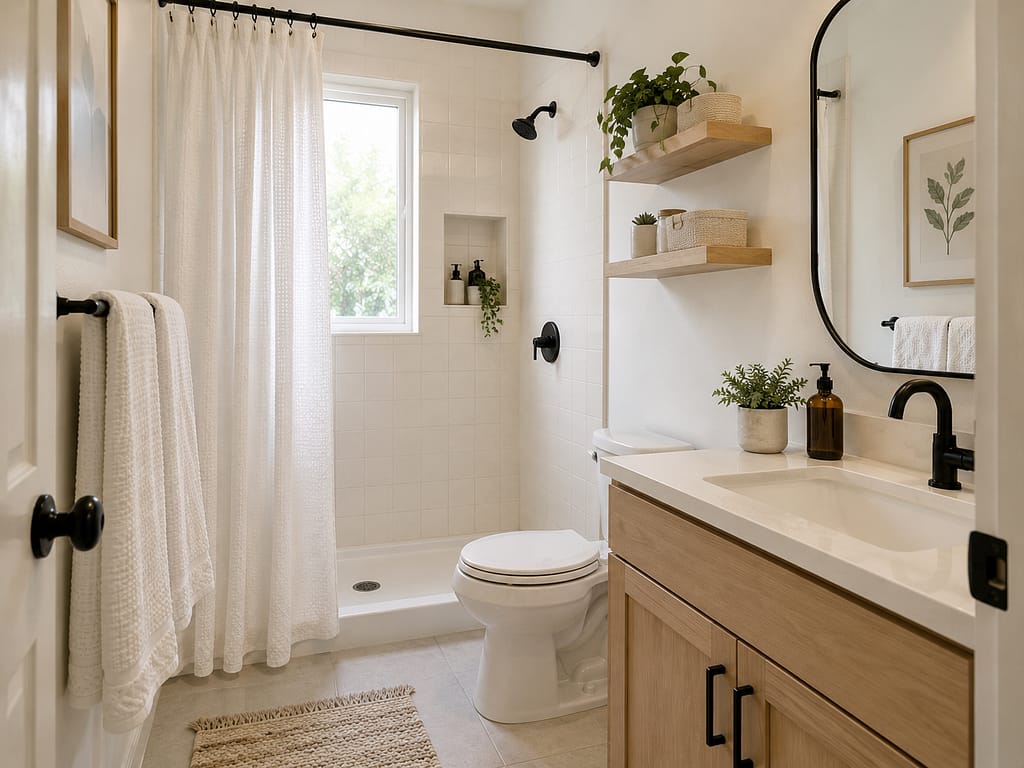
Small white bathroom ideas work best when “white” isn’t one identical finish everywhere. Try warm white walls with slightly creamy tile, soft gray-beige grout, natural wood, textured towels, and a small amount of black, brass-tone, or brushed metal hardware. The subtle variation gives the eye something to read without fragmenting the room. If you’re repainting, test the white beside your existing tile first; a cool blue-white can make older cream fixtures look noticeably yellow.
3. Update Cabinet Hardware Without Creating More Work
New pulls or knobs can make an older vanity feel much cleaner, but measure before shopping. If you’re replacing pulls, measure the center-to-center distance between the existing screw holes and choose replacements with the same spacing whenever possible. That avoids filling, sanding, repainting, and redrilling every door. If you’re switching from knobs to pulls, mock up the position with painter’s tape first. Keep hardware scale modest on a small vanity so the handles don’t visually overpower the cabinet fronts.

Budget Tip: Remove one existing pull and take it with you—or write down the exact hole spacing—before shopping. Matching the existing holes can save an entire extra round of filling, sanding, and touch-up paint.
4. Replace a Too-Small Mirror With a Better-Proportioned One
A wider mirror can reflect more light and reduce the number of small visual fragments above the vanity. I usually like a mirror that relates closely to the vanity width rather than a tiny decorative shape floating in the center of the wall. Before ordering, tape the proposed dimensions onto the wall and check clearances around faucets, sconces, medicine cabinets, outlets, and nearby doors. A bigger mirror is useful only if it fits the fixtures around it without creating new conflicts.

5. Improve Vanity Lighting Instead of Just Changing the Fixture Style
Lighting is one of the quickest ways to make a dated bath feel better, but placement matters more than choosing a trendy fixture. A single ceiling light behind you can cast shadows across your face at the mirror. Side lighting around face level is often more even, while a broad fixture above the mirror can work when wall space is tight. Use bathroom-appropriate fixtures where required, and aim for a comfortable warm-to-neutral residential light rather than a harsh blue-white glow.
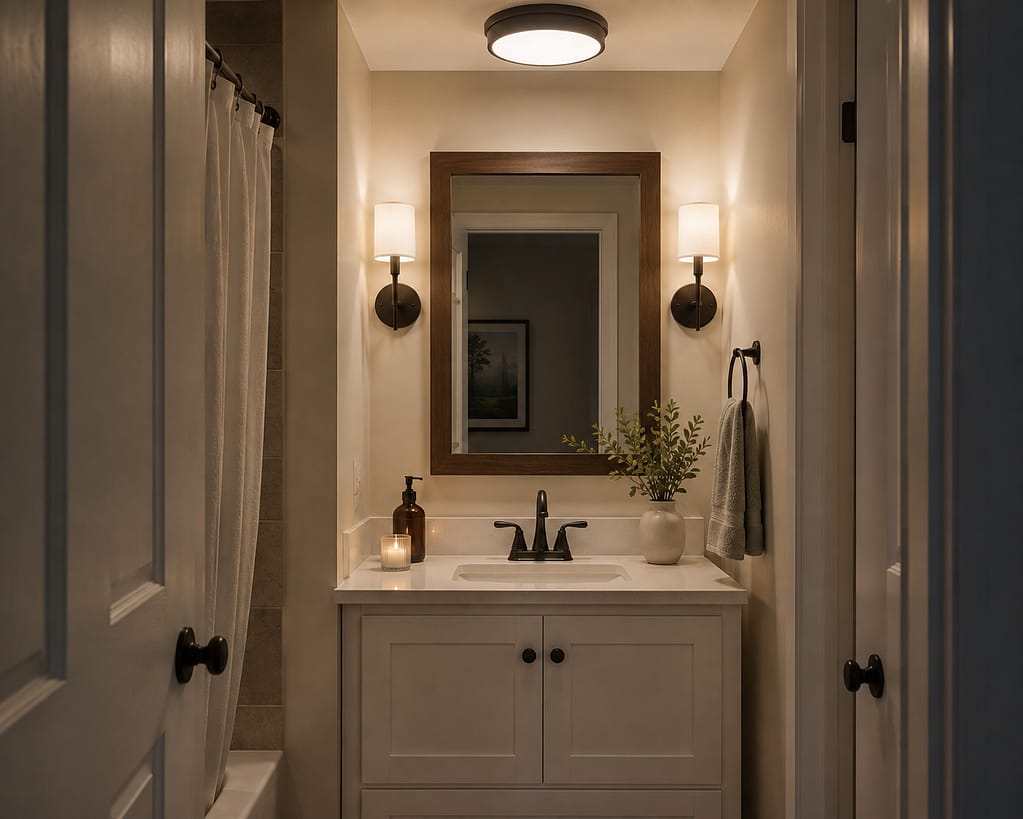
6. Refresh Grout Before Assuming the Tile Needs Replacing
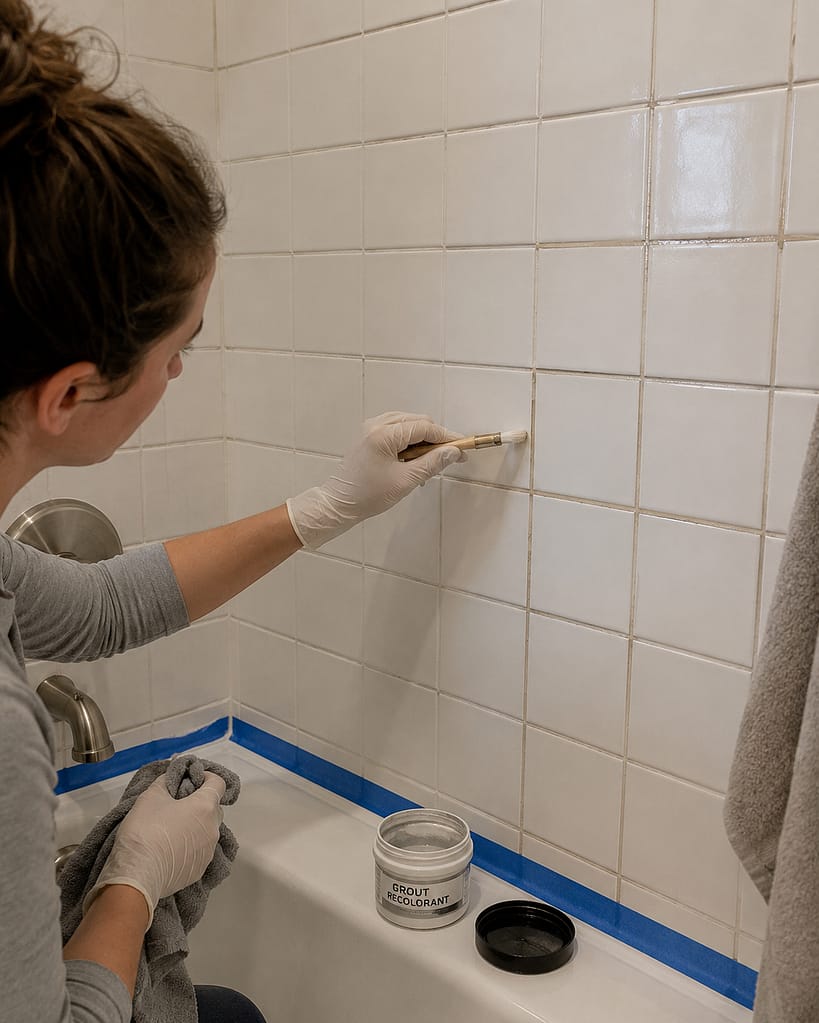
Old grout can make perfectly serviceable tile look far more dated than it is. Start with a thorough cleaning and let the area dry so you can see whether the problem is staining, small cosmetic gaps, or something more serious. Grout colorant or localized repair can improve appearance when the tile assembly is otherwise sound. But loose tile, persistent dampness, crumbling grout, or signs of failed waterproofing shouldn’t be disguised with a cosmetic coating. Those conditions need proper investigation first.
7. Raise the Shower Curtain Rod for Better Proportion
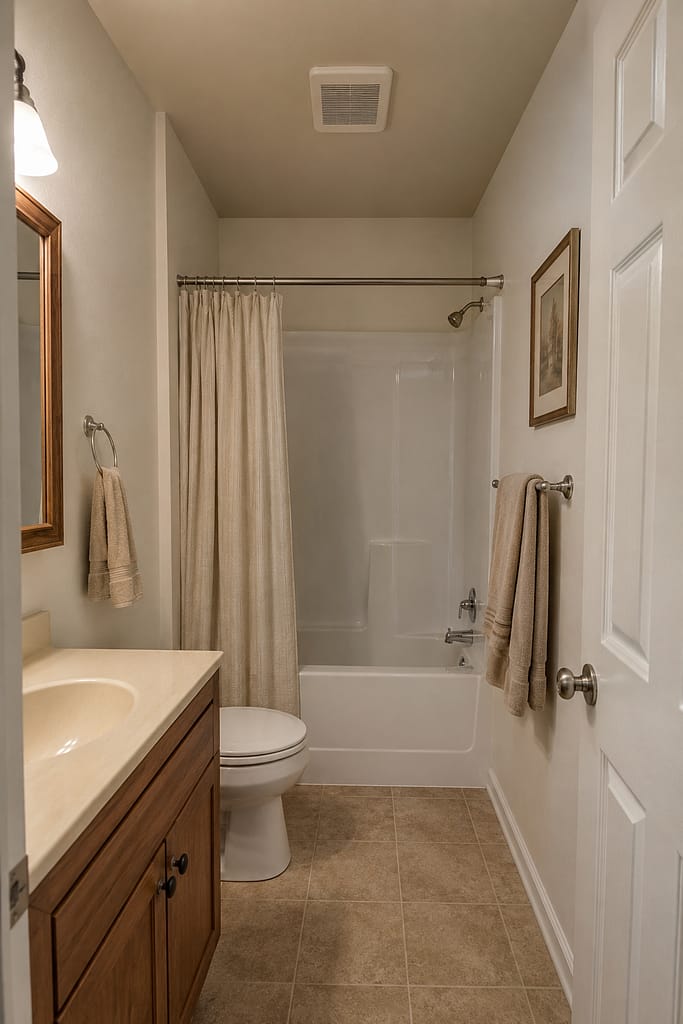
If your bathroom has a tub-shower combination, a shower curtain can become one of the largest visual surfaces in the room. Mounting the rod higher—where the room proportions and wall construction allow—draws the eye upward and can make the shower wall feel taller. Pair it with a curtain long enough to look intentional instead of leaving an awkward gap above the tub. Keep the liner practical and washable. This is especially useful when replacing the enclosure itself isn’t part of the budget.

Pro Tip: Before ordering a new mirror or shower curtain, mock up the final dimensions with painter’s tape. Seeing the real scale on the wall catches proportion problems that measurements alone often don’t.
8. Add Controlled Wall Color Instead of Repainting Everything White
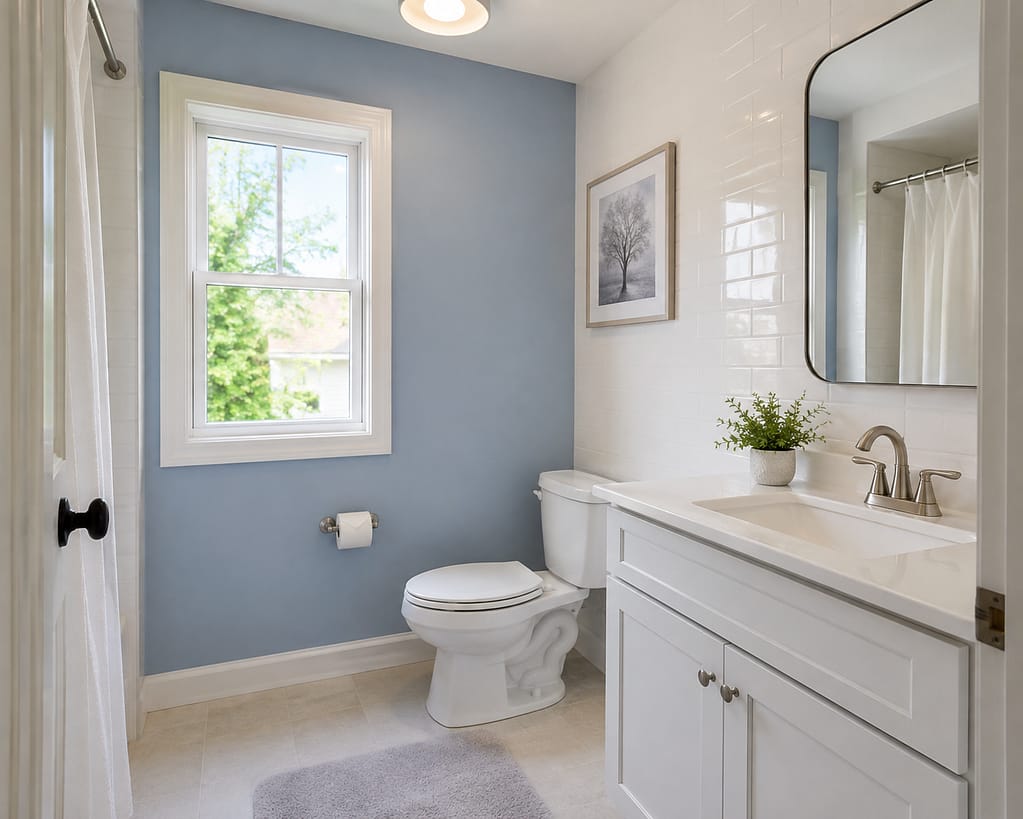
A tiny bathroom can handle color. The trick is controlling where it appears. A muted olive, dusty blue, warm clay, mushroom, or deeper taupe on one dry wall or the vanity can give a simple bathroom personality while lighter tile and fixtures keep the room from feeling visually dense. Test a large sample under daylight and nighttime lighting because small bathrooms often change dramatically once the door closes and artificial light takes over. Darker paint also makes good lighting more important.
9. Use Bathroom-Appropriate Wallpaper on a Dry Wall
Wallpaper can bring pattern to a small bath without replacing tile, but humidity changes the rules. Check whether the product is suitable for bathroom conditions, whether your ventilation is adequate, and whether the wall stays out of direct shower spray. A vanity wall or wall opposite the shower is usually more sensible than the wet zone. Peel-and-stick products aren’t automatically moisture-proof, either. Test adhesion and removal on your existing paint before committing to the whole wall.

10. Add Shallow Storage Instead of Bulky Cabinets
Tiny bathrooms don’t automatically improve when you add more storage. A deep cabinet can steal shoulder room or make the toilet feel boxed in. Look first for shallow solutions: a recessed medicine cabinet where construction allows, a narrow ledge, compact shelf, hooks, or a slim wall cabinet positioned where it doesn’t intrude into circulation. Before mounting anything, hold a cardboard template at the planned depth and walk past it. Storage that makes everyday movement awkward isn’t really solving the room.

11. Simplify Open Shelving Before Adding More of It
Open shelves are useful because everything is visible and easy to grab, but in a very small bathroom they can also create constant visual noise. Keep daily items together in one or two containers, store backups behind closed doors, and leave part of each shelf empty. Avoid rows of mismatched bottles if the shelves are directly in the doorway sightline. If you already own shelves, editing them can produce more impact than buying new storage. The goal is accessibility without turning toiletries into wall decor.

Pro Tip: Before mounting a new shelf, tape a cardboard strip to the wall at the proposed depth. Walk through the bathroom and sit at the toilet to make sure the shelf doesn’t intrude into shoulder or head space.
12. Treat the Ceiling as a Real Surface
Painting the ceiling is a surprisingly effective cosmetic change because you don’t have to disturb plumbing or fixtures. In a tall, narrow bathroom, a slightly deeper ceiling color can visually lower the ceiling and make the proportions feel cozier. If the room already feels low, keep the ceiling closer to the wall color so you don’t visually compress it further. Use a finish suitable for bathroom moisture and address ventilation first; beautiful paint won’t stay beautiful if condensation regularly sits on the ceiling.
13. Add a Small Bathroom Gallery Wall Carefully
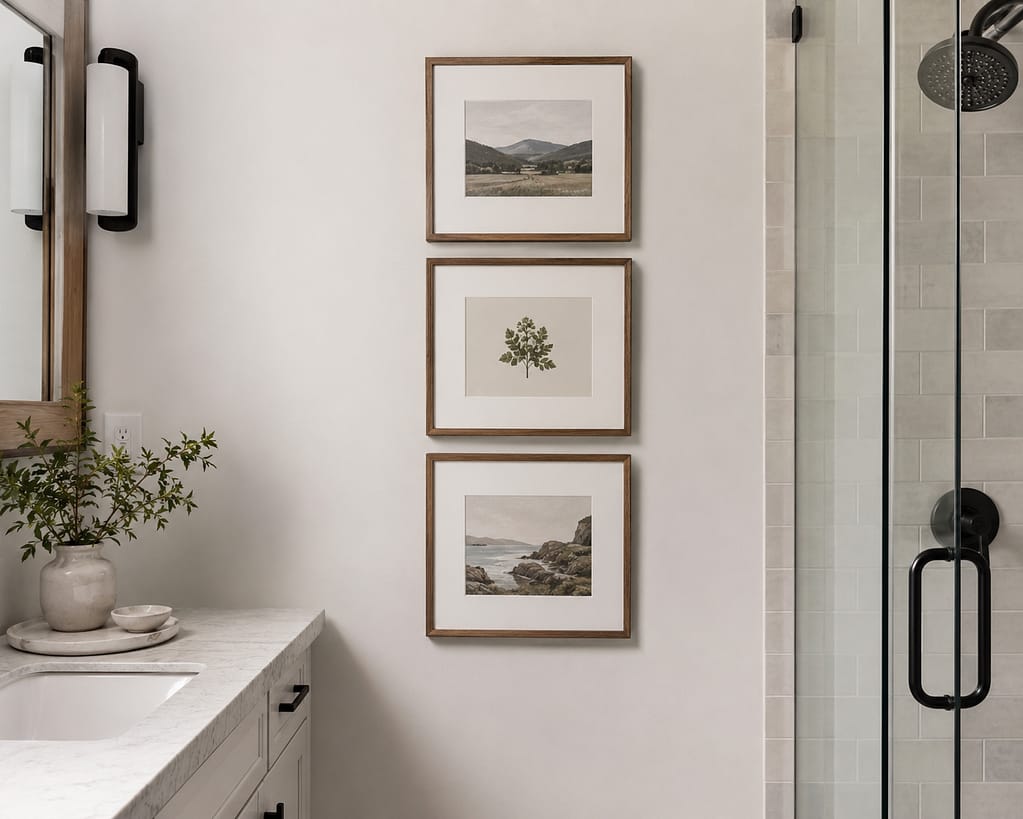
Artwork can make a simple bathroom feel finished, but a tiny room doesn’t need scattered frames on every wall. Create one compact grouping around a visual anchor and keep frames fairly close together—roughly 2 to 3 inches apart is often a useful starting point. Lay the arrangement on the floor first, then transfer the positions to paper templates before making holes. Use artwork and framing appropriate for a humid room, and avoid placing delicate paper where it will receive direct water or heavy condensation.
14. Coordinate Hardware Instead of Matching Every Metal Perfectly
You don’t need to replace every fixture to make the bathroom feel more coherent. Start with the smaller pieces that are easy to change—cabinet pulls, towel hooks, mirror frame, and perhaps a light fixture—and repeat one dominant finish. Existing faucet or shower hardware can stay if it’s functional. Mixed metals look intentional when they’re repeated rather than appearing once each. This approach is much cheaper than replacing plumbing fixtures simply because their finish doesn’t match a Pinterest photo.

15. Edit the Counter and Add Hooks Where You Actually Need Them
One of the cheapest makeovers is removing things. A tiny vanity covered with bottles makes the whole room feel busier because there’s almost no surrounding surface to absorb the clutter. Keep only daily essentials out, group them on one small tray, and move backups into closed storage. Add towel or robe hooks near the shower where they’re genuinely reachable rather than filling a wall with bulky towel bars. In a small bath, every clear surface makes the fixed fixtures feel more deliberate.
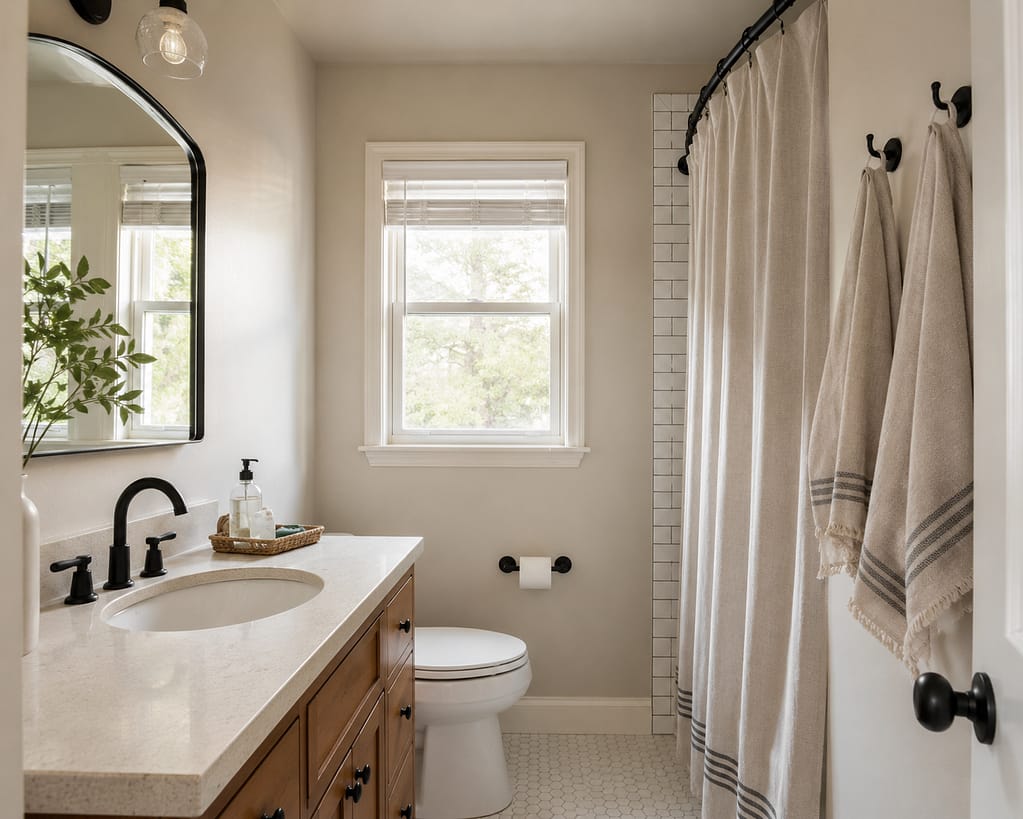
Budget Tip: Photograph the bathroom before buying decor, then temporarily remove everything sitting on open surfaces. You may find that the room needs fewer new objects than you thought once the visual clutter is gone.
Frequently Asked Questions
How can I update a small bathroom on a tight budget?
Start with the largest visible surfaces and the pieces you touch every day: paint, the vanity finish, mirror, lighting, grout, shower curtain, and hardware. Keeping the existing plumbing locations and sound tile usually gives you more room in the budget for cosmetic changes that people will actually notice.
What should I update first in an outdated bathroom?
Fix maintenance issues first, then look at lighting and the dominant visual surfaces. If the vanity is sound, painting it and changing the hardware may be enough; if the lighting is harsh or dim, improving that can make every other finish look better too.
How do I make a small white bathroom look less boring?
Mix whites rather than using one stark shade everywhere. Warm white walls, textured tile, softer grout, natural wood, woven or cotton textiles, and a small amount of dark or metallic contrast can create depth without making the room busy.
Can I make a tiny bathroom look bigger without replacing the fixtures?
Yes. A larger appropriately scaled mirror, clearer countertops, better lighting, quieter grout, a higher shower curtain, and shallow storage can reduce visual fragmentation while leaving the toilet, sink, and tub exactly where they are.
Is wallpaper practical in a small bathroom?
It can be, especially on a relatively dry wall with good ventilation, but you need to check the product’s suitability for humid conditions. Avoid assuming that every peel-and-stick paper can tolerate bathroom moisture, and keep wallpaper away from direct shower spray unless the product and installation are specifically appropriate for that use.
Make the Changes You’ll Notice Every Day
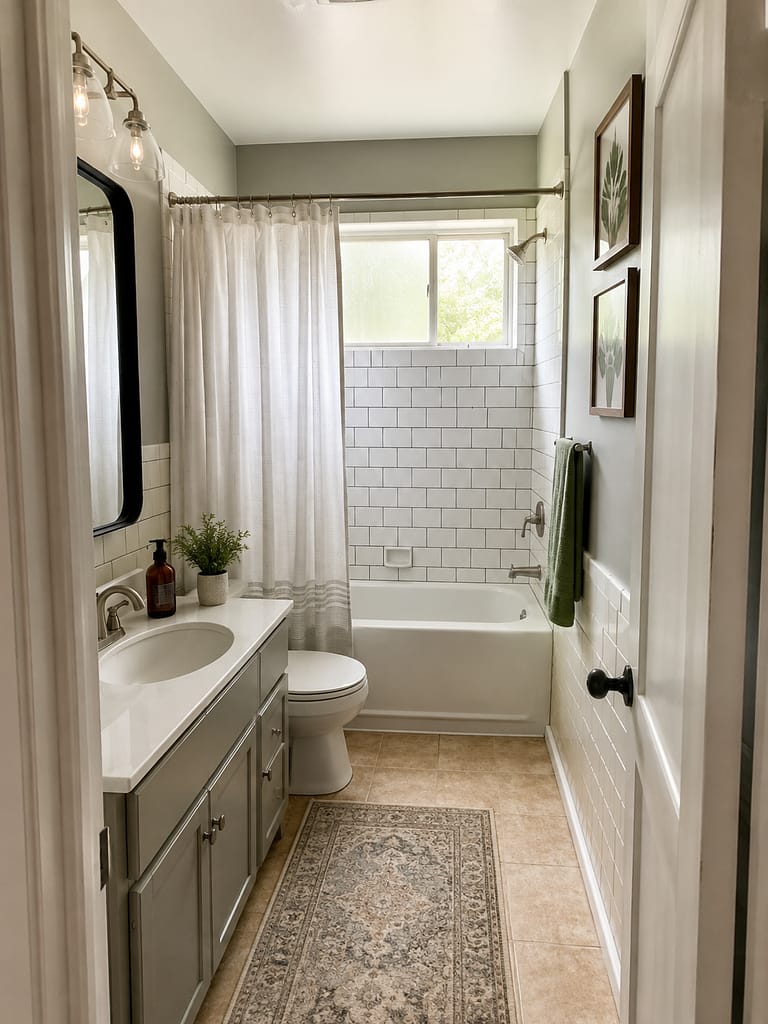
A successful budget bathroom makeover isn’t about replacing everything. Often, the room changes most when you improve the surfaces that dominate the view, fix the lighting, clean up the storage, and make the everyday setup easier to use.
Start with the thing that bothers you most—dated vanity paint, dingy grout, bad lighting, cluttered counters, or a shower curtain that makes the room feel unfinished. Solve that first, then build from there.
Save or pin this post before planning your small bathroom makeover, and use it as a checklist for the changes that can make the biggest difference without moving the plumbing.