
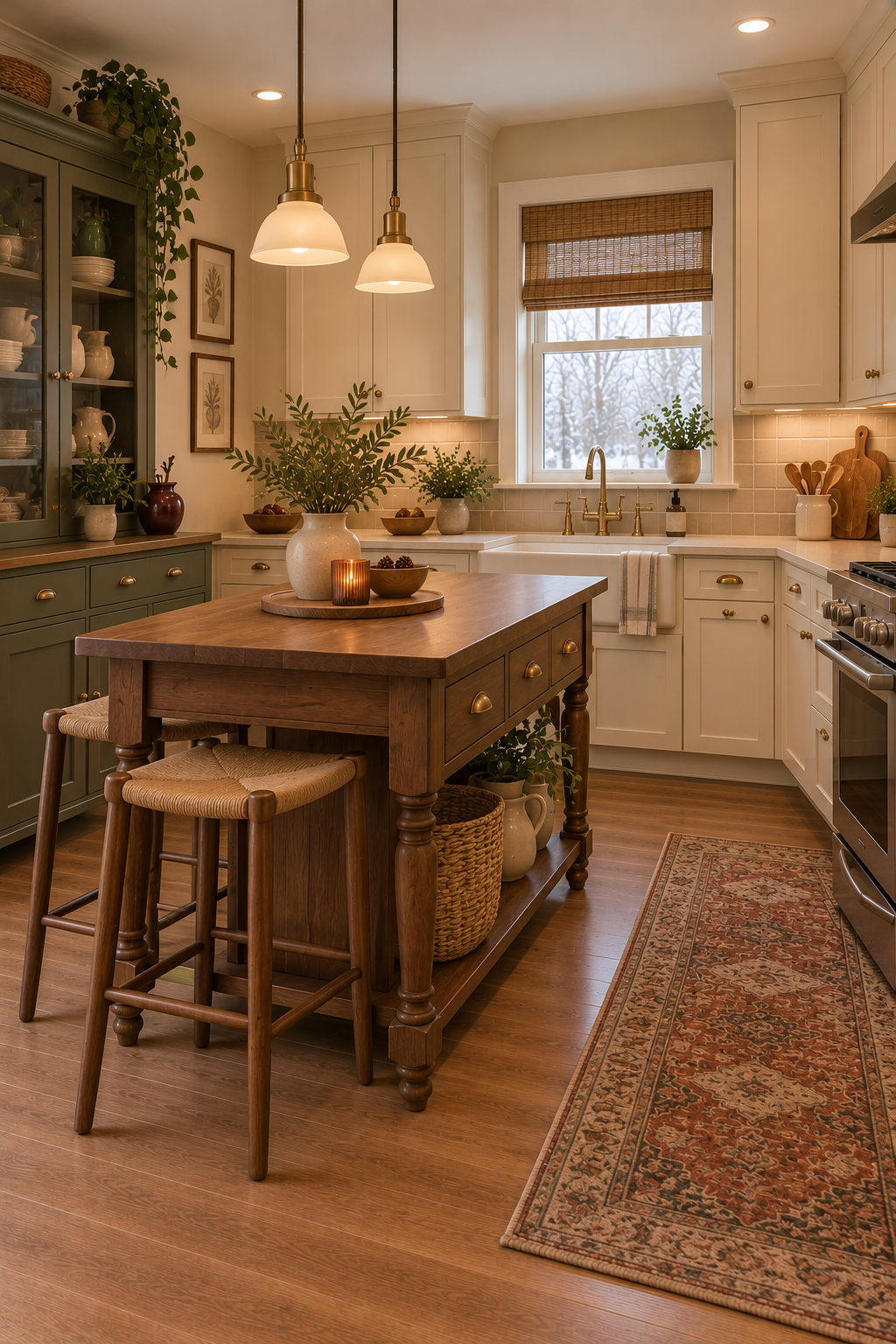
14 Vintage Cottage Kitchen Ideas for a Cozy Collected Look
A vintage cottage kitchen shouldn’t feel perfectly coordinated. Its charm comes from warm colors, traditional details, natural wood, floral textiles, and useful objects that look as though they’ve been collected gradually.
You don’t need an actual English cottage to create the look. A modest American kitchen with standard cabinetry can feel just as welcoming with a few thoughtful changes. Cream paint, muted olive cabinets, a small wooden table, and a patterned curtain can establish the mood without requiring a complete renovation.
The trick is balancing character with practicality. Vintage-inspired decorating should make the kitchen feel comfortable and personal, not turn every countertop into a display shelf.
These 14 vintage cottage kitchen ideas explore ways to combine traditional finishes, natural textures, and collected details while keeping the room useful for everyday cooking.
1. Start With Warm Cream Cabinets
Warm cream cabinets provide a versatile foundation for a vintage cottage kitchen. They feel softer than stark white and complement natural wood, muted greens, faded florals, and traditional metal finishes.
Choose shaker-style or other simple traditional cabinet fronts, then add understated knobs or cup pulls. Medium-walnut accents can introduce depth, while a cream or mushroom backsplash keeps the palette connected.
Compare paint samples with the countertop and flooring before making a decision. Cream shades vary in their undertones, and the wrong combination can look noticeably yellow or gray beside existing finishes.
If you’re updating existing cabinets, prepare the surfaces and use a coating intended for cabinetry. You don’t need elaborate decorative details everywhere; the cabinet color can establish the vintage character while smaller accents make the kitchen feel collected.
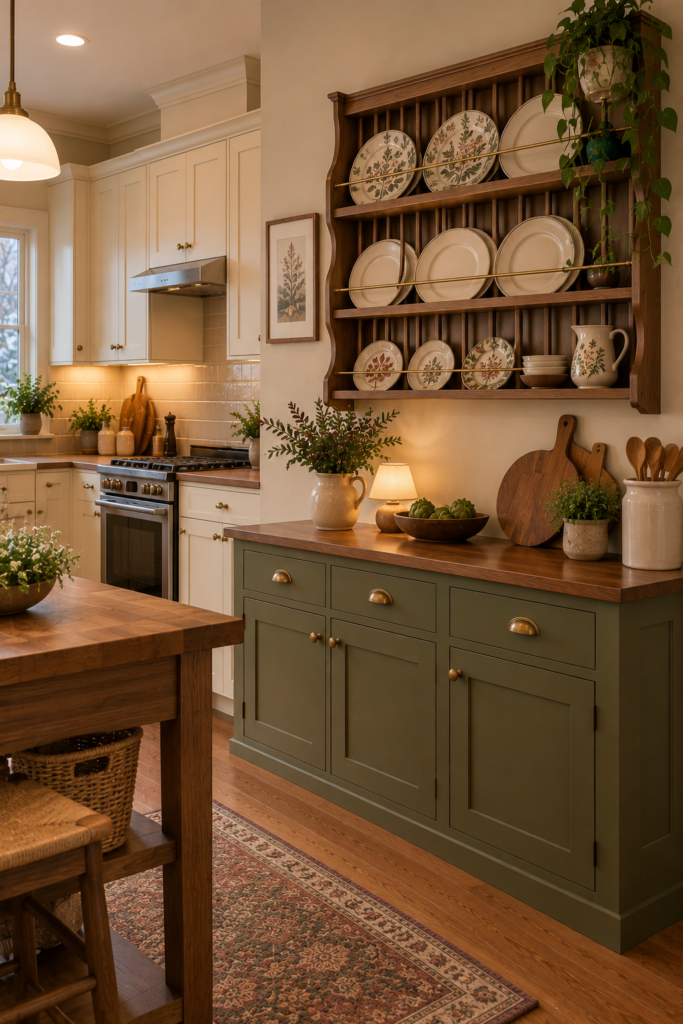
2. Add Muted Olive Lower Cabinets
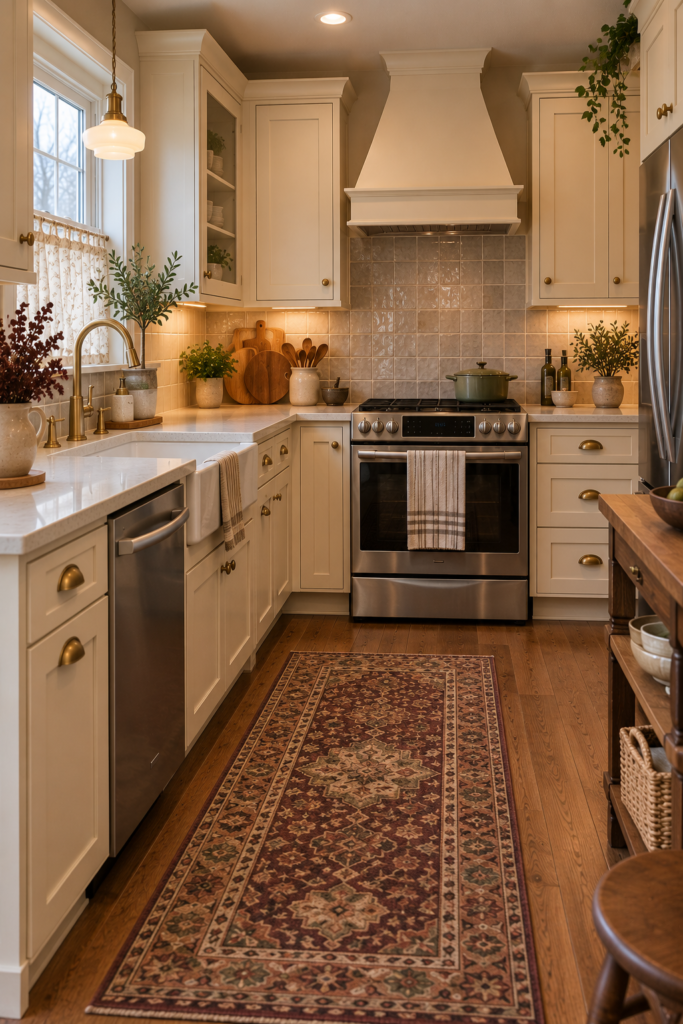
Muted olive lower cabinets introduce color while keeping the overall kitchen relaxed and grounded.
Pair them with warm cream upper cabinets, medium-walnut accents, and understated aged-brass-style hardware. The green provides personality without competing with the traditional shapes and natural materials that define cottage style.
Choose an olive shade that suits the room’s lighting. Some versions lean yellow, while others look grayer or browner. Compare samples against your countertop and wood finishes rather than selecting the color in isolation.
If repainting, follow the coating manufacturer’s preparation and curing instructions. Keep the backsplash relatively simple so the cabinetry remains the main color feature.
For another approach to combining natural materials and earthy shades, explore these natural earthy kitchen ideas for a warm organic space.
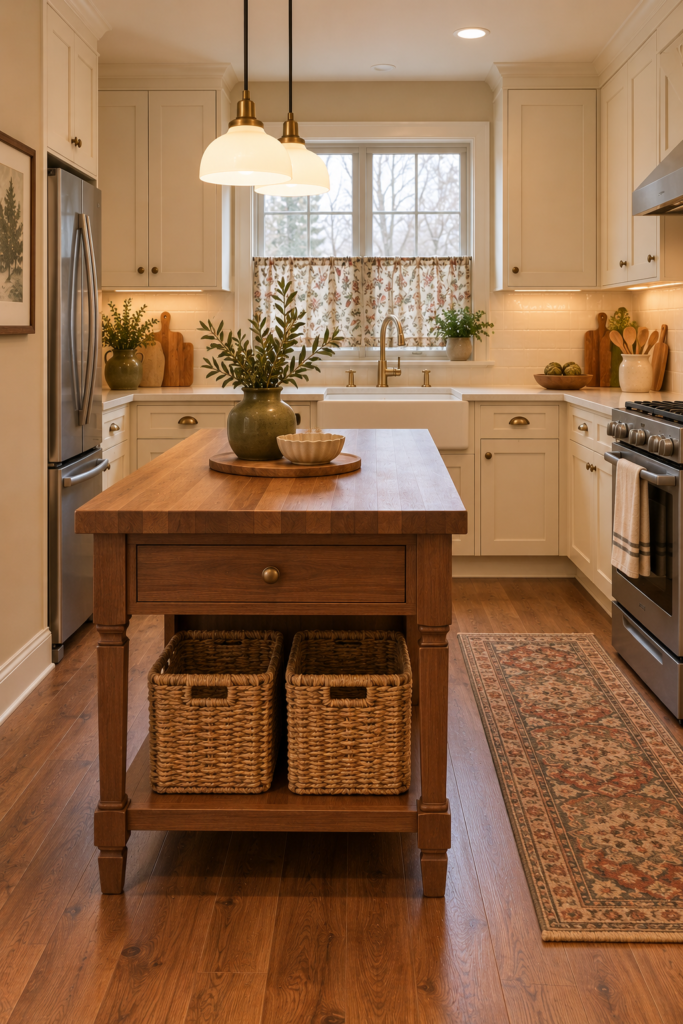
3. Bring in a Small Wooden Kitchen Table
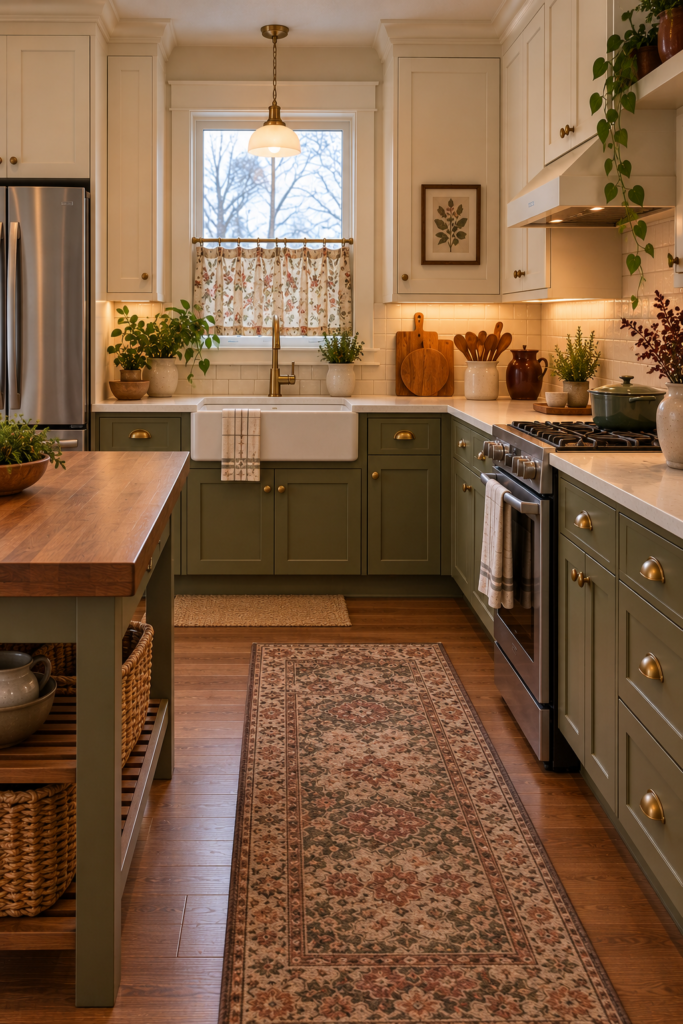
A small wooden table can make a cottage kitchen feel more like a comfortable living space than a row of cabinets and appliances.
Choose a table in medium oak or walnut, then pair it with simple wooden chairs. The chairs don’t have to match perfectly, but their shapes and finishes should feel related.
Before buying furniture, consider how the table will affect circulation. Leave room to pull out chairs, open nearby appliances, and walk through the kitchen without squeezing past furniture.
A table can serve several purposes, from breakfast and coffee to homework or occasional food preparation. Choose a durable surface that’s easy to clean, and avoid overcrowding it with decorative objects.
If a separate table won’t fit, a small freestanding worktable or compact breakfast nook can provide a similar sense of cottage character without sacrificing essential floor space.
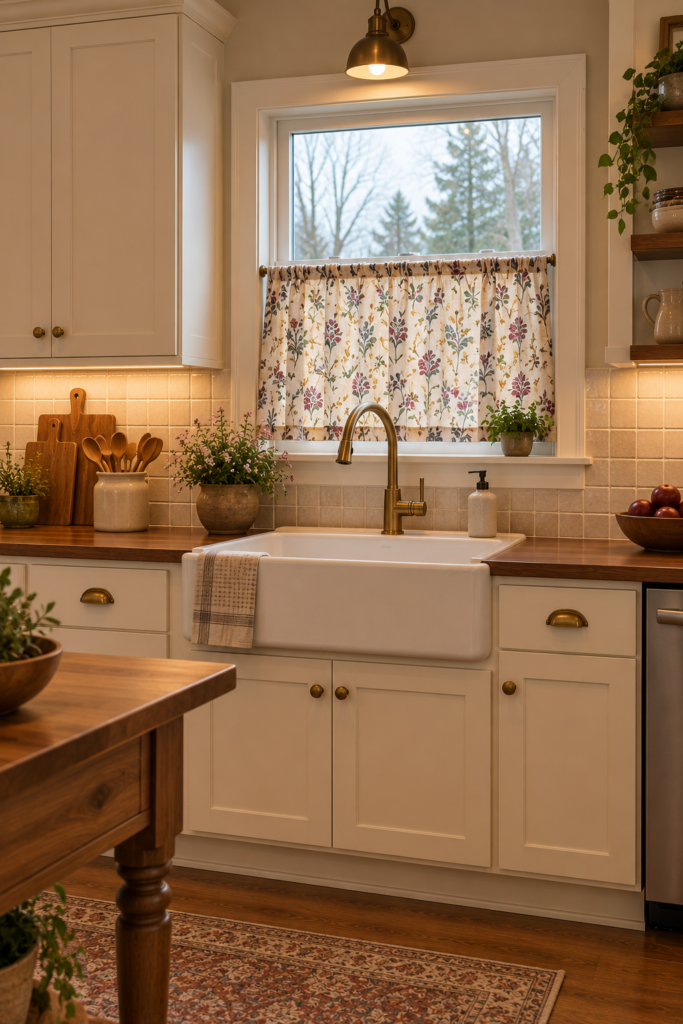
4. Add a Vintage-Inspired Floral Curtain
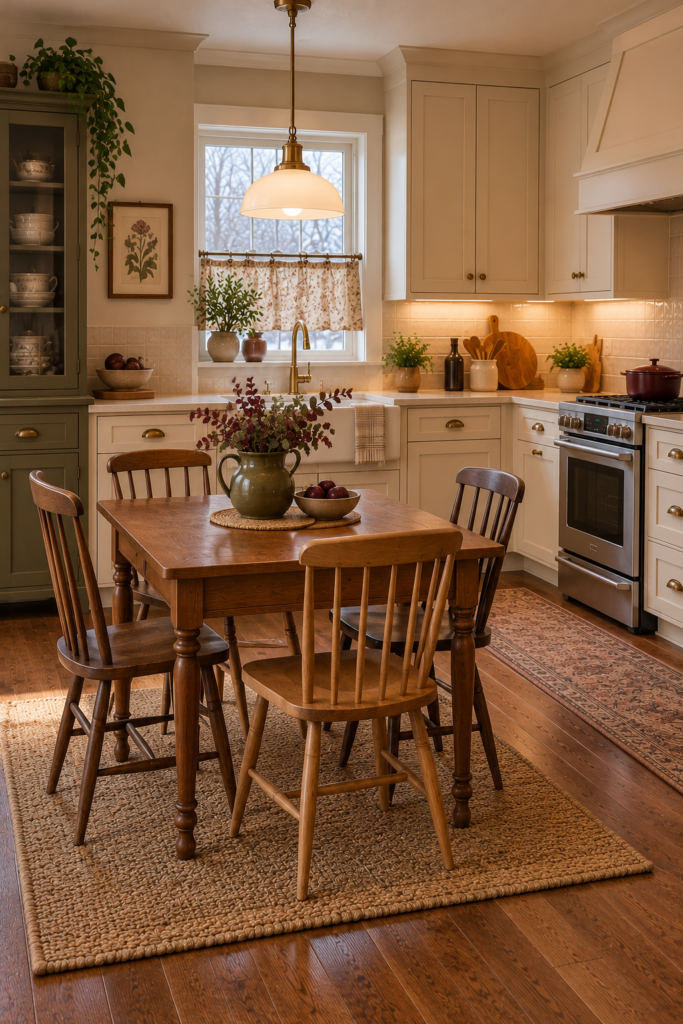
A small floral curtain introduces softness and pattern without requiring a major change to the kitchen.
Look for a restrained print in dusty burgundy, muted olive, warm cream, or soft brown. Smaller patterns often work well in compact rooms because they add detail without overwhelming the surrounding finishes.
Choose a washable fabric and a style that allows the window to remain easy to operate and clean. A café curtain can offer privacy while preserving daylight, provided it suits the window and doesn’t interfere with its hardware.
Safety matters when choosing the location. Keep fabric away from cooktops, open flames, hot appliances, and other heat sources. Avoid placing a curtain where it will repeatedly collect grease or become soaked by sink splashes.
For more window-treatment options, explore these kitchen curtain ideas above the sink.
5. Display Collected Cottage Ceramics
Ceramics add color, texture, and a sense of personal history to a cottage kitchen.
Display a small group of cream bowls, muted olive pottery, dusty-blue dishes, or brown and burgundy pieces. A glass-front cabinet, a suitable dry countertop corner, or securely supported shelving can provide a place to show them.
Avoid filling every available surface. Grouping a few pieces together usually creates a clearer display than scattering many small objects around the room.
If you’re using genuine vintage pottery, don’t automatically assume it is safe for food contact. Unknown glazes and finishes may be unsuitable for serving or storing food. Keep uncertain pieces decorative unless their suitability has been established.
Consider the weight of the display, too. Shelves and cabinets should be appropriate for the intended load, and fragile pieces should be placed where they can be reached without awkward stretching.

6. Use a Cottage-Style Plate Rack
A plate rack turns everyday dishes into part of the kitchen’s decor while keeping them accessible.
Choose a traditional wooden or painted design in warm cream, walnut, or another finish that complements the cabinetry. Display plates with related colors or subtle variations rather than insisting that every piece match exactly.
Before installation, check the wall construction and use suitable fixings and supports. The rack must be designed for the weight of the plates, and the dishes should sit securely without being crowded together.
Position the rack away from cooking heat, persistent steam, and areas where grease accumulates. Choose a location that makes it easy to remove and replace dishes without reaching across hot appliances.
If you’re short on space, a compact rack inside a cupboard can provide a similar organizational benefit without turning the wall into a display.
7. Add a Faded Vintage-Style Runner
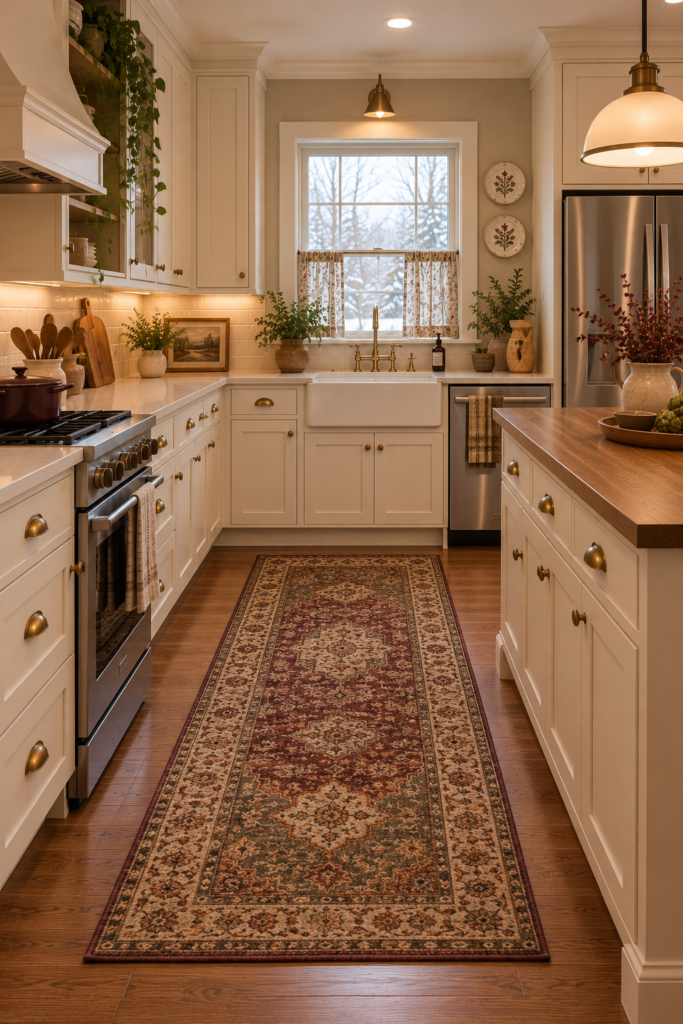
A faded runner can soften a kitchen filled with hard surfaces and straight cabinet lines.
Choose a low-profile design featuring muted burgundy, mushroom, warm brown, olive, or cream. A restrained pattern can complement traditional cabinetry without competing with a decorative backsplash.
Measure the available floor space and choose a runner that leaves doors, drawers, and appliance openings unobstructed. It should lie flat and stay securely in place, especially in areas where people turn or carry hot dishes.
Check the cleaning instructions before purchasing. Kitchens experience crumbs, spills, and frequent foot traffic, so a washable or easy-to-maintain design is often more practical than a delicate textile.
Keep the runner away from open flames and significant heat. If the layout makes a rug difficult to secure safely, skip it and introduce softness through curtains or seat cushions instead.
8. Bring in Wicker Baskets
Wicker baskets introduce natural texture and provide storage for suitable dry items.
Use one beneath an open island shelf for clean kitchen linens and another in a pantry for appropriate packaged supplies. The natural weave complements painted cabinets, wood furniture, and traditional ceramics.
Choose baskets according to the available space and intended use. Handles should be comfortable to grip, and the basket should slide out without obstructing a walkway or catching on cabinet frames.
Keep woven materials away from cooktops, open flames, significant heat, standing water, and persistent steam. Store only clean, dry textiles in wicker, and avoid using decorative baskets as a substitute for suitable food-safe containers.
For more practical ways to organize open shelving, see these kitchen shelves decor ideas for beautiful open storage.
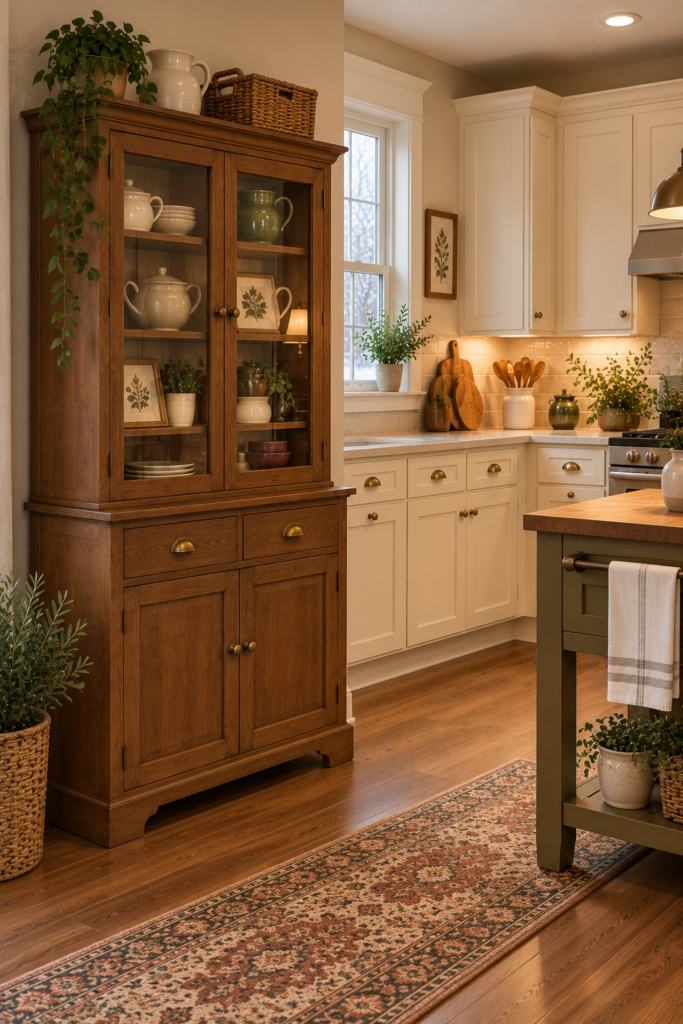
9. Use a Freestanding Cottage Cupboard
A freestanding cupboard can make a kitchen feel as though it has evolved over time rather than arriving as one perfectly matched set.
Choose a wooden cupboard or a softly painted piece that complements the existing cabinetry without needing to match it exactly. Use the shelves for dinnerware, serving pieces, linens, cookbooks, or appropriately stored pantry supplies.
Check the cupboard’s stability, shelf condition, and capacity before loading it. Heavier items belong on lower shelves, and tall furniture should be secured where tipping could pose a risk.
Measure the available floor space and allow room for doors and drawers to open fully. A cupboard should provide useful storage without blocking the main walking route.
This approach is especially useful if you want cottage character without replacing the existing cabinets. One well-chosen piece can introduce a different finish and add storage at the same time.
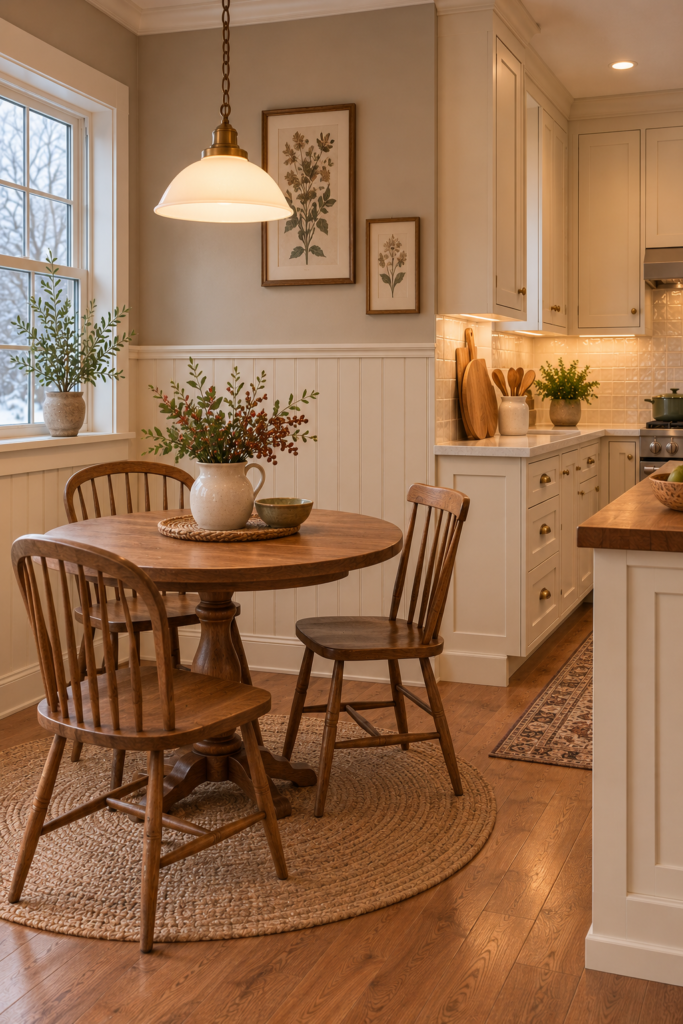
10. Add Beadboard to a Breakfast Nook
Beadboard-style paneling can introduce traditional architectural detail to a plain breakfast nook.
Use it on a suitable dry wall and paint it warm cream, then consider mushroom or another muted neutral above. A small wooden table and simple chairs can complete the look without making the area feel overly formal.
Before installation, consider the wall’s location and the finish’s maintenance needs. Grooved paneling can collect grease and dirt, so it is less suitable for areas exposed to heavy cooking splashes or difficult-to-clean conditions.
Choose materials and coatings appropriate for the intended environment, and make sure the installation doesn’t interfere with outlets, switches, vents, or other fittings.
If a permanent wall treatment isn’t practical, traditional furniture and a carefully chosen paint color can introduce a similar sense of age and character with less work.
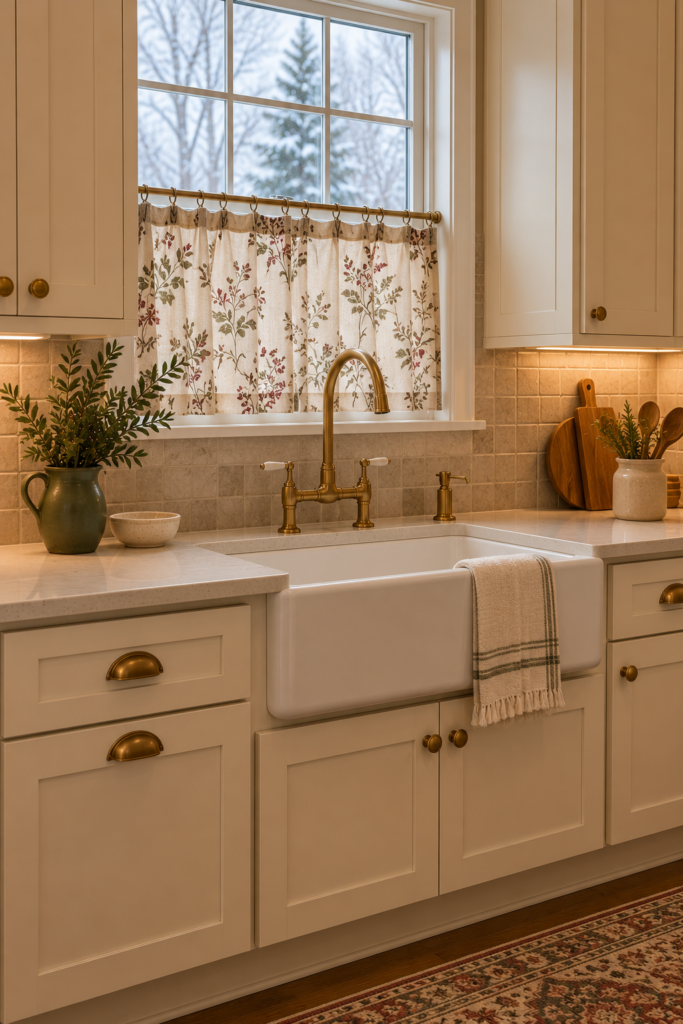
11. Create a Cottage Sink Area
The sink area can become a small focal point without sacrificing its practical purpose.
Pair a traditional-style sink with a warm metal faucet, a simple ceramic vessel, and a short café curtain if the window location permits. Cream cabinetry and natural wood accents can connect the arrangement to the rest of the kitchen.
Keep the countertop mostly clear so you have space for washing dishes and handling food. Decorative containers should not block the faucet, interfere with the sink, or occupy the only useful preparation area.
Choose finishes suited to regular exposure to water and cleaning. Textiles and decorative objects should remain away from cooking heat, while items near the sink should be easy to move when cleaning.
The best cottage sink area combines traditional character with a layout that remains comfortable to use every day.
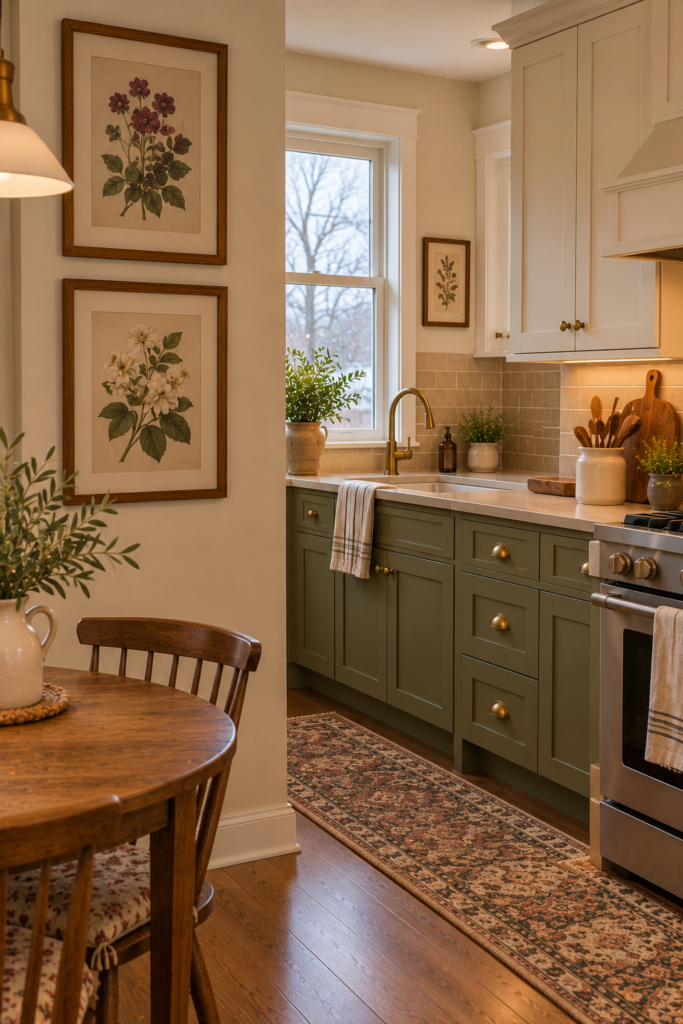
12. Add Vintage-Inspired Botanical Art
Botanical prints can introduce a gentle decorative detail without taking up valuable countertop space.
Choose one or two prints featuring leaves, flowers, or other botanical subjects. Warm wood frames complement natural materials, while muted greens, browns, burgundy, and cream connect the artwork to the kitchen’s palette.
Place artwork on a suitable dry wall away from sink splashes, cooking heat, and areas exposed to grease. Secure the frames properly rather than balancing them precariously on a narrow ledge.
Consider the scale of the wall. One well-proportioned piece can be more effective than a crowded gallery in a small kitchen where cabinets, windows, and appliances already occupy much of the visual space.
If you prefer a collected appearance, related frames and colors can work together without needing identical artwork.
13. Mix Painted Cabinets With Natural Wood
A cottage kitchen feels more collected when painted cabinetry and natural wood complement one another rather than matching perfectly.
Pair warm cream perimeter cabinets with a walnut island or wooden table. Muted olive on a lower cabinet section or freestanding cupboard can add another layer of color.
Choose wood finishes that share compatible undertones. They don’t need to be identical, but too many unrelated stains can make the room feel disjointed.
Before changing the cabinetry, consider which existing materials you want to retain. Coordinating new paint with the floor, countertop, and wood furniture can be more effective than replacing several finishes at once.
Keep the palette controlled and repeat the main colors in small details. The result should feel varied but connected, with each material contributing to the overall warmth.
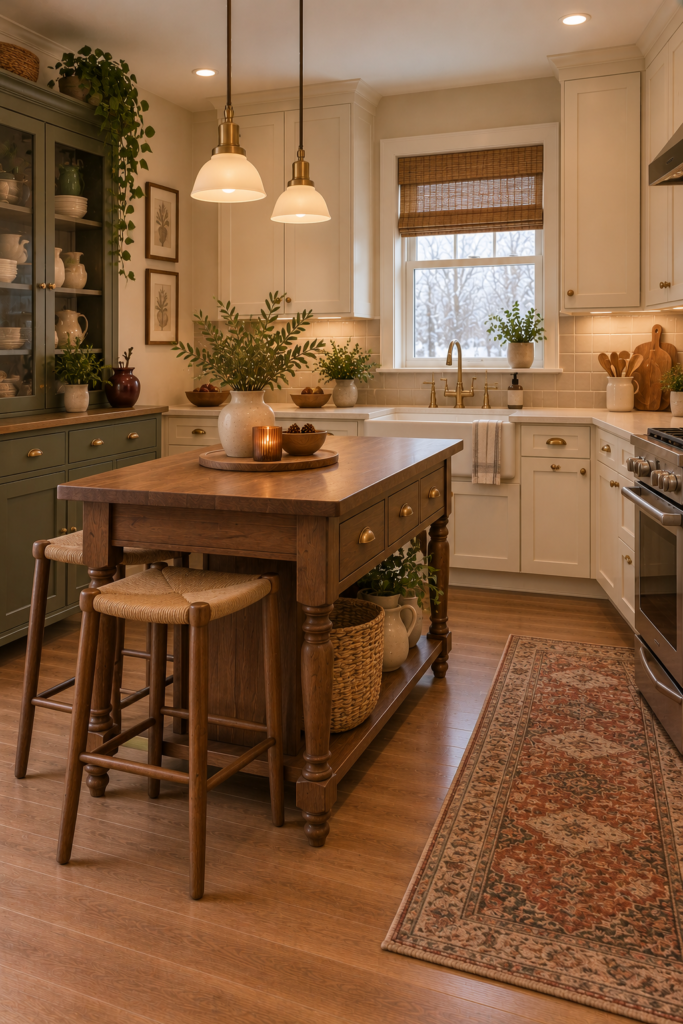
14. Build a Full Collected Cottage Kitchen
The complete cottage look comes from combining a few compatible layers rather than filling the room with every vintage-inspired accessory available.
Start with warm cream cabinetry, then introduce muted olive, medium walnut, a floral curtain, and a faded runner if the layout allows. Add a small group of ceramics, one wicker basket, and a traditional lighting fixture suited to the space.
Choose the larger surfaces first and add decorative details afterward. This helps prevent the colors and patterns from competing.
Consider how the kitchen functions as well as how it looks. Preserve useful work surfaces, keep storage accessible, and make sure furniture and textiles don’t obstruct walkways or appliance operation.
Finally, edit the arrangement. Remove anything that crowds the counters or doesn’t contribute to the room’s character. A collected kitchen should feel personal and relaxed, with enough breathing room for everyday life.

What Is a Vintage Cottage Kitchen?
A vintage cottage kitchen combines traditional details, warm materials, and relaxed decorating. Common elements include painted cabinetry, natural wood, floral textiles, ceramics, wicker baskets, traditional hardware, and freestanding furniture.
The style doesn’t depend on having genuine antiques. New pieces with traditional shapes and muted finishes can create a similar atmosphere without artificially distressing every surface.
The aim is a comfortable, useful room that feels collected rather than overly coordinated.
Vintage Cottage Kitchen Color Ideas
Warm cream, muted olive, medium walnut, and aged-brass-style accents create a versatile starting palette. For more contrast, introduce dusty burgundy or mushroom taupe. For a softer neutral kitchen, combine cream, camel, and natural wood.
Compare paint and material samples together under the kitchen’s actual lighting. Similar colors can have different undertones, and the relationship between the finishes matters more than matching everything exactly.
Vintage Cottage Kitchen Ideas for Small Kitchens
Keep the main cabinetry light and introduce character through a few carefully chosen details, such as a café curtain, a runner, ceramics, traditional hardware, or a small piece of botanical art.
Prioritize clear countertops and convenient storage. A small kitchen needs enough room for food preparation, so avoid filling every shelf with decorative objects.
If a wooden table or freestanding cupboard would obstruct circulation, choose a smaller accent instead.
Vintage Cottage Kitchen Ideas on a Budget
Start with changes that work alongside the existing kitchen. Updating cabinet hardware, adding a simple café curtain, using a secondhand wooden table, or displaying ceramics you already own can introduce cottage character without changing every surface.
Shop gradually and choose items that are useful as well as attractive. The collected look develops through compatible materials and thoughtful choices, not through buying everything at once.
Vintage Cottage Kitchen Storage Ideas
Use storage that contributes to the room while remaining practical. A freestanding cupboard can hold dishes, wicker baskets can organize suitable dry supplies, and a securely mounted plate rack can display everyday plates.
Keep less attractive necessities in closed cabinetry. Not every kitchen item needs to be visible, and a mixture of open and concealed storage makes the room easier to maintain.
Cottage Kitchen Lighting Ideas
Choose lighting with traditional character, such as simple pendants or fixtures with aged-metal-style finishes and opal-glass-inspired shades.
Keep preparation and sink areas well illuminated, and use warmer light where it suits the space. Decorative lighting should never leave work surfaces too dim for safe cooking and cleaning.
Choose fixtures appropriate for the kitchen environment and follow the manufacturer’s installation instructions. Electrical work should meet applicable requirements.
Vintage Items: Safety and Care
Inspect secondhand furniture for stability and damage. Secure tall pieces where tipping is a concern, and avoid disturbing unknown old paint or finishes without appropriate assessment because some may contain hazardous materials.
Unknown vintage ceramics should remain decorative unless their suitability for food contact is established. Keep textiles, wicker, paper, and dried materials away from cooktops, open flames, and significant heat.
Choose washable textiles where practical, follow care instructions for decorative finishes, and keep frequently used work surfaces clear.
How to Keep Cottage Kitchen Decor From Looking Cluttered
Repeat a limited palette, group similar ceramics together, and leave some shelves and walls relatively open. Use closed storage for everyday items that don’t need to be displayed.
Choose a few objects with a clear role or visual purpose rather than filling every surface with small decorations.
A collected kitchen should feel as though its pieces arrived gradually. The space still needs room for cooking, cleaning, and simply getting on with the day.
Final Thoughts
The best vintage cottage kitchen ideas combine warmth, useful storage, traditional details, and a little variation in materials. Start with a comfortable base of cream or muted olive, bring in natural wood, and introduce character through textiles, ceramics, and furniture.
Choose pieces that suit the size and layout of your kitchen, and prioritize safety and everyday function alongside appearance.
A cozy cottage kitchen doesn’t need to look like a showroom. It should feel welcoming, personal, and comfortable enough for a slow breakfast or an ordinary busy afternoon.
