
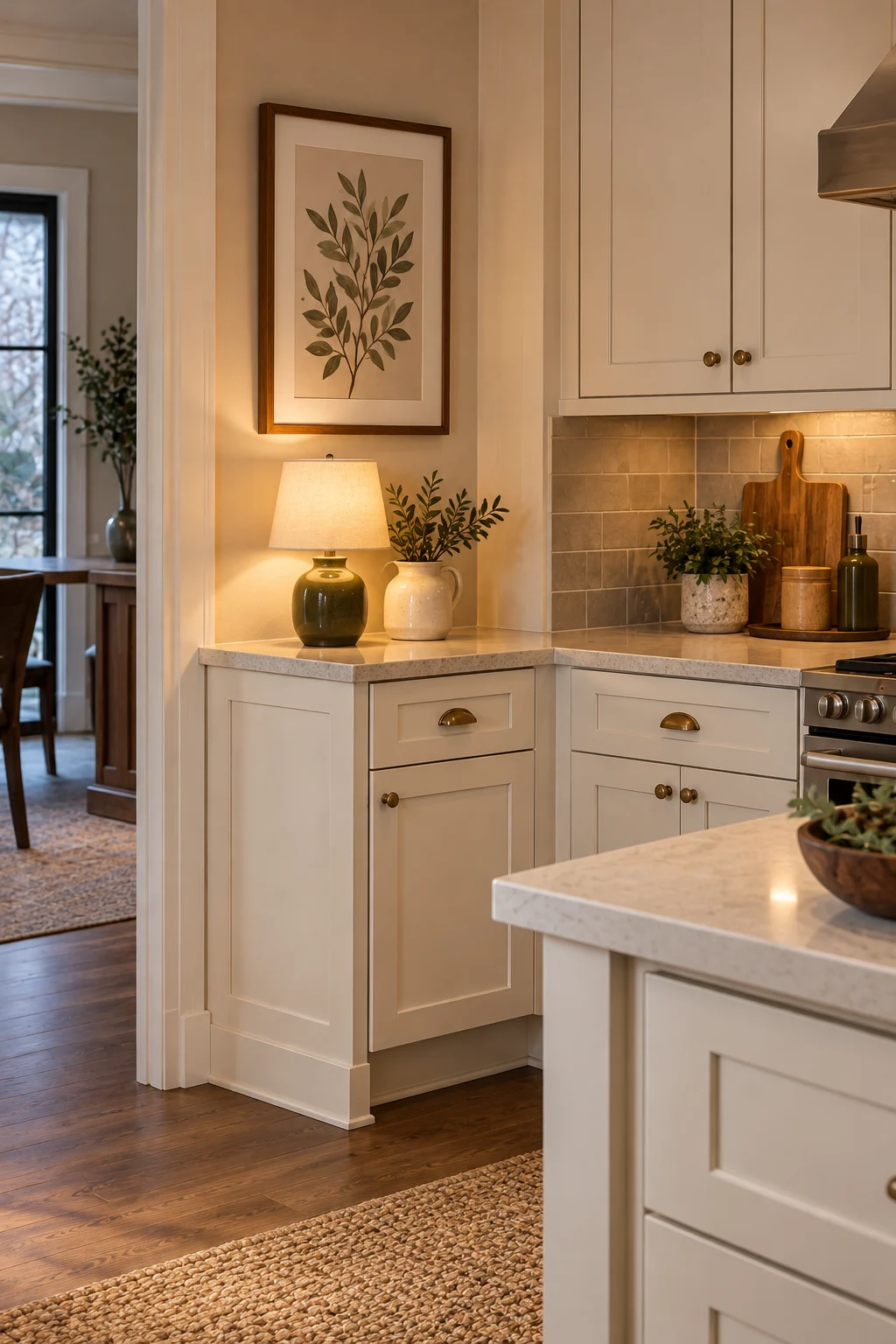
16 Kitchen Lamps on Counter Ideas for Cozy Layered Lighting
Kitchen lighting often focuses on function: ceiling fixtures illuminate the room, under-cabinet lights brighten the work surfaces, and pendants provide focused light over an island. A small lamp adds something different. It creates a softer pool of light that can make a kitchen feel welcoming in the early morning or after dinner.
A countertop lamp needs more thought than a lamp in a living room. Kitchens contain water, steam, cooking heat, appliances, electrical outlets, and busy work surfaces. The best placement adds atmosphere without interfering with food preparation or creating an electrical hazard.
You can introduce this kind of lighting through a compact ceramic lamp, a coffee-station accent, or a lamp on a nearby sideboard. Mushroom taupe, warm cream, muted olive, and deep burgundy can all complement a range of kitchen styles.
These 16 kitchen lamps on counter ideas explore ways to layer decorative lighting into your kitchen while keeping everyday function and safety in mind.
1. Add a Small Lamp to a Kitchen Corner
An unused counter corner can be a good place for a small lamp, provided it’s well away from the sink, cooktop, and other sources of water or heat.
Choose a compact fixture with a stable base and a shade that’s proportional to the available space. A warm-cream ceramic base works well with neutral cabinetry, while a simple shade keeps the overall look understated.
Before choosing the lamp, consider how much counter space you actually have. It shouldn’t interfere with food preparation, small appliances, or access to cabinets and drawers.
A warm bulb can create a gentle evening glow while the kitchen’s regular lighting remains available for cooking and cleanup. The decorative lamp should supplement functional lighting, not replace it.

2. Put a Lamp Beside the Coffee Station
A coffee station can benefit from a small lamp that creates a comfortable atmosphere during early mornings or relaxed evenings.
Place the lamp at one end of the setup, with enough separation from the coffee maker, hot surfaces, steam, and water reservoir. A mushroom, cream, or muted olive base can coordinate with the surrounding cabinetry.
Choose a lamp that doesn’t crowd the coffee equipment or reduce the space needed to fill the reservoir, handle mugs, and clean the counter.
Keep cords dry and safely routed to an appropriate outlet. If the available location would require a cord to cross the sink area or a walking route, move the lamp rather than improvising an unsafe arrangement.
For a cohesive look, repeat one of the lamp’s colors in a mug, canister, or other small accessory. A few coordinated details are enough to make the coffee station feel intentional.

3. Use a Mushroom Ceramic Lamp
A mushroom-taupe ceramic lamp suits kitchens that favor warm neutrals and natural materials.
Pair a softly colored base with a warm-cream shade and place it in a suitable dry corner against a cream or subtly textured backsplash. Walnut shelving or wood cabinetry can introduce additional warmth without making the arrangement feel busy.
Compare the lamp’s finish with the surrounding surfaces before buying it. Mushroom shades can lean gray, brown, or slightly pink, so the undertone may look different beside your cabinets than it does in a product photograph.
Choose a stable base and a shade that doesn’t interfere with nearby cabinets or work areas. Make sure the lamp is suitable for the location and has adequate clearance around the fixture.
The appeal of this look is its restraint. The lamp can complement the kitchen without becoming the dominant decorative feature.

4. Add a Deep Burgundy Lamp
A deep burgundy lamp introduces a richer accent into a kitchen with cream cabinetry, natural wood, or muted green finishes.
Choose a ceramic base in a subdued wine-red or plum-burgundy tone and pair it with a warm neutral shade. Repeating the burgundy once in a nearby ceramic accessory or textile can help connect the color to the rest of the room.
Consider the amount of color already present. If the kitchen has a bold backsplash or dark cabinetry, a smaller lamp with a simple shade may be enough.
The lamp should remain on a stable surface in a dry location away from cooking heat and splashes. Keep textiles clear of hot appliances and avoid placing the fixture where it interferes with normal kitchen tasks.
This approach works especially well when you want one decorative object to provide contrast without repainting cabinets or changing the countertop.

5. Try a Muted Olive Kitchen Lamp
Muted olive is a natural choice for cottage, farmhouse, and earthy kitchens. Its green undertones complement warm wood, cream ceramics, and other grounded finishes.
Choose an olive ceramic base with a cream shade, then place it on a suitable dry surface such as a counter corner or sideboard. Walnut or medium-oak furniture can make the green feel warmer.
Compare the olive shade with the cabinet color and other nearby finishes. Some olive greens lean yellow, while others appear grayer or browner. A coordinated palette doesn’t require exact matching, but the undertones should work together.
Keep the surrounding accessories simple. One lamp and a useful ceramic vessel can create a finished arrangement without taking over the counter.
For more ideas on combining wood and earthy colors, see these natural earthy kitchen ideas for a warm organic space.

6. Add a Lamp Beneath Glass-Front Cabinets
A lamp beneath upper cabinetry can create a layered lighting effect, but this placement requires particular care.
First, check the lamp’s overall height, including its shade, and compare it with the clearance beneath the cabinets. Follow the fixture and bulb manufacturer’s instructions for placement, ventilation, and heat clearance.
Choose a lamp specifically suitable for the intended location. Don’t force a tall fixture into a narrow gap or allow the shade to touch cabinetry, nearby objects, or other surfaces.
A low-heat bulb does not automatically make every lamp suitable for confined spaces. The fixture still needs adequate clearance and must be used according to its instructions.
If the counter is too crowded or the required clearances can’t be maintained, use a suitable under-cabinet light or place the decorative lamp elsewhere. A safe, well-planned lighting layer is more useful than a fixture squeezed into an unsuitable space.

7. Use a Lamp on a Kitchen Sideboard
When countertop space is limited, a nearby sideboard or freestanding cupboard can provide a better home for a decorative lamp.
Choose a sturdy piece of furniture positioned outside the main cooking area and away from sinks, heat, and frequent splashes. A walnut sideboard with a cream or mushroom lamp can add warmth without sacrificing food-preparation space.
Check the furniture’s stability and the lamp’s base before arranging accessories around it. Leave enough room to operate drawers and cabinet doors, and make sure the lamp’s cord can reach an appropriate outlet without crossing a walking path.
You can add a small ceramic vessel or a carefully chosen decorative object, but avoid crowding the surface.
This is a useful option for kitchens that connect to a dining area or have a freestanding cupboard near the breakfast nook.

8. Add a Vintage-Inspired Counter Lamp
A vintage-inspired lamp can complement traditional cabinets, warm wood, and classic kitchen hardware.
Look for a traditional ceramic shape or an aged-brass-style finish paired with a simple shade. Cream cabinetry and walnut accents help the fixture feel connected to the kitchen rather than like an unrelated antique.
Appearance and electrical condition are two different considerations. Choose a properly functioning fixture that meets applicable electrical requirements, and don’t assume that an old lamp is safe simply because it looks attractive.
If you’re considering a genuine vintage fixture, have its condition assessed by a qualified professional when necessary. Damaged cords, plugs, sockets, or other electrical components should not be used.
The aim is to bring vintage character into the room while keeping the fixture suitable for everyday use.

9. Try a Pleated-Shade Kitchen Lamp
A pleated shade adds a soft, cottage-inspired detail to a kitchen lamp.
Choose warm cream or a restrained pattern and pair it with a simple ceramic or wood-look base. The fabric texture can soften the straight lines of cabinetry and create a comfortable contrast with stone or tile surfaces.
Placement is especially important for fabric shades. Keep them away from cooktops, toaster heat, kettle steam, persistent moisture, and grease-heavy cooking areas.
Consider cleaning as well as appearance. A shade that collects grease or cannot be maintained appropriately may not be practical for the chosen location.
If your kitchen is busy or has very little spare counter space, a washable or easier-to-clean shade material may be a better option, provided it’s suitable for the fixture and its operating conditions.

10. Add a Lamp to a Dark Kitchen
A small lamp can add a softer layer of light to a kitchen with charcoal, deep olive, or burgundy cabinetry.
A warm-cream shade creates contrast against the darker surroundings, while a neutral or ceramic base can coordinate with the countertop and hardware.
Keep the kitchen’s main ceiling and task lighting in place. A decorative lamp provides atmosphere, but it shouldn’t be responsible for illuminating the entire work surface where you prepare food or handle knives and hot cookware.
Consider how the lamp’s light interacts with the rest of the room. The shade, bulb, cabinet color, and nearby wall finishes all influence the final effect.
Choose a location that doesn’t reduce the available counter space or obstruct access to appliances. In a small dark kitchen, improving task lighting may be more useful than adding a decorative lamp.

11. Add a Lamp to a Cottage Kitchen
A small lamp can reinforce the relaxed character of a cottage kitchen when its materials and colors complement the existing finishes.
Choose a ceramic base with a cream or restrained floral shade. Place it in a suitable dry counter corner or on a freestanding cupboard, away from cooking heat and splashes.
Muted olive, warm cream, and walnut are useful supporting colors. A faded-looking textile or a few cream ceramics can complete the arrangement without making the kitchen feel overly decorated.
Keep the countertop practical. If the only available space is needed for food preparation, move the lamp to a sideboard rather than squeezing it beside the sink or cooktop.
The result should feel comfortable and lived-in while remaining easy to clean and use.

12. Use a Small Lamp in a Modern Kitchen
Counter lamps can suit modern kitchens just as well as cottage interiors. The key is selecting a simple form that complements the cabinetry and other finishes.
A mushroom-colored base with a cream dome or understated shade can soften flat-panel cabinets, stone-look counters, and clean lines. Walnut accents introduce warmth without adding elaborate decoration.
Consider the lamp’s shape as well as its color. A compact silhouette and restrained finish can fit neatly into a contemporary kitchen without competing with the architecture.
Keep accessories to a minimum and leave sufficient counter space for everyday tasks. The lamp should add atmosphere without interfering with appliances, cabinet doors, or work surfaces.
Choose a fixture that’s suitable for the intended location, with appropriate clearance and safely managed electrical connections.

13. Create a Lamp and Art Kitchen Corner
A suitable dry counter corner can become a small decorative arrangement with a lamp and one piece of wall art.
Choose a compact lamp with a stable base and place the artwork securely on the wall above or nearby. A small ceramic vessel can connect the colors without filling the entire counter.
Keep the arrangement away from high-splatter and high-moisture areas. Artwork should be securely mounted, and frames should not lean precariously behind the lamp or interfere with cabinet doors.
Consider the scale of the objects. The artwork should suit the available wall space, while the lamp should remain small enough to preserve a useful counter area.
This approach works well when you want a decorative moment in an otherwise simple kitchen, provided the chosen location stays dry and practical.

14. Add a Lamp to a Kitchen Breakfast Nook
A lamp on a sturdy sideboard or cabinet beside a breakfast nook can create a softer atmosphere for meals and evening conversations.
Pair a warm-cream or burgundy lamp with a walnut dining table and neutral seating. The colors can connect the eating area to the kitchen without requiring matching furniture throughout the room.
Choose a location where the lamp won’t interfere with chairs, doorways, or normal circulation. Make sure the furniture is stable and the cord can reach an appropriate outlet without crossing the floor or a walking route.
A small lamp works particularly well when the kitchen and dining area share an open room. It can provide a gentler layer of light after cooking is finished, while the main lighting remains available when needed.

15. Use Two Small Lamps in a Large Kitchen
Two small lamps can work in a larger kitchen when there are separate, suitable dry areas for them.
For example, one could sit beside the coffee station and another on a sideboard near the breakfast nook. Coordinating their colors or shapes helps the arrangement feel connected without requiring identical fixtures.
Check each location separately. Both lamps need safe placement, suitable clearance, stable surfaces, and appropriate access to electrical outlets. Don’t place lamps symmetrically around a sink or cooking area simply to create a balanced photograph.
Consider whether two fixtures add useful atmosphere or just consume counter space. In some kitchens, one lamp and a well-planned lighting scheme will be enough.
Use the layout to guide the decision rather than adding a second fixture for symmetry alone.

16. Build a Full Layered Kitchen Lighting Scheme
A well-lit kitchen combines several types of lighting, each serving a different purpose.
Keep general ceiling lighting for the room as a whole, use appropriate task lighting over preparation areas, and add pendants where they suit the layout. A small counter lamp can provide a softer decorative layer in a suitable dry location.
Choose compatible light colors so the room feels cohesive. Warm light can create a comfortable atmosphere, while work areas still need enough illumination for cooking, cleaning, and handling sharp tools safely.
Think about the lamp’s role before choosing its size or brightness. It should not replace the lighting needed for safe food preparation, and it shouldn’t be placed where its cord or base creates an obstruction.
For a cohesive kitchen, coordinate the lamp with the cabinetry and materials rather than trying to match every fixture exactly.

Can You Put a Lamp on a Kitchen Counter?
Yes, provided the lamp is suitable for the location and placed safely. A kitchen has different conditions from a bedroom or living room, including water, steam, cooking heat, food preparation, and frequent cleaning.
Choose a dry location away from sink splashes, cooktops, hot appliances, and persistent steam. Follow the fixture manufacturer’s instructions and keep electrical equipment and connections away from water.
The lamp should also leave enough room for food preparation and normal appliance use. If you’re unsure whether an outlet or location is suitable, consult a qualified electrician.
Where Should You Put a Kitchen Counter Lamp?
Suitable locations may include an unused dry counter corner, a sideboard, a freestanding cupboard, or a coffee-station area with appropriate separation from appliances and water.
Avoid locations where the lamp could interfere with food preparation, appliance operation, cabinet doors, or the main walking route. A lamp should never be placed where its cord crosses a sink, cooktop, or walkway.
If the kitchen lacks spare counter space, consider a nearby sideboard rather than sacrificing an essential work surface.
Kitchen Lamps on Counter Ideas for Small Kitchens
In a small kitchen, choose one compact lamp with a stable base and a shade proportionate to the available space.
Keep it in a dry corner that isn’t needed for preparation, and route the cord safely to a suitable nearby outlet. Avoid long cords, unstable placements, and arrangements that obstruct appliances or walkways.
If every part of the counter is needed for cooking, a decorative lamp may not be the right choice for that room. Functional space and safe placement should take priority over the trend.
Kitchen Counter Lamp Color Ideas
Warm cream and mushroom taupe work well in neutral kitchens, while muted olive can complement earthy wood finishes. Deep burgundy provides a richer accent, and matte black can suit a contemporary interior.
For cottage styling, a cream ceramic base with a restrained botanical shade can introduce a softer detail.
Choose a color that relates to the cabinetry, countertop, or other accessories. Exact matching isn’t necessary; a few compatible tones can make the lamp feel connected to the room.
What Color Temperature Is Best for a Cozy Kitchen Lamp?
Warm light generally creates a softer residential atmosphere. A warm-white bulb can work well for a decorative counter lamp, provided it’s compatible with the fixture.
The lamp is usually supplemental lighting, so keep appropriate task lighting over the areas where food is prepared and hot appliances are used.
Check the bulb and fixture specifications before purchasing. The best choice should provide the desired atmosphere without compromising visibility or exceeding the fixture’s requirements.
Kitchen Counter Lamp Cord Ideas
Keep cords short, controlled, dry, and routed directly to an appropriate nearby outlet whenever possible.
Never run cords across sinks, cooktops, walking paths, or hot appliances. Avoid routing them beneath rugs, through cabinet doors, or anywhere they may be pinched or damaged.
Don’t overload outlets or rely on unsuitable extension arrangements. If the lamp’s position requires a cord to cross a busy work area, choose a different location or seek appropriate electrical advice.
A tidy cord arrangement should also leave access to outlets and switches and shouldn’t interfere with cleaning or normal kitchen use.
Kitchen Counter Lamp Safety
Use fixtures and bulbs according to the manufacturer’s instructions. Keep lamps away from water, sink splash zones, cooktops, open flames, hot appliances, persistent steam, and grease-heavy cooking areas.
Keep cords dry and undamaged. Don’t pinch them behind appliances or cabinets, create trip hazards, overload outlets, or use damaged plugs, sockets, cords, or fixtures.
Maintain clearance around the lamp and its shade, particularly beneath cabinetry. The fixture must not obstruct cabinet doors, appliance doors, outlets, switches, ventilation, or work surfaces.
Never sacrifice essential food-preparation space for decorative lighting. If you’re uncertain about outlet suitability, electrical placement, or the condition of a fixture, consult a qualified electrician.
Final Thoughts
The best kitchen lamps on counter ideas introduce warmth without compromising kitchen function. A small lamp can soften a dry corner, give a coffee station a more welcoming atmosphere, or add a decorative accent to a sideboard beside the breakfast nook.
Choose a fixture that suits the kitchen’s palette and available space. Keep it away from water, cooking heat, and unsuitable conditions, and make sure its cord and electrical connections are managed safely.
Most importantly, retain the lighting needed for everyday cooking and cleaning. A counter lamp should be a comfortable finishing touch, not a substitute for practical illumination or useful workspace.
