
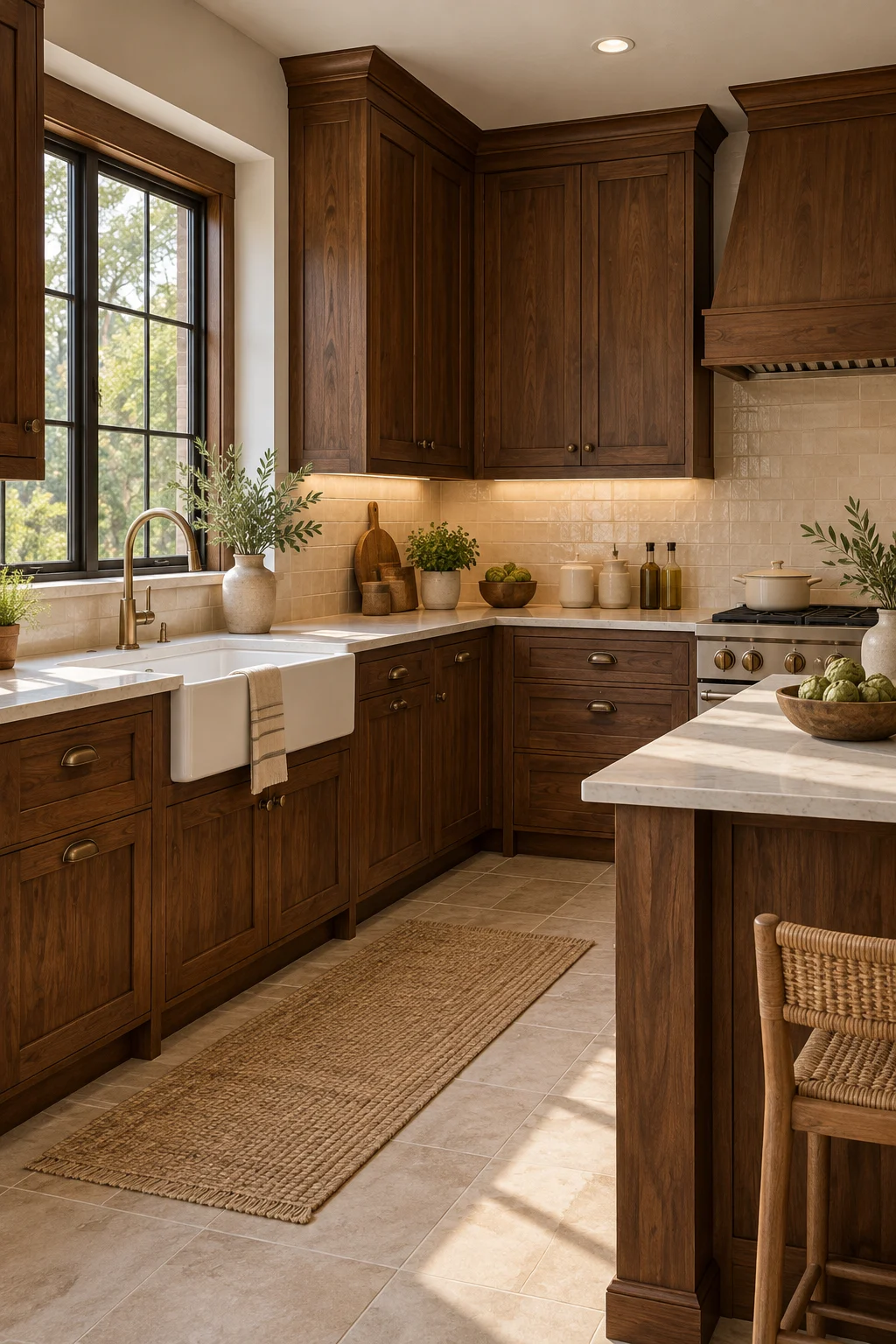
18 Rustic Kitchen Cabinets Ideas for a Warm and Character-Filled Space
A kitchen with smooth, uniform cabinetry can sometimes feel too polished or impersonal. Even when the layout works well, the room may lack the natural textures and inviting details that make rustic interiors so appealing.
Rustic kitchen cabinets introduce warmth through wood grain, traditional construction, earthy colors, and finishes that feel comfortably lived-in. These 18 ideas explore everything from natural oak and knotty pine to painted farmhouse cabinets and combinations of rustic and modern materials.
Start by choosing the level of rustic character you prefer. Subtle wood grain and simple hardware create a softer look, while reclaimed textures and darker finishes establish a more traditional country atmosphere.
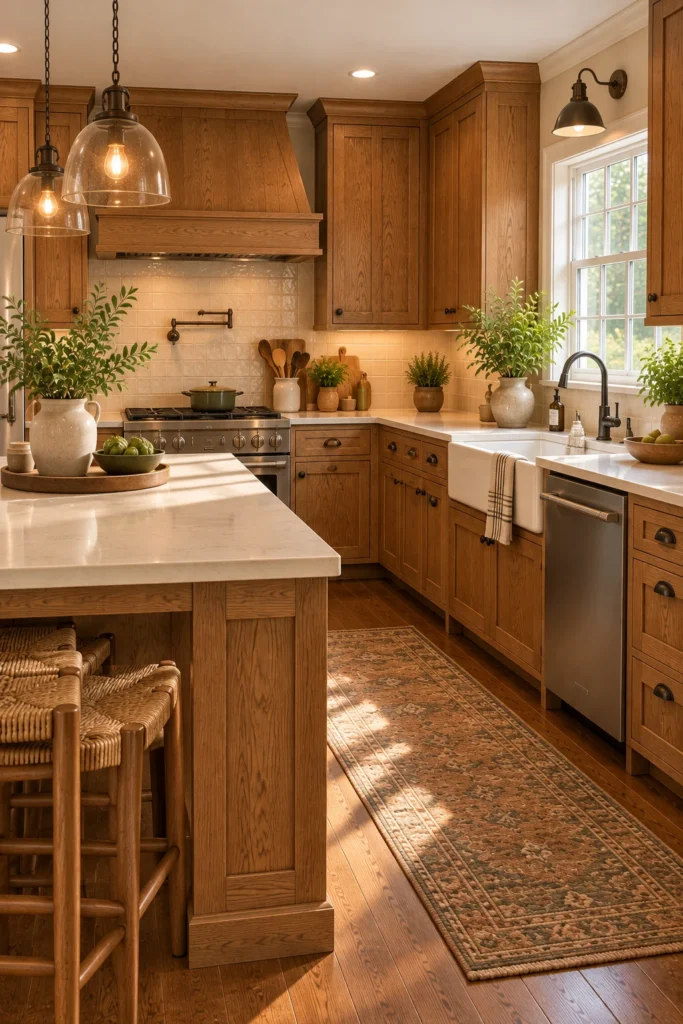
1. Choose Natural Oak Cabinets With Visible Wood Grain
Natural oak cabinets create a warm foundation for a rustic kitchen without requiring heavy distressing or elaborate ornamentation. Their visible grain introduces texture that makes even a simple cabinet design feel more personal.
Choose a clear or lightly tinted finish that allows the wood’s natural variation to remain visible. Flat-panel or shaker doors can both work, depending on whether you prefer a contemporary rustic or traditional farmhouse appearance.
Pair oak cabinets with cream countertops and a restrained backsplash to keep the wood from competing with too many patterns. Avoid combining several strongly contrasting wood stains in a small kitchen.
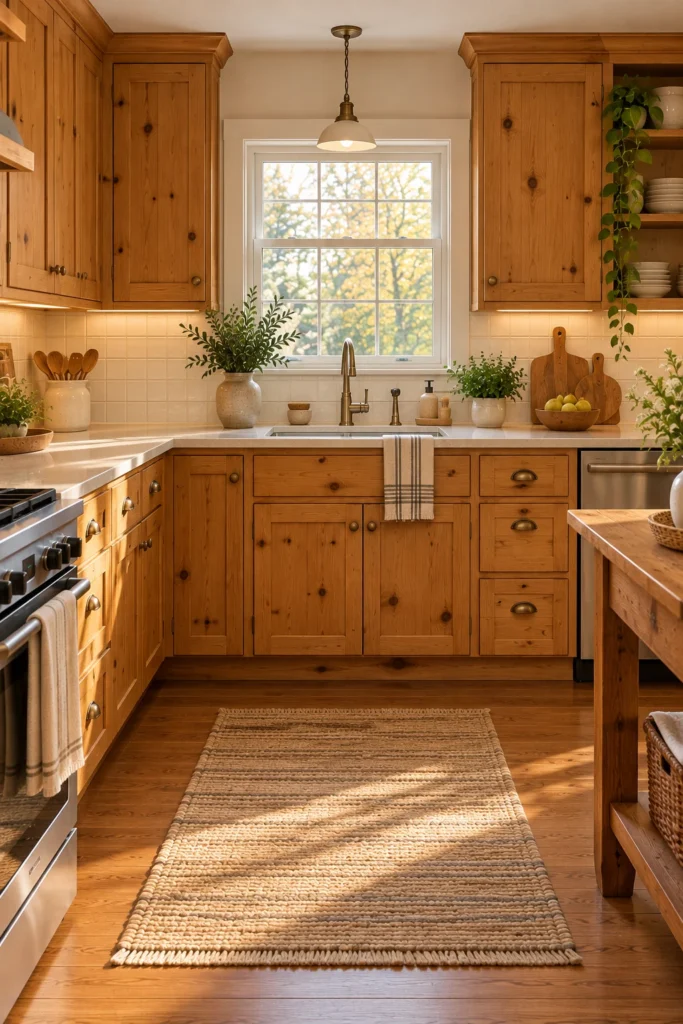
2. Add Knotty Pine Cabinets for Country Character
Knotty pine cabinets bring a relaxed, traditional atmosphere to a rustic kitchen. Their visible knots and natural color variation create the impression of a cozy country home.
Choose well-constructed cabinets with a protective finish appropriate for kitchen use. Pale honey-toned pine can brighten a modest room, while a slightly deeper finish creates a more established appearance.
Keep countertops and walls simple to balance the active wood grain. Avoid pairing knotty pine with heavily patterned flooring and elaborate backsplash tile, which can make the kitchen feel visually crowded.
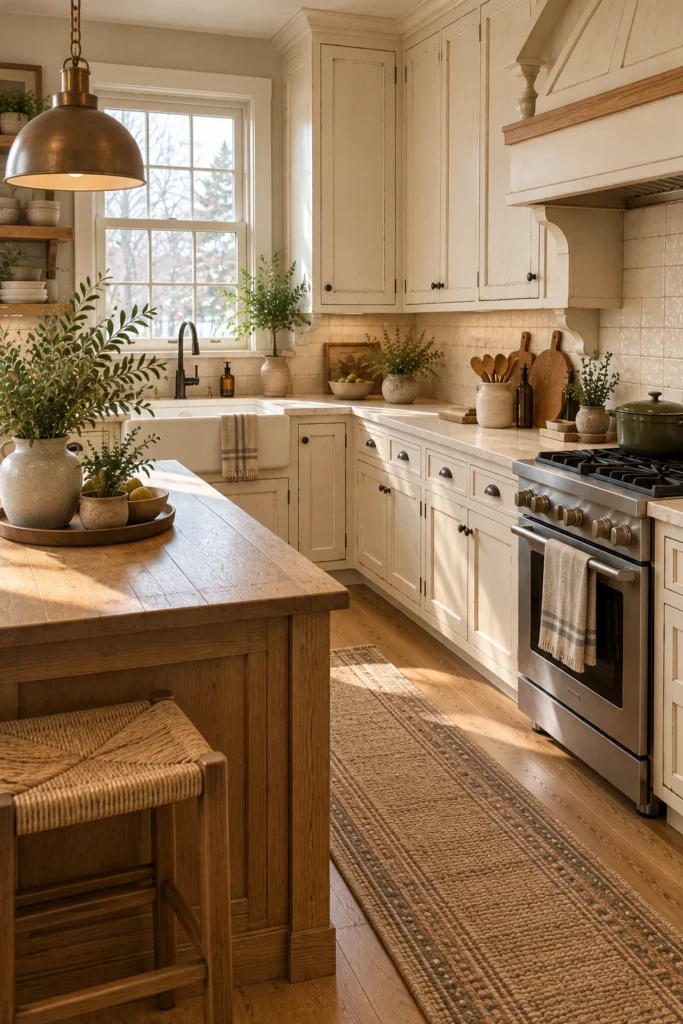
3. Use Distressed Cream Cabinets for a Farmhouse Look
Distressed cream cabinets introduce the softened character of older painted furniture. They work especially well in farmhouse kitchens where natural wood and traditional metal finishes are already present.
Choose a warm cream paint color with restrained wear around selected edges. Subtle distressing looks more convincing than large patches of exposed wood across every door.
Pair the cabinets with simple dark hardware and natural wood accents. Avoid distressing every surface in the room, since too much artificial wear can make the kitchen appear neglected rather than charming.
4. Combine Rustic Wood Lower Cabinets With Cream Uppers
Two-tone cabinetry can introduce rustic warmth without making the entire kitchen feel dark or visually heavy. Natural wood lower cabinets provide texture, while cream upper cabinets keep the room bright.
Choose a medium oak or walnut-look finish for the lower cabinets and a warm ivory paint for the upper sections. Simple hardware in a consistent finish helps connect the two materials.
Keep the transition between cabinet colors deliberate. Avoid introducing a third competing cabinet finish unless it serves a clear design purpose.
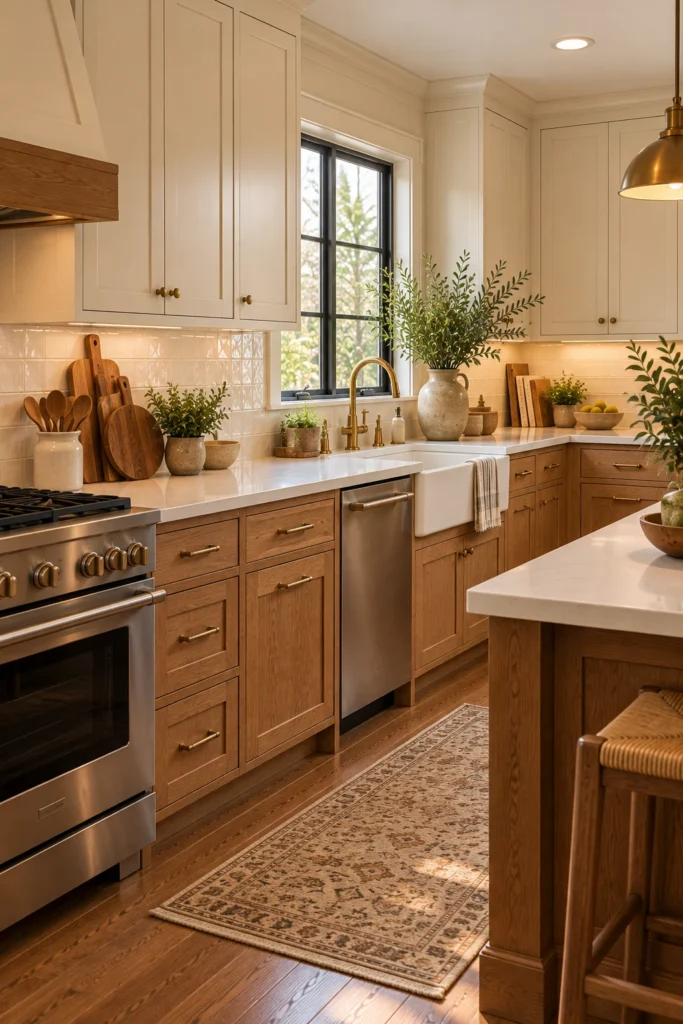
5. Introduce Reclaimed-Wood-Look Cabinet Fronts
Reclaimed-wood-look cabinet fronts add the character of weathered timber while maintaining a coordinated kitchen layout. Their varied grain and muted tones can create a distinctive rustic focal point.
Choose cabinet materials and finishes designed for kitchen humidity and regular cleaning. A softly weathered brown or gray-brown appearance works well with simple stone-look countertops.
Use reclaimed character selectively, such as on a kitchen island or a small bank of cabinets. Covering every surface in heavily weathered wood can make the room feel unnecessarily busy.
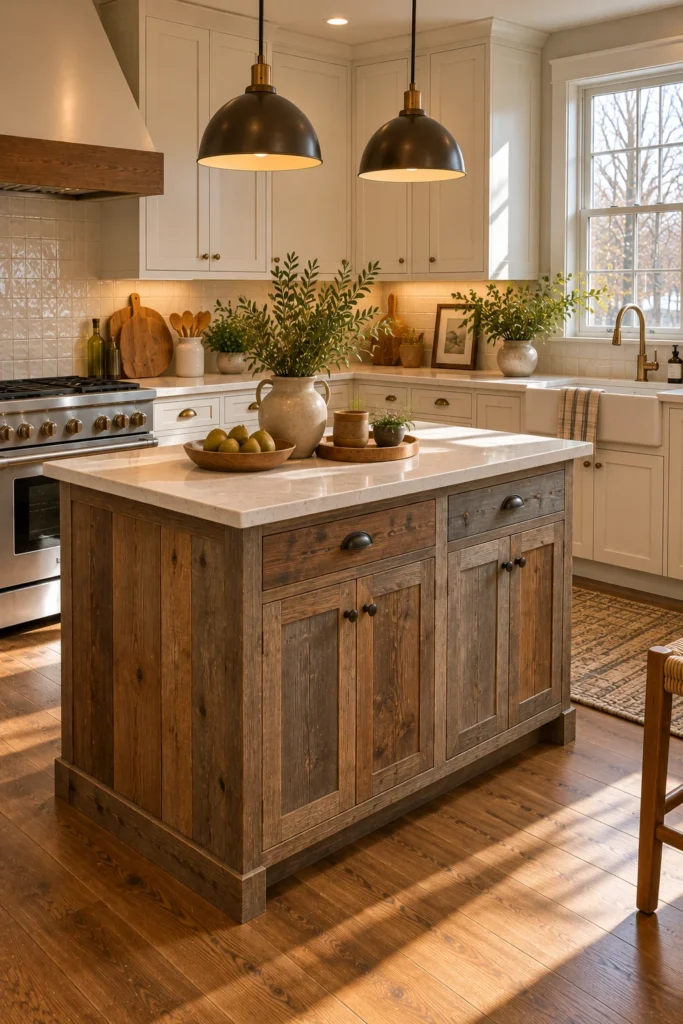
6. Choose Rustic Sage Green Kitchen Cabinets
Sage green cabinetry offers a softer interpretation of rustic style. Its earthy tone feels connected to nature and pairs comfortably with wood furniture, stone-look counters, and traditional ceramics.
Choose a muted green with a gray or olive undertone rather than a bright saturated shade. Shaker cabinet doors and understated hardware create a familiar country-kitchen appearance.
Balance the color with warm white walls and natural wood accents. Avoid combining several unrelated green tones that make the cabinetry appear mismatched.
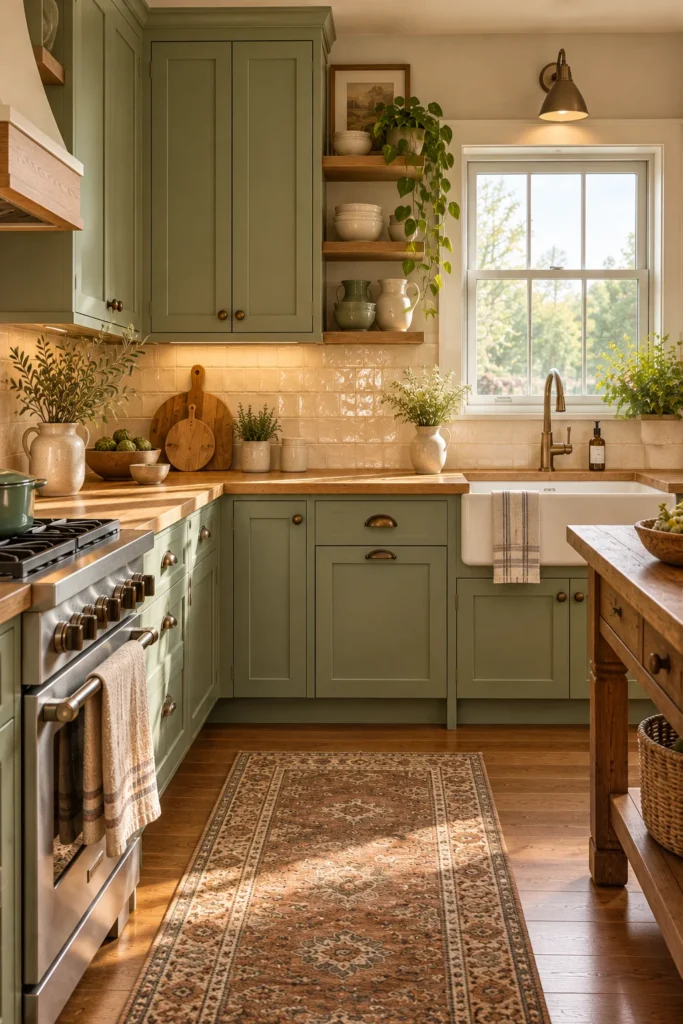
7. Add Black Iron-Style Cabinet Hardware
Black iron-style hardware creates a strong traditional accent against rustic wood or painted cabinetry. Its dark finish emphasizes cabinet shapes without requiring elaborate decorative details.
Choose simple cup pulls, round knobs, or modest traditional handles. Matte black and dark iron-look finishes work particularly well with oak, pine, cream, and muted green cabinets.
Keep the hardware shapes consistent across the main cabinet run. Avoid oversized decorative pulls that overwhelm smaller cabinet doors or become uncomfortable during everyday use.
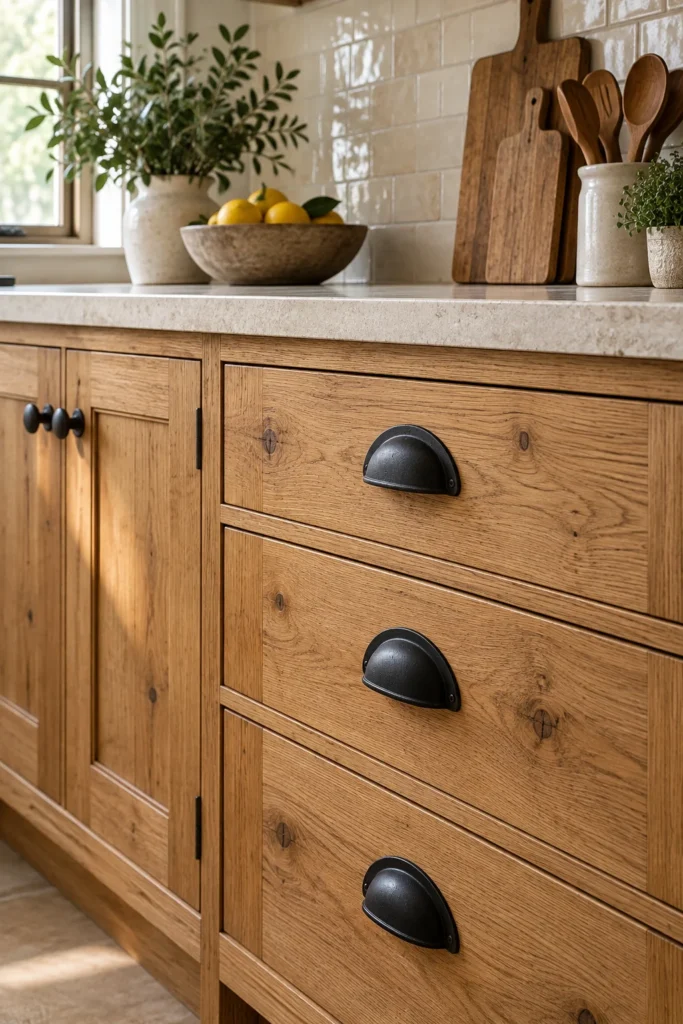
8. Install Open Wooden Shelves Between Rustic Cabinets
Open shelving can break up a long wall of rustic cabinetry and create a lighter appearance. It also provides space for useful dishes and a few carefully chosen decorative objects.
Choose shelves that complement the cabinet wood tone and use properly sized structural brackets. Cream plates, simple bowls, and clear glasses can soften the surrounding wood surfaces.
Keep shelf arrangements practical and restrained. Avoid placing heavy cookware overhead or filling every inch with accessories that require frequent dusting.
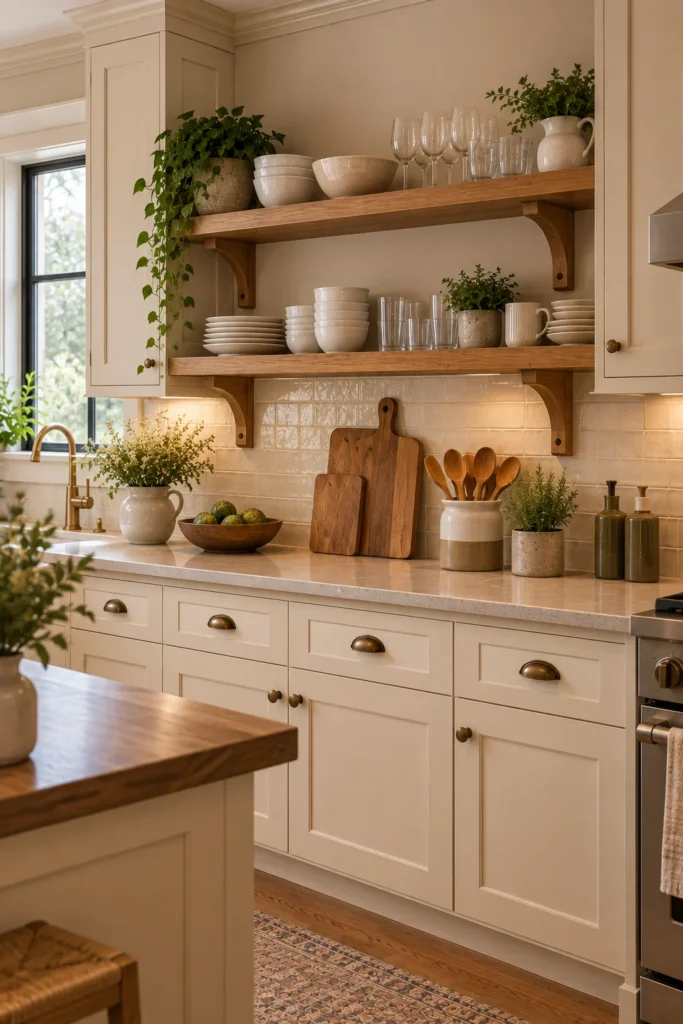
9. Create a Rustic Kitchen With Dark Walnut Cabinets
Dark walnut cabinets introduce richness and a more dramatic interpretation of rustic design. Their deep brown tones can make a kitchen feel grounded and established.
Choose cabinetry with visible wood grain and a finish that allows the natural variation to remain apparent. Pair dark cabinets with lighter countertops and walls to preserve contrast.
Use adequate task lighting, especially beneath upper cabinets and around preparation areas. Avoid combining dark cabinetry with equally dark floors and walls in a kitchen with limited daylight.
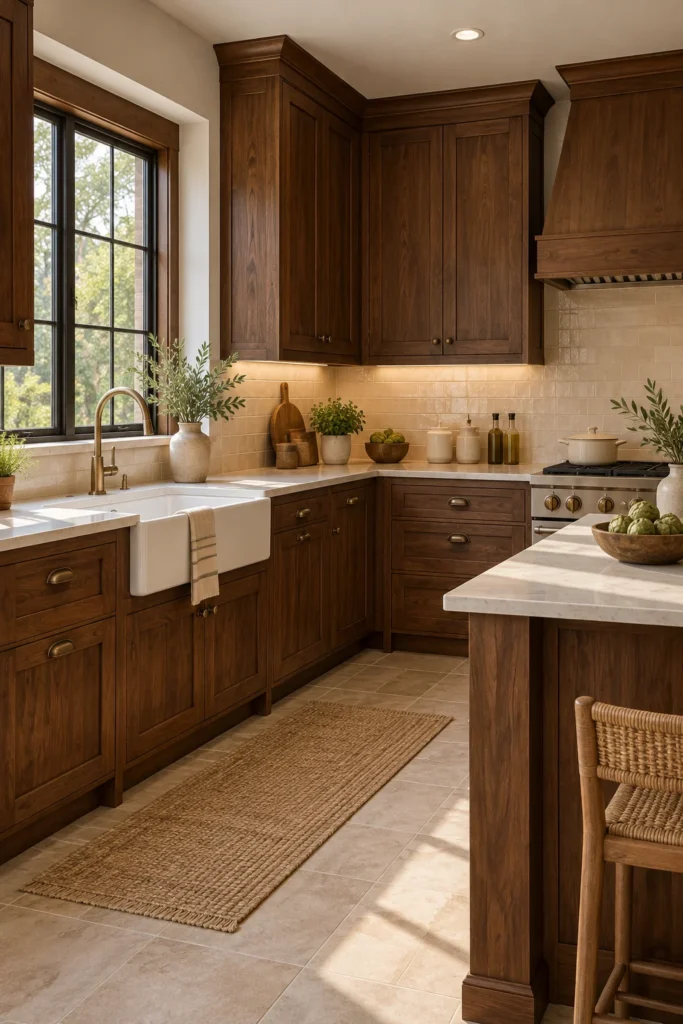
10. Add Glass-Front Cabinets for Rustic Display Storage
Glass-front cabinets make a rustic kitchen feel more open and collected. They provide a place to display everyday dishes while protecting them from dust and cooking residue.
Choose cabinet doors with simple divided panes or straightforward glass panels. Natural wood frames and painted cream finishes both work well in traditional kitchens.
Arrange the contents in balanced groups rather than filling every shelf. Avoid using glass-front storage for miscellaneous items that would look more organized behind solid cabinet doors.
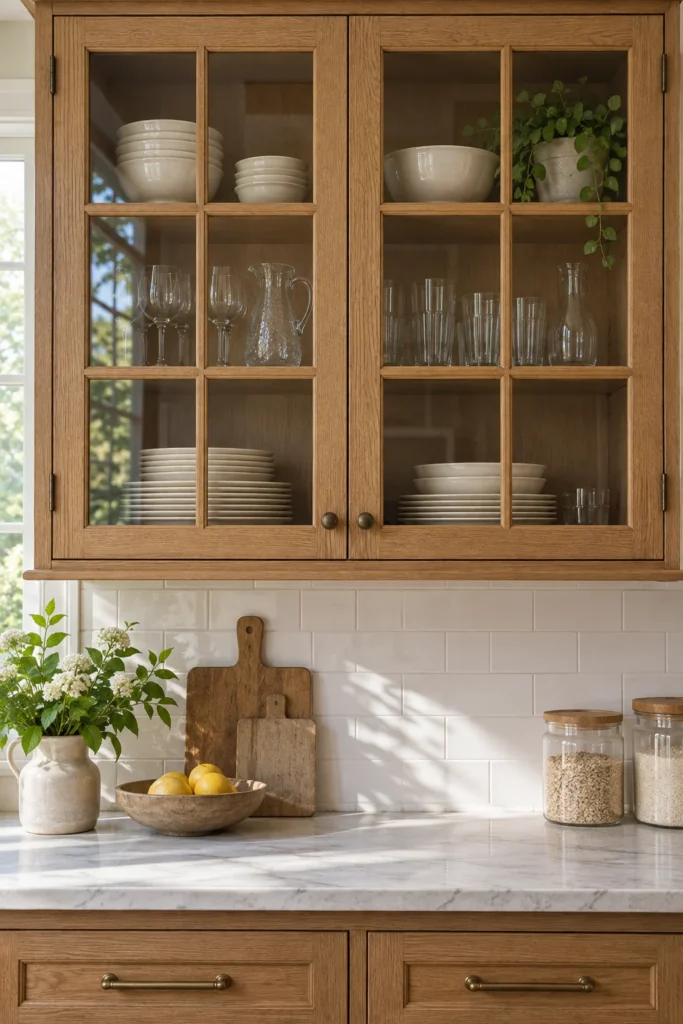
11. Choose Rustic Blue-Gray Painted Cabinets
Blue-gray cabinets offer a relaxed alternative to traditional brown wood finishes. Their subdued color can make rustic cabinetry feel fresh while retaining a comfortable country character.
Choose a dusty blue-gray paint with a matte or low-sheen appearance. Traditional cabinet profiles, natural wood flooring, and simple bronze hardware reinforce the rustic atmosphere.
Keep the surrounding materials warm enough to prevent the kitchen from feeling cold. Avoid pairing blue-gray cabinets with too many cool metallic and stark white finishes.
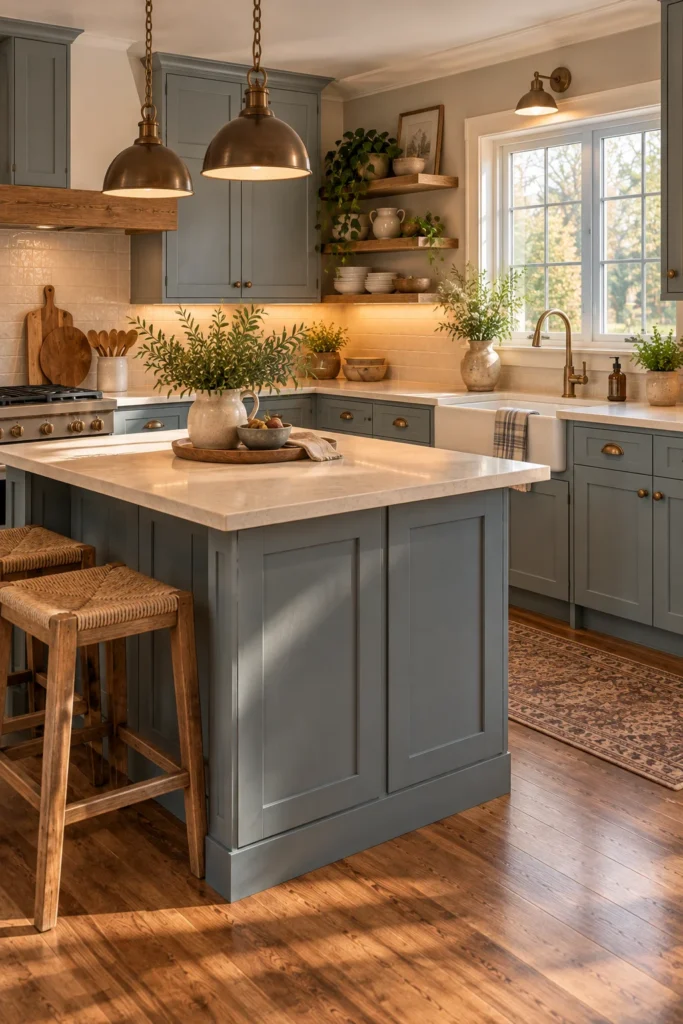
12. Incorporate a Rustic Wooden Pantry Cabinet
A tall wooden pantry cabinet adds useful storage and creates a furniture-like focal point. Its vertical form can balance lower cabinetry and help keep countertops uncluttered.
Choose a pantry with adjustable shelves and doors that coordinate with the kitchen’s overall style. Natural oak, softly aged pine, and muted painted wood are all suitable options.
Position the pantry where it does not block a window or interfere with appliance access. Avoid placing heavy items on difficult-to-reach upper shelves.
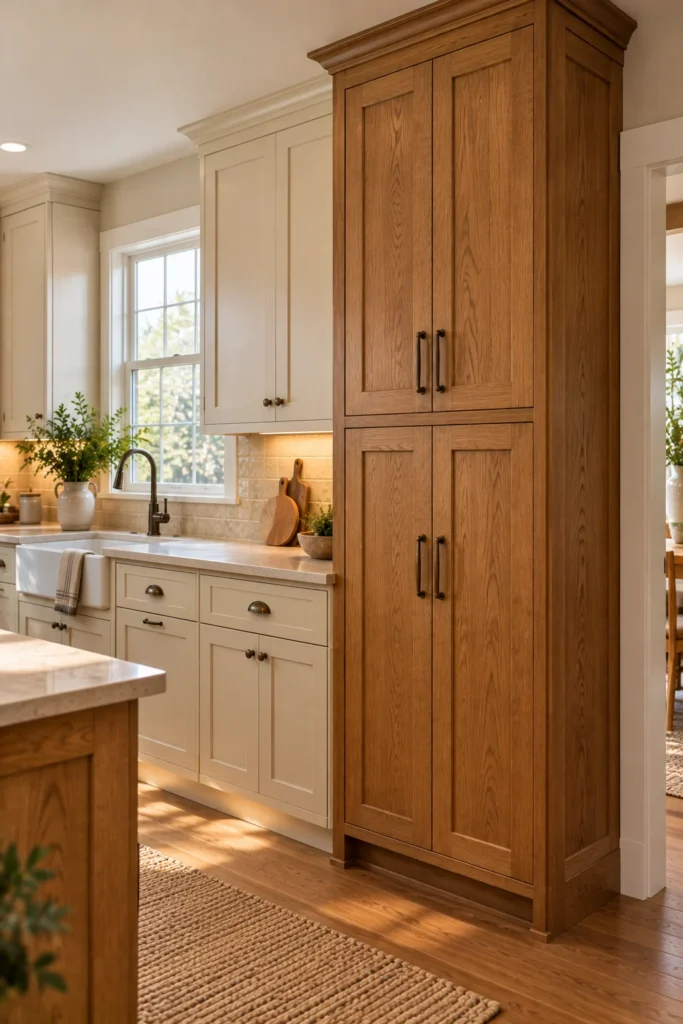
13. Pair Rustic Cabinets With a Brick-Look Backsplash
Brick-look backsplash tile introduces another traditional material to a rustic kitchen. Its texture creates contrast against smooth cabinet doors and countertops.
Choose thin brick-look ceramic or porcelain tile in muted cream, warm gray, or soft terracotta tones. A restrained color helps the backsplash complement the cabinets rather than dominate them.
Use kitchen-appropriate materials and finishes that can be cleaned easily. Avoid overly rough surfaces immediately behind cooking areas if they are difficult to maintain.
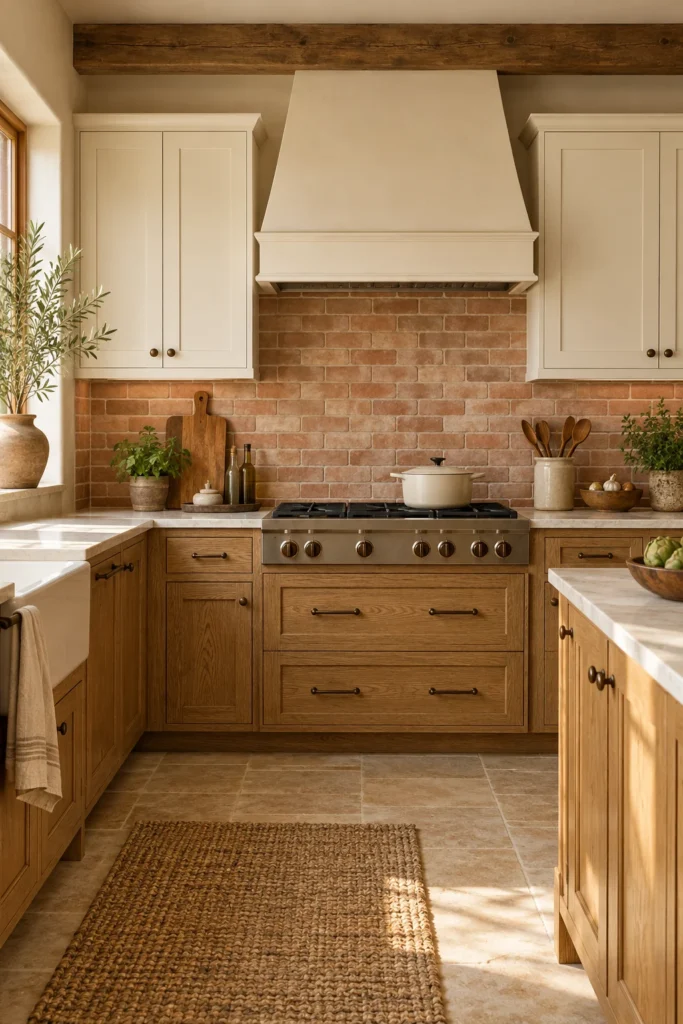
14. Use Rustic Cabinets With a Stone-Look Countertop
Stone-look countertops balance the warmth of rustic cabinetry with a durable, visually grounded surface. Their subtle texture can create a more natural appearance than highly polished decorative finishes.
Choose warm gray, cream, or soft beige countertops with restrained variation. Natural oak and walnut cabinets both pair comfortably with these tones.
Consider how the countertop finish interacts with the backsplash and flooring. Avoid combining strongly patterned stone-look surfaces with heavily figured wood cabinets.
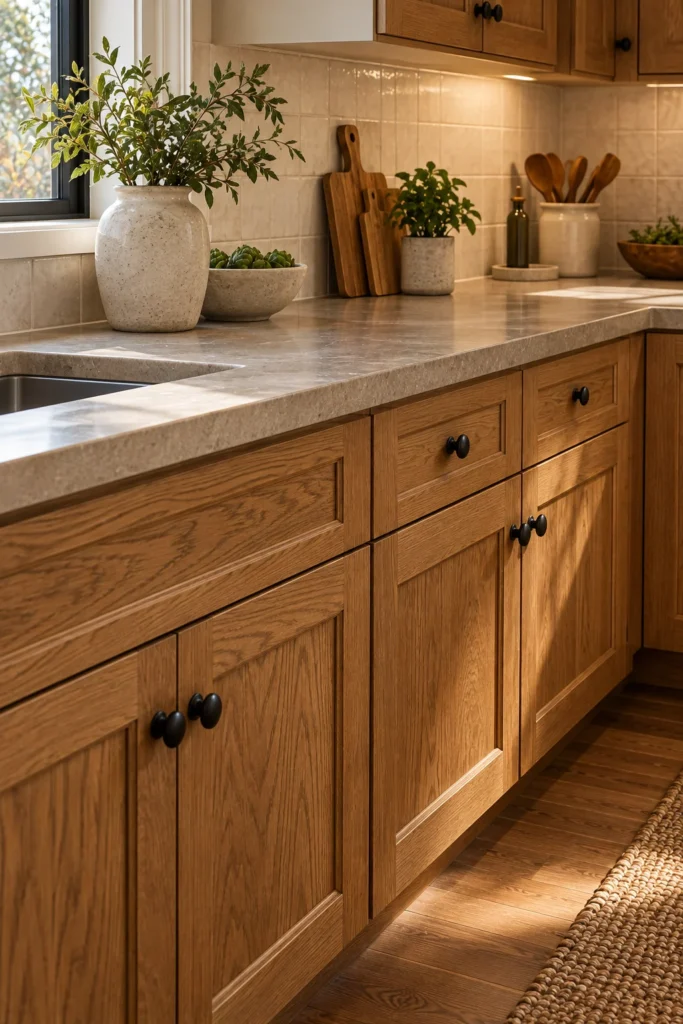
15. Create a Two-Tone Rustic Kitchen With a Dark Island
A darker kitchen island can add depth to a rustic room while allowing the perimeter cabinets to remain light. This combination creates a natural focal point without requiring dramatic wall colors.
Choose a compact island in dark walnut or deep brown wood and pair it with cream or pale gray cabinets. Keep countertops coordinated so the two cabinet finishes feel intentional.
Ensure that the island fits the available floor space and preserves comfortable circulation. Avoid selecting an oversized island simply to accommodate more storage.
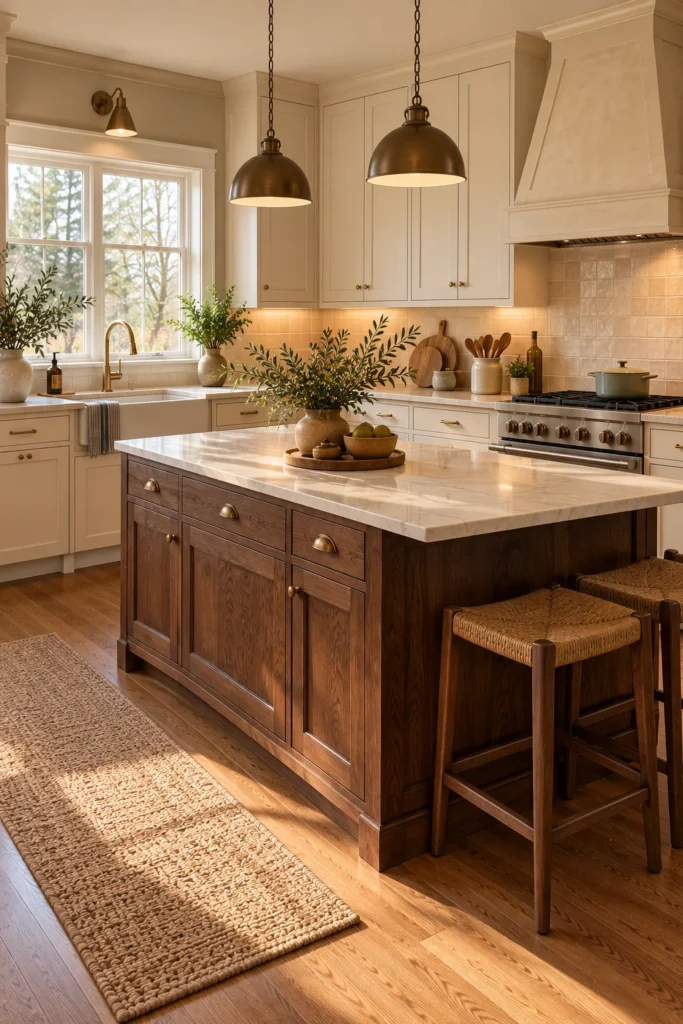
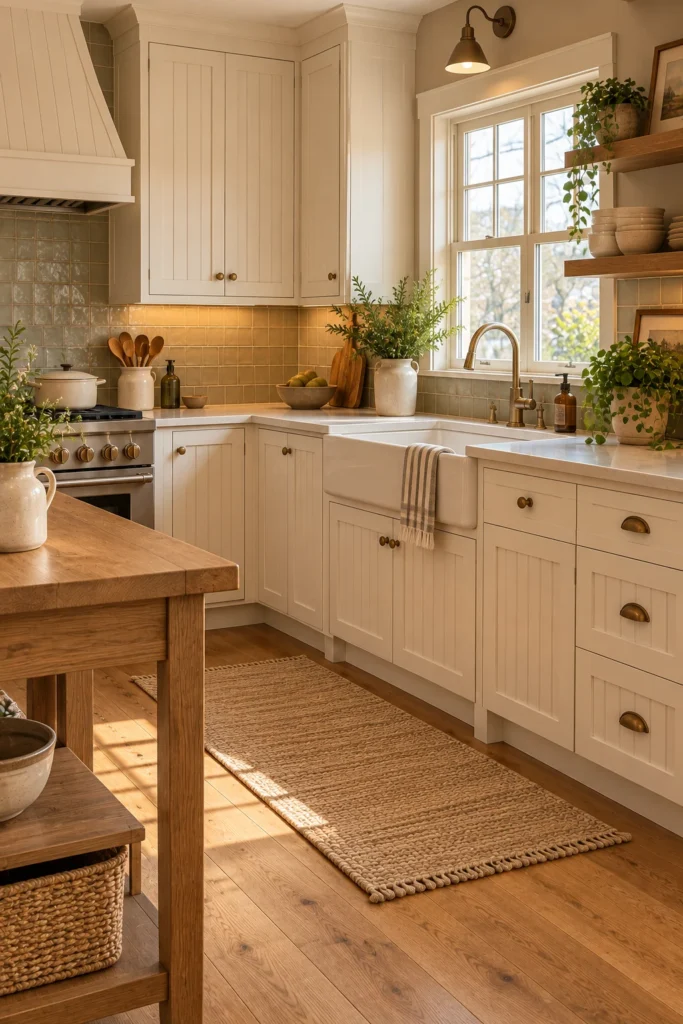
16. Add Beadboard Cabinet Door Details
Beadboard cabinet doors introduce cottage-style texture to rustic kitchen cabinetry. Their narrow vertical grooves create subtle visual interest while maintaining a traditional appearance.
Choose beadboard detailing for selected cabinet fronts or an island base rather than automatically applying it everywhere. Cream, pale blue, and muted sage finishes help emphasize the pattern gently.
Keep the grooves easy to access for cleaning and avoid overly elaborate door profiles. Too many decorative lines can make a small kitchen feel busy.
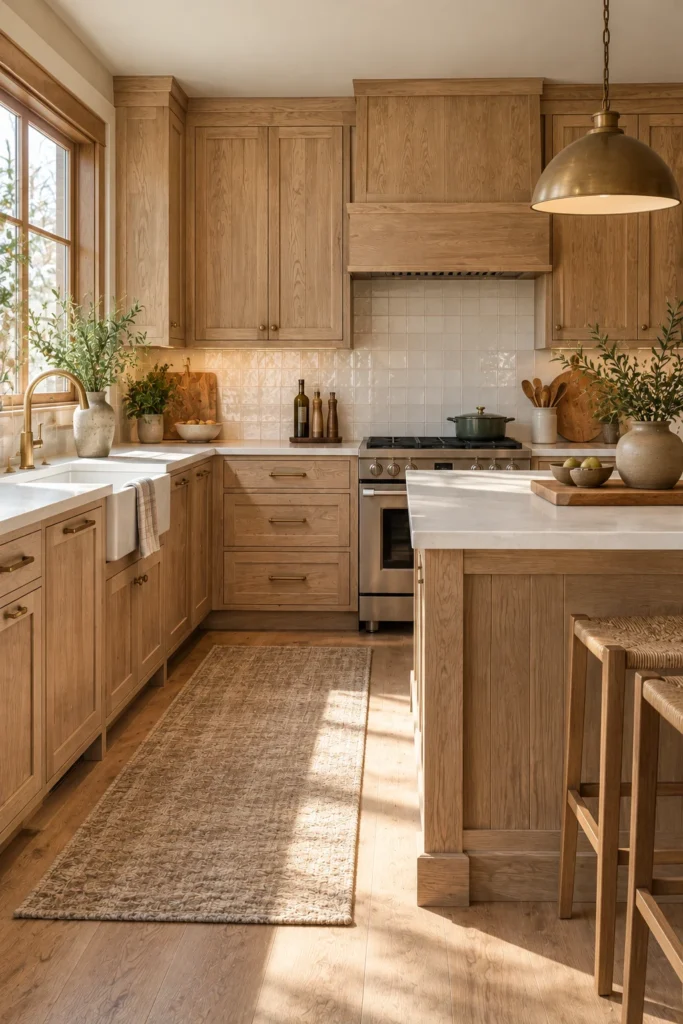
17. Choose Rustic Cabinets With a Natural Matte Finish
A natural matte finish allows the wood itself to become the main feature of rustic kitchen cabinetry. It creates a softer appearance than glossy varnish and emphasizes authentic grain patterns.
Choose a protective finish designed for kitchen cabinetry and appropriate to the wood species. Light oak, ash, and medium-toned walnut can all look beautiful with a low-sheen surface.
Pair matte wood with simple hardware and understated counters. Avoid leaving cabinetry unfinished in areas exposed to moisture, grease, and frequent handling.
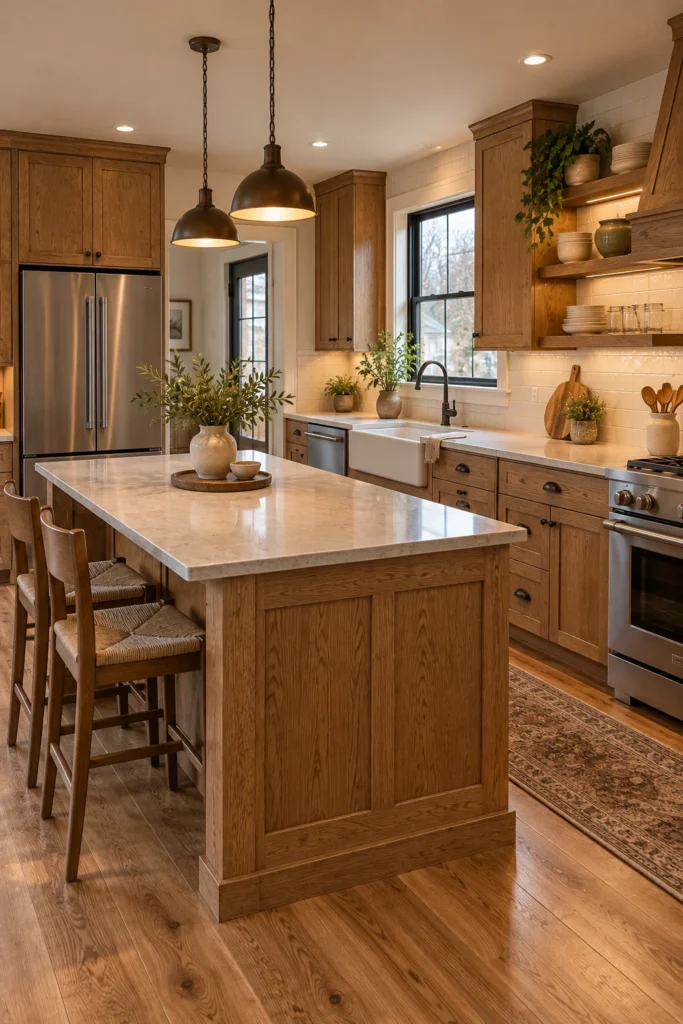
18. Combine Rustic Cabinetry With Modern Appliances
Rustic cabinets can work beautifully alongside modern appliances when the surrounding finishes are carefully balanced. The contrast creates a kitchen that feels warm and character-filled without sacrificing convenience.
Choose simple wood or painted cabinets with restrained hardware. Standard stainless steel appliances often complement natural wood, especially when countertops and backsplash materials remain understated.
Keep appliance sizes appropriate to the kitchen layout and cabinet proportions. Avoid overly decorative panels or accessories that make the room feel crowded.
How to Choose the Right Rustic Cabinet Wood
Different wood species create different rustic appearances. Oak has a distinctive grain pattern, pine often includes visible knots, and walnut introduces a deeper, richer color.
Consider the amount of natural light in the kitchen before choosing a finish. Pale wood can keep a small kitchen feeling open, while darker wood may work best with lighter countertops and walls.
Examine actual samples rather than relying only on photographs. Wood color and grain can vary noticeably under different lighting conditions.
Making Rustic Cabinets Work in a Small Kitchen
Rustic cabinets do not need to be dark or heavily textured. Light oak, muted painted finishes, and simple shaker doors can bring warmth to a compact room without making it feel crowded.
Use lighter countertops and backsplashes to balance the cabinet texture. Glass-front cabinets or a short section of open shelving can also reduce visual weight.
Prioritize useful drawer storage and practical cabinet organization. A beautiful rustic finish will not compensate for an inefficient layout.
Budget-Friendly Rustic Cabinet Updates
Refinishing existing cabinets may be more economical than replacing them when their construction is sound. Paint, appropriate wood finishes, and new hardware can change the appearance substantially.
Consider updating only the island or a small section of cabinetry first. A contrasting wood finish or muted painted color can introduce rustic character without changing the entire kitchen.
Avoid purchasing decorative wood panels or trim before checking their compatibility with existing cabinet materials. Some surfaces require specialized preparation for a durable finish.
Common Rustic Kitchen Cabinet Mistakes
One frequent mistake is combining too many competing wood tones. A kitchen with strongly figured cabinets, contrasting floors, rough shelves, and a heavily textured island can feel visually overwhelming.
Another is choosing an artificial distressed finish that appears too uniform. Natural-looking rustic character usually benefits from restraint and believable variation.
Avoid overlooking practical maintenance. Intricate cabinet profiles and rough finishes may require more cleaning than simple, smooth surfaces.
Cleaning and Maintaining Rustic Cabinets
Use cleaning products appropriate to the cabinet material and protective finish. Gentle regular cleaning helps prevent grease and residue from accumulating around handles and door edges.
Wipe moisture promptly, particularly around sinks and dishwashers. Prolonged dampness can affect wood, veneers, and painted finishes.
Inspect hinges, drawer slides, and handles periodically. Keeping hardware properly adjusted helps cabinetry remain comfortable to use.
Safety and Installation Considerations
- Confirm that cabinets and shelves are securely mounted using appropriate wall supports.
- Use finishes suitable for kitchen humidity, cleaning, and everyday wear.
- Keep wooden trim and decorative accessories away from unsafe heat exposure.
- Store heavy cookware in accessible lower cabinets or properly rated drawers.
- Maintain clearances around appliance doors, ventilation equipment, and walkways.
- Have electrical, plumbing, and major cabinet installation work handled by qualified professionals where appropriate.
Rustic kitchen cabinets can make an ordinary kitchen feel warmer, more welcoming, and full of natural character. Whether you choose pale oak, deep walnut, or gently painted farmhouse cabinetry, thoughtful materials and practical proportions will help the room remain beautiful and comfortable for everyday living.
