
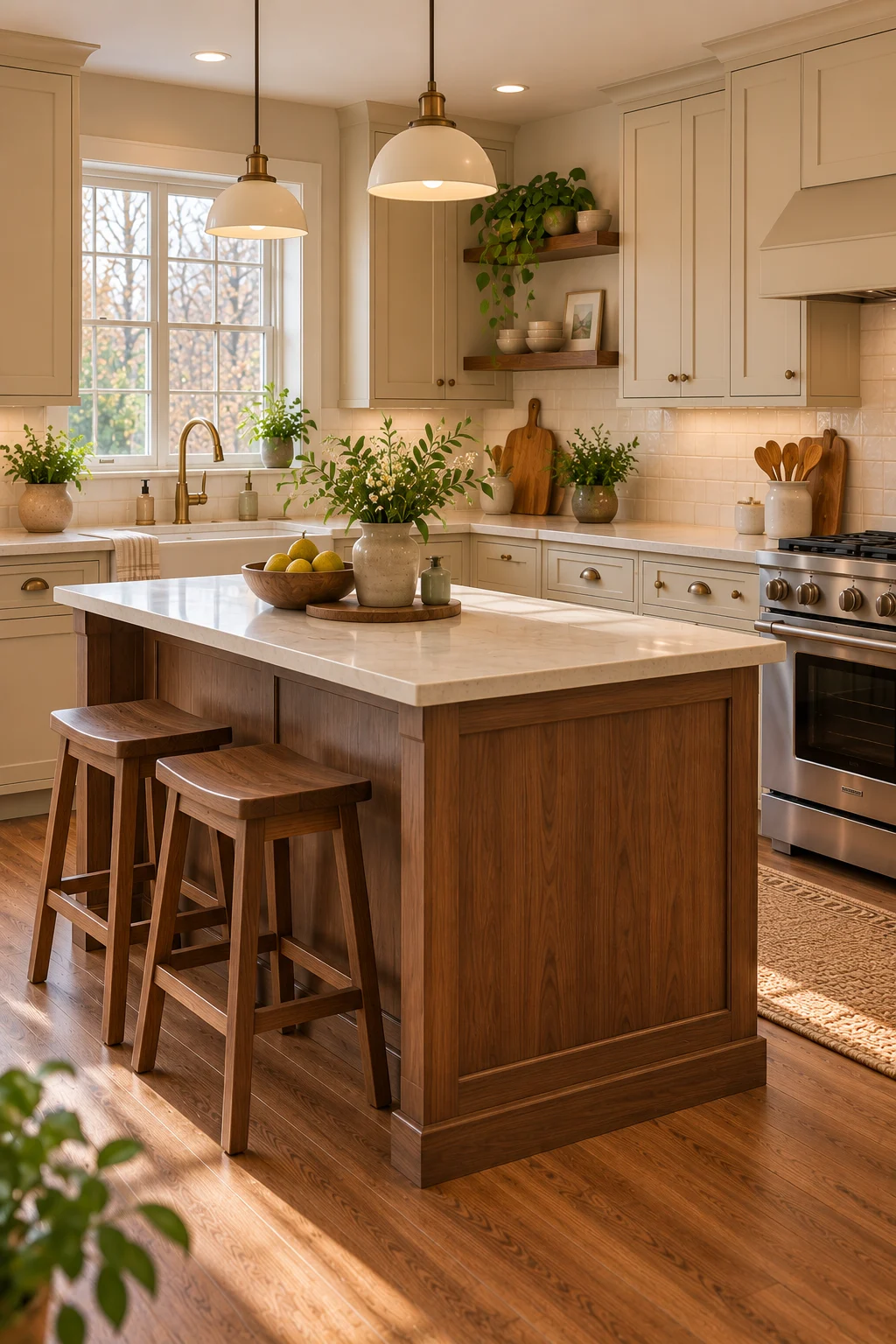
17 Beige and Wood Kitchen Ideas for a Warm Natural Interior
A kitchen can feel unfinished when the cabinets, countertops, and flooring do not share a comfortable visual balance. Beige and wood offer a simple way to create warmth without relying on bold colors or elaborate finishes.
This combination works across many kitchen styles, from relaxed cottage interiors to contemporary spaces with clean lines. These 17 beige and wood kitchen ideas explore cabinet colors, natural timber accents, backsplashes, shelving, islands, and practical finishing details that make an everyday kitchen feel inviting.
Start by choosing whether beige or wood will dominate the room. Light beige cabinetry with warm oak accents creates an airy appearance, while darker wood cabinets and beige walls produce a richer, more grounded atmosphere.
1. Pair Beige Shaker Cabinets With Natural Oak Flooring
Beige shaker cabinets and natural oak flooring create a classic foundation for a warm kitchen. The simple cabinet profiles provide traditional character, while the wood grain adds natural variation beneath the lighter cabinetry.
Choose beige paint with subtle sand or oatmeal undertones rather than a strongly yellow shade. Pale or medium oak-look flooring can complement the cabinets without making the room feel overly uniform.
Finish the arrangement with a light countertop and understated hardware. Avoid choosing flooring that closely matches the cabinets in both color and brightness, since a little contrast helps define the different surfaces.

2. Combine Beige Upper Cabinets With Wood Lower Cabinets
Reversing the usual cabinet arrangement creates a distinctive kitchen with natural wood at eye level below the countertop and beige cabinetry above. This combination feels warm and contemporary while maintaining a practical, familiar layout.
Choose medium oak or walnut-look lower cabinets with a visible but restrained grain. Beige upper cabinets soften the appearance and help the wall feel lighter, especially when paired with a simple backsplash.
Keep the two finishes connected through the countertop and hardware. Avoid very dark wood across the entire lower cabinet run if the kitchen has limited daylight and little visual contrast elsewhere.

3. Add a Wood Kitchen Island to Beige Perimeter Cabinets
A wood island introduces a furniture-like focal point in a kitchen with beige perimeter cabinetry. The natural finish adds depth and gives the center of the room a different character without requiring a dramatic color change.
Choose an island in oak, maple, or medium walnut, depending on the existing flooring and cabinet tones. A light countertop can connect the island to the surrounding kitchen while keeping the overall design balanced.
Make sure the island is appropriately sized for the room and leaves comfortable access to appliances and cabinets. Avoid an oversized island that reduces the available preparation area or blocks the main walkway.

4. Choose a Beige and Wood Kitchen With Open Shelving
Open wood shelving brings texture and practical storage to beige kitchen cabinetry. It can break up a long stretch of solid cabinet doors while creating a convenient place for everyday dishes.
Choose shelves in a wood tone that complements the flooring or island. Display a restrained collection of cream bowls, clear glasses, and a few neutral ceramic pieces so the arrangement remains calm and useful.
Install shelves with suitable structural supports and keep heavy objects securely positioned. Avoid displaying too many items, particularly near cooking areas where grease and dust can accumulate.

5. Use a Beige Tile Backsplash With Wood Accents
A beige backsplash can create a seamless, warm background for natural wood cabinets, shelves, or furniture. Its subtle color variation provides interest without competing with the grain of the timber.
Consider rectangular ceramic tiles, small squares, or handmade-look surfaces in sand, oatmeal, or pale taupe. Choose a finish that complements the countertop and is suitable for the areas exposed to cooking splashes.
Keep the grout color coordinated with the tile for a quieter appearance. Avoid combining several strong tile patterns with pronounced wood grain, since the materials may compete visually.

6. Introduce Walnut Accents for a Richer Look
Walnut accents add depth to a beige kitchen without requiring every wooden surface to be dark. The richer brown tone creates contrast and helps the lighter cabinetry feel more defined.
Use walnut for a compact island, a breakfast table, selected shelves, or a small group of furniture pieces. Pair it with beige cabinets and a pale countertop to keep the room from becoming visually heavy.
Repeat the walnut finish in a few carefully chosen places. Avoid mixing many different dark stains, reddish woods, and highly contrasting grains throughout the same kitchen.

7. Choose Beige Cabinets With a Butcher-Block Countertop
A wood countertop creates a warm work surface against beige cabinets. Its natural grain makes the kitchen feel less formal and can suit cottage, farmhouse, and relaxed contemporary interiors.
Choose a suitable hardwood surface or a wood-look countertop designed for kitchen use. Oak and maple create lighter combinations, while darker wood produces a stronger contrast with pale beige cabinetry.
Pay attention to the areas around the sink and cooking equipment. Follow the countertop manufacturer’s care guidance, wipe up spills promptly, and avoid exposing an unsuitable wood finish to prolonged moisture or heat.

8. Pair Beige Cabinets With a Wood Breakfast Table
A small wooden breakfast table brings a relaxed dining element into a beige kitchen. Unlike a large island, it can provide a dedicated place for meals without taking over the center of the room.
Choose a compact rectangular or round table in oak or walnut. Simple wooden chairs connect naturally with the cabinetry, while a restrained fabric seat cushion can introduce additional texture.
Measure the area before choosing the table so chairs can be pulled out comfortably. Avoid placing the furniture where it blocks cabinet doors, the refrigerator, or the main route through the kitchen.

9. Create Contrast With Dark Wood Cabinet Hardware
Dark hardware gives beige cabinetry a little definition without introducing another major material. The contrast works especially well when the cabinet finish is pale and the surrounding wood tones are natural.
Choose simple matte black, dark bronze, or oil-rubbed bronze-look knobs and pulls. Keep the shapes consistent across doors and drawers so the hardware appears intentional rather than decorative for its own sake.
Coordinate the finish with the faucet or lighting where practical. Avoid using multiple unrelated metal finishes, particularly when the kitchen already includes prominent wood grain and textured tile.

10. Use a Wood Range Hood Cover as a Focal Point
A wood range hood cover can add architectural interest to a beige kitchen while connecting the cabinetry to the natural material palette. Its shape creates a focal point above the cooking area without relying on a bright accent color.
Choose a simple oak or walnut-look finish that complements nearby cabinetry or shelving. Keep the surrounding backsplash and countertops relatively understated so the hood remains visually distinct.
The hood must still function as a properly installed ventilation system. Avoid decorative covers that obstruct airflow, conflict with the appliance’s clearances, or use materials unsuitable for the installation.

11. Add Wood-Framed Glass Cabinet Doors
Wood-framed glass cabinet doors introduce another layer of texture while allowing selected dishes to become part of the kitchen’s visual design. They work especially well in a beige kitchen that needs a little variation above the countertop.
Choose frames in oak or walnut with clear glass panels. Display a small collection of coordinated cream dishes and clear glasses to create a light, orderly appearance.
Use glass-front doors selectively rather than replacing every cabinet front. Avoid displaying crowded packaging or mismatched items in full view, since the contents contribute directly to the overall look.

12. Choose Beige Cabinets With a Wood-Look Floor
A wood-look floor adds warmth and visual continuity to a beige kitchen. It provides the natural character of wood grain while allowing homeowners to consider materials suited to their maintenance preferences and household needs.
Choose a flooring tone that contrasts gently with the cabinets. Pale oak creates a light Scandinavian-inspired effect, while medium brown planks give the room a more traditional appearance.
Check that the selected flooring is suitable for kitchen moisture, spills, and regular cleaning. Avoid choosing a floor so similar in color to the cabinets that the entire room loses definition.

13. Introduce Beige and Wood Through a Coffee Station
A dedicated coffee station creates a useful home for a small appliance and everyday mugs while adding a cozy detail to the kitchen. Beige cabinetry and natural wood make the area feel integrated rather than like a separate decorative setup.
Use a dry countertop section with a compact coffee maker, a wood shelf, and a few coordinated mugs. A small tray can keep accessories together without occupying the entire work surface.
Keep the appliance’s electrical cord safely routed and follow its ventilation and clearance requirements. Avoid installing shelves directly where appliance steam or heat could damage the materials.

14. Combine Beige Cabinets With a Textured Natural Wood Ceiling Detail
A subtle wood ceiling detail can make a beige kitchen feel warmer and more architectural. It is particularly effective in a room with otherwise simple cabinetry and a restrained palette.
Consider a limited section of wood-look ceiling boards or a carefully integrated timber detail that suits the existing structure. Natural oak tones can complement beige cabinets without requiring additional decorative colors.
Keep the treatment proportionate to the room and ensure all materials are suitable for the installation environment. Avoid adding heavy overhead elements without appropriate structural support or making an eight-foot ceiling feel unnecessarily low.

15. Style Beige Cabinets With Natural Woven Accessories
Woven accessories introduce another natural texture to a beige-and-wood kitchen. Baskets, woven seat details, and simple fiber accents can soften the straight lines of cabinetry and countertops.
Choose a few practical pieces in natural rattan, seagrass, or similar materials. A basket can hold suitable lightweight items on an open shelf, while woven stools can bring texture to a breakfast counter.
Keep woven materials away from direct cooking heat and areas exposed to frequent splashes. Avoid placing baskets on the floor where they obstruct walkways or make routine cleaning difficult.

16. Add a Wood Peninsula to an Open-Plan Beige Kitchen
A wood peninsula can define the kitchen area while maintaining a visual connection to an adjoining dining or living space. It provides additional countertop area and may also accommodate casual seating.
Choose a peninsula base or wood finish that complements the beige cabinetry. A pale countertop can connect the peninsula with the main work surfaces, while compact stools provide a practical place for quick meals.
Check that the extension leaves enough room for appliances, cabinets, and comfortable circulation. Avoid a peninsula that creates a narrow bottleneck between the kitchen and the rest of the home.

17. Create a Fully Layered Beige and Wood Kitchen
A fully coordinated beige-and-wood kitchen combines several natural materials while maintaining a simple, cohesive appearance. Beige cabinets create a calm foundation, and carefully repeated wood tones provide warmth across the room.
Begin with beige cabinetry and one main wood finish for the flooring or island. Add a pale backsplash, understated hardware, and a few wooden shelves or furniture pieces that reinforce the palette.
Keep decorative objects limited and preserve usable countertop space. Avoid introducing too many unrelated wood stains, beige undertones, or competing patterns, which can make the room feel less intentional.

How to Choose the Right Beige and Wood Combination
Beige can have pink, yellow, gray, or green undertones, and these differences influence how it looks beside natural wood. Compare cabinet samples with the actual flooring and countertop rather than choosing each finish separately.
Light oak often works well with sandy beige, while medium walnut can create a richer contrast. If the wood has strong orange or red undertones, choose a beige that complements rather than clashes with that warmth.
Consider the natural light available in the room. Test finishes in daylight and under evening lighting before committing to a large cabinet or flooring project.
Making a Small Beige and Wood Kitchen Feel Spacious
A small kitchen benefits from a restrained palette and clear visual organization. Beige upper cabinets, pale countertops, and lighter wood finishes help the room feel open without removing useful storage.
Use darker wood selectively through stools, a shelf, or a compact table. Repeating the same wood tone in a few places can make the kitchen feel coordinated rather than crowded.
Avoid using dark wood across every major surface when natural light is limited. Keeping the backsplash and some cabinetry light provides contrast and helps define the room.
Budget-Friendly Beige and Wood Kitchen Updates
Painting existing cabinets is one way to introduce beige without replacing the entire kitchen. Choose a suitable cabinet finish and prepare the surfaces carefully for an even result.
Smaller changes can include replacing outdated hardware, adding a wooden shelf, or introducing a compact oak breakfast table. These updates bring texture into the room without requiring major construction.
If replacing flooring or countertops, prioritize durability and maintenance as well as appearance. A practical material that suits daily cooking is more useful than a finish chosen solely for its visual effect.
Common Beige and Wood Kitchen Decorating Mistakes
One frequent mistake is choosing beige and wood finishes that are too similar in tone. Without enough contrast, cabinets, flooring, and countertops can blend together and make the room feel flat.
Another is mixing too many different wood colors. A combination of pale oak, reddish wood, dark walnut, and orange-toned pine can feel disjointed unless the relationships are carefully planned.
Avoid relying on beige alone to create warmth. Natural textures, good lighting, and a few contrasting details help the kitchen feel layered rather than bland.
Caring for Beige Cabinets and Wood Surfaces
Beige cabinets benefit from regular gentle cleaning, particularly around handles and cooking areas where grease can accumulate. Use cleaning products suited to the cabinet finish and avoid abrasive materials that could damage the surface.
Wood countertops, shelves, and furniture need care appropriate to their protective coatings. Wipe up spills promptly and prevent standing water from collecting around joints and edges.
Clean wood-look flooring according to the manufacturer’s guidance and check that rugs or mats remain flat. Periodic maintenance helps preserve the kitchen’s appearance and everyday usability.
Safety and Practical Considerations
- Secure wall shelves and tall cabinets with appropriate supports.
- Keep wood accessories and woven materials away from cooking heat.
- Maintain clear walkways around islands, peninsulas, and breakfast tables.
- Choose countertops and flooring suitable for kitchen moisture and regular cleaning.
- Ensure range hoods and ventilation systems remain functional and unobstructed.
- Keep appliance doors, windows, and cabinet drawers fully accessible.
- Use suitable mounting and electrical installation methods for lighting and overhead details.
Beige and wood create a flexible foundation for a kitchen that feels warm, natural, and easy to live with. By balancing cabinet tones, wood finishes, and practical details, you can create a welcoming space that remains comfortable and useful for everyday cooking.
