
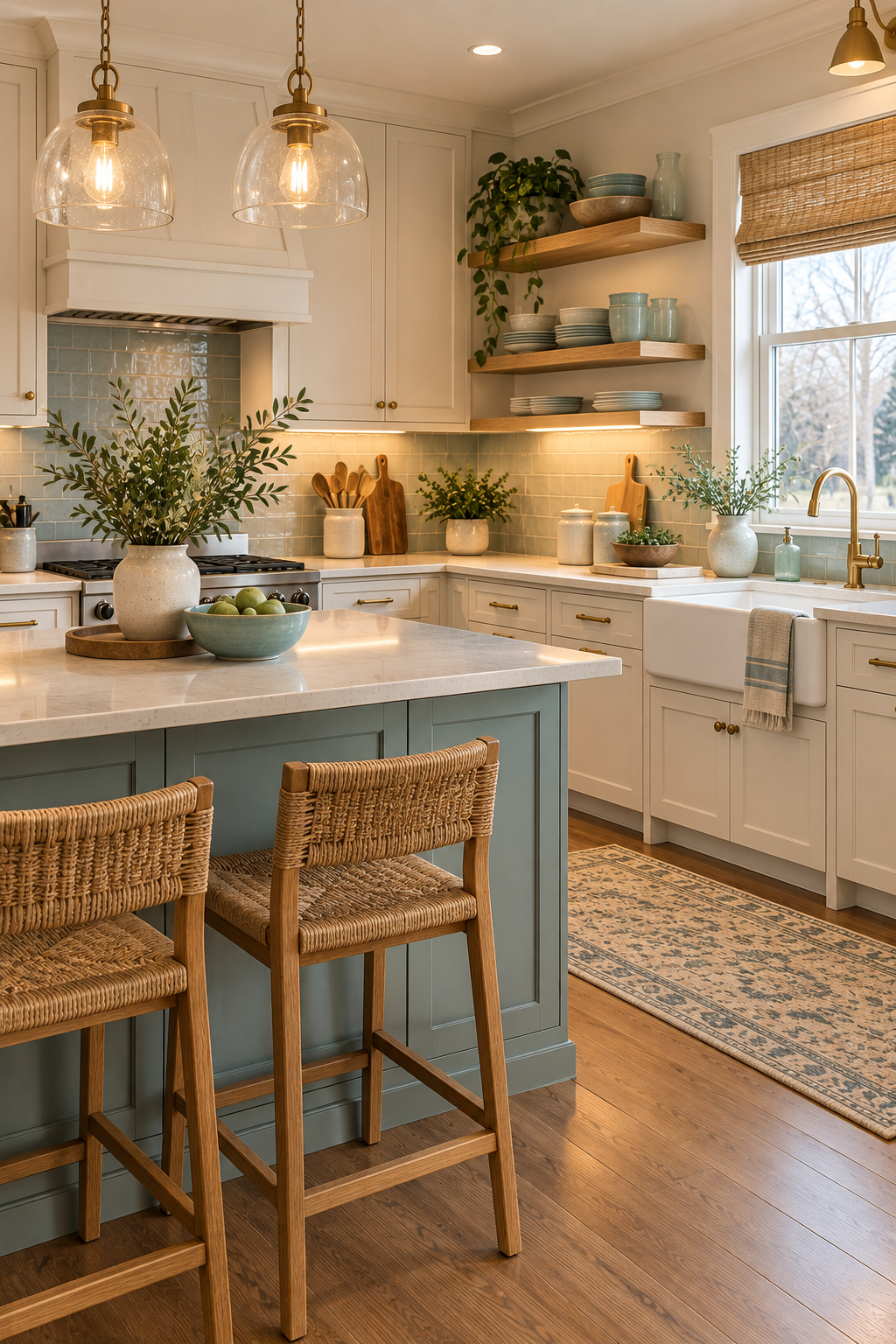
17 Coastal Kitchen Design Ideas for a Light and Relaxed Space
A coastal kitchen can feel bright, relaxed, and welcoming without looking like a beach-themed gift shop. The secret is to borrow the colors and textures associated with the coast rather than filling the room with anchors, shells, and nautical decorations.
Warm cream, dusty blue, natural wood, woven textures, and clear glass create a softer interpretation of coastal style. These materials work well in everyday American kitchens, including modest homes with standard cabinetry, limited counter space, and ordinary windows.
The key is balance. Light finishes keep the room feeling open, wood adds warmth, and a few blue or green accents introduce color without overwhelming the space.
Here are 17 coastal kitchen design ideas that combine a relaxed atmosphere with practical choices for everyday cooking, storage, and dining.
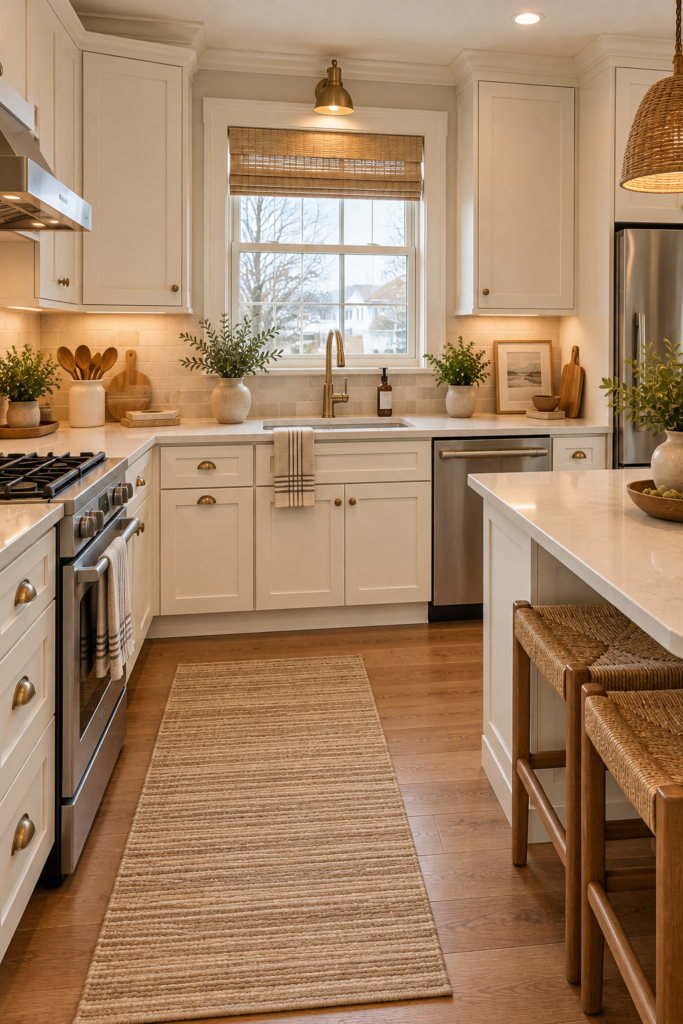
1. Start With Warm Cream Cabinets
Warm cream cabinets create a softer foundation for a coastal kitchen than stark white. They complement natural wood, muted blue accents, and pale countertops without making the room feel overly cool.
Simple shaker cabinetry is a natural fit for this look. Pair it with light counters and medium-toned oak details to introduce contrast without adding unnecessary decoration.
Before choosing a cream finish, compare samples with the existing flooring and countertop. Some shades lean yellow, while others have beige or gray undertones that can change the overall appearance.
If replacing cabinets isn’t practical, consider updating the surrounding wall color or introducing cream through a smaller piece of furniture. The goal is to create a light, coordinated background that lets natural materials stand out.
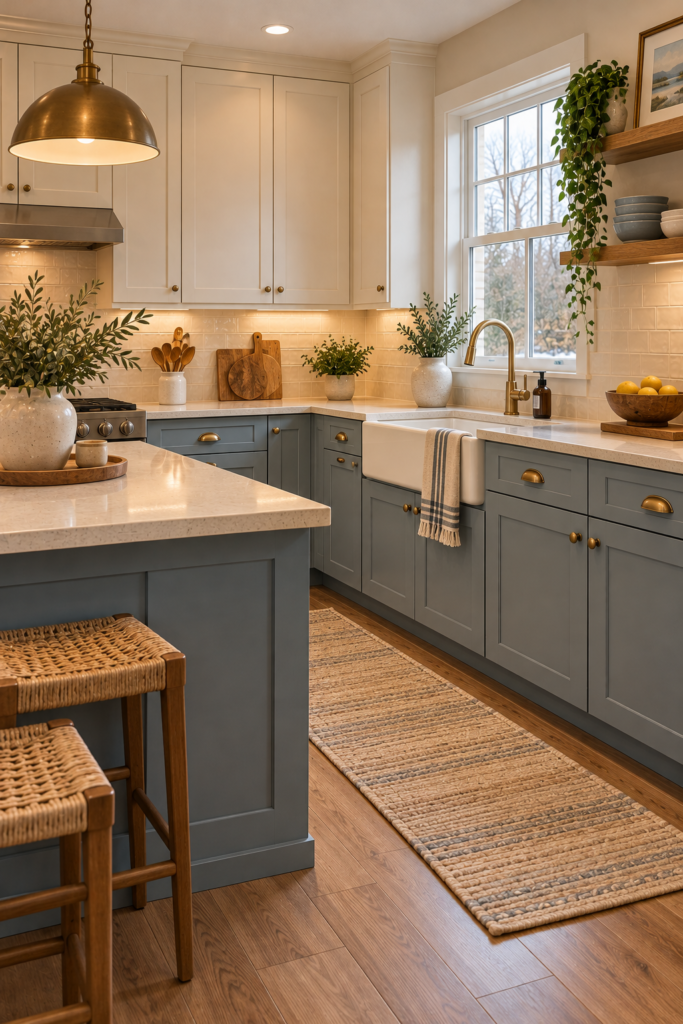
2. Add Dusty Blue Lower Cabinets
Dusty blue lower cabinets introduce coastal color while keeping the upper half of the kitchen visually light. Pair them with cream upper cabinets, warm wood flooring, and simple hardware for a balanced result.
Look for a muted blue-gray rather than an intensely saturated blue. A softer shade is easier to combine with natural wood and neutral surfaces, particularly in a compact kitchen.
Compare paint samples in daylight and under evening lighting before making a decision. The same blue can appear noticeably different depending on the surrounding finishes.
If you are painting existing cabinets, prepare the surfaces according to the coating manufacturer’s instructions and choose a finish suited to frequent handling and cleaning.
Keep the backsplash relatively quiet so the cabinet color remains the main feature.
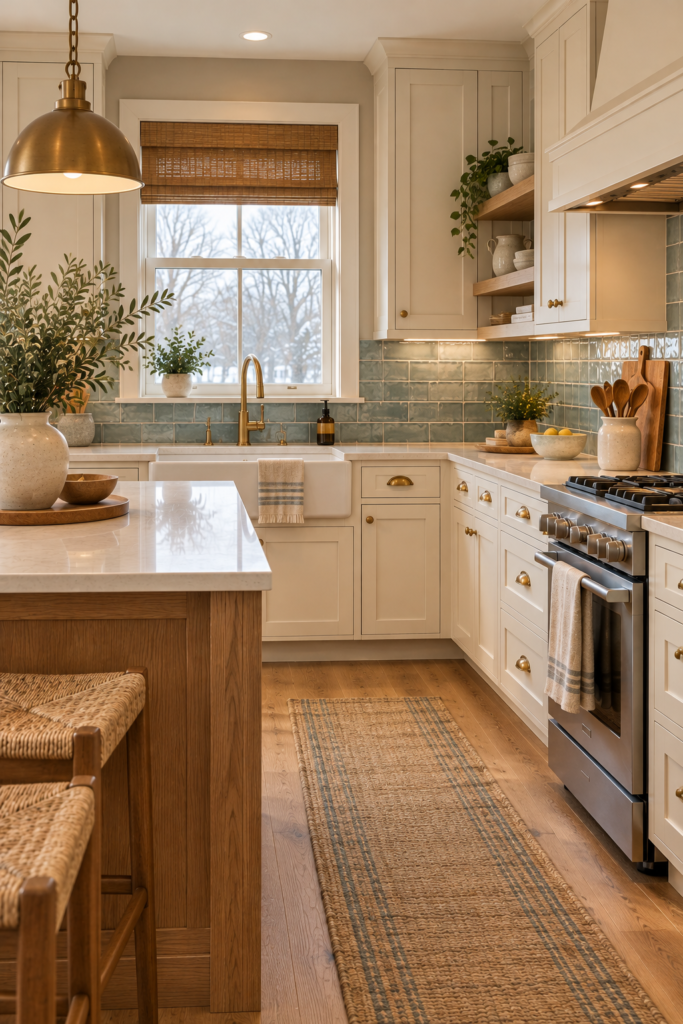
3. Use Soft Blue Backsplash Tile
A soft blue backsplash introduces color in a contained area without requiring a full kitchen redesign.
Choose dusty blue or blue-green ceramic tile with subtle glaze variation. Paired with cream cabinetry and natural wood, it creates a coastal feeling without relying on literal seaside decorations.
Simple rectangular tiles work well in many kitchens, while smaller formats can introduce additional detail. Consider the scale of the backsplash and the surrounding cabinet fronts before selecting a pattern.
Grout color also affects the result. A close match creates a more continuous surface, while contrasting grout emphasizes the tile layout.
Check that the tile is suitable for the intended location and consider cleaning requirements around the sink and cooking area.
4. Bring in Natural Wood
Natural wood keeps a coastal kitchen from feeling cold or overly polished. Medium oak and walnut work particularly well alongside cream cabinetry, dusty blue, and soft green.
Introduce wood through flooring, stools, shelves, or an island rather than trying to match every surface exactly. Related wood tones can create continuity while allowing individual pieces to retain their character.
Choose finishes that complement the room’s existing colors. Strong orange undertones may clash with cooler blue-gray cabinets, while a more neutral brown can be easier to coordinate.
If you’re adding open shelving, consider both the appearance and the storage requirements. A small, securely supported section can provide the warmth of wood without sacrificing all your upper cabinetry.
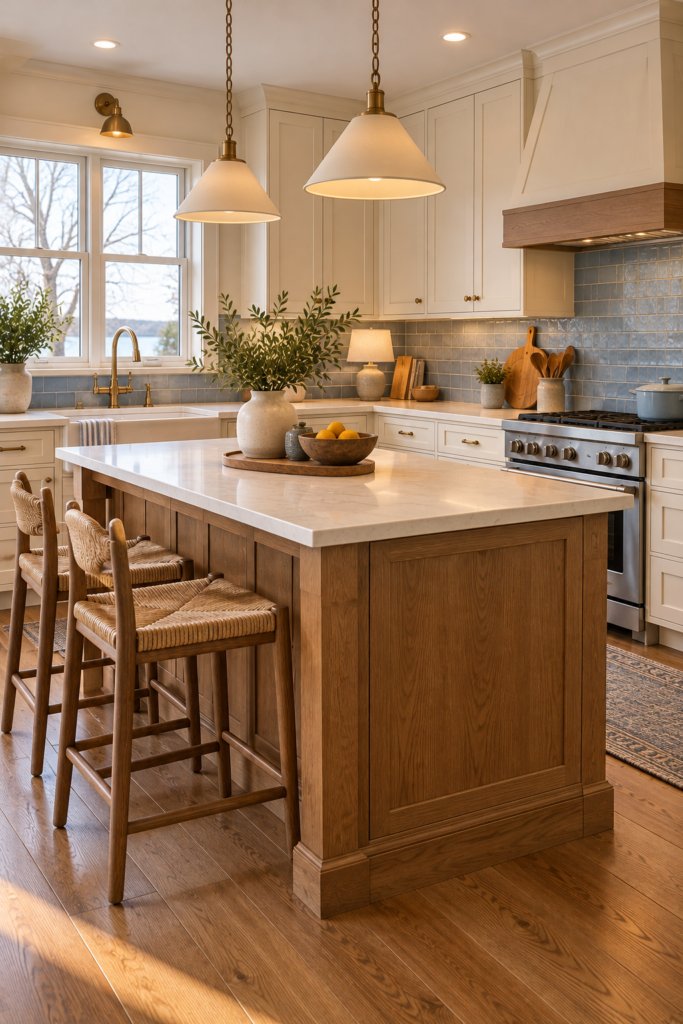
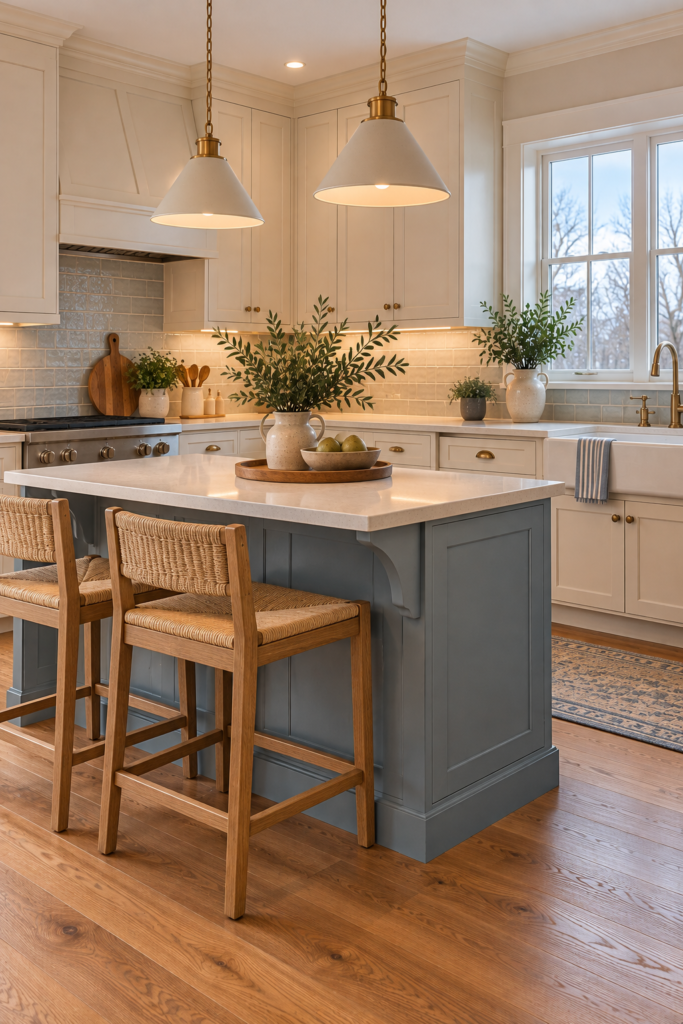
5. Add Woven Counter Stools
Woven counter stools bring texture into a coastal kitchen without adding more color or pattern.
Choose sturdy seating with a natural woven seat or back, then pair it with a wood island or peninsula. Cream upholstery and understated hardware can help connect the stools to the rest of the room.
Measure the counter height and available legroom before buying. Make sure the stools can be moved comfortably without blocking cabinets, appliance doors, or the main walking route.
Consider how the woven material will hold up to spills and everyday use. A suitable finish and straightforward construction can make maintenance easier.
A few well-chosen stools can introduce a relaxed, natural look without requiring overt beach-themed decoration.
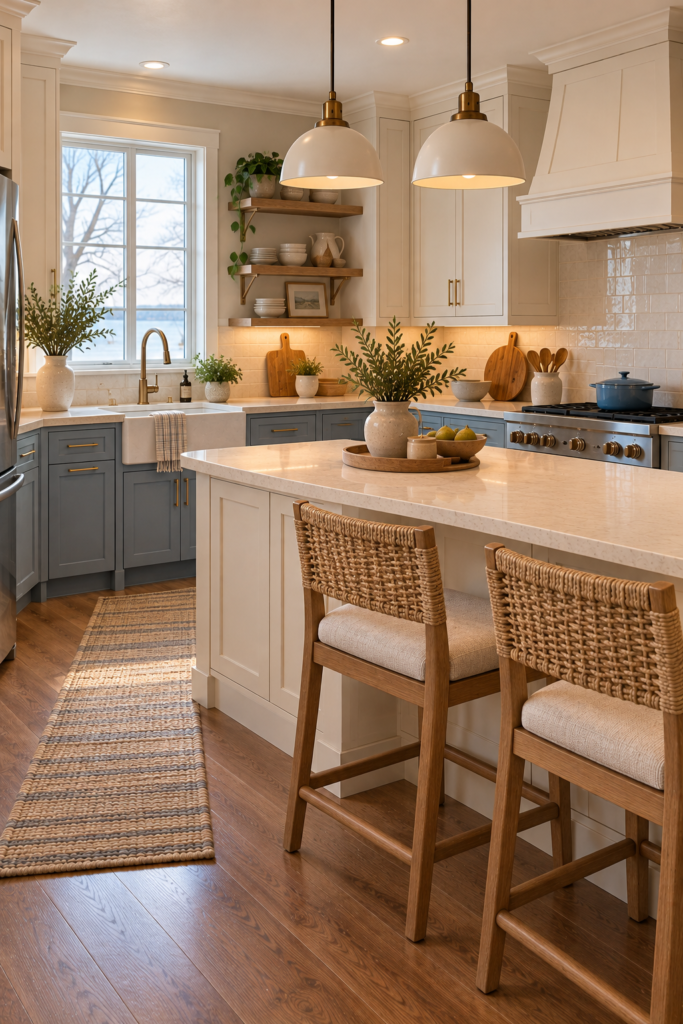
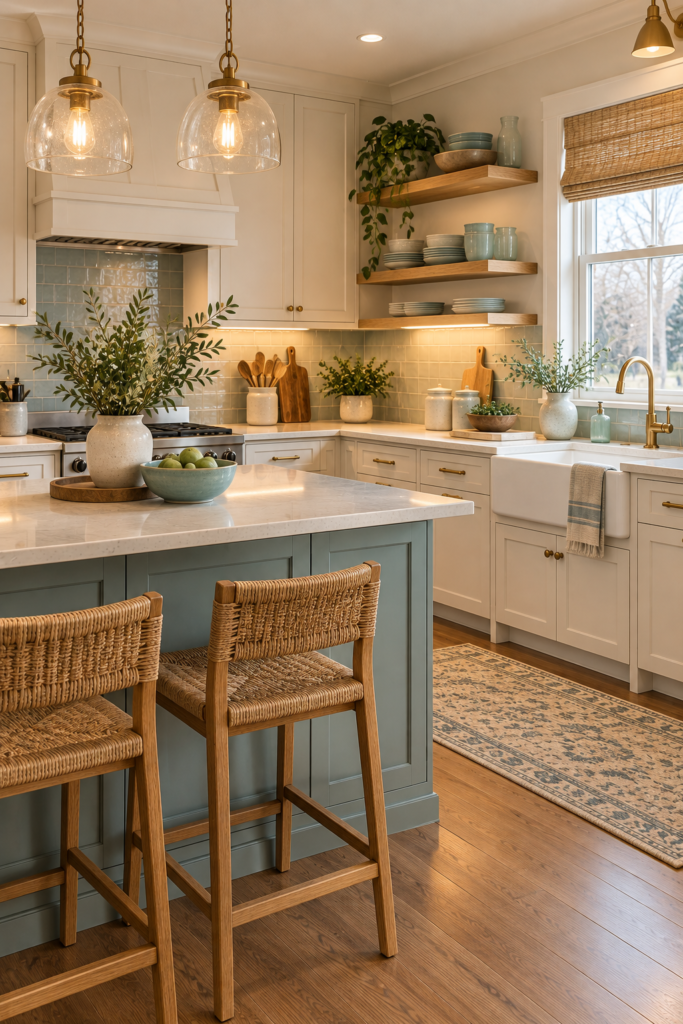
6. Use Light Wood Open Shelves
Light wood open shelves can make a small coastal kitchen feel less visually crowded, especially when they replace only a limited section of upper cabinetry.
Use them to display everyday cream dishes, clear glasses, or a few simple ceramics. Keeping the arrangement restrained allows the wood grain to remain visible.
Before installation, confirm the wall construction and use suitable supports and fixings for the intended load. Store heavier dishes on lower shelves and avoid positioning fragile objects near the edge.
Open shelves also require regular cleaning, particularly near cooking areas where grease and dust can accumulate.
If you prefer concealed storage, retain most of the upper cabinets and introduce just one section of shelving. This provides the desired texture without sacrificing practical storage.
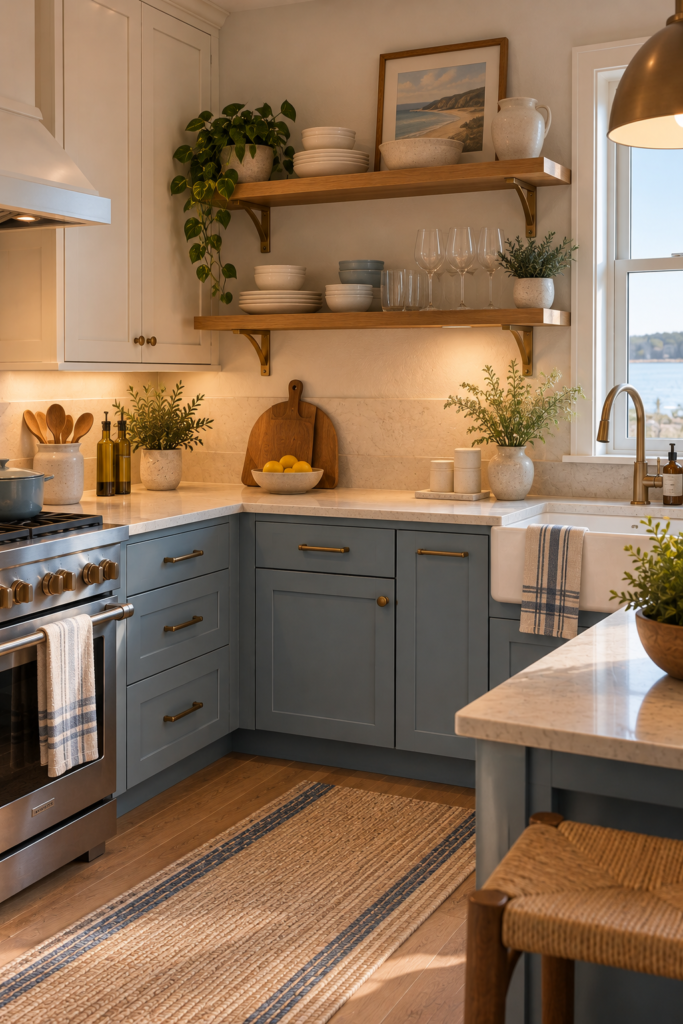
7. Add a Coastal Breakfast Nook
A compact breakfast nook can make a coastal kitchen feel more relaxed and inviting.
Consider a round wood table, cream upholstery, and dusty-blue cushions. A simple pendant can help define the dining area while coordinating with the kitchen’s broader palette.
Choose furniture that fits the available space. A round table can work well in a corner, while a built-in bench may be useful along a narrow wall.
Check the space needed to pull out chairs and move between the table and nearby work areas. Decorative furniture should not interfere with the kitchen’s everyday circulation.
Keep the styling simple, using natural materials and a small number of related colors rather than filling the nook with themed accessories.
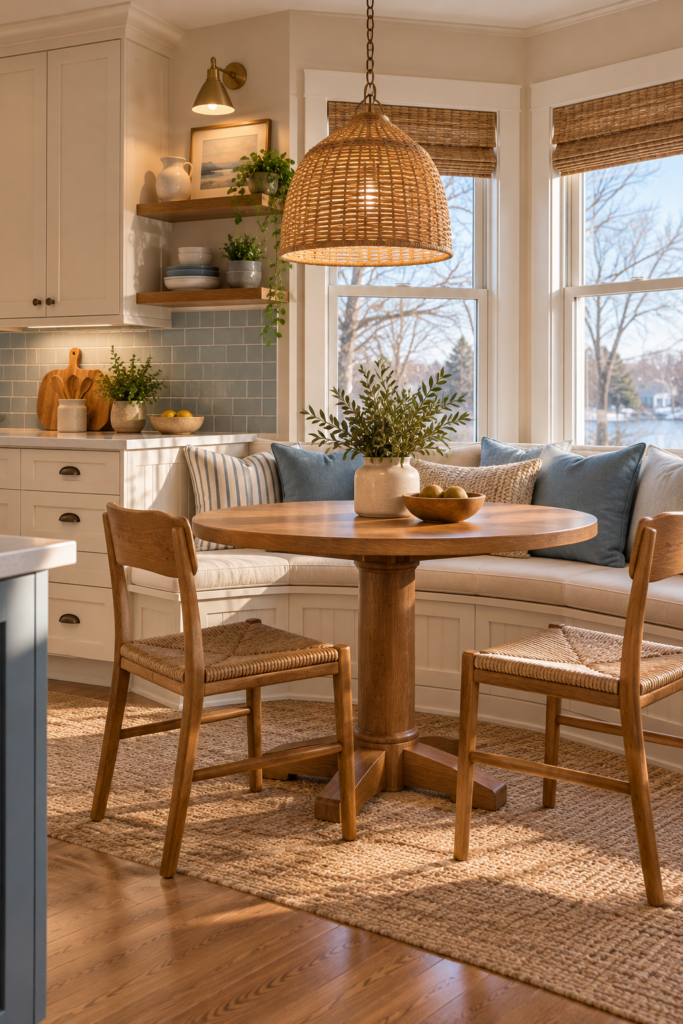
8. Use a Soft Blue Island
A dusty-blue island can become the focal point of a coastal kitchen while the perimeter cabinets remain cream or another light neutral.
Pair the island with a warm countertop and medium-oak stools to balance the cooler blue. Simple cabinet fronts and understated hardware help keep the arrangement timeless.
Before repainting or replacing an island, consider the surrounding finishes and available light. A muted blue can look calm in a bright kitchen but more pronounced in a dimmer room.
If space is limited, a compact island or appropriately sized freestanding worktable may provide a similar visual effect without restricting movement.
Keep enough clear space around the island to open nearby cabinets and appliances comfortably.
9. Add Subtle Stripes
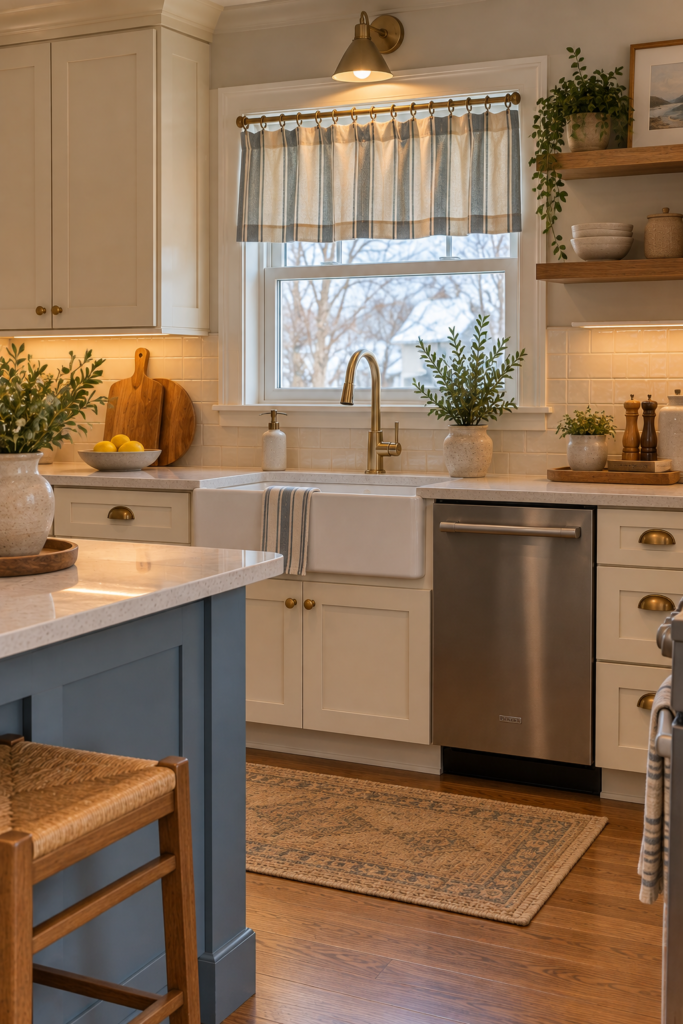
Stripes introduce a classic coastal pattern without requiring a major change to the kitchen.
Try a cream-and-dusty-blue café curtain, striped seat cushions, or a simple textile accent. Fine stripes can feel understated, while wider stripes create a stronger decorative statement.
Choose just one prominent striped element if the kitchen already contains patterned tile or visible wood grain. Too many competing patterns can make a compact room feel busy.
For window treatments, choose washable fabric and keep it clear of cooking heat and areas exposed to repeated splashes.
If you prefer not to add curtains, striped cushions in a breakfast nook can introduce the same general pattern while keeping the window unobstructed.
10. Add Sea-Glass Colors
Sea-glass-inspired colors offer a softer alternative to bright blue. Muted aqua, smoky blue, pale green, and clear glass can introduce coastal character without making the kitchen feel themed.
Use these colors through ceramics, glassware, or a small backsplash area. Pair them with warm cream and natural wood to prevent the palette from becoming too cool.
Choose a dominant neutral first, then introduce one or two related accents. Using every sea-glass shade across equally large surfaces can make the room feel less cohesive.
If the kitchen already has blue cabinets, consider using clear glass and muted green accessories rather than adding another strong blue element.
The result should suggest the colors of the coast through materials and subtle variation.
11. Use Natural Linen-Look Curtains
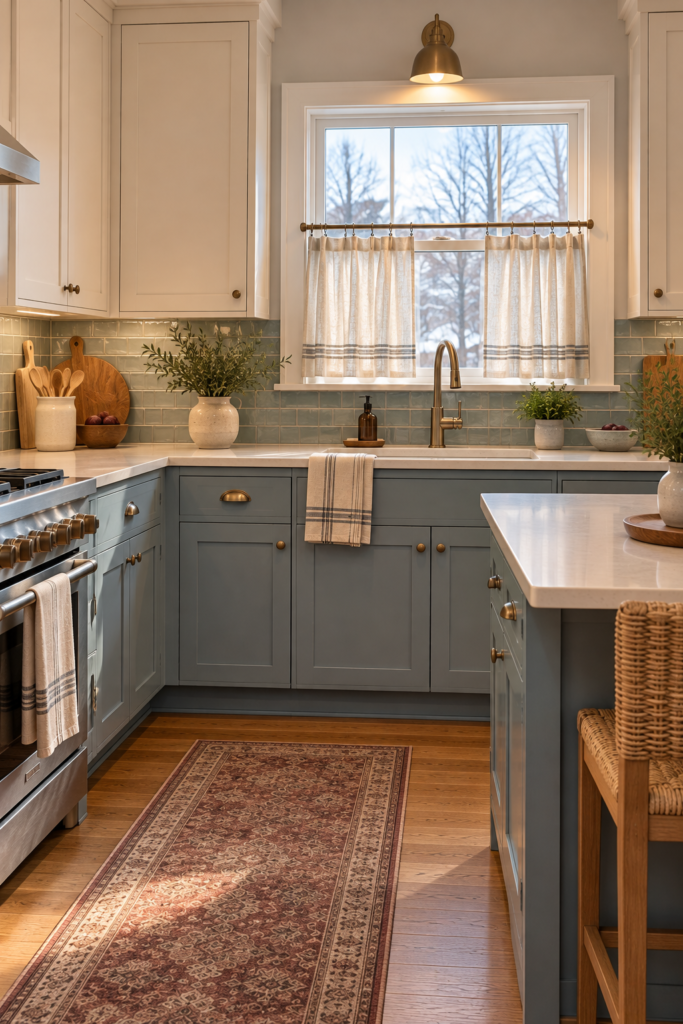
Linen-look curtains soften a kitchen window while preserving the relaxed feeling of coastal style.
Choose warm cream or natural flax for a neutral look that works with blue cabinetry, wood trim, and pale countertops. A simple café curtain can provide lower-window privacy while allowing daylight to enter from above.
Measure the window and check the position of the faucet before selecting the length. Fabric should not brush against the sink, collect water, or interfere with window hardware.
Choose washable or otherwise easy-to-maintain fabric, particularly in a busy kitchen.
For windows near a cooktop, a non-fabric treatment may be more appropriate. Keep all curtains clear of significant heat sources and ensure the window remains easy to operate.
12. Create a Coastal Coffee Station
A dedicated coffee station can bring coastal colors and materials into a small area without changing the whole kitchen.
Combine cream cabinetry, a dusty-blue backsplash, and a securely supported oak shelf. Store mugs on the shelf and keep the coffee maker on a stable, dry countertop.
A small sea-glass-colored ceramic piece can introduce an accent without cluttering the work surface.
Before installing a shelf, check the wall construction and select suitable supports for the weight of the mugs and other stored items. Keep objects away from the edge and leave enough clearance for the appliance below.
Follow the coffee maker’s instructions for ventilation, steam clearance, and electrical use. Route cords safely and keep them away from water.
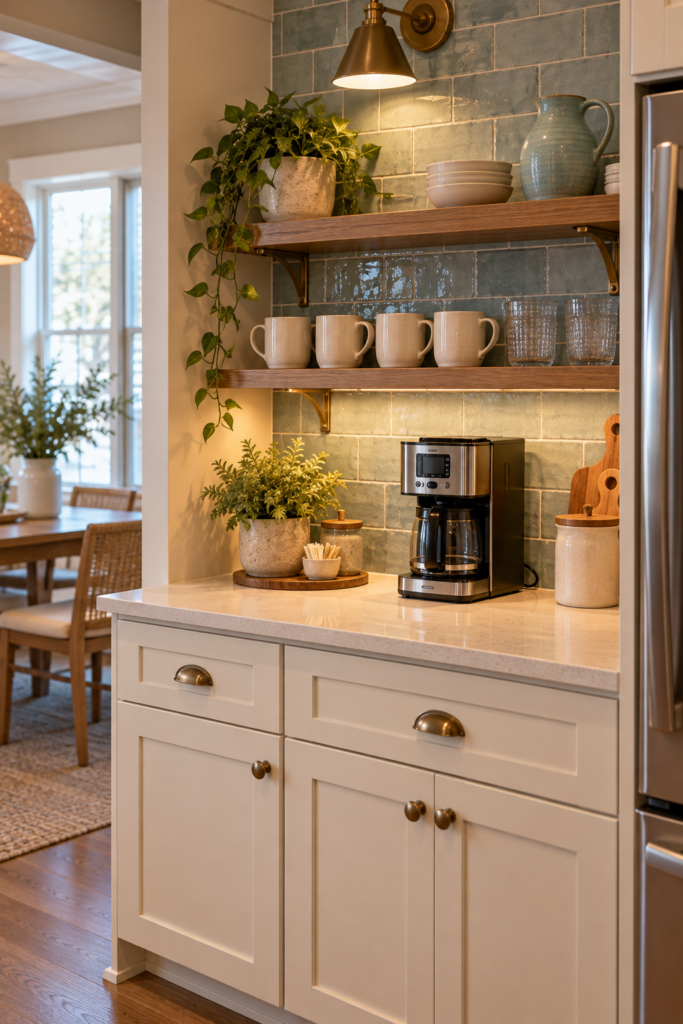
13. Create a Small Coastal Kitchen
Coastal style can work particularly well in a compact kitchen because its light colors and natural materials help create a visually calm environment.
Consider cream upper cabinets, dusty-blue lower cabinets, light counters, and medium-oak flooring. Keep decorative objects limited so the room retains a sense of openness.
Choose storage according to the actual layout rather than adding an island simply because it appears in coastal kitchen photographs. A compact table or a few carefully planned shelves may be more useful.
Use appropriate task lighting over preparation areas and maintain clear access to appliances, cabinets, and windows.
For more inspiration, explore these kitchen shelves decor ideas for beautiful open storage.
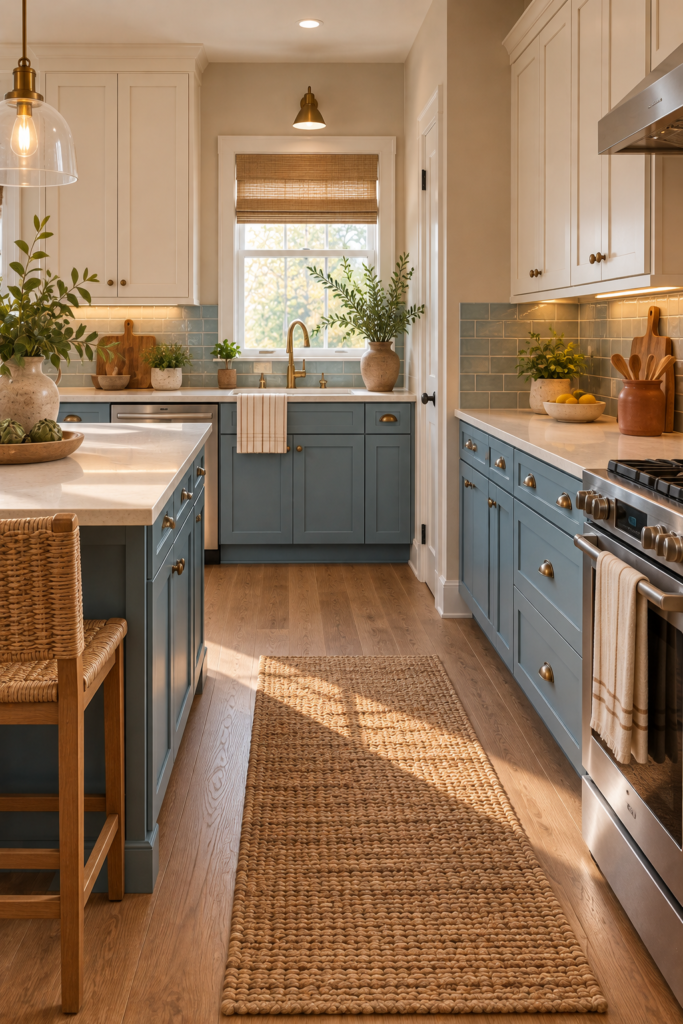
14. Try Coastal Style With Darker Blue
Coastal kitchens don’t have to rely entirely on pale colors. A muted navy island or darker blue lower cabinets can create depth while still working with natural materials.
Balance the deeper blue with cream walls, warm wood, and lighter countertops. This combination feels more grounded than a room where every surface is equally pale.
Consider the amount of daylight the kitchen receives before choosing a dark finish. In a smaller or dimmer room, using navy on the island or one section of cabinetry may provide enough contrast.
Keep accessories relatively simple and choose lighting that illuminates the work surfaces clearly.
The aim is a sophisticated coastal palette, not a collection of nautical decorations.
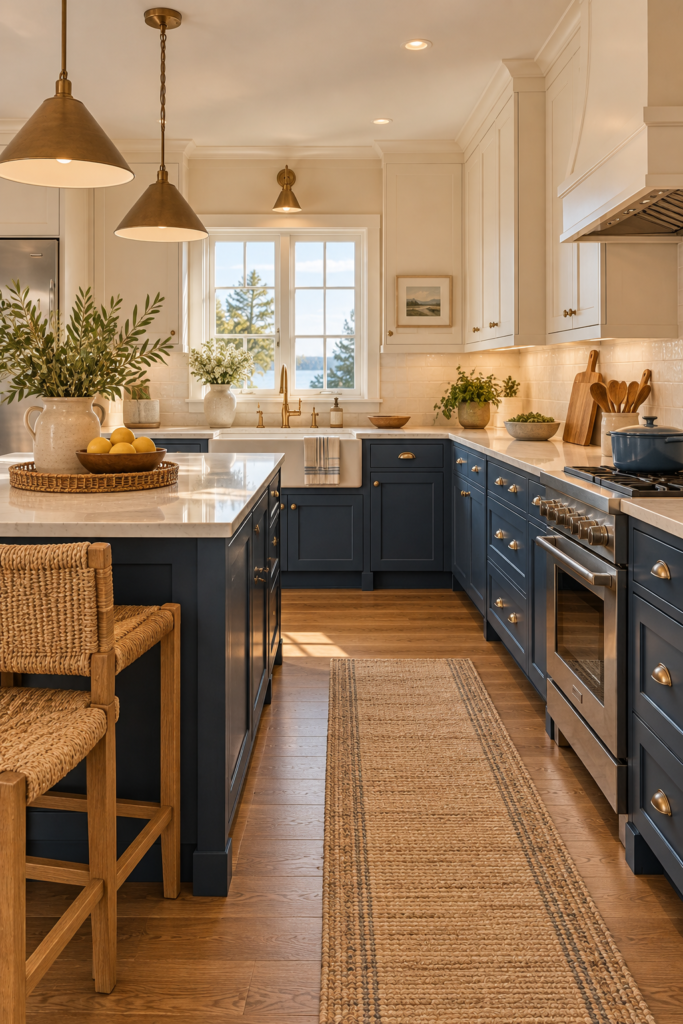
15. Add a Natural Fiber Runner
A low-profile runner with a natural woven appearance can introduce texture without adding another strong color.
Warm beige and mushroom tones work well with oak flooring, cream cabinetry, and dusty-blue accents.
Choose a runner designed for kitchen use, with suitable care instructions and a stable, nonslip backing or appropriate underlay. It should lie flat and remain clear of appliance doors and the main walking route.
Before buying, consider the floor surface and how frequently the kitchen is cleaned. A material that looks attractive but is difficult to maintain may not suit a busy cooking area.
The runner should complement the room rather than become its main feature.
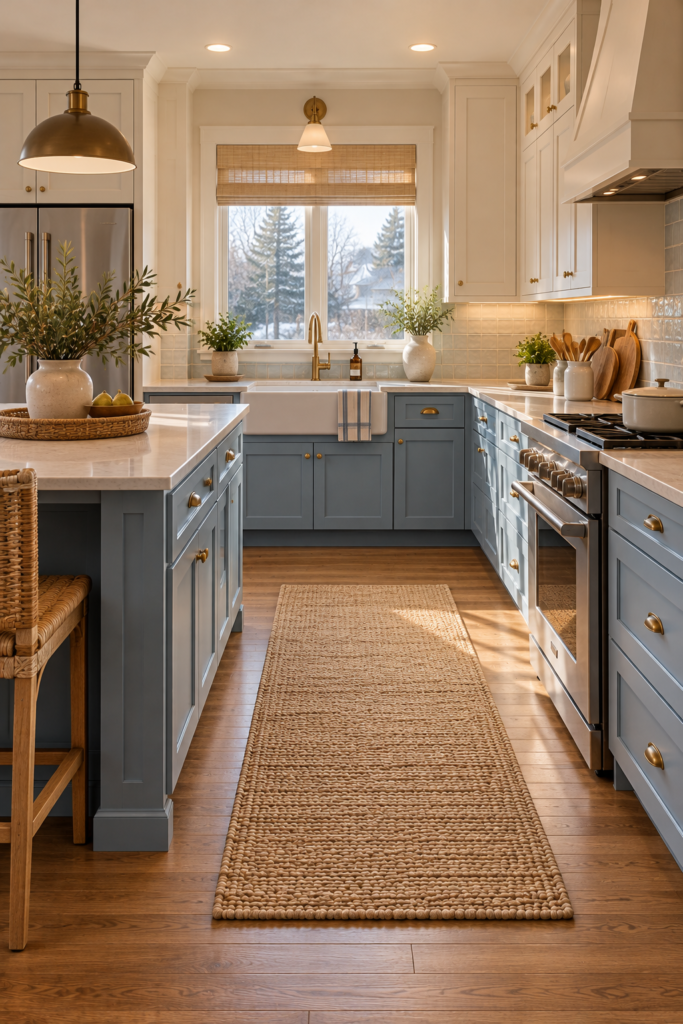
16. Keep Coastal Decor Subtle
The most convincing coastal kitchens use materials and colors rather than obvious seaside symbols.
Natural wood, woven textures, blue ceramics, cream textiles, clear glass, and greenery can establish the look without requiring anchors, fishing nets, or decorative signs.
Choose a few elements that relate to one another. For example, woven stools can complement a wood island, while blue ceramics connect to a muted backsplash.
Leave the countertops relatively clear and keep decorative items away from cooking heat and water splashes.
This approach is especially useful if you want the kitchen to remain timeless as your tastes change.
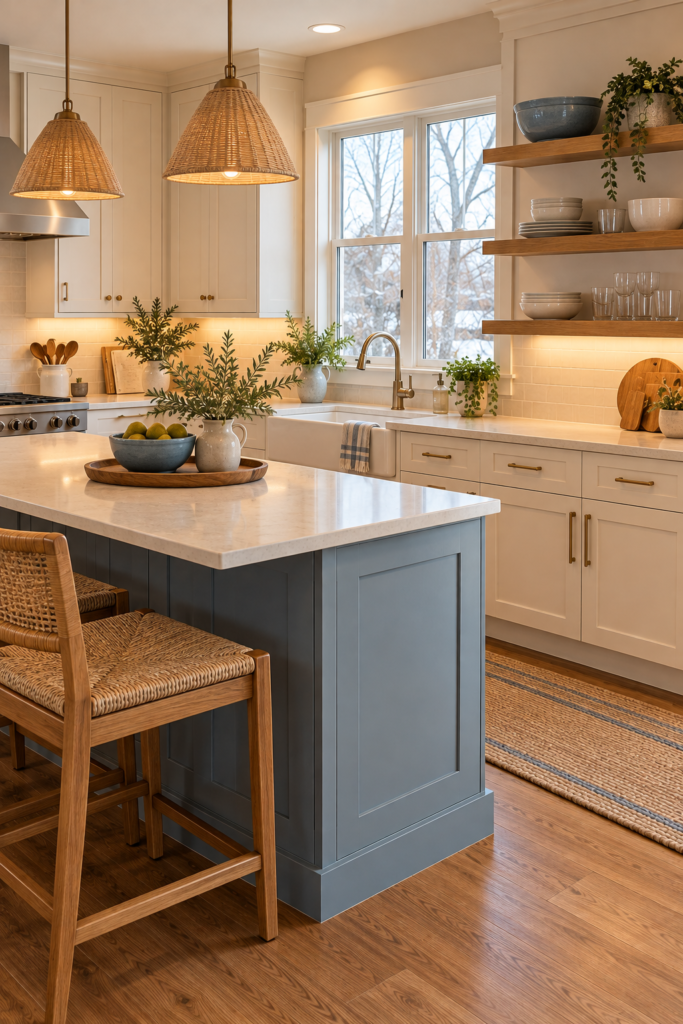
17. Layer the Full Coastal Palette
A layered coastal palette brings warm cream, dusty blue, medium oak, woven texture, clear glass, and a little muted green into one coordinated design.
Start with the largest surfaces, such as cabinetry, counters, walls, and flooring. Then introduce smaller accents through stools, curtains, ceramics, and lighting.
Choose one dominant wood finish and a clear main color. The remaining elements should support those choices rather than compete for attention.
Use daylight where available and add suitable warm artificial lighting for evening cooking and dining. Keep the work surfaces clear enough for everyday preparation.
The finished kitchen should feel relaxed because its materials and colors work together, not because every possible coastal detail has been included.
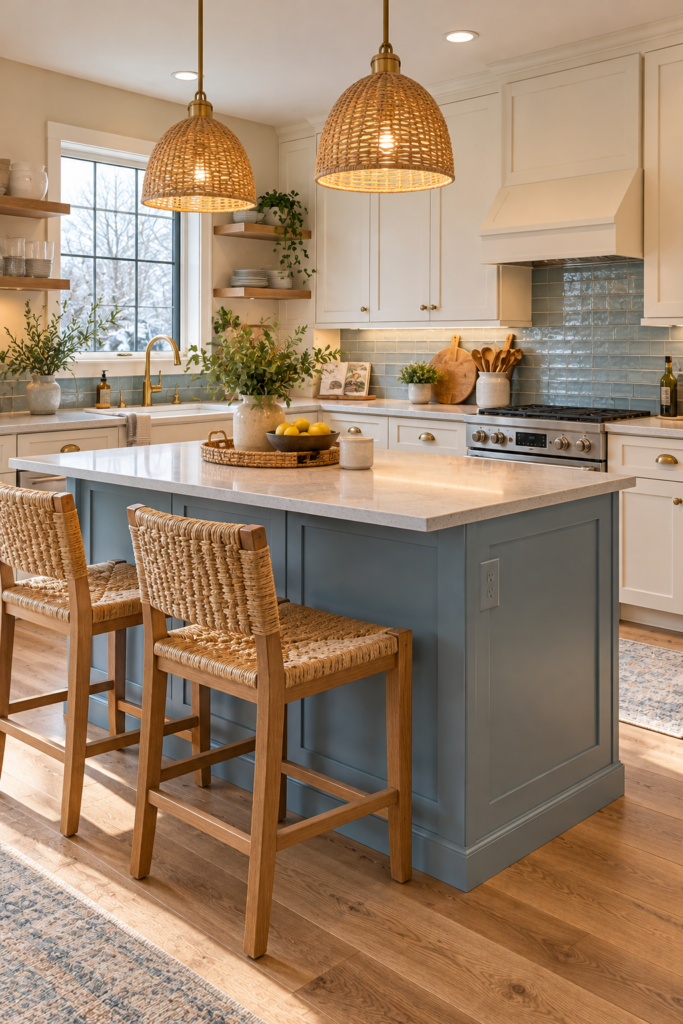
What Colors Work Best in a Coastal Kitchen?
Warm cream provides a versatile foundation for coastal design. Dusty blue, muted aqua, soft green, medium oak, warm beige, and restrained navy can add depth and contrast.
Avoid relying exclusively on bright white and saturated blue. Natural wood and softer neutral shades help the room feel warmer and more inviting.
Compare paint, tile, and wood samples together in the kitchen’s actual lighting. Compatible undertones matter more than finding an exact match for every finish.
Coastal Kitchen Ideas Without Nautical Decor
Focus on natural materials, restrained patterns, and a coordinated palette.
Woven stools, wood cabinetry, soft blue tile, cream cabinets, linen-look curtains, clear glass, and subtle greenery can all contribute to the look.
Choose only the elements that suit your kitchen. A room can feel coastal without containing a single boat or seashell.
Coastal Kitchen Ideas for Small Spaces
Keep upper cabinetry light and use blue on lower cabinets or a compact island. Preserve available daylight, choose furniture that fits the layout, and keep counters clear.
Open shelving can help a small kitchen feel lighter, but it works best when introduced selectively. Retain enough closed storage for items you don’t want on display.
Task lighting and clear walkways are essential, regardless of the decorating style.
Coastal Kitchen Safety and Practicality
Keep woven materials and textiles away from significant cooking heat. Secure shelves and lighting fixtures with supports appropriate for the wall or ceiling construction and intended load.
Maintain clear appliance ventilation and door swings, and choose kitchen runners that lie flat without obstructing walkways.
Keep window treatments away from sinks, cooking heat, and window hardware. Maintain access to outlets, switches, vents, windows, doors, and safety equipment.
Electrical, plumbing, gas, structural, and ventilation work should be assessed and completed by appropriately qualified professionals.
Final Thoughts
The best coastal kitchen design ideas rely on a balance of light colors, natural wood, soft blue, and tactile materials rather than beach souvenirs.
Start with a calm foundation, add a few coastal accents, and keep the layout practical. Whether you choose a dusty-blue island, woven stools, open shelving, or a natural fiber runner, let each detail support the overall design.
A coastal kitchen should feel bright, natural, relaxed, and comfortable to use every day.
