
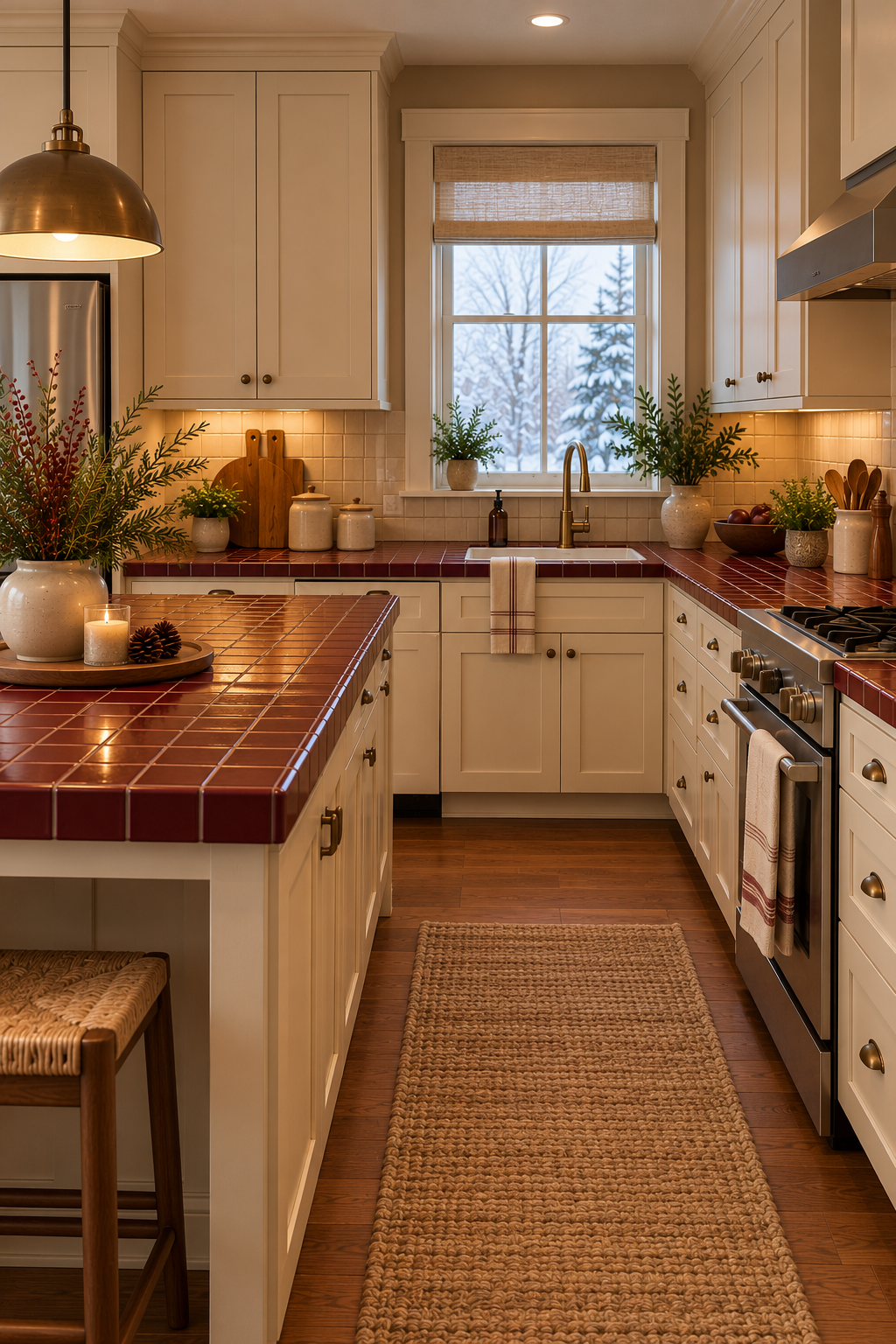
14 Tile Countertops Kitchen Ideas Worth Bringing Back
Tile countertops are making a compelling case for a second look. They offer color, texture, and visible craftsmanship in a way that feels different from the large, uninterrupted stone surfaces found in many modern kitchens.
Of course, tiled counters come with grout joints and maintenance requirements. The key is choosing suitable materials, planning the edges carefully, and understanding how the surface will perform during everyday cooking and cleanup.
The right combination can feel vintage, cottage-inspired, Mediterranean, or surprisingly contemporary. Warm neutrals create a timeless foundation, while terracotta, olive, burgundy, and dusty blue bring more personality to the kitchen.
These 14 tile countertops kitchen ideas worth bringing back explore different colors, tile formats, and styling approaches, along with practical considerations for choosing and maintaining a tiled work surface.
1. Use Warm Cream Square Tile
Warm cream square tile creates a classic countertop with a subtle vintage character. Its simple grid works well with muted olive cabinetry, walnut flooring, and traditional cabinet fronts.
Choose tile specifically suitable for countertop use rather than assuming that every decorative wall tile will withstand the demands of a work surface. The finished counter needs to tolerate routine cleaning, food spills, and the conditions around the sink and cooking area.
Grout color also influences the appearance. A shade close to the tile creates a quieter surface, while a slightly darker neutral emphasizes the square pattern.
Before installation, consider the countertop edges and the transitions around the sink. These details affect both the finished appearance and the ease of cleaning.
Pair the cream tile with restrained accessories and let the material provide most of the visual interest. The result feels traditional without requiring the entire kitchen to follow a particular period style.
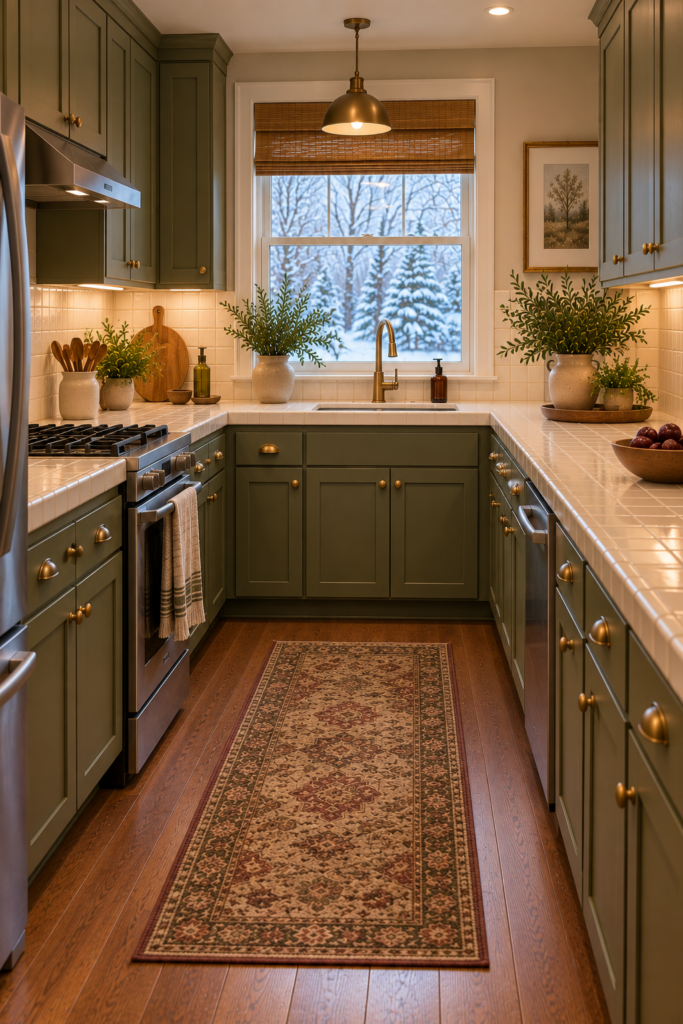
2. Try Soft White Tile With Mushroom Grout
White tile paired with mushroom-colored grout offers a softer alternative to a stark white grid.
The subtle contrast makes the tile layout visible while introducing a warm neutral that complements walnut cabinetry, cream walls, and natural wood flooring.
Choose a grout product appropriate for the tile and countertop application. Its color is only one consideration; resistance to staining, cleaning requirements, and compatibility with the installation system also matter.
Tile size affects the overall look. Smaller tiles create more joints, while larger formats can produce a calmer surface with fewer grout lines.
This combination works especially well when you want a light countertop that still has texture and definition. It can suit both traditional kitchens and more contemporary spaces with simple cabinet fronts.
Keep the surrounding finishes understated so the relationship between the white tile and mushroom grout remains the main detail.

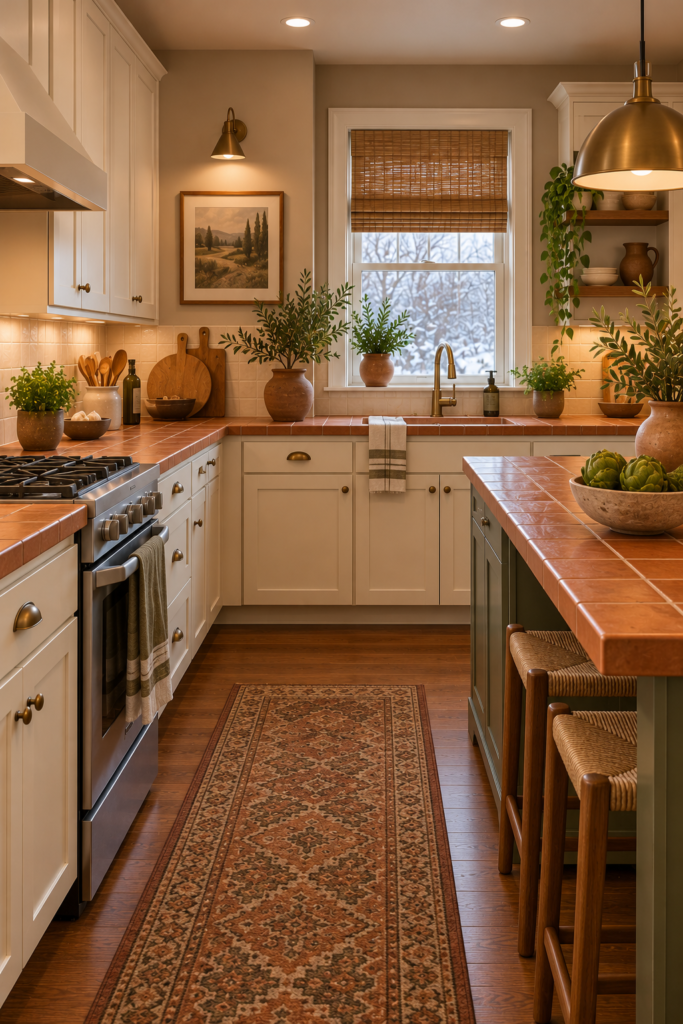
3. Add Terracotta-Look Tile
Terracotta-look tile brings a warm, earthy character to a kitchen countertop. Its reddish-brown tones complement cream cabinetry, muted olive accents, and natural wood.
This palette works particularly well in Mediterranean-inspired kitchens, where the emphasis is on warm materials and simple, grounded colors.
Consider the exact shade before choosing the tile. Some terracotta finishes appear more orange, while others lean toward brown or dusty red. Compare samples with the cabinetry and flooring to avoid an unexpected clash.
The surface texture also deserves attention. A heavily irregular finish may be attractive, but a countertop needs to provide a practical area for preparing food and cleaning up afterward.
Choose a product suitable for the intended use and confirm the manufacturer’s care recommendations. If the desired look is very rustic, a textured backsplash or floor may be a more practical place for a less uniform tile.
Keep the countertop styling simple. Terracotta already supplies substantial color and visual warmth.
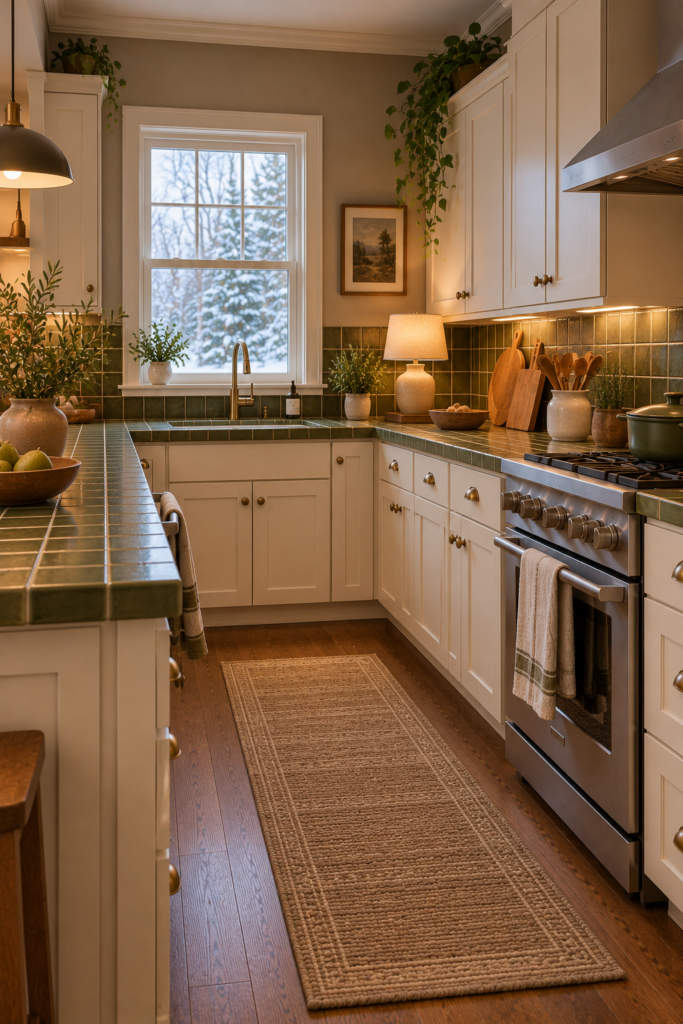
4. Use Muted Olive Tile
Muted olive tile creates an earthy countertop that feels distinctive without being overly bright.
Pair it with warm cream cabinetry, walnut accents, and mushroom or beige walls. These finishes allow the green to become the main color feature while keeping the overall palette grounded.
Olive varies considerably from one product to another. Some shades lean yellow, while others have gray or brown undertones. Compare tile samples with the wood and cabinet finishes under the kitchen’s actual lighting.
Choose grout that complements the tile rather than automatically selecting a strong contrast. A coordinated shade can create a more continuous surface, while contrasting grout makes the pattern more prominent.
This look works well in cottage-inspired kitchens, particularly when the cabinetry has simple recessed panels and the surrounding decoration remains restrained.
For more inspiration using earthy wood tones and natural materials, explore these Craftsman kitchen ideas full of warm wood and character.
5. Try Deep Burgundy Tile
Deep burgundy tile creates a bold countertop with a rich, vintage-inspired appearance.
Cream cabinetry provides a light background, while walnut accents introduce warmth and keep the burgundy from feeling disconnected from the rest of the kitchen.
Consider the amount of color already present in the room. If the backsplash or flooring is patterned, a relatively simple burgundy tile may be enough. A busy tile pattern combined with several strong colors can make the space feel crowded.
Look carefully at the tile’s finish and undertone. Some burgundy shades lean toward plum, while others appear closer to brown-red. Compare the options with your cabinetry before choosing.
The countertop should remain functional as well as decorative. Check the tile’s suitability for the intended application and consider how easily its surface and grout can be cleaned.
Keep hardware and accessories relatively understated. The deep tile can serve as the focal point without needing additional decorative elements competing for attention.
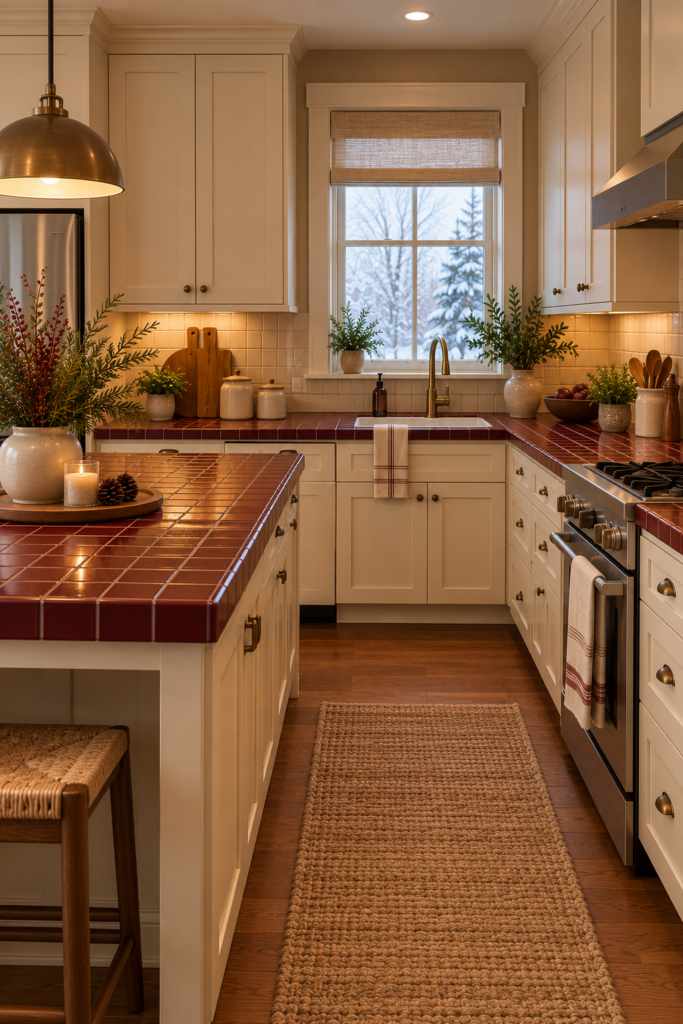
6. Add Dusty Blue Tile
Dusty blue tile gives a tiled countertop a relaxed, slightly coastal character without relying on bright turquoise or obvious nautical motifs.
Pair the surface with warm cream cabinetry, medium oak or walnut, and restrained aged-brass-style hardware. The wood adds warmth, while the softer blue creates contrast.
Compare blue samples in both natural and artificial lighting. Some shades appear gray and subdued, while others lean green or more saturated than expected.
The tile format matters, too. A simple square or rectangular tile keeps the color in focus, while a more elaborate pattern adds another layer of visual interest.
Consider how the countertop relates to the backsplash. The two surfaces can share a color family without using identical tile. A cream backsplash, for example, can help a dusty-blue countertop stand out.
For another approach to combining pale colors and natural materials, see these coastal kitchen design ideas for a light and relaxed space.
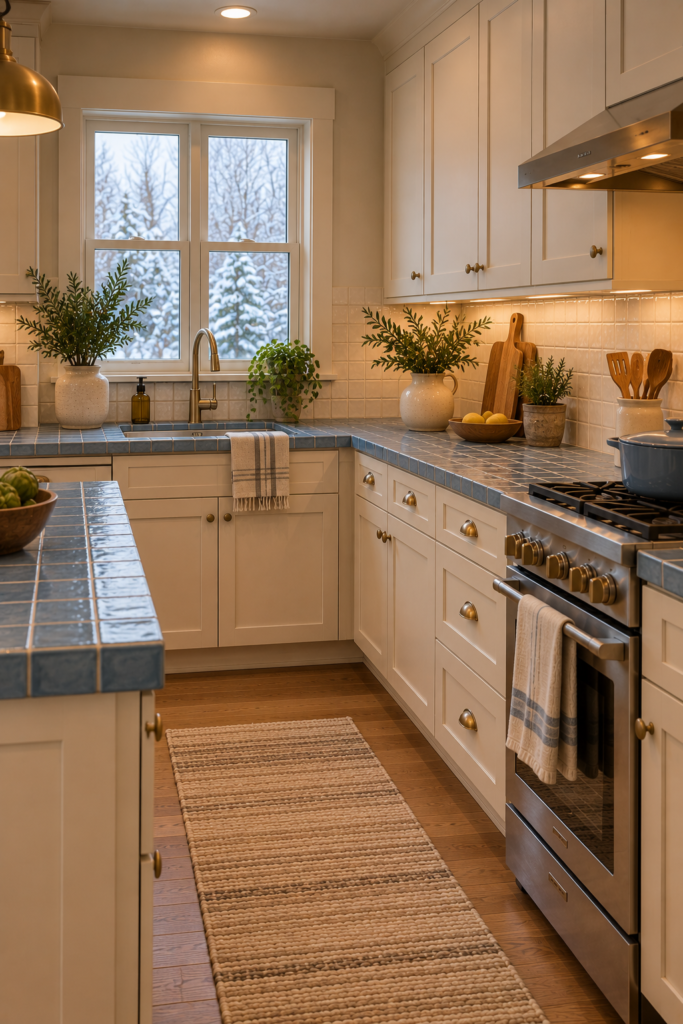
7. Use Tile on the Island Only
If you’re unsure about a fully tiled kitchen, using tile on the island alone can introduce the material in a more limited area.
Keep the perimeter countertops in a simpler solid surface and let the island provide the decorative focal point. Warm cream, muted olive, and dusty blue are all possible choices, depending on the cabinetry and flooring.
Before proceeding, check that the selected tile, substrate, edge treatment, and supporting structure are suitable for the island’s intended use. A countertop assembly needs to accommodate its own weight and the demands of everyday activity.
Plan the island’s edges carefully, especially if seating is included. Any overhang must have suitable support, and stools should not obstruct the kitchen’s main walking routes.
This approach provides a way to introduce the character of tile without using the same material across every work surface.
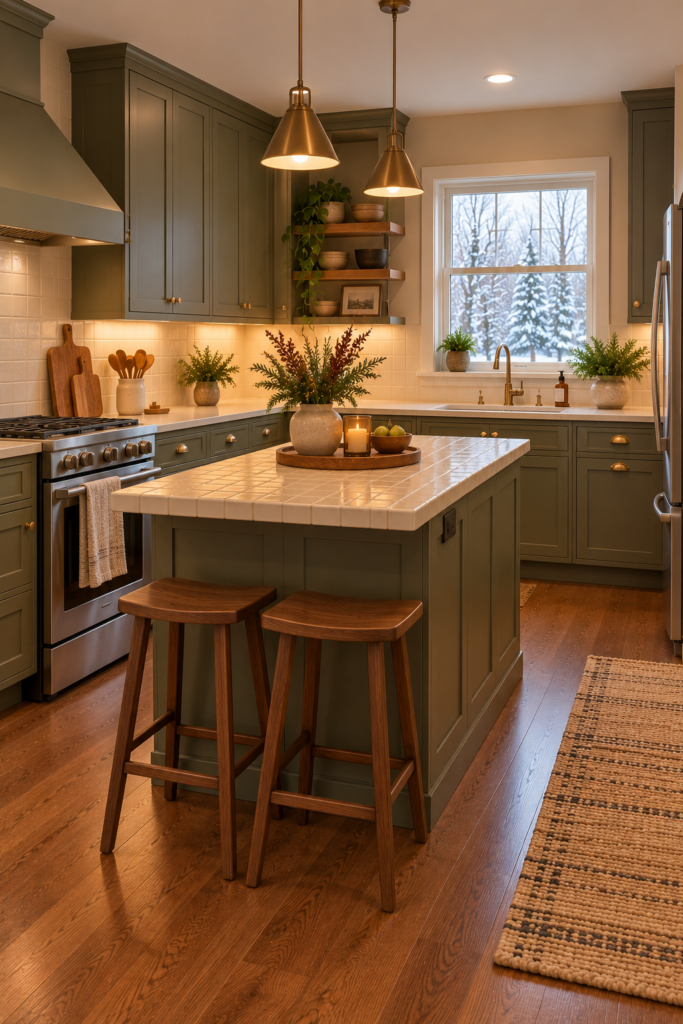
8. Try Larger-Format Tile
Larger-format tile creates a more continuous countertop appearance because it generally requires fewer grout joints than small-format tile.
Warm cream, mushroom, and other restrained neutrals work particularly well with flat-panel walnut cabinetry and simple hardware.
However, tile size alone doesn’t guarantee a suitable countertop. The selected product must be rated for the intended application, and the installation needs an appropriate substrate and support system.
Consider the layout before purchasing. Tile dimensions affect how cuts fall around the sink, corners, and exposed edges. Planning the layout in advance can help avoid awkward slivers and inconsistent transitions.
Grout color also matters. A coordinated shade emphasizes the broader surface, while a contrasting grout creates a more noticeable grid.
This is a useful option if you want to retain the tiled-countertop look while giving it a cleaner, more contemporary appearance.
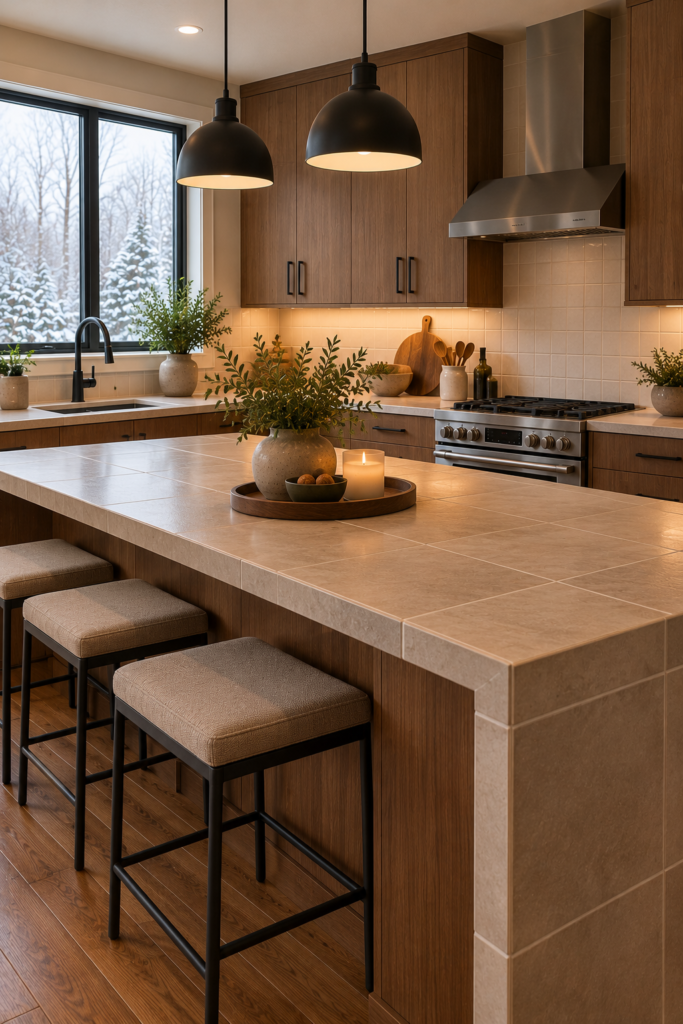
9. Use Handmade-Look Tile Carefully
Handmade-look tile introduces subtle variations in color, glaze, and surface texture. Those differences can bring character to a kitchen without requiring a bold color scheme.
Warm cream, dusty blue, and muted olive are useful choices when paired with natural wood and understated cabinetry.
A countertop, however, is a working surface rather than a purely decorative backdrop. Very irregular edges or uneven surfaces may make food preparation, cleaning, and placing cookware more difficult.
Check the tile’s suitability for countertop use and consider how its texture will affect everyday tasks. Samples can help you assess the surface, although the finished installation must still follow the manufacturer’s requirements.
If you love a particularly irregular handmade appearance, consider reserving that tile for the backsplash and choosing a more even surface for the counter.
The aim is to retain the visual character of handcrafted materials while keeping the kitchen practical.
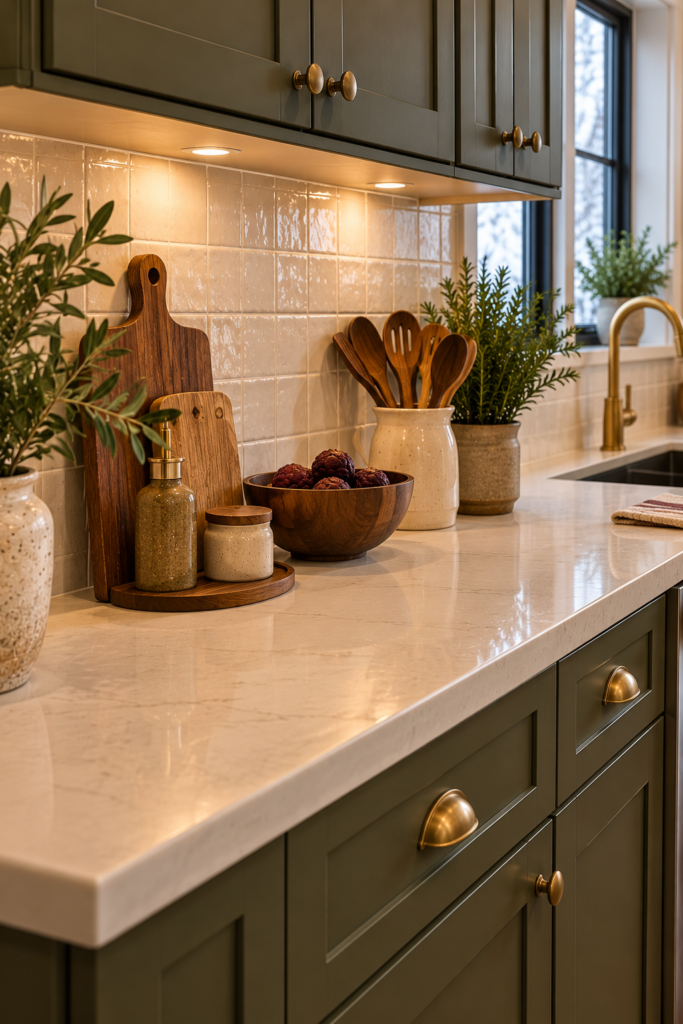
10. Coordinate Tile Counters With the Backsplash
A tiled countertop and backsplash can complement one another without matching exactly.
For example, cream countertop tile can work with a muted green backsplash, while dusty-blue counters can be paired with warm cream wall tile.
The most successful combinations share compatible undertones but vary the scale, finish, or color intensity. This creates visual continuity without making every surface look identical.
Before choosing both materials, compare samples side by side. Consider how the grout colors will interact and whether the combined pattern will feel too busy in a compact kitchen.
The transition between the horizontal countertop and vertical backsplash also needs careful planning. The installation should account for the materials, joints, and moisture conditions of the area.
If one surface has a strong pattern or noticeable texture, keep the other relatively simple. That allows the kitchen to feel layered rather than visually crowded.
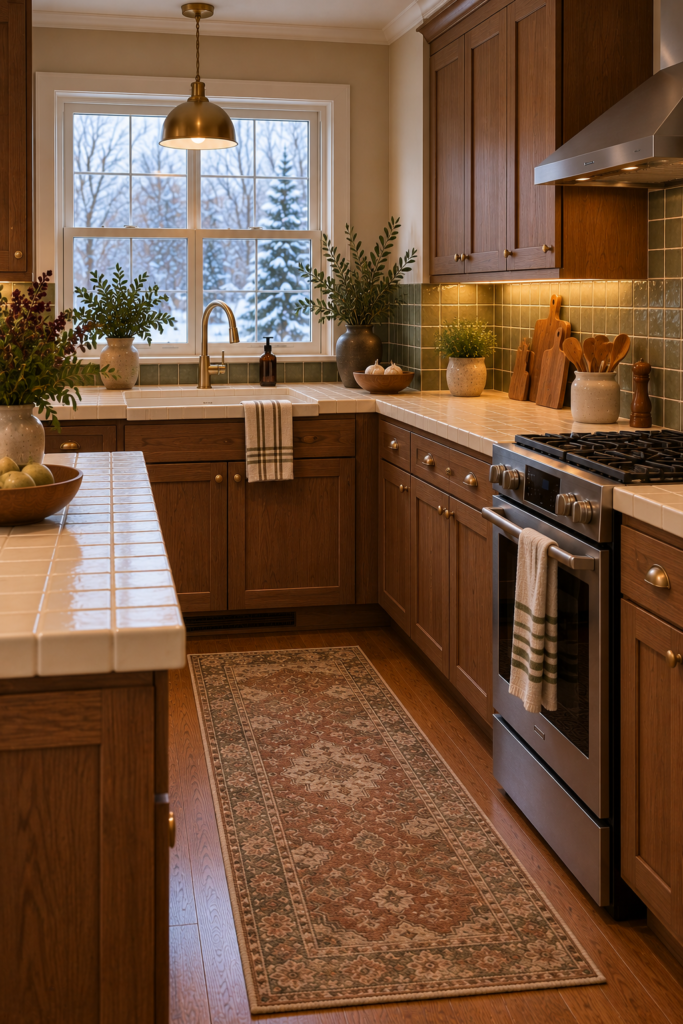
11. Plan a Proper Tile Edge
The countertop edge deserves attention before installation begins.
Tile edges can be finished with compatible trim, purpose-made edge pieces, or another suitable detail designed for the chosen system. The right approach depends on the tile, substrate, countertop construction, and desired appearance.
A coordinated edge creates a quiet transition, while a carefully chosen contrasting trim can provide definition.
Consider corners, exposed ends, sink openings, and transitions to adjacent surfaces. These details affect the finished appearance and can influence how easily the counter is cleaned.
Don’t assume that a tile intended for a flat wall will automatically provide a suitable exposed countertop edge. Check the product specifications and available finishing components.
Planning the edge early helps create a more cohesive installation and avoids discovering late in the project that the chosen tile doesn’t have an appropriate finishing solution.
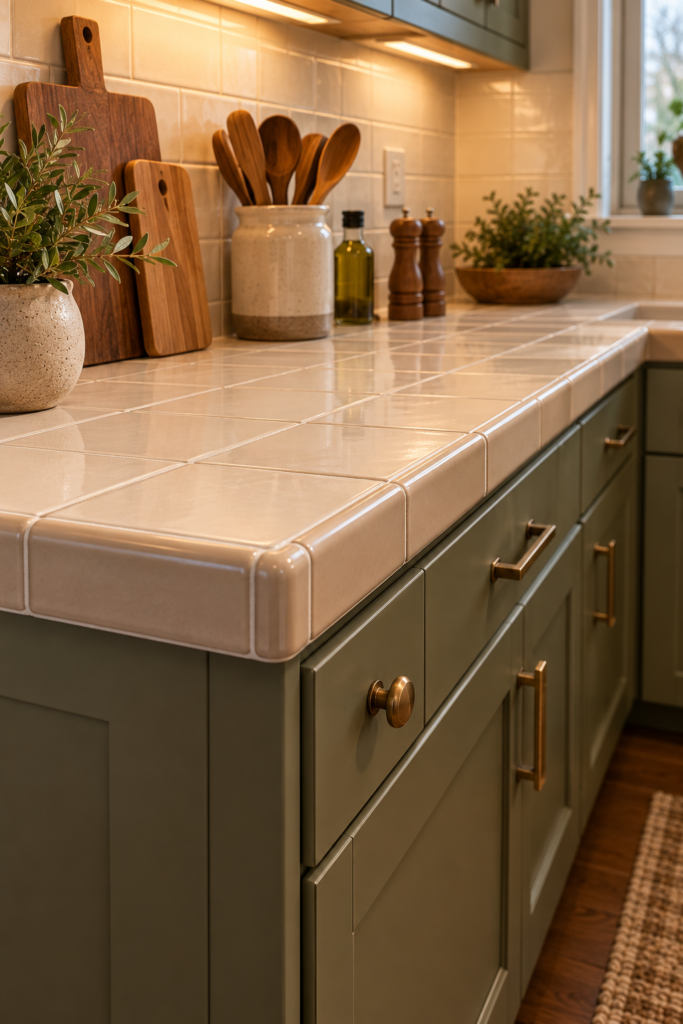
12. Create a Cottage Tile-Countertop Kitchen
Cottage kitchens are a natural setting for tiled countertops because the material works well with simple cabinetry, natural wood, and a restrained collection of decorative details.
Warm cream square tile can be paired with muted green cabinets, walnut accents, and a small floral café curtain. Cream ceramics provide continuity without adding another strong color.
Choose a tile and grout combination that suits the amount of use the counter receives. Near a sink or cooking area, cleaning and moisture resistance are especially important considerations.
A patterned curtain can soften the window, but keep it away from cooking heat and repeated splashes. In a compact kitchen, a simple treatment is often easier to maintain than a heavily gathered fabric.
Keep the countertops clear enough for food preparation. The tiled surface already provides texture, so the room doesn’t need a large collection of decorative objects.
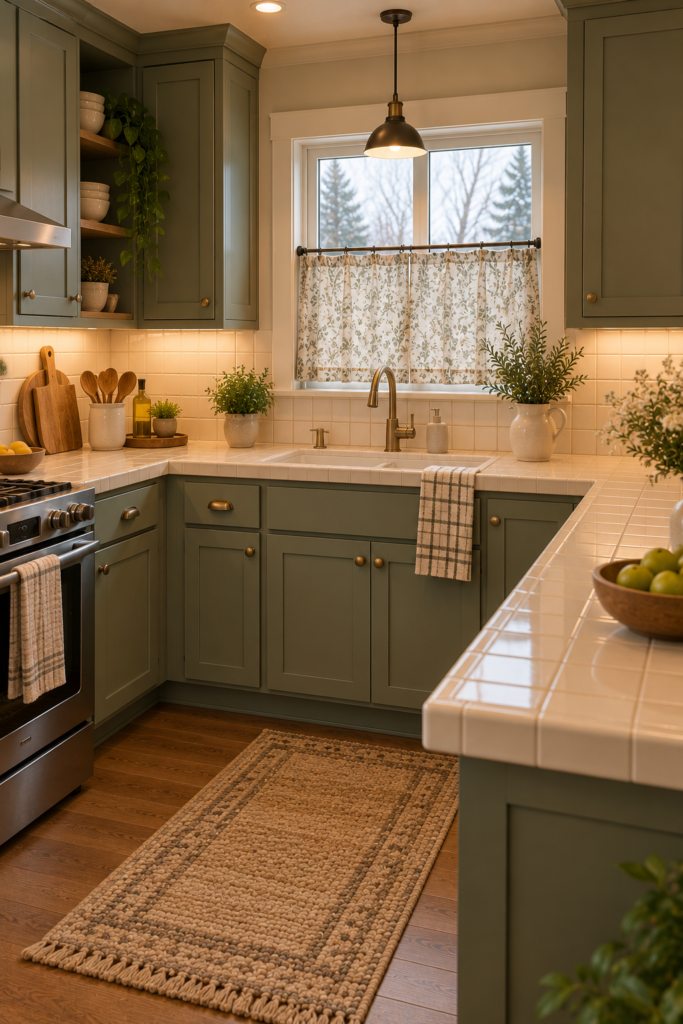
13. Create a Modern Tile-Countertop Kitchen
Tile countertops can suit a modern kitchen when the format, grout, cabinetry, and surrounding finishes are chosen carefully.
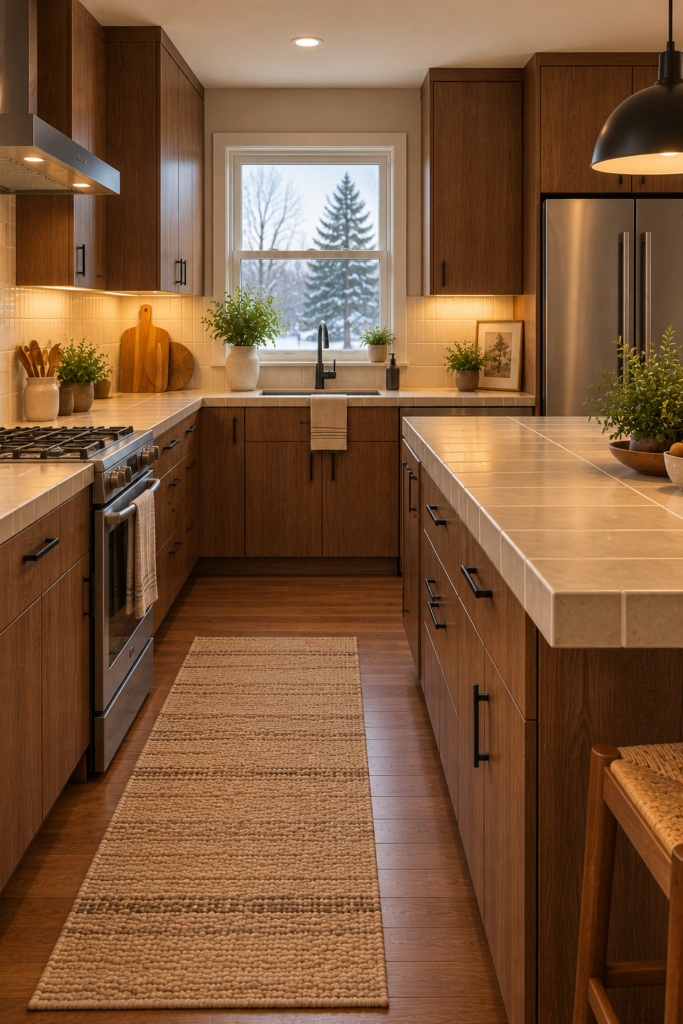
Consider larger warm-mushroom tiles with coordinated grout, flat-panel walnut cabinets, and a simple cream backsplash. Minimal hardware allows the tile layout to become an intentional design feature.
The overall appearance depends on the relationship between the grid and the cabinet fronts. Simple, aligned lines can make the composition feel orderly, while too many competing patterns may distract from the clean look.
Before installation, plan the tile layout around the countertop dimensions, sink opening, and exposed edges. Confirm that the selected materials are suitable for the intended use.
A modern tiled counter doesn’t have to imitate a seamless stone slab. Its visible joints can be part of the design, provided the surface is properly constructed and practical to maintain.
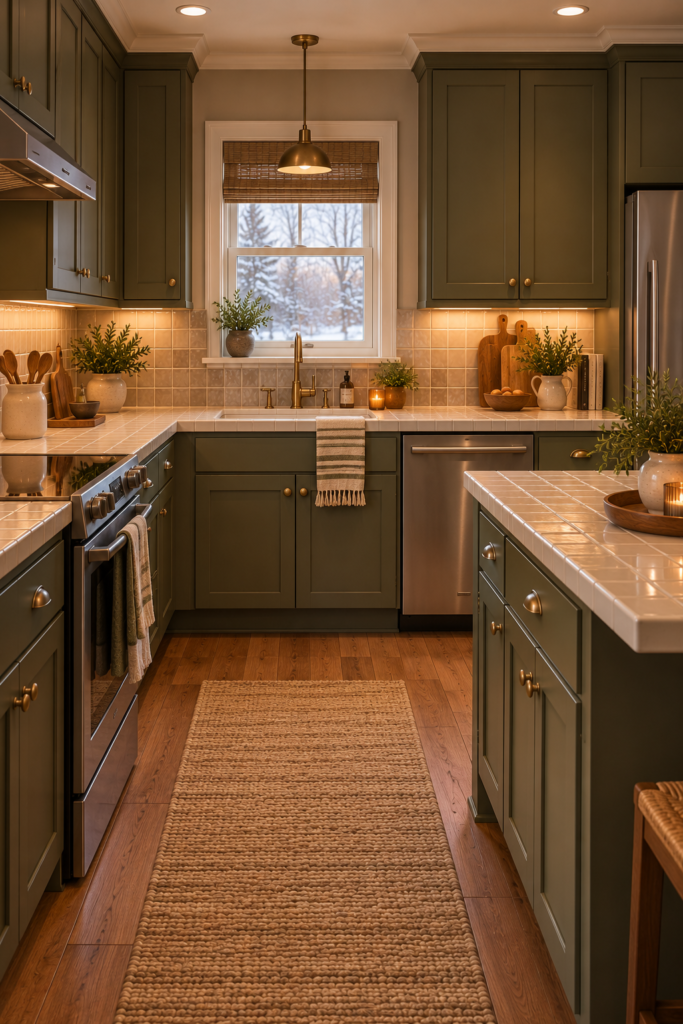
14. Layer a Complete Tile-Countertop Kitchen
A fully coordinated tile-countertop kitchen combines the surface with cabinetry, flooring, backsplash, hardware, and lighting.
Warm cream countertop tile can work with muted olive cabinets, walnut flooring, mushroom backsplash tile, and aged-brass-style hardware. The mixture creates depth through material and color rather than relying on elaborate decoration.
Choose one dominant color and a small number of supporting finishes. If both the countertop and backsplash have strong patterns, the room may feel busy; a quieter combination lets the materials complement one another.
Lighting can help bring out the differences between wood grain, tile glaze, and cabinet finishes. Compare samples under the kitchen’s actual lighting before committing to permanent choices.
Most importantly, plan the countertop assembly as a functional work surface. The substrate, grout, edge treatment, and any required sealants need to suit the selected tile and the kitchen’s conditions.
The result can feel nostalgic without becoming a replica of a particular decade.
Are Tile Countertops Practical?
Tile countertops can be practical when the tile, grout, substrate, and installation system are suitable for the intended use.
The surface will encounter food spills, moisture, cleaning, impact, and the weight of appliances. The performance of the finished counter depends on the complete assembly, not just the appearance of the tile.
Grout joints require care, and some tiles are more vulnerable to chipping or staining than others. Choose products according to their specifications and consider how much maintenance you’re prepared to do.
A decorative wall tile isn’t automatically appropriate for a countertop. Confirm the intended application with the manufacturer before purchasing.
What Are the Downsides of Tile Countertops?
Grout joints can require regular cleaning, and some materials need sealing or other maintenance according to the manufacturer’s instructions.
Tile may also chip, and an uneven installation can create an inconvenient work surface. Poorly planned edges and sink transitions can make the finished counter harder to clean or maintain.
These drawbacks don’t make every tiled countertop unsuitable. They mean the material and installation need to be selected with everyday use in mind.
If you prefer a nearly seamless surface with minimal joints, another countertop material may better suit your priorities.
How to Make Tile Countertops Easier to Maintain
Start by selecting tile and grout designed for the intended application. Follow the manufacturer’s recommendations for cleaning and sealing, where applicable.
Wipe spills promptly, use cutting boards, and protect the surface from hot cookware according to the material’s requirements. Avoid cleaning products that could damage the tile, grout, or sealant.
Larger-format tile may reduce the number of grout joints, but the installation still needs proper support and suitable edge details.
Inspect the countertop periodically for damaged grout, loose tiles, or other signs that maintenance is needed. Addressing problems early can help prevent them from becoming more difficult to repair.
Tile Countertop Installation and Safety
A tiled countertop requires a stable substrate designed for the finished assembly. Installation needs to account for the tile and grout system, sink openings, edges, moisture, and transitions to other surfaces.
Follow manufacturer specifications for the selected materials and installation products. Don’t assume that a wall-tile installation method is appropriate for a countertop.
Keep the work area safe during construction and ensure that sink, appliance, and electrical connections are handled appropriately. For substantial countertop replacement, plumbing changes, sink installation, electrical work, or structural modifications, use qualified professionals where appropriate.
Maintain a practical food-preparation surface and choose materials that can be cleaned and cared for as intended.
Final Thoughts
Tile countertops offer an alternative to large solid surfaces, with opportunities for color, texture, and visible craftsmanship.
Warm cream and soft white create a classic foundation, while terracotta, muted olive, burgundy, and dusty blue introduce stronger character. Larger-format tile can create a quieter grid, and carefully planned edges help the finished surface feel intentional.
The best choice depends on the kitchen’s style and how the countertop will be used. Select suitable materials, plan the installation details early, and make maintenance part of the decision.
Tile countertops aren’t right for every kitchen, but with thoughtful choices, they can bring distinctive character to a space designed for everyday cooking.
