
17 Teal Kitchen Ideas for a Bold and Beautiful Space
Teal is a kitchen color that deserves a little attention. Sitting between blue and green, it can feel dramatic, cozy, vintage, or contemporary depending on the finishes and materials around it.
The secret is choosing a shade that suits the room. Muted, slightly deep teal tends to work well with warm cream, walnut, mushroom taupe, and natural wood. A brighter turquoise creates a more energetic look, while a darker blue-green can add depth to traditional or modern cabinetry.
You don’t have to commit to teal across the entire kitchen, either. Lower cabinets, an island, a backsplash, a piece of furniture, or a few accessories can introduce the color in different ways.
These 17 teal kitchen ideas explore how to create a bold but balanced space that remains practical for everyday cooking and dining.
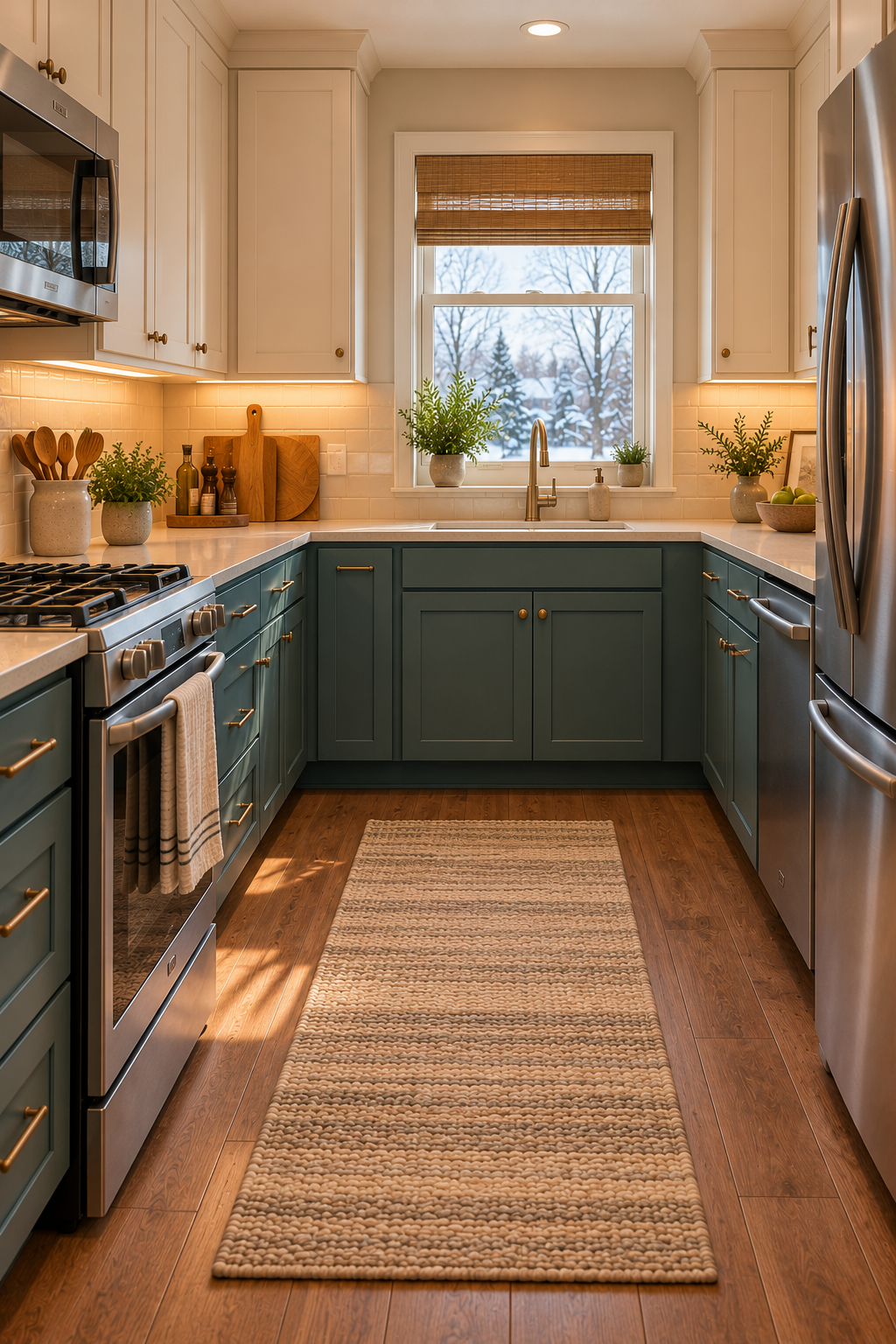
1. Paint Lower Cabinets Deep Teal
Deep teal lower cabinets provide a strong color statement while keeping the upper half of the kitchen visually light. Pair them with warm cream upper cabinets, light countertops, and medium-walnut flooring.
This arrangement creates contrast without covering every surface in a dark color. It can be especially effective in a smaller kitchen where lighter upper cabinets help the room feel more open.
Choose a teal with muted blue-green undertones rather than an extremely saturated turquoise if you want a more restrained appearance. Compare paint samples beside your countertop and flooring under both daylight and artificial lighting.
If you’re repainting existing cabinets, prepare the surfaces according to the coating manufacturer’s instructions and choose a finish suitable for regular cleaning and handling.
Keep the backsplash simple so the cabinet color remains the main feature.
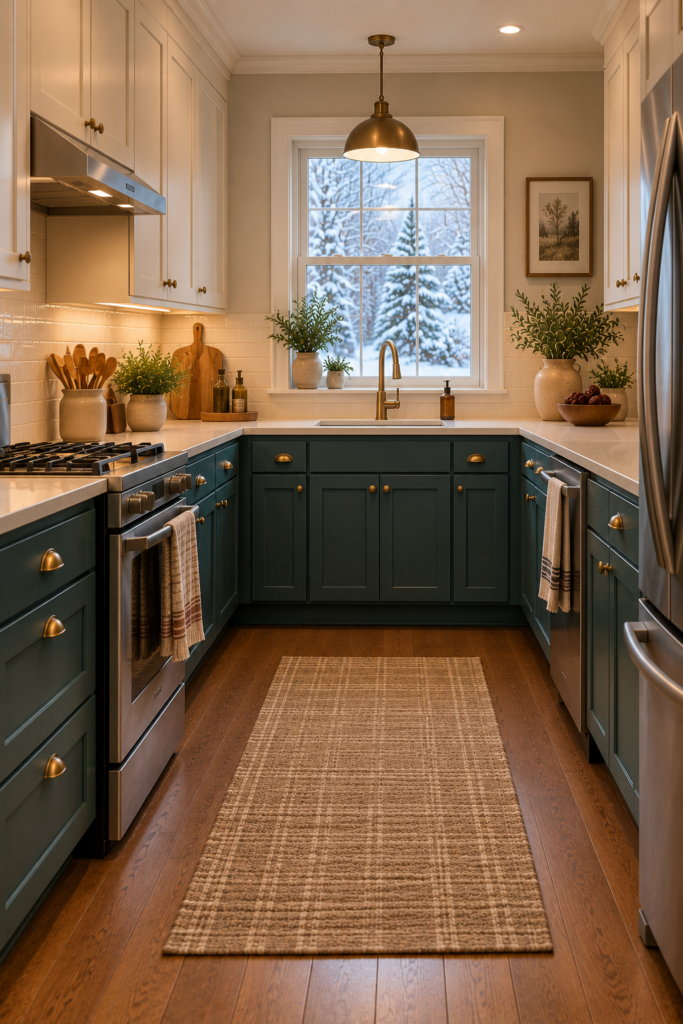
2. Go All-In With Teal Cabinets
Full teal cabinetry creates a more immersive look and can make the kitchen feel distinctive and cohesive.
Choose a deep, muted blue-green and balance it with warm cream counters, a light backsplash, and natural wood flooring. Warm lighting can help the darker color feel inviting, particularly in the evening.
Before painting or replacing all the cabinets, assess the room’s natural light and existing finishes. A shade that looks rich beside a sunny window may appear much darker in a dim corner.
Consider using simple cabinet profiles and restrained hardware so the color provides most of the visual interest.
If the kitchen has limited daylight, a lighter countertop and backsplash can provide useful contrast. You can also reserve the deepest teal for selected cabinet sections rather than using it everywhere.
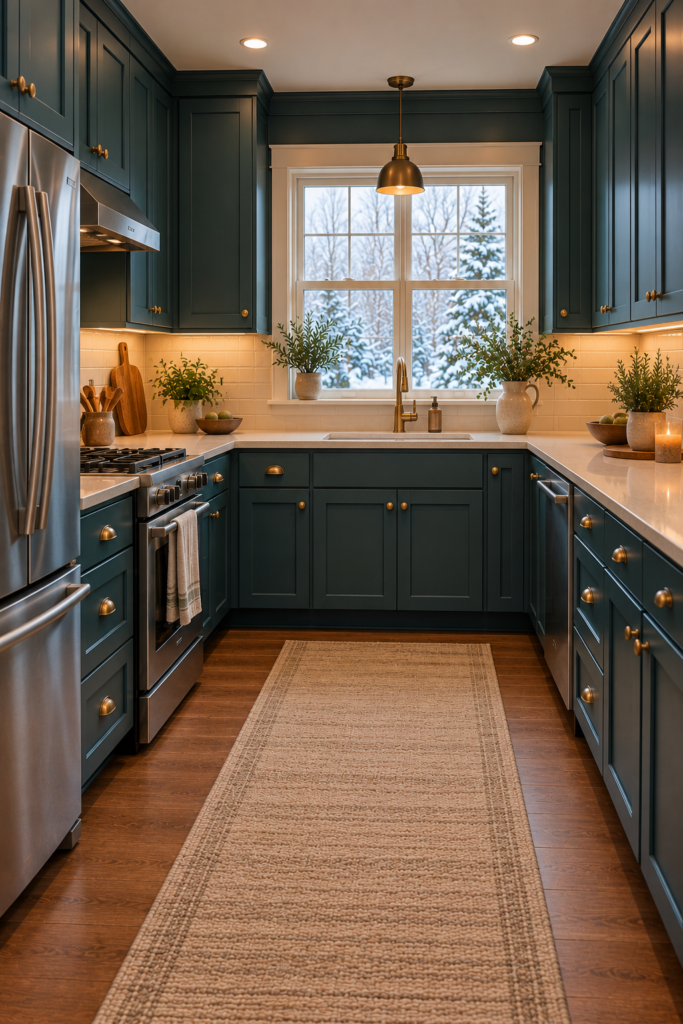
3. Add a Teal Kitchen Island
A teal island creates a focal point without requiring a complete cabinet repaint.
Keep the perimeter cabinetry warm cream, introduce teal on the island, and add walnut stools or other natural wood accents. A light countertop can connect the island to the surrounding cabinets.
Choose a shade that relates to the existing flooring, backsplash, and hardware. The island should feel like part of the kitchen rather than an unrelated piece of furniture.
If you’re repainting an existing island, use a coating suited to cabinetry and follow the manufacturer’s preparation and curing instructions.
Check the available circulation before adding or enlarging an island. Cabinet doors, appliance doors, and walkways need sufficient clearance, and any countertop overhang must have appropriate support.
This approach gives you a strong dose of color while allowing the rest of the kitchen to remain relatively neutral.
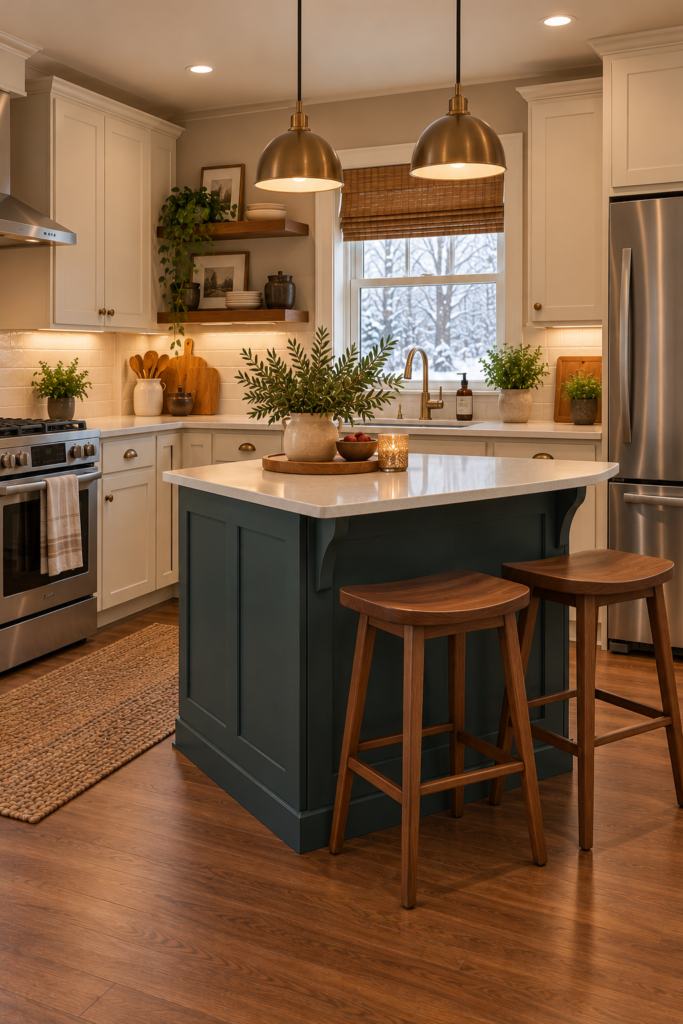
4. Pair Teal With Warm Cream
Warm cream is a versatile partner for teal because it softens the contrast and introduces warmth.
Use cream on the walls, backsplash, or countertops, then let the teal cabinetry provide the main color statement. A warm neutral can work with both traditional shaker cabinets and contemporary flat-panel designs.
Choose a cream that suits the undertones of the teal. Some creams appear yellow, while others lean toward beige or gray, so compare samples together instead of selecting them separately.
A relatively simple backsplash helps maintain a balanced appearance, especially when the cabinets have a strong color.
You don’t need every surface to match. Small differences between the wall, counter, and backsplash can add depth without competing with the teal.
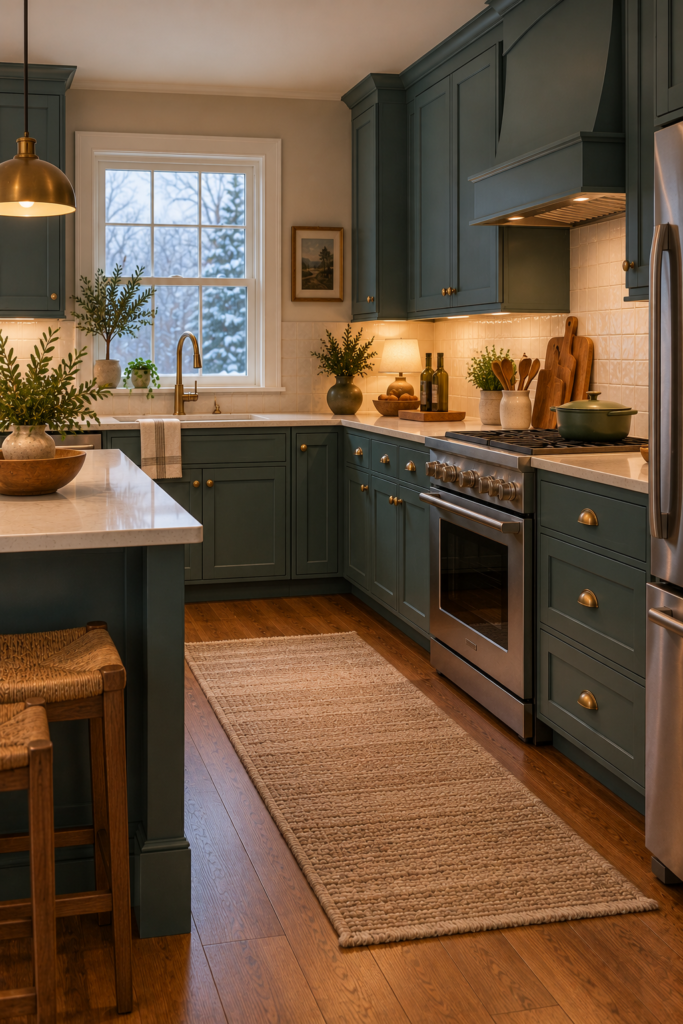
5. Pair Teal With Walnut
Walnut brings warmth to teal’s blue-green tones. The combination can feel rich and sophisticated without requiring ornate details or a formal kitchen design.
Use teal cabinetry with walnut-look flooring, wood shelving, or a furniture-style island. Warm cream countertops can bridge the two finishes and keep the room from feeling too dark.
Consider the wood’s undertone before choosing a finish. Some walnut finishes lean reddish, while others appear more neutral or chocolate brown. The right pairing depends on the specific teal and the other surfaces in the room.
You don’t need to match every wood element exactly. Related brown tones can create a layered look, provided they work together rather than clash.
Keep accessories relatively restrained so the contrast between teal and walnut remains the defining feature.
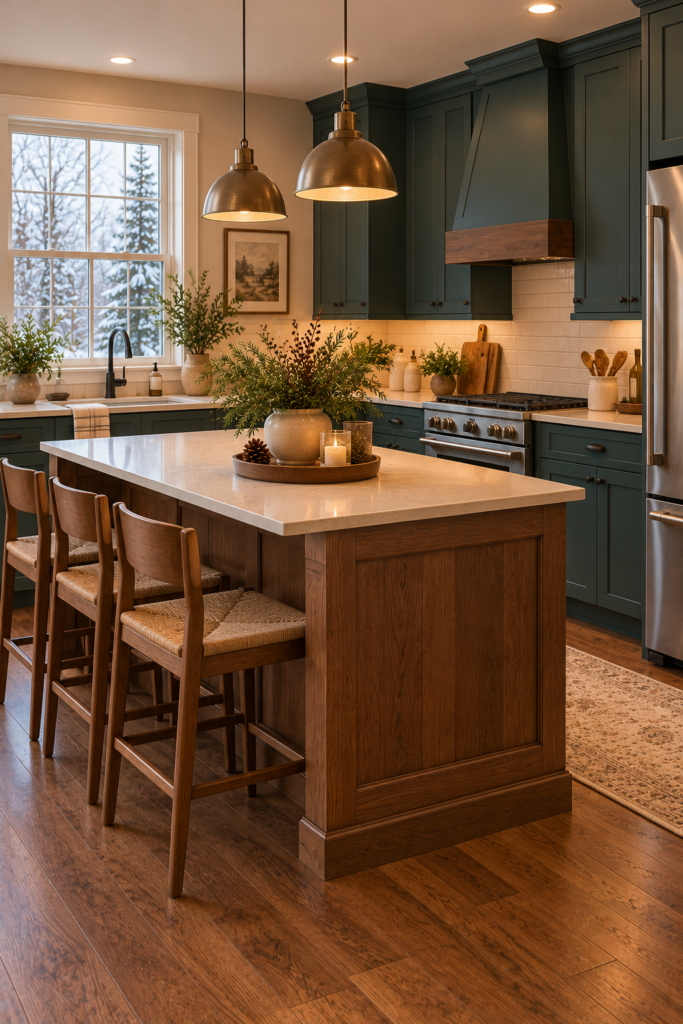
6. Add a Teal Backsplash
A teal backsplash is a useful option when you want to introduce color without changing the cabinetry.
Choose muted teal ceramic tile with subtle glaze variation, then pair it with cream cabinets and walnut flooring or shelving. The backsplash becomes the main color feature while the surrounding finishes provide balance.
Consider the tile format and grout color before purchasing. Simple rectangular tiles create a clean pattern, while smaller formats can add more visual detail. Coordinated grout produces a quieter appearance; contrasting grout emphasizes the grid.
Check that the selected tile is suitable for the intended wall location and can be maintained around the sink and cooking area.
If you prefer a more flexible update, consider whether a smaller backsplash section can achieve the effect you want. A limited area of teal may be enough to transform an otherwise neutral kitchen.
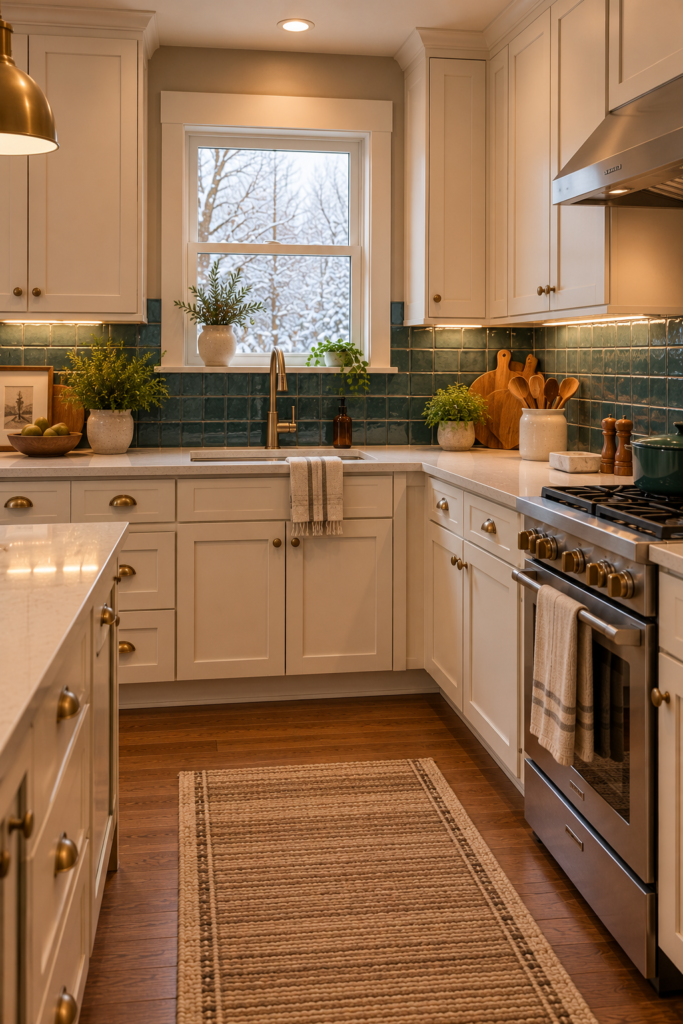
7. Pair Teal With Aged Brass
Aged-brass-style hardware adds warmth and contrast to teal cabinets. The gold-brown finish complements the green undertones and can suit traditional, transitional, and contemporary kitchens.
Choose simple knobs and pulls that work with the cabinet profiles. A compatible faucet or lighting detail can repeat the metal finish, but every fixture doesn’t need to match exactly.
Brass finishes vary in color and sheen, so compare samples against the actual teal cabinetry. A muted brushed finish can create a different effect from a highly polished gold tone.
Consider the practical side of hardware, too. Drawer pulls should be comfortable to grip, and the finish should suit frequent handling and cleaning.
A small number of coordinated metal details can provide enough warmth without turning the kitchen into a collection of matching accessories.
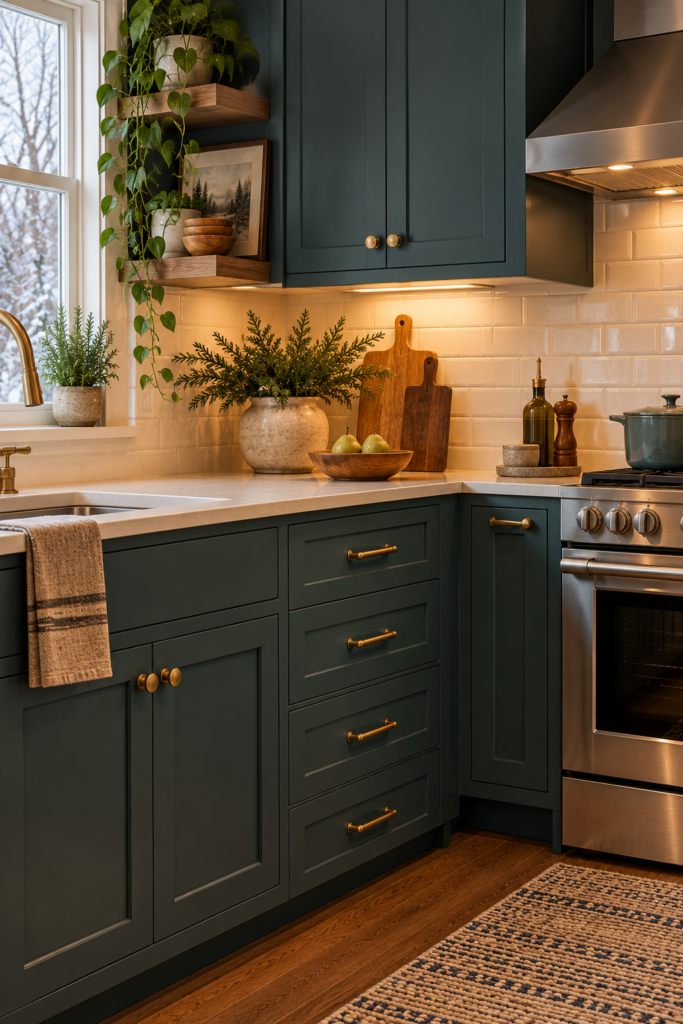
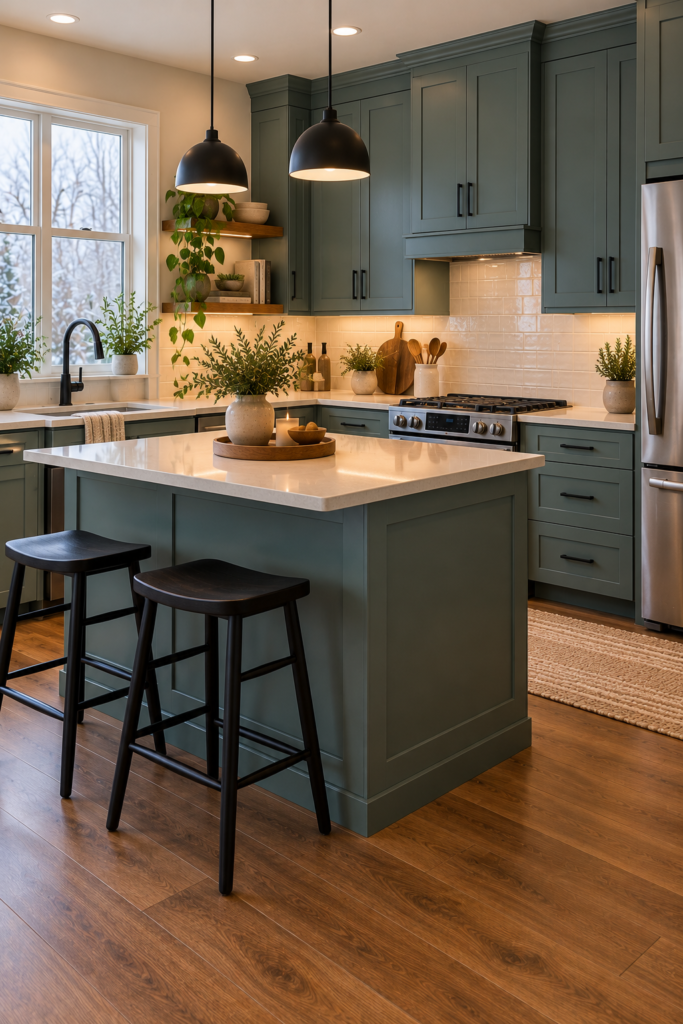
8. Pair Teal With Matte Black
Matte black hardware gives teal cabinetry a more contemporary appearance.
Use black knobs and pulls, then introduce a compatible black stool frame or lighting detail if it suits the rest of the kitchen. Cream countertops and walnut accents soften the contrast and keep the palette from feeling overly stark.
Consider how much black is already present in the room. If the appliances, window frames, and flooring contain dark elements, a few carefully chosen accents may be enough.
Choose hardware that feels comfortable to use and suits the cabinet style. Simple shapes generally work well when the teal itself is the main decorative feature.
The aim is a clear contrast between teal, black, and natural materials, rather than covering every remaining surface in another dark color.
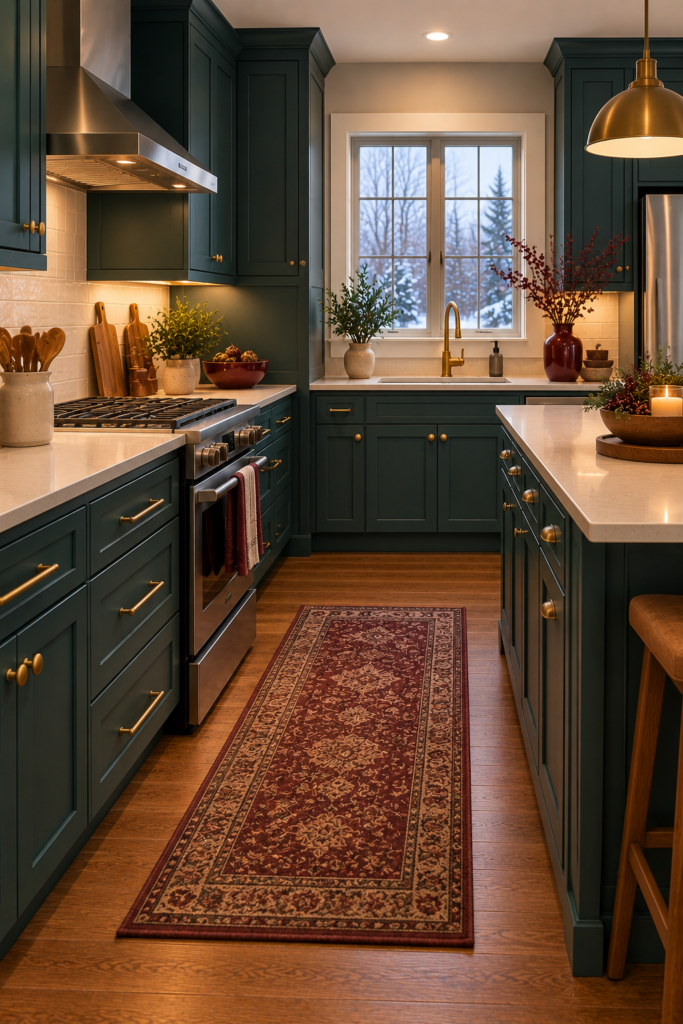
9. Add Burgundy Accents
Dusty burgundy introduces a rich accent that can make teal feel even more distinctive. The combination works best when both colors are slightly muted rather than extremely bright.
Try a burgundy runner, a ceramic bowl, or a simple Roman shade. Warm cream and walnut can connect the two colors and help the overall palette feel balanced.
Consider the scale of each accent. If the cabinets are already deep teal, a small burgundy accessory may be enough. Larger burgundy surfaces can work too, but they require more careful coordination with the countertops and backsplash.
If you choose a runner, select one that lies flat and stays clear of appliance doors and walkways. Window treatments should remain away from cooking heat and repeated sink splashes.
Use burgundy as a supporting color so teal remains the main focus.
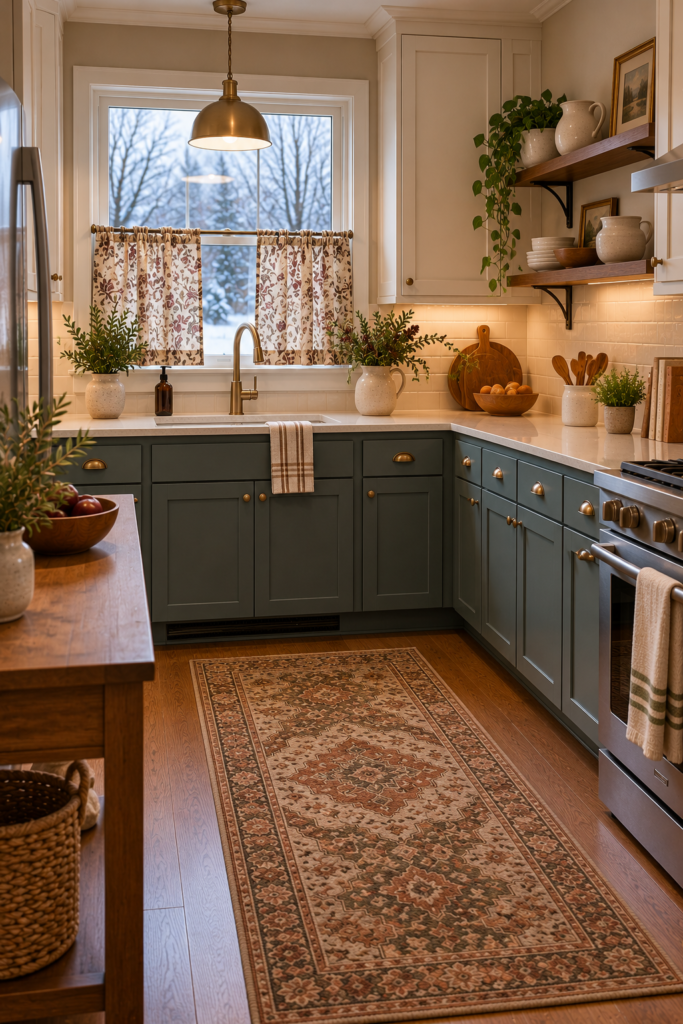
10. Create a Teal Cottage Kitchen
Teal adds depth to cottage-style kitchens while retaining the relaxed character of traditional cabinetry and natural materials.
Pair teal lower cabinets with cream upper cabinets, walnut shelves, and simple cream ceramics. A small floral café curtain can introduce a softer pattern without overwhelming the room.
Before installing shelves, confirm the wall construction and choose suitable supports for the intended load. Keep heavier dishes on appropriately supported shelves and leave enough space to remove items safely.
Choose a washable curtain fabric and keep it clear of cooking heat, faucet movement, and repeated sink splashes.
Keep decorative accessories selective. A few useful ceramics and natural wood details can create a cottage atmosphere without making the countertops crowded.
For a related look using natural wood and traditional cabinet details, explore these Craftsman kitchen ideas full of warm wood and character.
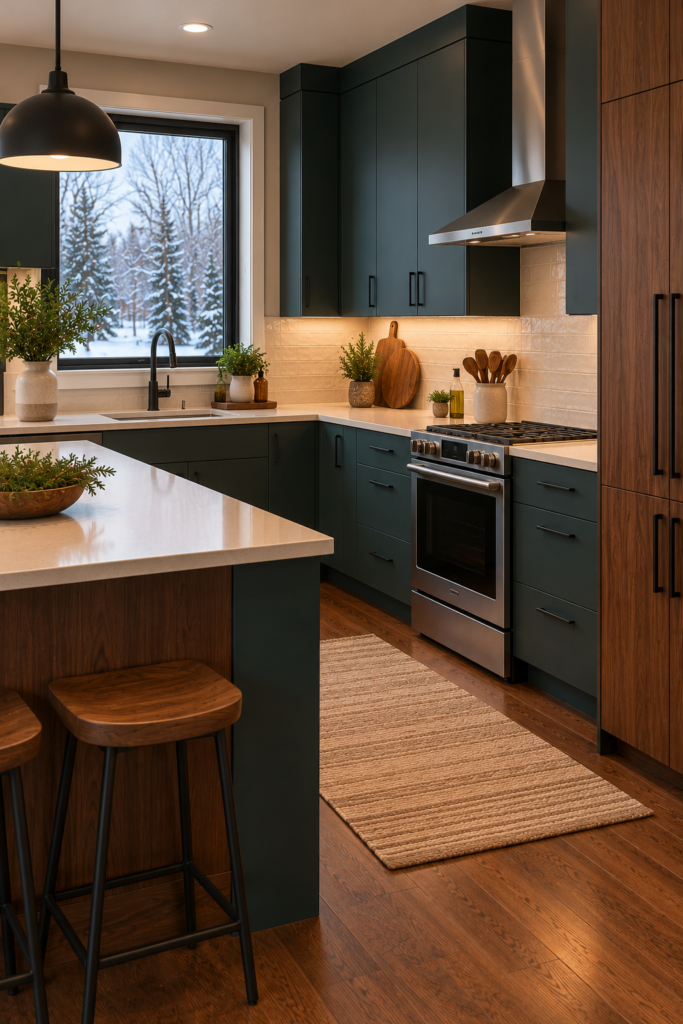
11. Create a Modern Teal Kitchen
A modern teal kitchen combines the strength of the color with clean cabinet lines and restrained decoration.
Choose flat-panel cabinetry in a deep muted teal, then pair it with walnut accents, cream counters, and minimal hardware. The simpler shapes prevent the color from feeling overly ornate.
Compare the teal with the countertop and wood finishes before committing. A blue-heavy teal can look different beside a warm brown than a greener shade does.
Keep storage functional and leave enough clear countertop space for everyday cooking. A few well-chosen accessories are usually more effective than filling every surface with decoration.
If you want the room to feel contemporary without looking cold, natural wood and warm lighting can soften the strong cabinet color.
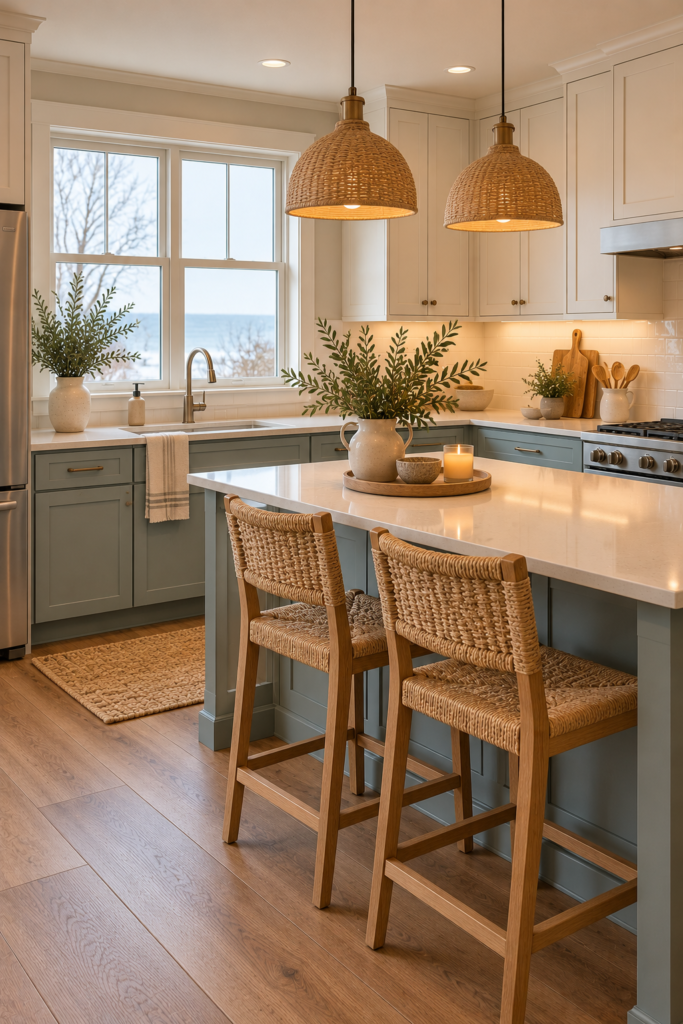
12. Create a Coastal Teal Kitchen
A softer gray-teal can bring coastal character into a kitchen without relying on overt nautical decorations.
Pair the cabinets with warm cream surfaces, medium oak, and natural woven stools. These materials introduce texture and warmth while allowing the blue-green color to remain prominent.
Choose a teal with a subdued finish if you want a relaxed appearance. Brighter turquoise creates a more energetic effect and may require simpler surrounding colors.
Check the stools’ dimensions and stability before purchasing, and make sure they can be moved without blocking cabinets or the main walking route.
Keep the accessories understated. The combination of muted teal, natural wood, and woven textures can establish the coastal mood without adding decorative anchors or other themed objects.
For another light and natural approach, see these coastal kitchen design ideas for a light and relaxed space.
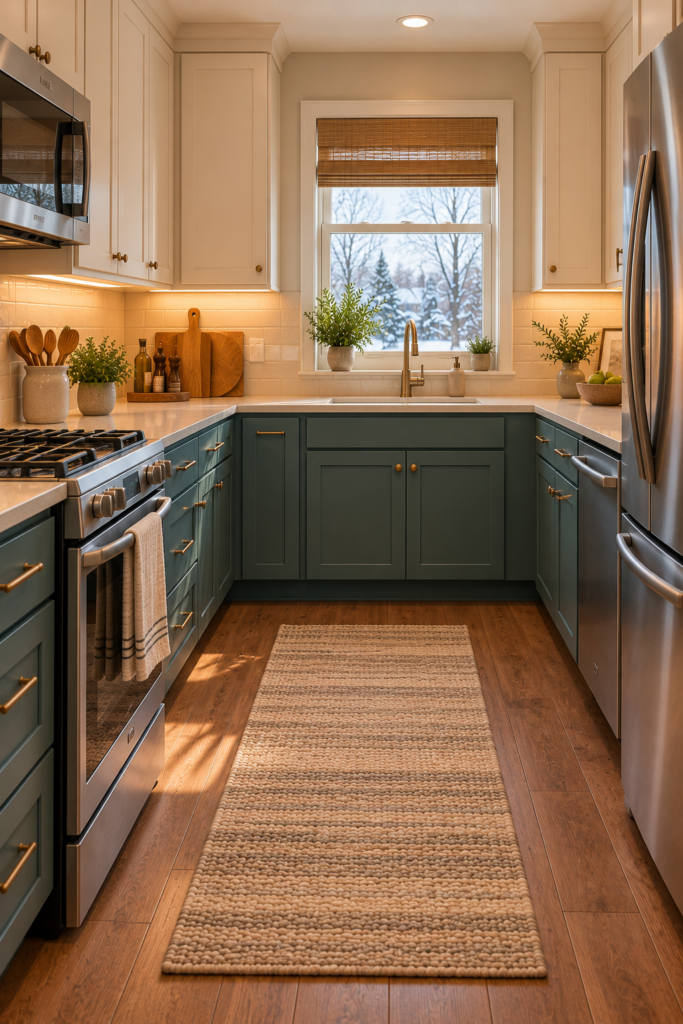
13. Use Teal in a Small Kitchen
A small kitchen doesn’t have to avoid dark colors entirely. Deep teal can add character when it’s balanced with lighter surfaces and a thoughtful layout.
Consider teal lower cabinets, cream upper cabinets, light countertops, and a relatively simple backsplash. Keeping the upper half lighter can help the room feel less enclosed.
Preserve the natural light available from the window and add suitable task lighting beneath upper cabinets where work surfaces need more illumination.
Avoid adding an island or extra furniture if it restricts movement. Clear circulation and convenient storage are more useful than another decorative feature.
If you aren’t ready to repaint the cabinets, introduce teal through a backsplash, a small freestanding cupboard, or a few coordinated accessories.
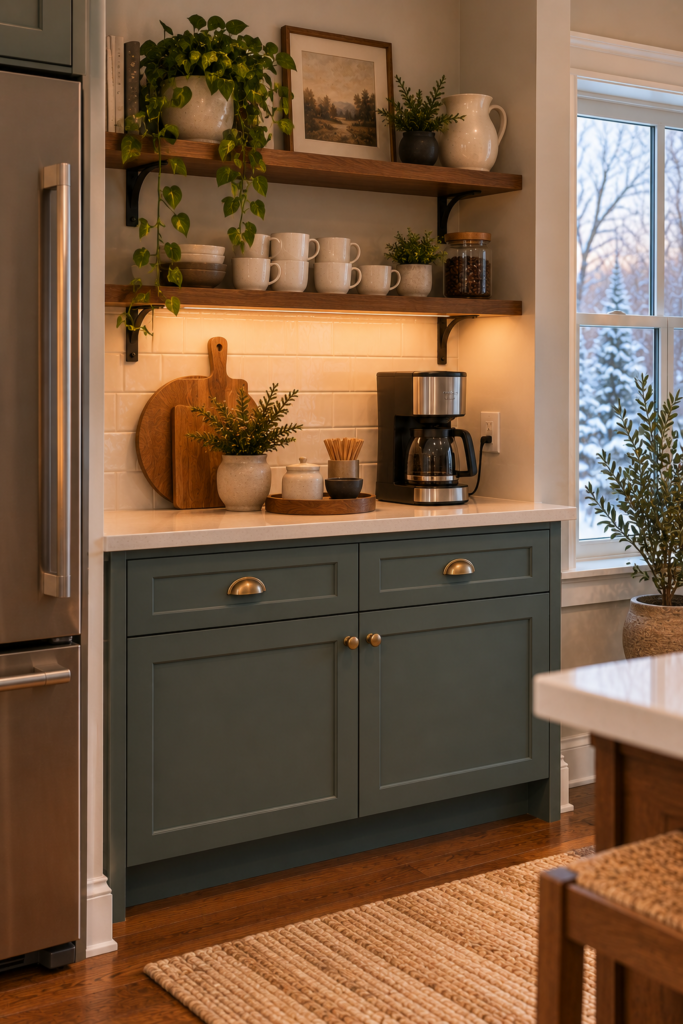
14. Build a Teal Coffee Station
A dedicated coffee station can introduce teal into a small area without changing the entire kitchen.
Use teal cabinetry around the beverage area, add a securely supported walnut shelf, and keep cream mugs nearby. Place the coffee maker on a stable, dry countertop with sufficient room for everyday use.
Before installing a shelf, check the wall construction and choose suitable supports for the intended load. Store heavier items where they can be reached comfortably and safely.
Follow the coffee maker’s instructions for ventilation and steam clearance. Keep electrical connections away from water, route cords safely, and avoid placing accessories where they obstruct the appliance.
A small coffee station can provide a strong color accent while keeping the rest of the kitchen neutral and practical.
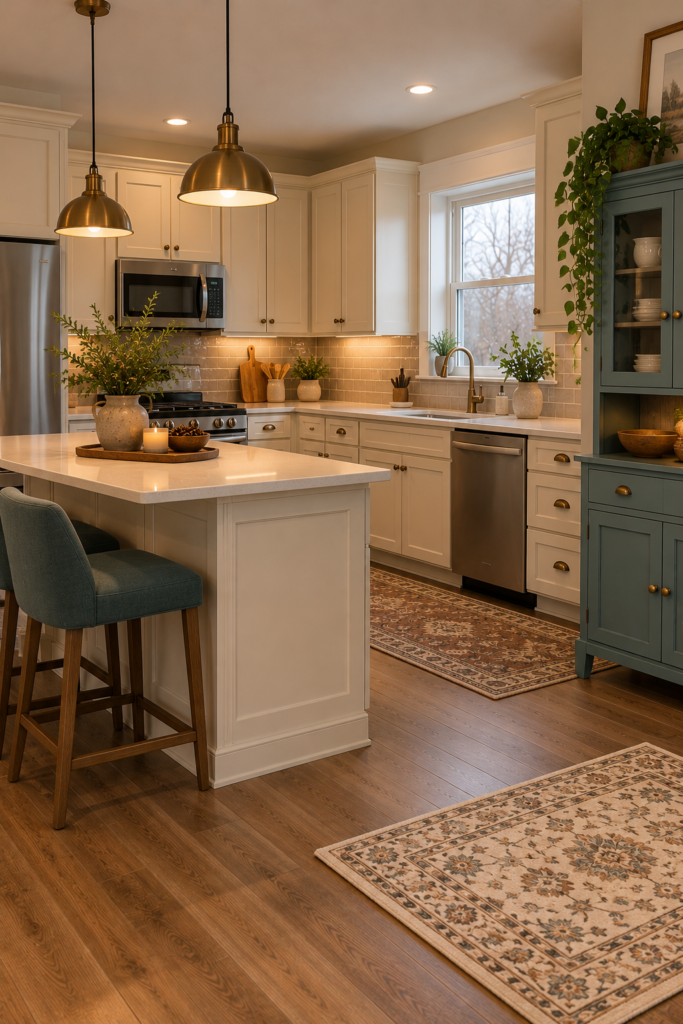
15. Add Teal Through Furniture
If you don’t want to repaint the cabinets, teal furniture offers a more flexible way to introduce the color.
Consider counter stools, a small freestanding cupboard, or a painted breakfast bench. Keep the main cabinetry neutral so the furniture provides the primary accent.
Choose a shade that relates to the kitchen’s existing palette. Muted teal works well with cream, walnut, and mushroom taupe, while brighter blue-green may suit a lighter, more playful interior.
Check the furniture’s dimensions and stability before buying. Stools should fit the counter comfortably, and freestanding pieces must not obstruct doors, appliances, or the main walkway.
This approach is especially useful when you prefer decorating changes that can be moved or replaced without repainting fixed cabinetry.
16. Use Teal Accessories
Teal accessories are an easy way to test the color before committing to larger changes.
Try ceramic bowls, a café curtain, a runner, or a planter. Repeat the shade in a few places so it feels intentional, but don’t feel obliged to match every kitchen object.
Choose accessories that suit the room’s existing finishes. A teal ceramic bowl can complement cream countertops and walnut shelves, while a simple textile can introduce color without adding another hard surface.
Keep the countertop clear enough for food preparation, and choose washable fabrics that can handle ordinary kitchen conditions.
If you later decide to repaint the cabinets or add a teal backsplash, the accessories can help connect the new finish to the rest of the room.
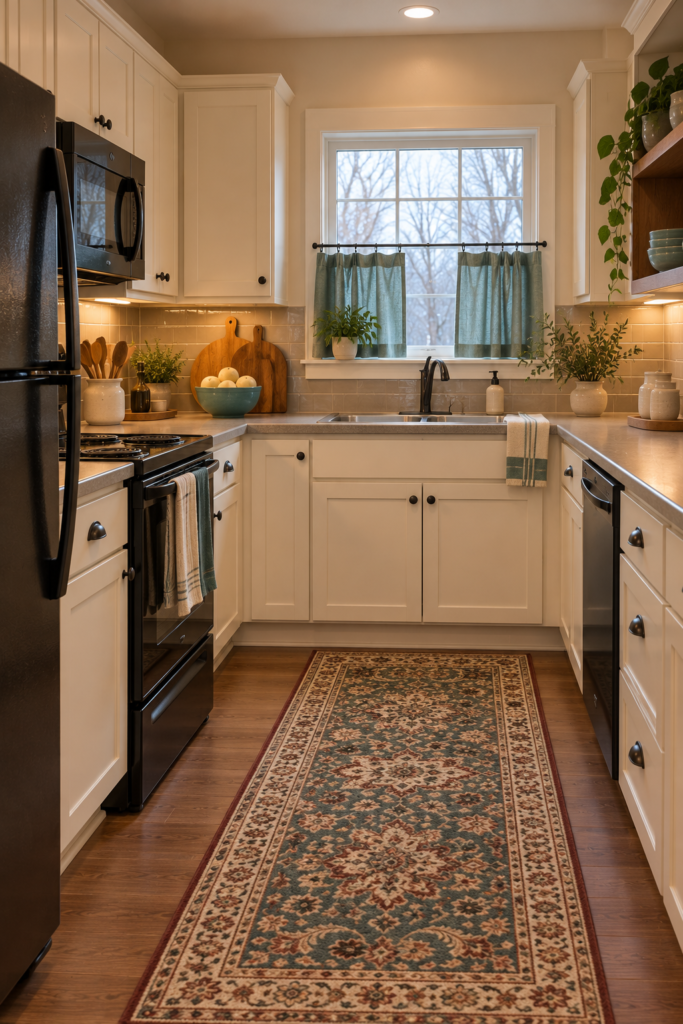
17. Layer a Complete Teal Kitchen
A fully layered teal kitchen brings the color together with natural materials, coordinated finishes, and suitable lighting.
Combine deep teal cabinetry with warm cream countertops, walnut accents, mushroom tile, and restrained aged-brass-style hardware. A small burgundy detail can provide an additional accent without competing with the main color.
Start with the largest surfaces and choose supporting materials around them. The cabinetry, countertop, flooring, and backsplash should work together before you add smaller decorative objects.
Compare samples in the kitchen’s actual lighting. Teal can appear more blue or green depending on its undertones and the surrounding materials.
Use general lighting and task lighting to keep work surfaces practical, and leave some countertop space clear. The goal is a kitchen with personality that remains comfortable for everyday cooking.
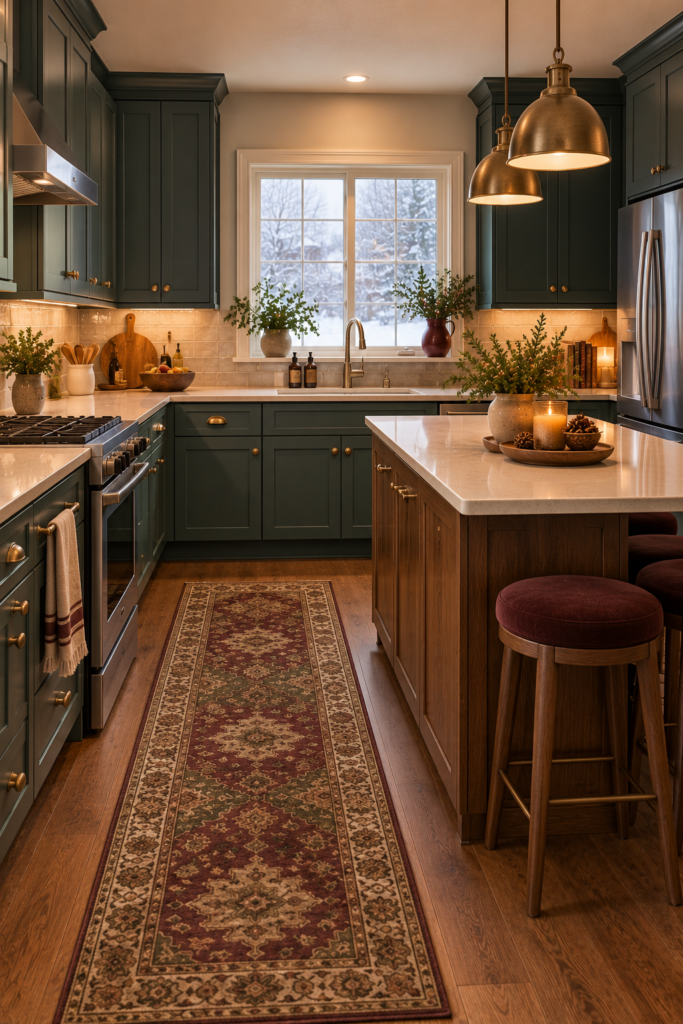
What Colors Go With Teal in a Kitchen?
Teal pairs well with warm cream, walnut, mushroom taupe, aged brass, matte black, dusty burgundy, and medium oak.
Cream provides a lighter background, wood introduces warmth, and black or burgundy creates stronger contrast. Aged brass can add a softer metallic accent.
Choose colors that suit the undertones of your teal. Compare samples together under both daylight and artificial lighting rather than relying on individual color swatches alone.
Is Teal Too Dark for a Small Kitchen?
Not necessarily. Deep teal can work in a small kitchen when the rest of the palette provides enough contrast.
Consider using teal on lower cabinets or a single island while keeping upper cabinets and countertops lighter. Preserve the available daylight and add task lighting where work surfaces need it.
A well-planned layout matters just as much as the color. Avoid adding furniture or storage features that restrict access to appliances and cabinets.
How to Make a Teal Kitchen Look Sophisticated
Choose a muted teal rather than an extremely saturated turquoise if you prefer a restrained look.
Pair it with natural wood, warm neutral surfaces, and simple hardware. Limit competing saturated colors and use decorative accents selectively.
Pay attention to the finishes as well as the colors. Coordinated wood tones, suitable lighting, and a consistent cabinet style can help the kitchen feel considered without requiring expensive materials.
Teal Kitchen Safety and Practicality
Choose coatings and materials suitable for kitchen conditions, and follow the manufacturer’s instructions for preparation, installation, cleaning, and maintenance.
Keep curtains and textiles away from cooking heat. Secure shelves using supports appropriate for the wall construction and intended load, and ensure runners lie flat without obstructing appliance doors or walkways.
Maintain required appliance clearances and ventilation. Keep windows, doors, outlets, switches, vents, and safety equipment accessible.
Electrical, plumbing, gas, structural, and ventilation work should be assessed and completed by appropriately qualified professionals.
Final Thoughts
Teal can bring depth and personality to a kitchen while remaining versatile enough for cottage, coastal, traditional, and modern styles.
You can introduce it through lower cabinets, a full cabinet scheme, an island, a backsplash, furniture, or smaller accessories. Warm cream, walnut, and restrained hardware help balance the color and connect the different finishes.
Choose a shade that suits the room’s light, plan the practical details carefully, and let teal remain the main feature rather than competing with too many other colors.
A bold kitchen works best when the design is distinctive and the space remains easy to use.
