
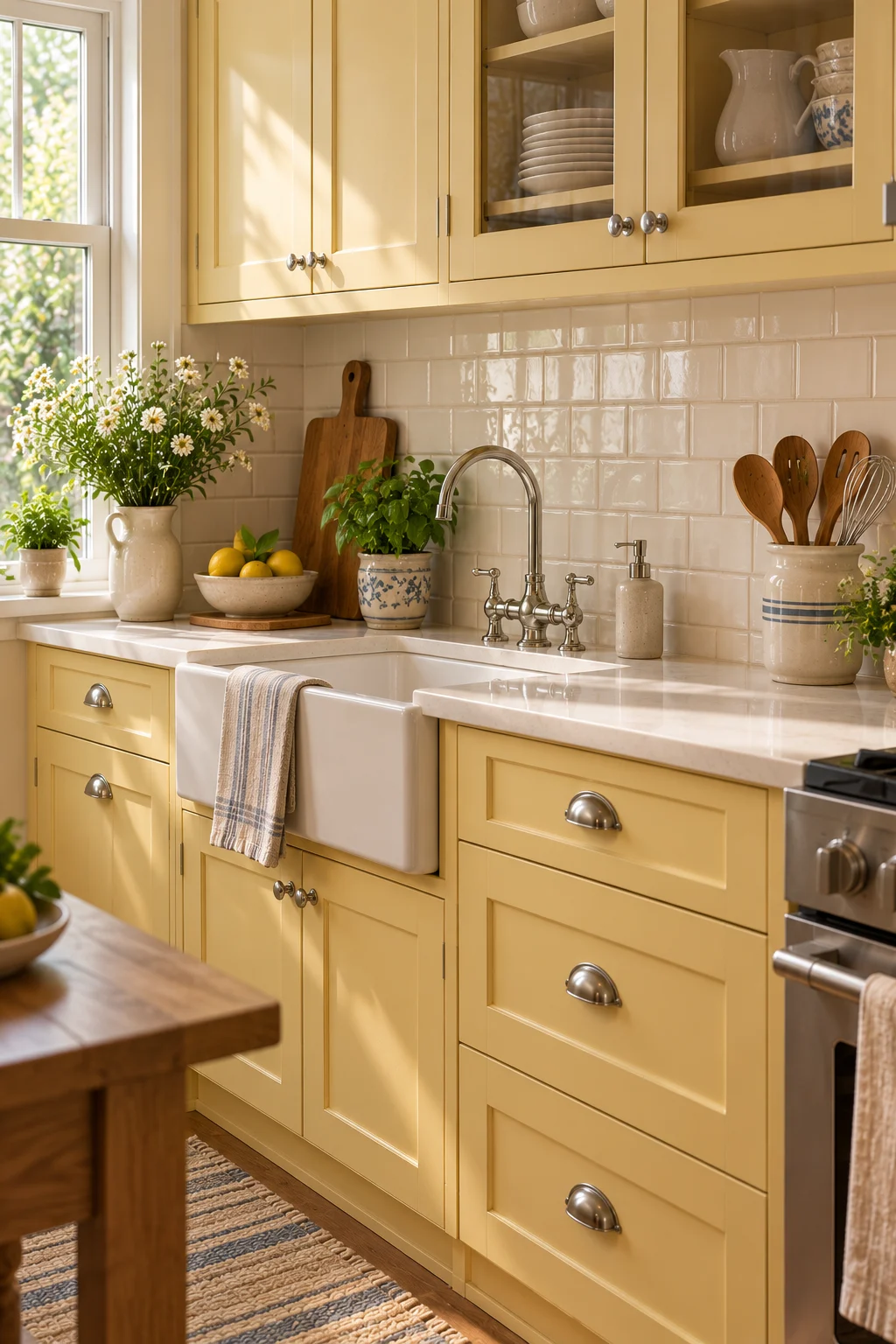
14 Vintage Yellow Kitchen Ideas for a Cheerful Retro Look
A kitchen with vintage character can feel welcoming and full of personality, but recreating an older style without making the room look dated takes a little planning. Yellow is a particularly charming choice because it brings warmth, highlights traditional details, and works beautifully with natural wood, patterned tiles, and classic kitchen accessories.
Vintage yellow kitchens can range from soft butter-yellow cottage rooms to bold retro spaces inspired by the middle of the twentieth century. These 14 ideas explore cabinet colors, backsplashes, flooring, curtains, furniture, and decorative details that bring cheerful vintage character into an everyday American kitchen.
Begin by choosing the kind of yellow you prefer. Pale butter yellow creates a gentle country atmosphere, while deeper golden shades deliver a more noticeable retro look.
1. Paint Traditional Shaker Cabinets Butter Yellow
Butter-yellow cabinets create a soft vintage appearance without making the kitchen feel overly bright. The color works particularly well with traditional shaker doors, simple knobs, and light countertops.
Choose a muted yellow with warm undertones rather than a fluorescent shade. Pair it with cream walls, a white ceramic backsplash, and natural wood accents to create a balanced, welcoming palette.
Keep the hardware understated so the cabinet color remains the main feature. Avoid combining several competing yellow shades across the cabinets, walls, and countertops.

2. Combine Yellow Cabinets With Natural Oak Wood
Natural oak brings an earthy quality to yellow cabinetry and prevents the overall palette from feeling too sweet. Its visible grain adds texture while reinforcing the comfortable character associated with traditional kitchens.
Choose pale butter-yellow or muted golden cabinets and introduce oak through a breakfast table, open shelves, or a suitable countertop. Keeping the wood tone consistent across a few elements helps the room feel coordinated.
Use a lighter backsplash to separate the yellow and wood finishes visually. Avoid mixing too many strongly contrasting wood stains, which can distract from the vintage color scheme.

3. Install a Classic White Tile Backsplash
White ceramic tiles provide a timeless backdrop for vintage yellow cabinetry. Their simple shapes and subtle reflections balance the warmth of the cabinets without competing for attention.
Choose traditional rectangular subway tiles or small square ceramic tiles with visible grout lines. Warm white grout can create a softer appearance, while a contrasting grout color emphasizes the tile pattern.
Keep the countertop relatively simple so the backsplash remains easy on the eye. Avoid adding another bold geometric pattern directly beside the tile, particularly in a narrow kitchen.

4. Choose a Vintage Yellow Refrigerator as the Focal Point
A yellow refrigerator can introduce a playful retro accent without requiring the entire kitchen to be painted yellow. It works especially well in rooms with otherwise simple cabinets and neutral walls.
Look for a refrigerator with rounded corners, vintage-inspired handles, and a finish suited to the rest of the kitchen. A muted pastel yellow creates a gentler look than a saturated golden finish.
Measure the appliance opening and check door clearance, ventilation, and installation requirements before choosing a model. Avoid placing the refrigerator where its doors block a walkway or interfere with adjacent cabinets.

5. Add a Yellow and Cream Checkerboard Floor
Checkerboard flooring gives a vintage kitchen a distinctive graphic foundation. A yellow-and-cream combination feels cheerful while remaining softer than a high-contrast black-and-white pattern.
Choose muted yellow and warm ivory tiles with a finish suitable for kitchen use. Smaller squares can reinforce a traditional cottage appearance, while larger squares create a cleaner interpretation of the retro style.
Let the floor provide most of the pattern and keep the cabinetry simple. Avoid adding several competing geometric motifs across the floor, backsplash, and window treatments.

6. Dress the Sink Window With a Gingham Café Curtain
A gingham café curtain adds a traditional country detail that suits a yellow kitchen particularly well. The small-scale check pattern introduces texture without requiring another large decorative feature.
Choose yellow-and-white gingham or a softer combination of cream and pale golden yellow. A short curtain covering part of the window allows daylight to enter while providing a little privacy.
Mount the curtain securely and keep the fabric clear of the faucet, wet countertop, and window controls. Avoid long dangling ties or fabric that could come into contact with cooking heat.

7. Pair Golden Yellow Cabinets With Darker Vintage Hardware
Hardware can make yellow cabinets feel more traditional and visually defined. Dark bronze-look knobs, aged brass-look pulls, or classic chrome-look fittings each create a different interpretation of vintage style.
Choose one finish that complements the shade of yellow and the other permanent fixtures. Simple rounded knobs work well on cabinet doors, while practical pulls can make wider drawers easier to open.
Keep the hardware consistent across the cabinet run. Avoid mixing too many unrelated metal finishes, which can make the room feel less cohesive.

8. Introduce Yellow Through a Vintage Breakfast Table
A yellow breakfast table can bring retro character into a neutral kitchen without requiring permanent changes to the cabinetry. It also creates a natural gathering point for casual meals and morning coffee.
Choose a compact table with a painted wooden or appropriately finished surface. Butter yellow pairs well with natural oak chairs, while a stronger golden finish can complement cream or muted blue seating.
Make sure the table leaves enough room for chairs to move comfortably. Avoid oversized furniture that interferes with cabinet doors or the main route through the kitchen.

9. Use Yellow Open Shelves for a Light Retro Accent
Yellow open shelves offer a smaller-scale way to introduce vintage color. They can brighten a plain wall while providing practical storage for everyday dishes and lightweight decorative objects.
Choose a muted golden or pale butter-yellow finish and install the shelves with appropriate structural supports. Cream ceramics, clear glasses, and a few vintage-inspired bowls can complement the color without making the arrangement too busy.
Leave enough room between objects for easy access and cleaning. Avoid overloading shelves or placing heavy items near the front edge.

10. Create a Retro Kitchen With Yellow and Mint Green
Yellow and mint green evoke a cheerful mid-century-inspired palette. The combination feels playful while remaining visually balanced when both shades are chosen carefully.
Try pale mint lower cabinets with butter-yellow accents, or use yellow cabinetry with mint-green seating and ceramic accessories. White countertops and simple chrome-look hardware help connect the two colors.
Choose muted versions of both shades if the kitchen is small or receives limited natural light. Avoid using equally intense yellow and green across every surface, since the result may become visually overwhelming.

11. Add a Vintage-Inspired Pendant Above the Kitchen Table
A vintage-inspired pendant helps establish the atmosphere of a yellow kitchen, especially above a breakfast table or small dining area. A simple enamel-look shade can reinforce the retro theme without requiring elaborate decoration.
Choose a compact pendant in cream, pale yellow, or muted chrome. The fixture should provide useful illumination while remaining proportionate to the table and ceiling height.
Have the light installed securely with suitable electrical connections. Avoid oversized fixtures that dominate the room or hang low enough to obstruct movement and sightlines.

12. Display Vintage-Inspired Yellow Ceramic Accessories
Ceramic accessories offer an easy way to introduce yellow without changing cabinets or flooring. A few carefully chosen pieces can create a collected appearance that feels appropriate to a vintage kitchen.
Look for butter-yellow pitchers, golden serving bowls, or simple ceramic canisters with traditional shapes. Combine them with cream dishes and natural wood accents to keep the arrangement balanced.
Place accessories on a dry counter or stable shelf away from cooking heat. Avoid filling every available surface with matching pieces, since a small collection often looks more natural.
13. Combine Yellow Cabinets With a Butcher-Block Countertop
A butcher-block countertop adds natural warmth to yellow cabinets and reinforces a traditional kitchen atmosphere. Its visible grain creates a pleasant contrast with painted surfaces.
Choose a suitable hardwood countertop or a wood-look alternative designed for kitchen use. Oak and maple tones pair particularly well with soft yellow, while richer wood finishes create a deeper vintage appearance.
Follow the countertop’s care requirements, especially around the sink and food-preparation areas. Avoid allowing standing water to remain on wood surfaces or placing unprotected wood too close to heat sources.

14. Create a Fully Layered Vintage Yellow Kitchen
A fully layered yellow kitchen combines color, traditional materials, and carefully chosen accessories into a cohesive design. The key is to repeat the yellow in a few places while allowing other finishes to provide contrast.
Start with butter-yellow cabinets, then introduce natural oak, cream ceramic tiles, simple vintage-style hardware, and a restrained patterned curtain. A small collection of yellow pottery or a compact breakfast table can reinforce the palette without making the room feel themed.
Keep preparation surfaces open and choose practical finishes for everyday use. Avoid introducing too many decorative patterns, competing metal finishes, and unrelated colors at once.

How to Choose the Right Shade of Vintage Yellow
Yellow changes noticeably with natural and artificial lighting. Pale butter shades tend to create a softer atmosphere, while golden yellow can feel more traditional and visually prominent.
Consider the colors already present in your kitchen before choosing paint. Cream countertops and warm wood generally complement golden undertones, while cooler white surfaces may work better with a softer, less orange yellow.
Test paint samples beside your backsplash and flooring. Check how the colors appear during the day and under your evening lighting before committing to a complete cabinet finish.
Making a Vintage Yellow Kitchen Work in a Small Space
A small kitchen can use yellow successfully without painting every wall and cabinet. Yellow lower cabinets, a colorful refrigerator, or a few ceramic accessories can provide enough character.
Balance the yellow with lighter upper cabinets and a simple backsplash. Clear countertops and good task lighting also help the space remain comfortable and practical.
Avoid combining dark flooring, strong yellow cabinetry, and heavily patterned walls in a room with limited daylight. Keeping some major surfaces visually quiet creates a more balanced result.
Budget-Friendly Vintage Yellow Kitchen Updates
Painting existing cabinets can provide a substantial visual change without replacing the entire kitchen. Proper surface preparation and a suitable cabinet finish help the result look more polished.
Smaller updates include changing hardware, adding a gingham café curtain, or introducing yellow ceramics and a compact vintage-style pendant. Secondhand furniture can also bring character when it is stable and in suitable condition.
Choose improvements according to their practical impact as well as their appearance. A carefully selected accent can be more effective than buying a large collection of decorative accessories.
Common Vintage Yellow Kitchen Decorating Mistakes
One common mistake is choosing a yellow that is too bright for the surrounding finishes. A shade that looks attractive on a small sample may feel much stronger across an entire cabinet run.
Another is using too many retro patterns together. Checkerboard floors, gingham curtains, patterned backsplashes, and decorative wallpaper can compete for attention when they are all equally prominent.
Avoid making every item yellow. Natural wood, cream ceramics, white tile, and simple metal hardware give the eye a place to rest.
Caring for Yellow Cabinets and Vintage Accessories
Painted cabinets benefit from regular gentle cleaning with products appropriate to their finish. Pay attention to areas near handles and cooking surfaces where grease can accumulate.
Clean ceramic tiles and grout using methods suitable for the materials. For wood countertops and furniture, follow the finish manufacturer’s guidance and wipe spills promptly.
Keep vintage-inspired accessories away from excessive heat and moisture. Inspect wall-mounted shelves and lighting fixtures periodically to ensure they remain secure.
Safety and Practical Considerations
- Keep curtains and decorative objects away from cooking heat.
- Secure shelves, artwork, and lighting fixtures with appropriate supports.
- Ensure refrigerator doors and cabinet drawers can open without blocking walkways.
- Choose flooring suitable for kitchen moisture and regular cleaning.
- Maintain clear access to windows, ventilation equipment, and electrical outlets.
- Use suitable finishes for countertops exposed to water and food preparation.
- Keep decorative accessories off essential preparation surfaces.
A vintage yellow kitchen can feel cheerful, welcoming, and full of character without sacrificing everyday practicality. By pairing the right shade of yellow with traditional materials, simple patterns, and carefully chosen accessories, you can create a kitchen that feels both nostalgic and comfortable for modern life.
